
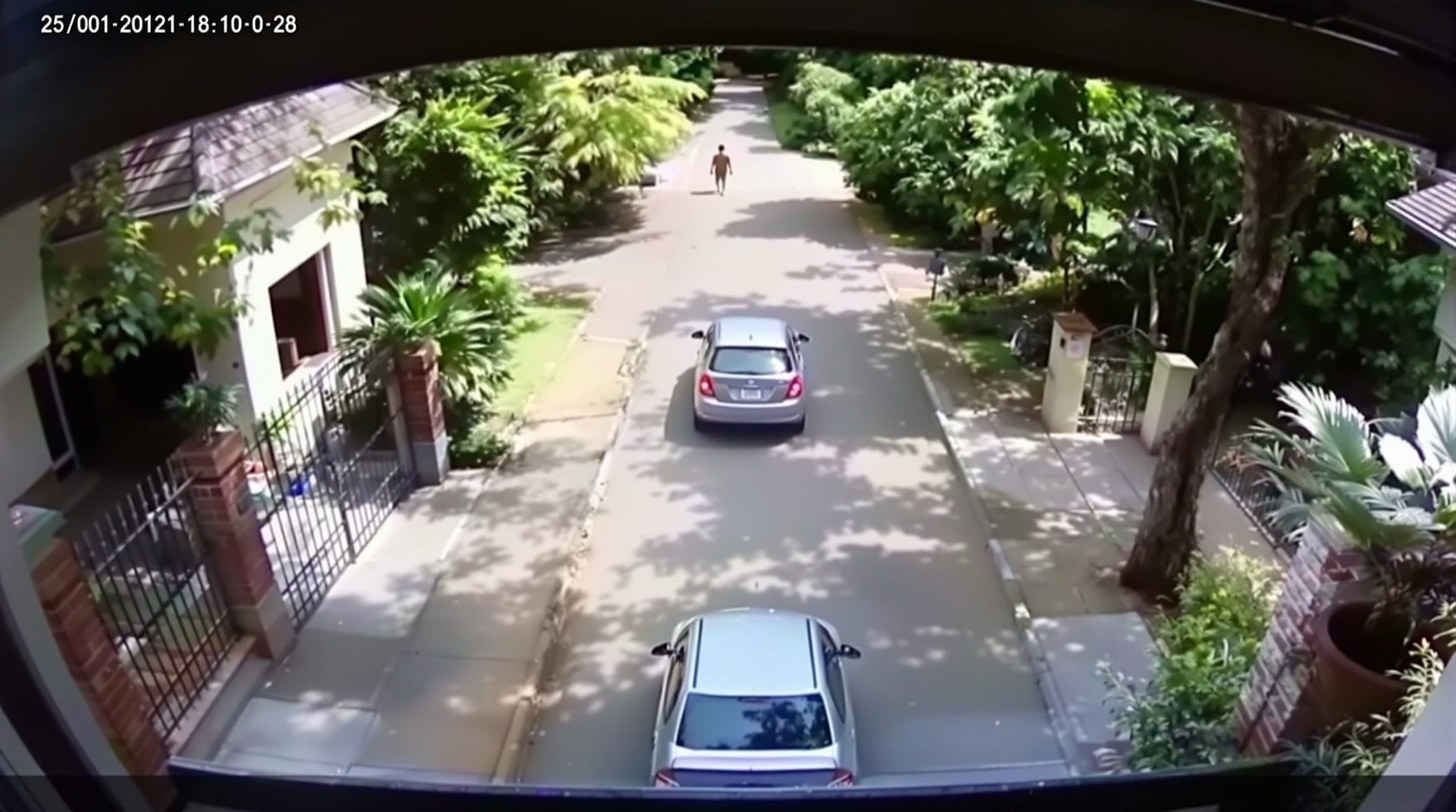
CCTV Human Vehicle Detection (India 2026): Human & Vehicle AI Alerts, Fewer False Alarms
How AI object classification alerts you only on people and vehicles - cutting the flood of false alarms that plain motion creates - where the AI runs (edge, NVR-side or cloud), its real limits, and the extra privacy weight of person-detection.
If you have ever put up a basic CCTV camera and then quietly switched off its alerts after the tenth notification for a passing crow, you already understand the problem cctv human vehicle detection exists to solve. Plain motion detection fires on any pixel change - a swaying neem tree, a stray dog, headlight glare, a moth on the lens at night. Human and vehicle detection adds a layer of AI that looks at each moving object, decides what it is, and only bothers you when it is a person or a vehicle.
This is the focused explainer on that one feature line you see on a spec sheet - "human/vehicle detection", "AI object classification", "person & vehicle alerts". It sits in Studio Matrx's CCTV hub alongside the other detection guides. If you have not read it yet, start with CCTV motion detection - human/vehicle detection is the upgrade that sits on top of motion, not a replacement for it. For the whole family of smart features (line-crossing, intrusion zones, people-counting, ANPR), see CCTV video analytics.
Scope & safety. This guide helps you choose and plan a feature. It never teaches anyone to defeat or evade detection. Deciding where cameras go is yours to do; mounting at height, cabling and any mains-electrical work belong to licensed professionals, and a camera must never block a fire-escape route. Person-detection watches people, so it carries a heavier privacy duty - keep detection to your own property and shared areas, never bathrooms, bedrooms or changing areas, and respect the spirit of the Digital Personal Data Protection Act, 2023.
What human & vehicle detection actually does
A camera with this feature runs a small object-classification model on its video. When motion is detected, instead of just shouting "something moved", the AI draws a box around the moving object and labels it: person, vehicle, or other. Only the first two raise an alert. Everything else - the dog, the crow, the wind-blown branch, the rain streak - is recognised as "not a person or vehicle" and stays silent.
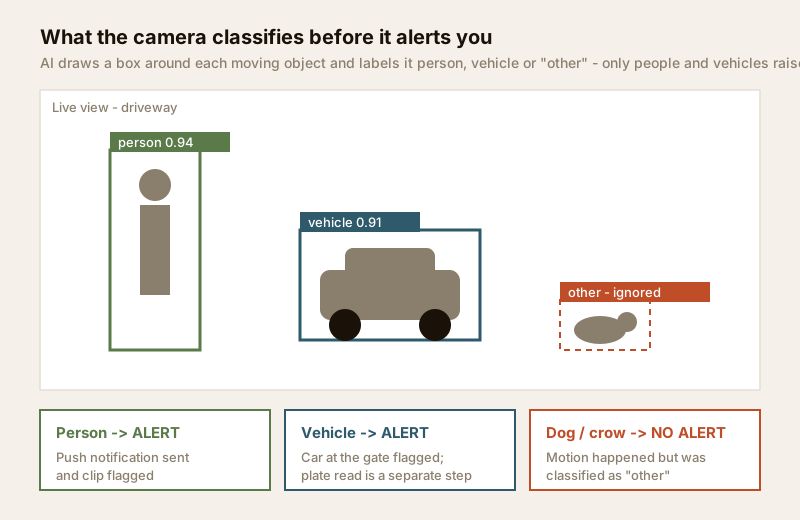
Two things are worth being clear about:
- It classifies, it does not identify. Human detection tells you a person is there - not who. Recognising a specific face is a separate, far more sensitive feature covered in the facial-recognition CCTV guide. Reading a number plate is another separate step, covered in the ANPR CCTV guide. Human/vehicle detection is deliberately the lighter, less intrusive of these - it is worth choosing it over face recognition unless you have a specific, lawful reason for the latter.
- It filters alerts; it does not decide who is a threat. A person walking past your gate and a person breaking in look identical to the classifier. The AI cuts noise so you see the events that matter - it does not judge intent.
Why it matters in India: the false-alarm flood
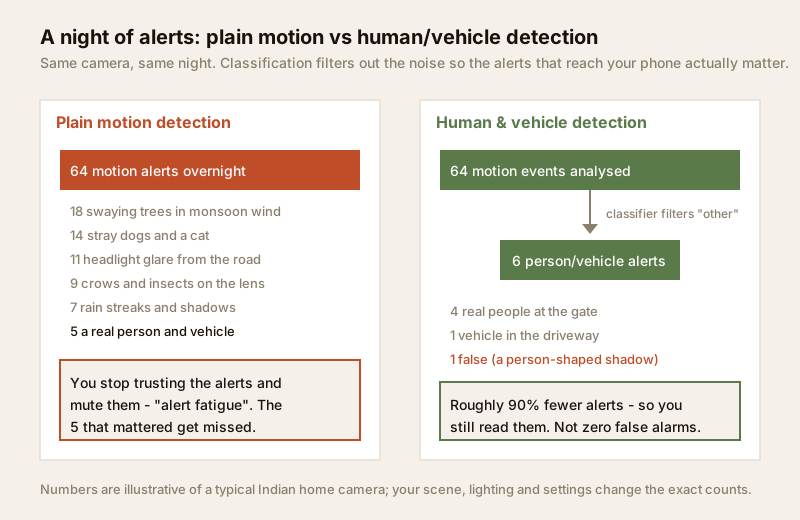
The single biggest reason to want this feature is alert fatigue. A plain-motion camera on an Indian street or plot is a false-alarm machine. The usual culprits:
- Animals - stray dogs, cats, cattle wandering in, monkeys on a terrace, crows and pigeons.
- Weather - monsoon rain streaks, wind-swayed trees and plants, moving shadows on a bright day.
- Light - headlight glare from passing vehicles, the beam sweeping across a wall at night.
- The lens itself - insects, especially at night, crawling on the glass and lit up by the IR, each one a giant blurry "motion" event.
A camera that pings you 60 times a night for these teaches you to ignore it - and then you miss the one alert that was a real person at the gate. Human/vehicle detection is the fix: it filters that flood down to a handful of alerts you will actually read.
Where the AI runs: edge, NVR-side or cloud
The same feature can be computed in three different places, and the choice matters for cost, reliability and privacy.
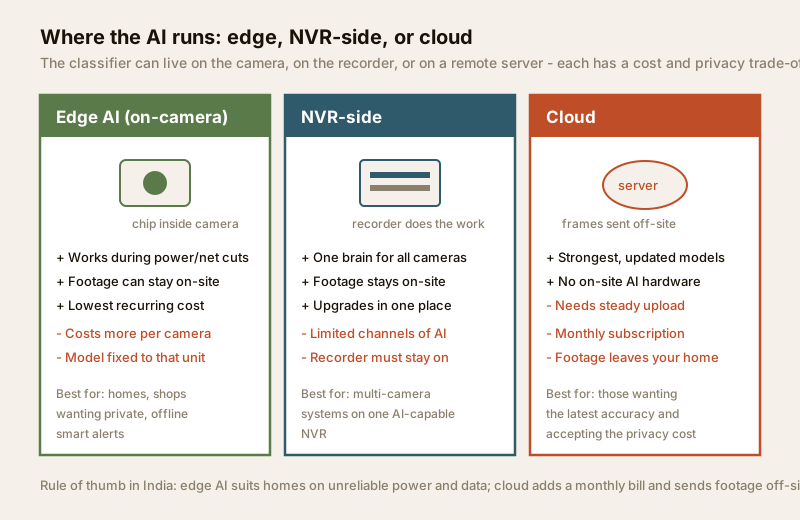
- Edge AI (on the camera). A small AI chip inside the camera does the classification. Alerts keep working during a network or internet cut, footage can stay entirely on-site, and there is no monthly fee. The trade-off is a higher price per camera and a model fixed to that unit. For most Indian homes on shaky power and data, this is the sensible default.
- NVR-side. The recorder does the classifying for several cameras at once. One "brain" to upgrade, footage stays on-site, but AI is limited to however many channels the NVR supports, and the recorder must stay powered.
- Cloud. Frames go to a remote server running the strongest, regularly-updated models. No on-site AI hardware needed, but it requires a steady upload link, usually a monthly subscription, and - the big one - your footage leaves your home. That is a real privacy and data-residency decision, not just a technical one.
| Where AI runs | Works in power/net cut | Footage stays on-site | Recurring cost | Best for |
|---|---|---|---|---|
| Edge (on-camera) | Yes | Yes | None | Homes/shops wanting private, offline smart alerts |
| NVR-side | Only if NVR powered | Yes | None | Multi-camera systems on one AI-capable recorder |
| Cloud | No - needs internet | No - leaves home | Monthly subscription | Latest accuracy, if you accept footage going off-site |
To pick the detection features and processing model view-by-view for your plot, use the new CCTV detection feature selector. For how the smart-camera category fits together overall, see the AI-powered CCTV guide and the smart CCTV guide.
The real limits - be honest before you buy
Human/vehicle detection is a big improvement, not magic. It reduces false alarms; it does not eliminate them, and it can miss real events. Know the failure modes:
- Distance. Beyond the camera's useful range, a person becomes too few pixels to classify confidently - the AI may label them "other" and stay silent. Match the resolution and lens to the distance you actually need.
- Darkness. At night, in poor light, both the image and the classifier degrade. A camera with strong night vision or good low-light performance and image quality classifies far better after dark than a cheap one.
- Partial or obscured view. A person half-hidden behind a wall, a car, or an umbrella - or only their legs visible - may not be recognised. Angle and framing matter as much as the AI.
- Crowds and clutter. In a busy, crowded scene many overlapping people confuse the boxes. This feature shines on a quiet home driveway, less so on a packed market frontage.
- Odd angles and edge cases. A person crouching, a rickshaw, a stray shape the shadows make person-like - these still slip through occasionally, in both directions (false alert and missed event).
The practical takeaway: treat human/vehicle detection as a noise filter that lets you keep trusting your alerts, not as a guarantee that every intruder trips it and nothing else ever does.
The privacy weight of person-detection
This is the part too many guides skip. A feature that specifically detects, boxes and logs people carries more privacy responsibility than a plain camera, not less - and cloud processing adds the question of where those clips are stored.
- Keep detection on your own property. Set the detection area to your gate, compound, driveway and shared spaces - not the public footpath, the neighbour's window, or the road. Most smart cameras let you draw the zone; keep it inside your boundary.
- Never in private spaces. Bathrooms, bedrooms and changing areas are off-limits, full stop - a person-detection camera there is both wrong and, in the spirit of the DPDP Act, 2023, unlawful.
- Purpose and proportion. Person-detection for your own home security is legitimate. Using it to profile, track or log neighbours, domestic staff, delivery workers or passers-by is not - keep the purpose to protecting your property, and be mindful that you are processing other people's personal data.
- Cloud means off-site. If you choose cloud AI, footage of identifiable people leaves your home to a third-party server. Prefer edge or NVR-side processing where you can, and read the provider's data terms before you commit.
For a structured way to think this through, the security and privacy assessment guide walks you through camera placement, zones and lawful purpose.
When human/vehicle detection is worth it - and when it is not
| Situation | Human/vehicle detection value |
|---|---|
| Gate/driveway camera flooding you with animal and tree alerts | High - the classic fix; cuts alerts sharply |
| Quiet plot, boundary wall, porch | High - clean scene, few objects, accurate |
| Busy shopfront on a crowded street | Moderate - many people overlap; tune zones |
| Long-range boundary you cannot resolve well | Low until fixed - improve resolution/lens first |
| You only ever review footage after an event | Low - you are not relying on live alerts anyway |
| You need to know who, not just that a person is there | Wrong feature - consider facial recognition with its heavier duties |
When to bring in a professional
Choosing the feature, the processing model (edge/NVR/cloud) and the detection zones is planning you can do yourself - this guide and the detection feature selector are built for exactly that. Hand the rest over:
- Mounting at height, cabling and weatherproof terminations - a licensed installer's job.
- Anything at the mains board - a licensed electrician's, see the electrical hub.
- System design for a larger property, shop or society - where detection, storage and network resilience must be sized together; the building security systems guide frames the whole picture, and for shared premises the gated-communities security guide covers RWA considerations.
A good installer will also aim and frame each camera so the AI has the clean, well-lit, front-on view it needs - which does more for accuracy than paying for a fancier model badly placed.
Key takeaways
- Human & vehicle detection is AI that classifies each moving object and alerts you only on people and vehicles - the upgrade that sits on top of plain motion detection.
- It dramatically reduces India's false-alarm flood (dogs, crows, trees, rain, headlights, insects) - but reduces, never eliminates, and can miss real events.
- Where the AI runs matters: edge (on-camera) works offline and keeps footage private; NVR-side centralises it; cloud is strongest but adds a subscription and sends footage off-site.
- Real limits are distance, darkness, partial view and crowds - fix resolution, lighting and framing first.
- Person-detection carries more privacy duty: keep zones on your own property, never in private spaces, purpose-limited, and mindful of the DPDP Act, 2023.
- Plan features and zones with the detection feature selector; route mounting, cabling and mains work to a licensed professional.
References
- Digital Personal Data Protection Act, 2023 - process personal data (including footage of identifiable people) for a legitimate purpose, limited to your own property and shared areas; avoid capturing neighbours' private spaces.
- Manufacturer specification sheets - verify the stated detection type (human/vehicle vs face), where the AI runs (edge/NVR/cloud), effective detection range and night performance before ordering; vendor accuracy claims are lab figures, not field guarantees.
- National Building Code of India (SP 7), Bureau of Indian Standards, and local municipal bye-laws for any structural, electrical or life-safety aspect of an install; verify the current edition via the BIS catalogue: https://www.services.bis.gov.in/
This is an educational overview. Detection accuracy varies with scene, lighting and settings; mounting at height, cabling and any electrical work are qualified professional tasks - engage licensed installers and verify any standard's current status via the BIS catalogue before relying on it.
Export this guide
Related Guides — Deep-dive reading
How to Choose a CCTV Camera (2026): The Homeowner's Decision Guide for India
Cut through the spec-sheet noise and choose the right CCTV camera for each spot around an Indian home. What actually matters — sensor and low-light performance, lens and field of view, form factor, IP and IK ratings, honest smart features — and the marketing claims to ignore.
SecurityAI-Powered CCTV in India: What the Analytics Really Do
What AI-powered CCTV actually means, which analytics are genuinely useful at a home, and how to weigh the cost, accuracy limits and privacy of features like facial recognition before you buy.
SecuritySmart Security Notifications in India (2026): Beating Alert Fatigue by Designing the Alert Layer
The single biggest reason smart security fails in a real home is not a weak camera or a cheap lock — it is alert fatigue. A system that pings you fifty times a day for a cat, a plant, a delivery and a neighbour's car trains you to swipe every alert away, so you miss the one that matters. The fix is to design notifications deliberately: tier alerts by severity, filter at the source, make each alert actionable, escalate to the right person, and keep a critical path that survives a phone on silent or an internet cut.
SecurityRelated Tools — Try Free
CCTV Cloud vs Local Cost Calculator
Compare cloud CCTV subscription against a local NVR + HDD — upfront, 5-year total, monthly fee and break-even.
Cloud vs LocalCCTV Detection Feature Selector
Answer four questions and get the right detection feature — basic motion, human/vehicle AI, line-crossing, intrusion-zone, auto-tracking or video analytics.
Detection SelectorCCTV Camera Coverage & Count Calculator
Estimate how many CCTV cameras you need, the NVR channels, storage in TB for your retention period, and an indicative all-in cost with GST.
CCTV Calculator