
Bicycle Parking Security in India: Stand, Lock and Location
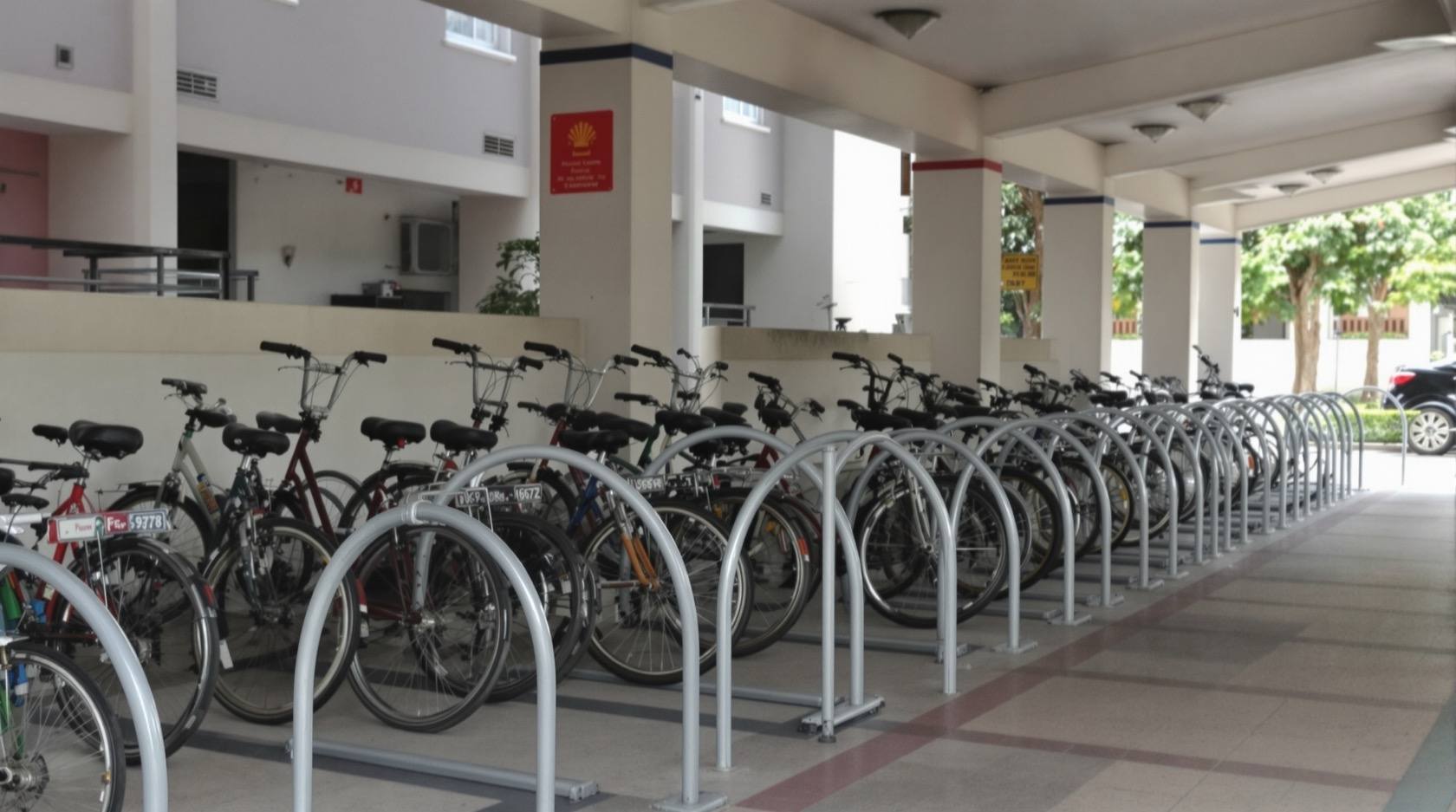
Cycles, e-cycles and e-scooters are among the most-stolen things in an Indian society precisely because we treat them casually. The fix is the same three-part logic as any theft: a good stand to lock to, a good lock used well, and a good place to leave it.
Walk through almost any Indian apartment society and you will find the cycles kept the way nothing else is. The car has a barrier, a sticker and a bay. The scooter has a lock and a slot. The cycles are leaned against a wall in a corner, some with a thin cable looped once around a wheel, many with nothing at all, in a spot no camera watches and no one overlooks. That casualness is exactly why cycles — and now the more expensive e-cycles and e-scooters — are among the most quietly stolen things in a building. Nobody plans to lose a cycle; it just isn't treated as worth securing until it is gone.
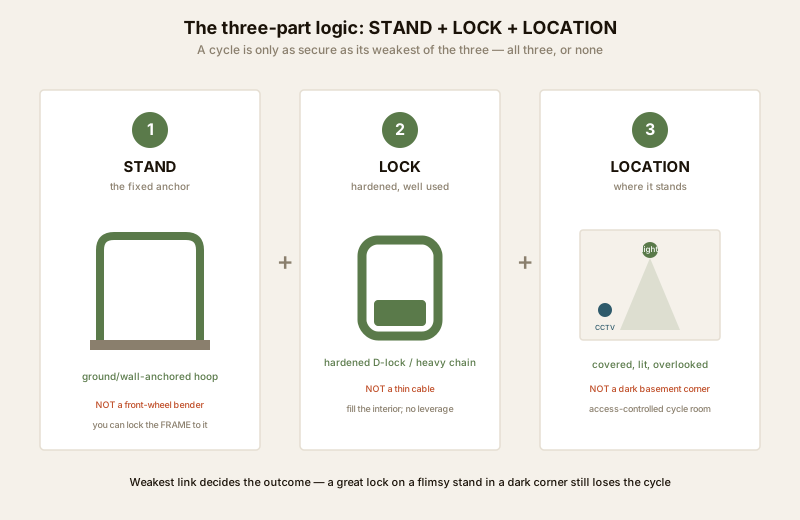
The good news is that the fix needs no special knowledge. A cycle is stolen the same way anything is: a thief meets a valuable thing through an open weakness. Close the weakness and the theft does not happen. For a cycle that comes down to three things you control — the stand you lock it to, the lock and how you use it, and the location you leave it in. Get all three right and even a determined opportunist moves on to the easier cycle two spots down.
Scope & safety. This is an educational planning guide for homeowners and RWAs. You choose, decide and coordinate; licensed professionals install anything involving mains power, drilling into structure, or wiring — a floor-anchored stand, a cycle-room lock, a camera, a charging point. It never teaches how to defeat a lock. Two hard rules override every idea here: a cycle store or its charging must never block a fire-escape route, a stair or the fire-tender lane, and an e-cycle or e-scooter battery is a fire risk when charged carelessly — never charge one on a stairwell or landing. Verify any built cycle store against the National Building Code of India (SP 7:2026) and your local bye-laws, and treat any battery like the fire consideration it is.
This guide sits in the Security Knowledge Hub, in the parking and garage sub-hub, beside the complete parking and garage security guide that frames the whole subject. Cycle theft is a small part of the wider vehicle-theft picture, but it is the loss most residents actually suffer — so it earns its own page.
Why cycles get stolen: the casual corner
A cycle is an easy target for reasons that have nothing to do with clever thieves and everything to do with how we leave them:
- Left unlocked, or as good as. A cycle leaned in a corner "for a minute" is an invitation. A cycle "secured" with a thin cable is barely better — a cable lock is defeated by a bolt-cutter in seconds, and the thief knows it.
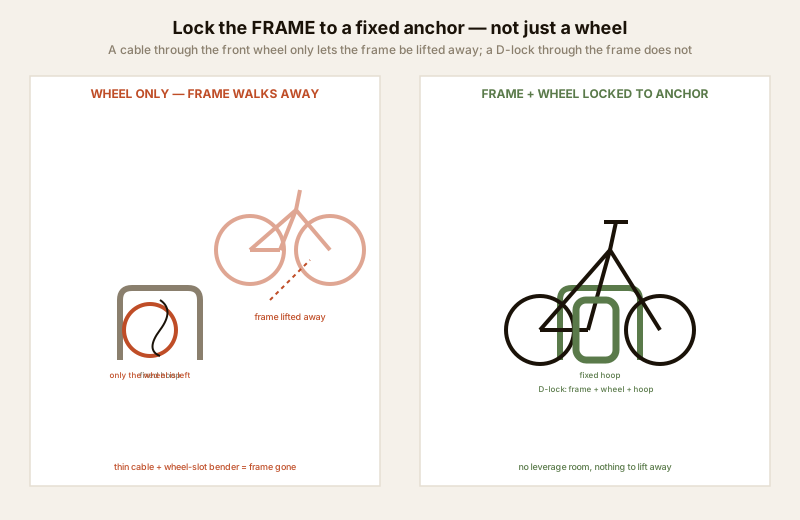
- Only the wheel is held. The commonest mistake is looping a lock through the front wheel and a stand, leaving the frame free. A quick-release front wheel pops off in seconds; the thief walks away with the whole cycle and leaves the wheel still locked to the stand.
- A flimsy stand that holds nothing. Many society "cycle stands" are the wheel-slot type — a row of metal channels you drop the front wheel into. Cyclists call these front-wheel benders: they hold the wheel, buckle it if the cycle is knocked, and let the frame be lifted straight up and away. A stand you cannot lock the frame to is not a security stand.
- An unwatched, dark spot. The cycle corner is usually the leftover space — a dark bit of basement, the back of the stilt, a stair landing — chosen because it is out of the way, which is exactly what makes it out of sight.
- Nobody would notice. Because no one registers whose cycle is whose, a stranger wheeling one out in daylight rarely gets a second look. Much cycle theft is casual and in broad daylight, not a midnight break-in.
Every one of those is a weakness you can close. The three-part logic below closes them in order.
Part 1 — The stand: something to lock the frame to
Everything starts with what the cycle is locked to. A lock is only as good as the fixed object it secures the cycle against, and the whole trick is being able to lock the frame — the one part a thief cannot replace or discard — to something that cannot be lifted, unbolted or cut away.
- A fixed, anchored stand. The gold standard is a stand fixed to the ground or wall — a Sheffield-style hoop (the simple inverted-U you can lean a cycle against and lock the frame and a wheel to) or a wall anchor for a single cycle. Fixed means bolted or grouted down by someone who knows how, so the stand itself cannot be carried off with the cycle still attached.
- Not a front-wheel bender. Avoid relying on the wheel-slot channel stands. If that is what the society has, still run your lock through the frame and something fixed, not just the wheel in the slot.
- A proper society cycle stand or cycle room. The best answer for a building is a dedicated cycle stand or cycle room with real anchors — a place designed for cycles rather than the corner they ended up in. For a society this is an RWA decision (more on that below), and it is the single upgrade that helps every resident at once.
If you can lock the frame to a fixed anchor, you have removed the "lift it away" attack entirely. The thief now has to beat the lock itself — which is Part 2.
Part 2 — The lock and the technique
A good lock badly used is a bad lock, and a modest lock used well beats an expensive one used carelessly. Two things matter: the lock you buy, and the way you close it.
The lock. A hardened D-lock (U-lock) or a heavy hardened chain is a different class of object from a thin cable. A cable lock exists to stop a cycle rolling away, not to stop a thief — it is cut in seconds and should be treated as a deterrent only, if used at all. For anything you would be sorry to lose, a hardened D-lock or chain is the baseline, and for a genuinely valuable cycle, two locks of different types (say a D-lock plus a chain) is worth it: it forces a thief to carry and use two different tools, and most simply won't.
The technique is where most cycles are lost, so it matters as much as the lock:
- Lock the frame — and ideally a wheel — to the fixed anchor. The frame is the non-negotiable. If the lock reaches, capture the rear wheel and the frame together against the anchor; if not, add a second lock or a cable specifically for the wheels.
- Fill the lock's interior. Position the cycle so the D-lock's shackle is as full as possible — frame, wheel and anchor packed inside — leaving no empty space. Empty space inside a D-lock is leverage room where a tool can be inserted and twisted; a full shackle denies it.
- Secure or remove quick-release parts. A quick-release front wheel or saddle comes off in seconds. Either capture it in the lock, add a second lock, swap the quick-releases for bolt-on or locking versions, or simply take the saddle and any easily-removed accessory with you.
- Lock it even at home, even briefly. The "just for a minute" unlocked cycle is the one that goes. Lock it in your own basement or stilt the same way you would outside.
Get the stand and the lock right and the cycle is genuinely hard to take. The third part decides whether a thief even tries.
Part 3 — The location
Where a cycle stands changes the odds before a lock is ever tested. Thieves prefer the dark, unwatched, unowned corner and avoid the covered, lit, overlooked one — the same principles that secure a whole parking floor apply to the cycle spot.
- Covered, lit and overlooked beats a dark basement corner. A spot that is under cover, lit at night, and visible to residents, a guard or a passing window is one where a thief is likely to be seen and interrupted. The dark far corner of a basement is the opposite. The lighting side is covered in parking security lighting; think about natural surveillance the way the basement and open parking guides describe.
- On camera. A cycle area within CCTV coverage both deters and, if the worst happens, gives the society something to review. Where to aim cameras so the cycle zone is actually in frame is in CCTV placement for parking.
- Access-controlled. The strongest location is a cycle room whose door is controlled — only residents get in — combined with light and a camera. That turns "anyone can wheel one out" into "only residents are ever near them." The general method is in parking access control.
For a whole building, the location question becomes the case for a proper cycle room: covered, lit, on camera, and access-controlled, with real anchors inside. It is the one intervention that fixes stand and location together for every resident.
| Weakness in the casual corner | Why it invites theft | The three-part fix |
|---|---|---|
| Cycle leaned unlocked | Nothing to beat at all | A lock — used every time, even at home |
| Thin cable through a wheel | Cut in seconds; frame free to lift | Hardened D-lock/chain through the frame and anchor |
| Wheel-slot "bender" stand | Holds only the wheel; frame lifts away | Fixed hoop / wall anchor you lock the frame to |
| Quick-release wheel or saddle | Pops off in seconds | Capture in lock, second lock, or take it with you |
| Dark, unwatched corner | No one sees the theft | Covered, lit, overlooked, on-camera, access-controlled spot |
E-cycles and e-scooters: the battery changes everything
E-cycles and e-scooters have arrived fast in Indian societies, and they bring two new problems the ordinary cycle does not: they are worth far more (so worth stealing), and they carry a lithium battery that is a fire risk if charged carelessly. The battery is the centre of both problems, so it drives the answer.
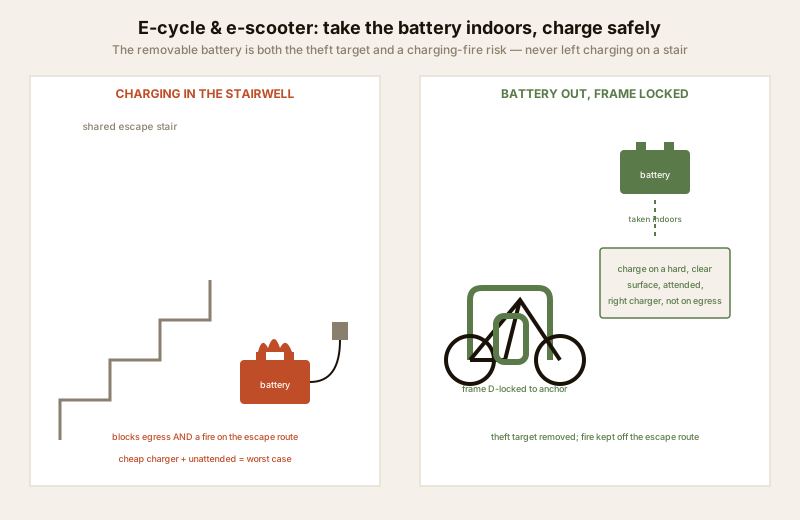
- Take the removable battery indoors. On most e-cycles and e-scooters the battery detaches. Remove it and take it inside. This does two jobs at once: it removes the most valuable, most stealable part from the parked vehicle, and it moves the fire risk off the shared parking and into a place you can charge under supervision.
- Never charge on a stairwell, landing or escape route. A battery charging in a stairwell is a double failure — it obstructs the escape route, and if that battery fails it starts a fire on the very path people need to get out. This is a life-safety line, not a preference. Charge on a hard, clear surface, attended, with the correct charger for that battery, and never leave a cheap or damaged charger running unattended overnight. The fire side is covered in EV charging fire safety; for shared bays, EV charging bay security covers the theft-and-safety overlap.
- Lock the frame as with any cycle. Battery aside, the e-cycle's frame still needs the same hardened lock to a fixed anchor — it is a bigger prize than an ordinary cycle, so if anything the lock should be better and doubled.
Marking, registration and recovery
Locks and location stop most theft; marking and a register deter the rest and give you a chance of recovery if a cycle does go.
- Photograph the frame number. Every cycle has a frame number, usually stamped under the bottom bracket. Photograph it and note it down. It is the one identifier that proves the cycle is yours and lets a recovered cycle be matched back to you.
- Mark the cycle. A visible mark or the society's sticker makes a cycle harder to fence and easier to spot being wheeled out by a stranger.
- Keep a society cycle register. A simple register of resident cycles — owner, flat, frame number, photo — turns "anyone can walk one out" into "the guard can ask whose cycle that is." A register that records residents' details is personal data under the DPDP Act 2023: collect only what is needed, keep it secure, and do not share it beyond the society's own use.
None of this stops a theft on its own, but together they raise the effort and the risk for a thief and the odds of getting a cycle back — the cheapest layer you can add.
Kids' cycles and casual daytime theft
Two everyday cases deserve a note because they are the ones most often lost:
- Kids' cycles are left in the open play area or the stilt, rarely locked, and taken casually — often by another child, sometimes for good. Give even a child's cycle a spot with a lock and, for a society, a marked place in the cycle stand; a small habit prevents a small heartbreak.
- Casual daytime theft is the reality most cycle owners meet — not a break-in but someone wheeling an unlocked or cable-locked cycle out in daylight while everyone assumes it belongs to whoever is walking with it. The whole three-part logic is aimed at exactly this: make it lockable, lock it, and put it somewhere a stranger doing this would be noticed.
The community angle: a proper cycle room is an RWA decision
Most of what makes cycles safe in a building is beyond any one resident. A dedicated cycle room — covered, lit, on camera, access-controlled, with real anchors — is an RWA decision, funded and maintained by the society. So is a decent stand in the stilt, a light in the cycle corner, a camera aimed at it, and a cycle register at the gate.
The way to get there is the way any shared security measure gets approved: take the case to the society as evidence, not opinion. Note how cycles are actually kept and lost, score the site, and put a costed proposal for a proper cycle room to the committee. The broader playbook for shared-community security is in the gated community security guide, and the pillar complete parking and garage security guide frames where the cycle room sits among the building's other parking measures. To turn a walk-around into a ranked list, run the home security risk scorecard; the parking security audit is the periodic re-check for the whole parking area.
Key takeaways
- Cycles get stolen because we treat them casually — left unlocked, "secured" with a thin cable, on a stand that holds only the wheel, in a dark unwatched corner. Close those weaknesses and the theft does not happen.
- Part 1, the stand: lock the frame to a fixed, ground- or wall-anchored stand (a Sheffield hoop or wall anchor), never a flimsy wheel-slot "bender" that lets the frame be lifted away.
- Part 2, the lock and technique: a hardened D-lock or heavy chain, not a thin cable; lock the frame and a wheel to the anchor, fill the lock's interior so there is no leverage room, secure or remove quick-release wheels and saddle, and use two locks for a valuable cycle.
- Part 3, the location: a covered, lit, overlooked, access-controlled spot — ideally a society cycle room with CCTV — beats a dark basement corner.
- E-cycles and e-scooters: take the removable battery indoors (it is the theft target and the fire risk), never charge on a stairwell or escape route, use the correct charger, and lock the frame as with any cycle.
- Mark, register and recover: photograph the frame number, mark the cycle, keep a society register (DPDP-compliant). A proper cycle room is an RWA decision — take a scored, costed case to the committee.
Where to go next
- Frame the whole subject with the complete parking and garage security guide and browse the parking sub-hub.
- See how the same three-part logic scales in basement parking security and open parking security, and secure a home two-wheeler or car with garage security and vehicle theft prevention.
- Get the location layer right with parking security lighting, CCTV placement for parking and parking access control.
- For e-cycles and e-scooters, read EV charging fire safety and EV charging bay security.
- Make it a community project with the gated community security guide, and assess the whole area with the parking security audit.
- Score your site with the home security risk scorecard.
References
- National Building Code of India, SP 7:2026 (Bureau of Indian Standards) — for any built cycle store, its fire and life-safety provisions, and clearances to escape routes; verify the current edition and any amendments with your architect.
- Local municipal building and fire bye-laws — for cycle-store siting, egress and fire-tender access; confirm the specific requirement for your building.
- Digital Personal Data Protection Act, 2023 — for any cycle register or parking CCTV that records residents' personal data.
- Battery and charger manufacturer instructions — for the correct charger, charging surface and supervision for an e-cycle or e-scooter battery; treat charging as a fire consideration.
This is an educational, strictly defensive planning guide. It does not describe how to defeat any lock or security measure. Electrical, structural-anchoring, camera and access-control work is qualified professional work — engage licensed installers, never charge a lithium battery on a fire-escape route, and never let any measure block a stair, an exit or a fire tender or violate an applicable National Building Code or municipal bye-law.
Export this guide
Related Guides — Deep-dive reading
The Complete Guide to Parking and Garage Security in India (2026): Access, CCTV, Lighting, People-Safety & Vehicle Protection
The pillar overview of parking and garage security for Indian apartments, offices and homes — how to control who enters, watch every corner, light and de-isolate the space, and protect the vehicles, without ever blocking the escape route or the fire tender.
SecurityOpen Parking Security in India: Open-Air and Stilt Lots
An open lot and a stilt park feel safer than a basement in daylight, but they are exposed on every side and usually unmanned after dark. Here is how to secure open parking from the boundary in, without ever blocking a fire tender or an escape route.
SecurityParking Security Lighting in India (2026): Lighting Basement, Stilt and Open Parking So Nothing Hides in the Dark
How to light apartment and commercial parking so vehicles, people and number plates are clearly seen, cameras can actually read the scene, and the space stops being a soft spot for theft and lurking, without ever compromising the emergency lighting on the escape route.
SecurityRelated Tools — Try Free
CCTV Camera Coverage & Count Calculator
Estimate how many CCTV cameras you need, the NVR channels, storage in TB for your retention period, and an indicative all-in cost with GST.
CCTV CalculatorHome Security Risk Scorecard
Score your home across six security layers — perimeter, entry points, lighting, detection, alarm and habits — and get a prioritised action plan.
Security ScorecardCCTV Camera Overlap Calculator
The overlap or blind gap between two adjacent cameras, from coverage width and spacing, plus the spacing for a target overlap.
Overlap