
Open Parking Security in India: Open-Air and Stilt Lots
An open lot and a stilt park feel safer than a basement in daylight, but they are exposed on every side and usually unmanned after dark. Here is how to secure open parking from the boundary in, without ever blocking a fire tender or an escape route.
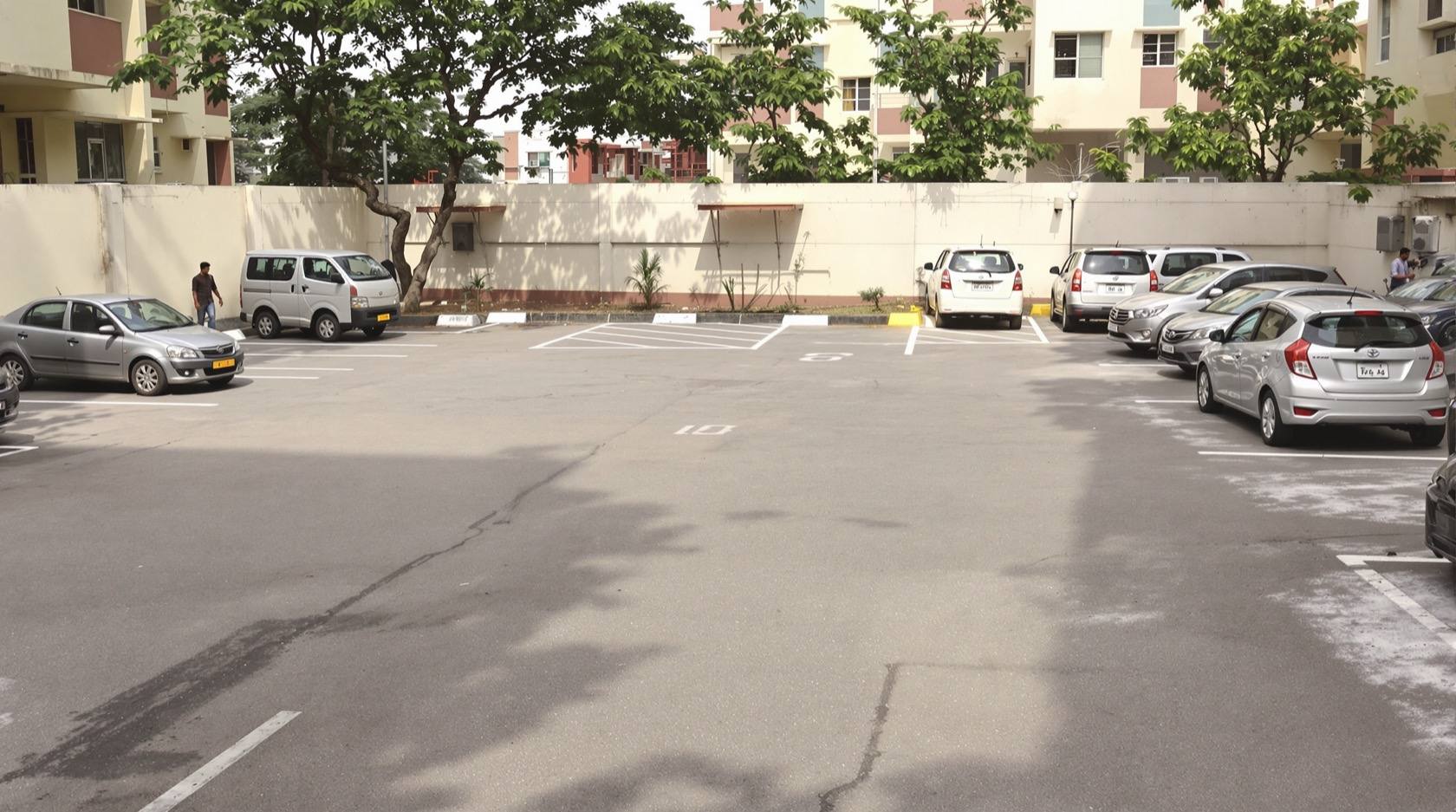
Walk into a stilt or open-air car park at four in the afternoon and it feels like the safe kind of parking. There is daylight, the guard can see it from the gate, residents pass through it constantly, and nobody has to grope down a dim ramp. Come back at eleven at night and it is a different place: the same lot is now unmanned, half its tube-lights are fused, the far row is in shadow, and anyone who can step over a low boundary wall from the street is standing among the cars with no one watching. Open parking security is the discipline of holding on to the daytime advantage after dark — and of remembering that an open lot, unlike a sealed basement, is exposed on every side at once.
This guide is written for the people who plan and run these spaces: RWA committees, facility managers, builders and the security consultants who advise them. It sits in the Security Knowledge Hub and the parking and garage security sub-hub, and it is the open-lot counterpart to the pillar guide on parking and garage security and to the basement parking security guide. Where the basement is a problem of enclosure, the open lot is a problem of exposure — and the two are secured almost in reverse.
Scope & safety. This is an educational, strictly defensive planning guide. It helps owners, RWAs and facility managers decide what an open or stilt parking area needs and coordinate its installation — never how to defeat a barrier, copy a sticker or steal a vehicle. Life-safety and specialist work (fire detection and emergency lighting, mains electrical, gates and boom barriers, access-control locks, EV chargers) is qualified work: specify it, then have a licensed professional install and certify it. No security measure may ever block an escape route, obstruct the fire-tender lane, or defeat mandated emergency lighting and exit signage. Where a code figure matters, verify it against the current National Building Code (SP 7:2026) and your local municipal bye-laws — do not rely on a number quoted from memory.
Open and stilt parking: the security profile
An open-air surface lot and a stilt park — the ground floor of an apartment or office block left open on columns — share one defining trait: they are not enclosed. That cuts both ways, and honest planning starts by naming both sides.
What open parking gets right, by day:
- Natural light and natural surveillance. By daylight the lot is overlooked by the building above it, by passers-by, and by the guard at the gate. Detection can happen by accident here in a way it never does in a basement.
- No pillar-shadow enclosure. Sightlines run clear across a surface lot. There are fewer of the deep recesses and dead ramps that make a basement a warren.
- Easy egress and fire-tender reach. An open lot is easy for people to leave and for a fire tender to reach — provided nobody has parked across the lane or chained a gate.
What open parking gets wrong, especially at night:
- Exposed on every side. A basement has one throat — the ramp. An open lot has a whole perimeter. Every metre of boundary that is low, broken or unlit is a way in.
- Easy pedestrian access from the street. A person on foot does not need to defeat a barrier; they step over a knee-high wall, slip through a gap beside the gate, or simply walk in behind a resident. The vehicle gate is not the whole boundary.
- Unmanned and dark after hours. The daytime "eyes" go home. The guard dozes or covers the main gate only. Half the lights are out. The lot that felt safe at 4 pm is now the least-watched space on the property.
- A through-route and a drift-in space. Because it is open, a stilt or surface lot invites people to cut through it or loiter in it. If the parking edge is not defined, outsiders drift in without ever deciding to trespass.
The rest of this guide works from the outside in: the boundary and gate first, then surveillance and access, then lighting and the real losses, then the stilt-specific and life-safety points.
Security starts at the boundary and gate
The single most important idea in open parking security is that the lot's security does not start at the parking bay — it starts at the compound boundary. In a basement you defend the ramp; in an open lot you defend the whole perimeter, and the parking is only as secure as the wall and gate around it.
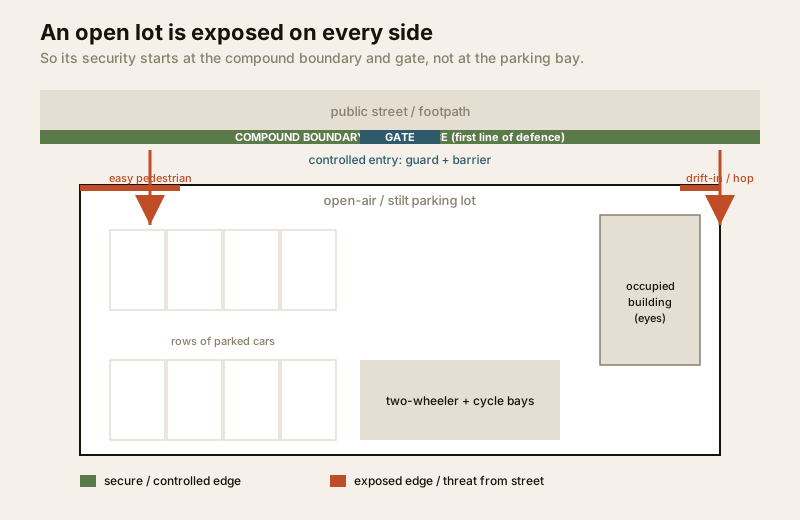
Three things follow from that:
1. Make the boundary a real boundary. A wall or fence that a person can step over, squeeze past or reach through is not securing the parking behind it. This is the domain of the complete guide to perimeter security — apply its method to the specific edges that enclose the parking, and pay attention to the low-wall segments, the gap beside the gate pillar, and the point where the boundary meets a neighbour's plot.
2. Control the gate as the one intended way in. The vehicle entrance is where access is decided. Get the discipline of the gate security guide right — a gate that opens for every car and every face without a check is a formality, not a control. Where vehicles are managed by a barrier, the boom barriers guide covers sizing, drop speed and the tailgating gap that lets a second vehicle follow one tag.
3. Define the parking edge so it is not a through-route. Mark where parking begins and the public realm ends — a change in surface, a low kerb, a line of bollards, a chain that still leaves the fire lane clear. The goal is that an outsider crossing into the parking has to make an unambiguous choice to trespass, rather than drifting in unnoticed. In a shared residential compound this is part of the wider gated-community security picture.
Naming the edge matters as much for people-safety as for theft: a clearly bounded, obviously private parking area is one that a loiterer cannot pretend to have wandered into by mistake.
Natural surveillance and CPTED: keep the lot overlooked
An open lot's best asset is that it can be seen. CPTED — Crime Prevention Through Environmental Design — is the discipline of protecting that visibility on purpose instead of letting landscaping and clutter erode it.
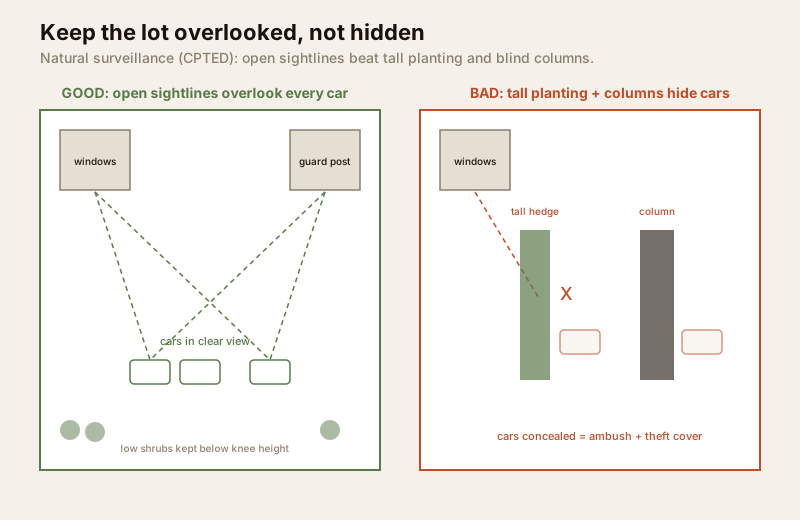
The rules for an open or stilt lot are simple to state and constantly broken in practice:
- Keep sightlines open from the occupied building and the guard post. The windows, balconies and the gate cabin that overlook the lot are free surveillance. Do not let anything grow or get built that breaks the line between those "eyes" and the cars.
- Keep planting low. Landscaping is where good intentions defeat security. A hedge or shrub row planted for shade or privacy along the parking edge becomes exactly the screen a thief needs. Keep planting near parking below waist height, and keep tree canopies high and trunks clear — so the greenery never hides a person or a car.
- Watch the columns on a stilt. On a stilt park the structural columns are the one thing that does break sightlines. Lay out bays and cameras so no column creates a standing blind spot where someone can wait unseen.
- Signal that the space is watched and owned. Clear signage, defined bays, tidy upkeep and posted CCTV notice all tell an opportunist that this space belongs to someone and is observed. Neglect signals the opposite.
The point is not to over-plant with cameras but to spend the natural surveillance the lot already has, and stop giving it away to a hedge.
Access control and visitor parking at the entry
The gate decides who gets in, so the entry is where access control earns its keep. For an open lot the aim is modest and achievable: know which vehicles belong, log the ones that do not, and stop the parking becoming free public parking.
- Resident and staff vehicles are the routine flow. Whatever tokens the site uses — stickers, tags, an RFID or FASTag-style system — the honest weakness is the "resident sticker" that any car can copy and the barrier that lifts for every windscreen without a glance. Design the flow with the parking access-control guide so recognition is real, not assumed.
- Visitors and deliveries are where an open lot leaks. A visitor who is waved in and parks in an unwatched corner is both a security unknown and, often, the person who takes up the space a resident paid for. Run a simple, logged process — covered in the visitor vehicle management guide — so every non-resident vehicle is recorded and directed to a defined visitor bay, not left to find its own dark corner.
- A record of what entered. Even without manned checking of every car, a camera that reads and logs number plates at the gate means an unrecognised vehicle is at least on record. The ANPR CCTV guide covers how automatic number-plate capture fits an entry — and, importantly, how to run it lawfully: under the DPDP Act 2023 you collect only what security needs, post a notice that the area is under CCTV and number-plate capture, secure the footage, and do not run ad-hoc facial or plate recognition against people going about their day.
| Entry element | Common open-lot weakness | What to plan instead |
|---|---|---|
| Vehicle gate / barrier | Lifts for every car; long open cycle lets a second vehicle follow | Per-vehicle cycle, guard or camera watch on the gate, close the pedestrian gap beside it |
| Resident token | Copyable sticker; no real check | Verifiable tag / RFID, spot-checks, revoke lost tokens |
| Visitor vehicle | Waved in, parks in an unwatched corner | Log it, issue a pass, direct to a defined visitor bay in view |
| Number-plate record | No record of what entered | ANPR at the gate, retained lawfully under DPDP, notice posted |
| Pedestrian gap | Anyone walks in beside the gate | Controlled pedestrian gate, on camera, still easy to exit |
CCTV that covers the whole lot, weather-rated
A basement camera lives in shade; an open-lot camera lives in the sun and the monsoon. Coverage and hardware are both harder here, and both are usually under-done.
- Cover every row, not just the gate. The commonest failure is a camera aimed at the entrance while the rows of cars — where the actual theft happens — sit uncovered. Plan coverage as a map so every bay and every row is in frame with no blind spot, using the CCTV placement for parking guide. On a stilt, position cameras so columns do not carve out dead zones.
- Weather-rate the hardware. Open cameras face direct sun, glare, dust and driving rain. Specify an outdoor-rated housing to the vendor's weatherproofing spec, plan for IR or low-light performance after dark, and mind that a camera staring west will be blinded by the evening sun unless it is placed and shielded for it.
- Make the footage worth reviewing. Analytics that distinguish a person from a passing vehicle cut the false-alarm fatigue that makes a guard ignore the monitor — see the human and vehicle detection guide. A camera nobody monitors and no one reviews is a gap, not a measure; confirm footage is actually recorded and retained for the period your policy and the DPDP notice state.
Night lighting for an exposed lot, with backup
Lighting is where an open lot most often betrays its daytime promise. The lot that everyone could see at noon is a field of shadow at night, and shadow is where two-wheelers vanish and people feel unsafe.
- Light it evenly, to the row. The aim is even illumination across the whole lot with no dark far corner, so the natural surveillance that works by day still works after dark. Set levels to the relevant National Building Code and municipal bye-law guidance rather than to whatever tube-lights were cheapest — the parking security lighting guide covers how to plan it and pair it with the cameras so the two work together.
- Plan for the power cut. This is the India-specific point that open-lot lighting plans forget. Grid power fails, and a lot that goes black the moment the mains drop is unlit exactly when it is least watched. Provide backup — DG-fed circuits or battery/solar luminaires for the critical rows and the two-wheeler area — so the lot is not plunged into darkness during an outage. Mains and DG wiring is a licensed electrician's work; specify the outcome and let them size and install it.
- Do not let lighting fight fire-safety. Any security lighting is separate from, and must never compromise, the building's mandated emergency lighting and exit signage.
The real losses: two-wheelers, accessories and break-ins
Open parking security is often sold on the fear of a stolen car, but the honest, everyday loss in an Indian open or stilt lot is smaller and more frequent — and planning should follow the real risk, not the dramatic one.
| Real loss on an open lot | Why the open lot enables it | What to plan |
|---|---|---|
| Two-wheeler and cycle theft | Light, quick to lift or ride off, often parked in the least-watched corner | Lit, covered, on-camera two-wheeler area; ground anchors / stands — see below |
| Accessory theft (mirrors, badges, battery, EV cable) | A few unwatched seconds at an exposed car; EV cables are a live target | Cover the rows on camera and light; treat EV bays as their own case |
| Vehicle break-in | An unwatched corner gives an intruder unhurried time inside a car | No dark, uncovered corner; define the edge so outsiders cannot loiter |
| Drift-in loitering / through-traffic | Undefined open edge invites people to cut through or wait | Bound the parking edge; signage; natural surveillance |
Two threads run through that table. First, the two-wheeler and cycle zone deserves its own attention — it is the commonest target and the easiest to protect. Give it a lit, covered, camera-watched location rather than the leftover dark corner, and plan its stands and anchors with the bicycle parking security guide. Second, most of the fix is the same fix — eliminate the unwatched corner. The broader method of designing out vehicle loss is in the vehicle theft prevention guide.
Stilt-specific notes
A stilt park — the ground floor of the building left open on columns — is a hybrid: open like a surface lot, but roofed by the building and threaded into the residents' daily path. Two things make it distinct.
- Columns are the blind spots. The structural columns that hold the building up are the one feature that breaks an otherwise open sightline. Lay out bays, cameras and lights so no column creates a standing shadow a person can wait behind, and check the layout after dark, not just on the plan.
- The stilt is a semi-public space residents pass through. Unlike a surface lot at the edge of the plot, the stilt is often the route from the gate to the lift lobby — a space people walk through at all hours, sometimes alone and late. That makes personal safety, not just vehicle theft, central: keep it lit, overlooked and free of hiding places, and consider help or panic points on the walk. The dedicated stilt parking guide goes deeper on this dual role.
The layers, and the life-safety line
Put the pieces together and open parking security is a set of layers, each covering the gaps the last one leaves — never a single gadget.
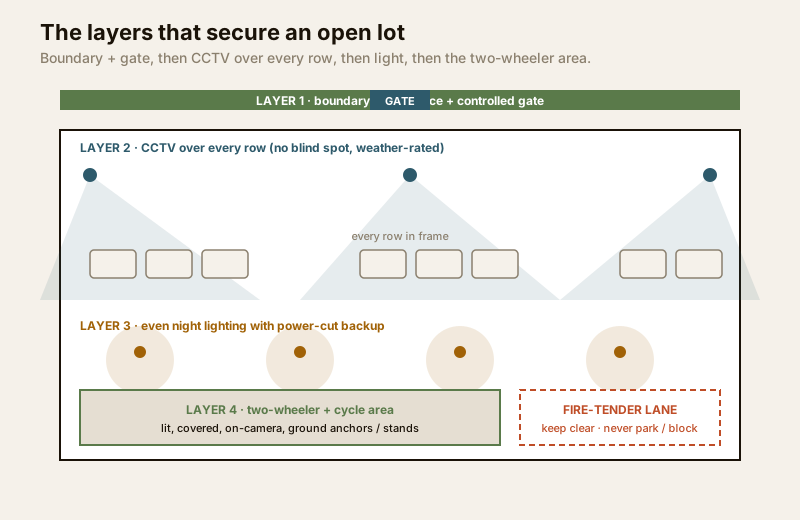
And the line that overrides every layer: nothing you add for security may compromise life-safety. On an open or stilt lot that means three concrete things:
- Keep the fire-tender lane clear at all times. The path a fire tender needs to reach the building must never be parked across, chained, or narrowed by a barrier or planter. Its width and position are set by the National Building Code and local bye-laws — verify them, do not guess.
- Keep egress paths clear. People must be able to leave the lot and the building instantly. A gate or bollard that traps people to stop a car is never acceptable.
- Route specialist work to licensed professionals. Fire and emergency lighting, mains and DG electrical, gates and barriers, access-control locks and EV chargers are all qualified installs. You plan and specify; a licensed installer fits and certifies.
To turn this into an actual plan for your site, walk the boundary with the site perimeter security assessment tool, then score the whole property — parking included — with the home security risk scorecard, and take the findings to the RWA or facility budget as evidence rather than opinion.
Key takeaways
- An open lot's security starts at the boundary and gate, not the bay — it is exposed on every side, so defend the whole perimeter and define the parking edge so outsiders cannot drift in.
- Protect the daytime advantage after dark. Open parking is safe when overlooked; keep sightlines open, planting low, columns un-shadowed, and the lot manned or watched at night — its real weakness is the unmanned, half-lit hours.
- Cover every row on weather-rated CCTV and light the whole lot with power-cut backup — the two most common open-lot failures are cameras aimed only at the gate and lighting that dies with the mains.
- Plan for the real losses — two-wheeler and cycle theft, accessory and EV-cable theft, and break-ins in an unwatched corner — by giving the two-wheeler area a lit, covered, on-camera home and eliminating every dark corner.
- Life-safety overrides everything. Keep the fire-tender lane and every egress path clear, never defeat emergency lighting or signage, verify code figures against SP 7:2026 and local bye-laws, and hand fire, electrical, barrier and access-control work to licensed professionals.
Where to go next
Start with the pillar guide on parking and garage security for the whole-picture method, then read the basement parking security guide if your building also has an enclosed level. Secure the edge that protects the lot with the complete guide to perimeter security, the gate security guide and the boom barriers guide. Fill in the details with the guides on CCTV placement for parking, parking security lighting, vehicle theft prevention and bicycle parking security. Then plan against your own site with the site perimeter security assessment and the home security risk scorecard, and browse the full parking and garage security sub-hub.
References
- National Building Code of India, SP 7:2026 (Bureau of Indian Standards) — Part 4 for fire and life-safety, parking and basement provisions, including fire-tender access and egress. Verify the current edition and clause with your architect or fire consultant.
- Local municipal building and fire bye-laws — parking layout, boundary, lighting and fire-lane requirements vary by city; treat the applicable bye-law as authoritative for your site.
- Digital Personal Data Protection (DPDP) Act 2023 — governs CCTV and number-plate data collected in parking areas: minimise, notify, secure, and do not run ad-hoc recognition.
- CPTED (Crime Prevention Through Environmental Design) — the framework behind natural surveillance, access control and territorial definition applied here; a generic, non-proprietary body of practice.
- PSARA 2005 — the Private Security Agencies (Regulation) Act, governing security guards deployed at the gate and on the lot.
This is an educational, strictly defensive planning guide. It does not describe how to defeat any security measure, copy a token or steal a vehicle. Fire, emergency-lighting, electrical, DG, barrier, access-control and EV-charging work is qualified professional work — engage licensed installers, and never let any security measure block an escape route, obstruct a fire-tender lane, or violate the applicable National Building Code or municipal bye-law. Verify all code references against the current edition before you rely on them.
Export this guide
Related Guides — Deep-dive reading
Visitor Vehicle Management in India: A Professional Guide
The everyday weak point of every society and office gate is not the resident's car — it is the visitor, the cab, the delivery rider and the contractor who must be let in without opening the whole park to anyone. This is the process, not just the hardware: verify at the gate before the boom lifts, park visitors away from resident bays, and never jam the gate a fire tender needs.
SecurityParking Security Lighting in India (2026): Lighting Basement, Stilt and Open Parking So Nothing Hides in the Dark
How to light apartment and commercial parking so vehicles, people and number plates are clearly seen, cameras can actually read the scene, and the space stops being a soft spot for theft and lurking, without ever compromising the emergency lighting on the escape route.
SecurityThe Complete Guide to Parking and Garage Security in India (2026): Access, CCTV, Lighting, People-Safety & Vehicle Protection
The pillar overview of parking and garage security for Indian apartments, offices and homes — how to control who enters, watch every corner, light and de-isolate the space, and protect the vehicles, without ever blocking the escape route or the fire tender.
SecurityRelated Tools — Try Free
Home Security Risk Scorecard
Score your home across six security layers — perimeter, entry points, lighting, detection, alarm and habits — and get a prioritised action plan.
Security ScorecardAccess-Control Battery-Backup Calculator
Size the standby battery so an access system keeps running through a power cut, with an egress life-safety note.
Battery BackupSolar CCTV Sizing Calculator
Enter cameras, sun-hours and backup days to get the solar panel wattage, battery Ah and an indicative kit cost for an off-grid camera.
Solar Sizing