
CCTV Placement Parking and Driveway in India (2026): Cover the Car and the Person
Where to put cameras so you record the vehicle AND the person getting out — wide or varifocal coverage, beating headlight glare at night, and the right angles for a society stilt or basement parking bay.
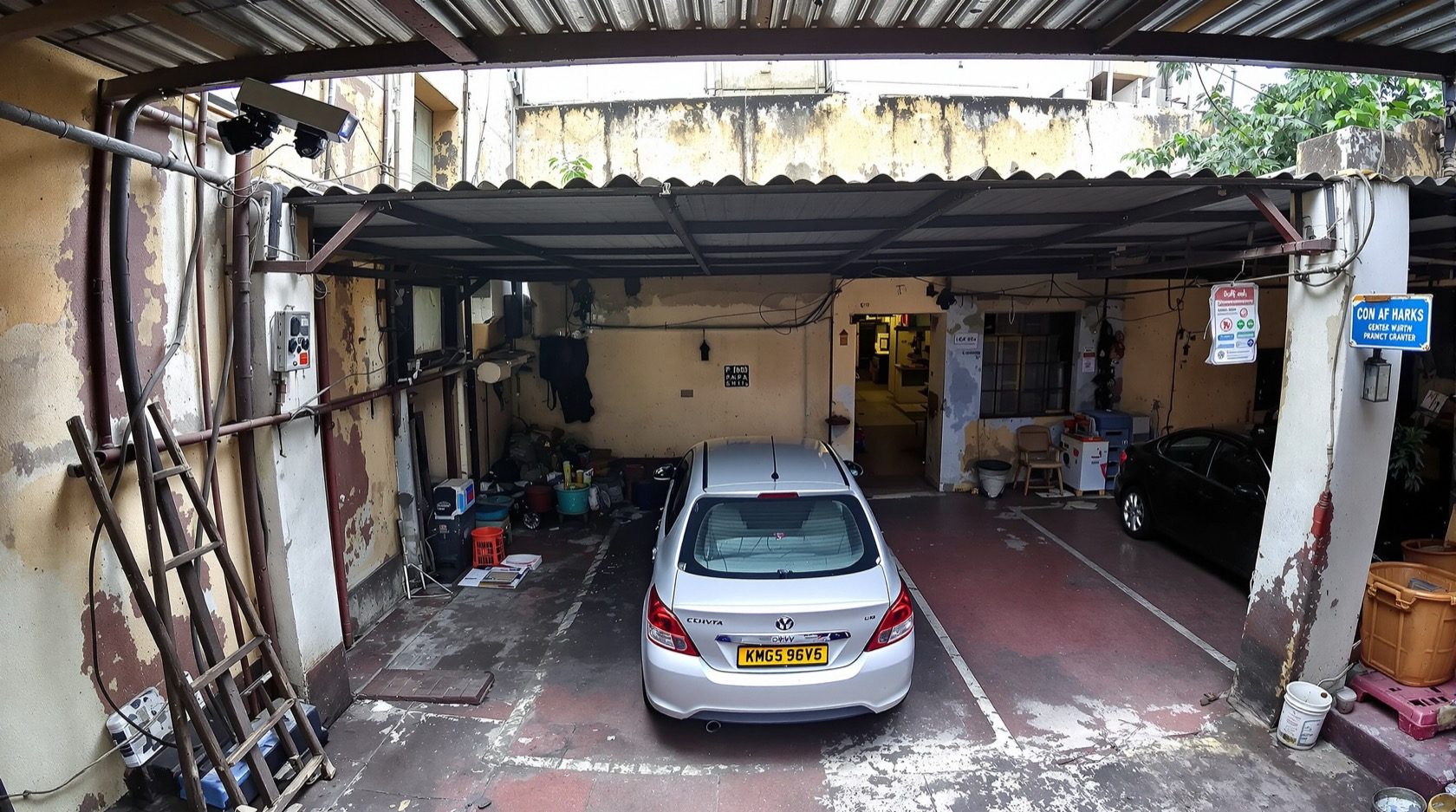
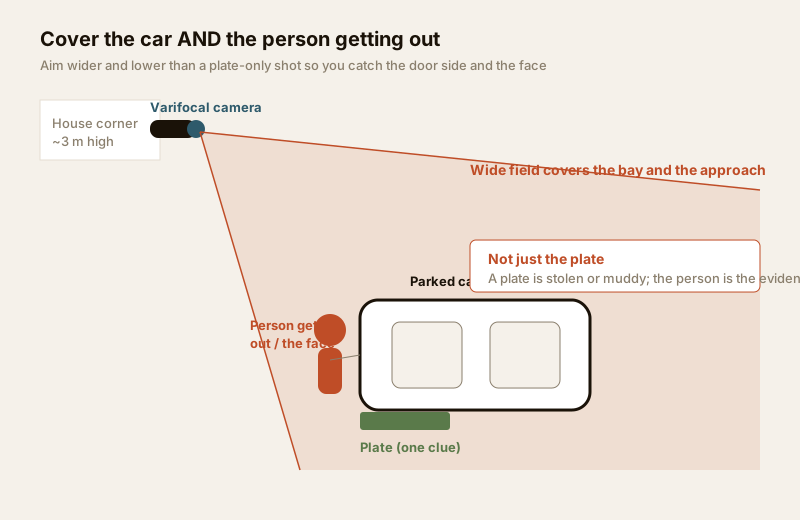
A parking or driveway camera has one job that most installs get wrong: it should record the person, not just the car. A number plate is a single clue — it can be muddy, stolen, or swapped — but a clear view of the face and build of whoever walks up to your vehicle is real evidence. This guide is the parking-zone chapter of Studio Matrx's CCTV hub. It stays in its lane — where to stand a camera so a driveway, porch or society parking bay is properly covered — and hands the neighbouring zones to their own guides: the entrance and main gate and the perimeter and compound wall.
For the underlying rules this guide applies — height, angle, overlap and lens choice — start with the placement principles guide and the coverage planning guide. Here we get specific about the parking zone.
Scope & safety. This guide helps you plan and decide positions. Mounting at height, running cabling in a stilt or basement, and any mains-electrical work are jobs for a licensed installer and electrician — see the electrical hub. Aim cameras only at your own vehicles, driveway and legitimate shared parking; never into a neighbour's flat, window or the public road beyond your boundary. In a society, get RWA consent for common-area cameras and use privacy masking. This is educational content, not legal advice; position cameras in the spirit of the DPDP Act, 2023.
What a parking camera must actually capture
Before you pick a spot, decide what "covered" means for this zone. A good parking view captures, in order of importance:
1. The person — the face and build of anyone approaching, opening a door, or loitering by the vehicles. This is your evidence.
2. The approach path — how they arrived, so you see the walk-up, not just the moment at the car.
3. The vehicle and its door side — damage, theft of mirrors or badges, and someone getting into the car.
4. The number plate — useful, but treat it as a bonus, not the whole plan.
A camera aimed tightly at bumper height to read plates will miss all of the first three. Aim wider and a little lower so the door side and the face fall inside the frame.
Camera choice for the parking zone
Parking bays are wide, often dark, and full of glare sources. That points to a specific kind of camera.
| Need in a parking zone | What to choose | Why |
|---|---|---|
| Cover a wide bay from one point | Varifocal or wide-angle (2.8–3.6 mm fixed, or a dial-able varifocal) | A narrow "plate" lens sees one car; a wide lens sees the bay and the person |
| See at night without a spotlight | Good low-light sensor (larger sensor, colour-at-night / "full-colour" mode) | Parking areas are the darkest part of most plots |
| Survive beams and mixed light | WDR (Wide Dynamic Range) | Balances a bright headlight against the dark bay so neither blows out |
| Reach the far end of a long drive | Varifocal zoomed in, or a second camera | One wide camera loses detail at distance |
| Outdoor / open stilt | IP66 weatherproof, IK-rated if reachable | Dust, monsoon splashback and the odd knock |
For the deeper trade-offs, the low-light camera guide covers night performance and the camera type selector walks you through shape and lens for each view. A bullet on a bracket suits a long driveway; a turret or dome under a porch or stilt slab suits a wide bay — compare them in the bullet camera guide.
Height, angle and mounting
The parking zone rewards mounting high and angled down — high enough to be out of reach, low-angled enough to catch faces rather than the tops of heads.
| Position | Suggested height | Angle | What it should frame |
|---|---|---|---|
| House / porch corner over a car | ~3 m | Tilt down 15–25° | The whole car plus the door side and approach |
| Long driveway (near end) | 2.7–3.5 m | Down the length of the drive | The walk-up and the vehicle body |
| Stilt / basement bay (society) | On the slab underside / column | Along the row, angled down | A full row of bays lengthwise |
| Gate-to-parking approach | ~3 m | Across the path | Anyone moving from gate to cars |
Mount so the person's face is in the top-to-middle third of the frame at the point they reach the car, not the ground at their feet. A camera set too high and looking straight down gives you scalps and shoulders — good for counting people, useless for identifying them. Use the mounting height and angle calculator and the coverage calculator to check the geometry before you commit a position, and see the camera height and angle guide for the principle.
Beating headlight glare at night
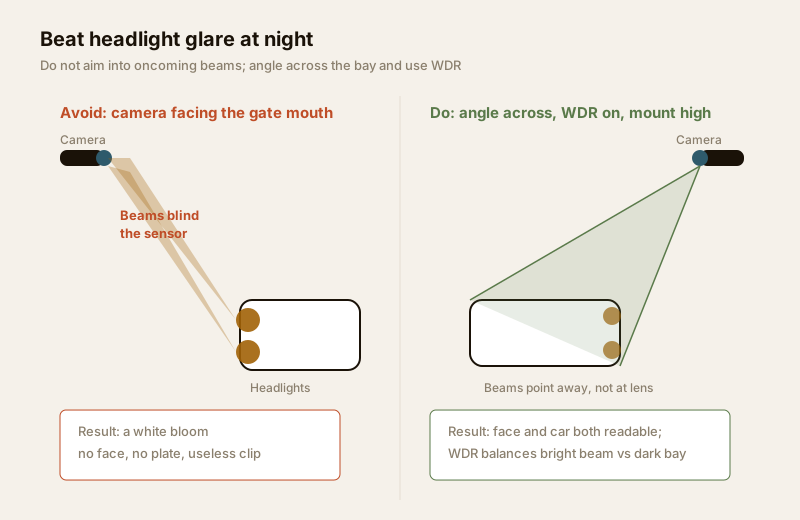
Headlights are the single biggest reason parking footage is useless. A car turning into the drive throws its beams straight at a badly aimed camera and the sensor blooms into a white smear — no face, no plate, nothing. Two fixes work together:
- Angle, not head-on. Do not point the camera straight down the throat of the driveway or gate mouth where beams come at it. Aim it across the bay so headlights sweep past the lens rather than into it. The person and the car body stay lit; the beams point away.
- WDR and a good sensor. A camera with real Wide Dynamic Range balances the bright beam against the dark surroundings, so the frame stays readable. Cheap cameras without it cannot recover.
Also mount high so beams pass below the lens, and rely on the parking area's own lighting rather than the camera's IR alone — a dim, evenly lit bay reads far better than a dark one lit only by a burst of IR. For laying out that lighting, see the lighting and visibility assessment.
Society stilt and basement parking
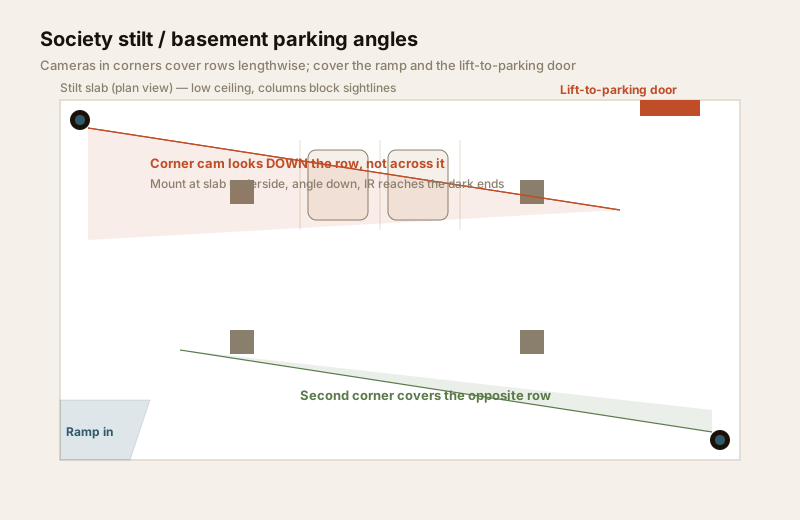
Shared parking under an apartment block is its own puzzle: a low ceiling, structural columns that block sightlines, poor light, and the politics of shared space. A few zone-specific angles:
- Camera in the corner, looking along a row. Mounting a camera in a corner and aiming it down the length of a row covers many bays with one unit. Aiming across rows wastes the view on the sides of parked cars. Two corner cameras facing opposite ways cover both rows.
- Cover the ramp and the lift-to-parking door. The two ways people enter — the vehicle ramp and the door from the lift lobby or staircase into the parking — are the choke points worth a dedicated camera. Anyone who takes a car or tampers with one came through one of them.
- Work with the columns, not against them. Position cameras so a column does not sit in the middle of the view creating a permanent blind spot. Plan overlap so what one camera loses behind a column, another picks up — the blind spots guide covers this.
- Respect residents. Common-area cameras in a society need RWA approval, and they should watch vehicles and access points, not the doors of individual flats. Use privacy masking where a camera unavoidably catches a private space.
Common parking-zone mistakes
| Avoid | Do instead |
|---|---|
| Aiming only at bumper height for the plate | Frame the door side and face; the plate is a bonus |
| Pointing into the gate mouth / oncoming headlights | Angle across the bay; mount high; enable WDR |
| One narrow lens trying to cover a whole bay | Use a wide or varifocal lens, or add a second camera |
| Relying on IR alone in a pitch-dark bay | Add even ambient lighting; use a low-light sensor |
| A column parked in the middle of the frame | Reposition and overlap so nothing hides behind it |
| Mounting low, within reach, in a stilt | Fix to the slab or high on a column, out of reach |
| Aiming across into a neighbour's flat or the road | Keep the view on your vehicles and access points; mask the rest |
When to bring in a professional
Decide the positions, lens types and count yourself using the tools above — then hand the physical work over. Mounting cameras on a slab underside or a house corner is work at height; pulling cable through a stilt or basement means coordinating with the society and routing it safely; and anything at the mains board is a licensed electrician's job. In a society, an installer familiar with common-area work will also help you present the plan for RWA sign-off. A camera that is well-aimed, out of reach and on a backed-up recorder is worth far more than a cheap one screwed on at the wrong angle. Plan the whole scheme with the installation planning guide and put it in context with the residential CCTV guide.
Key takeaways
- A parking camera's real target is the person, then the approach and the vehicle — the number plate is just one clue.
- Choose a wide or varifocal lens with a good low-light sensor and WDR; a narrow plate-only lens misses everything that matters.
- Beat headlight glare by mounting high and aiming across the bay, not into the gate mouth, and turning WDR on.
- In a society stilt or basement, put cameras in corners looking down a row, cover the ramp and lift-to-parking door, and work around columns with overlap.
- Get RWA consent for common-area cameras, mask private spaces, and route mounting, cabling and mains work to a licensed professional; sanity-check angles with the CCTV placement planner.
References
- Digital Personal Data Protection Act, 2023 — position parking cameras to cover only your own vehicles, driveway and legitimate shared parking; avoid capturing neighbours' private spaces, and obtain RWA consent for society common areas.
- Ingress Protection (IP) ratings — verify weatherproofing (IP66 or higher for open stilt/outdoor mounts) on the manufacturer's specification sheet before ordering.
- National Building Code of India (SP 7), Bureau of Indian Standards, and local municipal bye-laws for any structural, electrical or life-safety aspect of an install; verify the current edition via the BIS catalogue: https://www.services.bis.gov.in/
This is an educational overview. Mounting at height, cabling and any electrical work are qualified professional tasks — engage licensed installers and verify any standard's current status via the BIS catalogue before relying on it.
Export this guide
Related Guides — Deep-dive reading
Parking Security Lighting in India (2026): Lighting Basement, Stilt and Open Parking So Nothing Hides in the Dark
How to light apartment and commercial parking so vehicles, people and number plates are clearly seen, cameras can actually read the scene, and the space stops being a soft spot for theft and lurking, without ever compromising the emergency lighting on the escape route.
SecurityCCTV Placement Perimeter and Compound Wall in India (2026): Watch the Line
How to position cameras ALONG your boundary wall at a grazing angle so you catch anyone approaching or climbing it, pair the view with line-crossing detection, light the line, cover corners and gates, and keep every camera on your own side.
SecurityHow to Choose a CCTV Camera (2026): The Homeowner's Decision Guide for India
Cut through the spec-sheet noise and choose the right CCTV camera for each spot around an Indian home. What actually matters — sensor and low-light performance, lens and field of view, form factor, IP and IK ratings, honest smart features — and the marketing claims to ignore.
SecurityRelated Tools — Try Free
CCTV Mounting Height & Angle Calculator
Height, target distance and lens angle to the downward tilt, the blind dead-zone below and where coverage begins and ends.
Height & AngleCCTV Blind-Spot Checker
The dead zone under a wall- or pole-mounted camera, from mounting height, downward tilt and vertical field of view.
Blind SpotCCTV Camera Type Selector
Answer five questions and get the right camera form factor — dome, vandal dome, bullet, turret or PTZ — with reasons.
Camera Selector