
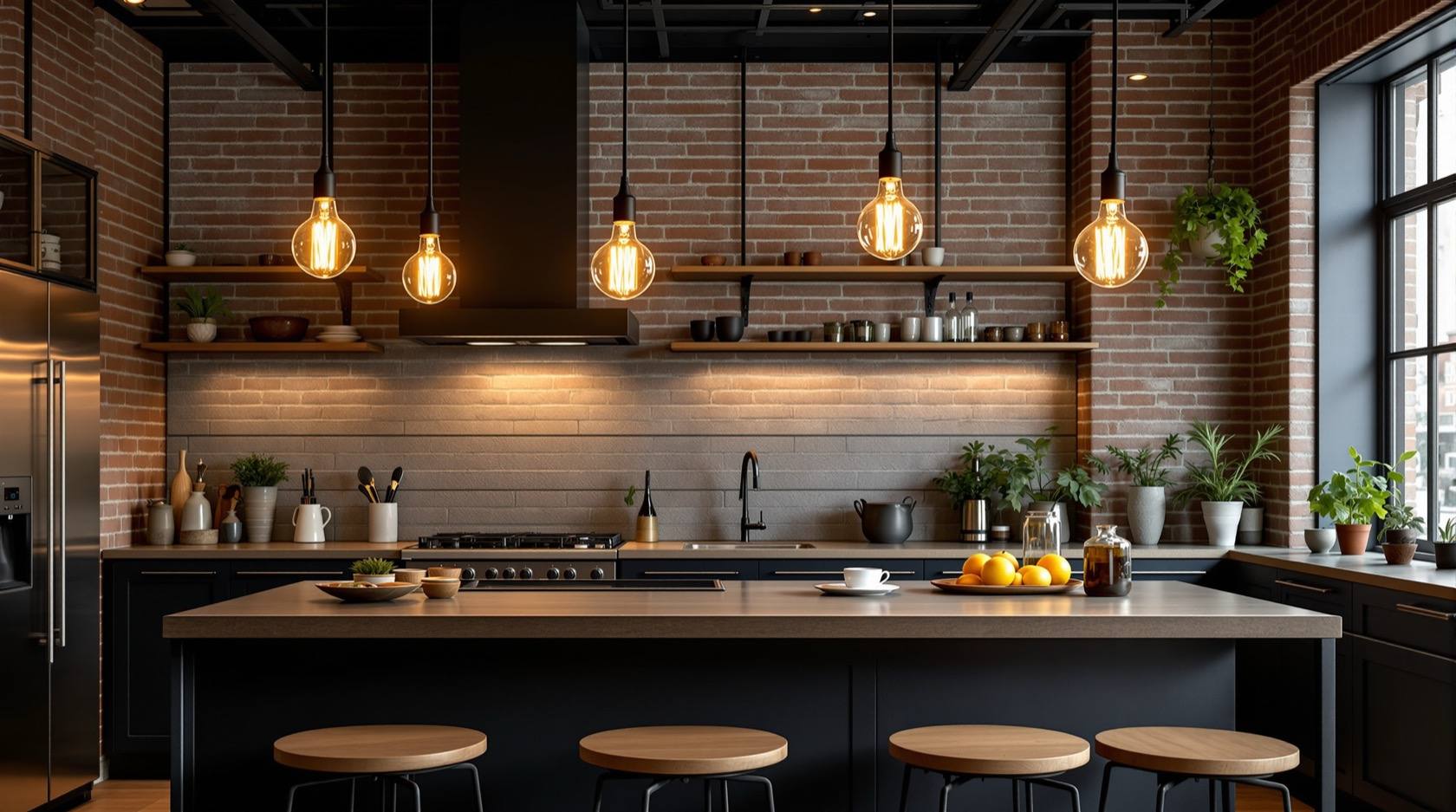
Industrial & Rustic Lighting: Raw, Warm & Characterful (2026)
How to light an industrial loft, cafe-at-home or rustic farmhouse in India — the raw-metal and filament language, the shared warm palette, the glare traps to dodge, and why the character fixtures still need a hidden functional layer to actually work.
Industrial and rustic lighting share one seductive idea: the fixture is not hidden, it is the decorative object. A cage pendant, an Edison-style filament bulb, a factory dome, a wrought-iron lantern — these are meant to be seen. Which is exactly why the style goes wrong so often. People buy the look — bare bulbs, black metal, exposed conduit — screw in a bright cool-white LED, skip the dimmer, and end up with a room that is hot to look at, clinical, and nothing like the warm loft or cosy farmhouse on the mood board. The style lives or dies on two decisions the shopping photo never shows you: how warm the light is, and whether there is any working light underneath the pretty fixtures at all.
This guide is the style playbook for lighting industrial and rustic (farmhouse) Indian homes — loft apartments, cafe-corners at home, terrace bars, exposed-brick studios, and country farmhouses. It sits inside the Studio Matrx Lighting hub; if you are still deciding which look is yours, start with how to choose a lighting style, and compare the neighbours: cool-crisp modern and contemporary and warm-ornamental traditional Indian.
Scope & how to read this. This is a design and fixture-selection guide — how to plan the layers, pick the luminaires and set the mood. It is not a wiring manual. Anything involving circuits, load, dimmer wiring, conduit runs or fixture mounting is safety-critical electrical work for a licensed electrician — exposed conduit that reads as "industrial" is still live wiring and must be done to code. Costs are indicative bands to help you budget and brief, never firm quotes — get local prices. Confirm lux and safety against IS 3646, NBC (SP 7:2026) and IS 16107 for LED performance.
What "industrial" actually means in light
Industrial lighting borrows the honest, utilitarian language of old factories, warehouses and workshops — nothing decorative for its own sake, everything looking like it has a job. Translated into a home, the vocabulary is remarkably tight:
- Exposed bulbs — but the modern, cool-running kind. The signature is a visible bulb, ideally an Edison-style filament shape. The trap is heat and glare from old-fashioned incandescent filament bulbs. Choose a warm filament-look LED (a "vintage LED" or "filament LED") — it gives the amber glow and visible filament pattern without the heat or the energy bill.
- Matte black and aged metal. Black steel, gunmetal, raw iron, aged brass and copper. Finishes look worn, not polished. This is the opposite of chrome.
- Cage, dome and barn shades. Wire cage guards (the "explosion-proof" factory look), enamelled dome/barn shades that throw light straight down, and simple bare-socket pendants.
- Exposed conduit and pipe fixtures — done tastefully. Surface conduit and plumbing-pipe lamps are part of the language. A little reads as authentic; a whole ceiling of it reads as unfinished. Keep it deliberate, and remember it is real wiring an electrician must run.
- Factory pendants in a row. A line of identical dome or cage pendants over a kitchen island, dining table or bar is the defining industrial move — see pendant lighting.
- Track on exposed ceilings, gooseneck on walls. Surface track and spotlights suit raw slab ceilings; wall-mounted gooseneck / barn lights are the classic industrial wall light.
What "rustic" and farmhouse mean in light
Rustic and farmhouse lighting run warmer, softer and more handmade than industrial, but they overlap heavily — both love visible bulbs, aged metal and a cosy amber glow. The rustic accent is nature and craft:
- Wood and wrought iron. Chandeliers and pendants mixing turned wood, rope-wrapped stems and black wrought-iron scrollwork.
- Lanterns. Caged lantern pendants and wall lanterns — candle-like, a little old-world, lovely on a verandah or over a farmhouse dining table.
- Rope, jute and natural texture. Jute-wrapped cords, cane or bamboo shades, woven baskets used as diffusers.
- Candle-like and cosy. Rustic leans hardest into warmth and flicker-like softness — mason-jar lights, cage lights and distressed-metal finishes, all glowing low and amber.
Where industrial says "workshop," rustic says "farmhouse kitchen at dusk." Most Indian homes that want this mood actually blend the two — black metal from industrial, wood and lanterns from rustic — into one warm, rugged scheme.
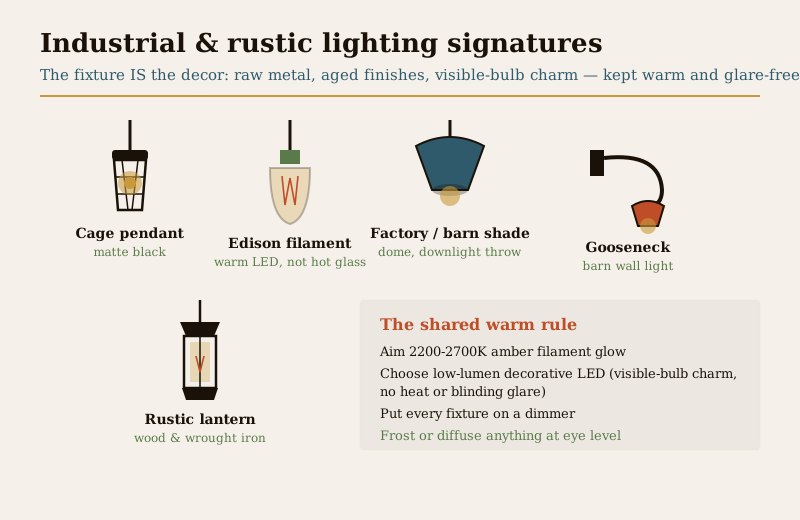
Industrial & rustic signatures at a glance
| Element | Industrial reads as | Rustic / farmhouse reads as | Watch-out |
|---|---|---|---|
| Bulb | Exposed Edison filament | Exposed filament, candle tips | Use warm filament LED, not hot incandescent |
| Metal | Matte black, gunmetal, raw steel | Wrought iron, aged brass, copper | Skip shiny chrome — it kills the look |
| Shade | Cage guard, factory dome, barn | Lantern, mason-jar, cane, jute | Frost or cage anything at eye level |
| Fixture type | Row of factory pendants, track | Wood-and-iron chandelier, lanterns | Still add hidden task + ambient |
| Wall light | Gooseneck / barn sconce | Lantern sconce | IP44+ for balconies and verandahs |
| Extras | Exposed conduit, pipe lamps | Rope, jute, reclaimed wood | Tasteful doses — not a whole ceiling |
| Mood | Raw, utilitarian, loft | Warm, handmade, farmhouse | Both must stay cosy, never clinical |
The shared warm palette — the one rule that saves the style
Whether you lean industrial or rustic, the light itself must be warm. This is the single decision that separates a characterful loft from a cold, harsh room wearing loft costume.
- Colour temperature: 2200-2700K. Aim for the amber, filament-glow end. 2200-2400K reads candle-warm and vintage; 2700K is a comfortable warm white. Anything at 3500K or above turns the space cold and industrial-in-the-bad-way. Set it with the colour temperature selector and read the deeper colour temperature and CRI guide.
- Keep the lumens low where the bulb is visible. A bare, unshaded bulb at head height should be a low-output decorative LED — glow, not floodlight. High-lumen clear bulbs at eye level are the number-one glare mistake in this style. The bulb's job here is charm; other fixtures do the actual lighting.
- Dim everything. A dimmer is non-negotiable for this look — it lets the visible bulbs sit at a soft, flattering level in the evening. (The dimmer must match the LED and be wired by an electrician; some cheap LEDs flicker or buzz on the wrong dimmer.)
- Manage glare three ways. Use a frosted filament bulb instead of clear where it faces you; let a cage or shade break the direct view; and dim. Any one helps; combine them at seating height.
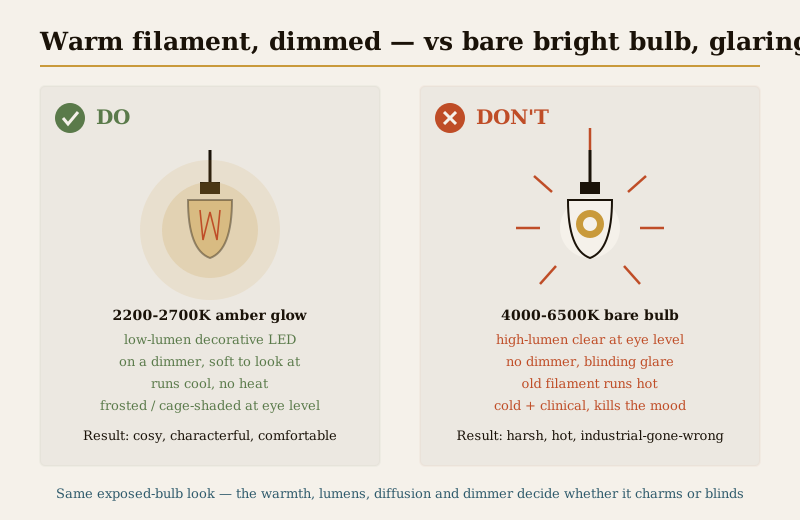
Warm-filament spec and glare cheat-sheet
| Where the bulb sits | Colour temp | Output | Diffusion | Dimmer |
|---|---|---|---|---|
| Pendant low over a table/island | 2200-2700K | Low-medium, filament LED | Clear ok (out of direct sightline) | Yes |
| Bare bulb at eye level / bar | 2200-2400K | Low decorative only | Frosted or caged | Yes |
| Gooseneck / barn wall light | 2700K | Medium, shaded downlight | Shade hides the source | Yes |
| Lantern / mason-jar | 2200-2500K | Low, candle-like | Glass diffuses | Yes |
| Hidden task (under-cabinet) | 2700-3000K | Higher, for work | Diffused profile | Optional |
Layering: the fixtures are the decor — but the room still has to work
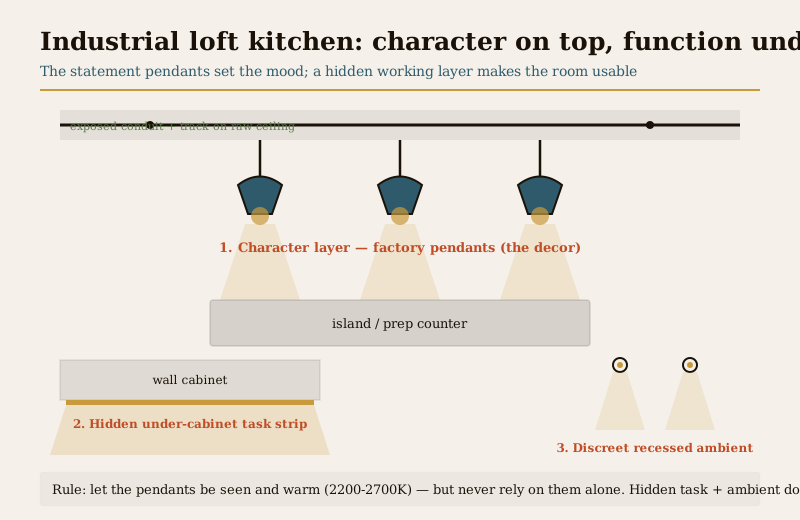
Here is the mistake that undoes both styles: treating the beautiful character fixtures as the whole lighting plan. A row of gorgeous factory pendants over an island looks incredible and lights almost nothing useful. Character fixtures are your decorative and ambient layer; you still need a hidden functional layer so the room actually functions — the golden rule of layered lighting and functional vs ambient vs accent.
- The character / feature layer. The pendants, lanterns, gooseneck sconces and filament bulbs. Warm, dimmed, and unapologetically visible. This sets the mood.
- The hidden task layer. In an industrial kitchen, warm under-cabinet strips light the counter that the pretty pendants leave in shadow — see kitchen lighting and strip and profile lighting. At a home bar, a discreet strip lights the back-bar bottles. On a desk, a task lamp does the reading the mood light cannot.
- The discreet ambient layer. A few recessed downlights or a warm cove fill in the general light without breaking the raw look — clean, minimal, dimmable, so on a bright evening the room lifts to a usable level. See recessed and downlights and cove and indirect lighting.
Get the balance right and it feels like magic: you see only warm bulbs and aged metal, but the counter, the stairs and the reading chair are all properly lit by fixtures you barely notice.
Materials, finishes and where the style fits
The look is carried as much by finish as by light. Favour raw and aged: matte black steel, gunmetal, raw iron, aged brass and copper, weathered wood, exposed concrete and brick, wire cages, rope and jute. Avoid glossy chrome, crystal and anything that reads "polished showroom" — that is the language of luxury and statement lighting, a different mood entirely.
Where it lands best in Indian homes:
- Open lofts and studio apartments with exposed ceilings and brick — the natural home of the style.
- Cafe-corners and home bars. A "cafe at home" nook or a terrace/balcony bar loves a row of warm cage pendants and Edison strings. For anything outdoors, insist on weatherproofing — IP44 for a covered balcony, IP65 for exposed terraces and monsoon-facing walls (per IS/IEC 60529). Outdoor and string-light ideas sit in decorative lighting and the outdoor and landscape lighting guide.
- Farmhouses and country homes. Wrought-iron chandeliers, lanterns over a long dining table, gooseneck lights on stone or brick — rustic warmth at its best.
- Exposed-brick living rooms and dining rooms. A single characterful pendant or a wood-and-iron chandelier anchors the room — see living room lighting and dining room lighting.
An honest India note: the raw industrial look reads best in genuinely open, high-ceilinged, exposed-service spaces. In a compact, false-ceilinged flat, go industrial-lite — a couple of warm cage pendants and black gooseneck sconces as accents against otherwise clean lines — rather than exposing conduit across a low ceiling, which just looks unfinished.
The traps to avoid
Two failure modes account for almost every disappointing industrial or rustic room:
- Bare, bright, cool bulbs = glare and heat. Clear high-lumen bulbs at eye level, cool colour temperature, no dimmer. The room becomes harsh and clinical — the exact opposite of the cosy loft intended. Fix with warm low-lumen filament LEDs, frosting or cages, and a dimmer.
- All decorative, no function. Gorgeous fixtures, dim impractical room. You cannot chop vegetables under a mood pendant. Fix by adding the hidden task and ambient layers above. This is also the top entry in common lighting mistakes.
Two smaller ones worth naming: over-doing exposed conduit until the space looks unfinished rather than intentional; and mixing so many different metal finishes and shade shapes that the "collected workshop" charm tips into clutter — pick a metal (usually black) and let it lead.
How it connects
- New to the whole subject? Anchor on the complete guide to lighting, then set direction with how to choose a lighting style.
- Compare the moods: cool-crisp modern and contemporary, ornamental traditional Indian, and the pared-back minimalist and Scandinavian.
- Shop the fixtures: pendant lighting, wall lights and sconces, track and spotlight lighting and decorative lighting.
- Build the working layers with layered lighting and strip and profile lighting; dial the warmth with the colour temperature selector.
- For the raw-material and finish story behind the look, browse the interior styles hub.
- Circuits, dimmers and any fixture wiring go to a licensed electrician; the deep LED-buying and CRI technicals live in the colour temperature and CRI guide.
Key takeaways
- Industrial and rustic both make the fixture the decor — exposed bulbs, aged metal, cages and lanterns — so the look depends on the fixtures being seen.
- The style's make-or-break rule is warmth: aim 2200-2700K, keep visible bulbs low-lumen, and put everything on a dimmer.
- Choose warm filament-look LEDs, not old incandescent bulbs — same vintage glow, no heat, far lower running cost.
- The character fixtures are your ambient/decorative layer; still add a hidden task and ambient layer (under-cabinet, discreet recessed) so the room actually works.
- Favour matte black, aged brass, wood, concrete and cage finishes; skip shiny chrome and crystal.
- Fits open lofts, cafe-corners, home bars, balconies and farmhouses best; go industrial-lite in compact flats.
- Dodge the two traps: bare bright cool bulbs (glare and heat) and all-decorative-no-function (pretty but dim).
- All lux, IP and safety figures are indicative — confirm against IS 3646, NBC (SP 7:2026) and IS 16107, and leave wiring to a licensed electrician.
References
- National Building Code of India, NBC (SP 7:2026), Bureau of Indian Standards — general illumination and lighting provisions (named generally).
- IS 3646 — code of practice for interior illumination and recommended lux levels for residential spaces (named generally).
- IS 16107 / IS 10322 / IEC 60598 — LED luminaire performance and luminaire safety (named generally).
- IS/IEC 60529 — IP ingress-protection ratings for balcony, terrace and outdoor fixtures (IP20 dry, IP44 splash, IP65 wet).
- BEE star rating — energy efficiency guidance for LED lamps and luminaires.
- A licensed electrician and the local electrical code — for all circuits, dimmer wiring, conduit runs and fixture mounting.
All colour temperatures, lumen guidance, IP ratings and cost bands here are indicative design aids only; confirm lux and safety against IS 3646, NBC (SP 7:2026) and IS 16107, get local quotes for cost, and have all wiring, dimmers and fixture mounting carried out by a licensed electrician.
Export this guide
Related Guides — Deep-dive reading
Decorative Lighting — A 2026 Guide for Indian Homes
The most powerful decor element · Chandeliers to LED art · Layer light for mood, depth & ambiance
Design StylesHow to Choose a Lighting Style for Your Home (2026)
The start-here decision guide for the style act of the Lighting hub — how to find a lighting style that fits your interior, read the signature of each look, follow the golden rules that cross every style, and mix styles without a clash.
LightingLayered Lighting Explained: Ambient, Task & Accent for Indian Homes (2026)
The single most important idea in lighting design, in plain language: why one central light flattens a room, and how three working layers — ambient, task and accent — plus a decorative sparkle layer combine on separate dimmable controls to make an Indian home feel lit, useful and alive.
LightingRelated Tools — Try Free
Circadian Light Meter
Patient-centric circadian lighting visualizer for Indian healthcare design — time-of-day × intensity → CCT, melanopic lux (EML / mEDI), melatonin suppression, and an alertness curve. Calibrated against WELL v2 L03 Circadian Lighting Design, CIE S 026:2018, Brainard 2001, and Lucas et al. 2014.
Circadian ToolDesign Style Finder Quiz
Answer 10 visual questions to discover your Indian interior style profile with materials and colours.
Interactive QuizFalse Ceiling Cost Estimator
Live ₹/sqft across 8 ceiling types — POP, gypsum, designer, metal, PVC, wooden — with cove and spot lighting for 20 Indian cities.
Cost Calculator