
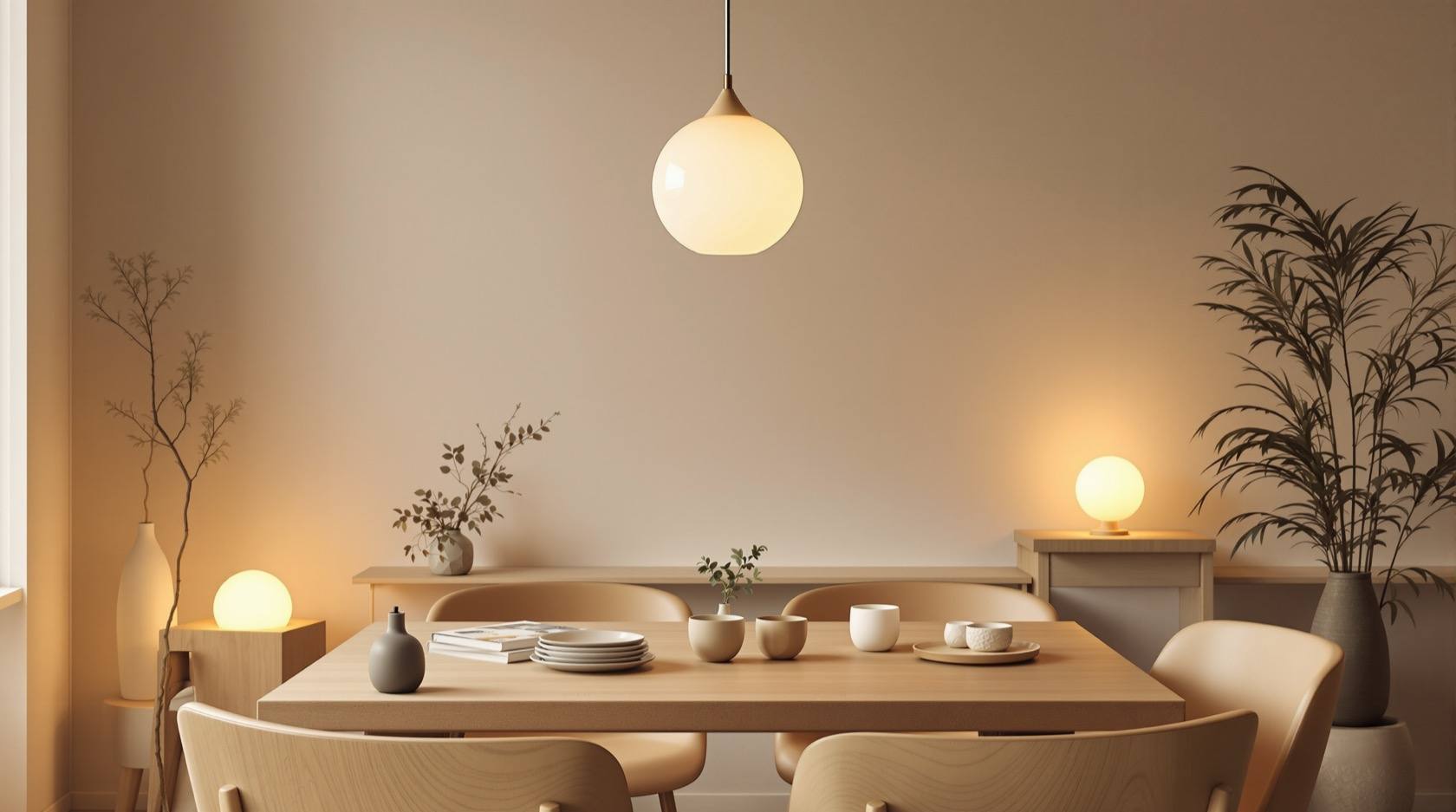
Minimalist & Scandinavian Lighting: Warm, Simple, Human (2026)
How to light a minimalist, Scandinavian or Japandi home in India — less but better, warm 2700K over bright white, cosy pools of light over one harsh ceiling, and honest fixtures in wood, paper and matte white that quietly disappear.
Minimalist and Scandinavian rooms fail more often at the light than at the furniture. You can buy the pale-oak table, the linen sofa and the bare white walls, then flatten the whole thing with one cold, bright ceiling light — and the calm you paid for simply evaporates. The style is not "less furniture"; it is "less, but better", and that rule applies to light more than to anything else in the room. Few fixtures, honestly chosen, quietly warm, with the mechanics hidden. That is the whole craft.
This guide is the style companion for anyone lighting a minimalist, Scandinavian or Japandi-leaning home in India. It sits inside the Studio Matrx Lighting hub — start at the complete guide to lighting for the fundamentals, and if you are still choosing a look, read how to choose a lighting style first. For the broader interior language this lighting serves, see the interior styles hub.
Scope & how to read this. This is a design-led guide: it helps you plan the scheme, pick fixtures and set the mood, not wire them. Any circuit, dimmer, load or switch work is safety-critical and belongs to a licensed electrician — plan here, wire there. Colour bands, wattages and rupee figures are indicative planning aids, not firm prices or code values; confirm against IS 3646 (interior illumination), NBC (SP 7:2026) and current product specs, and get local quotes.
The philosophy: less, but better
Minimalist lighting is a subtraction exercise. Most Indian homes over-fixture — a grid of downlights, a fan-light, a couple of tube lights and a few spots, all fighting each other. The minimalist move is to remove until only what earns its place remains, then make those few pieces beautiful.
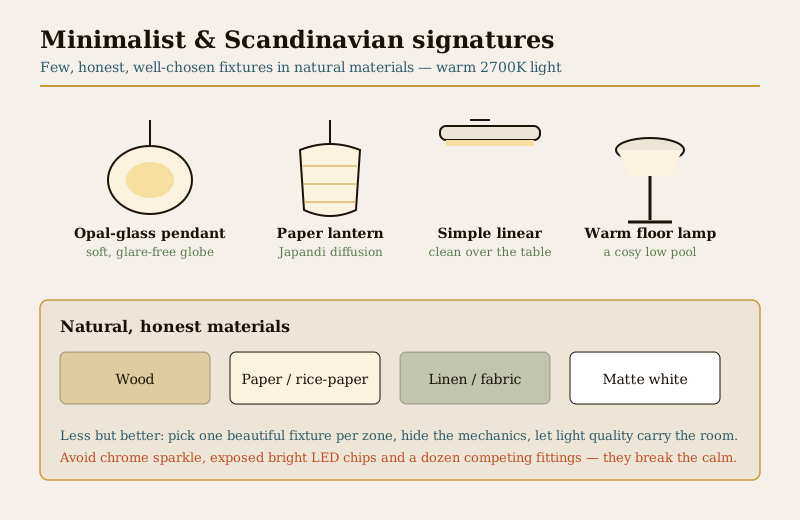
- Few fixtures, well chosen. One considered pendant over the dining table can do more than six recessed lights. Buy the good one; skip the other five.
- Honest fixtures. The fitting should look like what it is — a paper shade, an opal globe, a wood-mounted lamp — not pretend to be jewellery. No sparkle, no crystal, no chrome drama. That restraint is what separates this from luxury and statement lighting.
- Light quality over quantity. The metric is not "how many lumens" but "how good does the light feel". Soft, warm, glare-free light on a pale wall beats a bright flood every time.
- Hide the mechanics. Recess the driver, tuck strips into a cove, run cables cleanly, and let the light appear without an obvious source. The absence of visible hardware is the aesthetic.
The Scandinavian warmth angle
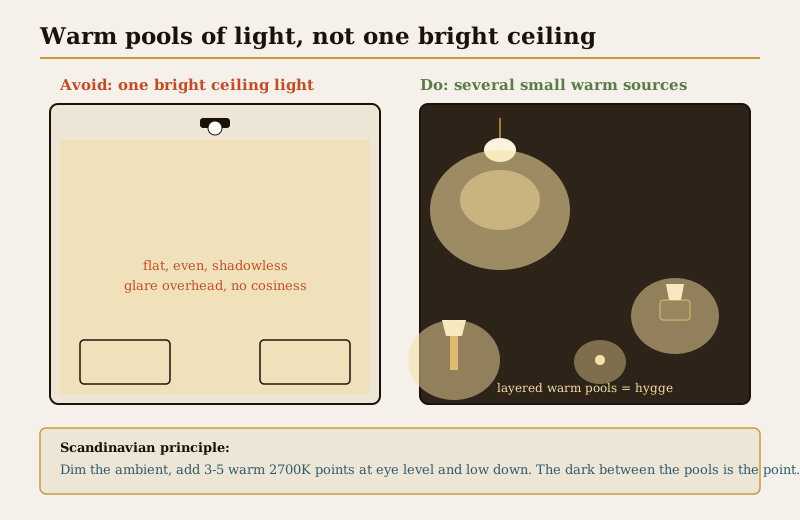
Here is the part that surprises Indian homeowners. Scandinavia has long, dark winters — months where daylight is scarce and precious — so its lighting culture is famously warm and cosy, the opposite of a bright white glare. This is the idea behind hygge: the small, warm, comfortable pool of light you want to sit inside. A Scandinavian room is not brightly lit; it is softly and warmly lit, with many small warm sources rather than one big bright ceiling.
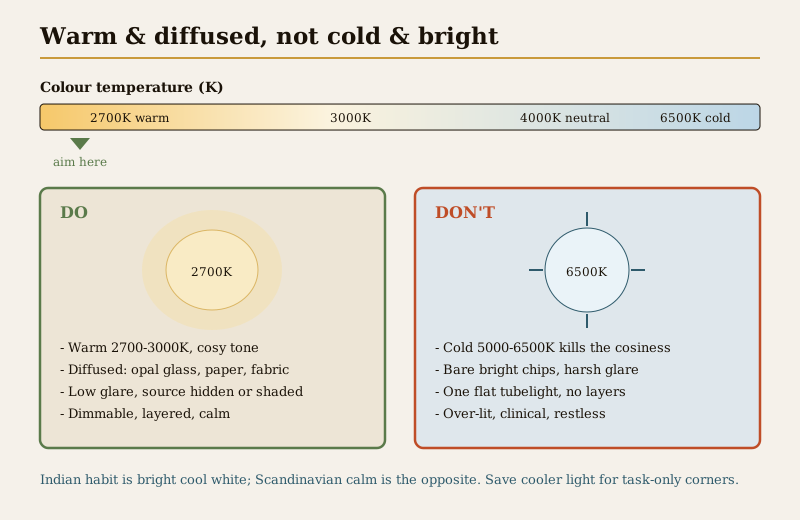
That is a direct clash with the common Indian habit of flooding a room with 6500K "cool daylight" tube lights. If you take one thing from this guide: Scandinavian lighting is warm — 2700K, sometimes 3000K — never cold. The colour of the light does more for the mood than any fixture you buy. Set your palette with the color temperature selector, and for the science behind Kelvin and CRI, cross-read the technical colour temperature and CRI guide.
The other half of the idea is the distribution of light. Instead of one central fitting blasting the whole room evenly, a Scandinavian scheme scatters several low, warm sources — a table lamp, a floor lamp, a low pendant, a candle — so the room reads as a series of gentle glows with soft darkness between them. That is precisely the layering the layered lighting guide describes, applied with restraint.
Minimalist restraint: fewer, better pieces
If Scandinavian is about warmth, minimalist is about editing. The two overlap beautifully, which is why they are so often paired. The minimalist discipline is to reduce the fixture count and let each remaining piece be quietly excellent.
- A single beautiful pendant over the table or island, chosen for its shape and the softness of its light — see pendant lighting.
- A concealed cove for a whisper of ambient wash with no visible fitting — the cleanest way to light a minimalist ceiling.
- A paper or opal diffused shade that turns a bare bulb into a soft glowing object with zero glare.
- A warm floor or table lamp for the evening pool of light — the lamps and portable lighting guide covers the movable layer that makes a room feel lived-in.
The materials matter as much as the fittings: wood, paper, linen, rattan and matte white, never glossy chrome or cut glass. Natural materials warm the light passing through them and keep the palette honest.
Palette: warm, soft, diffused, dimmable
The minimalist and Scandinavian light palette is narrow on purpose. Get these four properties right and almost any well-shaped fixture will work.
| Property | Aim for | Avoid |
|---|---|---|
| Colour temperature | 2700K warm; 3000K at most for task zones | 4000K+ neutral or 6500K "cool daylight" |
| Diffusion | Opal glass, paper, fabric, frosted — soft edges | Bare LED chips, clear glass, hard spots |
| Glare | Source hidden, shaded, or aimed at a surface | Naked bulbs at eye level, bright downlight glare |
| Control | Dimmable everywhere, warm-dim if possible | On/off only, one bright setting |
| CRI | 90+ so wood, linen and skin look true | Cheap low-CRI LED that greys the palette |
Two notes. Dimming is not optional in this style — the whole point is to drop the level in the evening into that cosy pool, so specify dimmable drivers and a dimmer (a licensed electrician wires the dimmer module; you just specify it). And CRI 90+ genuinely matters here: the palette is all natural wood and off-white, and low-CRI light makes those materials look flat and grey.
Layering minimally
Layered lighting usually means "ambient plus task plus accent". In a minimalist home you keep all three layers but you thin each one down to its essentials, and you let daylight do a lot of the work.
- Ambient — soft and low. A concealed cove or a single diffused pendant gives a gentle overall glow. Keep it dim; it is a wash, not a floodlight.
- Task — a few warm points. One good reading lamp, under-cabinet warmth in the kitchen, a bedside lamp. Task light can go slightly cooler (3000K) but never cold.
- Accent — used sparingly. Perhaps one warm wall grazer on a textured wall or a single object. Minimalism resists the urge to spotlight everything.
- Daylight — celebrated, not fought. The Scandinavian instinct is to treasure daylight. Keep windows unfussy, use sheer or no curtains, and let the room change through the day — this is the natural partner of your electric scheme, covered in daylighting design and windows.
For the deeper principles behind balancing these layers, see lighting design principles. The minimalist twist is simply: fewer sources per layer, all of them warm.
The Japandi note
Japandi — the marriage of Japanese and Scandinavian design — is where this style feels most at home in India, because it adds wabi-sabi: an appreciation of natural, imperfect, handmade things. In lighting terms, Japandi means warm and minimal and natural, with paper lanterns, rice-paper shades, low floor-level light and a reverence for shadow. Where Scandinavian chases cosy warmth against the dark, Japanese tradition finds beauty in the shadow — so a Japandi room is dimmer, softer, and unafraid of pools of darkness between the light. A single paper lantern casting a warm glow over a low wooden table is the whole idea in one image.
Adapting Scandinavian warmth to Indian homes
Scandinavia lights against darkness; much of India lives with abundant, sometimes harsh daylight. That does not cancel the style — it refines how you apply it.
- Lean on daylight by day, warmth by night. Indian homes get generous daylight, so the electric scheme mostly needs to carry the evening. Let big windows do the daytime work (see natural light planning for Indian homes) and switch to warm pools after dark.
- Resist the cool-white default. The single biggest adaptation is refusing the 6500K tube-light habit. Warm 2700K reads as "cosy" to a Scandinavian and "dim" to someone used to bright white — give your eyes a week to adjust; the calm is worth it.
- Manage heat and glare. In warmer months warm light can feel heavier, so make it dimmable and add a slightly cooler 3000K task option for kitchens and study corners rather than flooding the whole home cool.
- Festival and pooja moments. The warm-pool approach pairs naturally with diyas and candles; a dimmable warm scheme lets you drop the electric light and let flame take over during a pooja or festival evening — a warmth Scandinavian lighting and Indian tradition happen to share. For the dedicated space, see pooja room lighting.
Signature fixtures and where they go
Use this as a shortlist. Each fixture is chosen for soft, warm, low-glare light and honest materials — and each has a natural home in the room.
| Signature fixture | Light quality | Best placed | Indicative band |
|---|---|---|---|
| Opal-glass pendant | Soft, even, glare-free globe | Dining table, bedside, hallway | Rs 2,000-8,000 |
| Rice-paper / Japandi lantern | Warm diffused, gentle shadow | Living corner, floor beside seating | Rs 1,500-6,000 |
| Simple linear pendant | Clean, low, direct-plus-soft | Over a long table or island | Rs 4,000-15,000 |
| Warm floor lamp | Low cosy pool at eye level | Reading corner, sofa end | Rs 3,000-12,000 |
| Matte-white / wood table lamp | Bedside or console warmth | Bedside, sideboard, study | Rs 1,500-7,000 |
| Concealed cove / profile | Invisible ambient wash | Living/bedroom ceiling perimeter | Depends on run length |
Bands are indicative and vary widely by brand, size and finish — get local quotes. For the movable pieces, the lamps and portable lighting guide goes deeper; for the concealed wash, see cove and indirect lighting.
The warm-pools placement approach
Rather than spacing downlights on a grid, minimalist and Scandinavian rooms are planned as a set of intentional pools. A simple way to lay it out:
1. Turn the ceiling down. Skip or heavily dim the central overhead. It is the enemy of the mood.
2. Place three to five warm points. A pendant low over a table, a floor lamp by the sofa, a table lamp on a console, a cove wash — position each where a person actually sits or works.
3. Keep sources at low and mid height. Light nearer eye level and below reads as cosy; light blasting from the ceiling reads as clinical.
4. Let darkness exist between the pools. The unlit gaps are not a mistake — they are what makes each warm pool feel intimate.
5. Put it all on dimmers. So the same room can go from soft-bright for company to a single glowing pool for a quiet evening.
Avoid the traps
This style is easy to describe and easy to ruin. The failure modes are consistent:
- Over-lighting kills the calm. Too much light, too evenly spread, erases the mood. When in doubt, use less. If a room feels restless, the fix is usually to remove or dim, not add.
- Cool white kills the cosiness. A single 6500K fitting in an otherwise warm room breaks the spell. Keep the whole scheme warm; do not mix cold and warm carelessly.
- Too many fittings break the simplicity. A dozen little lights is not minimalism, it is clutter with a switchboard. Edit ruthlessly.
- Visible glare and bare chips. An exposed bright LED at eye level undoes every soft surface in the room. Shade it, diffuse it, or hide it.
These overlap with the broader common lighting mistakes — worth a read once your scheme is drafted.
How it connects
- Ground yourself first in the complete guide to lighting (the pillar) and lighting design principles.
- Still deciding the look? Compare it against modern and contemporary lighting and traditional Indian lighting via how to choose a lighting style.
- Build the scheme with layered lighting, a concealed cove and indirect wash, and warm movable lamps and portable lighting.
- Set the tone with the color temperature selector and celebrate daylight through daylighting design and windows.
- See the whole interior language in the interior styles hub.
Key takeaways
- Minimalist lighting is less, but better — few, honest, well-chosen fixtures with the mechanics hidden and light quality valued over quantity.
- Scandinavian lighting is famously warm (2700K) and cosy — many small warm sources for hygge, never one bright cool-white ceiling.
- Keep the palette warm, soft, diffused, low-glare and dimmable, with CRI 90+ so wood and linen read true.
- Layer minimally: soft ambient + a few warm task/mood points + celebrated daylight, with dark space allowed between the pools.
- Japandi adds wabi-sabi — warm, minimal, natural, unafraid of shadow, at home in Indian rooms.
- Adapt to India by leaning on daylight by day, warm pools by night, and resisting the 6500K cool-white habit.
- Avoid the traps: over-lighting, cool white, too many fittings and visible glare all kill the calm.
- All colour bands, wattages and rupee figures are indicative — confirm against IS 3646, NBC (SP 7:2026) and product specs, and have a licensed electrician do any wiring or dimmer work.
References
- IS 3646 — code of practice for interior illumination (recommended lux levels and lighting quality; named generally).
- NBC (SP 7:2026), Bureau of Indian Standards — general provisions for illumination and lighting in buildings.
- IS 16107 / IEC 60598 — LED luminaire performance and safety (named generally; confirm current product specifications).
- BEE star rating for LED lamps — energy efficiency guidance for the fixtures you choose.
- Licensed electrician — all circuit, dimmer, driver and switch work, sized and certified on site.
All colour temperatures, wattages, material notes and cost bands here are indicative design and planning aids only; confirm the governing values against IS 3646, NBC (SP 7:2026) and current product specifications, get local quotes for cost, and have a licensed electrician design, wire and certify any electrical work.
Export this guide
Related Guides — Deep-dive reading
Common Home Lighting Mistakes in India (and How to Fix Them) (2026)
The most common lighting mistakes in Indian homes — one bright tubelight per room, everything blue-white, glare, no dimming, dark stairs — and the specific, affordable fix for each, plus the one habit that causes half of them: not planning the scheme before the electrician wires.
LightingLuxury & Statement Lighting: Drama, Sculpture & Scale (2026)
How to design lighting that actually feels luxurious in an Indian home — layered scenes, deep shadow-and-highlight contrast, hidden sources and premium materials — and how to place one sculptural statement fixture as the jewel of a room without over-lighting the whole thing.
LightingThe Homeowner's Guide to Lighting Your Home: Start to Finish (2026)
The warm, plain-English capstone for the whole Lighting hub - how to light an Indian home from empty to done, in the order things actually happen, with the one rule that saves you the most money: decide the whole scheme before the electrician wires.
LightingRelated Tools — Try Free
Circadian Light Meter
Patient-centric circadian lighting visualizer for Indian healthcare design — time-of-day × intensity → CCT, melanopic lux (EML / mEDI), melatonin suppression, and an alertness curve. Calibrated against WELL v2 L03 Circadian Lighting Design, CIE S 026:2018, Brainard 2001, and Lucas et al. 2014.
Circadian ToolCross-Ventilation Analyzer
Estimate airflow and air changes per hour (ACH) from room size, window areas, layout, and local wind — with NBC 2016 Part 8 compliance check.
Ventilation CalculatorElectrical Safety & Load Audit
Home electrical audit — 10 categories, 65+ checkpoints across earthing, RCCB, MCB, wiring, switchboards, appliance circuits, DG/inverter backup.
Safety Audit