
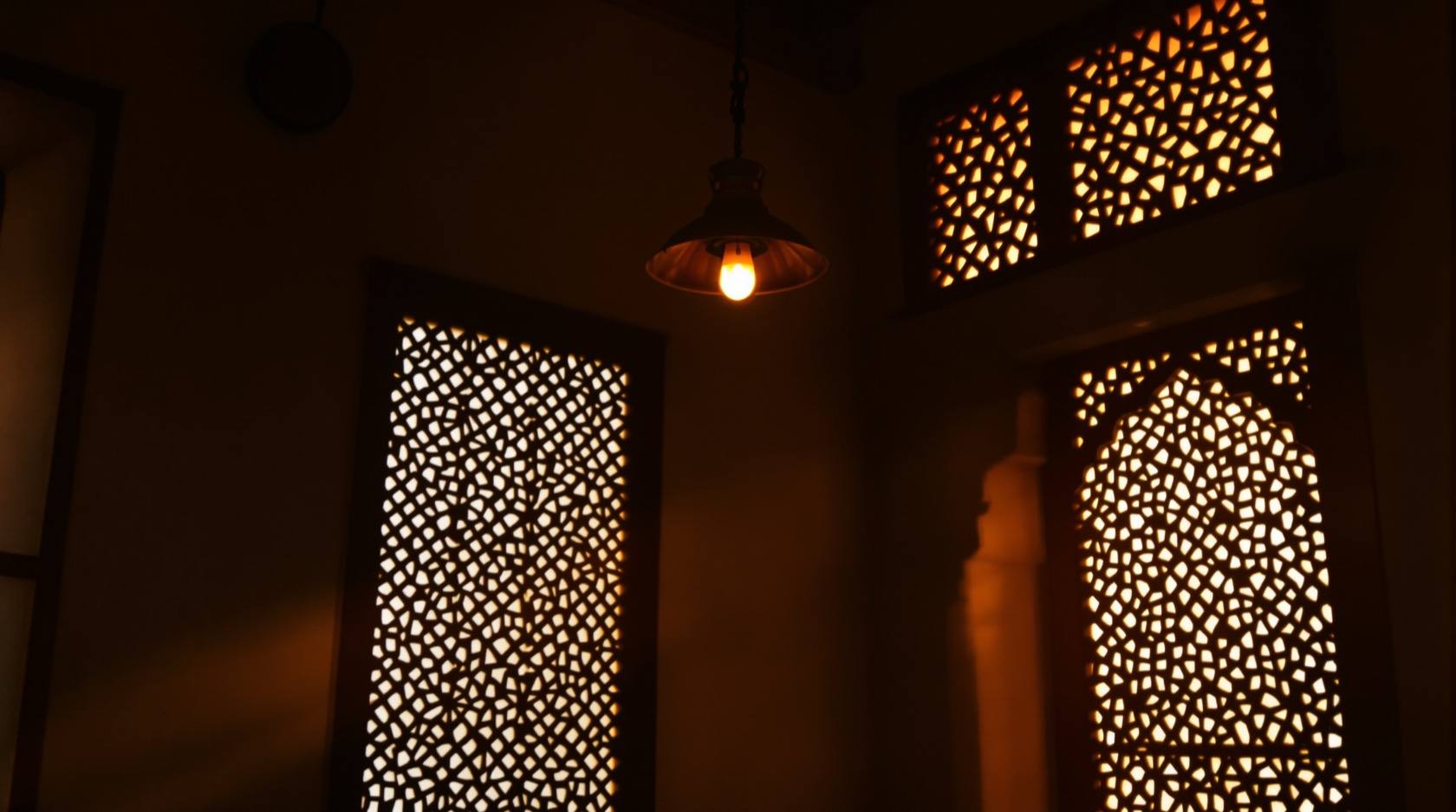
Traditional Indian Lighting: Brass, Diyas, Jaali & Heritage Glow (2026)
How to light a traditional, ethnic or heritage Indian home in a warm golden glow - the brass lamps, samai and diyas, backlit jaali, jhoomars and Chettinad pendants, the 2700K amber palette that is the whole essence, and how to reinterpret the craft with hidden LED while keeping real flames safe.
Walk into a well-lit traditional Indian home and the first thing you feel is not a fixture - it is warmth. A brass lamp catching the light like honey, a diya flickering in an alcove, a jaali screen throwing a lattice of soft shadow across an ochre wall. Traditional Indian lighting is less about hardware and more about a mood: golden, candle-like, hospitable, rooted in temple and courtyard and festival. This guide is about how to build that mood deliberately in a modern home - honouring the craft, borrowing the motifs, and reaching the same glow with fixtures you can actually live with.
This is the traditional and heritage entry in the Studio Matrx lighting style family. If you are still deciding which direction suits you, start with how to choose a lighting style, and read the complete guide to lighting for the layered-scheme fundamentals every style sits on. Where this style leans opulent, it shades into luxury and statement lighting; where it goes earthy and raw, it meets industrial and rustic lighting.
Scope & how to read this. This is a design guide - it helps you plan a warm, layered heritage scheme, choose fixtures and motifs, and specify what to buy. It is not a wiring manual. Every colour temperature, dimension and cost note is indicative to help you brief a professional; confirm illumination levels against IS 3646 and NBC (SP 7:2026), and remember that all electrical work - circuits, load, dimmers, fixing heavy brass jhoomars - is safety-critical and belongs to a licensed electrician. Real-flame diyas are a fire risk; the safety notes below are guidance, not a substitute for common sense. Cost bands are relative; get local quotes.
The Indian lighting heritage - motifs worth borrowing
Before choosing anything, it helps to know the vocabulary. Indian lighting is a deep, regional craft tradition, and each element carries a look and a feeling you can bring into a scheme without turning your home into a museum.
- Brass and bronze lamps. The heart of the tradition. Cast brass hanging lamps, the tall samai (standing oil lamp), the South Indian nilavilakku and Kerala vilakku, and the deepam all share a soft golden sheen that warm light flatters and cool light kills.
- Diyas and hanging diya lamps. The humble earthen or brass diya, single or in a hanging cluster, is the most portable piece of the tradition - equally at home in a pooja alcove and a festive verandah.
- Lanterns and fanoos. Pierced-metal or coloured-glass lanterns - Moroccan-influenced fanoos, Rajasthani hanging lanterns - throw dappled, jewel-toned light in courtyards and stairwells.
- Jhoomar. The Indian chandelier - beaded, mirror-worked or brass-and-glass - reads as ceremony overhead. Treat it as decorative first; see chandeliers for the scaling and hanging-height rules that still apply.
- Colonial and Chettinad pendants. Enamelled tin shades, Athangudi-tile courtyards and long-drop pendants from the Chettinad mansions of Tamil Nadu bring a stately, lived-in heritage note to dining rooms and hallways.
- Temple and mandir aesthetics. The layered warmth of a temple - many small points of flame, brass reflecting, deities gently uplit - is a masterclass in mood you can echo at home.
- Jaali and lattice. Carved stone or wooden jaali screens exist to filter - light, air, sightlines. Backlit or side-lit, they cast the patterned shadows that are perhaps the most distinctive move in the whole tradition.
- Terracotta, mirror-work and kundan. Earthen shades, Kutchi mirror-embroidered lampshades and kundan-detailed pieces add texture, sparkle and regional character.
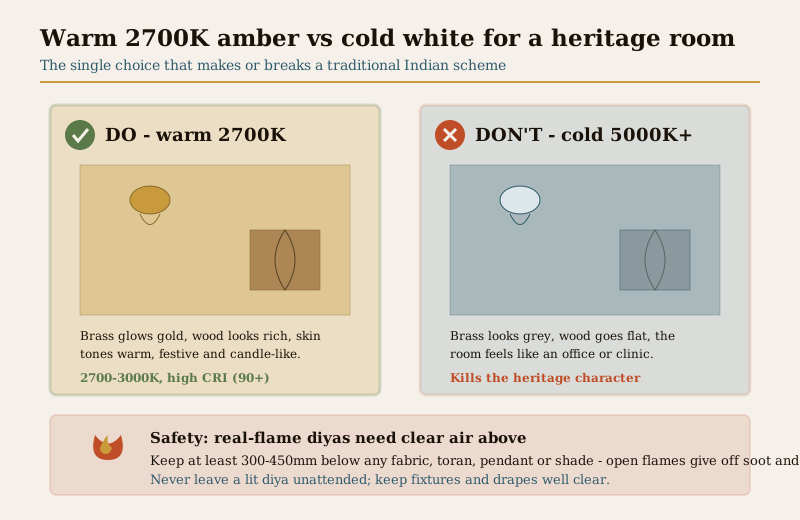
The warm golden palette - this is the whole essence
If you take one thing from this guide, take this: traditional Indian lighting lives at 2700-3000K, and it must never be cool white. The entire tradition grew from flame - oil lamps, diyas, candles - all of which glow amber. That warm, candle-like tone is not a preference here; it is the identity of the style. Push the colour temperature up to a bluish 4000K or 5000K and brass looks grey, carved wood goes flat, textiles lose their depth, and a room that should feel like a festival ends up feeling like a clinic.
- Target 2700K for the main glow in living, dining and pooja spaces - the closest LED equivalent to lamplight. A touch warmer (2400K) reads even more candle-like for accent points.
- Never exceed 3000K for the traditional layer. Reserve any cooler light for a hidden task source in a kitchen or study, kept off the heritage stage.
- Insist on high CRI (colour rendering index 90 or above) - it is what makes brass read as gold and a Kanjeevaram sari read as silk. Cheap low-CRI LEDs muddy exactly the colours this style depends on. The colour-temperature and CRI guide explains the numbers; the colour temperature selector lets you preview the difference before you buy.
- Dim everything. Flame is never at one fixed brightness, and neither should your heritage scheme be. Dimmable warm LEDs (many "warm-dim" to an even cosier tone as they lower) let you shift from bright puja-morning to soft evening. Dimmer installation is electrician work.
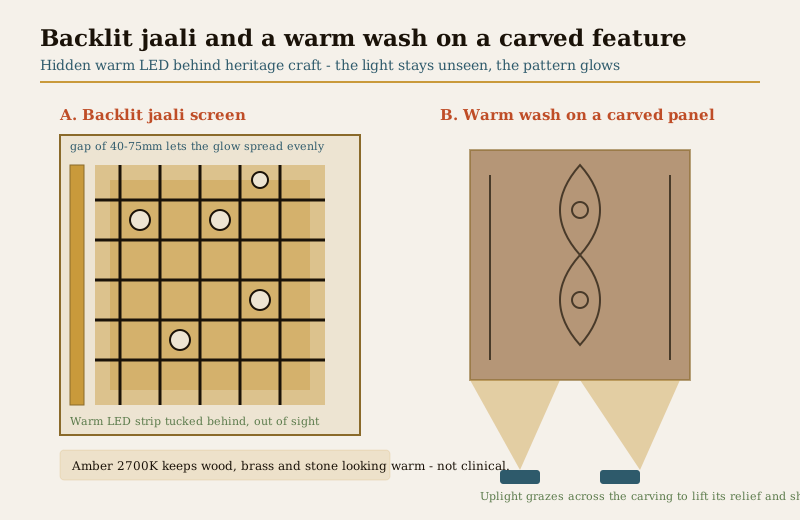
Modern reinterpretation - the craft, without the maintenance
You do not need to fill a home with oil lamps to get the effect. The most successful traditional schemes today reach the same glow with reliable, low-maintenance electric light, and keep the actual flames for ritual and celebration.
- LED "diya-warm" points. Small 2700K spots and mini-pendants stand in for the scatter of flame-points that give temples their warmth - many soft sources, none of them harsh.
- Backlit jaali screens. Set a warm LED strip behind a carved jaali (wood, MDF, brass or stone) with a 40-75mm gap so the glow spreads evenly, and the lattice throws its shadow pattern across the room. This is the single highest-impact heritage move available - see strip and profile lighting is where the technique is drawn out further in plain prose.
- Brass-finish LED pendants and jhoomars. Antique-brass fittings with warm LED lamps give the look and the light in one. A large brass jhoomar can be decorative overhead while hidden downlights or cove do the actual illuminating.
- Warm cove behind carved panels. A concealed warm strip above a carved wooden or stone panel washes it in gentle light without a single visible fixture - the cove and indirect lighting principle applied to heritage joinery.
- Grazing an uplight on a feature. A small warm uplighter set close to a carved column, a stone deity niche or a wooden bracket rakes light across the relief so its texture and shadow come alive.
- Warm wash on art and textiles. A discreet wall light or sconce or a warm framing spot on a Tanjore painting, a Pichwai, an antique door or a hung textile turns heirlooms into the room's focal glow.
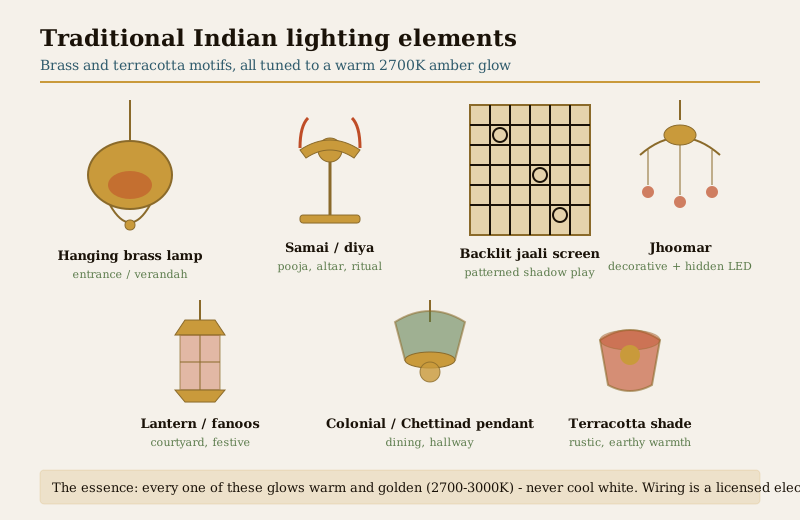
Traditional lighting elements - a quick reference
Use this to match a motif to a material and a place in the home.
| Element / motif | Typical material | Where it works best | Modern light source |
|---|---|---|---|
| Hanging brass lamp | Cast brass / bronze | Entrance, verandah, pooja | Warm 2700K candle-lamp inside |
| Samai / nilavilakku / deepam | Brass, bronze | Altar, side table, ritual corner | Real flame for ritual; LED replica for daily |
| Diya (single or hanging cluster) | Terracotta, brass | Alcoves, festive verandah, pooja | Flame for festivals; warm LED cluster daily |
| Jaali / lattice screen | Carved wood, stone, brass, MDF | Partitions, feature walls, headboards | Concealed warm LED strip behind |
| Jhoomar | Beads, mirror, brass, glass | Living, dining, formal hall | Warm LED lamps + hidden downlight for real light |
| Lantern / fanoos | Pierced metal, coloured glass | Courtyard, stairwell, balcony | Warm LED lamp; IP-rated if outdoors |
| Colonial / Chettinad pendant | Enamelled tin, brass, glass | Dining, hallway, long stair | Warm 2700K, dimmable |
| Terracotta shade | Fired clay | Rustic corners, cafe-style nooks | Warm LED, low glare |
Blending tradition with modern layered function
The mistake many heritage-loving homes make is to treat one gorgeous brass jhoomar as the room's only light - and then find the space dim and flat, because a decorative fixture rarely puts out usable, even illumination. The craft answer is to separate the two jobs. Let the jhoomar, the lantern, the samai be the decorative and character layer - the thing you see and love. Let a discreet, unseen layer - warm downlights, cove, backlit jaali, a couple of picture spots - do the functional and ambient work. Both stay at 2700K, so they read as one warm scheme, not two.
This is simply the universal layered approach - ambient, task, accent - dressed in heritage clothing. A traditional living room might carry a brass jhoomar (character) plus warm cove (ambient) plus a jaali-backlit feature wall (accent) plus a picture spot on a Tanjore painting (accent) plus a floor-standing samai near the seating (character and ritual). The decorative lighting guide goes deeper on making ornamental fixtures earn their place; the pillar covers the layering logic in full.
A warm heritage scheme, room by room
A worked example of how the layers stack in a traditional Indian home. Bands are indicative.
| Layer | Fixture example | Colour temp | Purpose |
|---|---|---|---|
| Character / statement | Brass jhoomar or hanging lamp | 2700K, dimmable | The piece you see and love |
| Ambient | Concealed warm cove or a few warm downlights | 2700K | Soft, even fill so the room is usable |
| Accent - feature | Backlit jaali screen or warm-washed carved panel | 2700K | The signature patterned-shadow moment |
| Accent - art | Framing spot on a Tanjore / Pichwai / textile | 2700-3000K, high CRI | Heirlooms as focal points |
| Ritual / festive | Samai, diya cluster, lit lamps | Real flame | Ceremony, pooja, festival |
| Task (kept offstage) | Under-cabinet or reading light | 3000K max | Function without breaking the mood |
For the sacred corner specifically, follow the dedicated pooja room lighting guide - it covers uplighting a deity, warm accenting of idols and antiques, and combining the diya with concealed light so the space glows without a harsh downlight on anyone's face. Accent your antiques and deities warmly, from below or the side, never with a flat overhead flood.
The regional and festive layer
Diwali is where Indian lighting shows its full character - rows of diyas along parapets and steps, warm string lights framing the entrance, lanterns in the courtyard, torans over doorways. Celebrate it fully. A couple of honest notes keep the festival joyful and safe:
- Real-flame diyas give off soot and heat. Keep them at least 300-450mm clear of any fabric, toran, curtain, hanging or pendant, place them on stable heat-tolerant surfaces, and never leave them lit and unattended - especially around children, pets and flowing festive clothes.
- Keep fixtures and drapes clear of open flame, and treat rows of diyas on floors and steps as trip-and-fire points to route around.
- String and fairy lights should be LED (cooler-running, lower load) and, if outdoors, rated for the weather (an IP44 splash rating or better). Do not overload a single socket or daisy-chain cheap extension boards - overloaded festive circuits are a recurring cause of fires. Any new circuit or fixed outdoor run is electrician work.
- A permanent warm entrance - a brass lantern or lamp at the threshold at 2700K - carries the festive welcome all year, not just for a week.
Regionally, the palette flexes: Kerala and Tamil Nadu lean brass samai and temple warmth, Rajasthan and Gujarat bring mirror-work, coloured-glass lanterns and jharokha shadows, Chettinad brings the enamelled colonial pendant and Athangudi glow, and Bengal and the east bring their own hanging-lamp traditions - all united by the same golden tone.
Materials and finishes that carry the look
The style lives in its finishes as much as its light. Favour antique or aged brass over bright chrome, copper for a warmer metal note, terracotta and fired clay for earthy rustic corners, and carved or turned wood - teak, rosewood, mango - for shades, brackets and jaali. Mirror-work and kundan detailing add sparkle in small doses. Avoid glossy white plastic and cold polished steel, which fight the whole mood. When these heritage materials and warm light meet the broader home, the interior styles hub shows how the lighting sits within a full traditional or Indian-eclectic scheme, and you can assemble the palette visually on moodboards.
How it connects
- Choosing between styles first? Read how to choose a lighting style, then anchor on the complete guide to lighting.
- Neighbouring style moods: luxury and statement lighting for the opulent end and industrial and rustic lighting for the earthy, raw end.
- Fixtures that carry the tradition: chandeliers and jhoomars, wall lights and sconces, and making ornament earn its keep in decorative lighting.
- The sacred corner: the pooja room lighting guide for deities, idols and warm accenting.
- Get the colour right: the colour-temperature and CRI guide and the colour temperature selector; reliable warm sources in the LED lighting guide.
- Style it into the whole home via the interior styles hub and build the palette on moodboards.
Key takeaways
- Traditional Indian lighting is a mood, not a fixture - warm, golden, candle-like, rooted in brass, flame, jaali and temple.
- The palette is the whole essence: 2700-3000K, high CRI (90+), never cool white - cold light greys the brass and kills the character.
- Reinterpret the craft with hidden warm LED - backlit jaali, warm cove behind carved panels, brass-finish pendants, grazing uplights - and keep real flames for ritual and festival.
- Separate character from function - let the jhoomar or lantern be the piece you love, and let discreet warm layers do the real illuminating, all at the same warm tone.
- Backlighting a jaali screen is the single highest-impact, most distinctively Indian move you can make.
- Celebrate festivals safely - keep real-flame diyas well clear of fabric and fixtures, never unattended, and use LED, weather-rated string lights outdoors.
- Design here, wire elsewhere - all circuits, dimmers and heavy-fixture fixing are a licensed electrician's job; confirm lux levels against IS 3646 and NBC (SP 7:2026).
References
- National Building Code of India, NBC (SP 7:2026), Bureau of Indian Standards - general illumination and lighting provisions.
- IS 3646 - code of practice for interior illumination (recommended lux levels; named generally).
- National Lighting Code and IS 16107 - LED luminaire performance (named generally).
- IS 10322 / IEC 60598 - luminaire safety, and IP ratings per IS/IEC 60529 for festive and outdoor fittings (named generally).
- Bureau of Energy Efficiency (BEE) star rating - for choosing efficient warm LED lamps.
- Licensed electrician - for all circuits, dimmer installation, fixture load and heavy-fixture mounting.
All colour temperatures, dimensions, cost notes and material guidance here are indicative planning aids only; confirm illumination levels against IS 3646 and NBC (SP 7:2026), treat real-flame diyas as a genuine fire risk to be kept clear of fabric and never left unattended, and have a licensed electrician design and install all wiring, dimmers and fixture mounting.
Export this guide
Related Guides — Deep-dive reading
Bathroom Mirror Lighting India: Shadow-Free Vanity Light, Colour Temp, CRI & Cost (2026)
Why a single ceiling downlight throws ugly shadows on your face, how vertical sconces either side of the mirror beat a light bar above, when a backlit mirror is glow not task light, plus the colour temperature, CRI, mounting height, IP rating and 2026 rupee costs that actually get make-up and shaving right.
BathroomsHow to Choose a Lighting Style for Your Home (2026)
The start-here decision guide for the style act of the Lighting hub — how to find a lighting style that fits your interior, read the signature of each look, follow the golden rules that cross every style, and mix styles without a clash.
LightingDecorative Lighting — A 2026 Guide for Indian Homes
The most powerful decor element · Chandeliers to LED art · Layer light for mood, depth & ambiance
Design StylesRelated Tools — Try Free
Design Style Finder Quiz
Answer 10 visual questions to discover your Indian interior style profile with materials and colours.
Interactive QuizHome Colour Studio
Colour every room — living, bedroom, dining, kitchen, bathroom — surface by surface in any HEX/RGB/CMYK colour, or from 80+ curated Indian shades.
Colour StudioColour Palette Generator
5 harmonious colour palettes with hex codes, Asian Paints and Berger shade names — by room and mood.
Palette