
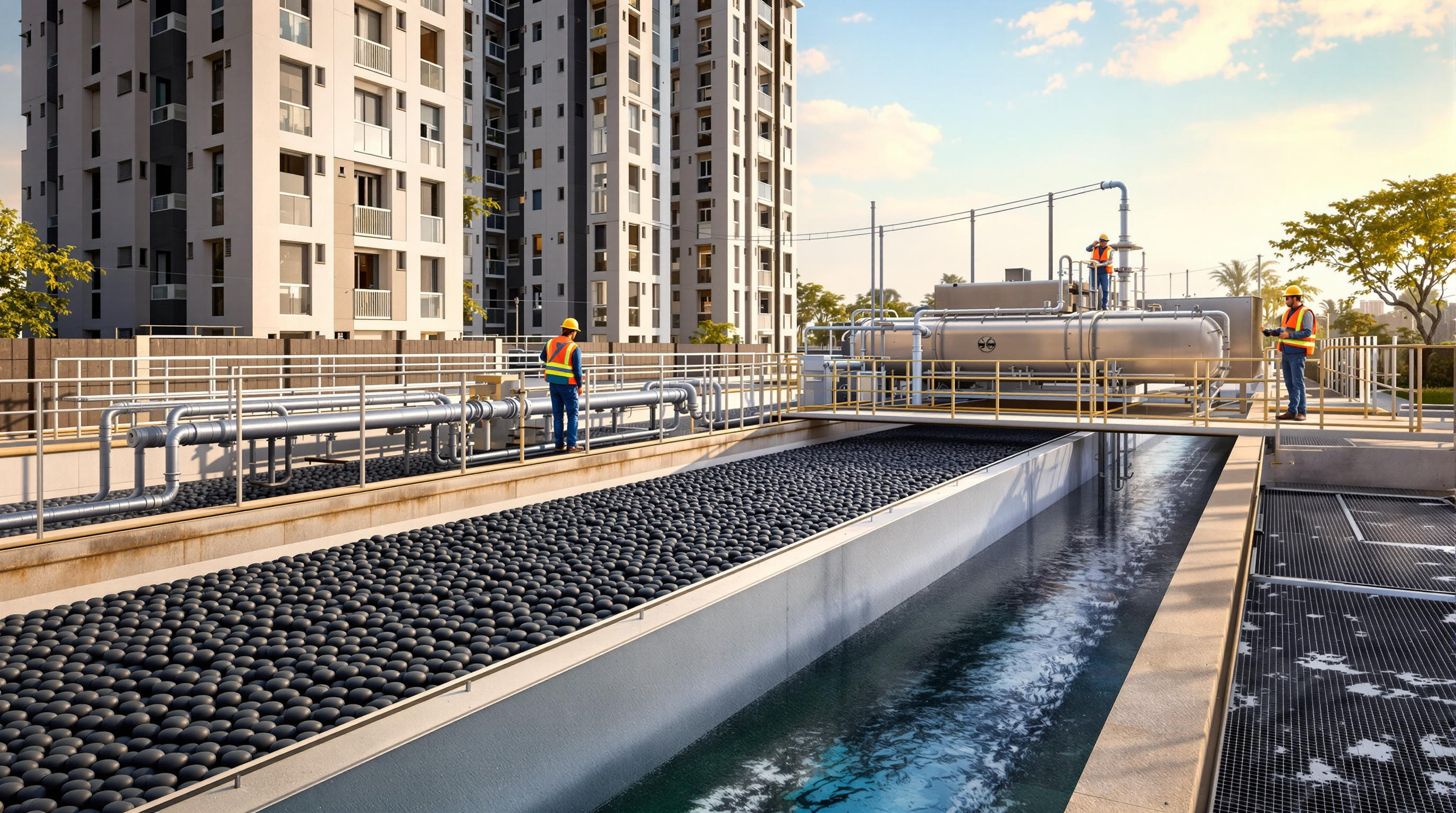
Hybrid STP Technologies: Combining MBBR, MBR, IFAS and Anaerobic-Aerobic Processes
Why the best sewage treatment plants rarely rely on one process alone — how engineers combine biofilm, membrane and anaerobic stages to squeeze more treatment out of less land, less energy and a smaller footprint.
No single sewage treatment technology is best at everything. The Activated Sludge Process is cheap and forgiving but hungry for land. MBBR is compact and shock-resistant but cannot on its own produce reuse-grade water. MBR delivers crystal-clear effluent but at a steep energy and membrane-replacement cost. Anaerobic systems like UASB barely use power but leave too much residual pollution to meet Indian discharge norms alone.
The obvious engineering move is to stop treating these as rival choices and start bolting them together. That is exactly what a hybrid STP does: it chains two or more treatment processes in series so that each stage does the job it is best at, and the weaknesses of one are covered by the strengths of the next.
A hybrid STP is not a compromise between technologies — it is a deliberate sequence in which a rough-but-cheap process removes the bulk load and a precise-but-expensive process only ever sees the easy remainder. You pay for the premium stage on a fraction of the work.
Why buildings choose hybrids
For a designer sizing a plant on a tight Indian plot, hybrids solve four recurring problems at once.
- Footprint. Attaching biofilm media (MBBR/IFAS) to a conventional aeration tank multiplies the biomass it can hold, so the same treatment fits a tank half the size. On a basement plot measured in square metres, that is decisive.
- Effluent quality. A biological stage brings BOD down cheaply; a membrane or filtration polish takes it the last mile to reuse-grade water for flushing, cooling towers and gardens.
- Energy and running cost. Putting an anaerobic stage first digests the heavy organic load with almost no aeration, shrinking the power bill of the aerobic stage that follows. Aeration is typically the single largest energy line in an STP — see reducing STP electricity consumption.
- Shock resistance. Hotels, banquet halls and hospitals see wildly variable loads. Biofilm processes hold their culture on fixed media, so they recover from a Sunday-night flood of load far faster than a purely suspended-growth plant.
The building blocks of a hybrid
Every hybrid is assembled from a small vocabulary of stages. Understanding what each contributes explains why they get combined the way they do.
- Anaerobic (UASB, anaerobic baffled reactor): removes heavy organic load with no aeration and produces little sludge, but cannot meet final norms alone.
- Suspended-growth aerobic (ASP, extended aeration, SBR): the reliable biological workhorse; land-hungry in its basic form.
- Attached-growth aerobic (MBBR, trickling filter, bio-tower): packs more biomass into less volume and shrugs off load swings.
- Membrane separation (MBR, UF): replaces the clarifier with a physical barrier, guaranteeing solids-free, near-disinfected output.
- Tertiary polish (filtration, UV or chlorination): the final safeguard on any train.
IFAS: the most common hybrid, hiding in plain sight
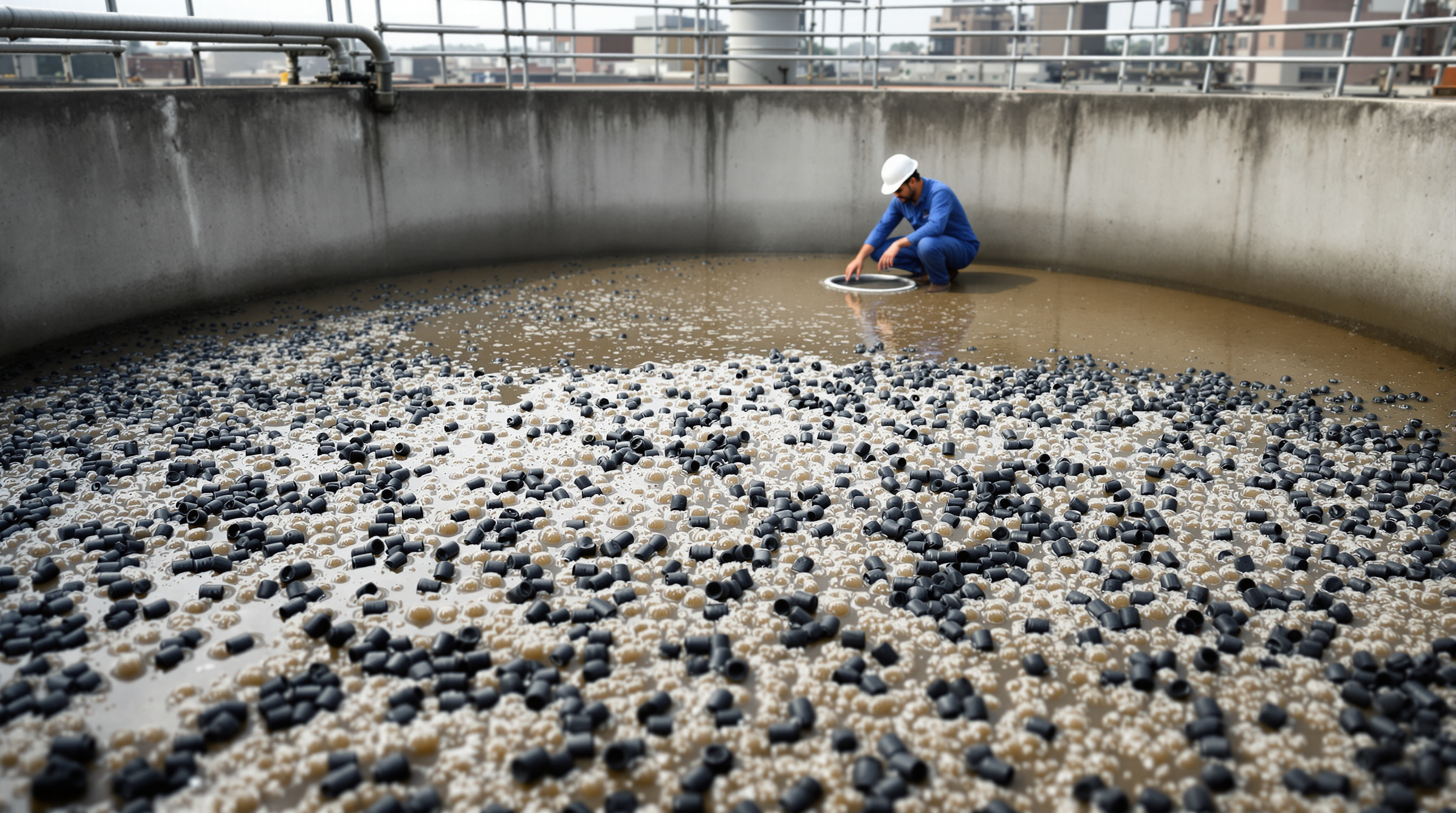
The classic hybrid is IFAS — Integrated Fixed-film Activated Sludge. It is simply a conventional activated-sludge aeration tank with fixed or floating biofilm media dropped into it. The plant now runs two cultures side by side in the same tank: free-floating flocs and a fixed biofilm on the media surface.
The payoff is capacity without new civil works. IFAS is the standard route for upgrading an existing overloaded ASP plant — an apartment complex that added towers, a hotel that expanded — because you can raise treatment capacity by retrofitting media into tanks you already own, rather than digging a bigger aeration tank. It also improves nitrogen removal, which a bare ASP often struggles with.
MBBR + MBR: quality without oversizing the membranes
Where the goal is genuinely reuse-grade water, the favourite pairing is MBBR followed by MBR. The MBBR stage does the heavy biological lifting, knocking BOD down cheaply on its plastic media. The MBR stage then receives a much lighter load, so its membranes foul more slowly, last longer and can be sized smaller.
Compared with a standalone MBR — where the membranes must carry the entire biological duty and clog faster — the hybrid trades a little extra tank volume for lower membrane replacement cost and steadier flux. For projects chasing zero-liquid-discharge or RO integration, this is the usual front end.
Anaerobic + aerobic: cutting the energy bill
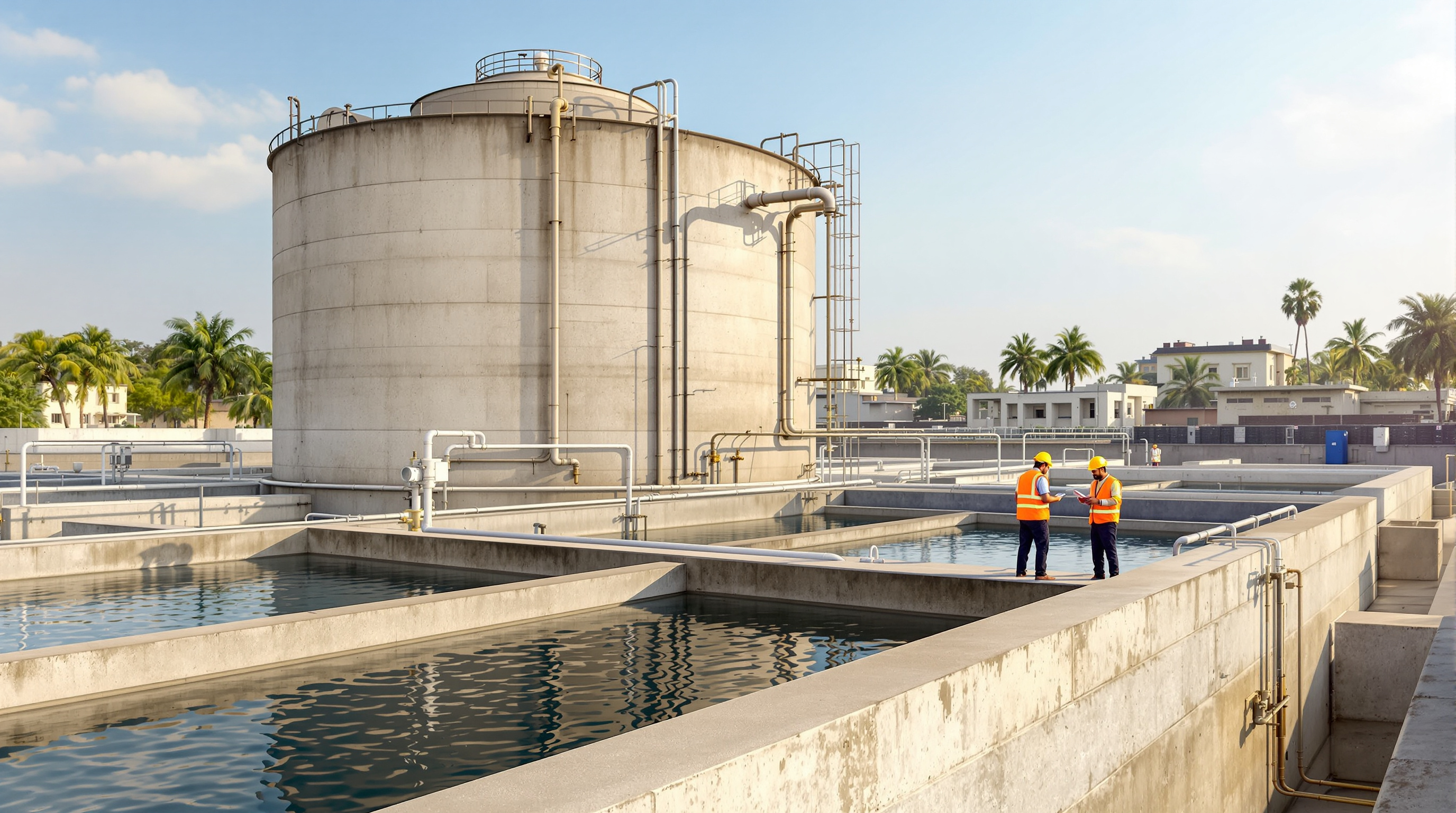
For high-strength or high-volume flows, an anaerobic stage ahead of an aerobic one is the energy play. A UASB or anaerobic baffled reactor digests the bulk of the organic load without blowers, so the downstream aerobic polish handles only the residue and its aeration demand drops sharply. Common in larger community and institutional plants, it also generates less sludge to dewater and cart away. The catch is that anaerobic stages need warmth and steady load to stay stable, and always require an aerobic polish to hit Indian norms — never used alone for building discharge.
Common hybrid combinations at a glance
| Hybrid | Stages combined | Best at | Watch-outs |
|---|---|---|---|
| IFAS | ASP + biofilm media | Upgrading overloaded tanks; better nitrogen removal | Media retention screens; slightly more aeration |
| MBBR + MBR | Biofilm + membrane | Reuse-grade water with longer membrane life | Higher capex; membrane care still needed |
| MBBR + Clarifier + Filter | Biofilm + settling + polish | Compact, robust general-purpose plant | Not quite MBR clarity |
| Anaerobic + Aerobic (UASB/ABR + ASP) | Anaerobic + aerobic | Low energy on high-strength/high-volume flow | Needs warmth, steady load, aerobic polish |
| SBR + UF/MBR | Batch aerobic + membrane | Small footprint with flexible cycles | Batch control complexity |
| Aerobic + Constructed wetland | Mechanical + natural polish | Low-O&M final polish where land exists | Land-hungry; wetland area |
How to choose the right hybrid
The combination follows from the constraints, not the other way round. A practical order of questions:
- What must the effluent achieve? Discharge-only norms allow a simpler MBBR-plus-filter train; reuse for cooling towers or an RO feed pushes you toward a membrane stage.
- How much land is there? A tight basement favours MBBR/MBR density; an open plot can afford settling tanks or a wetland polish.
- How variable is the load? Erratic occupancy rewards biofilm and batch processes that ride out surges.
- What is the energy budget? High, steady flows justify an anaerobic front end; small plants may not.
- Who will operate it? Membrane trains demand disciplined O&M and skilled operators; a resident-run apartment plant may be better served by a robust MBBR train.
Work through these against your actual numbers with the STP Technology Selector, and confirm the flow you are designing for with the STP Capacity Calculator before locking a train.
The bottom line
Hybrid STP technologies are the mainstream, not the exotic edge, of modern Indian sewage treatment. The reasoning is simple: a cheap, rugged process should absorb the bulk load, and an expensive, precise process should only ever polish what is left. IFAS upgrades tired plants, MBBR+MBR delivers reuse water without burning out membranes, and anaerobic+aerobic trims the energy bill on heavy flows. Pick the pairing that matches your land, your load and your reuse target — then size it carefully. Start from the Sewage Treatment Plants hub, or ground the fundamentals first with how an STP works and the sewage treatment process flow.
Export this guide
Related Guides — Deep-dive reading
Bio Tower Systems: Packed-Media Trickling Towers for High-Load Treatment
The tall, packed-media cousin of the trickling filter, explained: how a bio tower trickles wastewater over deep plastic media to strip out heavy organic load with almost no energy, why industries lean on it as a roughing stage, and where it fits against ASP and MBBR.
Sewage Treatment PlantsHow Does an STP Work? A Step-by-Step Explanation
Follow a single drop of sewage from the building drain to reusable water — through screening, settling, the living microbial heart of the plant, and final polishing — with every stage explained in plain language and no engineering background assumed.
Sewage Treatment PlantsTrickling Filter Systems in Wastewater Treatment: How Attached-Growth STPs Work
The trickling filter treats sewage by dripping it over a bed of media coated in living biofilm — a low-power, low-maintenance workhorse. Here is how it works, where it fits in India, and how it stacks up against activated sludge.
Sewage Treatment PlantsRelated Tools — Try Free
STP Technology Selector
Weight your priorities — footprint, effluent quality, cost, power and simplicity — and get a scored recommendation between Extended Aeration, MBBR, SBR and MBR.
SelectorSTP Technology Comparison Matrix
Compare Extended Aeration, MBBR, SBR, MBR and UASB across six criteria, set your priority, and see the best-fit STP technology instantly.
ComparatorApartment STP Planner
Plan an apartment complex sewage treatment plant from flats and occupancy — get population load, sewage flow, recommended STP capacity in KLD, treatment technology and approximate space.
Planner