
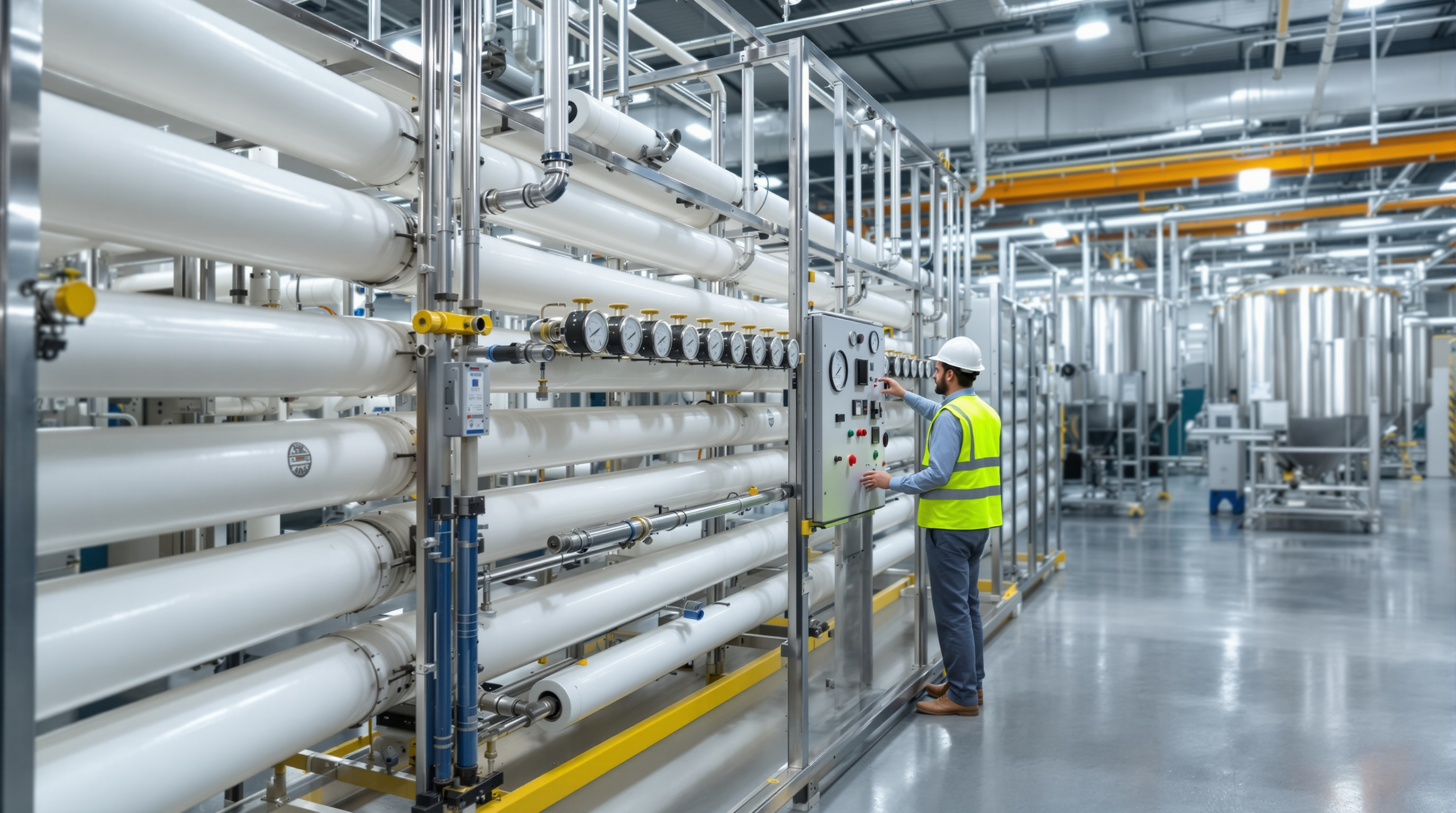
RO Integration in STPs: When Reverse Osmosis After an STP Makes Sense
Bolting reverse osmosis onto a sewage treatment plant turns reuse-grade water into near-distilled water for cooling towers, boilers and zero-liquid-discharge. Here is when RO integration in an STP is worth it, what pretreatment it demands, and how to handle the reject.
A conventional sewage treatment plant does an excellent job of turning foul water into clear, low-BOD water fit for flushing toilets and watering gardens. But it barely touches one thing: dissolved salts. The total dissolved solids (TDS) that walk into an STP walk out again almost untouched, because biology eats organic matter, not minerals. For most reuse that is fine. For a cooling tower, a boiler or a factory chasing zero-liquid-discharge, it is a problem — and that is exactly where RO integration in an STP earns its keep.
This guide is for the engineer or informed owner deciding whether to bolt a reverse osmosis stage onto the back of an STP. When is it genuinely needed, what pretreatment does it demand, what do you do with the salty reject, and what does it all cost to run?
A standard STP cleans water; an RO stage desalinates it. Adding RO is not a bigger STP — it is a different job, with different economics, that only makes sense when your reuse point cannot tolerate salt.
What RO adds that an STP cannot
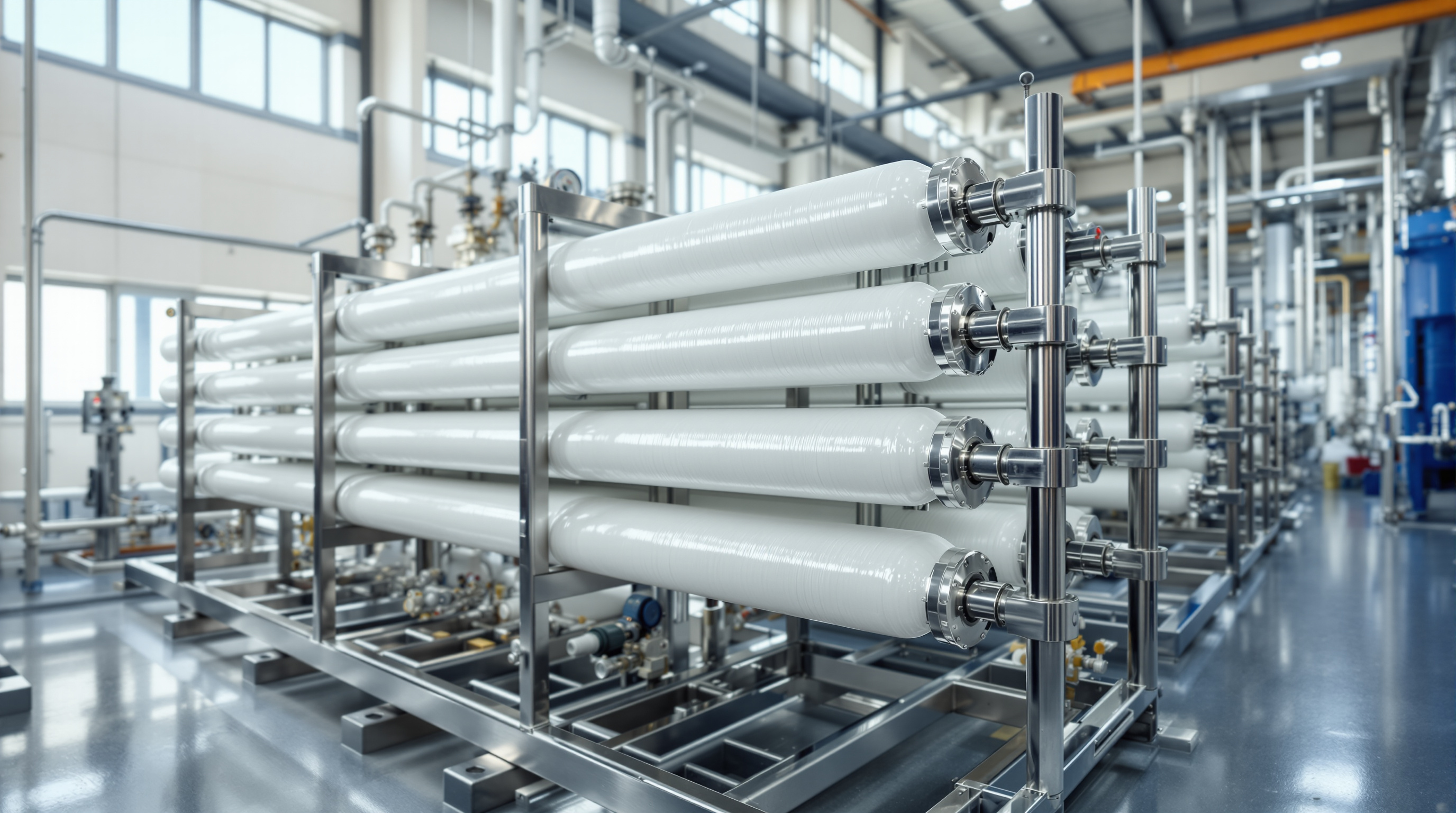
Tertiary-treated STP effluent in India typically leaves the plant at 800–1,800 mg/L TDS, sometimes higher where the incoming sewage is saline or borewell-fed. That water is perfectly reusable for flushing and irrigation. But push it into equipment that concentrates salts, and trouble starts:
- Cooling towers evaporate water and leave the salts behind. Feed them 1,500 mg/L water and after a few cycles of concentration you are circulating 5,000+ mg/L brine that scales the fill and corrodes the metal.
- Boilers demand very low TDS feed — high dissolved solids cause scale on tubes, carryover and priming.
- Process industries and zero-liquid-discharge (ZLD) schemes need a clean, low-salt stream to recover as product water.
A reverse osmosis membrane pushes water through under pressure and rejects 95–98% of dissolved salts, dropping 1,500 mg/L feed to well under 100 mg/L permeate — near-distilled quality. That is the whole point of RO integration: not cleaner-looking water, but salt-free water.
When you actually need it — and when you don't
RO is capital-heavy and power-hungry. Do not add it reflexively. Use this test.
| Reuse application | RO needed? | Why |
|---|---|---|
| Toilet flushing | No | Tertiary STP water is well within spec; RO is wasted money |
| Landscape / garden irrigation | No | Plants tolerate moderate TDS; RO reject would actually harm soil |
| Cooling tower makeup (low cycles) | Sometimes | Depends on feed TDS and cycles of concentration you want to run |
| Cooling tower makeup (high cycles) | Yes | High cycles concentrate salt fast; low-TDS feed is essential |
| Boiler feed | Yes | Boilers need very low TDS and hardness |
| Process water / product recovery | Yes | Specifications are tight |
| Zero-liquid-discharge (ZLD) | Yes | RO is the workhorse that concentrates the stream before evaporation |
The honest rule: if your reuse point tolerates the STP's native TDS, skip RO. It is one of the most over-specified add-ons in Indian water projects — installed because a consultant wrote "RO" into the tender, then run at a fraction of capacity because flushing and gardening never needed it. Size the RO to the salt-sensitive load only, not to the whole plant.
Pretreatment is non-negotiable: UF before RO
An RO membrane is a fine, delicate barrier. Feed it STP effluent directly and it will foul within weeks — biofilm, suspended solids and organics blind the membrane, pressures climb, output collapses, and you are cleaning or replacing elements constantly. The fix is proper pretreatment, and for treated sewage that means ultrafiltration.
A typical RO train downstream of an STP looks like this:
- Feed from tertiary STP — already filtered through pressure sand and activated carbon.
- Ultrafiltration (UF) — the critical step. A UF membrane removes virtually all suspended solids, colloids and bacteria, delivering a consistently low SDI (Silt Density Index) that RO needs to survive. Skipping UF and relying only on sand filters is the single most common reason STP-RO systems fail early.
- Antiscalant and pH dosing — to keep sparingly-soluble salts (calcium, silica) in solution across the membrane.
- Cartridge filters (5 micron) — a final guard.
- High-pressure pump + RO membranes — the desalination stage itself, running at 10–15 bar for brackish-water elements.
If your existing STP does not already have a robust tertiary train and UF, budget for it. RO on poorly pretreated water is a maintenance nightmare that will cost more in membrane replacements than it ever saves in water.
The uncomfortable part: RO reject
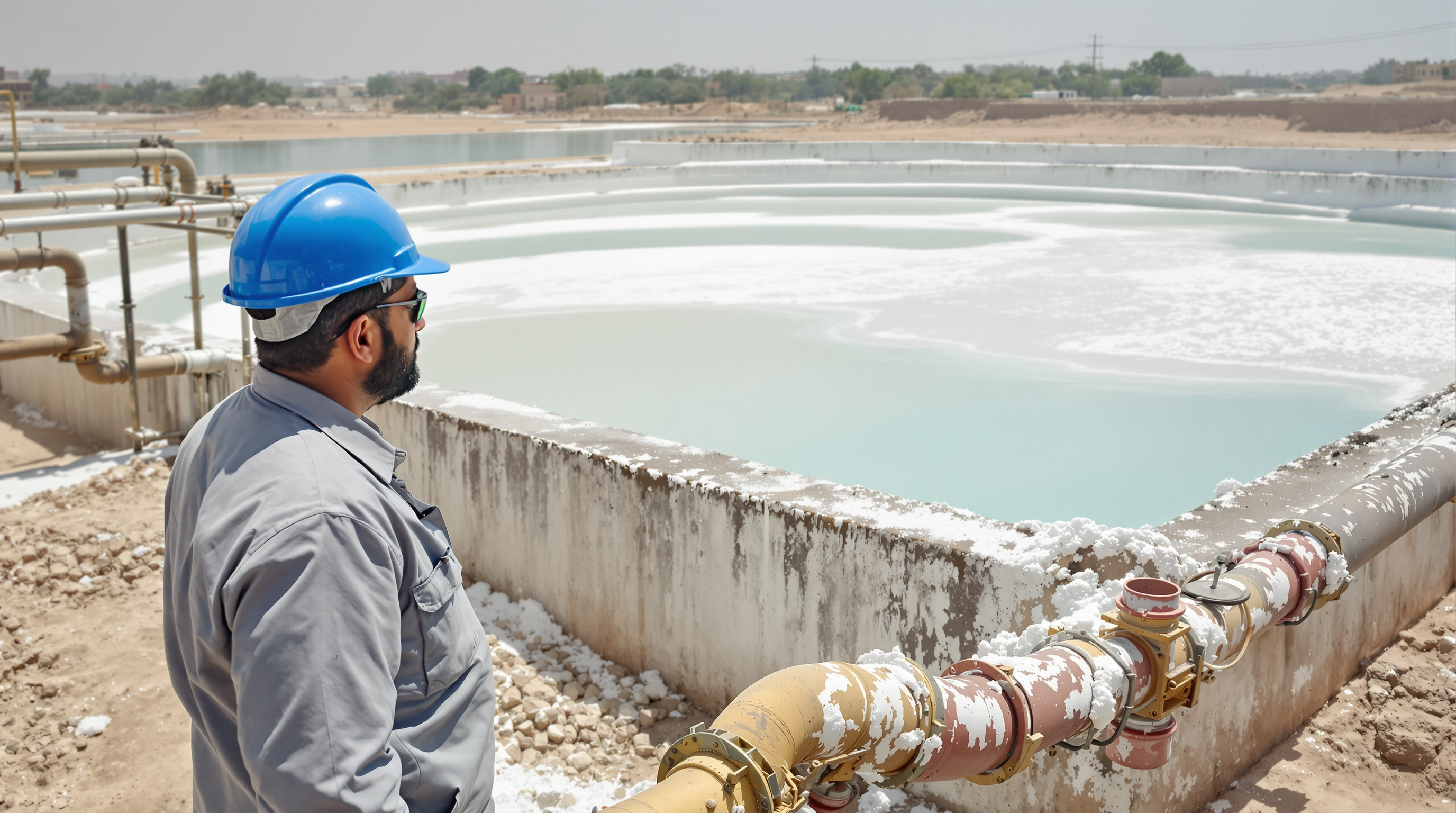
Here is what tender documents love to skip. An RO system does not make all the feed drinkable — it splits it into two streams:
- Permeate — the clean, low-TDS product you wanted, typically 70–80% of the feed (the "recovery rate").
- Reject (concentrate) — the remaining 20–30%, carrying all the rejected salt concentrated into a smaller volume. If feed is 1,500 mg/L at 75% recovery, the reject can be 5,000–6,000 mg/L of briny water.
You cannot just flush this down the storm drain — CPCB and state boards treat concentrated reject as a discharge that must meet norms, and dumping it on land salts the soil. Your options:
- Blend and dilute for a use that tolerates it — landscape irrigation in limited quantity, or dust suppression — but this only works at small volumes and salt-tolerant end uses.
- Send to further concentration — in a ZLD scheme the reject goes to a second-pass RO, then an evaporator and crystalliser, until only solid salt remains and no liquid leaves the site.
- Legitimate discharge — where permitted, to a sewer or designated point meeting the consented TDS limit.
Reject handling is the make-or-break of any STP-RO project. Decide where the concentrate goes before you buy the RO skid, not after. A plant that produces clean permeate but has nowhere to legally put its reject is not a solution — it is a liability.
Cost and energy: what you are signing up for
RO is the most energy-intensive stage you can add to an STP. A brackish-water RO desalinating STP effluent typically draws 1.0–2.0 kWh per cubic metre of permeate — on top of everything the STP already consumes to treat the sewage in the first place. For a plant already running aeration blowers around the clock, adding RO can noticeably move the monthly electricity bill.
Beyond power, the running costs that catch owners out:
- Membrane replacement — RO and UF elements have finite lives (RO roughly 3–5 years, shorter if pretreatment is poor) and are a recurring capital item.
- Chemicals — antiscalant, cleaning chemicals (CIP), pH correction.
- Reject disposal — trucking, evaporation power, or salt handling in a ZLD chain.
- Skilled operation — RO is less forgiving than biology; it needs an operator who watches pressures, SDI and recovery.
Before committing, benchmark the whole system's power against comparable plants with the energy-benchmark calculator, and revisit the base plant's efficiency — the guide on reducing STP electricity consumption often finds savings that partly offset the RO load. Right-sizing matters too: use the STP capacity calculator to fix the base flow, then size RO only to the salt-sensitive fraction of the reuse demand.
The bottom line
Reverse osmosis is a powerful, expensive tool that solves one specific problem an STP cannot: dissolved salt. Add it when — and only when — your reuse point genuinely needs low-TDS water, such as high-cycle cooling towers, boilers, sensitive processes, or a ZLD mandate. When you do add it, treat the three pillars as inseparable: UF pretreatment to keep the membranes alive, a planned reject route so the concentrate has a legal home, and an honest energy budget so the running cost never surprises you.
Get those right and RO turns an STP from a water-recycling plant into a high-purity water source. Get them wrong and you have an idle skid, blinded membranes and a salty puddle nobody wants. To place this decision in the wider treatment picture, browse the full Sewage Treatment Plants guide library, and if you are still choosing the biological core of the plant, the STP technology selector is the place to start.
Export this guide
Related Guides — Deep-dive reading
Zero Liquid Discharge (ZLD): When No Water Leaves the Site
What zero liquid discharge actually means, the biological-plus-RO-plus-evaporator train that recovers nearly all the water and leaves only dry solids, why it is expensive and energy-hungry, when it is mandated, and the lighter near-ZLD options that make sense for most buildings.
Sewage Treatment PlantsRO Water System for Indian Homes: How Reverse Osmosis Works, When You Need It, Reject Water and Cost
The point-of-use purifier that strips dissolved salts, TDS and heavy metals from high-TDS borewell and brackish water — how the membrane and cartridge train actually work, when RO is right (and when it just wastes water and strips minerals), how to reuse reject water, and what it costs to run in India.
PlumbingPharmaceutical Wastewater Treatment: Why It Needs an ETP, Not an STP
Pharma effluent carries high COD, toxic and refractory compounds, swinging pH and traces of active drug ingredients — a load that overwhelms a domestic STP. Here is what makes it so hard to treat, and the ETP train engineers build to handle it in India.
Sewage Treatment PlantsRelated Tools — Try Free
Landscape Cost Calculator
Estimate a garden's cost — hardscape, softscape, lawn, irrigation, lighting and annual upkeep — by area, tier and city.
Budget CalculatorSTP Electricity Consumption Calculator
Estimate a sewage treatment plant's daily power use and its monthly and annual electricity running cost from capacity, specific energy and tariff.
STP CalculatorPool Maintenance Cost Calculator
Monthly and yearly running cost of a home pool — chemicals, electricity, water and service, DIY vs AMC.
Pool Calculator