
Trickling Filter Systems in Wastewater Treatment: How Attached-Growth STPs Work
The trickling filter treats sewage by dripping it over a bed of media coated in living biofilm — a low-power, low-maintenance workhorse. Here is how it works, where it fits in India, and how it stacks up against activated sludge.
Not every sewage treatment plant relies on a tank full of aerated water with microbes swimming free in it. One of the oldest and most reliable ideas in wastewater treatment does the opposite: it makes the microbes stay put. In a trickling filter, sewage is trickled slowly over a fixed bed of media — stones, or more often engineered plastic — and the pollution-eating bacteria live as a slimy coating, a biofilm, on that media. The water passes over the bugs; the bugs never move. Engineers call this an attached-growth or fixed-film process, and it is the quiet, low-power counterpoint to the aeration-heavy plants that dominate modern Indian STPs.
This guide explains what a trickling filter is, how the biofilm actually cleans the water, why it sips electricity where other technologies gulp it, and — honestly — where it wins and where it loses against the Activated Sludge Process that most engineers reach for by default.
A trickling filter is a river turned on its side and made vertical: instead of water flowing past microbes clinging to rocks over kilometres, it drips through a few metres of media where the same clinging microbes do the same job — using gravity and air, not a wall of blowers.
What a trickling filter actually is
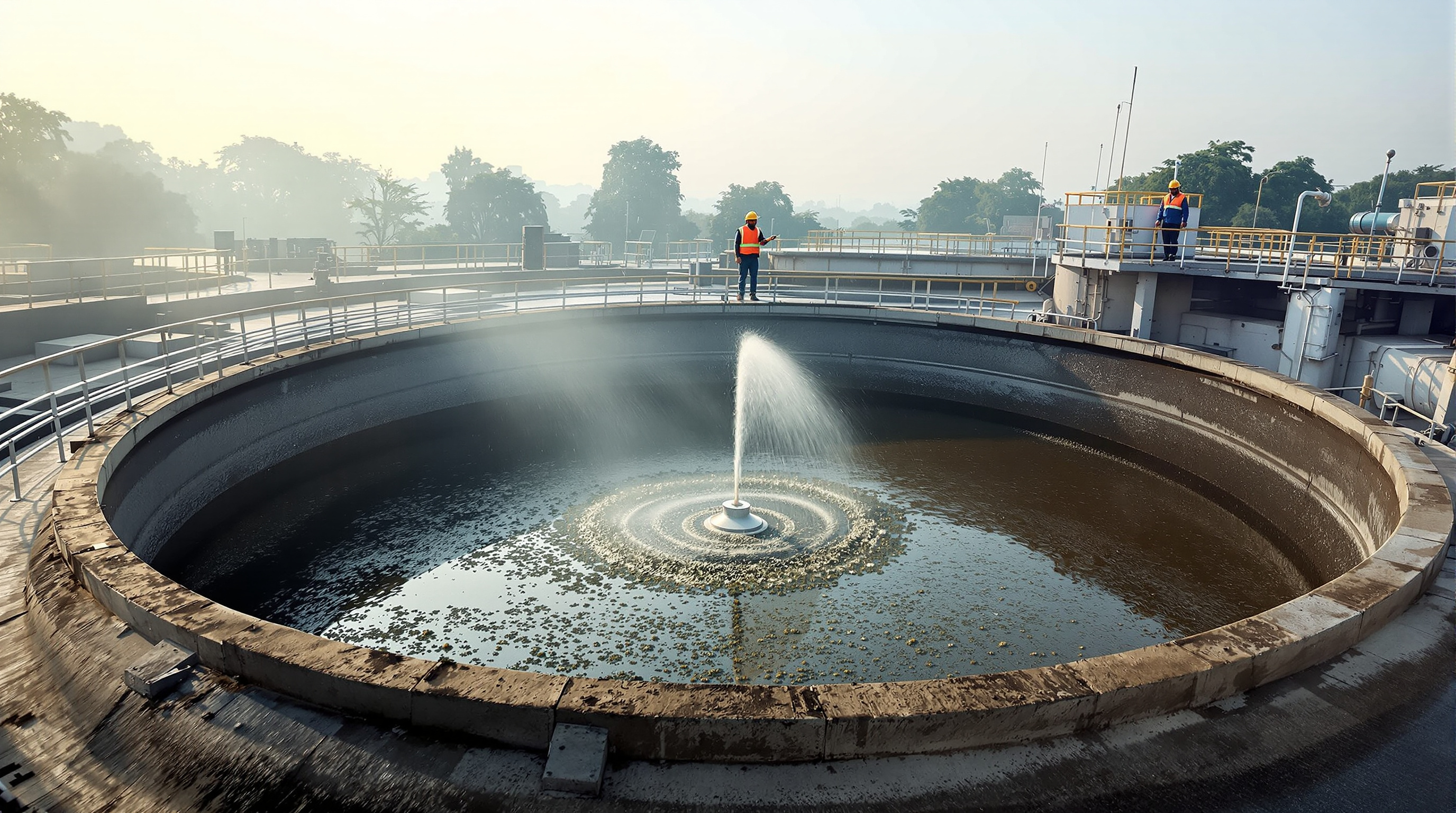
Strip away the jargon and a trickling filter is a circular tank filled with media, with a rotating arm on top that sprays settled sewage evenly across the surface. The water percolates down through the bed by gravity, wetting every surface, and drains out through an underdrain at the bottom. Air moves through the same voids in the opposite direction — usually by natural draught, no blower required — feeding oxygen to the biofilm.
The core components are simple and there are very few moving parts:
- The media bed — historically 50–100 mm crushed stone or clinker, 1.5–2 m deep. Modern plants use lightweight plastic media (corrugated or random-pack), which offers far more surface area per cubic metre and lets beds go 4–6 m deep without crushing. More surface area means more biofilm, means more treatment in less footprint.
- The rotary distributor — the slowly turning arm, driven by the reaction force of the sewage jetting out of its nozzles (often no motor at all), that lays the water down evenly.
- The underdrain and ventilation — supports the media, collects treated water, and lets air circulate up through the bed.
- A secondary clarifier downstream — because bits of biofilm continually slough off the media, the flow always needs a settling tank after it. See our guide to the clarifier for how that stage works.
Because the sewage must be dripped, not pumped through, a trickling filter always sits after preliminary screening and primary settling. It is a secondary-treatment stage, and it is almost always followed by tertiary polishing and disinfection before reuse.
How the biofilm cleans the water
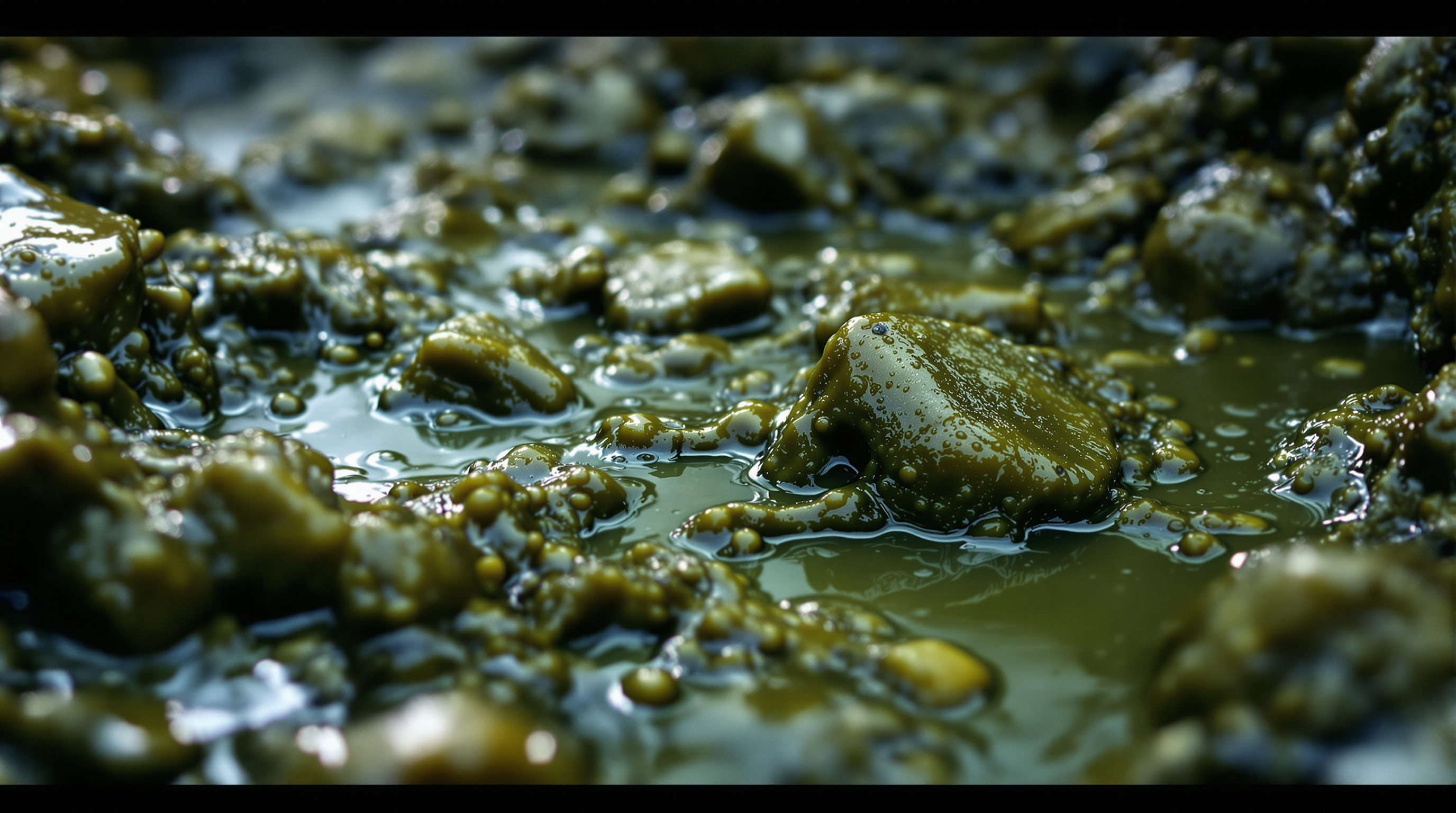
The real work happens in a film barely a few millimetres thick. As settled sewage trickles over the media, the bacteria, fungi and protozoa living on the surface grab the dissolved organic matter — the BOD — and eat it, using oxygen pulled from the air moving through the bed.
The biofilm is layered, and that layering is the whole trick:
- The outer layer, in contact with fresh sewage and air, is aerobic and hungry — this is where most of the BOD is destroyed.
- Deeper in, oxygen runs out and the film turns anaerobic. The bugs there loosen their grip on the media.
- Eventually a patch of film gets too thick, loses its anchor, and sloughs off into the flowing water. This is the plant's natural way of shedding old biomass — the equivalent of wasting sludge in an activated-sludge plant — and the sloughed solids are caught in the downstream clarifier.
Many plants recirculate part of the treated flow back to the top of the filter. Recirculation dilutes strong incoming sewage, keeps the biofilm continuously wet, evens out the load, and can be dialled up to push effluent quality closer to CPCB discharge norms. For very strong or industrial-strength waste, filters are sometimes stacked or run in stages — the principle behind bio-tower systems, which are essentially tall plastic-media trickling filters.
Why the power bill is so low
Here is the trickling filter's headline advantage, and the reason it refuses to disappear: it barely uses any energy.
In an activated-sludge or MBBR plant, blowers force air into the water around the clock, and aeration alone typically accounts for 50–65% of the entire plant's electricity. A trickling filter needs none of that. Oxygen arrives by natural draught through the media, driven by the temperature difference between the warm sewage and cooler air. The only power draw is:
- Pumps to lift the sewage to the top of the filter (unavoidable, since it must fall through the bed).
- Recirculation pumping, if used.
- A small motor for the distributor arm — and often even that is eliminated by the reaction-drive design.
For a facility watching its running cost, or one on an unreliable grid, that is a real structural saving. If you want to see how aeration dominates a conventional plant's consumption, our guide to reducing STP electricity consumption and the Energy Benchmark Calculator both make the gap obvious.
Trickling filter vs activated sludge: the honest comparison
Neither technology is "better" in the abstract — they trade the same coin differently. Activated sludge buys a smaller footprint and tighter effluent with electricity and skilled operation; the trickling filter buys low power and simplicity with land and a slightly softer effluent.
| Factor | Trickling filter (attached-growth) | Activated sludge (suspended-growth) |
|---|---|---|
| Energy | Very low — natural draught, minimal aeration | High — continuous blower aeration is the biggest load |
| Operational simplicity | High — few moving parts, tolerant, forgiving | Lower — needs careful control of MLSS, DO, sludge age |
| Effluent quality | Good; BOD ~20–30 mg/L typical, may need polishing | Can reliably hit BOD < 10 mg/L for reuse |
| Footprint | Larger — deep beds still need land and a clarifier | Compact for the same load |
| Shock/load tolerance | Excellent — biofilm survives surges and starvation | Sensitive; upsets can wash out the culture |
| Sludge produced | Lower, and better settling | Higher volume of waste activated sludge |
| Nuisances | Filter flies (Psychoda), odour, media clogging | Foaming, bulking sludge |
| Skilled operator need | Low | Moderate to high |
The practical read: a trickling filter is the sensible choice where land is available, power is scarce or costly, operators are unskilled, and load swings wildly — small towns, institutional campuses, industrial pre-treatment, hill stations with cheap gravity fall. Where land is expensive and reuse-grade effluent is mandatory — a dense urban apartment block feeding water back for flushing — the compact, controllable activated-sludge family (or MBR) usually wins, which is why you see far fewer trickling filters in city high-rises.
Where trickling filters fit in India
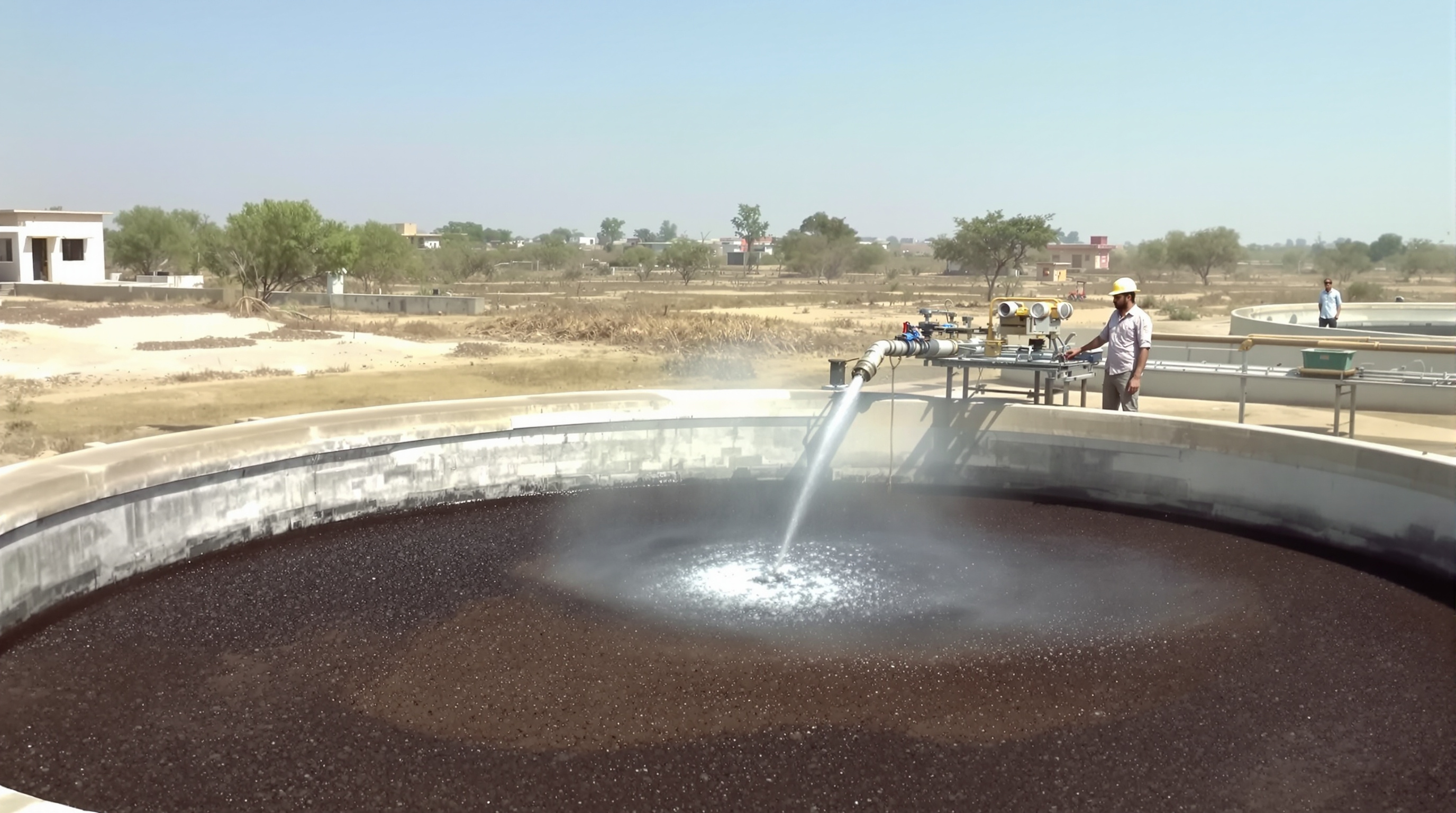
In the Indian STP landscape, the trickling filter is a niche but respected technology rather than the default. You will find it in:
- Municipal and small-town plants on the outskirts, where land is cheaper and the priority is a rugged, low-attention system that survives power cuts.
- Industrial pre-treatment, knocking down high organic loads before a polishing stage.
- Roughing filters — a shallow, high-rate plastic-media filter used purely to take the first big bite out of strong waste ahead of another process, a common role in hybrid STP technologies.
For most new residential and commercial buildings, though, the footprint and the softer effluent push designers toward compact aerobic systems. The choice is genuinely site-specific: the STP Technology Selector weighs footprint, power, effluent target and skill availability to point you at the right family, and the STP Capacity Calculator sizes whatever you land on.
The bottom line
A trickling filter cleans sewage with an old, robust idea executed simply: trickle the water over a media bed, let a living biofilm eat the pollution, use gravity and natural air instead of blowers, and settle out what sloughs off. It trades footprint and a little effluent polish for dramatically lower power and forgiving, low-skill operation — a trade that still makes sense wherever land is available and electricity is not to be wasted. It is not the answer for every building, but where it fits, few technologies are cheaper to run or harder to break.
To place it in the wider process, start with how an STP works and the full Sewage Treatment Plants guide library.
Export this guide
Related Guides — Deep-dive reading
Bio Tower Systems: Packed-Media Trickling Towers for High-Load Treatment
The tall, packed-media cousin of the trickling filter, explained: how a bio tower trickles wastewater over deep plastic media to strip out heavy organic load with almost no energy, why industries lean on it as a roughing stage, and where it fits against ASP and MBBR.
Sewage Treatment PlantsAeration Tank: The Biological Heart of an STP
The tank where blowers push oxygen into billions of microbes that eat the sewage's organic load — how it works, what DO, MLSS, F/M and HRT mean, and why it quietly runs up the biggest electricity bill in the plant.
Sewage Treatment PlantsBiological Culture Management in an STP: The Heart of Good O&M
The microbes in your aeration tank do the actual work of cleaning sewage. Keep them healthy — the right MLSS, food, oxygen and nutrients — and everything else falls into place. Here is how operators manage the living culture, diagnose bulking and foaming, and recover after a crash.
Sewage Treatment PlantsRelated Tools — Try Free
Cross-Ventilation Analyzer
Estimate airflow and air changes per hour (ACH) from room size, window areas, layout, and local wind — with NBC 2016 Part 8 compliance check.
Ventilation CalculatorPopulation Equivalent (PE) Calculator
Convert an organic pollution load into Population Equivalent from flow and BOD concentration — the BOD load in kg/day and equivalent number of people.
STP CalculatorSTP Technology Selector
Weight your priorities — footprint, effluent quality, cost, power and simplicity — and get a scored recommendation between Extended Aeration, MBBR, SBR and MBR.
Selector