
The Sewage Treatment Process Flow, Explained: Every Stage From Inlet to Reuse
Follow a drop of sewage through a typical STP — inlet, screening, aeration, clarifier, filtration, disinfection and reuse — as one connected flow, with a block diagram and a unit-by-unit table, in plain language.
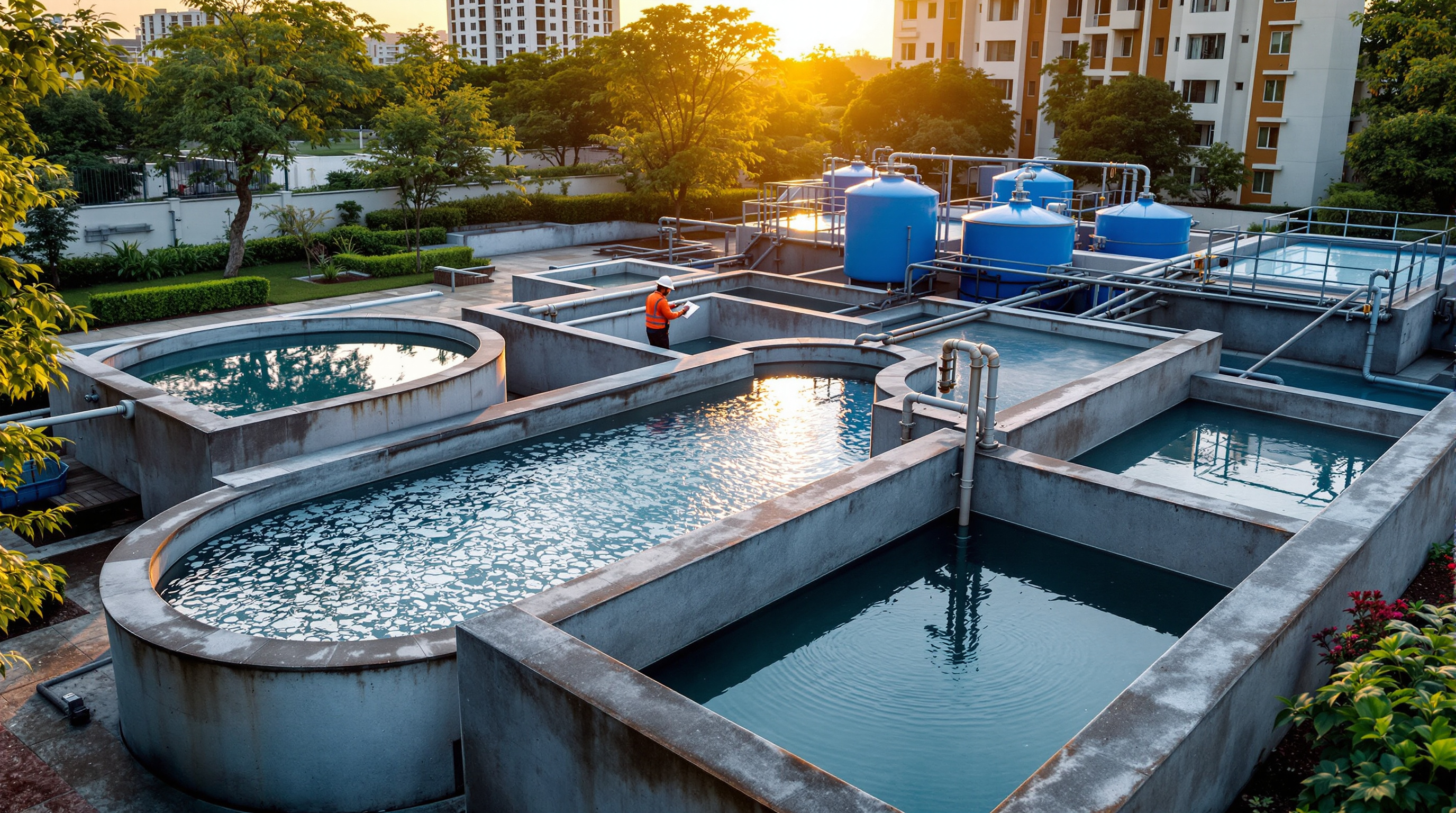
Open up any sewage treatment plant — a compact one in an apartment basement, or a sprawling one behind an IT park — and you will find the same thing: a line of tanks, each connected to the next by a pipe or a channel, water moving through them in one direction. Raw sewage goes in at one end, clear reusable water comes out the other, and every tank in between does one specific job before handing the water on.
That line is the sewage treatment process flow. If you understand the order of the tanks and what happens inside each one, you understand how an STP works — not as a mysterious black box, but as a sequence you could trace with your finger. This guide walks that flow from end to end.
An STP is a relay race, not a single machine. Each tank cleans the water a little, then passes it to the next, which is built to do the next job. No single unit does everything — the sequence is the design.
If you are completely new to these systems, start with What is a Sewage Treatment Plant for the big picture, then come back here to follow the water through.
The flow at a glance
Here is the whole journey in one line, the way an engineer would sketch it on a whiteboard:
Inlet → Bar Screen → Grit & Oil-Grease Removal → Equalisation Tank → Aeration Tank (bioreactor) → Secondary Clarifier → Filtration → Disinfection → Treated Water Tank → Reuse
And running quietly underneath it, a loop that most people miss: settled biology from the clarifier is pumped back to the aeration tank (return sludge), while the excess is drawn off to a sludge holding tank (waste sludge). We will come to that loop at the end, because it is what keeps the whole plant alive.
Blue = the water path. Gold dashed = the sludge return-and-wasting loop.
Following the water, tank by tank
1. Inlet and bar screen — catch the junk
Everything the building flushes and drains arrives here through a single incoming sewer line. The very first unit is a bar screen — a set of closely spaced metal bars angled across the channel. It catches the things that should never have gone down a drain: rags, sanitary waste, plastic, hair, kitchen debris. In: raw sewage full of solids. Out: the same sewage minus the big stuff, which is raked off and binned. Skip this and every pump and pipe downstream would choke within weeks.
2. Grit and oil-and-grease removal — protect the plant
Next the flow slows down in a grit chamber, where heavy inert particles — sand, silt, coffee grounds — sink out. Alongside (or combined with it) sits an oil-and-grease trap, where fats floating up from kitchens are skimmed off the surface. In: screened sewage. Out: sewage without abrasive grit or floating grease. Grit would wear out pumps like sandpaper; grease would coat and smother the biology later. This stage exists to protect the expensive parts of the plant, not to clean the water.
3. Equalisation tank — smooth the surges
A building does not produce sewage evenly. There is a flood at 7 a.m. when everyone showers, another after dinner, and a trickle at 3 a.m. If that raw rhythm hit the biological stage directly, the microbes would be alternately overfed and starved. The equalisation tank is a large buffer that collects the peaks and releases a steady, even flow to the rest of the plant. It is usually gently mixed or aerated to stop sewage turning septic while it waits. In: surging, uneven flow. Out: calm, constant flow — the single most important thing for keeping the biology healthy.
4. Aeration tank — the biological heart
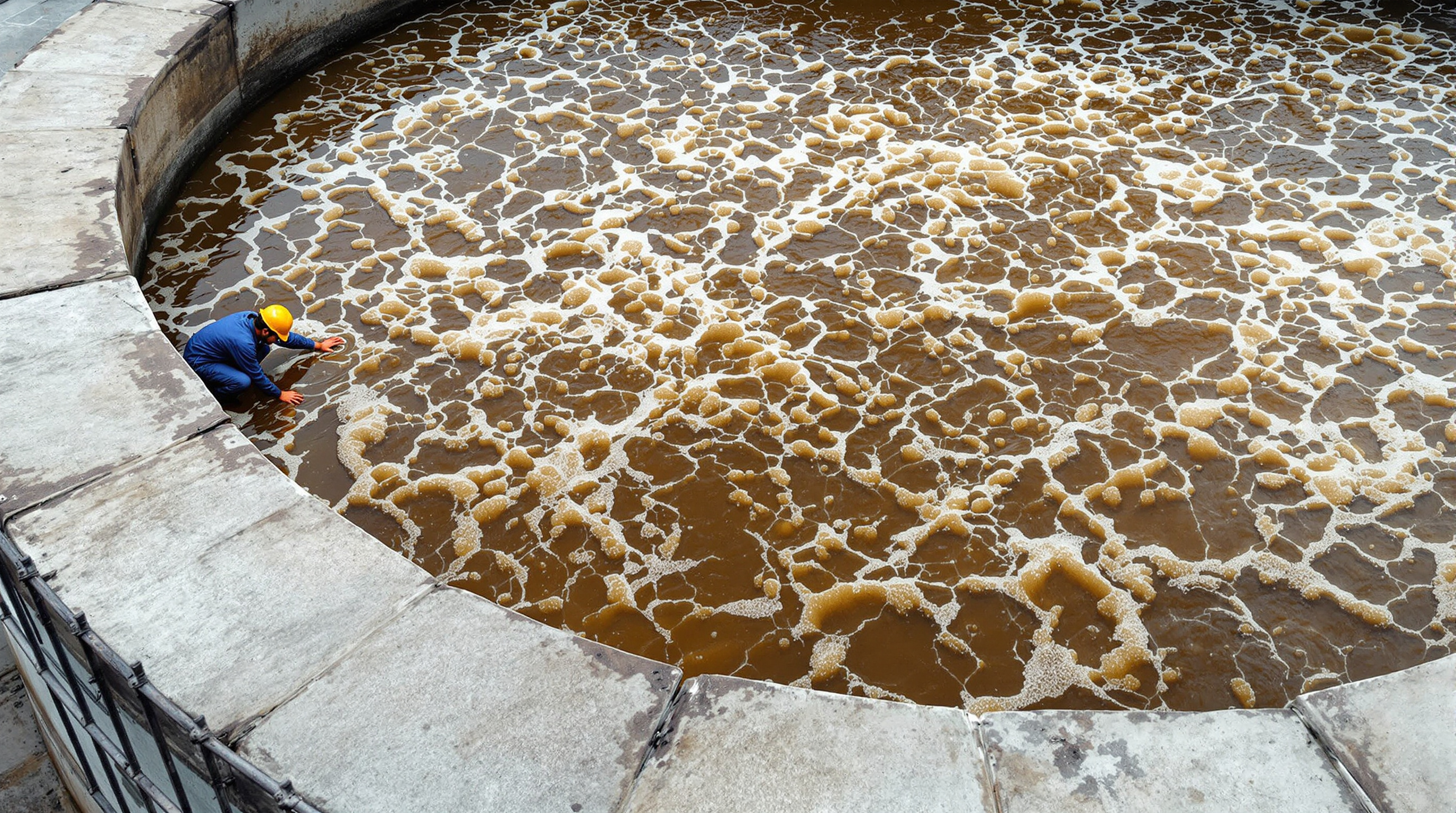
This is where the actual cleaning happens. The equalised sewage enters a large aeration tank (the bioreactor), where air blowers or diffusers pump a constant stream of oxygen through the water. That oxygen sustains billions of bacteria and other microbes — the biomass — which treat the dissolved organic waste as food and consume it, exactly as microbes do in a healthy flowing river, only far faster and in a controlled space. In: cloudy sewage heavy with dissolved pollution (high BOD). Out: a brown, oxygen-rich mixture of clean-ish water and well-fed microbes. This oxygen-and-microbes principle underlies almost every STP technology — see How Does an STP Work for the biology in depth, and Wastewater Characteristics: BOD, COD, TSS, pH for what those pollution numbers actually mean.
5. Secondary clarifier — settle the biology out
The mixture leaving the aeration tank is clean but cloudy — full of the microbes that did the work. It flows into the secondary clarifier, a quiet settling tank where, with the turbulence gone, the microbes clump together and sink to the bottom as a thick sludge. In: water-and-biomass mixture. Out: genuinely clear water drawn off the top, and a blanket of settled biomass at the bottom. This is the unit where water and life finally separate.
6. Filtration — polish the last particles
The clarified water is clear but not yet reuse-grade; fine particles still slip through. It is pushed under pressure through a sand filter (which strains out the last suspended solids) and then an activated carbon filter (which adsorbs residual colour and odour). In: clarified water. Out: polished, sparkling water — but not yet safe to touch, because it still carries bacteria.
7. Disinfection — kill the pathogens
The final treatment step. The polished water is disinfected, usually by dosing chlorine or passing it under ultraviolet (UV) light, to destroy the disease-causing bacteria and viruses that survive everything upstream. In: clean but biologically live water. Out: clear, odourless, hygienically safe water.
8. Treated water tank and reuse
The finished water collects in a treated-water tank, ready to be pumped where it is needed. In a typical Indian building it goes to:
- Toilet flushing — piped up a separate line, the single biggest reuse.
- Landscape and garden irrigation.
- Cooling towers in air-conditioned commercial buildings.
- Common-area and vehicle washing.
- Groundwater recharge for the surplus.
The loop underneath: sludge return and wasting
Look again at the clarifier. All that settled biomass at its bottom is not waste — it is the plant's workforce. So most of it is pumped straight back to the aeration tank as return sludge, keeping the microbe population dense and hungry. This return loop is why the biology is self-sustaining and why the process is called activated sludge.
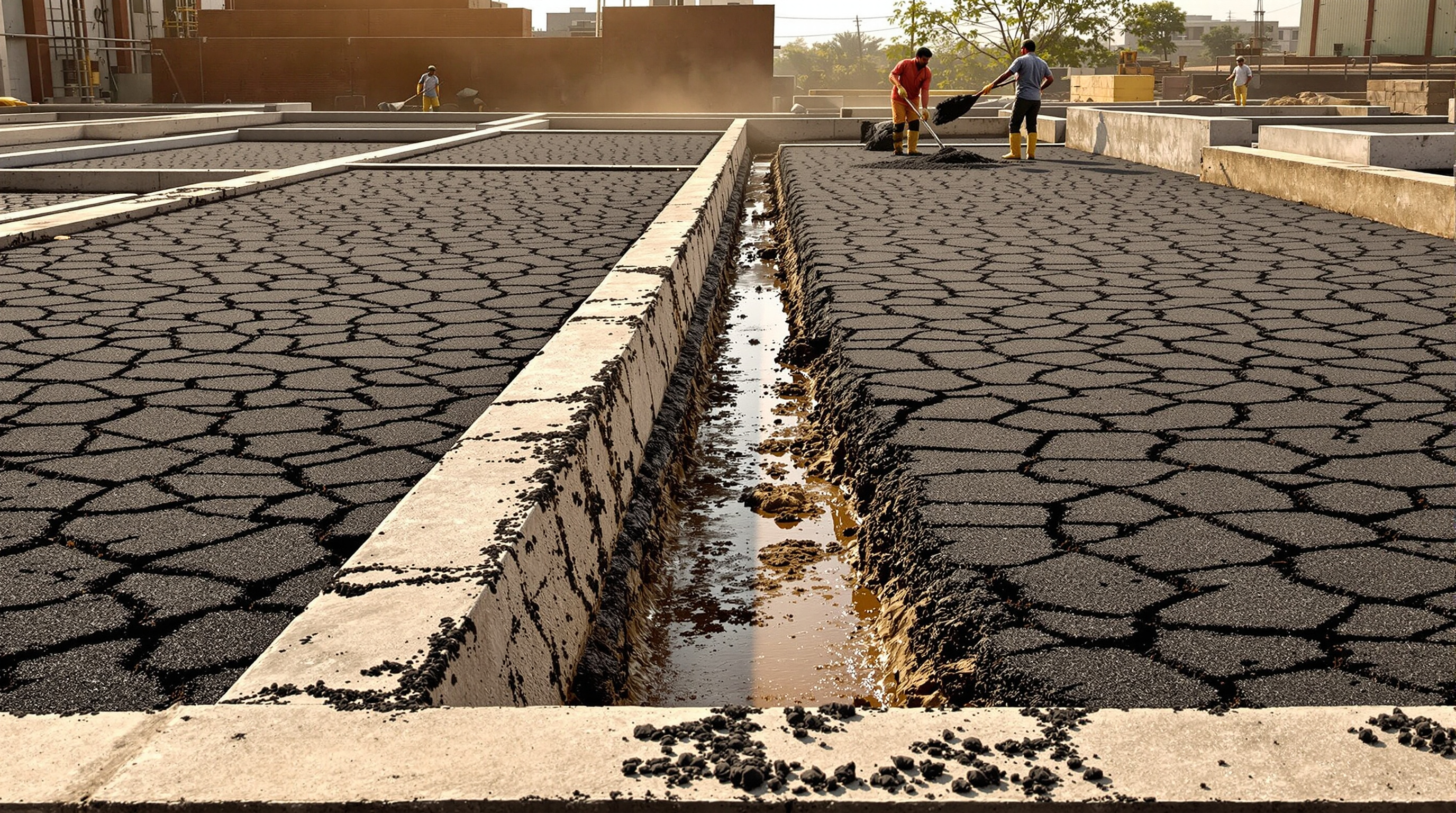
But the microbes multiply, so the plant grows more biomass than it needs. The surplus is drawn off as waste sludge, sent to a sludge holding tank, thickened, de-watered on drying beds, and carted away periodically. This deliberate return-and-waste balance is the quiet control loop that keeps an STP stable day after day.
Every unit at a glance
| # | Unit | What enters | What it does | What leaves |
|---|---|---|---|---|
| 1 | Bar screen | Raw sewage | Traps rags, plastics, large solids | Screened sewage |
| 2 | Grit + oil/grease | Screened sewage | Settles grit, skims floating fats | Sewage, no grit or grease |
| 3 | Equalisation tank | Uneven, surging flow | Buffers peaks, feeds a steady flow | Calm, constant flow |
| 4 | Aeration tank | Equalised sewage | Microbes eat organic waste using pumped oxygen | Water + biomass, low BOD |
| 5 | Secondary clarifier | Water-biomass mix | Settles biomass out by gravity | Clear water + settled sludge |
| 6 | Filtration | Clarified water | Sand + carbon remove fine solids, colour, odour | Polished water |
| 7 | Disinfection | Polished water | Chlorine/UV kills pathogens | Safe, clean water |
| 8 | Treated water tank | Safe water | Stores for distribution | Water to reuse |
| — | Sludge loop | Settled biomass | Returns most to aeration, wastes the surplus | Dried sludge removed |
The bottom line
The sewage treatment process flow is simply a well-ordered line of tanks: screen out the junk, protect the plant from grit and grease, steady the flow, feed the pollution to oxygen-loving microbes, settle those microbes out, filter and disinfect what remains, and store the clean water for reuse — while quietly recycling the biology that does the work. Change the technology and the tanks change shape, but this sequence stays the same.
From here, compare this active process with the passive alternative in STP vs Septic Tank, or understand what the plant is cleaning in Greywater vs Blackwater. Browse the full Sewage Treatment Plants guide library, and when you are ready to size a plant, the STP Capacity Calculator turns your building's occupancy into a treatment capacity in litres per day — the number every process flow is built around.
Export this guide
Related Guides — Deep-dive reading
Aeration Tank: The Biological Heart of an STP
The tank where blowers push oxygen into billions of microbes that eat the sewage's organic load — how it works, what DO, MLSS, F/M and HRT mean, and why it quietly runs up the biggest electricity bill in the plant.
Sewage Treatment PlantsBiological Culture Management in an STP: The Heart of Good O&M
The microbes in your aeration tank do the actual work of cleaning sewage. Keep them healthy — the right MLSS, food, oxygen and nutrients — and everything else falls into place. Here is how operators manage the living culture, diagnose bulking and foaming, and recover after a crash.
Sewage Treatment PlantsHow Does an STP Work? A Step-by-Step Explanation
Follow a single drop of sewage from the building drain to reusable water — through screening, settling, the living microbial heart of the plant, and final polishing — with every stage explained in plain language and no engineering background assumed.
Sewage Treatment PlantsRelated Tools — Try Free
Apartment STP Planner
Plan an apartment complex sewage treatment plant from flats and occupancy — get population load, sewage flow, recommended STP capacity in KLD, treatment technology and approximate space.
PlannerSTP vs Septic Tank Decision Tool
Answer five yes/no questions about your site and get a clear STP-or-septic-tank recommendation, with a confidence score and the reasons driving it.
Decision ToolTreated Water Reuse Planner
Allocate a building's treated water across flushing, landscape, cooling and washing, and see the remaining volume for groundwater recharge — all in KLD.
Planner