
Smart Sensors for Home Security in India (2026): Choosing and Deploying a Connected Set
What makes a sensor smart rather than a plain alarm contact, the full family from door and motion to smoke and water, the wireless-battery catch that quietly creates blind spots, placement to tame false alarms, and using sensors for automation without weakening the security they exist for.
An old alarm sensor did one thing: when it tripped, a siren screamed. A smart sensor does that too — but it also tells the hub and your phone exactly what it saw, when, and whether it is healthy. That difference sounds small and changes everything. Instead of a box that only shouts, you get a system that reports, remembers, and can act. A contact on the balcony door can turn on a light; a motion trip in the hall can start a camera clip; a leak sensor under the sink can warn you before a slow drip becomes a ruined floor.
This guide is not about any one detector — there are dedicated deep-dives for door contacts, window sensors, motion (PIR) sensors and glass-break sensors. It is about what makes a sensor smart, how the family fits together, and how to choose and place a whole set so it is genuinely reliable in an Indian home — power cuts, dust, pets, alert fatigue and all. It sits under the complete smart-home-security picture and pairs closely with the hub that ties every sensor together.
Scope & safety. Smart sensors are convenience and awareness, not a guarantee. A wireless sensor runs on a battery and a radio — when either fails, or the internet or vendor cloud goes down, that sensor can fall silent while looking perfectly fine on the wall. Design so the system degrades gracefully: the alarm and siren should still work locally without the internet, and anything that truly matters wants a non-smart fallback. Every sensor is also a data point — motion and occupancy are behavioural data under the Digital Personal Data Protection Act, 2023. A smart smoke or gas sensor is a helpful add-on, never a substitute for a certified fire-alarm system (NBC, SP 7:2026). Mains-powered detectors, chased-in cabling and any certified fire work belong to licensed professionals. This is educational guidance, not legal advice.
What actually makes a sensor "smart"
Strip away the marketing and a plain alarm sensor and a smart sensor detect the same physical thing — a door opening, movement, breaking glass. The difference is entirely in what happens next.
A plain sensor is wired to a panel and, when armed, contributes to one decision: sound the siren or not. A smart sensor does three extra things:
- It reports state, not just alarm. The hub knows a door is open right now, not only that it opened while armed. You can glance at the app and see which windows are shut before you sleep.
- It drives automations. Because the state is a signal the hub can read at any time, other devices can react — a light, a camera, a scene — independent of whether the alarm is armed.
- It keeps a history. Every event carries a timestamp, so you get a log ("back door opened 7:42pm") instead of a siren and a shrug. History is what turns a false alarm into a solved mystery.
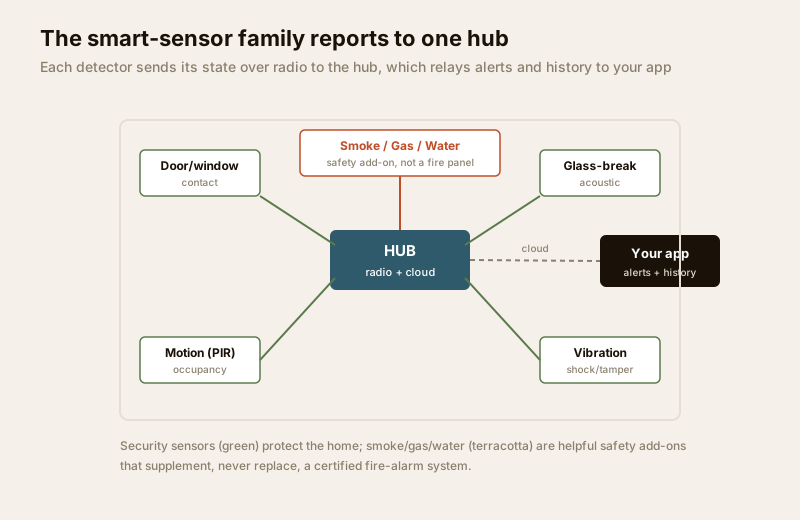
That reporting is why "smart" is worth having — and also where the honesty has to start. A sensor that reports is only as trustworthy as the link that carries the report. Hold that thought; it is the whole of the next two sections.
The smart-sensor family
A modern security system quietly absorbs sensors that were once separate products. It helps to see them as two groups: the security sensors that protect against intrusion, and the safety-adjacent sensors that watch for household hazards. Both can live on the same hub; they play very different roles.
| Sensor | What it detects | Primary job | Notes for an Indian home |
|---|---|---|---|
| Door/window contact | Open or closed | Perimeter intrusion | Cheapest, most reliable; cover main door, balcony doors, reachable windows — see the door and window guides |
| Motion (PIR) | Movement/body heat in a space | Interior catch behind the perimeter | Aim away from pets, kitchens, sunlit walls; detailed in the motion sensor guide |
| Glass-break | The sound signature of breaking glass | Windows and glazed doors | Best for real intrusion coverage; see the glass-break guide |
| Vibration/shock | Impact or tampering | Grilles, safes, boundary walls, the sensor itself | Useful as an early "someone is working on this" warning |
| Smoke/heat | Products of a fire | Household fire warning (add-on) | Helpful notification only — not a certified fire-alarm system |
| Gas/LPG | Combustible gas near the cylinder | Kitchen safety | Placement matters (LPG is heavier than air, sits low) |
| Water leak | Water where it should not be | Under sinks, near tanks, washing machines | Cheap insurance against slow, expensive damage |
| Temperature/humidity | Environmental drift | Comfort and asset protection | Often bundled into other sensors; drives automation more than alarm |
The security sensors are the spine. The safety-adjacent ones are genuine value — a leak caught early or an LPG warning is worth a great deal — but they must not confuse the picture. A smart smoke alert on your phone is welcome; treat it as a bonus that sits beside a proper fire-alarm system, never as the fire-alarm system itself.
The wireless reality: battery, radio, and the silent blind spot
Almost every smart sensor you retrofit is battery-powered and talks over radio. That is exactly what makes it easy to fit — stick it on, pair it, done, no walls to chase. The radio itself (Zigbee, Z-Wave, Thread, Wi-Fi or a proprietary band) is the hub's department; how those meshes behave is covered in the smart-security-hubs guide. The catch that lands on you is the battery.
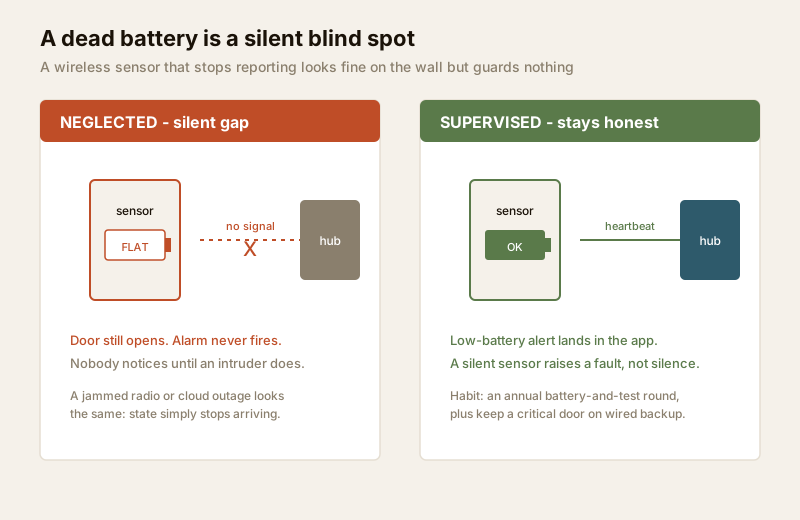
A dead sensor battery is the most dangerous failure in a smart system precisely because it is invisible. The sensor still sits on the door looking installed and reassuring. But it has stopped reporting. The door opens; nothing happens. Nobody notices — until an intruder does. A jammed radio or a cloud outage produces the same symptom: state simply stops arriving, and silence reads as "all quiet" unless the system is built to notice.
Two habits close this gap:
1. Insist on supervision and low-battery alerts. Good sensors send a periodic heartbeat; the hub raises a fault if one goes quiet, and warns you well before a battery dies. Cheap no-name sensors often do neither — they just stop. This alone is worth paying for.
2. Make replacement a routine, not a rescue. Put an annual (or per-manufacturer) battery-and-test round on the calendar: walk-test each sensor, swap tired cells, confirm every one still reports. For the few sensors that truly matter — the main door, perhaps — consider keeping them wired so there is no battery to fail at all.
The principle underneath both: a critical sensor should fail loud. Loss of contact must raise an alert, not vanish into a quiet that feels like safety.
Placement and taming false alarms
The discipline that makes a plain sensor work makes a smart one work too — smart adds reporting, not physics. Bad placement produces two failures: misses (a sensor that never sees the intruder) and false alarms (a sensor that cries wolf until you stop believing it). In India, 50 pointless motion pings a day is a real thing, and alert fatigue is a security hole: you eventually mute the very system meant to warn you.
The type-specific detail lives in the dedicated guides, but the shared rules are worth stating together:
- Motion (PIR): aim it away from trouble. Keep it off kitchens and cooking heat, direct sunlight on walls, AC and fan draughts, and the path pets and street traffic take. Point it across a room, not at a window. If you have pets, choose pet-immune units and mount at the recommended height — the motion sensor guide has the specifics.
- Contacts: align the two halves. Magnet and sensor must sit within their working gap and stay parallel; a warped door or a sloppy fit causes phantom "open" events. Detail in the door and window guides.
- Glass-break: line of sound, not line of sight. These listen, so they need to hear the glazing they protect and be kept away from constant sharp household noise. See the glass-break guide.
- Safety sensors: physics dictates the spot. Smoke rises (mount high, off the kitchen to avoid cooking smoke), LPG sinks (mount low, near the cylinder), leak sensors go on the floor at the lowest likely wet point.
Getting this right is what separates a system you trust from one you mute. If you want a structured way to check whether your coverage actually holds up, the home-security risk scorecard walks you through the gaps.
Using sensors for automation, not just alarm
Here is the genuinely fun part of "smart", and the part that needs a firm boundary. Because a smart sensor reports state all the time, its signals can drive the home:
- A contact sensor on the front door turns on the hallway light after dark as you walk in.
- A motion sensor in the hall starts a short camera clip and nudges the porch light — useful whether or not the alarm is armed.
- Occupancy sensing across rooms can switch off lights and fans in empty spaces, or set an "everyone out" scene.
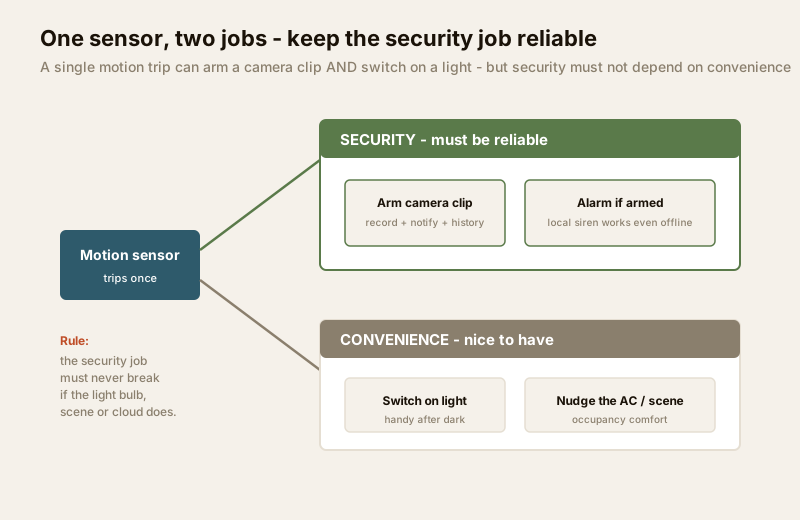
The rule that keeps this from backfiring: the security job must never depend on the convenience job. A motion trip can both arm a camera clip and switch on a light — but if the light bulb is unplugged, the scene is misconfigured, or the cloud is down, the alarm and the camera must still do their work. Build the automations on top of a security layer that stands on its own, and keep the security-critical sensors out of the tangle of convenience scenes where a stray edit can silently disable them. The wider craft of wiring these together well is its own topic in the smart-home hub.
The honest limits
Smart sensing is awareness, not armour. Be clear-eyed about what it cannot do, and design around it:
- A flat battery or jammed radio is a blind spot. Covered above — the fix is supervision, low-battery alerts and a replacement habit, with wired backup for what matters most.
- A cloud outage can mute your notifications. If alerts route only through a vendor server, an outage or a discontinued app can silence them. Prefer systems where the local alarm and siren work without the internet, and where the hub can alert on the local network, not only via a faraway cloud.
- A power cut disables the unpowered parts. In a long Indian power cut, mains-powered devices and any router-dependent path go dark. Battery sensors survive; the hub, router and cameras may not without a backup supply. Plan the fallback.
- Detection for real security must be robust. For genuine intrusion protection, lean on well-placed contacts and glass-break sensors on the actual entry points, backed by a panic button for a person who needs to raise the alarm directly. Do not let convenience automations dilute this core.
- Cheap sensors are a cyber liability. A no-name sensor or bridge on a default password is an easy foothold onto your network — the same story as the botnet-recruited budget camera. Change defaults, keep firmware current, and read the smart-security cybersecurity guide before you buy the cheapest option.
None of this means "do not go smart". It means go smart with the fallback built in.
Smart smoke, gas and water: helpful, but know their place
It is worth repeating on its own, because it is where people are most tempted to over-trust an app. A smart smoke or heat sensor that pings your phone is a real benefit — especially for an empty home or a second property. But it is a notification add-on, not a certified fire-alarm system. It has not been engineered, sized or commissioned to a fire code; it can be muted by a dead battery, a cloud outage or a phone left on silent. For any home or building where fire detection genuinely matters, a certified system is the answer — see the addressable fire-alarm systems guide — and the smart sensor sits alongside it as a convenience, never in its place. Gas and water sensors carry less regulatory weight but the same mindset: welcome early warning, not a reason to skip good plumbing and safe LPG practice.
Key takeaways
- A smart sensor reports its state to a hub and app, drives automations and keeps a history — a plain alarm sensor only triggers a siren. That reporting is the value, and its reliability is the risk.
- The family spans security sensors (door/window contact, motion, glass-break, vibration) and safety-adjacent ones (smoke/heat, gas/LPG, water, temperature). All can share a hub; they play different roles.
- Most smart sensors are battery plus radio. A dead battery is a silent blind spot — demand supervision and low-battery alerts, keep a replacement habit, and wire the few sensors that truly matter.
- Placement discipline is the same as for any sensor: aim motion away from pets, heat and traffic; align contacts; give glass-break a clear line of sound. Avoid alert fatigue, or you will mute the system.
- Use sensors for automation freely — but the security job must never depend on the convenience job. Build scenes on top of a security layer that stands alone.
- Smart smoke/gas/water alerts are add-ons. A smart smoke sensor is not a certified fire-alarm system.
Where to go next
- The pillar: the complete guide to smart-home security in India.
- The radio and brain behind the sensors: smart security hubs.
- Sensor-type deep-dives: door sensors, window sensors, motion sensors, glass-break sensors.
- A person-triggered alarm: panic buttons.
- Keeping cheap sensors from becoming a way in: smart-security cybersecurity.
- Certified fire detection, done properly: addressable fire-alarm systems.
- Check your coverage: the home-security risk scorecard.
- Browse the whole security hub and the smart-home security section.
References
- Digital Personal Data Protection Act, 2023 (India) — personal and behavioural data obligations for connected devices that log occupancy and movement.
- National Building Code of India (NBC), SP 7:2026, Bureau of Indian Standards — the reference for certified fire detection and life-safety systems that a smart smoke sensor supplements but does not replace.
- Matter, Zigbee, Z-Wave, Thread and Wi-Fi — the connectivity standards over which smart sensors report to a hub; verify current versions and device support at purchase.
- Bureau of Indian Standards (BIS) and Bureau of Energy Efficiency (BEE) — for product safety and energy marks on mains-powered devices; confirm certification on the specific product.
This guide is educational and reflects general good practice for choosing and deploying smart sensors in Indian homes; it is not legal, fire-safety or engineering advice. Device capabilities, standards and regulations change — verify the current specification of any product and engage a licensed professional for mains-powered, certified fire, or life-safety work.
Export this guide
Related Guides — Deep-dive reading
Security Fire Alarm Integration in India (2026): Smart Alerts, Certified Systems, Fail-Safe Egress
The most important sentence a smart-home designer can say about fire is also the least profitable: a smart-home smoke sensor or fire notification is a helpful add-on, not a substitute for a certified fire-alarm system. This guide draws the line hard — life-safety detection and alarm belongs to the NBC-governed certified system — and then covers the genuinely useful, correctly-scoped automations the smart layer can add on a verified fire signal: unlock for egress, open the gate for the fire tender, light the escape path, stop the away-scene, and notify everyone loudly. All of it fail-safe. None of it in the way of the system that actually saves lives.
SecurityLPG Leak Detectors in India (2026): The Kitchen Gas Alarm Every Home Should Fit
Almost every Indian home cooks on LPG or PNG, and a leak pools invisibly until one spark ignites it. Here is the cheap kitchen gas alarm to fit, and the one placement rule that decides whether it works.
SecuritySmart Home Maintenance & Troubleshooting for Indian Homes
A smart home is not a one-time purchase — it is a small fleet of computers that needs firmware updates, fresh batteries, occasional reboots and a plan for the day a manufacturer switches off the cloud. This guide gives you a maintenance calendar, a troubleshooting flow for the failures Indian homes actually see, and the UPS and security hygiene that keep it all running through power cuts and voltage swings.
Smart HomeRelated Tools — Try Free
Home Security Risk Scorecard
Score your home across six security layers — perimeter, entry points, lighting, detection, alarm and habits — and get a prioritised action plan.
Security ScorecardStamp Duty Calculator — All Indian States
Stamp duty + registration charges for all 28 states and 8 UTs — gender concessions, urban/rural variants, metro cess built in.
Stamp DutyCross-Ventilation Analyzer
Estimate airflow and air changes per hour (ACH) from room size, window areas, layout, and local wind — with NBC 2016 Part 8 compliance check.
Ventilation Calculator