
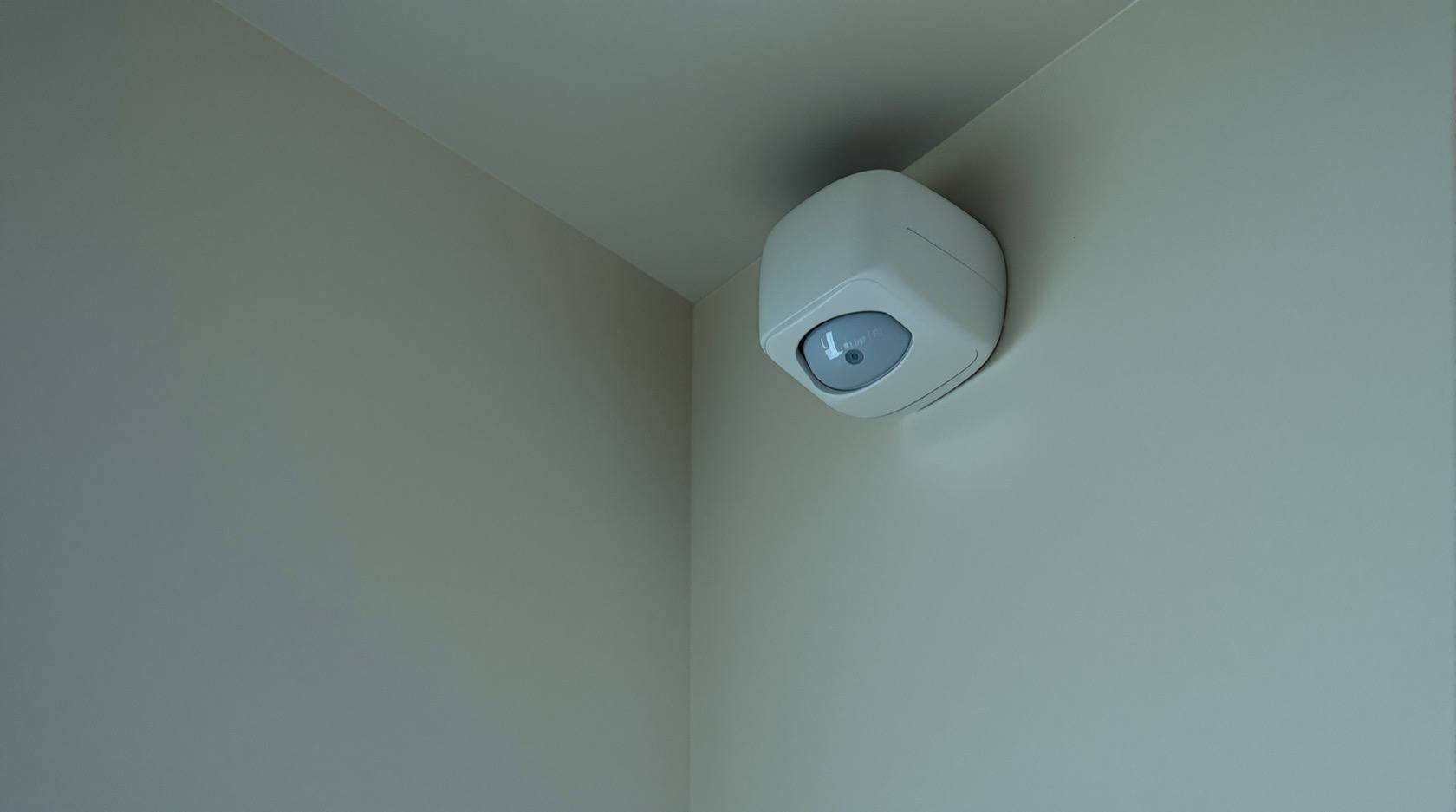
PIR vs Microwave Sensor (2026): Which Motion Sensor for Indian Homes?
A neutral head-to-head between passive-infrared (PIR) and microwave (radar) motion sensors for intruder detection in an Indian home — how each detects, where each false-triggers, how they cover a room, and why their opposite weaknesses make dual-technology the honest best-of-both.
You are fitting motion sensors to a burglar alarm and the datasheet offers you two words that mean nothing until someone explains them: PIR and microwave. They are the two main ways a sensor notices that something is moving in a room, and they work on completely different physics. Pick wrongly and you either miss an intruder or, far more commonly, spend your evenings resetting an alarm that keeps crying wolf.
The honest one-line answer: for almost every room in an ordinary Indian home, a well-aimed PIR is the right sensor — cheap, reliable and low on false alarms. Microwave alone is rarely the home answer because it is too eager and triggers on movement it should not see. But their weaknesses are opposite, and that single fact is the reason a third option exists — the dual-technology sensor, which combines both and is the genuine "best of both" where a false alarm would be costly.
Scope and how to read this. This is a neutral head-to-head to help a homeowner choose, not a sales pitch for either technology or a price list — both are legitimate and both win in some setting. It is not a buying or cost guide; for money and models, follow the cross-links. Motion sensors are a detection layer, not a life-safety device — never wire one so that it can lock a person in. If your alarm is protecting something valuable, treat the sensor choice as one part of a designed system and involve a competent installer.
What each one actually is
The two sensors answer the question "is something moving here?" in opposite ways.
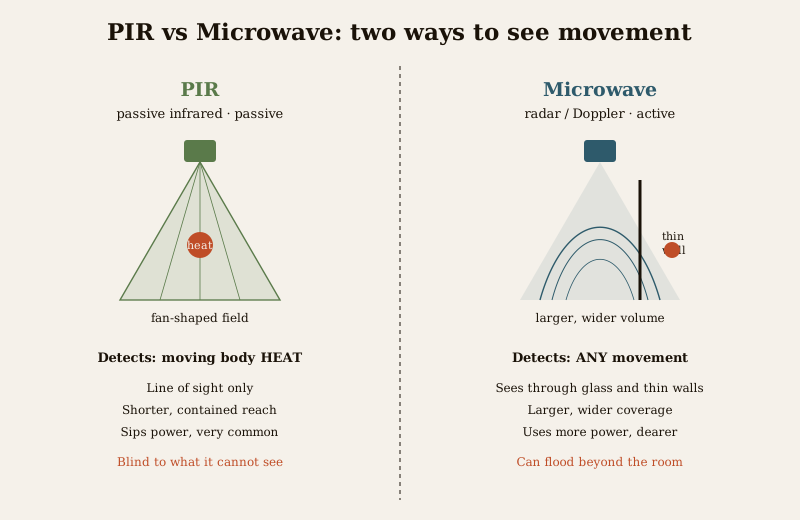
PIR — passive infrared. A PIR sensor is passive: it emits nothing. It simply watches the infrared (heat) that everything warm gives off, and looks for that heat moving across its field of view. A human body is warmer than a room, so when a person walks across the sensor's fan of detection zones, the warm shape crosses from one zone to the next and the sensor fires. Two things follow from this. First, a PIR only sees what is directly in front of it, within line of sight — it cannot see around a wall or through furniture. Second, it needs movement of heat, so it is naturally deaf to a swaying curtain or a rolling ball that is at room temperature.
Microwave — radar. A microwave sensor is active: it continuously emits low-power microwave (radar) energy and listens to the echo. When something moves, the frequency of the returning echo shifts slightly — the Doppler effect, the same reason a passing horn changes pitch. Any movement changes the echo, so a microwave sensor detects motion of any kind, warm or not. Crucially, radar passes through many thin, non-metallic materials — glass, plasterboard, thin partition walls, a wooden door — so a microwave sensor can "see" movement that a PIR never could. That penetration is both its superpower and its curse.
The head-to-head
Here is where the two differ across the dimensions that decide a home installation. Neither column is all good or all bad — each strength has a matching cost.
| Dimension | PIR (passive infrared) | Microwave (radar) |
|---|---|---|
| How it detects | Moving body heat crossing its field | Any movement, via Doppler shift in a radar echo |
| Needs heat? | Yes — target must be warmer than room | No — detects motion of any object |
| What it sees through | Nothing — line of sight only | Thin walls, glass, doors, furniture |
| Coverage | Shorter, a defined fan; blind to what it cannot see | Larger, wider volume; can flood beyond the room |
| Typical false triggers | Sun, heat sources, warm airflow, pets, AC/heater draughts | A fan, moving foliage outside a window, people in the next room through a thin wall |
| Power use | Very low — sips battery, ideal for wireless | Higher — constantly transmitting, heavier on battery |
| Cost | Generally cheaper, very common | Generally dearer, less common alone at home |
| Best home role | The default room sensor | Rarely alone; large areas, or paired in dual-tech |
Read that table and the pattern jumps out. PIR is contained, frugal and predictable, but blind to things it cannot directly see and fooled by heat it should ignore. Microwave is far-reaching and hard to hide from, but so eager that it fires on movement it should ignore — often movement that is not even in the room you are guarding.
Where each one false-triggers — the opposite weakness
Nuisance alarms are the single biggest reason home motion detection fails in practice: after a few 2 a.m. false alerts, people stop trusting and eventually stop arming the system. So the false-trigger behaviour matters more than any spec.
PIR false-triggers on heat and motion of heat. Direct sun creeping across a floor, a heater or a warm appliance, a gust of hot air from an air-conditioner or an open window, the family pet trotting across the beam — anything that presents moving warmth can fool a PIR. In an Indian home the sun and the AC/fan draught are the usual culprits. The fixes are almost all about aiming: keep it off windows and direct sun, away from vents and heat sources, and choose a pet-immune model or mounting if you have animals. This is covered in depth in the motion-sensor false triggers guide.
Microwave false-triggers on movement beyond the room — the classic problem. Because radar passes through thin walls and glass, a microwave sensor happily detects things you never meant to guard: a ceiling fan spinning, curtains or foliage swaying outside a window, rain-lashed plants, and — the notorious one — a family member walking about in the next room through a thin partition wall. It has no way of knowing that movement is "outside" the protected space; to the radar it is just movement. This is why a microwave sensor used alone in a normal home is usually a mistake: it will find something to trigger on.
The key insight: the two have opposite weaknesses. PIR is fooled by heat that moves; microwave is fooled by movement it should not be able to see. A PIR ignores the fan and the neighbour through the wall; a microwave ignores the sunbeam and the warm draught. Neither weakness overlaps with the other — and that is the whole basis of the smartest option below.
The honest best-of-both: dual-technology sensors
Because PIR and microwave fail on different things, a sensor that contains both and only raises the alarm when both agree is dramatically harder to fool. A moving sunbeam trips the PIR but not the microwave, so no alarm. A ceiling fan trips the microwave but not the PIR, so no alarm. Only a real intruder — a warm body that is actually moving through the room — sets off both at once and produces an alert. This "must agree" logic (often called AND logic) is exactly what a dual-technology sensor does, and it slashes false alarms while keeping genuine detection reliable.
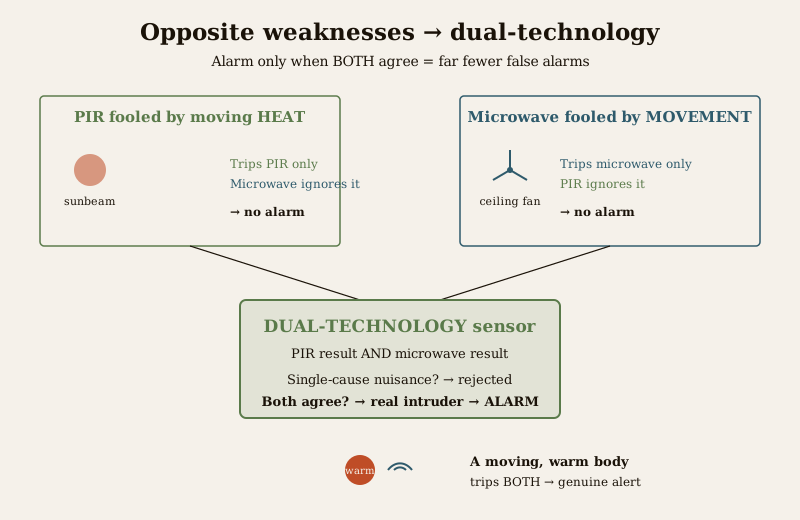
Dual-tech is not magic — requiring both to agree can, in theory, make it slightly less sensitive at the far edges, and it costs more and uses more power than a plain PIR. But for any spot where a false alarm is genuinely costly — a monitored alarm that dispatches a response, a shop, a room you cannot afford to nuisance-trip — it is the honest right answer. The full picture is in the dual-technology sensors guide. For the single-technology detail on each side, see the motion sensors guide and the microwave sensors guide.
Which suits whom
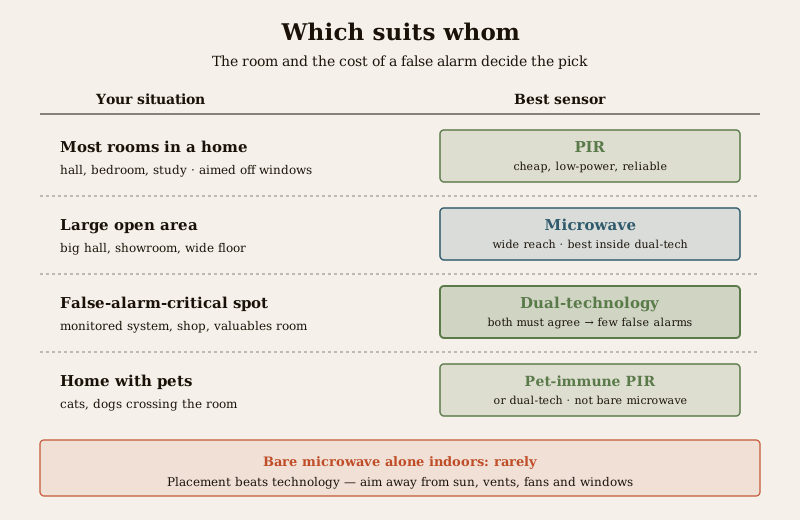
There is no universal winner — the right pick is set by the room and by how costly a false alarm is.
- Most rooms in an ordinary home — PIR. A hall, bedroom, landing or study, aimed away from windows, sun and vents, is textbook PIR territory. It is cheap, sips battery (so it suits wireless sensors), and if positioned sensibly it is low on false alarms. This is the default and it is the right default.
- A large open area — microwave, usually as part of a dual-tech unit. A big hall, a warehouse floor or a wide showroom where one sensor must cover a large volume plays to microwave's longer, wider reach. Even here, in a home, prefer it inside a dual-tech sensor rather than alone.
- A false-alarm-critical spot — dual-technology. Anywhere a nuisance alarm has a real cost — a professionally monitored system, a valuables room, a business — the "both must agree" dual-tech sensor earns its higher price.
- Homes with pets — a pet-immune PIR (or dual-tech). Choose a PIR designed to ignore animals below a weight, or mount to keep pets out of the beam. A raw microwave sensor is a poor pet choice because it reacts to any movement.
- Microwave alone in a normal home — rarely. The through-wall and beyond-the-room triggering usually makes it more trouble than it is worth on its own indoors.
How to decide
Work the choice in this order and it resolves itself:
1. Start with PIR as the default. For the great majority of home rooms, a well-aimed PIR is correct. Only move off it for a reason.
2. Ask how costly a false alarm is here. If a nuisance trip would dispatch a guard, wake a street, or you simply cannot tolerate it, step up to dual-technology — its "both must agree" logic is the reliable fix.
3. Ask how big and open the space is. If one sensor must cover a large volume, microwave's reach helps — but house it in a dual-tech unit rather than run it alone indoors.
4. Account for pets and layout. Animals, big windows, direct sun, fans and AC vents all push you towards a pet-immune PIR or a dual-tech sensor and, above all, towards aiming the sensor well — most false alarms are a placement problem, not a technology problem.
5. Remember power and wiring. PIR's low draw suits battery/wireless sensors; microwave and dual-tech draw more, which matters for a wireless install.
The technology matters less than most people fear and placement matters more than most people realise. Choose PIR for ordinary rooms, dual-technology where a false alarm is costly, and reserve bare microwave for the rare large-area case — and aim whatever you fit away from sun, vents, fans and windows.
Key takeaways
- PIR is passive — it reads moving body heat in line of sight; cheap, low-power, contained, the default home sensor.
- Microwave is active radar — it detects any movement via Doppler and passes through thin walls and glass, covering a larger area but flooding beyond the room.
- Their weaknesses are opposite — PIR is fooled by moving heat (sun, draughts, pets); microwave by movement it should not see (fans, foliage, the next room through a thin wall).
- Dual-technology alarms only when both agree — this rejects single-cause nuisances and is the honest best-of-both where a false alarm is costly.
- Which suits whom — PIR for most rooms, microwave for large areas (best inside a dual-tech unit), dual-tech for false-alarm-critical spots, pet-immune PIR for homes with animals.
- Placement beats technology — most false alarms come from poor aiming, not the wrong sensor.
Where to go next
- Motion sensors guide and microwave sensors guide — the full single-technology detail on each side.
- Dual-technology sensors guide — the combined "both must agree" sensor in depth.
- Motion-sensor false triggers guide — how to aim and choose to stop nuisance alarms.
- The security comparison guide pillar and the security comparisons sub-hub, plus burglar alarms and the main security hub.
References
- Bureau of Indian Standards (BIS) catalogue — for the current status of any Indian Standard referenced by an installer for intruder-alarm and detection equipment, verify at https://www.services.bis.gov.in/
- Digital Personal Data Protection Act, 2023 — where a motion sensor is part of a wider system that also records video or is monitored remotely, the footage and logs hold personal data; agree who may view them, retention and access in writing.
- Doppler effect and passive infrared detection — the underlying physics of, respectively, microwave (radar) and PIR sensing, as described in standard sensing and building-services references.
This is an educational, neutral comparison for homeowners choosing a motion sensor — not installation advice, a buying guide or a price list. Motion sensors are a detection layer, not a life-safety device; never install one so that it can trap a person, and engage a competent installer for a system protecting anything of real value.
Export this guide
Related Guides — Deep-dive reading
Dual-Technology Sensors in India (2026): PIR + Microwave, Fewer False Alarms
How dual-technology motion sensors combine a PIR and a microwave detector in one unit and only trigger when BOTH agree, cutting the false alarms that make Indian homeowners give up and stop arming the system.
SecurityFalse Alarm Prevention for Burglar Alarms in India: Causes & Fixes (2026)
Why home alarms cry wolf — ceiling fans, pets, heat, insects, weak batteries, power blips and poor door alignment — and how correct placement, the right sensors and simple upkeep keep the system trusted and armed.
SecurityHow to Choose a Burglar Alarm in India (2026): Sensors, Alerts and What Actually Matters
A homeowner's guide to selecting an intruder alarm that fits your flat, villa or shop and alerts you the way you want — matching the sensor mix, control panel and the big siren-versus-monitored decision to your real risk, and dodging the false-alarm traps that make people switch systems off.
SecurityRelated Tools — Try Free
Cross-Ventilation Analyzer
Estimate airflow and air changes per hour (ACH) from room size, window areas, layout, and local wind — with NBC 2016 Part 8 compliance check.
Ventilation CalculatorWindow Material Comparison Tool
Compare uPVC, aluminium, wood, steel and composite windows on cost, life, upkeep and insulation.
CompareFalse Ceiling Cost Estimator
Live ₹/sqft across 8 ceiling types — POP, gypsum, designer, metal, PVC, wooden — with cove and spot lighting for 20 Indian cities.
Cost Calculator