

Designing a Lift into a New House (India): Getting It Right at the Plan Stage
Where to place the lift, which type to commit to early, what shell to reserve, and how to coordinate architect, structural engineer and vendor before a single column is cast.
The Cheapest Lift You Will Ever Buy Is the One You Draw at the Plan Stage
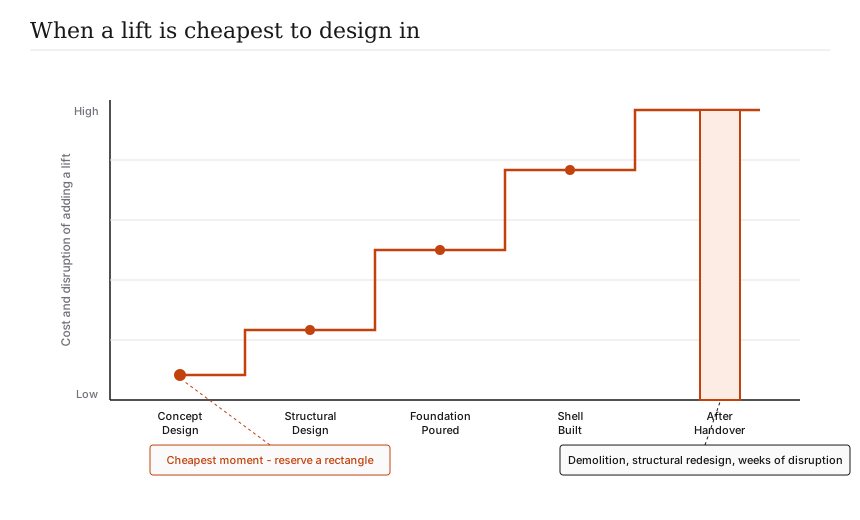
If you are building a new house and there is any chance you will want a lift — now, or in ten years when knees and parents and stairs stop being friends — the single most valuable decision you can make is to put it on the drawings before a single column is cast. A lift designed into a plan is a reserved rectangle, a slightly deeper pit, a thicker wall and a spare conduit. A lift cut into a finished house is demolition, dust, a structural redesign and weeks of disruption. The difference between the two is often several lakh rupees and a great deal of regret.
This guide is about getting the lift right at the design stage of a brand-new home — where to place it, what type to commit to early, what to reserve in the shell, who to coordinate, and how to budget for it before the foundation goes in. It is deliberately distinct from two sibling guides: if you are not sure you want a lift yet but want to keep the option open cheaply, read Lift-Ready: Future-Proofing Your Home; if the house is already built and you now need to add one, read Retrofitting a Lift into an Existing Home. This guide assumes you are committing to a real lift, on the drawings, from day one.
A lift on the plan costs a rectangle. A lift in a finished house costs a wall, a slab and a season.
For the wider professional context — how the architect runs the whole residential lift question end to end — this guide sits under the Architect's Residential Elevator Handbook, the pillar for this cluster.
Why the Plan Stage Is the Decisive Moment
A lift is not a fitting you add to a room. It is a vertical structure that punches through every floor of the house, lands on its own pit, and feeds loads into walls that must be designed for it. Almost every expensive lift mistake traces back to a decision that was cheap to make on paper and ruinous to change in concrete:
- The shaft footprint. Get it right on the plan and it costs nothing. Discover it is 100 mm too narrow after the walls are up and you are demolishing.
- The pit. A pit is a waterproof concrete box that sits below the lowest floor. Forming it during the raft/foundation pour is routine. Excavating it under a finished ground-floor slab is a major operation.
- Headroom. The overhead clearance above the top floor must be reserved before the roof slab level is fixed. Afterwards you are raising a parapet or losing a lift type.
- Loads into walls. Guide-rail brackets feed both vertical and horizontal forces into the shaft walls. The structural engineer must know this before designing those walls — see Structural Design for a Home Lift.
- Power. A spare three-phase (or single-phase) feed and a conduit run to the shaft cost almost nothing to lay during first-fix wiring.
Every one of these is trivial on a drawing and severe in a built house. That asymmetry is the whole argument for designing the lift in now.
Where to Put It: Placement in the Plan
The lift's position is the first thing to fix, because it constrains the staircase, the circulation and the structural grid. Five rules carry most of the value.
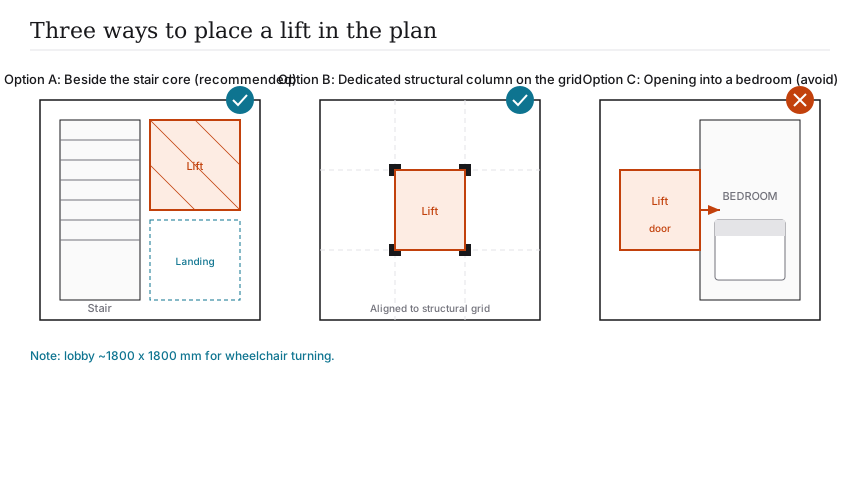
1. Locate it beside the stair core
A lift and a staircase serve the same job — moving people between floors — so they belong together, in one compact vertical circulation core. Putting them side by side means one structural zone, one daylit landing per floor, and a natural fallback: if the lift is out of service or the power fails, the stair is right there. This also keeps the lift out of the middle of your living spaces. The integration of the two is worth its own read — see Integrating a Lift with the Staircase and the broader Designing a Staircase in India.
2. Serve every floor it needs to
This sounds obvious and is routinely botched. The shaft must stack cleanly from the pit to the top served floor, with a usable landing and lobby at each stop. A lift that skips the floor where your parents will sleep, or lands in a cramped corner with no turning space, fails its purpose. Reserve a lobby of roughly 1800 mm by 1800 mm at each accessible stop so a wheelchair can turn — the CPWD barrier-free benchmark.
3. Never open a lift directly into a bedroom
A lift door should open onto a landing, lobby or circulation space — never directly into a private room. A lift opening into a bedroom is noisy, it compromises privacy, and it forces people to pass through a private space to reach other floors. Plan the door to face a hall or landing every time.
4. Keep the shaft against fixed, load-bearing lines
Place the shaft where its walls can be solid RCC that run the full height of the house, ideally aligned with the structural grid. A shaft straddling a span you later want column-free, or wrapped around a bathroom you may move, is trouble.
5. Respect Vastu as a client preference, not an engineering rule
Many Indian families have strong Vastu views on lift placement. Traditional guidance favours the north or north-east, accepts south-east or north-west in many readings, and avoids the south-west corner (kept "heavy" and grounding), the exact centre/Brahmasthan, and a position directly opposite the main door. Since the staircase is traditionally placed in the south-west and the lift sits beside the stair, these two preferences can pull against each other — resolve it with the family early. Treat Vastu as a cultural preference to reconcile with spatial and structural reality; where they genuinely conflict, safety and engineering win. The dedicated read is Lift Placement and Vastu, with the wider Staircase Vastu and Vastu House Plan guides.
Choosing the Type Early — Because the Type Sets the Shell
You cannot reserve a pit, a headroom and a shaft until you know the broad lift type, because each type demands a different shell. Committing to a family of lift early — even before you pick a brand — is what lets the architect freeze dimensions. The four home options and what they ask of the building:
| Lift type | Pit depth | Shaft / structure | Power | Indicative cost | Why choose it for a new build |
|---|---|---|---|---|---|
| Traction MRL (machine-room-less) | ~300–610 mm (some gearless 1200–1500 mm) | RCC shaft; machine sits in hoistway top | Often three-phase | ₹10–25 lakh+ | The 2026 default: efficient, smooth, no separate machine room |
| Hydraulic | ~150–300 mm | RCC shaft; small power-pack cabinet nearby | Single- or three-phase | ₹8–20 lakh | Quiet, smooth, cost-effective for low rise (2–4 floors) |
| Screw / winding-drum | ~150–300 mm | Self-supporting; compact | Often single-phase | ₹14–30 lakh | Low pit, low maintenance, compact footprint |
| Pneumatic Vacuum (PVE) | None | No pit, no shaft, self-supporting; panoramic glass | Single-phase | ₹11–22 lakh | Smallest building impact; limited to ~2–3 persons and modest travel |
All figures are indicative — confirm with your local municipal bye-laws and a licensed lift contractor, and add 18% GST; civil work (shaft, pit, electricals) and installation are usually extra. For a new build with two or more proper floors and a family that wants accessibility, a traction MRL is the most common sensible default; for a low, quiet, cost-sensitive home, hydraulic competes well. PVE is brilliant when building impact must be near zero, but its capacity and travel limits mean you should choose it eyes-open. The full comparison lives in the Residential Elevator Buyer's Guide; the type decision also drives every space number in Home Lift Space Requirements.
Decide the lift family before you freeze the floor levels. The type writes the pit, the headroom and the shaft — not the other way round.
Reserving the Shell: Shaft, Pit, Headroom and Power
Once the type is chosen, the architect reserves four things in the shell. These reservations are the heart of designing a lift into a new house.
The shaft (hoistway)
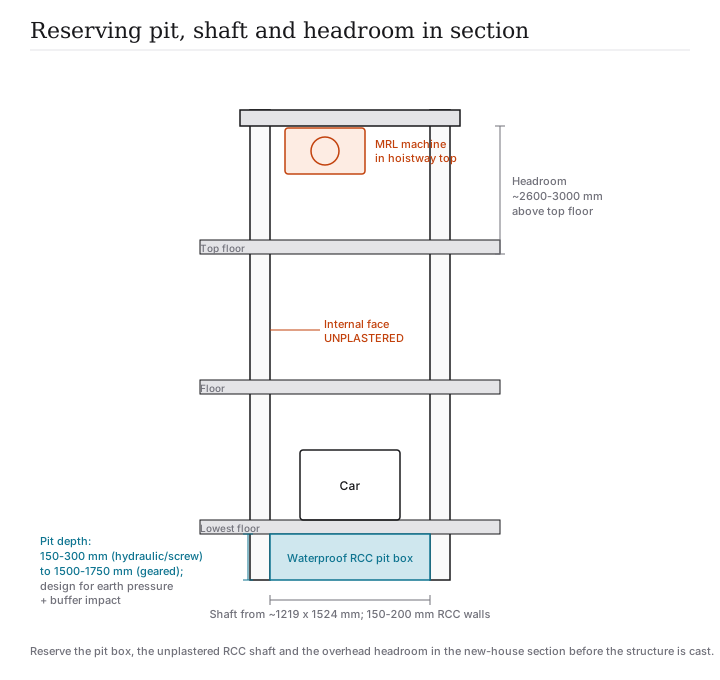
Reserve a clear rectangle, full height, from pit floor to overhead. A small home car starts from roughly 1219 mm by 1524 mm (4 by 5 feet) internal shaft and grows with capacity and door type. Build the shaft as 150–200 mm RCC walls and leave the internal face unplastered — plaster eats into clearances and can spall onto running gear. The walls must be designed to take guide-rail bracket reactions, so the structural engineer needs the vendor's loads. Full detail is in the Lift Shaft Design Guide.
The pit
The pit is a waterproof RCC box below the lowest floor — depth from ~150–300 mm for hydraulic/screw to ~1500–1750 mm for some geared/gearless types (PVE needs none). Because it sits below ground, design its walls for lateral earth pressure, and give the pit slab buffer-impact capacity. Forming it in the foundation pour is routine; cutting it later is not. See Lift Pit Requirements.
Headroom and machine space
Reserve overhead clearance of roughly 2600–3000 mm above the top served floor. The 2026 norm is MRL — the machine sits in the hoistway top, so no separate machine room is needed; where a machine room or hoist beam does exist, the overhead slab and beam must carry the supplier's stated loads. The machine-room question is covered in Lift Machine Room Requirements.
Power and the essentials
Lay a dedicated feed to the shaft during first-fix — single-phase suffices for small home lifts, three-phase for larger traction. Reserve room for an ARD (Automatic Rescue Device) battery: in India's outage-prone supply, an ARD that brings the car to the nearest floor and opens the doors on a power cut is non-negotiable. Plan from the start for automatic telescopic doors (manual swing doors are cheap but block wheelchairs), a ≥900 mm clear door, and the accessible-car package — see Accessible Home Design.
Coordinating the Three Parties Before You Pour
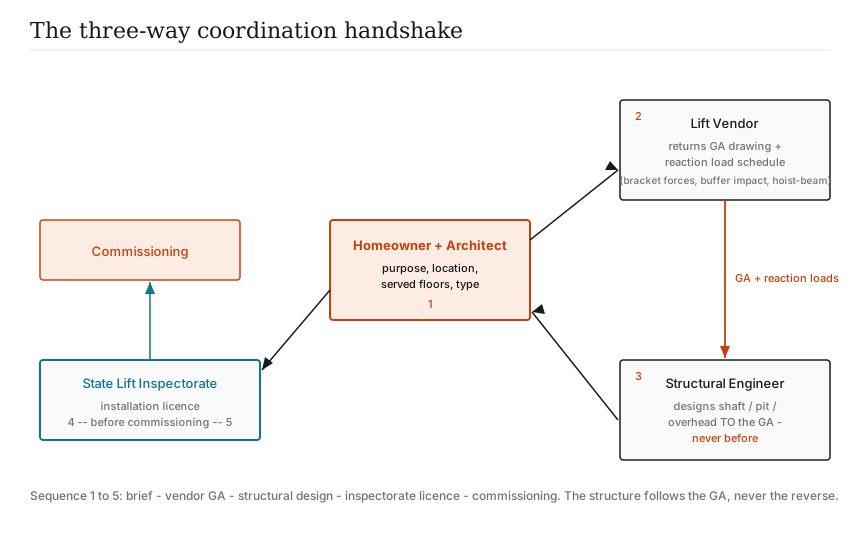
A well-designed lift is a three-way handshake, and the sequence matters more than anything. The fatal error is letting the structural engineer design the shaft, pit and overhead before the lift vendor's general-arrangement (GA) drawing is fixed. Pit slabs and overhead slabs crack when buffer and impact forces are underestimated — and those forces come from the supplier's reaction schedule, not a textbook.
The correct order:
1. Homeowner + architect agree the lift's purpose, location beside the stair, served floors and broad type.
2. Architect briefs the vendor with the reserved footprint; the vendor returns a general-arrangement drawing with exact shaft, pit, headroom, door and capacity dimensions, plus a reaction load schedule (guide-rail bracket forces, buffer-impact loads, any hoist-beam live load).
3. Structural engineer designs the shaft walls, pit box and overhead slab to that GA and those loads — never before. Guide-rail bracket positions and intervals come from the vendor.
4. Architect coordinates the result back into the plan — landing levels, lobby sizes, door swings, power route — and locks it before the shell is cast.
5. State licence and inspection are factored in: lifts are state-regulated in roughly ten states (Maharashtra, Gujarat, Karnataka, Kerala, Tamil Nadu, Assam, West Bengal, Delhi, Haryana, Himachal Pradesh), typically requiring an installation licence before commissioning, an operation licence/registration, and periodic inspection by the government lift inspectorate. Build this into the programme, not the punch list.
Never finalise the shaft before the vendor's general-arrangement is fixed. The structure follows the GA — always.
Budgeting at the Design Stage
Budget the lift while you are still designing, so it is funded as part of the build rather than scraped together at the end. Three layers to provision for:
| Layer | What it covers | Indicative figure (verify locally) |
|---|---|---|
| Lift equipment | The car, drive, doors, controller, ARD | ₹8–30 lakh by type (Hydraulic ₹8–20 L; Traction ₹10–25 L+; PVE ₹11–22 L; Screw ₹14–30 L); 2-floor ≈ ₹11.99–18 L |
| Civil and electrical | Shaft, pit, overhead, power feed, conduits | Usually extra, over and above equipment |
| Taxes and recurring | GST and annual upkeep | 18% GST on equipment; AMC ≈ ₹20,000–38,500/yr |
Two budget rules for the design stage. First, the equipment price you are quoted almost never includes civil work and installation — provision for those separately or you will be surprised. Second, decide your AMC philosophy early: a comprehensive ("bumper-to-bumper") contract costs roughly 60–70% more than a non-comprehensive one but caps surprise repair bills, and standard service is around 12 monthly preventive visits a year plus emergency calls. The full money picture is in Home Lift Cost in India 2026.
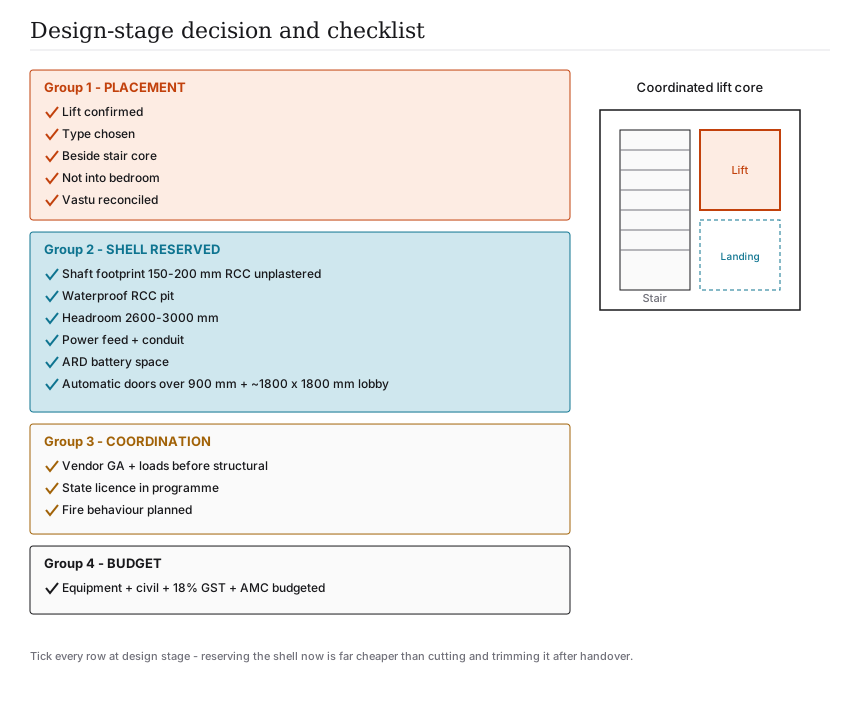
The Design-Stage Decision and Checklist Table
Run through this before the structural drawings are finalised. If any row is unresolved, the shell is not ready to cast.
| # | Decision / item | Resolved by | Why it must be settled now |
|---|---|---|---|
| 1 | Is a lift definitely going in? | Homeowner + architect | A definite "yes" means a real shaft; a "maybe" means read the lift-ready guide instead |
| 2 | Which lift family (traction MRL / hydraulic / screw / PVE)? | Homeowner + vendor | The type sets pit depth, headroom and shaft size |
| 3 | Location beside the stair core, serving every needed floor? | Architect | Fixes the circulation core and structural grid |
| 4 | No lift door opening into a bedroom? | Architect | Privacy, noise and circulation |
| 5 | Vastu preference reconciled with placement? | Homeowner + architect | Avoid late, costly relocation; manage expectations |
| 6 | Shaft footprint reserved (from ~1219 by 1524 mm), 150–200 mm RCC, unplastered internal face? | Architect + structural | Cannot widen later without demolition |
| 7 | Pit reserved as waterproof RCC box, correct depth for the type, designed for earth pressure and buffer impact? | Structural | Formed in the foundation pour, not cut later |
| 8 | Headroom reserved (~2600–3000 mm) above top floor; MRL vs machine room decided? | Architect + structural | Set before roof slab level is frozen |
| 9 | Power feed (single- or three-phase) and conduit run to shaft in first-fix? | Architect + MEP | Near-free now, disruptive later |
| 10 | ARD battery space reserved? | Vendor | Essential against power cuts |
| 11 | Automatic doors, ≥900 mm clear door, accessible car, ~1800 by 1800 mm lobby? | Architect | Future accessibility and wheelchair turning |
| 12 | Vendor GA drawing + reaction loads issued BEFORE structural design? | Vendor → structural | Pit/overhead slabs crack if loads are guessed |
| 13 | State lift licence/registration and inspection in the programme? | Homeowner + contractor | Required before commissioning in ~10 states |
| 14 | Lift equipment + civil + 18% GST + AMC all budgeted? | Homeowner | Avoid an end-of-project funding scramble |
| 15 | Fire behaviour planned (lift not an escape route; fire-rated landing doors; fireman's lift only if above the height trigger)? | Architect | Compartmentation and code compliance |
A standard home/passenger lift is not a fire escape — occupants use the stairs, and the lift should return to a designated floor and park with doors open on a fire alarm. A fireman's lift is generally required only above 15 m (some residential rules set 30 m); most independent houses fall below this, but verify the threshold and any fire NOC locally. The dedicated read is Lift Fire-Safety Planning.
Putting It Together
Designing a lift into a new house is not hard — it is just unforgiving about timing. Decide early whether the lift is real, choose its family, place it beside the stair where it serves every floor and never opens into a bedroom, and then reserve the shaft, pit, headroom and power in the shell. Run the three-way coordination so the structural engineer builds to the vendor's GA and reaction loads, never ahead of them. Budget all three cost layers — equipment, civil, taxes and AMC — while you are still drawing. Do that, and the lift becomes the cheapest, calmest part of the whole project. Leave it to later, and it becomes the most expensive.
For the wider programme, return to the Architect's Residential Elevator Handbook; for the specific neighbours of this topic, Home Lift Space Requirements, Structural Design for a Home Lift and Integrating a Lift with the Staircase go a level deeper. Duplex builders should also see Duplex House Plans and Lift Planning for Duplex Homes.
References
Standards and figures in this guide are indicative and were verified in June 2026. Lift regulation is state-specific in India; always confirm against your local municipal bye-laws and a licensed lift contractor, and have your structural engineer design to the vendor's general-arrangement drawing and reaction loads.
- IS 14665 — Electric Traction Lifts (BIS, committee ETD 25; Part 1 outline dimensions for car, well, pit, headroom and machine room): https://law.resource.org/pub/in/bis/S05/is.14665.1.2000.pdf and Part 2 (installation, operation and maintenance): https://law.resource.org/pub/in/bis/S05/is.14665.2.1-2.2000.pdf
- IS 15259 — Hydraulic Lifts (companion code, BIS) — referenced by name.
- National Building Code of India 2016, Part 8 (Building Services), Section 5 — Installation of Lifts, Escalators and Moving Walks (BIS): https://www.bis.gov.in/standards/technical-department/national-building-code/ and the BIS Guide for Using NBC 2016: https://www.bis.gov.in/wp-content/uploads/2022/08/Booklet-Guide-for-Using-NBC-2016.pdf
- Rights of Persons with Disabilities (RPwD) Act 2016 (Sections 40, 44, 45): https://ssepd.odisha.gov.in/sites/default/files/2024-01/RPWD%20ACT.pdf and DEPwD FAQs: https://depwd.gov.in/en/faqs-4/
- CPWD / MoHUA Harmonised Guidelines and Space Standards for a Barrier-Free Built Environment (door ≥900 mm, ~1800 by 1800 mm lobby, handrail and signage): https://www.cpwd.gov.in/Publication/Harmonisedguidelinesdreleasedon23rdMarch2016.pdf
- State Lift Acts (named): Maharashtra Lifts, Escalators and Moving Walks Act 2017; Karnataka Lifts, Escalators and Passenger Conveyors Act 2015; Delhi Lifts and Escalators Act 2007; Tamil Nadu Lifts Act 1997. Maharashtra licence to operate a lift (National Government Services Portal): https://services.india.gov.in/service/detail/maharashtra-license-to-operate-lift and an overview of lift regulations in India (99acres): https://www.99acres.com/articles/know-all-about-the-lift-regulations-in-india.html
- Structural design of lifts and lift pits (Civilera): https://www.civilera.com/post/structural-requirement-for-lifts-and-lift-pits and RCC lift-well design guidelines: https://www.sketchup3dconstruction.com/const/guidelines-for-making-perfect-structural-design-of-a-lift.html
- Lift Vastu (cultural preference, presented as belief): https://www.nobroker.in/blog/lift-vastu/ and https://www.subhavaastu.com/vastu-tips-lift.html
Export this guide
Related Guides — Deep-dive reading
Lift and Fire Safety Planning (India): What Home Lifts Must Do When There's a Fire
Why your home lift is never the escape route, how fire recall works, when a fireman's lift is required, and the local fire NOC and bye-law checks every Indian homeowner should make.
Home Lifts & AccessibilityArchitect's Residential Elevator Planning Handbook (India): Shaft, Loads, Code & Coordination
The plan-stage reference for carrying a home lift through the drawing board — shaft, structure, pit, code, licensing and accessibility.
Home Lifts & AccessibilityBuilding Codes for Residential Elevators (India): NBC 2016 and Local Bye-Laws
How NBC 2016 Part 8 Section 5 and your municipal building bye-laws decide when a home lift is required, where its shaft goes, and how it must be built and fire-protected.
Home Lifts & AccessibilityRelated Tools — Try Free
Accessibility Compliance Calculator
Check a planned lift against the CPWD and RPwD accessible-lift benchmarks for a score.
Lift CheckerHome Lift Comparison Tool
Compare hydraulic, traction, pneumatic vacuum and screw lifts side by side for your home.
Lift ComparisonLift Shaft Size Calculator
Required hoistway, pit and headroom dimensions for a home lift by capacity and drive type.
Lift Calculator