
Lift Placement as per Vastu (India): Directions, the Staircase and Practical Reconciliation
What lift-Vastu writers recommend, where it collides with structure and stairs, and how a sensible architect reconciles the two.
Many Indian families want their new home to feel "right" — and for a great number of clients that means consulting Vastu Shastra before fixing where the lift goes. Builders and architects field the question constantly: "Which direction should the lift face? Can it sit in the south-west? Will it disturb the energy of the house?" This guide answers those questions honestly. It sets out what traditional lift-Vastu writers recommend, where those recommendations collide with the realities of structure, stairs and small plots, and how a sensible architect reconciles the two — because when a Vastu preference and an engineering requirement disagree, engineering and safety must win.
We treat Vastu here as a cultural preference that many of our clients hold sincerely, deserving respect and accommodation wherever it costs nothing structurally. It is not presented as engineering fact, and nothing in this guide overrides the Indian Standards or your structural engineer's drawings. For the technical backbone of any lift project, start with the residential elevator handbook and the structural design guide.
Vastu can shape where a lift goes when there is a genuine choice between two workable positions. It must never force a position that is structurally unsound, spatially impossible or unsafe.
Why Vastu enters the lift conversation at all
A home lift is a permanent, heavy, mechanically active object embedded in the core of the house. In Vastu thinking, the placement of any such fixed, dynamic element matters — and a lift combines weight, movement, vibration and a vertical shaft cutting through every floor. So it is unsurprising that clients who follow Vastu for the kitchen, the pooja room and the staircase also ask about the lift.
The practical difficulty is that the lift is one of the most constrained elements in the whole house. Its position is dictated by the stair core, the structural grid, the foundation, the entrance and the available shaft footprint — see home-lift space requirements and shaft design. That leaves far less freedom to "follow a direction" than for, say, a bedroom. Reconciliation, not perfection, is the realistic goal.
The favoured directions
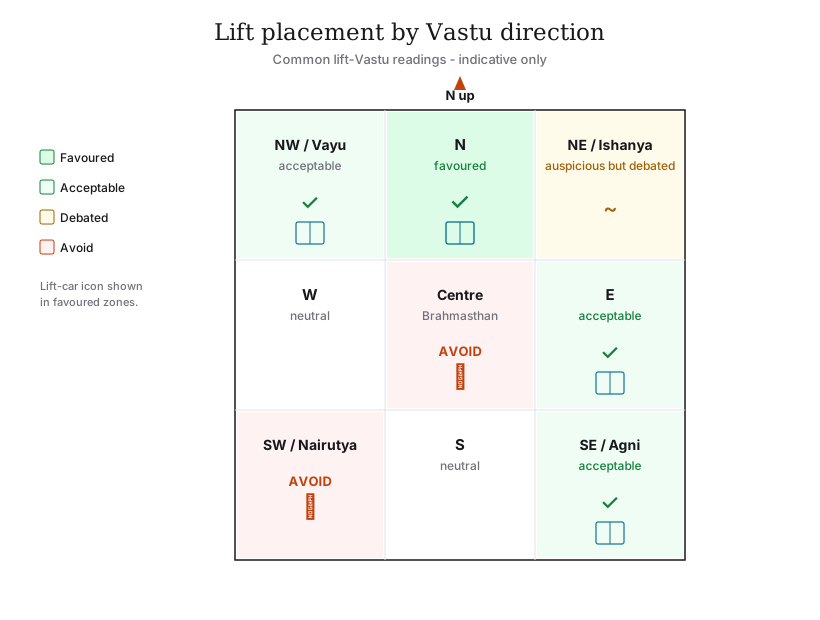
Lift-Vastu writers are broadly consistent on the preferred zones. The directions below summarise the common readings; individual consultants differ, and you should treat any one reading as guidance rather than rule.
- North (N) — widely considered favourable. North is associated with prosperity and flow; a lift here is generally welcomed.
- North-East (NE) / Ishanya — the most auspicious corner in Vastu. Many writers permit or favour a lift here, though others counsel caution because the NE is also the zone you are usually advised to keep light, open and uncluttered. Where opinions split, treat NE as "acceptable but discuss with the family's consultant".
- South-East (SE) / Agni — acceptable in many readings, as the zone of fire and energy suits an active, powered element.
- North-West (NW) / Vayu — the zone of air and movement; also acceptable in many readings, and a natural fit for something that moves.
The recurring theme is that a lift sits comfortably in the north or east halves and in the SE/NW corners, while one corner is consistently discouraged.
The directions to avoid
- South-West (SW) / Nairutya — the corner Vastu treats as the "heavy, grounding" anchor of the house, ideally occupied by mass and stability (master bedroom, heavy storage). A lift's constant mechanical movement is said to disturb that grounding quality, so SW is the most commonly cautioned-against direction for the lift itself.
- Exact centre / Brahmasthan — the central zone is meant to stay open and unbuilt; a shaft punched through the Brahmasthan is strongly discouraged. This one also aligns neatly with good planning, because the centre of a home is rarely the right place for a structural shaft anyway.
- Directly opposite the main door — a lift facing the entrance head-on is discouraged, partly on Vastu grounds and partly because it makes for an awkward arrival sequence.
The do and don't table
The table below condenses the common lift-Vastu readings. Treat every row as a preference, indicative only — consultants differ, and none of it overrides structural or safety requirements.
| Direction / Zone | Vastu reading | Notes |
|---|---|---|
| North (N) | Favoured | Associated with flow and prosperity; generally welcomed |
| North-East (NE) | Auspicious but debated | Some favour it; others prefer to keep NE light and open — discuss with the consultant |
| East (E) | Acceptable | North-and-east halves are generally comfortable |
| South-East (SE) | Acceptable | Zone of fire/energy suits a powered, active element |
| North-West (NW) | Acceptable | Zone of air/movement; natural fit for something that moves |
| South-West (SW) | Avoid | Should stay heavy and grounding; mechanical movement said to disturb it |
| Exact centre / Brahmasthan | Avoid | Keep central zone open; also poor structural planning |
| Opposite the main door | Avoid | Discouraged; also an awkward arrival sequence |
| Lift pit | North or East | Per lift-vastu writers; reconcile with waterproofing and structure |
The lift and the staircase
This is where Vastu and lift planning most often meet, because the two vertical circulation elements are usually planned together. In traditional Vastu the staircase is placed in the south-west — the same heavy, grounding corner discussed above — and a clockwise (rising toward the south or west) flight is often preferred. Our dedicated guide staircase Vastu covers the stair side in detail; for the engineering of the flight see designing a staircase.
Here the tension becomes obvious. If the stair belongs in the SW, and the lift is best kept adjacent to the stair for a compact, shared circulation core, then a strict reading would push the lift toward the very SW corner that lift-Vastu discourages. Different consultants resolve this differently: some keep the lift just outside the SW corner (toward south or west of centre, but not in the Nairutya corner), some accept the lift in the north or east while the stair stays SW, and some prioritise the stair's SW position and treat the lift's direction as secondary.
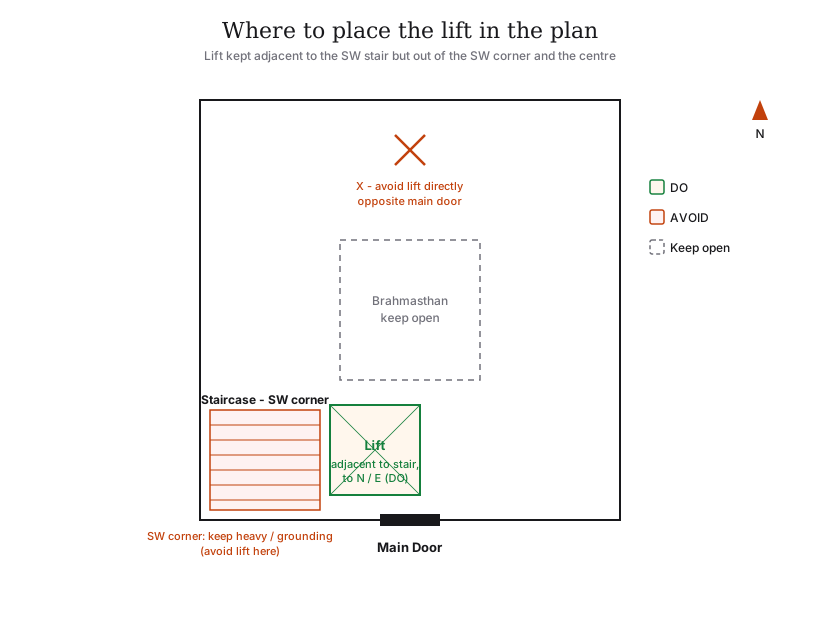
The lift and stair want to be neighbours for good planning; Vastu wants the stair in the SW and the lift out of it. The usual compromise is a shared core where the stair holds the SW edge and the lift sits to its north or east.
For the deeper planning logic of combining the two — the shared core, the structural grid, the lobby — see lift-staircase integration.
The pit direction
Lift-Vastu writers also offer guidance on the pit, generally recommending it toward the north or east. Here reconciliation is especially important. The pit is a waterproof RCC box below ground level, designed for lateral earth pressure and buffer-impact loads, and its position is fixed by the shaft, which is fixed by the structure. If the favoured pit direction happens to align with where the shaft already sits, well and good. If not, the pit goes where the shaft goes — full stop. Pit waterproofing and drainage decide longevity; a flooded pit is excluded from most maintenance contracts. See lift pit requirements for the engineering, which is non-negotiable.
How to reconcile Vastu with structure and space — the practical method
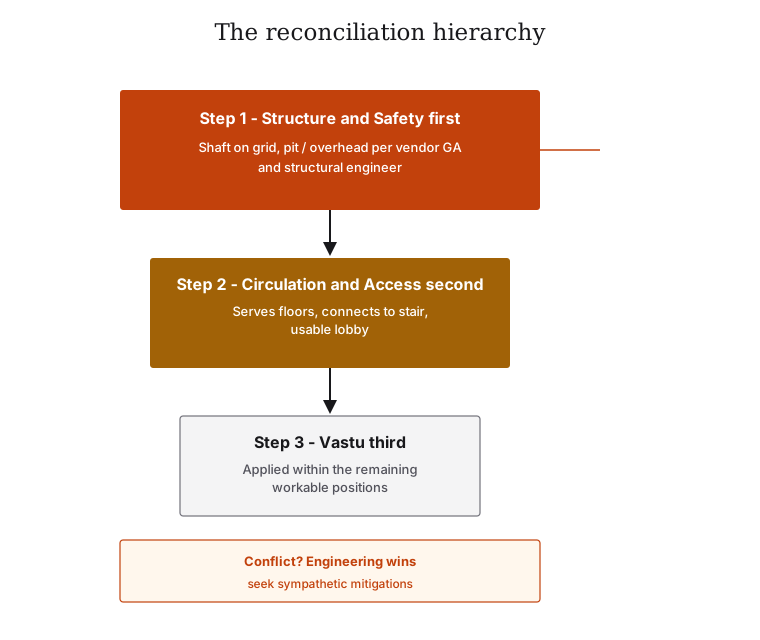
This is the heart of the guide. A home lift is the least movable element in the house, so the reconciliation must be deliberate and ordered. We use the following hierarchy, and we explain it to clients up front so there are no surprises.
1. Structure and safety first. The shaft must land on the structural grid, over a foundation that can carry it, with a pit and overhead that the structural engineer signs off against the vendor's general-arrangement drawing and reaction loads. Never finalise the shaft before the vendor's GA is fixed. This is fixed before Vastu enters.
2. Circulation and access second. The lift must serve the right floors, connect to the stair core, open into a usable lobby, and not clash with the entrance or living spaces.
3. Vastu third — within the remaining freedom. Whatever positional choice survives steps 1 and 2 is where Vastu guidance is applied. Often there are two or three workable positions, and Vastu simply helps choose between them at no cost.
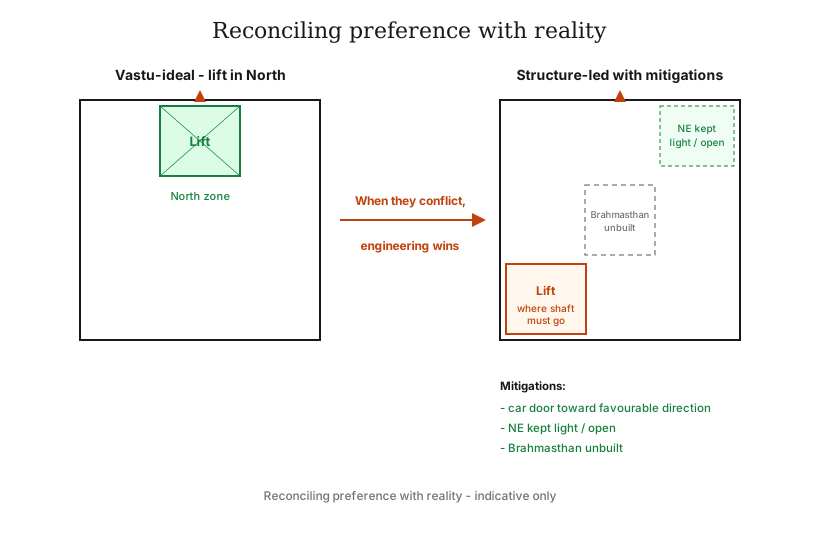
When a Vastu preference and a structural requirement genuinely conflict — for example, the family wants the lift in the north but the only sound shaft position is toward the south-west — the engineering wins. We then look for sympathetic mitigations that respect the family's beliefs without compromising the building: orienting the car door toward a favourable direction, keeping the NE corner light and open elsewhere in the plan, ensuring the central Brahmasthan stays unbuilt, and consulting the family's own Vastu adviser on acceptable remedies. Many consultants accept such compromises gracefully when the structural reasoning is explained.
This ordering is not a dismissal of Vastu. It is the only honest way to honour it: a lift placed on a poor structural position to satisfy a direction is a lift that cracks its pit, fails inspection or endangers its users — outcomes no tradition would endorse.
Setting expectations with the family
The smoothest projects are the ones where the conversation happens early. Before the plan is frozen, we recommend the homeowner:
- Decide whether a Vastu consultant will be involved, and bring them in at the planning stage, not after the shaft is cast.
- Share the consultant's directional preferences with the architect and the lift vendor so they can be accommodated where feasible.
- Accept in advance that the structural engineer and the lift supplier's general-arrangement drawing set the hard constraints, and that Vastu guides choices within them.
- Treat every directional figure here as indicative — readings vary between consultants, and none of it replaces local municipal bye-laws, the vastu house plan logic for the whole home, or a licensed lift contractor's advice.
Handled this way, Vastu becomes a calm input into the design rather than a late-stage crisis. For where the lift sits in the wider home plan, read it alongside vastu house plan (India); for the technical scope of the whole installation, return to the residential elevator handbook.
References
Vastu directional guidance in this guide reflects common readings from established lift-Vastu writers; it is cultural preference, not a standard, and consultants differ.
- Lift Vastu (NoBroker): https://www.nobroker.in/blog/lift-vastu/
- Vastu tips for lifts (SubhaVaastu): https://www.subhavaastu.com/vastu-tips-lift.html
The engineering and regulatory constraints that take precedence are governed by:
- IS 14665 (Electric Traction Lifts) — Part 1 (BIS): https://law.resource.org/pub/in/bis/S05/is.14665.1.2000.pdf
- IS 14665 — Part 2 (BIS): https://law.resource.org/pub/in/bis/S05/is.14665.2.1-2.2000.pdf
- National Building Code of India 2016, Part 8 Section 5 — Installation of Lifts (BIS): https://www.bis.gov.in/standards/technical-department/national-building-code/
- Structural requirement for lifts and lift pits (Civilera): https://www.civilera.com/post/structural-requirement-for-lifts-and-lift-pits
All figures are indicative — confirm directional choices with the family's Vastu consultant, and confirm every structural and dimensional requirement with your structural engineer and a licensed lift contractor.
Export this guide
Related Guides — Deep-dive reading
Best Lift Location as per Vastu (India): Direction by Direction for Every House Facing
Where the home lift belongs in a north, east, south or west facing plan — favoured zones, the stair core, the main door and the pit direction, reconciled with structure and safety.
Home Lifts & AccessibilityMain Door Direction in Vastu: Best Facing & Padas (India Guide)
Which direction your main door should face according to Vastu Shastra — the favoured north, east and north-east, the auspicious padas within each direction, what each facing is said to bring, and the practical light-and-access logic that sits alongside the tradition.
Home Doors & EntrancesVastu for Home Lifts (India): Direction, Colour, Materials and Remedies
The complete vastu picture for a home lift — favoured and avoided directions, the honest north-east nuance, cabin colour and material, the door, light and cleanliness, the stair relationship, and remedies when an existing lift cannot be moved — always reconciled with structure, safety and accessibility.
Home Lifts & AccessibilityRelated Tools — Try Free
Vastu Shastra Compliance Checker
Score your home across 21 Vastu criteria with a weighted score, compliance band, and remedial guidance.
Vastu ScoringVastu Window Planner
Vastu guidance for window placement and size by wall direction and room — rating and remedies.
VastuHome Lift Size Planner
Which lift capacities fit the space you have — largest car for your shaft footprint.
Lift Calculator