
Home Lift Cost in India 2026: Benchmark Report — Prices by Type, Floors & All-In Budget
What a residential elevator really costs in 2026 — drive type, floor count, the full all-in budget and a decade of ownership, in rupees.
A home lift has moved from indulgence to sensible infrastructure for India's multi-storey houses — but the sticker price you see in a brochure is rarely the price you pay. The cabin is only one line on the invoice. Civil work, electricals, taxes, installation and a decade of maintenance all stack on top. This benchmark report breaks down what a residential elevator actually costs in India in 2026, type by type, floor by floor, and rupee by rupee — so you can budget honestly before you ever call a vendor.
Every figure below is indicative for June 2026 and varies materially by city, vendor, finish level and site conditions. Treat these as planning ranges, not quotes — confirm with your local municipal bye-laws and at least two licensed lift contractors before you commit. For the full picture of how a lift fits into your home, start with our residential elevator buyer's guide.
How to read these numbers
Three caveats frame everything that follows. First, the headline lakh figures are for the equipment package — the car, drive, controller, doors and standard fittings. Second, GST at 18% is almost always quoted separately, and so is civil work (the shaft, pit and structural changes) and the electricals that feed the lift. Third, prices climb with travel: more floors means more rail, more rope or screw, more wiring and a longer install. A two-stop lift and a four-stop lift in the same house are not the same purchase.
The cabin is the cheapest honest part of a home lift. What you really buy is a hole in your house, a power supply, a tax bill and ten years of someone keeping it safe.
Cost by lift type
The drive technology is the single biggest swing in price and suitability. Hydraulic and traction (in its modern machine-room-less, or MRL, form) are the residential workhorses; screw-driven and pneumatic-vacuum lifts solve specific problems — tight pits and retrofits — at their own price points.
| Lift type | Indicative price (equipment) | What you get | Best for |
|---|---|---|---|
| Hydraulic | ₹8–20 lakh | Piston pushes the car; smooth, quiet, shallow pit (≈150–300 mm); power pack in a small adjacent cabinet; slower, oil/temperature considerations | Low-rise homes (2–4 floors), tight overhead, cost-conscious buyers |
| Traction MRL (geared/gearless) | ₹10–25 lakh+ | Steel ropes + counterweight; machine sits inside the hoistway (no machine room); energy-efficient, faster, smooth; needs a little more pit/headroom | The 2026 default for most new homes; best running economy |
| Screw / winding-drum | ₹14–30 lakh | Car climbs a threaded screw column; self-supporting, low pit (≈150–300 mm), low maintenance, compact | Compact footprints, low pit, simple low-rise installs |
| Pneumatic vacuum (PVE) | ₹11–22 lakh | Air-pressure cabin; no pit, no shaft, no machine room, self-supporting; panoramic glass; 2–3 persons, limited travel; draws more power on ascent | Retrofits into an existing home where digging a shaft is impossible |
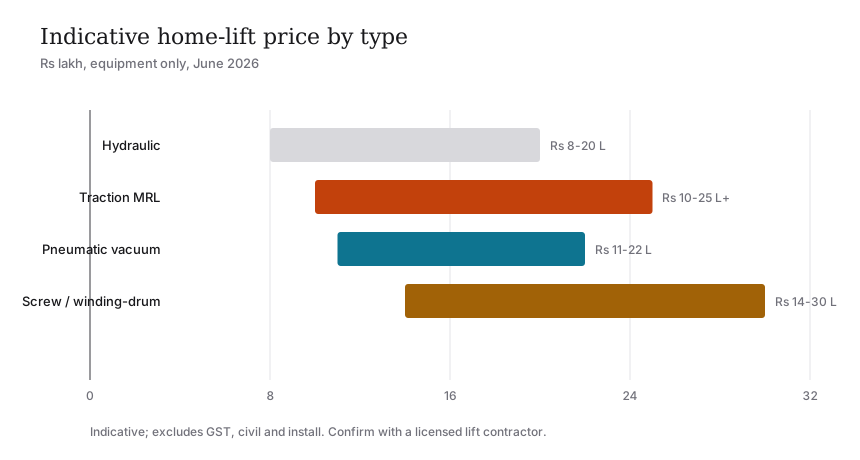
A few reading notes. Hydraulic is the value champion for two- to four-floor homes, but its running characteristics (oil, heat, lower speed) make it less popular for daily-use tall homes. Traction MRL is the all-rounder and usually the smartest long-run choice because of its energy efficiency. The pneumatic vacuum lift looks expensive for its small cabin, but its real saving is civil work you never have to do — for a finished house with no shaft, that can be the cheapest all-in route even when the equipment costs more. Nibav is the best-known India-grown PVE brand; weigh it against the others in our vendor comparison guide.
Cost by number of floors
Travel distance drives material and labour. A ground-plus-one (G+1) home — the most common Indian home-lift install — anchors the bottom of the range. Each additional stop adds guide rail, suspension, wiring, a door assembly and install time. The figures below are for a modest two- to three-person residential car; larger cabins and premium finishes push every row higher.
| Configuration | Stops | Indicative equipment price | Notes |
|---|---|---|---|
| G+1 (two floors) | 2 | ₹11.99–18 lakh | Entry point; lowest rail/rope length and install time |
| G+2 (three floors) | 3 | ₹14–22 lakh | The typical Indian duplex/triplex case; basis of the worked example below |
| G+3 (four floors) | 4 | ₹17–26 lakh+ | More rail, longer ropes/screw, longer wiring runs, longer commissioning |
These ranges assume the equipment only and exclude GST, civil and install. A 2-person car typically lands around ₹11–22 lakh depending on type and floors. As travel grows, traction MRL increasingly out-economises hydraulic on both energy and ride quality.
The all-in budget: a worked G+2 example
This is the table most buyers wish someone had shown them first. Below is a fully built-up budget for a typical G+2 (three-stop) home using a mid-range traction MRL lift. The equipment is taken at the middle of its band; civil, electrical and install lines are realistic mid-points; GST is applied at 18% on the taxable supply. Your numbers will differ — site access, finishes, and how much shaft work your house needs can move the total by lakhs.
| Line item | Indicative amount | What it covers |
|---|---|---|
| Lift equipment (traction MRL, 3-stop, 2–3 person) | ₹16,00,000 | Car, drive, controller, automatic doors, standard fittings, ARD battery backup |
| Civil / shaft work | ₹2,50,000 | Hoistway construction, pit, structural openings, plaster, making good |
| Electricals | ₹70,000 | Dedicated supply, mains/sub-mains, earthing, shaft lighting, point wiring |
| Installation & commissioning | ₹1,20,000 | Erection labour, alignment, testing, handover |
| Subtotal (taxable supply) | ₹20,40,000 | — |
| GST @ 18% | ₹3,67,200 | Applied on the supply per current rates |
| All-in total | ₹24,07,200 | Indicative turnkey cost for this configuration |
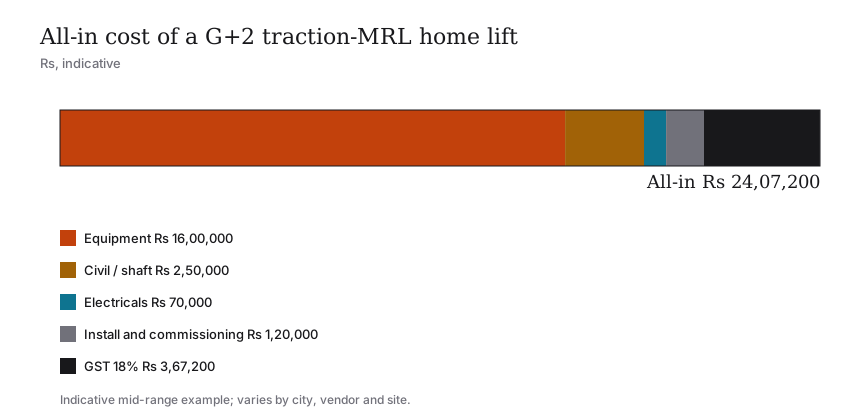
Two things jump out. The cabin is roughly two-thirds of the bill, not the whole bill — the civil + electrical + install layer adds about 22% before tax, and GST adds nearly ₹3.7 lakh on its own. Budget the lump sum, not the brochure number. If you are building new, lock the shaft into the structural design early; retrofitting a shaft into a finished house costs far more, which is exactly when a pneumatic-vacuum lift (no shaft, no pit) starts to win on total cost. Use our planning checklist and specification checklist to make sure no line item is forgotten before you sign.
Recurring costs: running and maintenance
The purchase ends; ownership begins. Two recurring lines matter — electricity and the Annual Maintenance Contract (AMC).
Running cost is modest for MRL and screw lifts, which sip power and recover energy efficiently. Hydraulic uses more on the up-stroke; the pneumatic vacuum lift draws the most on ascent (it descends by controlled gravity, so the down trip is nearly free). For a typical low-use home lift, electricity is a minor line — usually a few hundred rupees a month — but a glass PVE in a hot, daily-use home will read higher.
AMC is the bigger, more strategic recurring cost. You choose between two contract shapes:
| AMC type | What's included | Indicative cost/yr | Trade-off |
|---|---|---|---|
| Non-comprehensive (semi) | Routine inspection, lubrication, adjustment, labour; ~12 monthly preventive visits + breakdown calls | ₹20,000–30,000 | Cheaper yearly, but major parts (motor, controller, etc.) billed separately — surprise bills possible |
| Comprehensive ("bumper-to-bumper") | Above, plus most spare parts and major repairs | ₹32,000–38,500+ | Costs ~60–70% more, but caps unexpected repair bills |
Standard service is around 12 monthly preventive visits a year plus emergency breakdown calls; example contracts run to about ₹38,500/yr with roughly 5% annual escalation. Even comprehensive contracts commonly exclude acts of God (pit flooding), vandalism and aesthetic modernisation — and some quietly exclude the motor, controller, machine, pulley or rope. Read the fine print. Our AMC evaluation guide walks through clause-by-clause comparison so you don't buy a hollow "comprehensive" contract.
Ten-year cost of ownership
A home lift is a ten-to-fifteen-year asset, so the honest comparison is total cost over time, not purchase price alone. The chart below models the worked G+2 install (≈₹24 lakh all-in) under a comprehensive AMC starting near ₹38,500/yr and escalating ~5% annually, plus a modest electricity allowance. The AMC and running lines are small each year but compound into a meaningful number across a decade.
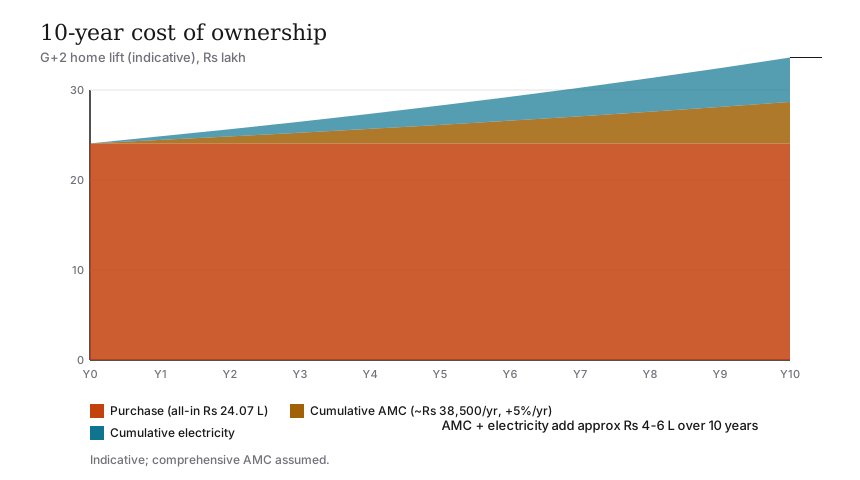
Over ten years, AMC plus electricity typically adds on the order of ₹4–6 lakh to the original purchase — material, but small against the up-front capital. The practical lesson: the drive type you pick (MRL's energy efficiency, screw's low maintenance) and the AMC you negotiate quietly shape the second half of your spend, long after the install crew has gone home.
What pushes the price up — and down
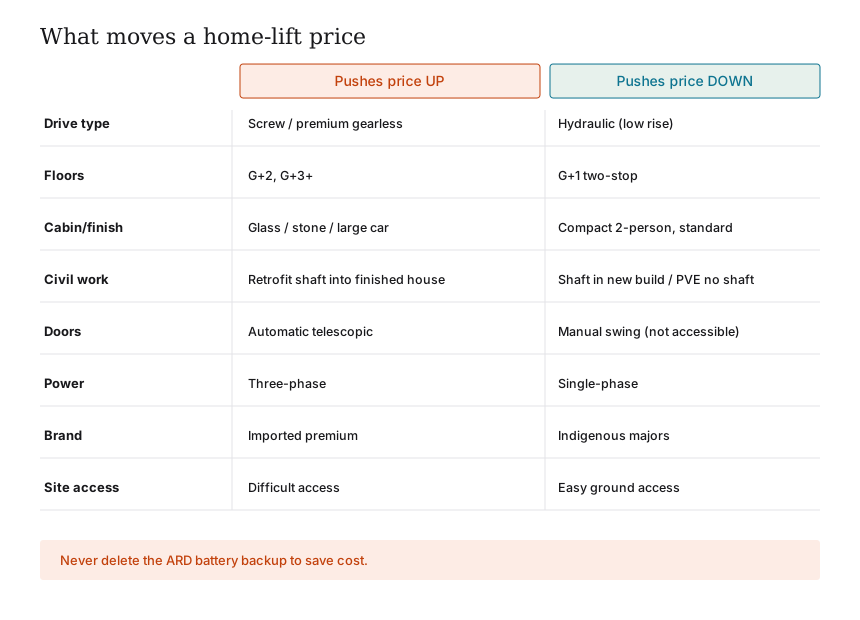
Two homes on the same street can pay lakhs apart for "the same" lift. The matrix below summarises the levers.
| Cost driver | Pushes price UP | Pushes price DOWN |
|---|---|---|
| Drive type | Screw, premium traction/gearless | Hydraulic for low rise |
| Floors / travel | G+2, G+3 and beyond | G+1 two-stop |
| Cabin & finish | Glass panoramic, stone/wood, large car | Compact 2-person, standard finish |
| Civil work | Retrofitting a shaft into a finished house | Shaft designed into a new build (or PVE: no shaft) |
| Doors | Automatic telescopic/sliding (accessible) | Manual swing (cheapest — but not wheelchair-friendly) |
| Power | Three-phase for larger traction | Single-phase for small home lifts |
| Brand | Imported premium (e.g. Aritco) | Indigenous majors (e.g. Johnson Lifts) |
| Site access | Difficult access, narrow staircases | Easy ground-level access |
A note worth bolding: do not "save" money by deleting the Automatic Rescue Device (ARD) — the battery that brings the car to the nearest floor and opens the doors on a power cut. Given India's outages, it is essential, not optional. Likewise, accessible automatic doors and a wheelchair-sized car cost more today but protect the home's usefulness for decades; see our accessible home design guide and the universal-design reference in adaptable homes.
Financing, EMI and the resale angle
At ₹20–25 lakh all-in, many families finance the lift rather than pay cash. Banks and the vendors themselves increasingly offer EMI plans, and a lift installed during construction can sometimes be folded into a home-improvement or construction loan. As a rough frame, a ₹20 lakh principal over five years at typical retail rates lands in the region of ₹40,000–45,000 a month — a manageable spread for a household that needs the lift for an ageing parent or a member with reduced mobility, where the alternative (moving house, or stairs becoming a daily hazard) is far costlier.
On value and resale: a well-installed, well-maintained home lift widens your buyer pool to multi-generational families and ageing-in-place buyers, and it future-proofs the house against your own changing needs. It rarely returns its full cost as a line-item premium, but in the multi-storey-house segment it can be the feature that makes a sale happen at all. Treat it as both infrastructure and insurance — the way our future-proof home design guide and lift-ready home guide frame it.
The honest bottom line
Budget a typical Indian home lift at ₹20–25 lakh all-in for a mid-range G+2 traction MRL, knowing that hydraulic can come in lower for low rise and screw/premium/glass can run higher. Add ₹20,000–38,500 a year for maintenance and a small electricity line on top. Pick the drive type for your floor count and energy economy, design the shaft into the build if you can, never skip the ARD, and read the AMC fine print before — not after — you sign. Then get two written quotes and hold them against the ranges here.
References
- IS 14665 (Electric Traction Lifts), Part 1 — Outline dimensions — Bureau of Indian Standards: https://law.resource.org/pub/in/bis/S05/is.14665.1.2000.pdf
- IS 14665, Part 2 — Code of practice for installation, operation & maintenance — Bureau of Indian Standards: https://law.resource.org/pub/in/bis/S05/is.14665.2.1-2.2000.pdf
- IS 15259 (Hydraulic lifts) — companion code, cited by name.
- National Building Code of India 2016, Part 8 (Building Services), Section 5 — Installation of Lifts, Escalators & Moving Walks — BIS: https://www.bis.gov.in/standards/technical-department/national-building-code/
- Guide for Using NBC 2016 — BIS: https://www.bis.gov.in/wp-content/uploads/2022/08/Booklet-Guide-for-Using-NBC-2016.pdf
- Rights of Persons with Disabilities (RPwD) Act 2016 — full text: https://ssepd.odisha.gov.in/sites/default/files/2024-01/RPWD%20ACT.pdf
- CPWD / MoHUA Harmonised Guidelines & Space Standards for a Barrier-Free Built Environment — CPWD: https://www.cpwd.gov.in/Publication/Harmonisedguidelinesdreleasedon23rdMarch2016.pdf
- Lift regulations in India (overview) — 99acres: https://www.99acres.com/articles/know-all-about-the-lift-regulations-in-india.html
Export this guide
Related Guides — Deep-dive reading
Designing Adaptable & Universal-Design Homes
Accessibility, Aging-in-Place, and the Multi-Stage Family — Code, Anthropometrics, and Plan-Stage Discipline for Indian Residential Architects
Room PlanningHome Lift Planning Checklist (India): Everything to Decide Before You Buy
A printable, ten-stage checklist that takes you from the first family conversation to a signed handover.
Home Lifts & AccessibilityHidden Costs of Home Lift Installation (India): The Bills Beyond the Sticker Price
Shaft, electricals, licences, AMC, GST and the battery you forget — what a lift quote leaves out, and how a quoted figure becomes the true all-in cost.
Home Lifts & AccessibilityRelated Tools — Try Free
Home Lift Comparison Tool
Compare hydraulic, traction, pneumatic vacuum and screw lifts side by side for your home.
Lift ComparisonLift Annual Maintenance Cost Calculator
AMC cost for a home lift — comprehensive vs non-comprehensive, with a 5-year projection.
Lift CalculatorAccessibility Compliance Calculator
Check a planned lift against the CPWD and RPwD accessible-lift benchmarks for a score.
Lift Checker