
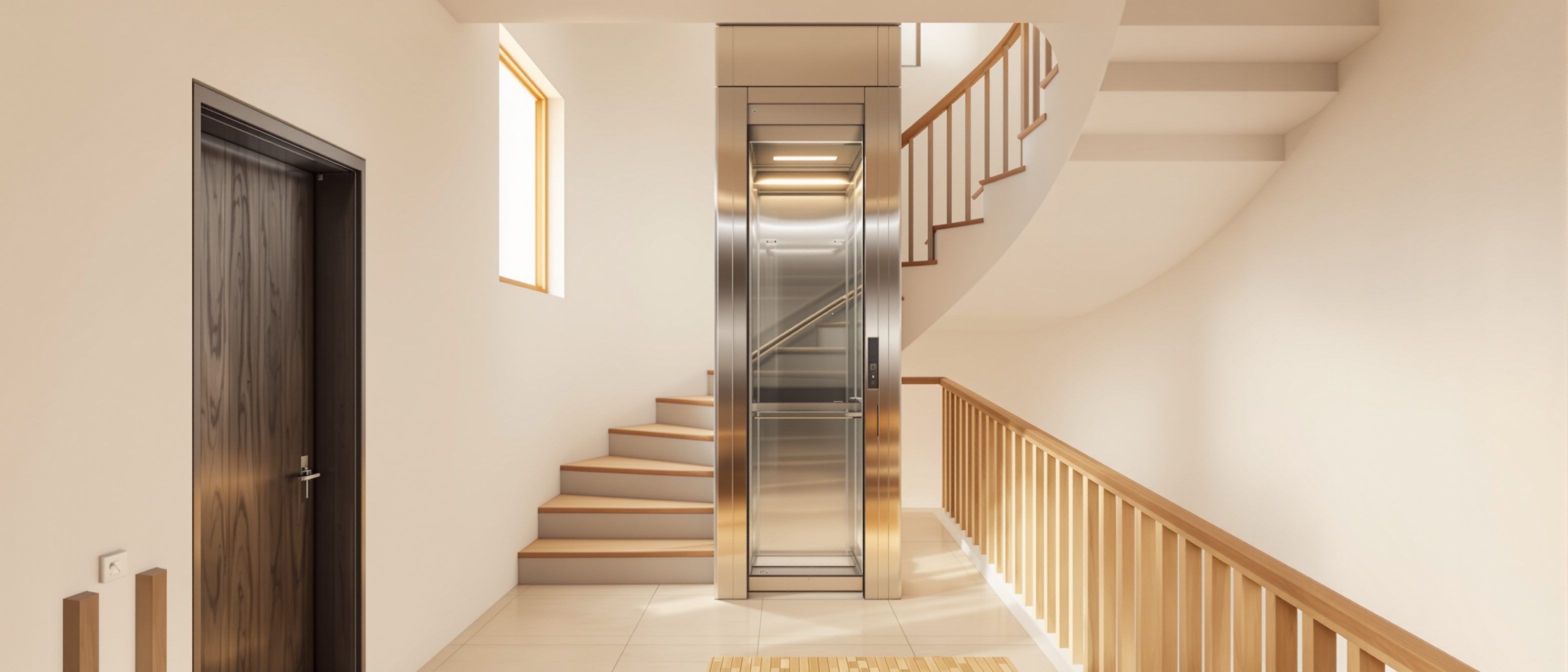
Home Lift Space Requirements (India): How Much Room a Home Elevator Really Needs
Footprint, clear shaft, pit and headroom by capacity (2/3/4/6 person), plus where to fit a lift in an Indian home plan.
The first question almost every homeowner asks is the same: "Will a lift even fit?" The honest answer is that a modern home lift needs far less room than most people imagine — often no more space than a generous broom cupboard — but the figure that matters is not the floor tile you can spare. It is the clear internal shaft (the well the car runs in), plus a pit below and headroom above, plus the landing space in front of the door so a person — and a wheelchair — can actually turn in and out.
This guide is about exactly one thing: how much room a home lift really needs, and where in an Indian house you can find it. It does not repeat the full buying decision or the engineering of the shaft itself — for those, lean on the Residential Elevator Handbook (pillar), the Lift Specification Checklist, and the deeper Lift Shaft Design Guide. Here we stay on footprint, clearances, and fit.
A home lift is a column of space, not a square on the floor. Plan the shaft, the pit and the headroom together — and the landing in front — or the car that "fits" on paper will not work in real life.
All dimensions below are indicative and follow IS 14665 Part 1 (outline dimensions) and the CPWD Harmonised Guidelines. Final numbers come from your chosen vendor's general-arrangement (GA) drawing — confirm with a licensed lift contractor and your local municipal bye-laws before you build.
Footprint by capacity: how big is the car, really
Home lifts in India run roughly from 2 to 8 persons, but the residential sweet spot is 2 to 4 persons. Capacity drives car size, and car size drives the shaft. A 2-person car can be as small as 150–204 kg; a 6-person car is wheelchair-and-attendant territory.
The crucial distinction is between three sizes that people confuse:
- Car (cabin) internal — the box you stand in.
- Clear shaft / hoistway — the structural opening the car runs inside. This is always larger than the car: it has to swallow the car frame, guide rails, brackets, door mechanism and running clearances. For a small home car the shaft is typically 150–250 mm wider and deeper than the cabin on each relevant face.
- Finished room footprint — shaft plus the 150–200 mm RCC wall thickness on each enclosed side.
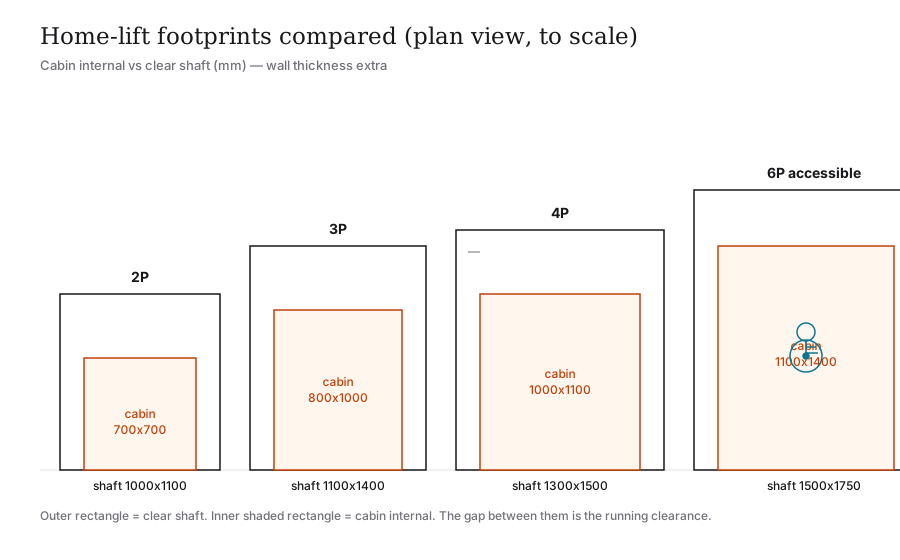
So when a brochure says "fits in 1 square metre," ask whether that is the cabin or the shaft — and remember the wall is extra. The table below gives a planning envelope you can sketch with before the vendor GA arrives.
Space-by-type and capacity table (mm)
These are planning ranges, not a single brand's catalogue. Manual swing-door cars are the most compact; automatic telescopic doors add a little width because the door pack stacks to one side. Pneumatic vacuum (PVE) cabins are round and self-supporting, so they are described differently — no pit, no shaft, no machine room.
| Capacity / type | Persons / kg (approx.) | Cabin internal W x D (mm) | Clear shaft W x D (mm) | Pit depth (mm) | Headroom / overhead (mm) | Door clear width (mm) |
|---|---|---|---|---|---|---|
| Compact home (manual swing) | 2P / ~150–204 kg | 700 x 700 | 1000 x 1100 | 150–300 (hydraulic/screw) | 2600–2800 | 600–700 |
| Small home (auto telescopic) | 3P / ~204–272 kg | 800 x 1000 | 1100 x 1400 | 150–300 (screw) / 300–610 (traction) | 2600–3000 | 700–800 |
| Standard home (accessible-ready) | 4P / ~320 kg | 1000 x 1100 | 1300 x 1500 | 300–610 | 2700–3000 | 800 |
| Accessible / wheelchair car | 6P / ~408–450 kg | 1100 x 1400 | 1500 x 1750 | 300–610 (geared); some gearless 1200–1500 | 2700–3000 | 900 (CPWD min) |
| Pneumatic vacuum (PVE) | 2–3P | round, ~933–1300 dia. | self-supporting tube, ~1100–1500 dia. footprint | none | ~2300–2500 floor-to-floor clearance | ~700–760 |
A few things to read out of this:
- The jump from a 2-person to a 6-person accessible car roughly doubles the footprint — and only the 6-person, 900 mm-door car meets the CPWD accessible benchmark of a car that takes a wheelchair plus attendant (~1100 x 1400 mm cabin). If ageing-in-place is the goal, plan for the bigger box now; see Senior-Friendly Homes and Accessible Home Design.
- Door type changes the shaft. Manual swing doors are cheapest and most compact but are not wheelchair-friendly; automatic telescopic doors are smoother, accessible, and need a touch more width.
- PVE breaks the table. It needs no pit and no separate shaft — the glass tube is the structure. That is why it is the easiest retrofit (more below).
Below and above: pit and headroom are space too
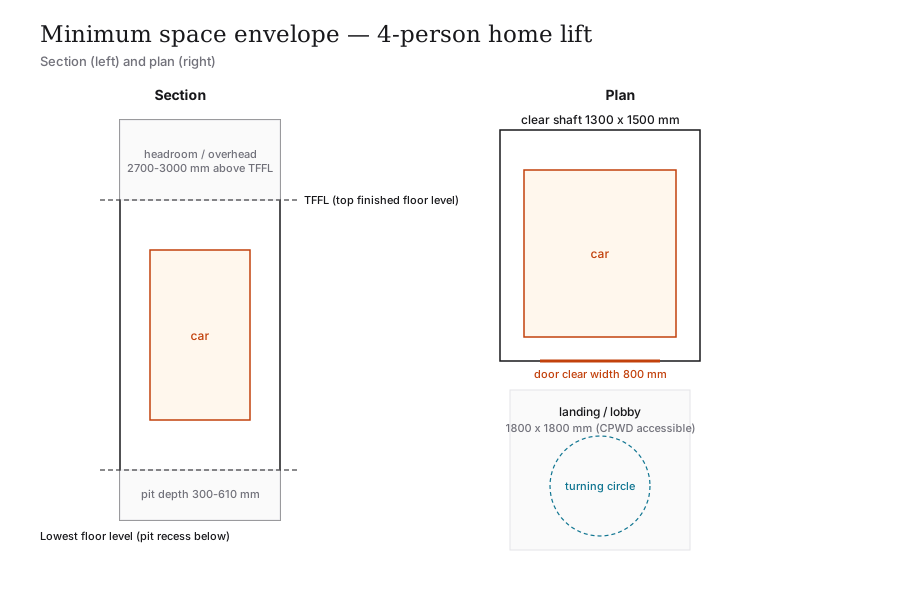
The two dimensions homeowners forget are the pit (the recess below the lowest floor where the car sits and the buffers live) and the headroom / overhead (the clearance above the top floor that lets the car overrun safely).
- Pit depth depends entirely on drive type. Hydraulic and screw lifts need a shallow pit of ~150–300 mm. Traction lifts need ~300–610 mm, and some modern gearless cars want 1200–1500 mm. Low-pit and pitless options exist for retrofits, and PVE needs no pit at all. A pit must usually be a waterproof RCC box designed for lateral earth pressure and buffer impact — that engineering lives in the Lift Pit Requirements guide, so plan the depth here and detail it there.
- Headroom / overhead is typically 2600–3000 mm above the top finished floor level. MRL (machine-room-less) traction is the 2026 norm: the machine sits inside the hoistway top, so you no longer need a separate machine room sitting on the roof — a big space saving on Indian plots. Where a hoist beam or small machine space is still used, see Machine Room Requirements.
Practically, this means a G+1 home lift is a vertical zone that starts ~150–600 mm below your ground floor and ends ~2.6–3.0 m above your top floor slab. Get those two ends right and the middle takes care of itself.
The landing in front: the space people always miss
A car that fits the shaft is useless if you cannot get into it. In front of every landing door you need room to approach, open/wait for the door, and turn — and for an accessible home, room to manoeuvre a wheelchair.
- CPWD Harmonised Guidelines suggest a lift lobby of about 1800 x 1800 mm for an accessible installation, with a 900 mm clear door, a handrail 600 mm long at 800–1000 mm height, automatic doors that stay open at least 5 seconds, and a rear-wall mirror so a wheelchair user can reverse out.
- In a non-accessible compact home you can work with less, but keep at least the door's clear width plus a comfortable standing depth (≥1100–1200 mm) so the swing or slide of the door is not fouled by a wall, a stair string or furniture.
- Manual swing landing doors swing OUT into the landing — that swing arc is dead space you must keep clear. Automatic sliding/telescopic doors need none, which is one more reason they suit tight Indian landings.
Budget the landing before the cabin. A 1m square lift behind a 600 mm strip of corridor is a lift you will resent; a slightly smaller cabin with a proper turning lobby is the better home.
Shaft vs shaftless: how PVE changes the space maths
Almost everything above assumes a conventional shafted lift — hydraulic, screw or traction MRL — running inside an RCC well with a pit and headroom. The Pneumatic Vacuum Elevator (PVE) rewrites the rules:
- No pit, no shaft, no machine room. The cylindrical glass tube is self-supporting and simply stands on the floor.
- It needs only a floor opening cut between levels and the floor-to-floor clearance for the cabin — roughly 2300–2500 mm between finished levels.
- Trade-offs: limited capacity (~2–3 persons), limited travel, a panoramic look that not everyone wants, and higher power draw on ascent (it descends by controlled gravity). Cost is broadly comparable to other home types (₹11–22 lakh, GST and civil work extra). Nibav is the best-known India-grown PVE brand.
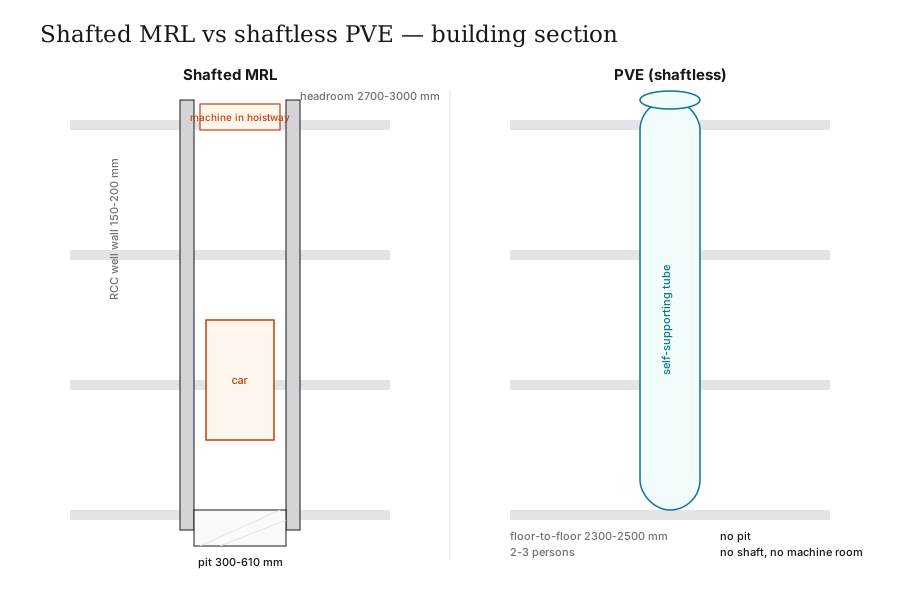
That self-supporting nature is why PVE dominates retrofits where digging a pit or building a shaft is impractical — covered in depth in Retrofitting a Lift into an Existing Home.
Where to find the space in your plan
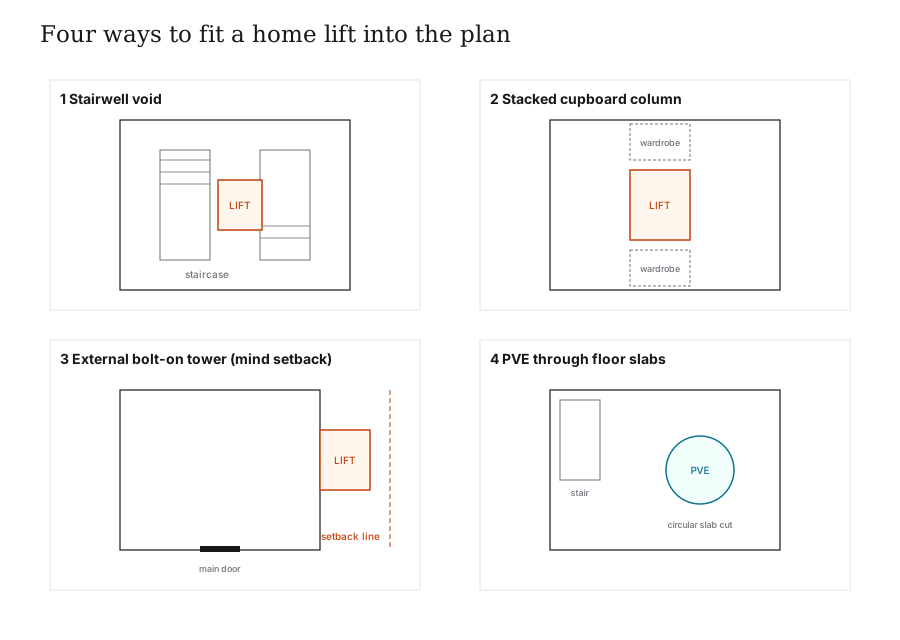
For a new build, provisioning the column at design stage is far cheaper and cleaner than cutting one later — see Designing a Lift into a New House and Lift-Ready / Future-Proof Home. For an existing home, you are hunting for a vertical void that already lines up across floors. Five classic places work:
1. The stairwell void. A switchback (dog-leg) staircase usually leaves a vertical shaft in its centre — often the single best, ready-made lift space, and it keeps the lift beside the stair (also the traditional Vastu pairing). See Lift-Staircase Integration and Designing a Staircase (India).
2. A stacked cupboard / storage column. If wardrobes or store cupboards sit one above another in the same position on every floor, that aligned column is a ready-made shaft footprint — the classic trick on narrow urban plots. See Lift Design for Narrow Plots.
3. A double-height or duplex void. Duplex and villa plans often have a stair core or void with room to spare; 2–3 stops with generous space suit a traction MRL or hydraulic car. See Lift Planning for Duplex Homes and Lift Planning for Villas.
4. An external bolt-on shaft. When nothing inside lines up, a lift tower can be added on an external wall — subject to setback / bye-law limits on your plot. Check local rules before you commit.
5. A PVE through the floor slabs. Where there is no void and no room to build a shaft, the shaftless tube cut through aligned floor openings is often the only feasible answer.
When you place the lift, reconcile space with Vastu preferences that many Indian clients hold — North or North-East are favoured, the South-West corner and the exact centre (Brahmasthan) are traditionally avoided, and the lift is often kept adjacent to the stair. Treat this as cultural preference and let engineering and safety win where they conflict; see Lift Placement and Vastu, Staircase Vastu and Vastu House Plan (India).
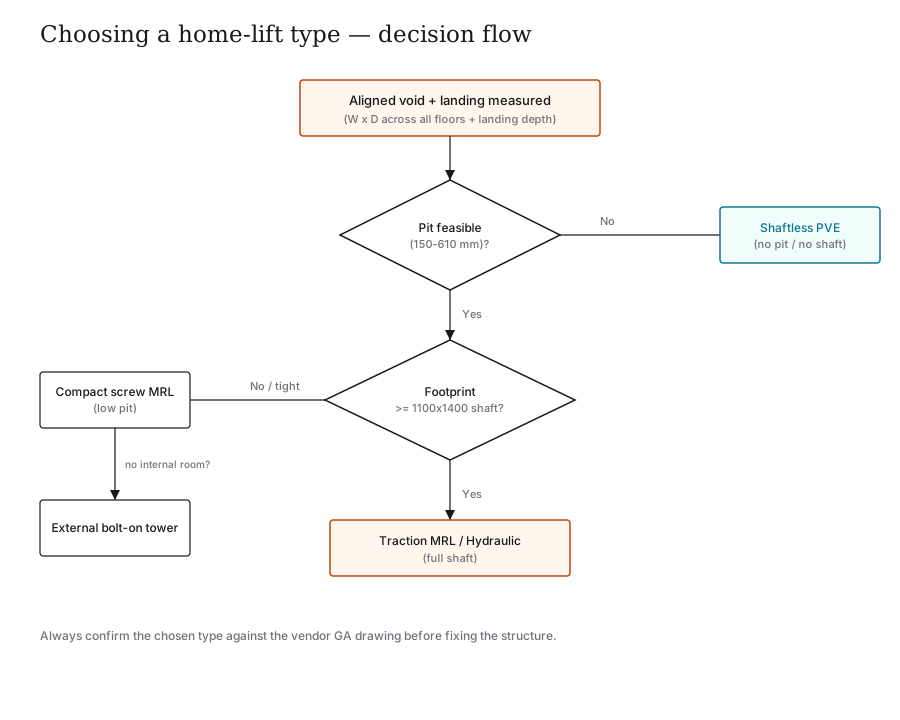
A quick worked sanity-check
Say you have a switchback stair with a central void measuring about 1200 mm x 1500 mm clear, and a corridor landing of 1500 mm depth on each floor. That void comfortably takes a 3–4 person automatic-door car (cabin ~800–1000 x 1000–1100 mm) inside a ~1100–1300 x 1400–1500 mm shaft, with a shallow screw/hydraulic pit (150–300 mm) and ~2.7–3.0 m headroom from the top slab. The 1500 mm landing is short of the 1800 mm accessible lobby, so if a wheelchair is a real requirement you would either widen the landing or step up to the external/PVE options. That five-minute check — void, pit, headroom, landing — is the whole game.
Bottom line
A home lift needs four spaces, not one: a clear shaft (always bigger than the cabin), a pit below (150–300 mm for hydraulic/screw, more for traction; none for PVE), 2.6–3.0 m of headroom above, and a usable landing in front (aim for the ~1800 mm CPWD lobby if accessibility matters). Find the aligned vertical void — stairwell, stacked cupboard, double-height, external wall, or a shaftless PVE through the slabs — and you have your lift. All figures here are indicative; the binding numbers come from your vendor's GA drawing, your structural engineer, and your local bye-laws.
References
- IS 14665 Part 1 — Electric Traction Lifts: Outline Dimensions (car, well/hoistway, pit, headroom, machine room, door types), BIS: https://law.resource.org/pub/in/bis/S05/is.14665.1.2000.pdf
- IS 14665 Part 2 — Code of Practice for Installation, Operation and Maintenance, BIS: https://law.resource.org/pub/in/bis/S05/is.14665.2.1-2.2000.pdf
- IS 15259 — Hydraulic Lifts (companion code; named for reference).
- National Building Code of India 2016, Part 8 (Building Services), Section 5 — Installation of Lifts, Escalators and Moving Walks, BIS: https://www.bis.gov.in/standards/technical-department/national-building-code/
- BIS Guide for Using NBC 2016: https://www.bis.gov.in/wp-content/uploads/2022/08/Booklet-Guide-for-Using-NBC-2016.pdf
- RPwD Act 2016 (Rights of Persons with Disabilities) — Sections 40, 44, 45: https://ssepd.odisha.gov.in/sites/default/files/2024-01/RPWD%20ACT.pdf
- CPWD / MoHUA Harmonised Guidelines and Space Standards for a Barrier-Free Built Environment (2016): https://www.cpwd.gov.in/Publication/Harmonisedguidelinesdreleasedon23rdMarch2016.pdf
- Lift regulations in India (overview), 99acres: https://www.99acres.com/articles/know-all-about-the-lift-regulations-in-india.html
- State Lift Acts (verify your state): Maharashtra Lifts, Escalators and Moving Walks Act 2017; Karnataka Lifts, Escalators and Passenger Conveyors Act 2015; Delhi Lifts and Escalators Act 2007; Tamil Nadu Lifts Act 1997.
Figures are indicative and vary by vendor, model, state bye-laws and year. Confirm every dimension against your chosen vendor's general-arrangement drawing, your structural engineer and your local municipal bye-laws before construction.
Export this guide
Related Guides — Deep-dive reading
Retrofitting a Lift into an Existing Home (India): Options, Structure, Disruption and Cost
How to add a lift to a finished house — the shaftless and compact routes, where it can go, cutting and framing slab openings, living through the work, and what the retrofit premium really costs.
Home Lifts & AccessibilityArchitect's Residential Elevator Planning Handbook (India): Shaft, Loads, Code & Coordination
The plan-stage reference for carrying a home lift through the drawing board — shaft, structure, pit, code, licensing and accessibility.
Home Lifts & AccessibilityDesigning a Lift into a New House (India): Getting It Right at the Plan Stage
Where to place the lift, which type to commit to early, what shell to reserve, and how to coordinate architect, structural engineer and vendor before a single column is cast.
Home Lifts & AccessibilityRelated Tools — Try Free
Home Lift Comparison Tool
Compare hydraulic, traction, pneumatic vacuum and screw lifts side by side for your home.
Lift ComparisonElevator Capacity Calculator
Pick the right home-lift capacity — 2 to 8 person — with car size and wheelchair fit.
Lift CalculatorAccessibility Compliance Calculator
Check a planned lift against the CPWD and RPwD accessible-lift benchmarks for a score.
Lift Checker