

Commercial Furniture Guide: Offices, Retail, Hospitality & More (2026)
How contract-grade furniture differs from home furniture, and what each sector really needs — offices, retail, restaurants, hotels, healthcare and education — from test standards and fire compliance to ergonomics, warranty, bulk procurement and total cost of ownership.
A sofa that lasts fifteen years in a living room can collapse in eighteen months in a hotel lobby. Not because it was badly made — because it was made for the wrong world. Home furniture is chosen; commercial furniture is specified — to a test standard, a fire class, a warranty and a maintenance regime. This is the guide to that gap: what "contract-grade" actually means, why it costs more up front and less over its life, and what each sector — offices, retail, restaurants, hotels, healthcare and education — demands that a home never will.
This is a designer- and facility-manager-oriented guide within the Furniture hub. It sits beside the complete guide to furniture — the pillar — and its residential twin, the residential furniture guide. Where the residential guide helps you furnish a home, this one helps you write a specification a supplier can quote against and a facility can live with.
Scope & how to read this. Every cost band, cycle count and warranty figure here is indicative and relative, to help you plan a spec and brief a manufacturer — confirm exact grades against the relevant IS furniture standards, BIFMA test methods and the product's own datasheet. This guide covers selection, layout, budgeting and maintenance. It deliberately defers the structural and electrified specifics — height-adjustable desk mechanisms, wiring, cable management, load-rated fixings — to the manufacturer and your MEP consultant, because those are certified-product decisions, not editorial ones. Fire-retardancy and accessibility are flagged as compliance-critical: treat them as requirements to verify, never assumptions.
What "contract-grade" actually means
Commercial (or "contract") furniture is engineered for a duty cycle a home never sees: eight to sixteen hours a day, many different bodies, careless use, industrial cleaning, and a client who expects it to look presentable years later. Three things separate it from residential:
- Test-rated strength and durability. Contract pieces are cycle-tested — a task chair to tens of thousands of seat-impact and back-recline cycles, a table to repeated edge loads. Globally this is expressed through BIFMA test methods; in India the IS furniture standards for strength, stability and durability play the same role. A datasheet that quotes a test grade is contract-grade; one that quotes only a "5-year warranty" with no method behind it is not.
- Heavier, serviceable construction. Steel or reinforced frames, replaceable components (castors, gas lifts, arm pads, seat foam), and joinery built to be repaired rather than binned. This is why a good contract chair can be re-gas-lifted at year six instead of replaced.
- Compliance built in. Fire-retardant foam and fabric, edge and stability rules, and — where the public uses it — accessibility. These are not upgrades; in most tenders they are pass/fail.
The built-in vs modular vs loose furniture distinction still applies commercially — built-in reception counters, modular workstation systems, loose task chairs — but every category is held to the contract duty cycle. And the make-or-buy call from custom vs ready-made furniture sharpens: standard catalogue systems win on lead time and spares, bespoke wins for a signature reception or a brand-defining restaurant, and most fit-outs blend both.
Residential vs commercial — the real contrast
The same object — say, a dining chair — lives in two different economies. Reading them side by side is the fastest way to understand why contract furniture is a separate market.
| Dimension | Residential | Commercial / contract |
|---|---|---|
| Duty cycle | Light, one household | 8-16 hr/day, many users |
| Selection driver | Taste and comfort | Test rating, code, lifecycle cost |
| Standards | Rarely engaged | BIFMA / IS furniture standards, cycle-tested |
| Fire | Seldom mandated | Fire-retardant foam & fabric often mandatory |
| Buying | One-off retail | Bulk tender, lead times, spares held |
| Warranty | 1-3 years typical | 5-12 years contract warranty |
| Cleaning | When it looks dirty | Wipe-clean, sometimes antimicrobial / IPC-ready |
| Decision | Replace on a whim | Lowest total cost of ownership wins |
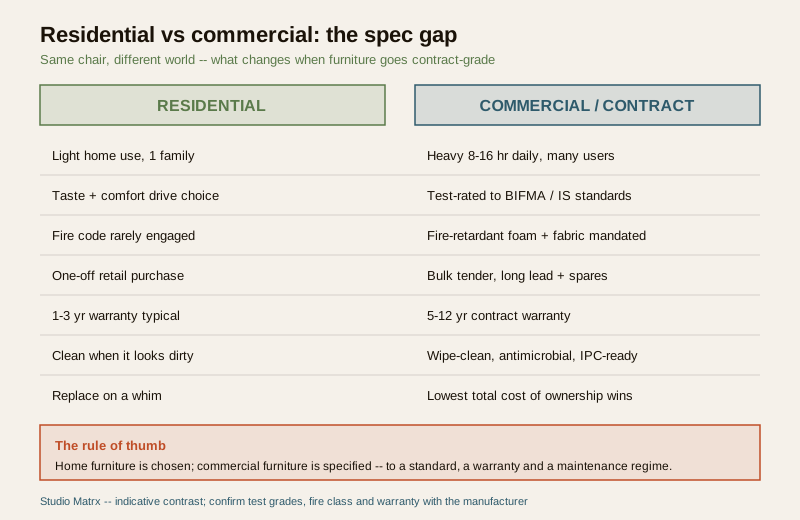
The last row is the one facility managers live by. A cheaper chair that fails in two years and takes down productivity while it is re-ordered is more expensive than a dearer chair that runs ten years and is re-gas-lifted once. Total cost of ownership — purchase plus maintenance plus downtime plus replacement, over the asset's life — is the number that should decide a commercial spec, not the sticker price.
Sector by sector — what each one needs
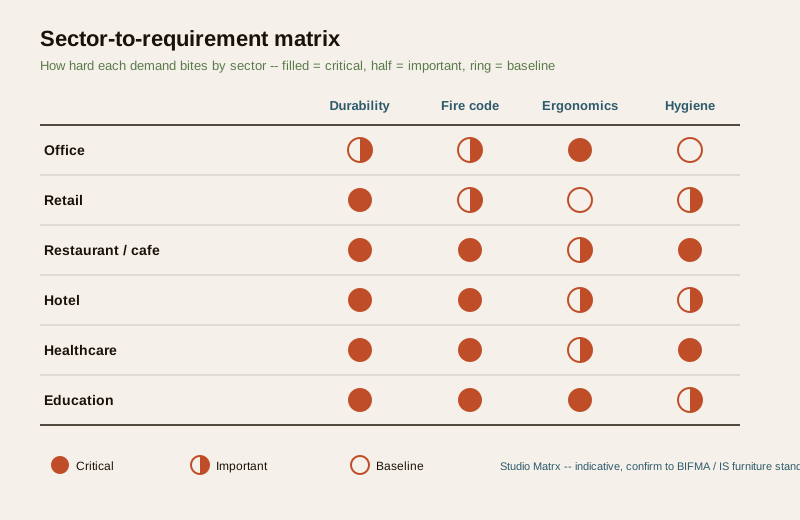
Every sector pulls the specification in a different direction. The matrix below is the shortlisting view; the notes under it are where the judgement lives.
| Sector | Governing demand | Signature pieces | Watch-outs |
|---|---|---|---|
| Office | Ergonomics + durability | Task chairs, workstations, meeting, storage, breakout | Long sit-time; adjustability is health, not luxury |
| Retail | Durability + brand | Display systems, cash/wrap counters, waiting seating | Public abuse; fast re-merchandising |
| Restaurant / cafe | Durability + hygiene | Tables, stacking chairs, banquettes, bar stools | Spills, grease, high turnover, tight spacing |
| Hotel | Durability + finish | Casegoods, lounge & lobby seating, contract beds | FF&E scale, brand-standard finish, long life |
| Healthcare | Hygiene + cleanability | Wipe-clean seating, bariatric chairs, waiting rows | Infection control; seamless, non-porous surfaces |
| Education | Durability + ergonomics | Height-graded desks, stackable chairs, lab furniture | Rough use, growth-appropriate heights, storage |
Offices
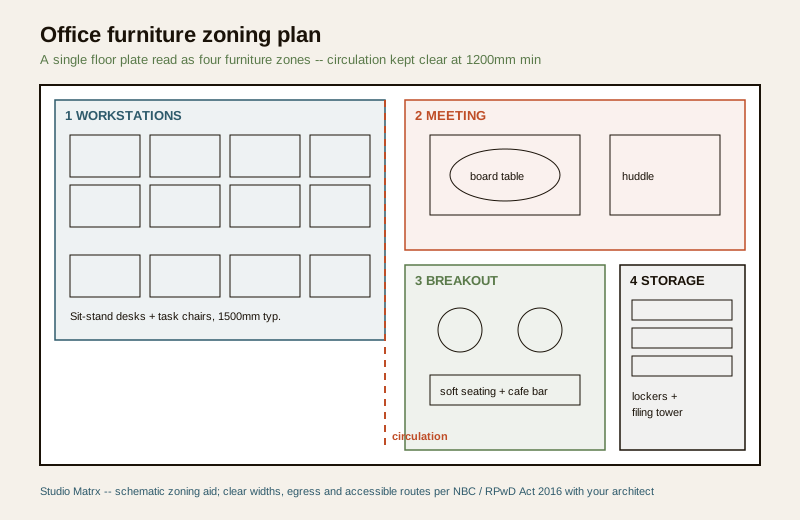
The office is where ergonomics stops being a comfort story and becomes an occupational-health one. People sit for the working day, so the ergonomic task chair — seat-height range, seat depth, lumbar support, adjustable arms, a reliable gas lift and a stable five-star base — is the single most consequential purchase. Specify it to a cycle-tested grade and hold spares of the wear parts. Around it sit workstations (the desk surface and screens; note that height-adjustable and electrified desks bring motor, load and wiring specifics that belong to the manufacturer and MEP consultant, not this guide), meeting furniture, lockable storage and pedestals, and increasingly a breakout zone of soft and cafe-style seating that does real collaborative work. Lay these as distinct zones with clear, accessible circulation — the space planning and ergonomics course is the deep dive on the anthropometry and clearances behind the plan below.
Retail
Retail furniture takes public abuse and must flatter the merchandise, not compete with it. Display systems (gondolas, wall bays, plinths) need to be robust, reconfigurable and fast to re-merchandise as ranges change. The cash-wrap / counter is a high-touch, high-wear anchor — often a custom, brand-defining piece where the custom vs ready-made trade-off tips toward bespoke. Any customer seating — fitting-room benches, waiting chairs — must survive constant, careless use.
Restaurants and cafes
Food service is the harshest everyday environment furniture faces: spills, grease, cleaning chemicals, dragging, stacking, and a turnover that means every chair is used dozens of times a day. Specify tables with sealed, heat- and stain-resistant tops and stable bases that do not rock on uneven floors; chairs that stack or gang for cleaning and events; banquettes with wipe-clean, fire-retardant upholstery (fixed seating is also a space-efficiency win in tight footprints); and bar stools rated for the height and the wobble. Moisture and humidity are real in Indian kitchens and coastal cities — favour sealed metal, treated solid timber or genuine outdoor-grade materials over raw MDF near wet zones, echoing the material logic in the materials hub. Tight covers-per-square-metre targets make the furniture cost calculator and a careful layout essential.
Hotels and hospitality
Hotels buy furniture as FF&E — furniture, fixtures and equipment — at room-multiplied scale, so a small per-item saving or a small quality failure is multiplied by hundreds. Casegoods (wardrobes, desks, luggage benches, headboards) must hold a brand-standard finish for years of guest use; lobby and lounge seating is the brand's first impression and the most abused seating on site; contract beds and banquettes carry their own durability and fire expectations. Long life, consistent finish across a bulk order, and a supplier who can hold matching spares for future refurbishment are the deciding factors. Where a property is chasing a premium signature, this shades into the luxury interiors territory — but even luxury must still be contract-grade underneath the finish.
Healthcare
Healthcare furniture is governed by infection control. Surfaces must be non-porous, seamless and able to withstand repeated cleaning and disinfection — that means wipe-clean vinyls or sealed surfaces, no fabric seams or crevices that harbour contamination, and often antimicrobial specification. Add bariatric and accessible seating, sturdy waiting-room rows, and fire compliance, and the spec becomes exacting. This is the sector where "cleanable" is a design requirement written into every joint and radius, not a maintenance afterthought.
Education
Classrooms and campuses combine rough, high-energy use with an ergonomic subtlety: desks and chairs must be height-appropriate to the age group, so schools buy in graded sizes rather than one size. Beyond that: stackable, nesting chairs for flexible rooms and easy cleaning; near-indestructible desks; lab and library furniture with their own demands; and generous, robust storage. Durability and value at volume dominate, but getting the heights wrong quietly harms posture for years.
Compliance, procurement and lifecycle
Three cross-cutting themes decide whether a commercial spec is defensible.
Fire and safety compliance. Public and workplace furniture frequently must use fire-retardant foam and fabric, and meet stability and edge-safety expectations. Treat these as pass/fail requirements to verify on the datasheet — not as options. Confirm the applicable class with your fire consultant and the local authority; this guide flags the requirement, it does not certify a product.
Ergonomics and accessibility. Beyond task-chair health, public and workplace settings must be usable by everyone. The RPwD Act 2016 and the Harmonised Guidelines set expectations for accessible seating, reachable counter heights, wheelchair-accessible tables and clear circulation. Build these into the layout from the first plan, alongside the anthropometric clearances taught in the furniture construction and detailing course.
Procurement, warranty and total cost of ownership. Commercial buying is a bulk tender with real lead times — plan the ordering calendar backward from handover, and confirm the supplier can hold spares for wear parts and future matching. Weigh the contract warranty (commonly far longer than residential) and, above all, the total cost of ownership rather than the unit price. For tenders with a green mandate, name recognised eco-certifications — CRI GreenPro and IGBC / Indian Green Building Council — and require low-formaldehyde boards in the E0 / E1 emission classes for any composite-wood component, so indoor air quality is not quietly compromised at scale.
How it connects
- This guide is the commercial companion to the complete guide to furniture pillar and its home-side twin, the residential furniture guide.
- Frame the make-or-buy and system choices with built-in vs modular vs loose furniture and custom vs ready-made furniture.
- Get the material and finish behaviour right — moisture, wear, board grades — from the materials hub; push a signature scheme further with luxury interiors.
- Go deep on the human factors and joinery in the space planning and ergonomics course and the furniture construction and detailing course.
- Turn a spec into an indicative budget with the furniture cost calculator, then benchmark against local supplier quotes.
Key takeaways
- Home furniture is chosen; commercial furniture is specified — to a test standard, a fire class, a warranty and a maintenance regime.
- Contract-grade means cycle-tested strength (BIFMA / IS furniture standards), serviceable heavy-duty construction, and compliance built in — not just a longer warranty line.
- Each sector has a governing demand: offices ergonomics, retail brand-durability, F&B durability-plus-hygiene, hotels finish-at-scale, healthcare cleanability, education graded-durability.
- Fire-retardancy and accessibility (RPwD Act 2016) are pass/fail requirements to verify, not optional upgrades.
- Buy on total cost of ownership — purchase plus maintenance plus downtime plus replacement — not the unit price; plan bulk lead times and hold spares.
- For tenders, name GreenPro / IGBC eco-certification and E0 / E1 low-formaldehyde boards; defer electrified and structural mechanism specifics to the manufacturer and MEP consultant.
References
- IS furniture standards — strength, stability, durability and safety of furniture (office, institutional and general; named generally).
- BIFMA test methods — internationally referenced performance and durability testing for commercial furniture (named generally).
- Plywood and board grades — IS 303 / IS 710 (plywood, MR and BWP), IS 1734 (plywood tests), IS 3087 / IS 3097 (particle board), IS 12406 (MDF), IS 1659 (blockboard); confirm grade to environment.
- Formaldehyde emission classes E0 / E1 / E2 (CARB / EN 13986 context) — for composite-wood components; named generally.
- RPwD Act 2016 and the Harmonised Guidelines — accessible seating, counter and table heights, and clear circulation in public and workplace settings.
- CRI GreenPro and IGBC / Indian Green Building Council — eco-certification frameworks commonly named in green procurement and tenders.
- Manufacturer datasheets, fire consultant and MEP consultant — the authorities on test grades, fire class, and any electrified or height-adjustable mechanism.
All cost bands, cycle counts, warranty periods and material notes here are indicative planning aids for designers and facility managers only; confirm exact grades against the IS furniture standards, BIFMA test methods and the product datasheet, verify fire class and accessibility with your fire consultant and the local authority, and defer electrified, height-adjustable and structural mechanism specifics to the manufacturer and MEP consultant.
Export this guide
Related Guides — Deep-dive reading
The Complete Guide to Furniture for Indian Homes (2026)
The start-here master guide for furnishing an Indian home — what furniture actually does, the five families of pieces, the decisions in the order you face them (space and needs, loose vs modular vs built-in, materials, size and layout, budget, buy, maintain), an honest read on plywood, humidity and termites, and where every choice hands off to the carpenter, the brand or the fixer.
FurnitureCommercial Flooring Guide India: The Right Floor for Every Sector, with Costs and Codes
The complete commercial flooring decision framework for India — how commercial differs from home (footfall, durability, slip, fire and accessibility codes, hygiene, lifecycle cost, downtime, brand image), plus the recommended floor, ₹/sq ft and key driver for offices, retail, restaurants, hotels, hospitals, schools, gyms, salons, banks, malls, warehouses, commercial kitchens and data centres.
Flooring & SurfacesDoors by Space in India: The Complete Which-Door-Where Decision Guide (2026)
Pick the right door for every room and building type in India - residential, office, hotel, hospital, retail and industrial - with the driver that should decide it and indicative costs.
Home Doors & EntrancesRelated Tools — Try Free
Apartment Furniture Size Chart
Standard furniture dimensions for Indian apartments — sofas, beds, tables, dining, storage.
Reference ChartAccessibility Compliance Calculator
Check a planned lift against the CPWD and RPwD accessible-lift benchmarks for a score.
Lift CheckerAcoustic Privacy (STC) Visualizer
Indian healthcare acoustic visualizer — compare wall assemblies and noise sources, see received SPL after STC attenuation, and check FGI 2018 / IS 1950 / NABH speech-privacy compliance with live dual-canvas waveform.
Acoustic Tool