
Types of Home Windows in India (2026): Complete Comparison and How to Choose
Every window type compared on ventilation, cost and best use, plus a frame, glazing and climate framework to choose right.
Windows are the single biggest lever you have over how a home feels: how much daylight pours in, how the air moves on a still April afternoon, how much your AC works, and how the façade reads from the street. Yet most buyers in India still choose a window the way they choose a switchboard, by asking the fabricator "sliding ya casement?" and leaving it there. There are at least seventeen window types worth knowing, each with a distinct job. This is the buyer's decision pillar: one complete comparison of every type, then a framework to pick the right ones for your rooms, your climate, and your budget.
If you only want a quick orientation to windows and doors together, read our combined overview at Windows and Doors Design in India. This guide goes much deeper on windows alone: it compares all the types head to head, and each type has its own dedicated deep-dive linked below.
Pick the window for the job the room needs done, not the job the showroom is selling.
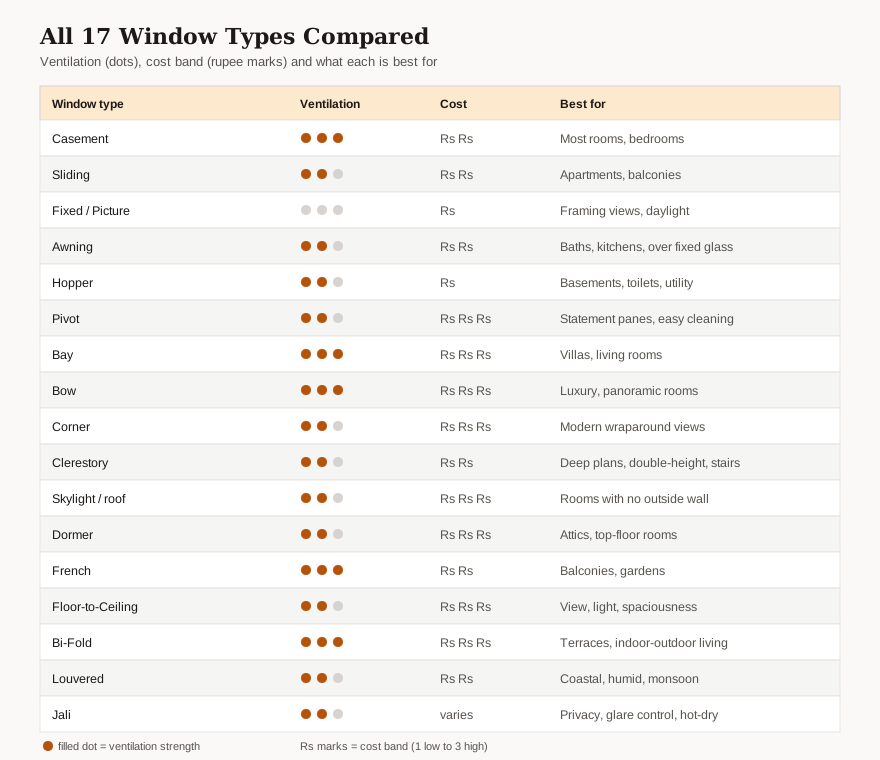
The master comparison: all 17 window types
Start here. Ventilation is rated by how much of the opening actually moves air; cost bands are indicative June 2026 and depend heavily on frame, glazing, and size.
| Window type | How it operates | Ventilation | Cost band | Best for |
|---|---|---|---|---|
| Casement | Side-hinged, cranks out ~90° | Excellent (full opening) | Medium | Most rooms, bedrooms |
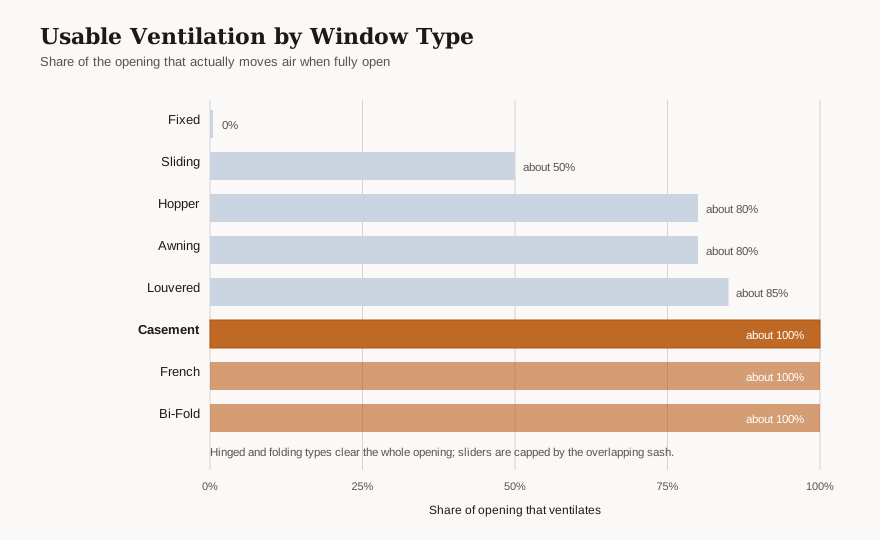
| Sliding | Sashes slide on tracks | Good (~50% opening) | Medium | Apartments, balconies |
| Fixed / Picture | Does not open | None | Low | Framing views, daylight |
| Awning | Top-hinged, opens out from bottom | Good, rain-tolerant | Medium | Bathrooms, kitchens, over fixed glass |
| Hopper | Bottom-hinged, opens in from top | Good, secure | Medium-low | Basements, toilets, utility |
| Pivot | Sash rotates on a central pivot | Good | High | Statement panes, easy cleaning |
| Bay | Three units project out at angles | Excellent light | High | Villas, living rooms |
| Bow | Four to five units in a curve | Excellent light | High | Luxury, panoramic rooms |
| Corner | Two windows meet at a corner | Medium-good | High | Modern wraparound views |
| Clerestory | A row of windows high on the wall | Good (stack effect) | Medium | Deep plans, double-height, stairwells |
| Skylight / roof | Glazed opening in the roof | Venting versions exhaust heat | Medium-high | Rooms with no outside wall |
| Dormer | Window in a projection on a sloped roof | Good | High | Attics, top-floor rooms |
| French | Full-height double-leaf, opens like doors | Excellent | Medium-high | Balconies, gardens |
| Floor-to-ceiling | Full-height fixed or sliding glass | Depends on opener | High | View, light, spaciousness |
| Bi-fold / folding | Panels concertina to one side | Excellent (whole wall) | High | Terraces, indoor-outdoor living |
| Louvered | Angled slats tilt open together | Good, rain-proof | Medium | Coastal, humid, monsoon |
| Jali | Perforated screen in the opening | Good, cooled airflow | Varies | Privacy, glare control, hot-dry |
The decision framework: five questions
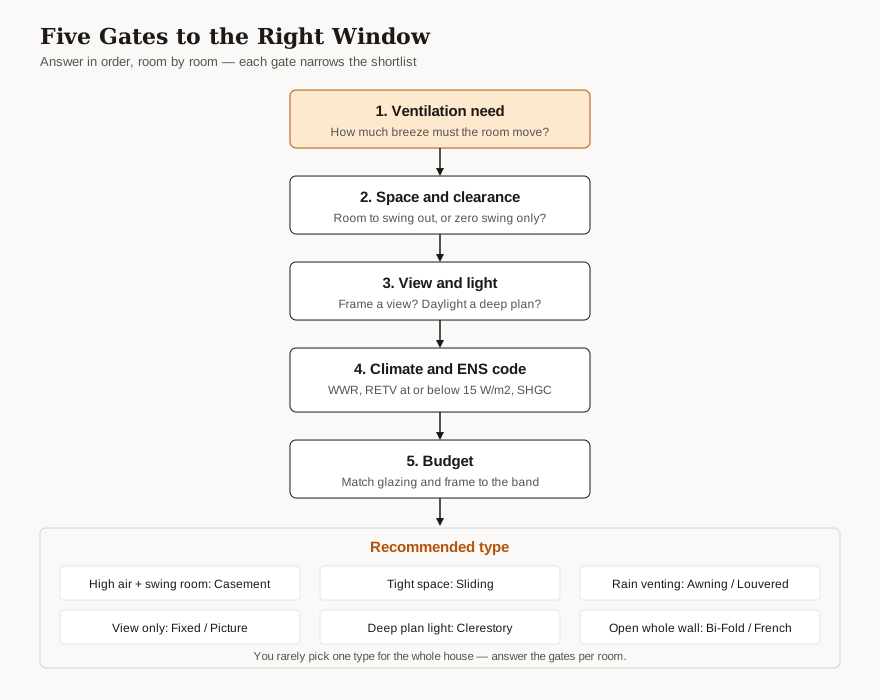
You do not choose one window type for the whole house. You choose room by room, answering five questions in order.
1. How much ventilation does the room need?
Habitable rooms in India should hit the NBC 2016 rule of thumb of an openable inlet area of at least one-tenth (10 percent) of the floor area, and many local bye-laws push window area to one-seventh or one-eighth for light and ventilation combined. IS 3362 is the reference for natural ventilation of residential buildings.
- High need (bedrooms, kitchens, anywhere you want a breeze): casement, awning, louvered, jali, bi-fold.
- Moderate (living rooms with AC backup): sliding, French, corner.
- None (the window is for light and view only): fixed and picture windows, which you always pair with an operable window nearby.
2. How much space and clearance is there?
Casement and awning sashes swing, so they need clearance and are awkward next to a walkway or balcony railing. Sliding and fixed windows take zero swing space, which is exactly why sliding dominates Indian apartments and balconies. In a tight bedroom on a corridor, sliding wins on space even though casement wins on airflow.
3. What view and how much light?
For drama and daylight, look at picture, floor-to-ceiling, bay, bow, corner, clerestory, and skylight. Clerestory deserves special mention for India: a band of glass high on the wall throws soft, glare-free light deep into a room and lets hot air escape at the top (the stack effect), without sacrificing privacy. Skylights are the only answer for an internal room with no exterior wall.
4. What does your climate and the energy code demand?
This is where most buyers under-think. The more glass you add, the harder the Eco-Niwas Samhita 2018 (ENS) energy code pushes back on the glazing you are allowed to use.
- Your WWR (window-to-wall ratio) is the non-opaque envelope area divided by the external wall area.
- The wall envelope's RETV (Residential Envelope Transmittance Value) must stay at or below 15 W/m² in composite, hot-dry, warm-humid, and temperate zones. Windows are the single biggest lever on RETV.
- As WWR rises, ENS demands a minimum visible-light transmittance (VLT) but, in practice, much lower solar heat gain.
| WWR band | Minimum VLT (ENS) | Practical glazing call |
|---|---|---|
| 0.00 to 0.30 | 0.27 | Single or basic DGU may pass |
| 0.31 to 0.40 | 0.20 | DGU, consider Low-E |
| 0.41 to 0.50 | 0.16 | Low-E DGU, low SHGC |
| 0.51 to 0.60 | 0.13 | Spectrally selective Low-E, shading |
| 0.61 to 0.70 | 0.11 | High-spec Low-E plus deep shading |
The takeaway: a floor-to-ceiling glass wall is not just expensive glass, it is a code obligation to buy the right glass. Plan cross-ventilation and shading first; use our cross-ventilation analyzer to test airflow before you commit.
5. What is the budget?
Fixed and sliding are the cheapest (least hardware). Casement, awning, and hopper sit in the middle. Bay, bow, corner, pivot, and bi-fold are premium because of glass area, structure, and specialty fitting (specialty fitting alone runs ₹500 to ₹800 per sqft versus ~₹200 per sqft for standard install).
The frame: uPVC, aluminium, wood, or steel
The window type is the shape; the frame material is its body. This is the first cost-and-performance fork.
| Frame | Strengths | Watch-outs | Cost (₹/sqft) |
|---|---|---|---|
| uPVC | Best all-round value, good thermal and acoustic insulation, termite and rust proof, low maintenance | Steel reinforcement needed for large spans | 250 to 1,500+ |
| Aluminium | Slimmest sightlines, largest spans, modern look, very strong | Bare metal conducts heat; insist on a thermal break | 350 to 3,000 |
| Wood | Warm, premium, classic, heritage fit | 2.5 to 4× uPVC over 10 years once you count repainting and monsoon sealing | 500 to 1,500+ |
| Steel (MS) | Slimmest of all, Crittall heritage look | Rusts without coating, niche | Varies |
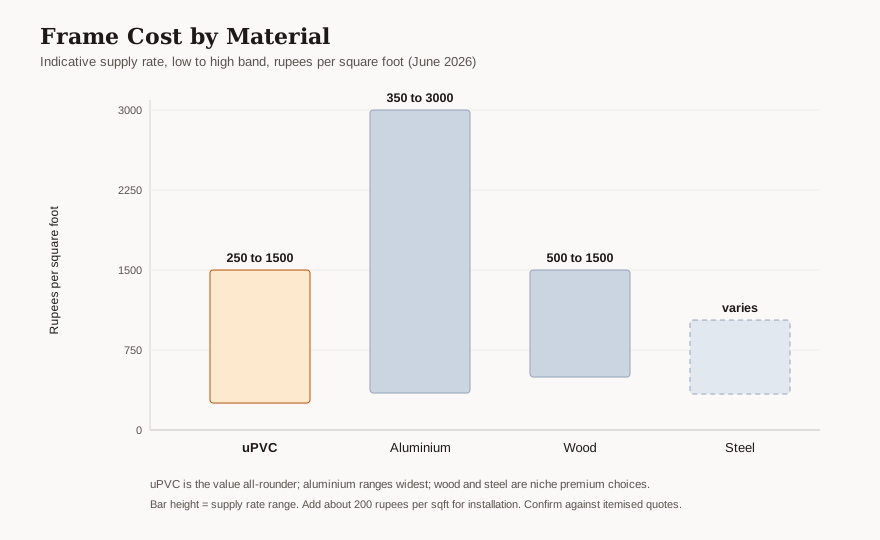
For most new Indian homes, uPVC is the default value pick and aluminium with a thermal break is the choice when you want big, slim spans. Wood and steel are tradition and luxury. Aluminium windows are governed by IS 1948:2024, and IS 1081 covers fixing and glazing of metal frames.
The glass: a quick glazing primer
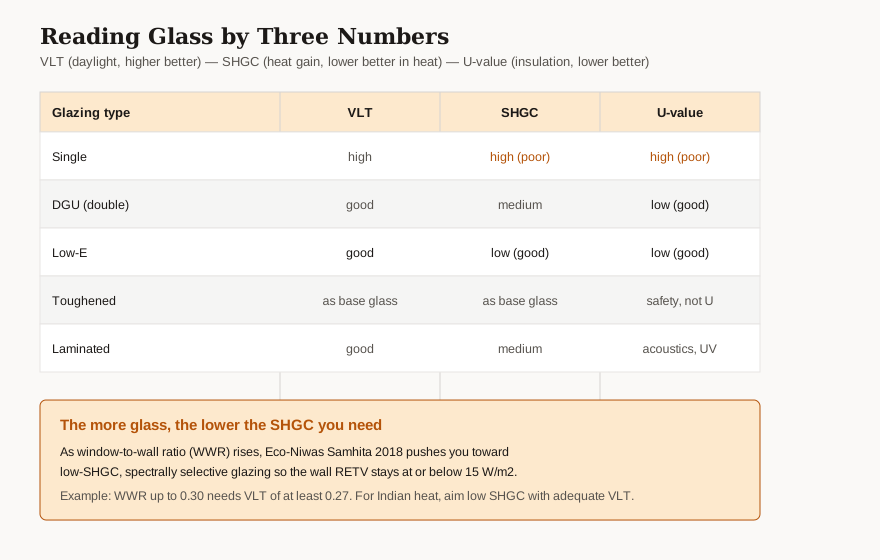
The frame holds the glass, but the glass does the thermal and acoustic work.
| Glazing | What it does | When to choose |
|---|---|---|
| Single | One pane, cheapest, poor insulation | Tight budgets, mild climate, small windows |
| DGU / IGU | Two panes plus a spacer and air or argon | The energy-code default for AC-heavy or large windows |
| Low-E | Coating that reflects radiant heat, cuts solar gain, keeps light | Almost any sun-facing Indian window |
| Toughened | 4 to 5× stronger, shatters into blunt granules | Large or low panes, floor-to-ceiling, doors |
| Laminated | PVB interlayer holds glass together when broken | Security, safety, best acoustics, UV cut |
Read glass by three numbers: VLT (visible light, higher means brighter), SHGC (solar heat gain, lower means cooler), and U-value (insulation, lower is better). Indian heat wants low SHGC with enough VLT to stay bright. As your WWR climbs, the SHGC has to fall.
Putting it together: a worked example
A 3BHK flat in Pune (composite climate): sliding windows in the two bedrooms and the kitchen for zero swing space; a casement in the master for a real breeze; a fixed picture window in the living room for the view, paired with an awning above it that you can leave open in the monsoon. Glass: Low-E DGU throughout to keep RETV under 15 and tame the western sun. That single set of choices is more thoughtful than 90 percent of homes get.
Where to go next
- Compare cross-flow before you finalise openings: cross-ventilation analyzer.
- Plan daylight without glare: Natural Light Planning for Indian Homes.
- Design the airflow path: Cross-Ventilation in Indian Homes.
- For the quick combined windows-and-doors brief: Windows and Doors Design in India.
Then dive into the type you have shortlisted using the links in the master table above. Each deep-dive carries its own operation diagram, frame and glazing advice, and a clear "choose this if / avoid if" call.
References
- IS 1948 (aluminium doors, windows and ventilators), BIS: https://law.resource.org/pub/in/bis/S03/is.1948.1961.pdf
- IS 1081 (fixing and glazing of metal doors and windows), BIS: https://law.resource.org/pub/in/bis/S03/is.1081.1960.pdf
- IS 3362 (natural ventilation of residential buildings), BIS: https://law.resource.org/pub/in/bis/S03/is.3362.1977.pdf
- BIS Guide for Using NBC 2016: https://www.bis.gov.in/wp-content/uploads/2022/08/Booklet-Guide-for-Using-NBC-2016.pdf
- Eco-Niwas Samhita 2018 (BEE / ECBC residential): https://ecbc.in/econiwas.html
- uPVC windows price per sq ft 2026 cost guide: https://buildingandinteriors.com/upvc-windows-price-per-sq-ft-india-2026-cost-guide/
Export this guide
Related Guides — Deep-dive reading
Floor-to-Ceiling Windows (India): Maximum Light, and the Heat Trade-Off
Full-height glazing for Indian homes — how to win the daylight and view without losing the energy code, comfort or safety.
Windows & GlazingAwning Windows Guide (India): Rain-Proof Ventilation for Kitchens and Baths
Top-hinged, outward-opening windows that shed rain and breathe high on the wall — the monsoon-smart choice for baths, kitchens and over picture windows.
Windows & GlazingSliding Windows Explained (India): The Apartment Favourite, Costed and Compared
How sliding windows operate, why they ventilate only half their opening, what uPVC sliders cost in rupees per square foot, and exactly when to choose one over a casement or bi-fold.
Windows & GlazingRelated Tools — Try Free
Cross-Ventilation Analyzer
Estimate airflow and air changes per hour (ACH) from room size, window areas, layout, and local wind — with NBC 2016 Part 8 compliance check.
Ventilation CalculatorBrise-Soleil Visualizer
Interactive horizontal-louvre cut-off angle calculator — sun altitude, louvre depth, and spacing inputs with a live shadow preview. Computes θ = arctan(spacing/depth) for façade shading, ECBC envelope compliance, hospital daylight design, and tropical sun-control detailing.
Sun Shading ToolWindow Material Comparison Tool
Compare uPVC, aluminium, wood, steel and composite windows on cost, life, upkeep and insulation.
Compare