
Hopper Windows Guide (India): Compact, Secure Ventilation for Baths and Basements
Bottom-hinged and opening inward from the top, the hopper is the compact, burglar-resistant, tight-sealing window for bathrooms, basements and utility rooms.
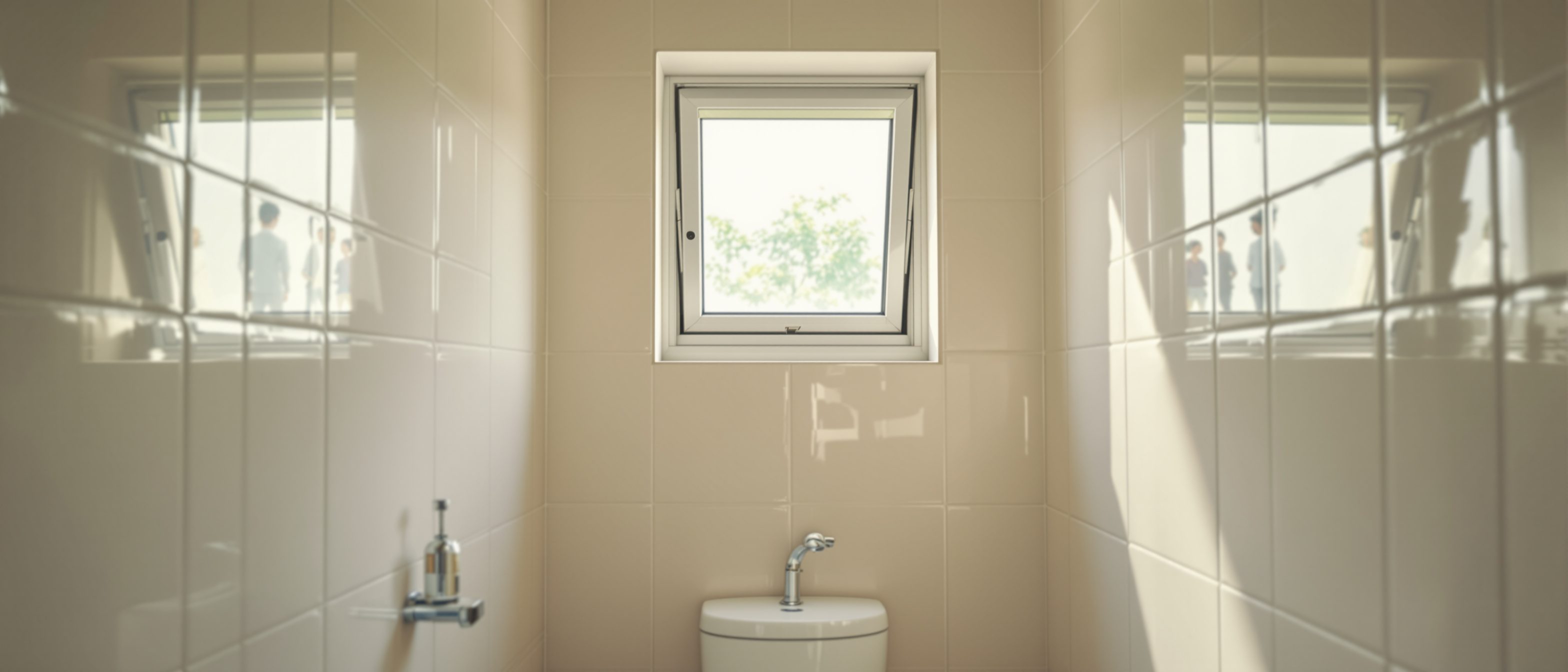
A hopper window is the quiet workhorse of Indian homes. It is bottom-hinged and opens inward from the top, tilting back into the room like a letter-box flap turned upside down. Because it is small, secure and seals tightly, it solves a very specific set of problems: ventilating a bathroom, a basement, a utility area or the strip of wall just above a kitchen counter, without sacrificing privacy or inviting break-ins.
If you have ever seen a small window high on a bathroom wall that tips open into the room, you have met a hopper. This guide is a buyer's deep-dive into how it works, where it shines, where it frustrates, and what to specify so you get a good one. For the full menu of window types, start at our pillar guide on types of home windows in India; for a quick combined intro to windows and doors together, see windows and doors design. This page goes much deeper on the hopper alone.
How a hopper window operates
The sash is hinged at the bottom edge. You release a latch at the top and the sash falls inward, pivoting on the bottom hinge, so the top of the glass swings down and into the room. Gravity helps it open, and a friction stay or a pair of side arms limits how far it tilts, usually to a narrow 15 to 30 degree gap.
That inward, top-down geometry is the whole personality of the window. Warm, stale air that collects near the ceiling escapes over the top of the tilted sash, while the latch and hinge stay clear of the wet zone below, which is why it suits bathrooms so well.
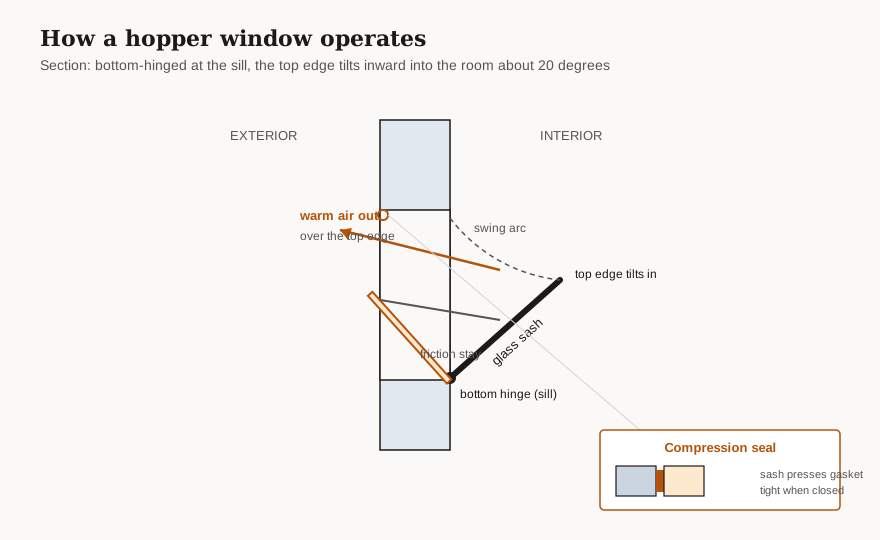
A hopper is essentially a casement laid on its back, hinged low and opening into the room. That single decision is what makes it compact, secure and weather-tight.
The compression seal advantage
When you shut a hopper, the sash is pulled against the frame rather than slid past it. The latch compresses a continuous gasket around all four edges, just as a casement does. This compression seal is far tighter than a sliding window, where two sashes must always overlap and leave a gap.
The payoff:
- Low air leakage, so dust and traffic noise are kept out when closed.
- Better thermal performance, which matters once you add a Double Glazed Unit and the room is air-conditioned.
- A genuinely rain-tight closed position, useful in monsoon-prone walls.
The energy code rewards this. Under Eco-Niwas Samhita 2018, windows are the single biggest lever on a wall's Residential Envelope Transmittance Value, which must stay at or below 15 W/m2 for composite, hot-dry, warm-humid and temperate zones. A tightly sealing hopper with the right glass helps you hit that number.
Security: hard to defeat
A hopper is one of the more burglar-resistant windows you can fit, for two structural reasons:
- It opens inward, so there is nothing to grab and lever from outside.
- The opening gap is small and high, awkward to climb through even when tilted fully open.
This is exactly why hoppers are popular for ground-floor toilets, basements and utility rooms, the openings a thief would otherwise target. You get ventilation you can leave open at night without a separate grille.
Hopper versus awning: the mirror twins
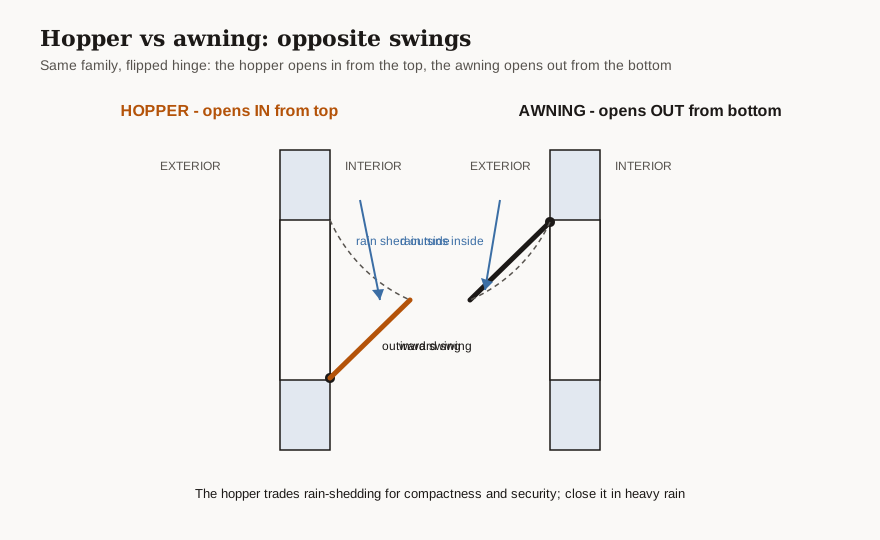
The hopper's closest cousin is the awning window. They are mechanical mirror images, and people confuse them constantly. We cover the awning in full in our awning windows guide; here is the crisp distinction.
| Feature | Hopper | Awning |
|---|---|---|
| Hinge | Bottom edge | Top edge |
| Opens | Inward, top tilts in | Outward, bottom swings out |
| Rain when open | Lets rain fall inside | Sheds rain outside, can stay open in a drizzle |
| Security | Very high (opens in) | High (opens out, no grab point) |
| Interior space | Eats interior clearance | Frees interior, projects outward |
| Debris | Falls into the room | Falls outside |
| Best for | Basements, ground-floor baths, utility, secure low openings | Bathrooms, kitchens, over fixed glazing, rain ventilation |
The simplest way to remember it: hopper opens IN from the top; awning opens OUT from the bottom. Choose hopper when security and a flush exterior matter; choose awning when you want to ventilate through light rain.
Where the hopper wins
- Bathrooms and WCs — high placement gives privacy, and ventilation clears steam over the top of the sash.
- Basements — the inward swing needs no exterior clearance against a retaining wall or window-well, and the security is built in.
- Utility and laundry rooms — exhausts humid air, takes little wall.
- Above kitchen counters — a slim hopper in the strip between counter and overhead cabinets vents cooking heat without anything projecting outward to hit.
- Stacked over fixed glazing — a hopper transom above a large picture pane gives ventilation without compromising the view.
Where the hopper frustrates
Be honest about the trade-offs before you commit.
- Debris falls inside. Because the top tilts in, leaves, dust and rain land on your floor or sill, not outside. In a bathroom that is a minor wipe; under a tree it is a chore.
- Inward swing eats interior space. The tilted sash projects into the room, so you cannot place a tall shelf, a mirror cabinet or a curtain rod in its path.
- Screens and curtains are awkward. A mosquito mesh must sit on the outside (since the sash swings in), and curtains or blinds foul the opening sash unless mounted well clear. Plan blinds outside the swing arc.
- Limited size. Hoppers are deliberately small; they are not a daylight or view window.
Frame material and glazing fit
Hoppers are made in every common frame material; match it to the room.
| Frame | Fit for hopper | Indicative cost |
|---|---|---|
| uPVC | Best all-round; rust-proof, good seal, ideal for wet baths and basements | ₹250 to ₹800 per sqft |
| Aluminium | Slim, strong; needs a thermal break if the room is conditioned | ₹350 per sqft and up, powder-coated ₹450 to ₹950 |
| Wood | Warm and classic, but repainting and monsoon sealing make it 2.5 to 4 times costlier over ten years | ₹500 to ₹1,500 per sqft and up |
For a small wet-area window, uPVC is usually the smart default: it shrugs off humidity, will not rust like steel or warp like untreated timber, and seals well. Aluminium suits a modern aluminium-everywhere home, but insist on a thermal break in air-conditioned spaces.
Glazing advice for a hopper, which is small and often in a wet or secure room:
- Single glazing is acceptable for a non-conditioned utility or basement hopper where budget rules.
- DGU (Double Glazed Unit) is worth it for an air-conditioned bathroom; the tight compression seal makes the DGU's insulation pay off.
- Toughened glass is wise for any low or reachable pane, shattering into blunt granules instead of shards.
- Laminated glass adds security and acoustic benefit if the hopper is at a vulnerable ground-floor opening.
- Low-E coating cuts solar heat gain; pick low-SHGC glass if the hopper faces west or south. In Indian heat, aim for low SHGC with adequate VLT.
Hopper openings are small, so they rarely move the window-to-wall ratio much, but the NBC 2016 rule of thumb still applies to the room as a whole: openable inlet area should be at least one-tenth of the floor area. A small hopper often partners with a larger window or door to meet that.
Cost band
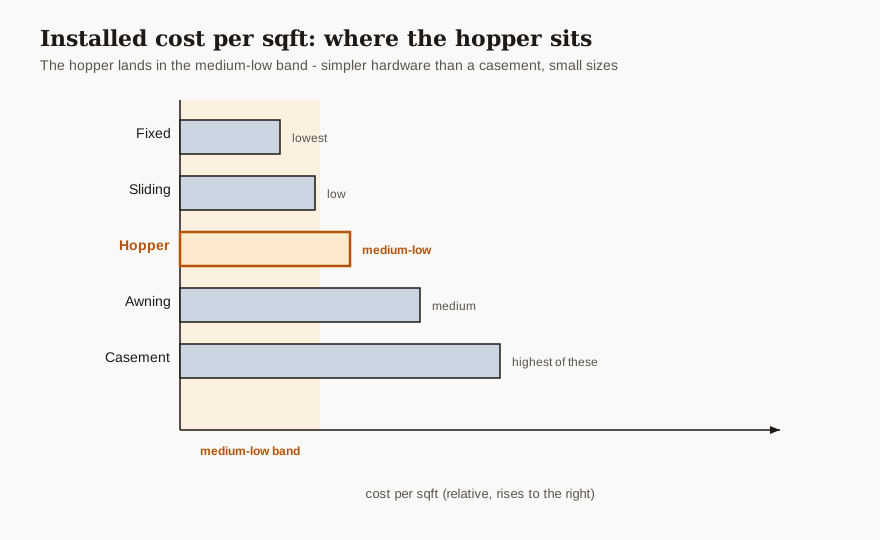
The hopper sits in a medium-low cost band. It uses simple bottom hinges and a single latch, less hardware than a casement crank or a sliding roller carriage, and the small sash uses little glass. Expect the frame-and-glazing cost to track the material table above, with installation around ₹200 per sqft.
Because the units are small, the absolute rupee cost per window is low even in uPVC with a DGU. The catch is that you are paying for a window that does not deliver daylight or view, only ventilation and security, so size and quantity matter to value. These figures are indicative for June 2026; always confirm with itemised quotes from fabricators.
Pros and cons at a glance
| Pros | Cons |
|---|---|
| Excellent compression weather-seal | Debris and rain fall inside |
| Very secure, opens inward | Inward swing eats interior space |
| Compact, fits tight or high walls | Screens must go outside; curtains awkward |
| Great for baths, basements, utility | Small, not a daylight or view window |
| Medium-low cost, simple hardware | Reach can be high for cleaning |
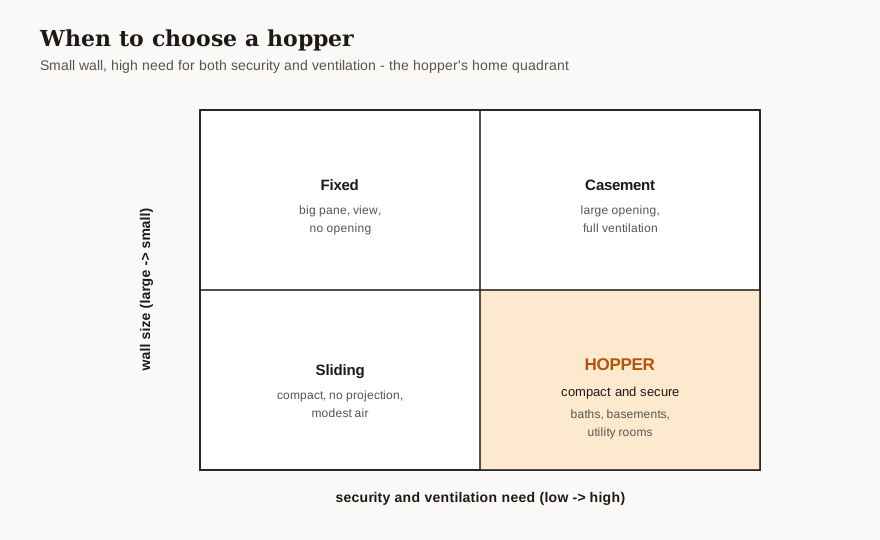
Choose this if / avoid if
| Choose a hopper if | Avoid a hopper if |
|---|---|
| You need secure ventilation for a bathroom, basement or utility room | You want daylight, a view, or a large opening |
| The opening is small and often high on the wall | The wall is under a tree and debris would constantly fall in |
| Exterior clearance is tight (a basement well or boundary wall) | You need to mount blinds, a curtain or a mirror cabinet on that wall |
| You want a window you can leave open safely at night | You want to ventilate through rain (choose an awning instead) |
For ventilation strategy across the whole home, run your plan through the cross-ventilation analyzer and read cross-ventilation in Indian homes; a row of hoppers can act as low inlets that pair with high outlets for stack effect. To weigh the inward-versus-outward decision against its mirror twin, compare with the awning windows guide.
References
- IS 1948 (aluminium doors, windows and ventilators), BIS: https://law.resource.org/pub/in/bis/S03/is.1948.1961.pdf
- IS 1081 (fixing and glazing of metal doors and windows): https://law.resource.org/pub/in/bis/S03/is.1081.1960.pdf
- IS 3362 (natural ventilation of residential buildings): https://law.resource.org/pub/in/bis/S03/is.3362.1977.pdf
- BIS Guide for Using NBC 2016: https://www.bis.gov.in/wp-content/uploads/2022/08/Booklet-Guide-for-Using-NBC-2016.pdf
- Eco-Niwas Samhita 2018 (BEE/ECBC): https://ecbc.in/econiwas.html
- uPVC windows price per sq ft 2026 (Building and Interiors): https://buildingandinteriors.com/upvc-windows-price-per-sq-ft-india-2026-cost-guide/
Export this guide
Related Guides — Deep-dive reading
Awning Windows Guide (India): Rain-Proof Ventilation for Kitchens and Baths
Top-hinged, outward-opening windows that shed rain and breathe high on the wall — the monsoon-smart choice for baths, kitchens and over picture windows.
Windows & GlazingFloor-to-Ceiling Windows (India): Maximum Light, and the Heat Trade-Off
Full-height glazing for Indian homes — how to win the daylight and view without losing the energy code, comfort or safety.
Windows & GlazingSliding Windows Explained (India): The Apartment Favourite, Costed and Compared
How sliding windows operate, why they ventilate only half their opening, what uPVC sliders cost in rupees per square foot, and exactly when to choose one over a casement or bi-fold.
Windows & GlazingRelated Tools — Try Free
Cross-Ventilation Analyzer
Estimate airflow and air changes per hour (ACH) from room size, window areas, layout, and local wind — with NBC 2016 Part 8 compliance check.
Ventilation CalculatorWindow Material Comparison Tool
Compare uPVC, aluminium, wood, steel and composite windows on cost, life, upkeep and insulation.
CompareWindow Quantity Calculator
Estimate how many windows your home needs for NBC daylight and ventilation norms.
Window Tool