
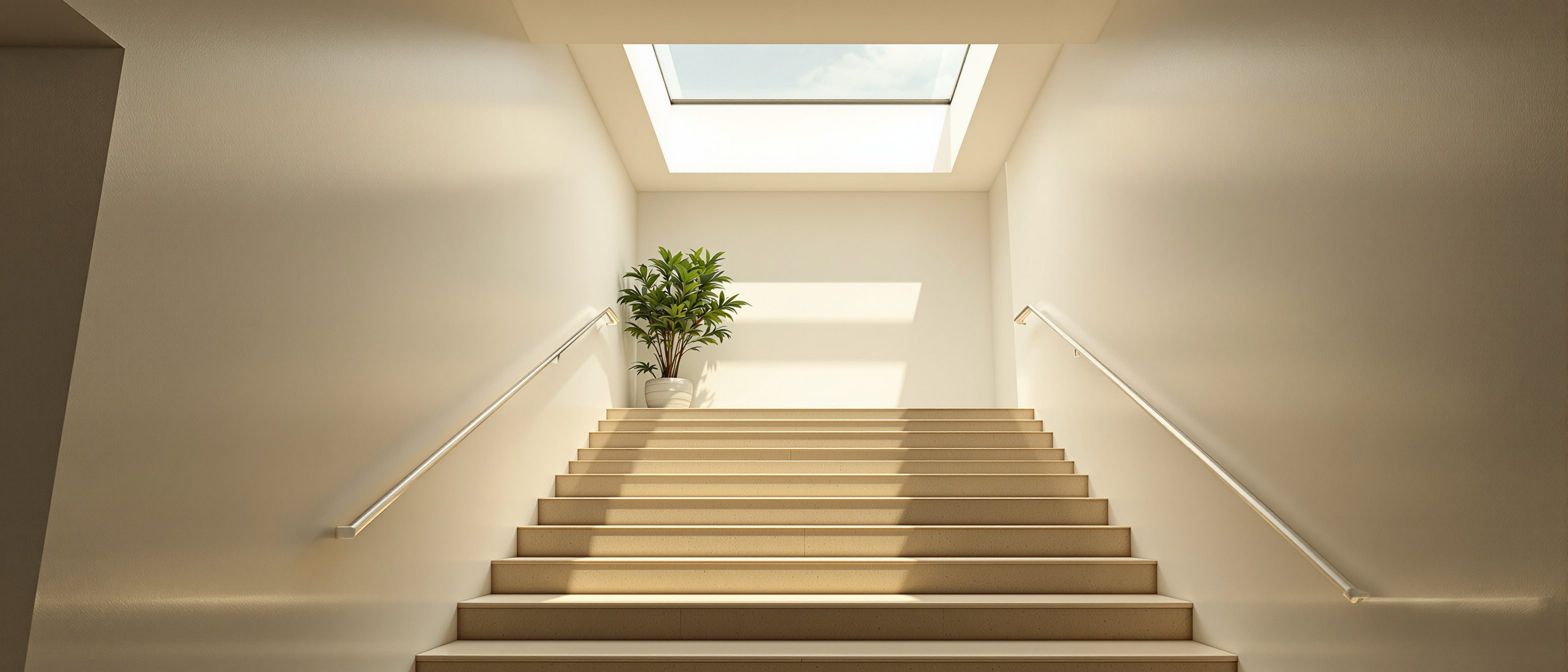
Skylights and Roof Windows (India): Overhead Daylight Without the Leaks
How to light a stairwell, bathroom or deep core from above — and beat the two India risks: monsoon leaks and summer heat gain.
Some rooms in an Indian home simply have no exterior wall to give them a window. The stairwell wedged into the building core. The internal bathroom. The deep middle of a long plot where the kitchen or pooja room sits two rooms away from any outside edge. For these spaces, daylight cannot come in sideways at all. It has to come from above.
A skylight is a glazed opening cut into the roof. It is the single strongest source of natural daylight you can give a room, because overhead glass faces the open sky and pulls in roughly two to three times the light of a same-sized window on a wall. But that strength is also its danger: a hole in your roof in a country that gets a brutal monsoon and a brutal summer. Get the detailing right and a skylight transforms a dark core into the brightest, most loved room in the house. Get it wrong and you have leaks every July and a greenhouse every May.
This is the dedicated deep-dive on roof glazing. For the high-on-the-wall alternative, see our clerestory windows guide — a clerestory is a wall window, far safer against rain and softer in glare, but it cannot light a room that has no wall to put it on. For the broad combined intro to all openings, see Windows and Doors Design in India; this guide goes much deeper on the two India-specific risks that overview only touches.
How a skylight works, and what overhead light feels like
A skylight admits light vertically, so the room glows evenly from the ceiling rather than from one bright edge. There is no glare hotspot on the floor near a wall, no deep shadow at the far side. A stairwell lit from above feels open and safe at every tread. An internal bathroom with a skylight needs no light switch through the day.
There are two broad families:
- Fixed skylights — sealed glazed panels that do not open. Maximum light, maximum seal against water, lowest cost, no ventilation. Right for stairwells, corridors and any space you only want to light.
- Venting (openable) skylights — hinge or crank open to exhaust hot air. Because heat rises, an openable skylight is the highest exhaust point in the house and pulls hot, stale air straight out — excellent for bathrooms, kitchens and the top of a stairwell that acts as a thermal chimney.
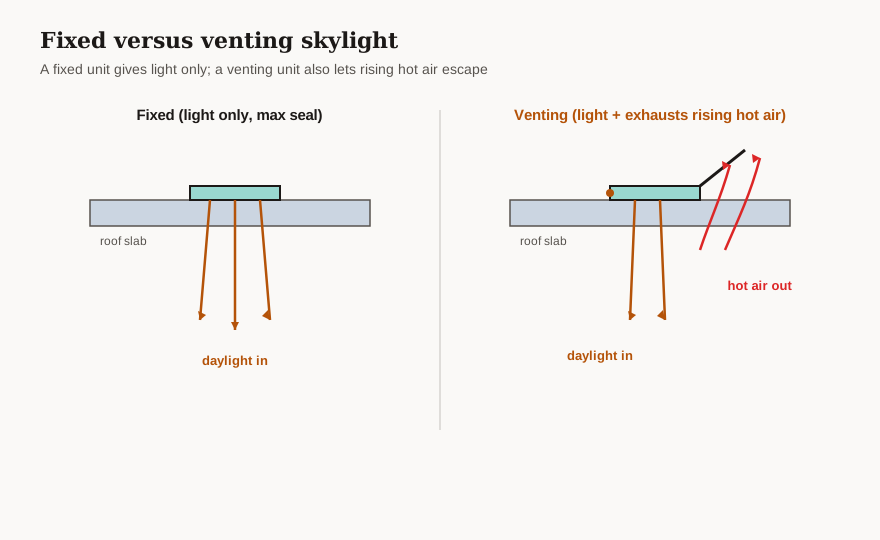
A fixed skylight gives you light. A venting skylight gives you light AND lets the hottest air in the house escape from its highest point. In the Indian summer, that second job is worth a lot.
Skylight versus roof window — the nuance
The terms are often swapped, but there is a real distinction. A skylight sits in a flat or low-slope roof, set on a raised kerb (upstand). A roof window is fitted into a sloped/pitched roof, sits in the plane of the roof slope, and is usually within reach so it can be opened and cleaned by hand — common in attic and top-floor rooms. A dormer is different again: a vertical window in a box that projects out of a sloped roof. If your roof is the typical flat RCC slab of an Indian home, you are almost always talking about a kerb-mounted skylight.
Risk 1 — Waterproofing (the one that ruins ceilings)
Most skylight failures are not the glass. They are the joint where glass meets roof. The defence is layered.
- Kerb / upstand — never set a skylight flush into the slab. Build a raised kerb (a 150 mm or more upstand of the RCC or a built-up frame) so the glass sits above the pooled rainwater level. Water has to climb to leak.
- Flashing — metal (aluminium or GI) skirts that lap over the kerb and tuck under the surrounding waterproofing membrane, like overlapping roof tiles, so every joint sheds water downhill.
- Continuous drainage — the roof around the skylight must slope away from the kerb so monsoon water runs off, never sits against it.
- Sealant is the last line, not the first — quality structural and weatherproof sealant fills the final gap, but it ages. A skylight that relies on sealant alone will leak within a few monsoons.
- Monsoon checks — inspect the flashing and sealant before every monsoon (and the kerb after) and reseal at the first sign of crazing or a hairline ceiling stain.
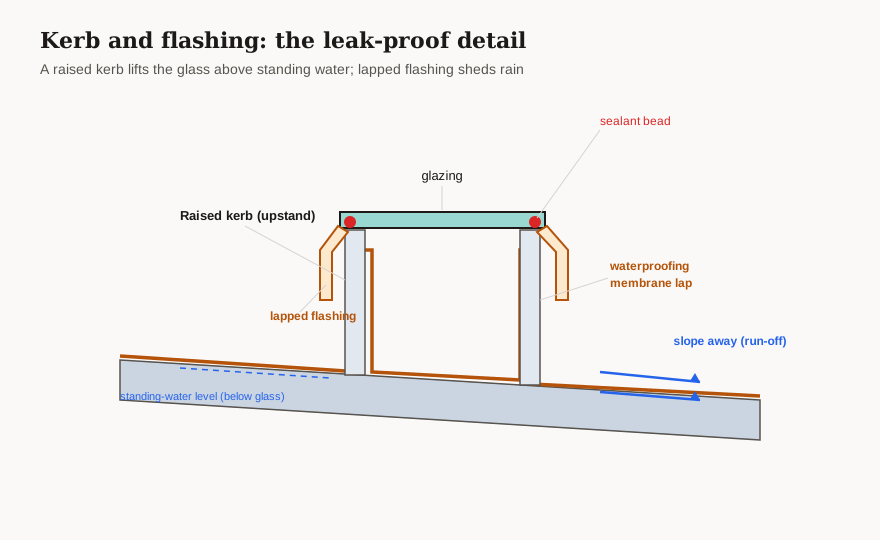
| Layer | Job | What fails if skipped |
|---|---|---|
| Raised kerb / upstand | Lifts glass above standing water | Sheet flooding through the joint |
| Flashing (lapped) | Sheds water downhill over kerb | Slow seepage, ceiling stains |
| Membrane lap | Ties roof waterproofing to kerb | Water tracks under the membrane |
| Slope-away drainage | Stops pooling against kerb | Standing water finds any gap |
| Weatherproof sealant | Final gap-fill | Ages and crazes; needs reseal |
Risk 2 — Heat gain (the greenhouse problem)
Overhead glass faces the hottest part of the sky for the longest part of the day. Plain single glazing in a skylight will turn a room into an oven by noon. The fix is the glass and the shade, and the energy code points the way.
Eco-Niwas Samhita 2018 (ENS) sets the roof U-value at 1.2 W/m²K or lower — and a skylight is a hole in that roof, so its glazing has to pull its weight. Specify:
- Double Glazed Unit (DGU/IGU) — two panes with an air or argon gap; far better insulation than single glass, and the code default for cooling-dominated homes.
- Low-E (low-emissivity) coating — reflects radiant heat back out while letting daylight through; the single most important spec for an Indian skylight.
- Heat-reflective / spectrally selective glass — chooses low SHGC (solar heat gain coefficient — lower means less heat) while keeping enough VLT (visible light transmittance — the daylight you actually want).
- Internal blinds or a diffuser — a roller blind, honeycomb blind or laminated diffusing pane lets you dial the light down on the worst afternoons.
- Toughened/laminated glass — overhead glass should be safety glass so it never falls as shards; laminated also cuts UV that fades furniture below.
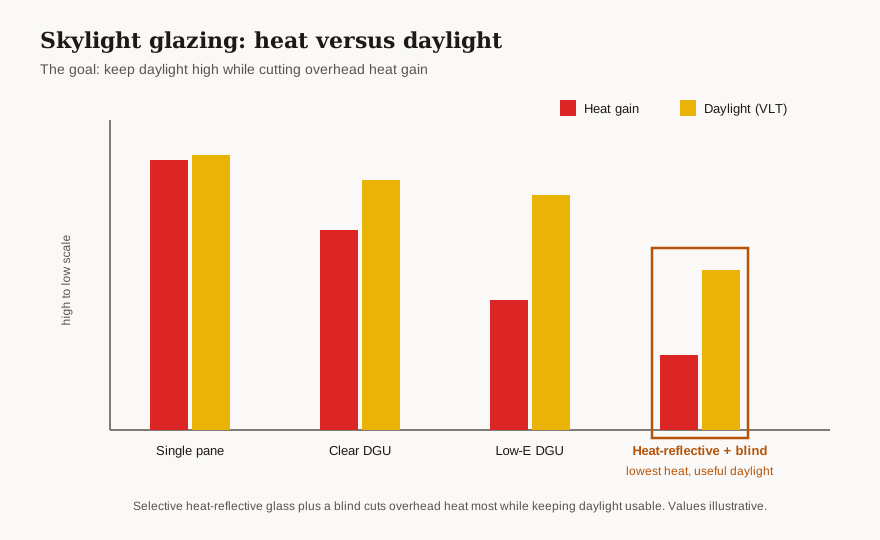
| Glazing | Heat gain | Daylight | Verdict for India |
|---|---|---|---|
| Single pane | Very high | High | Avoid — greenhouse effect |
| Clear DGU | Medium-high | High | Better insulation, still hot |
| Low-E DGU | Low | Good | Strong all-round choice |
| Heat-reflective / selective DGU + blind | Lowest | Tunable | Best for hot-dry / composite |
Tubular skylights for small, awkward spaces
When you only need to light a small windowless box — an internal bathroom, a WC, a corridor — a full glazed skylight is overkill and a leak risk. A tubular skylight (sun tunnel) is a small roof dome connected to the ceiling by a short, highly reflective tube that funnels daylight down and spreads it through a flush ceiling diffuser. It needs only a small roof penetration, is far easier to waterproof, and delivers a surprising amount of light for its size. For a 1.2 by 1.5 m internal bathroom it is often the smartest, leak-safest answer.
Cost, frame and glazing fit
Skylight pricing varies widely by size, glazing and how the kerb and flashing are built, so treat these as indicative and always confirm with itemised quotes from your fabricator and waterproofing contractor.
| Item | Indicative cost (₹) | Note |
|---|---|---|
| Tubular skylight (sun tunnel), supplied + fitted | 15,000–40,000 each | Small internal rooms |
| Fixed flat skylight glazing | 900–2,500 per sqft | DGU/Low-E at the higher end |
| Venting (openable) skylight | higher | Adds hardware + opening mechanism |
| Kerb + flashing + waterproofing | quoted separately | Do NOT skip — this is the leak defence |
On frames, aluminium (with a thermal break) is the workhorse for skylight perimeters — strong, slim and weatherproof. uPVC suits smaller domestic skylights for its insulation and low maintenance. Timber roof windows look beautiful in attic conversions but need diligent sealing against the monsoon. Whatever the frame, the glazing and the flashing matter more than the frame brand.
Pros and cons
| Pros | Cons |
|---|---|
| Strongest overhead daylight available | Waterproofing risk — leaks if detailed poorly |
| Lights rooms with no exterior wall | Heat gain risk — needs Low-E / shading |
| Venting versions exhaust rising hot air | Harder to clean and maintain (overhead) |
| Frees up wall space for storage/art | Costs more once kerb + flashing are counted |
| Even, glare-free light from above | Monsoon inspections needed every year |
Choose this if / avoid if
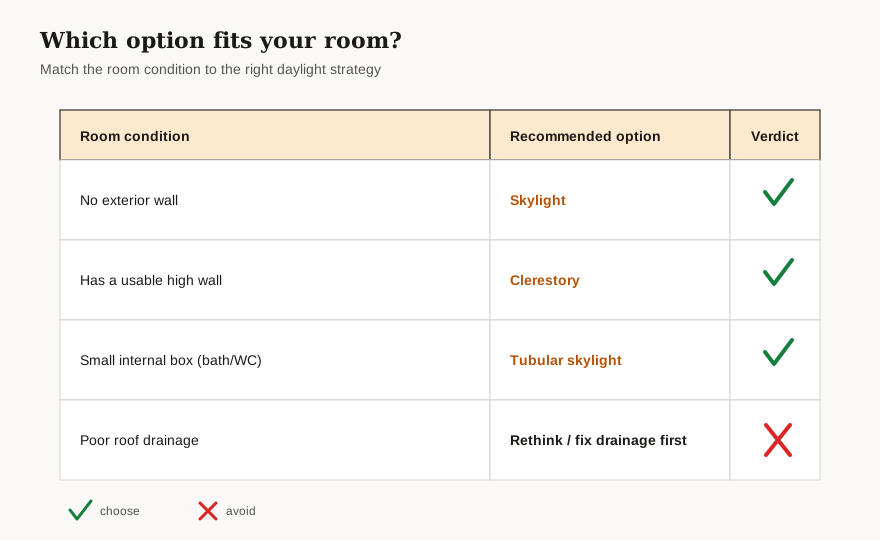
Choose a skylight if: the room has no exterior wall (stairwell, internal bathroom, deep core); you want maximum daylight from above; you can commit to proper kerb, flashing and yearly monsoon checks; or you want a venting unit to exhaust hot air from the top of the house.
Avoid (or rethink) if: the room already has a usable exterior wall — a clerestory window high on that wall gives soft daylight with far less rain and heat risk; your roof drainage is poor or already prone to pooling; or the budget cannot stretch to proper waterproofing detailing, in which case a tubular skylight is the safer small-scale fallback.
To weigh overhead daylight against wall-window and cross-ventilation options for the whole plan, read Natural Light Planning for Indian Homes (the daylighting science) and start from the pillar guide to home window types to see where roof glazing fits among all your choices.
References
- Eco-Niwas Samhita 2018 (BEE/ECBC residential energy code): https://ecbc.in/econiwas.html
- BEE ENS Residential Code, Building Envelope: https://beeindia.gov.in/sites/default/files/Residential%20Code_Building%20Envelope_Draft_rev4.pdf
- IS 3362 — natural ventilation of residential buildings: https://law.resource.org/pub/in/bis/S03/is.3362.1977.pdf
- BIS Guide for Using NBC 2016: https://www.bis.gov.in/wp-content/uploads/2022/08/Booklet-Guide-for-Using-NBC-2016.pdf
- IS 1948:2024 — aluminium doors, windows and ventilators: https://law.resource.org/pub/in/bis/S03/is.1948.1961.pdf
Export this guide
Related Guides — Deep-dive reading
Floor-to-Ceiling Windows (India): Maximum Light, and the Heat Trade-Off
Full-height glazing for Indian homes — how to win the daylight and view without losing the energy code, comfort or safety.
Windows & GlazingClerestory Windows Explained (India): High Daylight and Stack Ventilation
A row of windows high on the wall that pushes soft daylight deep into a room and lets hot air escape near the ceiling
Windows & GlazingEnergy-Efficient Facades in India: How the Building Skin Cuts Your Cooling, Heating & Lighting Bills
How a building facade drives cooling, heating and lighting energy in India, the three levers of solar-heat-gain control, insulation and daylighting, U-value, SHGC, VLT and WWR in plain terms, ECBC and Eco-Niwas expectations, and real Indian green buildings.
Building FacadesRelated Tools — Try Free
Cross-Ventilation Analyzer
Estimate airflow and air changes per hour (ACH) from room size, window areas, layout, and local wind — with NBC 2016 Part 8 compliance check.
Ventilation CalculatorWindow Size Calculator
Get the right window size, glazing area and openable area for any room using NBC daylight rules.
Window ToolBrise-Soleil Visualizer
Interactive horizontal-louvre cut-off angle calculator — sun altitude, louvre depth, and spacing inputs with a live shadow preview. Computes θ = arctan(spacing/depth) for façade shading, ECBC envelope compliance, hospital daylight design, and tropical sun-control detailing.
Sun Shading Tool