
Sliding Windows Explained (India): The Apartment Favourite, Costed and Compared
How sliding windows operate, why they ventilate only half their opening, what uPVC sliders cost in rupees per square foot, and exactly when to choose one over a casement or bi-fold.
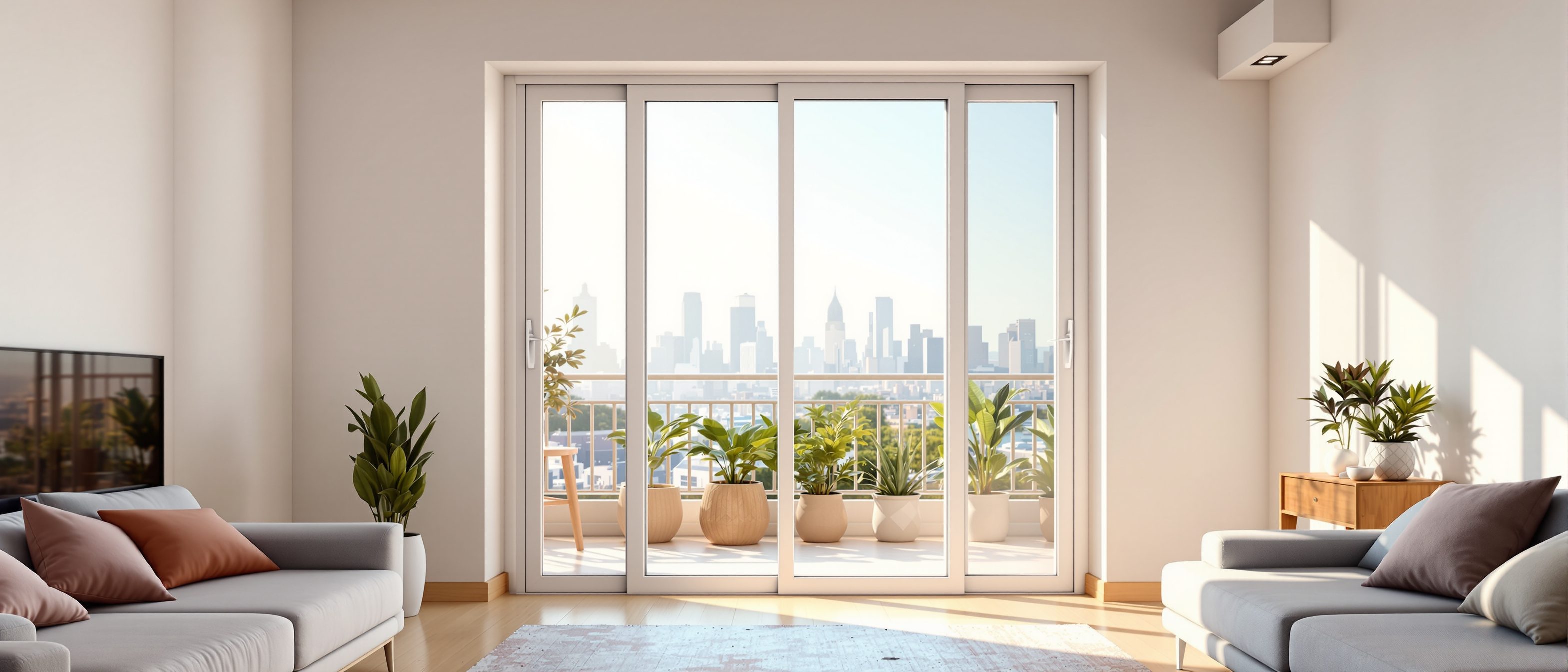
If you live in an Indian apartment, you almost certainly have sliding windows. They are the default fenestration of urban India: the sashes glide sideways on tracks, nothing swings into the room or out over the balcony, and a single deft push opens the view. That space-saving simplicity is exactly why builders specify them and why they remain the most common window type in the country.
But "most common" is not the same as "best for every room". A sliding window trades airflow for compactness. Where a casement throws its whole opening into the breeze, a sliding window only ever ventilates about half its width at once. This guide is the buyer's deep-dive into that trade-off: how the operation works, what it costs in ₹/sqft, which frame and glass to specify, how meshes and tracks behave over the years, and exactly when to choose a slider and when to walk away.
This is the dedicated sliding-window deep-dive. For the bird's-eye picture of windows and doors together, start at our broad overview, Windows and Doors Design in India; to compare all eighteen window types side by side, use the pillar, Types of Home Windows in India.
How a sliding window works
A sliding window is built around two or more horizontal tracks set into the sill and head of the frame. Each sash carries small wheels, called rollers, that ride along these tracks. To open the window you slide one sash sideways so it overlaps, or "nests" behind, the adjacent one. Nothing projects beyond the wall plane, indoors or out.
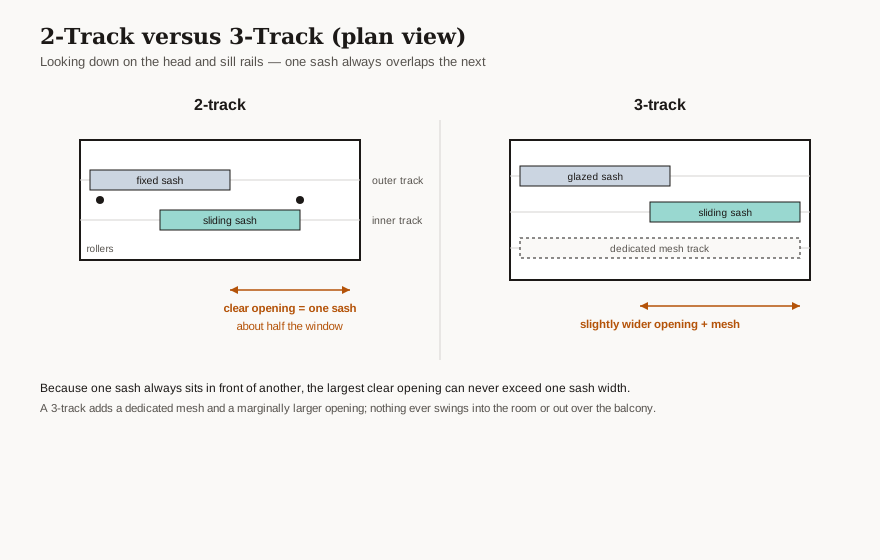
The number of tracks defines the unit:
| Configuration | Sashes | How it behaves | Best for |
|---|---|---|---|
| 2-track | 2 | One sash fixed-feeling, one slides; classic two-panel slider | Standard apartment bedrooms, kitchens |
| 2-track (both moving) | 2 | Both sashes slide, meet in the middle or part to either side | Wider openings where you want either end open |
| 3-track | 3 | Two sashes plus a dedicated mesh track, OR three glazed panels for wide spans | Living rooms, balconies, where insect mesh is wanted |
The crucial geometric fact: because one sash always sits in front of the other, the largest clear opening you can ever create is the width of one sash. On a two-panel slider that is half the window. On a three-panel unit you can clear up to two-thirds, but the panels still overlap.
Ventilation: the 50% rule
This is the single most important thing to understand before you buy. A two-panel sliding window ventilates roughly 50% of its opening area because one sash must stay put while the other slides over it. A casement window, by contrast, cranks its sash fully clear of the frame and ventilates close to 100% of the opening.
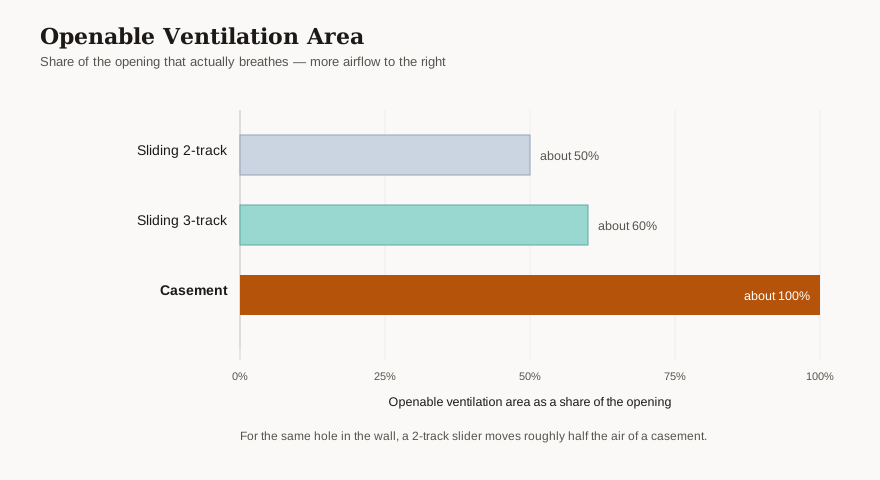
Rule of thumb: for the same hole in the wall, a slider gives you about half the airflow of a casement. Size up, or pair it with cross-ventilation, if breeze matters.
This matters for code as well as comfort. NBC 2016 uses a natural-ventilation rule of thumb of openable inlet area greater than or equal to one-tenth (10%) of the floor area for habitable rooms. Because a slider only opens half its width, you may need a physically larger window to hit that openable target than you would with a casement. Always check the openable area, not the glazed area, against your local bye-laws (some require a window area of one-seventh to one-eighth of the floor for light and ventilation combined).
To squeeze more out of a slider, plan for cross-ventilation: a slider on one wall paired with any opening on the opposite or adjacent wall lets the half-open sliders still drive a through-breeze. Model it before you commit using our Cross-Ventilation Analyzer, and read Cross-Ventilation in Indian Homes for the room-planning logic.
Sliding versus its rivals
Three cousins are worth comparing directly so you do not over- or under-buy.
| Window | Wins on | Loses on | Pick when |
|---|---|---|---|
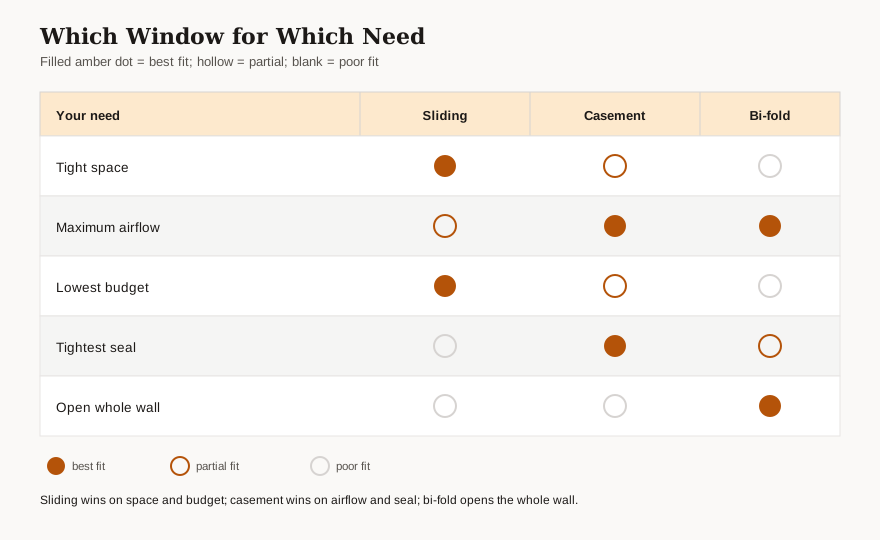
| Sliding | Space, no swing, low cost, apartment fit | Only ~50% ventilation, mesh on outer track collects dust | Tight rooms, balconies, high floors |
| Casement | ~100% airflow, airtight seal, energy efficiency | Needs swing clearance, max ~3 ft per sash | Airflow and acoustics are priorities |
| Bi-fold / folding | Opens an entire wall to a terrace | Premium hardware, threshold detailing, high cost | Indoor-outdoor living, villas |
The honest summary: sliding wins on space, casement wins on airflow. If you have the wall clearance and you care most about breeze and a tight seal, choose a casement. If clearance is the constraint, which it almost always is in an apartment or over a balcony, the slider is the right tool. The bi-fold is the premium "sliding-wall" cousin: think of it as a slider that disappears entirely, for spaces and budgets the everyday slider was never meant to serve.
Frame material and fit
A sliding window depends on rigid, well-aligned tracks, so frame choice matters more than for hinged types.
- uPVC is the all-round value pick and the most popular for new Indian homes: good thermal and acoustic insulation, low maintenance, termite-proof and rust-proof, and steel-reinforced for larger spans. This is the default recommendation for an apartment slider.
- Aluminium gives the slimmest sightlines and the strongest, largest spans, ideal for a wide three-track living-room unit. Bare aluminium conducts heat and cold, however, so specify a thermal break (a polyamide strip) if comfort and energy bills matter.
- Wood is premium and warm but needs sealing against the monsoon and costs roughly 2.5 to 4 times uPVC over ten years once you count repainting. Reserve it for heritage or luxury projects.
Fit is everything on a slider. The frame must be plumb and the tracks dead level, or the sash will not glide and the rollers wear unevenly. Fixing and glazing of metal frames should follow IS 1081; aluminium windows themselves are specified under IS 1948:2024. Budget around ₹200/sqft for standard installation on top of the window cost.
Glazing for an Indian slider
| Glass | What it does | Use it when |
|---|---|---|
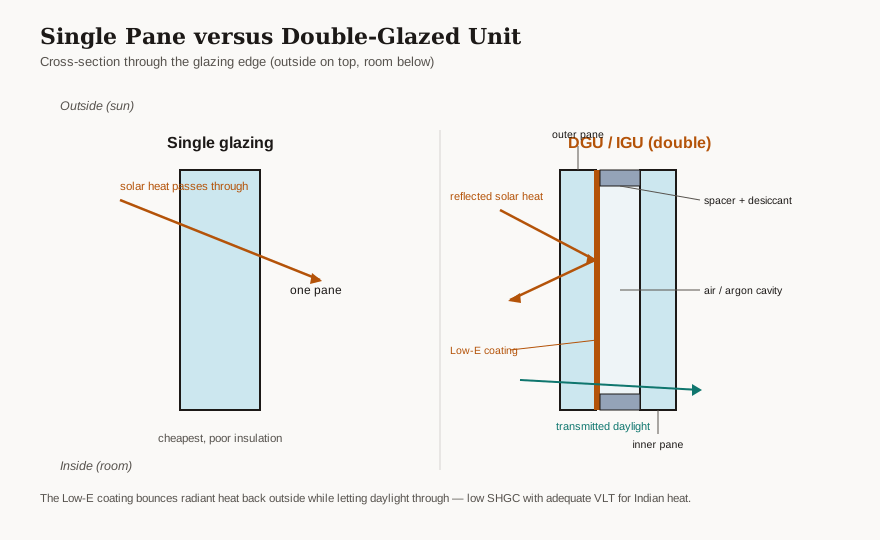
| Single glazing | One pane, cheapest, poor insulation and acoustics | Tight budget, mild climate, secondary rooms |
| DGU / IGU | Two panes plus a spacer and air or argon; big jump in thermal and acoustic insulation | The energy-code default for cooling- or heating-dominated homes |
| Low-E coating | Reflects radiant heat, cuts solar heat gain while keeping daylight | Almost any sun-facing Indian elevation |
| Toughened | 4 to 5 times stronger, shatters into blunt granules | Large or low panes (a safety feel for sliders) |
| Laminated | PVB interlayer holds together when broken; best acoustics and UV-cut | Road-facing, security-sensitive, high-noise sites |
For Indian heat, aim for low SHGC (solar heat gain coefficient, lower means less heat) with adequate VLT (visible light transmittance, daylight). The Eco-Niwas Samhita 2018 ties the two together: as your window-to-wall ratio (WWR) rises, the code demands lower-SHGC glazing and sets a minimum VLT for each WWR band (for example WWR 0 to 0.30 needs VLT greater than or equal to 0.27). Windows are the biggest lever on the RETV limit of 15 W/m² that ENS sets for composite, hot-dry, warm-humid and temperate zones, so glass choice on a large slider is not cosmetic.
Cost band
| Spec | Indicative ₹/sqft |
|---|---|
| uPVC sliding, budget white, single glazing | 280 to 450 |
| uPVC sliding, mid-range, DGU | 450 to 600 |
| uPVC sliding, premium DGU / Low-E | 600 to 700+ |
| Powder-coated aluminium sliding | 450 to 950 |
| Installation (standard) | ~200 |
A uPVC sliding window broadly lands in the ₹280 to ₹700/sqft band before glazing upgrades, which is why it is the builder's economical default. These are indicative June 2026 figures; they vary by city, brand, size and glazing, so always confirm with itemised quotes from fabricators.
Maintenance: tracks and rollers
Sliders are low-fuss but not no-fuss, and the failure points are predictable:
- Track cleaning is the big one. The bottom track is a dust and grit trap, and on a three-track unit the outer mesh track collects the most. Vacuum and wipe the tracks every few weeks; grit is what grinds rollers to a halt.
- Rollers are wear parts. A window that has started to drag or jump usually needs roller cleaning, lubrication or replacement, not a new sash. Specify good-quality rollers up front.
- Weatherstripping along the meeting rail keeps out dust and noise; replace it when it hardens.
- Drainage weep holes in the bottom track must stay clear so monsoon water drains out rather than pooling.
Pros and cons
| Pros | Cons |
|---|---|
| No swing, saves space, ideal for apartments and balconies | Only ~50% of the opening ventilates |
| India's most common type, easy to source and service | Outer track and mesh collect dust |
| Lower cost than hinged premium types | Seal is less airtight than a casement |
| Large glazed spans possible (especially aluminium) | Rollers and tracks need periodic upkeep |
| Mesh integrates cleanly on a 3-track unit | Larger unit needed to meet openable-area codes |
Choose this if / avoid if
Choose a sliding window if:
- You are fitting an apartment, balcony, or any room where a swinging sash would foul furniture or walkways.
- You want the most economical, easy-to-service window type with a clean modern look.
- You are pairing it with cross-ventilation or fans, so half-open airflow is enough.
- You want integrated insect mesh on a three-track unit.
Avoid a sliding window if:
- Maximum natural airflow is the priority and you have swing clearance: choose a casement instead.
- You want the tightest possible seal for acoustics or air-conditioning efficiency (again, casement).
- You want to open an entire wall to a terrace: step up to a bi-fold.
To get the daylight side of the equation right alongside ventilation, read Natural Light Planning for Indian Homes, then return to the pillar to lock in the rest of your window schedule.
References
- IS 1948 (Specification for aluminium doors, windows and ventilators), BIS: https://law.resource.org/pub/in/bis/S03/is.1948.1961.pdf
- IS 1081 (Code of practice for fixing and glazing of metal doors and windows), BIS: https://law.resource.org/pub/in/bis/S03/is.1081.1960.pdf
- IS 3362 (Code of practice for natural ventilation of residential buildings), BIS: https://law.resource.org/pub/in/bis/S03/is.3362.1977.pdf
- BIS Guide for Using NBC 2016: https://www.bis.gov.in/wp-content/uploads/2022/08/Booklet-Guide-for-Using-NBC-2016.pdf
- Eco-Niwas Samhita 2018 (BEE / ECBC for residential buildings): https://ecbc.in/econiwas.html
- uPVC windows price per sq ft 2026 cost guide (Building and Interiors): https://buildingandinteriors.com/upvc-windows-price-per-sq-ft-india-2026-cost-guide/
Export this guide
Related Guides — Deep-dive reading
Floor-to-Ceiling Windows (India): Maximum Light, and the Heat Trade-Off
Full-height glazing for Indian homes — how to win the daylight and view without losing the energy code, comfort or safety.
Windows & GlazingTypes of Home Windows in India (2026): Complete Comparison and How to Choose
Every window type compared on ventilation, cost and best use, plus a frame, glazing and climate framework to choose right.
Windows & GlazingPivot Windows Explained (India): The Dramatic, Easy-Clean Premium Window
A central-pivot sash that rotates open like a turnstile — large panes, an architectural statement, and glass you can clean on both faces from inside. The premium, easy-clean alternative to the everyday casement.
Windows & GlazingRelated Tools — Try Free
Cross-Ventilation Analyzer
Estimate airflow and air changes per hour (ACH) from room size, window areas, layout, and local wind — with NBC 2016 Part 8 compliance check.
Ventilation CalculatorWindow Material Comparison Tool
Compare uPVC, aluminium, wood, steel and composite windows on cost, life, upkeep and insulation.
CompareGlass Selection Tool
Single vs double (DGU) vs triple glazing and the right glass type for your climate, priority and sun.
Window Tool