
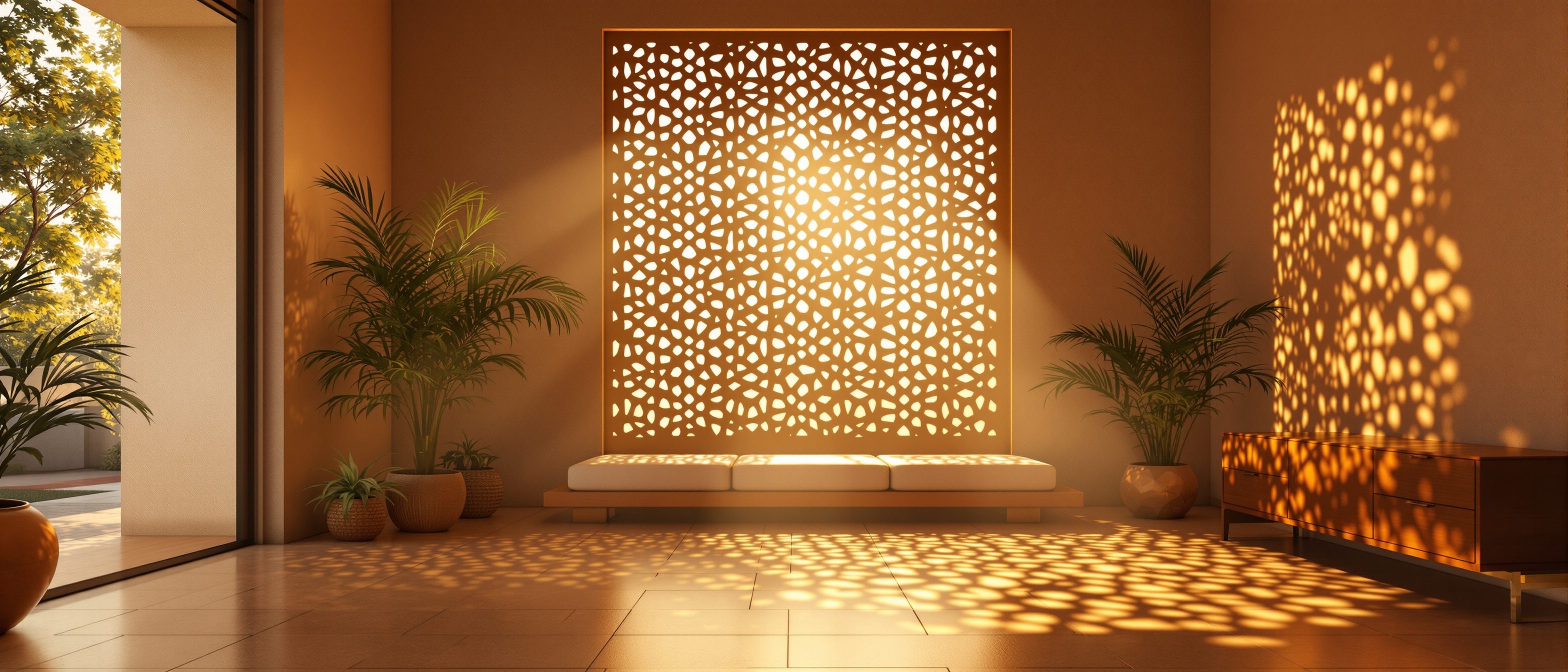
Jali Windows for Indian Homes: The Climate-Smart Perforated Screen
How a fixed perforated screen diffuses sun, gives privacy, and cools the breeze through it
For centuries before anyone in India had heard of Low-E glass or thermal breaks, builders solved the heat, glare and privacy puzzle with a single beautiful device: the jali. A perforated screen, carved or cast, set into a window opening so that air, light and view are filtered rather than blocked. It is India's original climate-smart fenestration, and in a country of hard sun and dense neighbourhoods it deserves a place in modern homes far beyond the heritage haveli.
This guide is about jali as a window element — a screen sitting in an opening, doing the job a sash would otherwise do. That is deliberately different from our cousin guide on jaali as a facade-scale building screen, which treats jaali as a wrapper over a whole wall or building. Here we stay at the scale of the window.
A jali turns a hole in the wall into a working machine: it softens the light, hides the inside, and speeds up the breeze — all with no moving parts.
How a jali window works
A jali is a fixed perforated screen — stone, GFRC (glass-fibre reinforced concrete), seasoned timber, terracotta, or precast concrete jali block — installed into the window opening. There is nothing to crank, slide or tilt. The performance comes entirely from the geometry of the holes.
This is the clearest way to separate it from its closest cousin. A louvered window uses adjustable slats you can open and shut to control rain and airflow; a jali is fixed and perforated — you tune it once, at the design stage, by choosing the pattern and the open area, not afterwards with a handle.
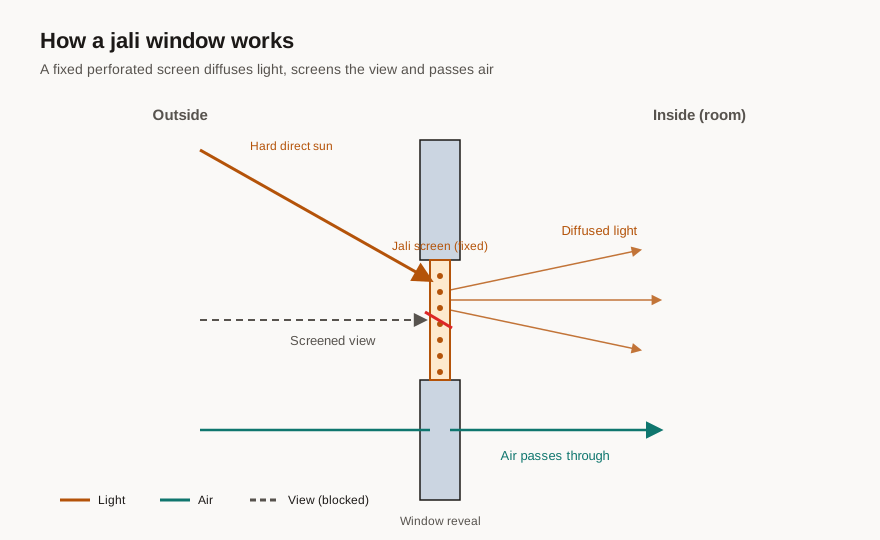
Three things happen at once as you pass a jali:
- Light is diffused. Harsh, directional sun is broken into a soft, patterned wash that reaches deep into the room without the glare or hot-spots of an open window.
- Privacy and security are built in. From outside, the small openings and the brightness contrast hide the interior; the screen itself — especially stone or concrete block — is a physical barrier, so you get a "window" that is also a grille.
- Air keeps moving. Unlike a solid wall or fixed glass, the jali never stops the breeze.
The cooling trick: the venturi effect
Here is the part that feels like magic but is just physics. When moving air is forced from a large area through many small openings, it speeds up — the same reason a thumb over a hose nozzle makes the water jet faster. Faster-moving air over your skin feels cooler, and the accelerated jets also stir and mix the room air better than a single lazy draught through an open window.
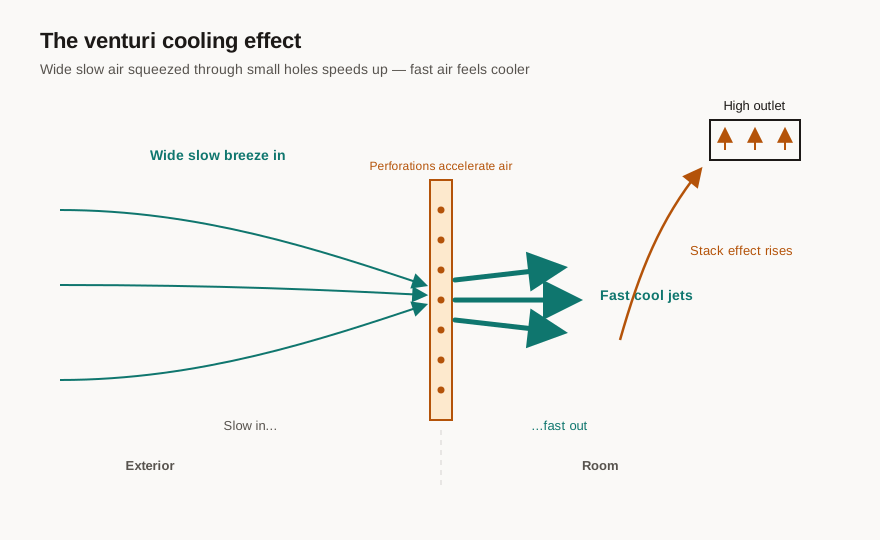
Pair this with the screen's shading and you get a genuine passive-cooling device: it cuts the solar heat gain of an open hole while keeping — even improving — the airflow. In a hot-dry city the jali shades the opening through the worst of the afternoon; in a humid coastal home its constant ventilation fights the stickiness. It is the rare fenestration that improves both comfort and privacy without electricity.
Materials and patterns
| Material | Character | Open area / cooling | Maintenance | Indicative cost |
|---|---|---|---|---|
| Carved natural stone (sandstone, marble) | Heritage, heaviest, most ornate | Lower (fine carving) | Very low; ages well | High |
| GFRC / precast concrete jali block | Modern, repeatable, structural | Tunable, often higher | Low | Medium |
| Seasoned timber | Warm, fine geometry, indoor-friendly | Medium | Needs sealing vs monsoon | Medium-high |
| Terracotta | Earthy, breathable, traditional | High, lightweight | Fragile; handle with care | Low-medium |
| CNC-cut metal or composite | Contemporary, crisp, custom patterns | Fully tunable | Low | Medium-high |
Patterns broadly fall into three families:
- Geometric — the classic interlocking stars, hexagons and lattices of Mughal and Rajasthani work; precise, calming, endlessly repeatable.
- Floral / organic — flowing vines and blossoms, softer and more decorative, common in marble jali.
- Contemporary CNC — parametric, pixel-gradient or bespoke patterns cut by machine, letting you grade the open area across a single panel (denser for privacy at eye level, more open above).
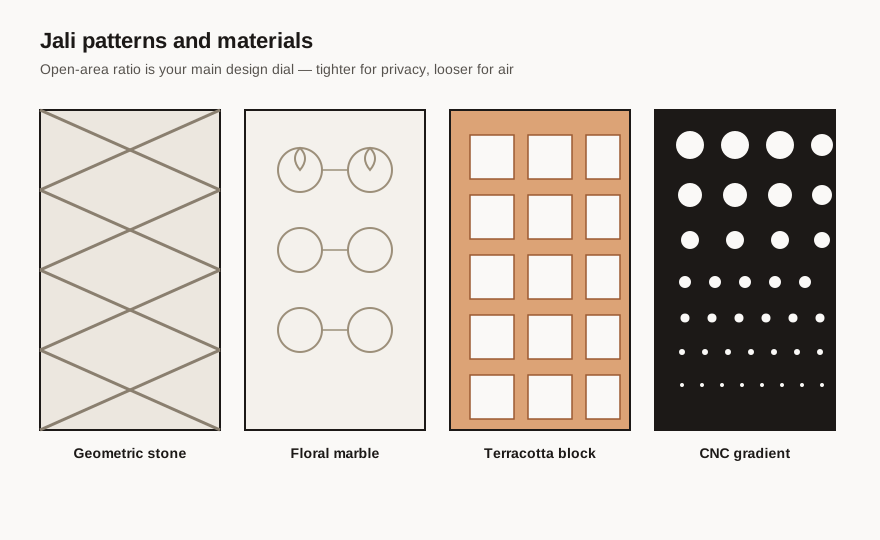
The open-area ratio is your main design dial. A tight pattern gives more privacy and shade but less air; an open one does the reverse. Contemporary CNC work lets you vary it within one panel.
Where it works today
Jali earns its keep wherever you want air and softened light but not a clear pane of glass:
- Stair cores and double-height voids — ventilation and a glowing patterned wall, with stack effect drawing hot air up and out.
- Bathrooms and powder rooms — permanent ventilation plus total privacy, no curtain needed.
- West-facing walls — shade the brutal evening sun while still breathing.
- Courtyards and verandahs — the traditional home; a jali edge keeps the courtyard private yet open.
- Facade-as-window strips — a band of jali reads as architecture from outside and as a luminous screen inside; this is where this guide brushes against the facade-scale jaali, so keep the scale honest.
Pairing jali with operable glazing
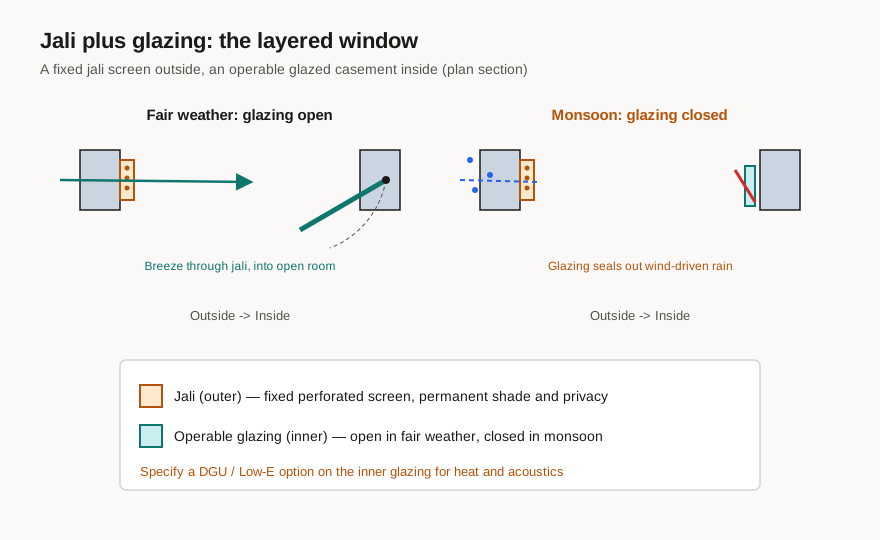
A pure jali is open to the weather — that is the point, but it means monsoon rain and dust come straight in. The standard modern detail is to set an operable glazed window behind the jali: a casement, sliding or louvered unit on the inner face.
- In fair weather, open the glazing fully and let the jali do its work — diffused light, accelerated breeze.
- In monsoon, dust storms or winter, close the inner glazing; the jali becomes a permanent shading-and-privacy screen over weather-tight glass.
For that inner layer, a DGU (double-glazed unit) adds thermal and acoustic insulation, and a Low-E coating cuts radiant heat further. Where panes are large or low, use toughened safety glass; for acoustics or security, laminated. As your glazed area grows the Eco-Niwas Samhita 2018 (ENS) energy code expects lower-SHGC glass to keep the wall's RETV at or below 15 W/m² — and conveniently, the jali itself is shading that helps you get there.
Cost, and the honest trade-offs
Jali sits across a wide band depending on material and carving. As an indicative June 2026 figure, expect roughly ₹400–1,200/sqft for precast concrete or GFRC blocks and CNC screens, climbing well past ₹1,500/sqft for hand-carved natural stone — always confirm with itemised quotes from fabricators. If you add an inner operable glazed window, layer its cost on top (uPVC casement glazing typically ₹450–900/sqft).
| Pros | Cons |
|---|---|
| Diffused, glare-free daylight | Open jali lets in rain and dust |
| Privacy and security in one element | Fixed — no on-the-fly control of airflow |
| Cools incoming air (venturi acceleration) | Needs inner glazing for weatherproofing |
| Permanent passive shading, no power | Carved stone is heavy and costly |
| Beautiful, distinctly Indian character | Fine perforations collect dust; periodic cleaning |
Choose a jali window if
- You want privacy plus constant ventilation — bathrooms, stair cores, west walls, courtyards.
- You are designing for a hot-dry or warm-humid climate and want passive shading and cooling.
- You value craft and want a screen that is also architecture.
Avoid (or rethink) a jali window if
- You need an unobstructed view or maximum clear daylight — choose fixed/picture or casement glazing instead.
- You cannot add an inner glazed layer in a heavy-monsoon or dusty location.
- You need to adjust ventilation by the hour — an operable louvered window suits you better.
Where this fits in the bigger picture
Jali is one branch of a much larger family. For the full decision tree across every type, start with our pillar, Types of Home Windows in India. For the quick combined intro to windows and doors together, see windows and doors design — this guide goes far deeper on the jali specifically. And to test whether a jali-and-glazing wall will actually move air through your particular plan, run the cross-ventilation analyzer before you commit.
References
- IS 1081 — code of practice for fixing and glazing of metal doors and windows: https://law.resource.org/pub/in/bis/S03/is.1081.1960.pdf
- IS 3362 — natural ventilation of residential buildings: https://law.resource.org/pub/in/bis/S03/is.3362.1977.pdf
- BIS Guide for Using NBC 2016: https://www.bis.gov.in/wp-content/uploads/2022/08/Booklet-Guide-for-Using-NBC-2016.pdf
- Eco-Niwas Samhita 2018 (BEE/ECBC): https://ecbc.in/econiwas.html
- uPVC windows price per sq ft 2026 (Building and Interiors): https://buildingandinteriors.com/upvc-windows-price-per-sq-ft-india-2026-cost-guide/
Export this guide
Related Guides — Deep-dive reading
Floor-to-Ceiling Windows (India): Maximum Light, and the Heat Trade-Off
Full-height glazing for Indian homes — how to win the daylight and view without losing the energy code, comfort or safety.
Windows & GlazingEnergy-Efficient Facades in India: How the Building Skin Cuts Your Cooling, Heating & Lighting Bills
How a building facade drives cooling, heating and lighting energy in India, the three levers of solar-heat-gain control, insulation and daylighting, U-value, SHGC, VLT and WWR in plain terms, ECBC and Eco-Niwas expectations, and real Indian green buildings.
Building FacadesJaali & Traditional Indian Façades: India's Original Climate-Smart Screen
Guide to the jaali and traditional Indian façades: history from Mughal and Rajasthani stone screens to Hawa Mahal and Sidi Saiyyed, the building physics of daylight, heat, privacy and breeze, materials from sandstone to GRC and metal, the parametric revival at Pearl Academy Jaipur, and how a homeowner can use a jaali.
Building FacadesRelated Tools — Try Free
Cross-Ventilation Analyzer
Estimate airflow and air changes per hour (ACH) from room size, window areas, layout, and local wind — with NBC 2016 Part 8 compliance check.
Ventilation CalculatorBrise-Soleil Visualizer
Interactive horizontal-louvre cut-off angle calculator — sun altitude, louvre depth, and spacing inputs with a live shadow preview. Computes θ = arctan(spacing/depth) for façade shading, ECBC envelope compliance, hospital daylight design, and tropical sun-control detailing.
Sun Shading ToolJaali Generator
Design a parametric jaali / perforated screen, see its open-area (daylight vs privacy), and download a print-ready SVG for CNC/laser fabrication.
Parametric Tool