
Folding and Bi-Fold Windows (India): Open a Whole Wall to the Outdoors
Multiple glazed panels that concertina to one side, dissolving a whole wall onto your terrace or garden — and the monsoon threshold detailing that makes or breaks them.
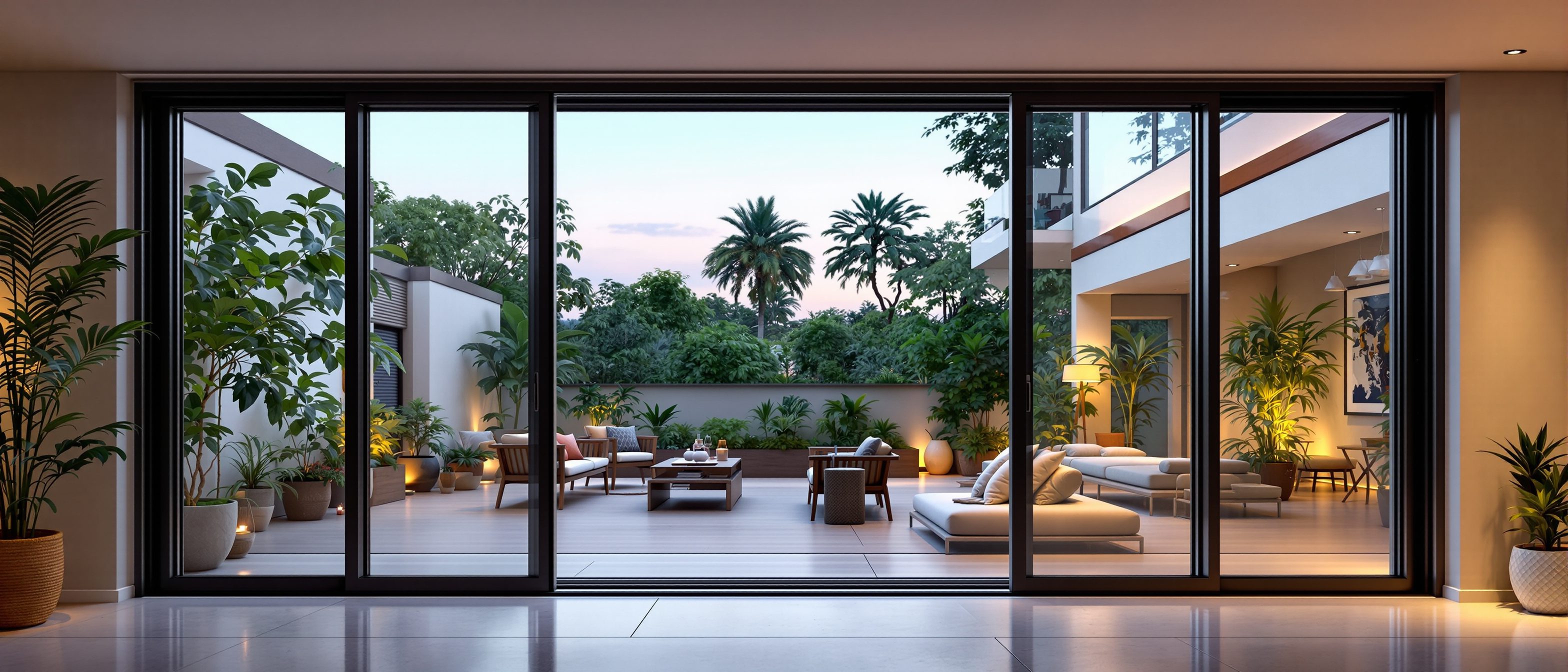
A bi-fold window is the closest a wall comes to disappearing. Multiple slim glazed panels are hinged to each other and run on a track; pull the lead panel and the whole row concertinas like an accordion, stacking neatly to one side. When it is shut you have a clean glazed wall. When it is open you have no wall at all — just an unbroken threshold onto the terrace, garden or balcony.
That single trick is why bi-folds have become the signature move of indoor-outdoor living in Indian villas, penthouse terraces and farmhouse verandahs. But the same hardware that makes the magic is what makes a bi-fold expensive, and what fails first if the monsoon detailing is wrong. This is a premium product that rewards getting the boring parts — track, threshold and drainage — exactly right.
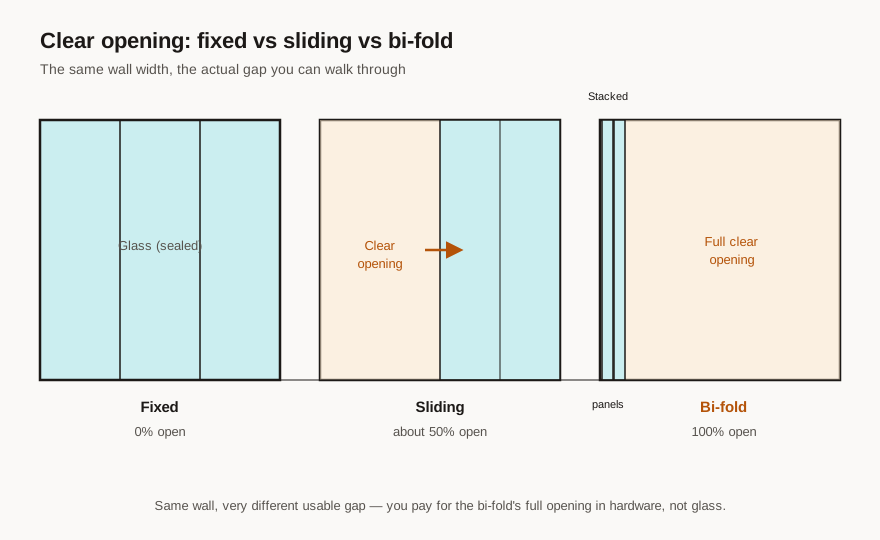
A sliding window opens about half its width. A bi-fold opens the full width. You pay for that difference in hardware, not glass.
How a bi-fold works
Each panel is hinged to its neighbour and carries rollers (or hangers) that ride a track. As you push, the panels fold against one another in pairs and park at the jamb. A typical residential run is three to seven panels, with panel widths of about 600 to 1,000 mm and heights up to 2,400 to 2,700 mm.
Two choices define the layout:
- Stacking direction — all panels fold to one side, or split and fold to both sides from the centre.
- Traffic door — one panel can be configured as a normal hinged "access" leaf so you can step out without folding the whole stack open every time.
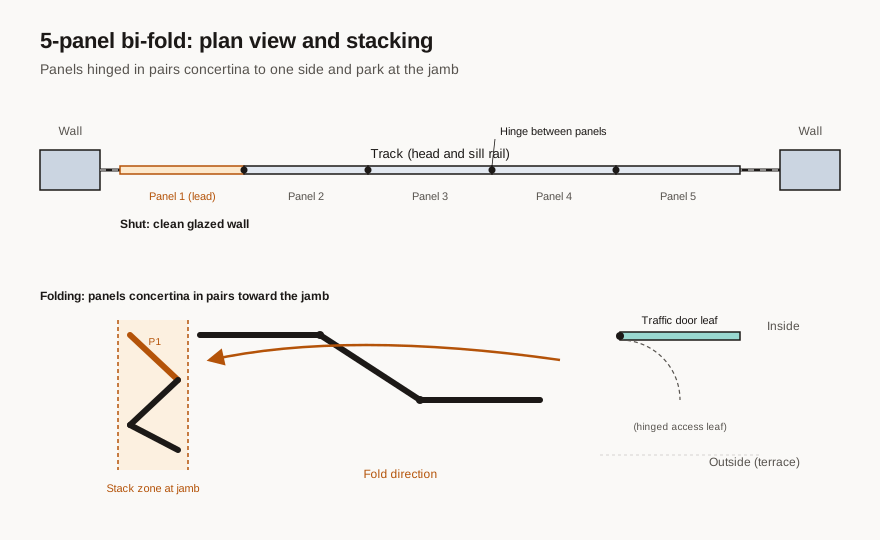
The track can be top-hung (panels hang from a head track; the bottom track only guides) or bottom-rolling (panels stand on the sill track, which carries the weight). Top-hung systems keep the threshold lower and cleaner but load the lintel; bottom-rolling systems are simpler but make the sill track work harder — and in India that sill track is exactly where monsoon water wants to sit.
The threshold and drainage — what makes or breaks them
A bi-fold opening can be three to six metres of unbroken sill facing a terrace. In a Mumbai or Kochi monsoon, wind drives rain straight at it. The bottom track is therefore both a structural rail and a drain — and if it cannot shed water, you get pooling, leakage and corroded rollers.
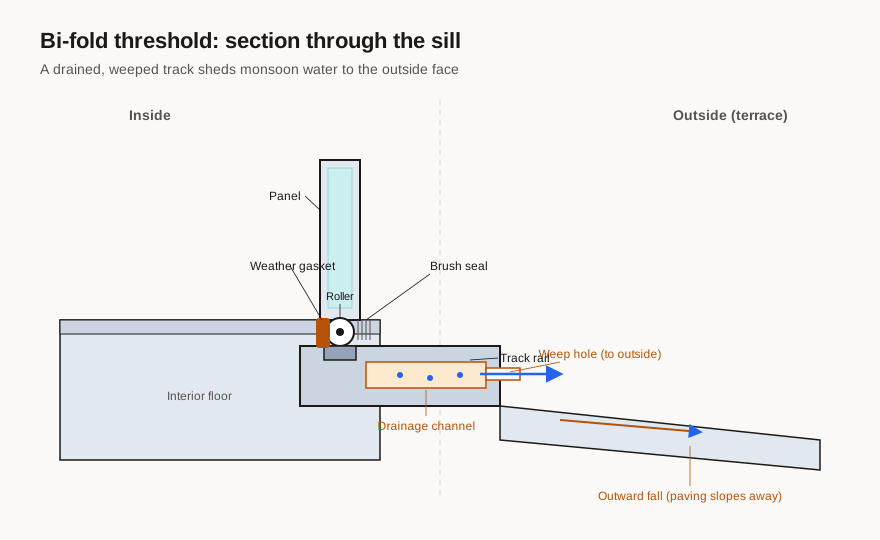
What good detailing looks like:
- A drained, weeped track — a channel under the rail with weep holes that send water to the outside face, never inward.
- A slight outward fall on the external paving or terrace so water runs away from, not into, the track.
- Multi-point gaskets and brush seals on every panel edge and between panels.
- A rebated or low-rise threshold, not a tall step — but accept that the flattest "flush" thresholds seal worst. In high-exposure monsoon locations, choose a modestly raised, fully drained threshold over a fashionable flush one.
The flush threshold photographs beautifully and leaks in July. On an exposed terrace, take the small step and the drainage channel.
Ventilation behaviour
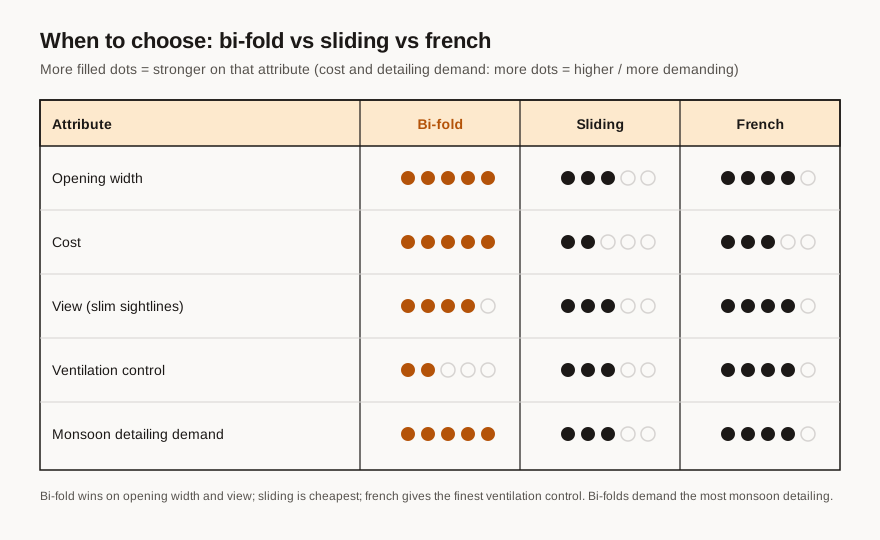
A bi-fold either opens completely or, with one panel set as a traffic door, gives you a single hinged leaf for everyday air. There is no in-between "crack it open" trickle position like a casement or awning. So a bi-fold is an event — you throw the wall open for the evening — rather than a fine-tuned daily ventilator. For continuous background airflow and rain-safe ventilation, pair it with a casement or awning elsewhere in the room, and check the room with the Cross-Ventilation Analyzer.
Frame material and glazing
Aluminium dominates bi-folds, and for good reason: the spans are large, the panels are repeatedly handled, and the hardware loads are high. Aluminium gives the strength and slim sightlines this product needs. Insist on a thermal break (polyamide) — bare aluminium conducts heat straight into an air-conditioned room. uPVC bi-folds exist for smaller two-to-three-panel runs but are less common at villa scale; timber is heritage-only and heavy.
| Frame | Fit for bi-fold | Note |
|---|---|---|
| Aluminium (thermal-break) | Best | Strong, slim, handles big spans and hardware loads; specify the thermal break |
| uPVC (steel-reinforced) | Limited | Workable for small 2–3 panel sets; rarely chosen for wide villa openings |
| Timber | Heritage only | Heavy, premium, high monsoon maintenance |
Glazing should follow Eco-Niwas Samhita 2018: a bi-fold pushes your window-to-wall ratio (WWR) up sharply, so the code demands lower-SHGC glass to keep the wall's RETV at or below 15 W/m². Use a double glazed unit (DGU) with a Low-E coating for low solar heat gain with good daylight, and toughened glass throughout — these are large, low, walk-into panels and tempered safety glass is non-negotiable. Laminated glass adds security and the best acoustics if the opening faces a road. As WWR climbs, ENS sets a minimum VLT for each band (for WWR 0.41–0.50, VLT must be at least 0.16), so do not over-tint.
Cost band
Bi-folds sit at the top of the window market — the premium is in the hardware and the precision install, not the glass.
| Item | Indicative June 2026 |
|---|---|
| Bi-fold system (aluminium, thermal-break, DGU) | High end of aluminium: roughly ₹950–3,000/sqft of opening |
| Specialty fitting (multi-panel, threshold detailing) | ₹500–800/sqft |
| Cheapest alternative for the same view | Fixed/picture glazing, far less per sqft |
These are indicative — confirm with itemised quotes from fabricators, because hinge, roller and track quality varies enormously and is precisely where corners get cut. Compare against a sliding window: a slider costs a fraction as much but only ever opens about half the width.
Maintenance
- Keep the bottom track and weep holes clear — grit and leaf litter block drainage and stiffen rollers; clean before and during the monsoon.
- Service the hinges, rollers and multi-point locks roughly yearly; lubricate per the maker's spec.
- Check gaskets and brush seals for wear; replace perished sections promptly.
- A traffic-door leaf saves the folding mechanism wear and tear of daily use.
Pros and cons
| Pros | Cons |
|---|---|
| Opens the FULL width — the wall genuinely disappears | Most expensive window/door type; premium hardware |
| Best-in-class indoor-outdoor connection | Threshold/drainage detailing is unforgiving in monsoon |
| Slim aluminium sightlines, big glazed area | No fine "trickle" ventilation setting (use a traffic door) |
| Flexible panel counts and stacking direction | Stacked panels need parking room at the jamb |
| Toughened DGU gives a clean glazed wall when shut | High WWR demands low-SHGC glazing to meet ENS |
Choose this if / avoid if
Choose a bi-fold if you have a terrace, deck, garden or balcony you want to merge with the living room; you want the entire wall to open for parties and evenings; you have budget for premium hardware and a fabricator who details thresholds properly; and you can shade the glass (deep overhang, pergola) to manage heat.
Avoid a bi-fold if your need is everyday ventilation rather than a grand opening — a casement or sliding window does that for far less. Avoid it on a highly exposed, unshaded monsoon-facing terrace unless you commit to a raised, fully drained threshold and disciplined upkeep. And if you simply want a wide view without the opening wall, a fixed picture window or a slider is the cheaper, lower-risk answer.
How this differs from its cousins
- Versus a sliding window: a slider's sashes pass each other, so only about half the opening is ever clear. A bi-fold folds the panels away to give the full width — at several times the cost.
- Versus a french window: a French window is a hinged pair of leaves — two panels swinging like doors. A bi-fold is many folding panels designed for a whole-wall opening; choose French for a classic balcony pair, bi-fold for an entire dissolved wall.
This guide is part of the Types of Home Windows in India pillar. For the quick combined intro to windows and doors, see Windows and Doors Design in India — this page goes deeper on bi-fold hardware, thresholds and monsoon drainage specifically.
References
- Eco-Niwas Samhita 2018 (BEE/ECBC), WWR, RETV and VLT bands: https://ecbc.in/econiwas.html
- BEE ENS Residential Code (Building Envelope): https://beeindia.gov.in/sites/default/files/Residential%20Code_Building%20Envelope_Draft_rev4.pdf
- IS 1948 (aluminium doors, windows and ventilators): https://law.resource.org/pub/in/bis/S03/is.1948.1961.pdf
- IS 1081 (fixing and glazing of metal doors and windows): https://law.resource.org/pub/in/bis/S03/is.1081.1960.pdf
- uPVC and aluminium window price per sqft 2026: https://buildingandinteriors.com/upvc-windows-price-per-sq-ft-india-2026-cost-guide/
Export this guide
Related Guides — Deep-dive reading
French Windows (India): Full-Height Glazed Doors to Balcony and Garden
Full-height, side-hinged, double-leaf glazed windows that open like doors onto a balcony, deck or garden, light, access and classic elegance, plus the monsoon threshold detail that makes or breaks them.
Windows & GlazingFloor-to-Ceiling Windows (India): Maximum Light, and the Heat Trade-Off
Full-height glazing for Indian homes — how to win the daylight and view without losing the energy code, comfort or safety.
Windows & GlazingFrench Doors for Indian Homes: Glazing, Security, Cost & Monsoon Sealing
The double-leaf glazed door that opens a living room to a balcony or garden - where it works, how to specify the glass, frame and seals, what it costs, and how it stacks up against sliding and bi-fold.
Home Doors & EntrancesRelated Tools — Try Free
Cross-Ventilation Analyzer
Estimate airflow and air changes per hour (ACH) from room size, window areas, layout, and local wind — with NBC 2016 Part 8 compliance check.
Ventilation CalculatorWindow Hardware Cost Calculator
Estimate window hardware cost — hinges, handles, locks, rollers and multipoint gears.
Window CalculatorGlass Selection Tool
Single vs double (DGU) vs triple glazing and the right glass type for your climate, priority and sun.
Window Tool