
Bay Windows for Indian Homes: Light, Floor Area and a Window Seat
How an angular three-unit bay adds floor area, light from three angles and a window seat, and what it takes to build one well in India.
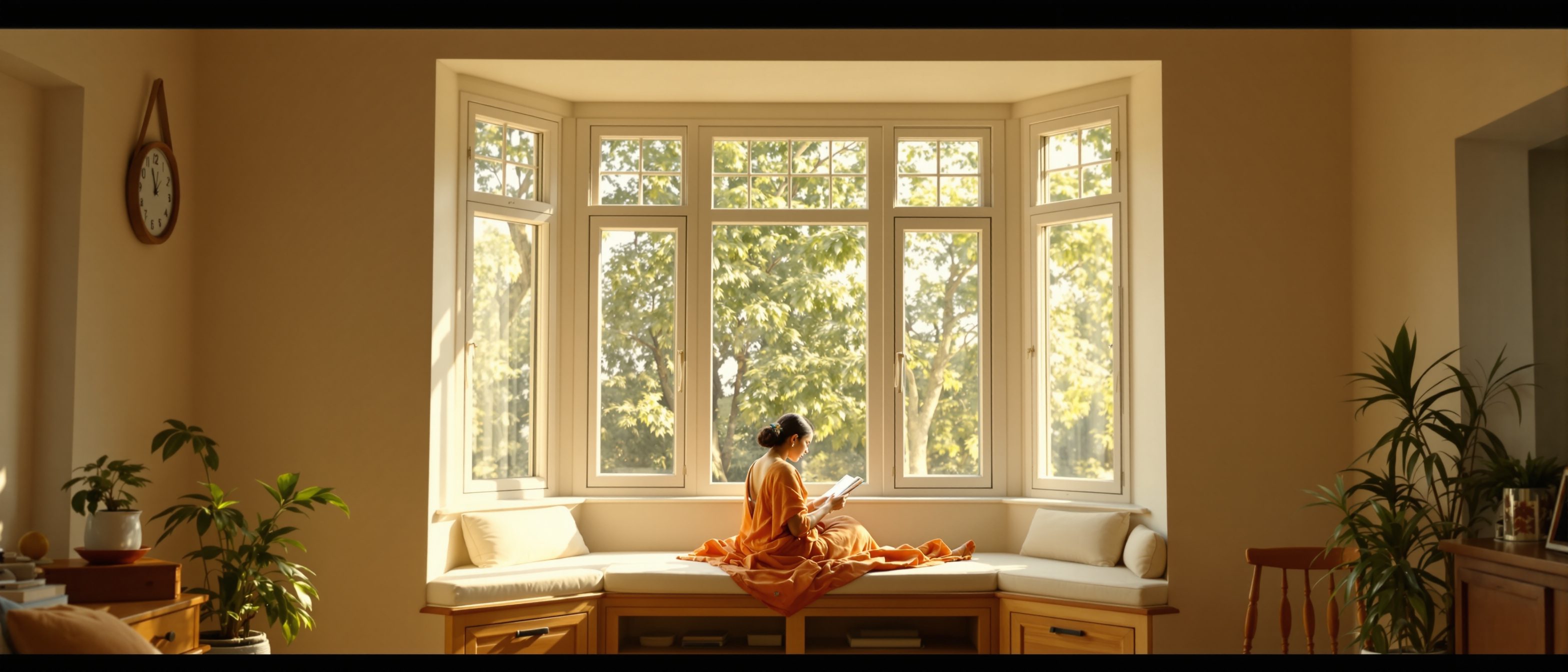
A bay window is the architectural flourish that quietly does real work. It pushes a slice of the room outward beyond the wall line, and in doing so it gives you three things at once: a pool of extra floor area, daylight arriving from three directions, and the most loved seat in the house. In Indian villas and independent homes, a well-built angular bay turns an ordinary living-room corner into the spot where chai gets drunk, books get read and grandchildren get parked.
But a bay is also a small piece of structure projecting out of your house, so it demands more than a fabricator and a glass cutter. It needs a cantilever or bracket to carry it, a roof and base that shed monsoon water, and a clear-eyed budget. This guide is the deep-dive on the angular three-unit bay. For the full menu of window types, start at our pillar guide, Types of Home Windows in India; for the broad windows-plus-doors primer, see Windows and Doors Design in India. This page goes much further on geometry, structure and cost than either.
What exactly is an angular bay window
The classic bay is three units that project outward from the wall in an angular plan. The arrangement is almost always the same:
- a large fixed (picture) pane in the centre that frames the view and floods the room with light, and
- two narrower operable flankers set at an angle on either side, which do the ventilating.
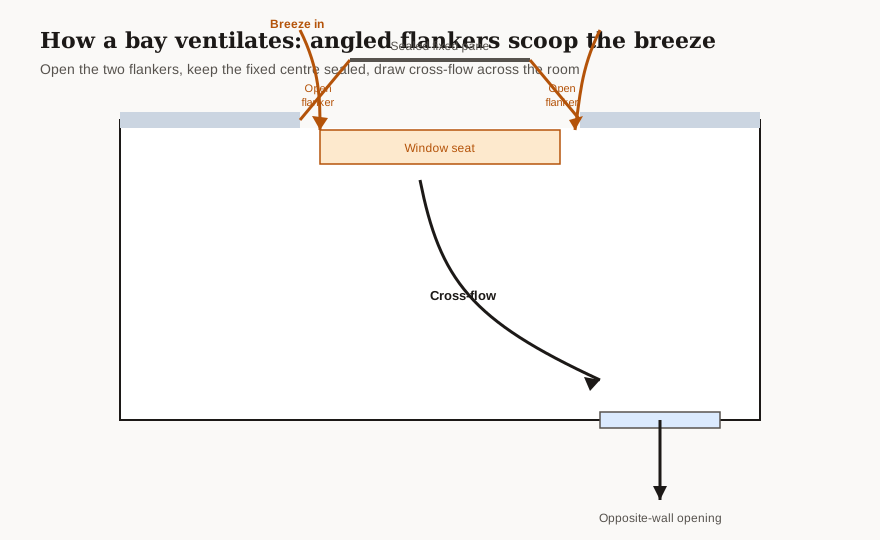
The flankers are usually casements (side-hinged, crank out) so the whole opening can breathe. Because the two angled units face slightly different directions, they catch breeze and light that a flat window on the same wall would miss.
A bay is not just a bigger window. It is a small habitable alcove that happens to be made of glass.
Bay geometry: the three angles you will choose
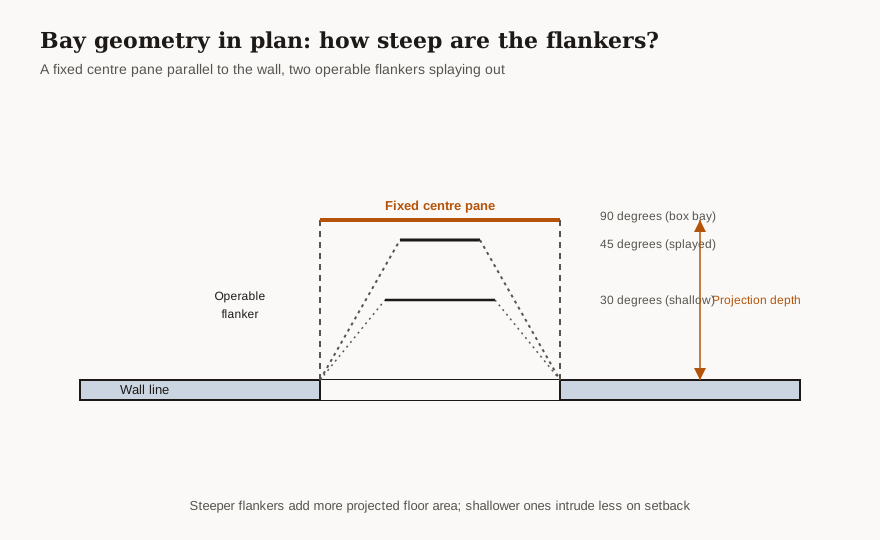
The "bay angle" is the angle the flankers make with the centre pane in plan. Three standard geometries cover almost every Indian home:
| Bay angle | Plan shape | Projection out | Character |
|---|---|---|---|
| 90 degrees | Square / box bay | Deepest, boxy | Most floor area; reads as a small room; squarish window seat |
| 45 degrees | Splayed bay | Medium | Balanced, classic; the most common choice |
| 30 degrees | Shallow / gentle bay | Least | Subtle projection; suits tighter setbacks |
A 45-degree bay is the workhorse: enough projection for a genuine seat, gentle enough angles to look elegant. A 90-degree box bay buys you the most usable area but eats more setback and reads heavier. Always check the projection against your plot setback and local bye-laws before you commit, since a bay extends past the wall line.
Bay versus bow: pick the right cousin
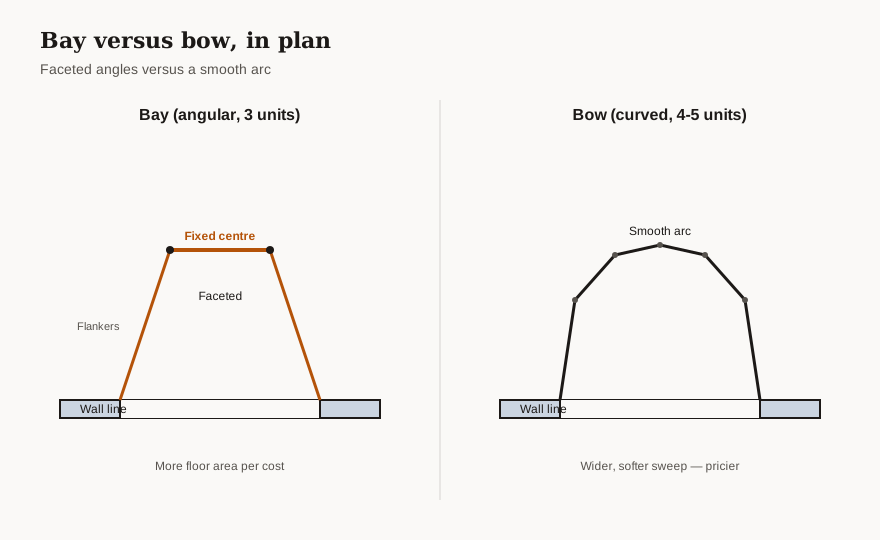
The bay has a curved sibling. Knowing the difference saves a costly misorder.
| Bay window | Bow window | |
|---|---|---|
| Plan shape | Angular, faceted | Smooth curve |
| Units | Three (fixed centre + two flankers) | Four to five equal units |
| Look | Crisp, geometric, classic | Soft, panoramic, period-luxury |
| Projection | Sharper, deeper at centre | Gentler, wider arc |
| Cost | High | Highest |
If you want the rounded, drawing-room look of a curved projection, that is the bow, covered in Bow Windows for Indian Homes. If you want a wraparound view where two walls meet rather than a projection off one wall, that is the Corner Window. This guide stays with the angular three-part bay.
What a bay gives you
Usable floor area and a window seat
Because the bay pushes past the wall, the floor inside the alcove is bonus space. Box it in below the sill and you have a window seat with storage drawers underneath, perfect for shoes, throws or toys. A 45-degree bay across a 7-to-8-foot opening typically yields a seat 18 to 24 inches deep, enough to sit cross-legged with a cushion.
Light from three angles
Daylight enters the centre pane and both flankers, so the alcove is bathed in light through most of the day, with the angled sides catching low morning and evening sun a flat window cannot. Use our Natural Light Planning guide to position the bay against your site's sun path.
Ventilation from the flankers
The fixed centre does not open, but the two flanker casements crank fully out, and because they face different directions they can set up gentle cross-flow. Pair the bay with an opening on the opposite wall and check the result in our Cross-Ventilation Analyzer. Aim to keep openable area at or above the NBC 2016 rule of thumb of roughly one-tenth (10%) of the room's floor area.
The hard part: structure and waterproofing
A bay carries its own weight plus people, cushions and storage, all hanging beyond the wall. It must be properly supported. There are three common approaches:
- Cantilever from the floor slab — the slab is extended out (or steel angles are cast in) to carry the bay base. Cleanest look, must be designed at the structural stage.
- Brackets / corbels — decorative or steel brackets under the bay transfer load back to the wall. Good for retrofits and lighter bays.
- Foundation / piers to ground — for a full-height or ground-floor bay, the projection sits on its own small footing.
Get a structural engineer to confirm the method for your span and storey. A bay added as an afterthought without support is a sag-and-crack risk.
Waterproofing the projection is non-negotiable. A bay has a small roof and a base that sit outside the wall and take the full monsoon. Detail these carefully:
- a sloped, flashed roof over the bay so water runs off and away from the wall junction,
- a waterproof, slightly sloped base/sill with a drip groove so water does not track back,
- sealed, flashed junctions where the bay meets the main wall, and
- adequate insulation in the roof and base of the projection, since these surfaces are exposed on more sides than a normal wall.
Frames and glazing for a bay
The bay's mix of one big fixed pane and two operable flankers shapes the material choice.
| Frame | Fit for a bay | Indicative ₹/sqft |
|---|---|---|
| uPVC | Best all-round; good insulation, low maintenance, steel-reinforced for the large centre span | 250 to 800 |
| Aluminium (thermal-break) | Slim sightlines for the big fixed pane; insist on a thermal break or it conducts heat | 350 to 3,000 |
| Wood (timber) | Classic, warm; suits heritage villas; needs sealing against monsoon | 500 to 1,500+ |
For the glass, the bay's large glazed area makes it a strong lever on heat gain, so glazing choice matters:
- Use a DGU (double-glazed unit) for thermal and acoustic comfort, the energy-code default for most Indian homes.
- Add a Low-E coating to cut solar heat gain while keeping daylight, important for the big centre pane.
- Specify toughened (tempered) glass for the large low panes as a safety must, and laminated glass where security, UV-cut or acoustics matter (a seat means people lean against this glass).
As glazed area rises, the Eco-Niwas Samhita 2018 energy code effectively demands lower-SHGC, spectrally selective glazing to keep the envelope's RETV within 15 W/m². A bay raises your window-to-wall ratio locally, so do not skimp on the glass spec.
Cost band
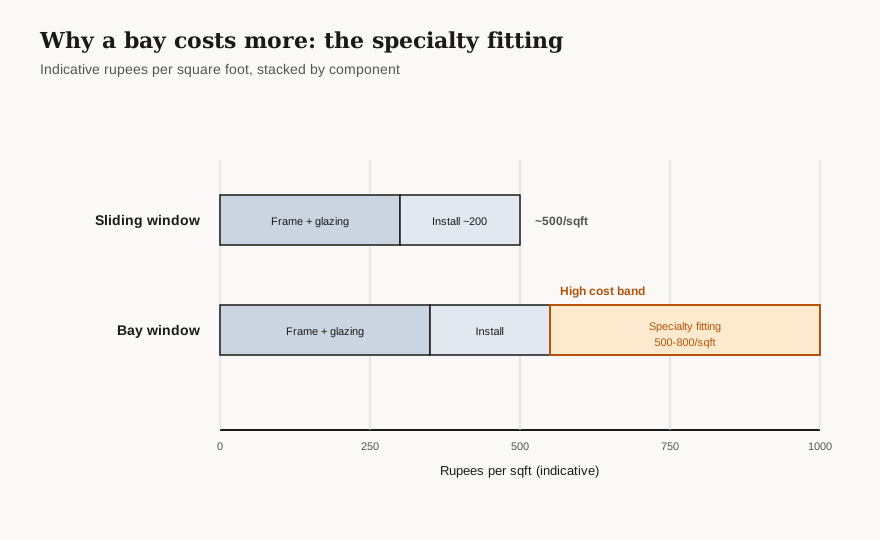
A bay sits firmly in the high cost band, for good reason: custom geometry, a structural projection, three coordinated units and specialist fitting.
| Cost element | Indicative ₹ |
|---|---|
| Frame + glazing (per sqft of window) | 250 to 1,500+ depending on material and glass |
| Standard install/fixing | ~200 per sqft |
| Specialty bay fitting | 500 to 800 per sqft |
| Structure (cantilever/brackets) + waterproofing | Project-specific; budget separately |
Treat these as indicative for June 2026 and always confirm with itemised quotes from fabricators, since geometry, span and city move the number a lot. The specialty fitting premium and the hidden structural and waterproofing costs are what separate a bay's budget from an ordinary window.
Pros and cons
| Pros | Cons |
|---|---|
| Adds usable floor area and a window seat | High cost; specialty fitting ₹500 to 800/sqft |
| Daylight from three angles | Needs structural support (cantilever/bracket/footing) |
| Operable flankers give real ventilation | Projection must be waterproofed against monsoon |
| Strong architectural focal point | Eats into setback; check bye-laws |
| Centre pane frames the view | More exposed surface area to insulate |
Choose this if / avoid if
| Choose a bay window if... | Avoid a bay window if... |
|---|---|
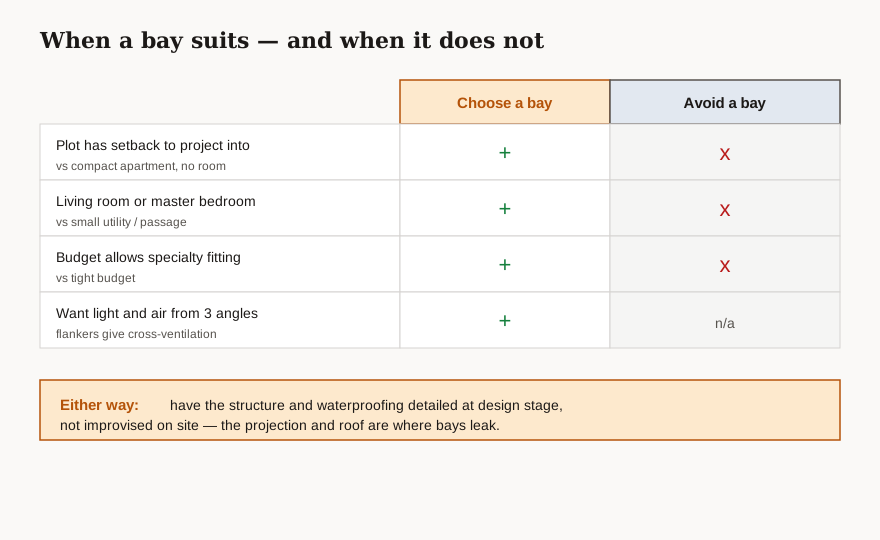
| You have an independent house or villa with setback to spare | You are in a compact apartment with no projection room |
| You want a daylit reading or seating nook | Your budget cannot absorb the structural + fitting premium |
| The room can take a strong focal point (living room, master bedroom) | You need the simplest, lowest-maintenance window |
| You can detail structure and waterproofing properly at design stage | The bay would breach your plot setback or bye-laws |
The bottom line
An angular bay is a small luxury that earns its keep: more floor, more light, more delight. Spend where it matters, on structure, waterproofing and good Low-E DGU glass, and the window seat will be the most-used square metre in the house. For the curved alternative see bow windows, for the wraparound corner see corner windows, and for the full window menu return to the types of home windows pillar.
References
- IS 1948 (aluminium doors, windows and ventilators), BIS: https://law.resource.org/pub/in/bis/S03/is.1948.1961.pdf
- IS 1081 (fixing and glazing of metal doors and windows), BIS: https://law.resource.org/pub/in/bis/S03/is.1081.1960.pdf
- BIS Guide for Using NBC 2016: https://www.bis.gov.in/wp-content/uploads/2022/08/Booklet-Guide-for-Using-NBC-2016.pdf
- Eco-Niwas Samhita 2018 (BEE/ECBC): https://ecbc.in/econiwas.html
- uPVC windows price per sq ft 2026 cost guide (Building and Interiors): https://buildingandinteriors.com/upvc-windows-price-per-sq-ft-india-2026-cost-guide/
Export this guide
Related Guides — Deep-dive reading
Floor-to-Ceiling Windows (India): Maximum Light, and the Heat Trade-Off
Full-height glazing for Indian homes — how to win the daylight and view without losing the energy code, comfort or safety.
Windows & GlazingFixed and Picture Windows (India): Maximum View, Minimum Maintenance
Why a picture window is just a large fixed pane, the glazing maths that big glass demands, and the operable partner it must always have.
Windows & GlazingTypes of Home Windows in India (2026): Complete Comparison and How to Choose
Every window type compared on ventilation, cost and best use, plus a frame, glazing and climate framework to choose right.
Windows & GlazingRelated Tools — Try Free
Cross-Ventilation Analyzer
Estimate airflow and air changes per hour (ACH) from room size, window areas, layout, and local wind — with NBC 2016 Part 8 compliance check.
Ventilation CalculatorWindow Material Comparison Tool
Compare uPVC, aluminium, wood, steel and composite windows on cost, life, upkeep and insulation.
CompareApartment vs Villa Interior Planning Guide
Compare ceiling height, structural flexibility, lighting, storage, and services between apartments and villas.
Planning Guide