
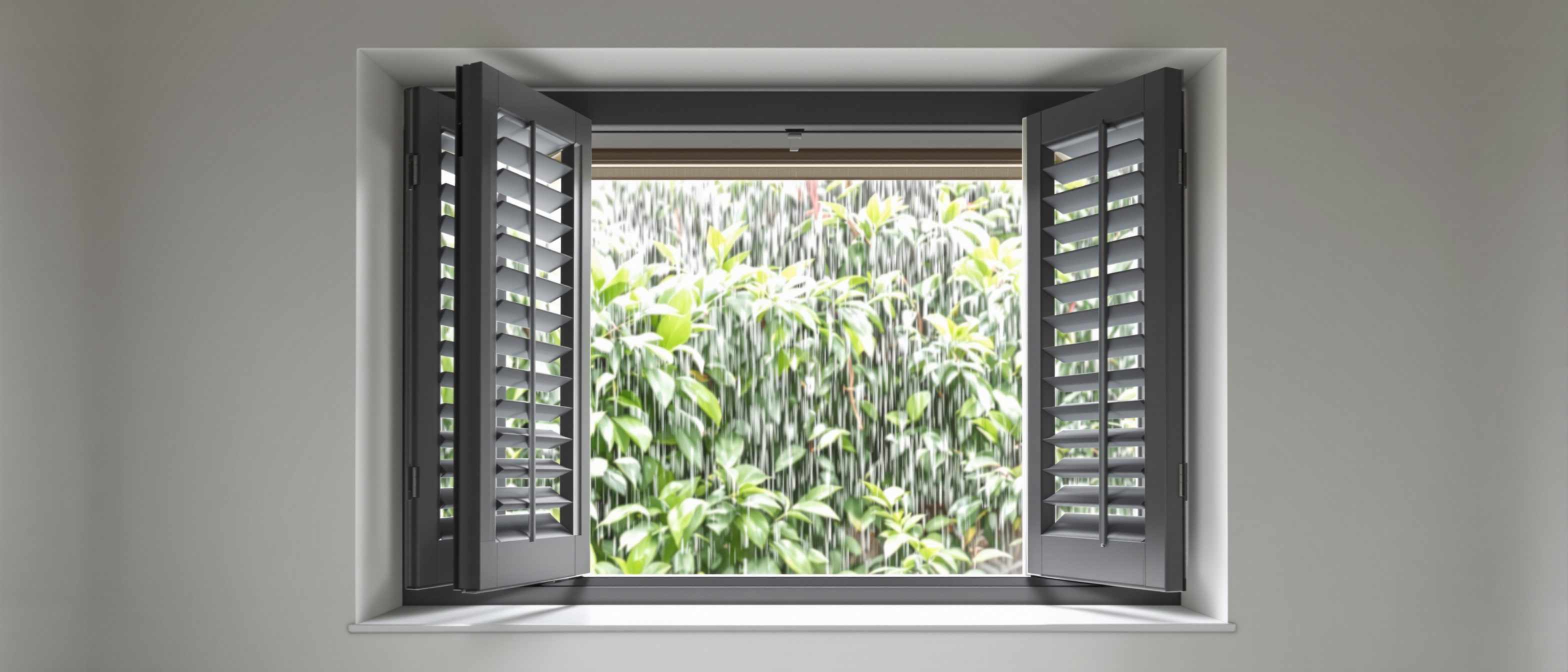
Louvered (Jalousie) Windows (India): Monsoon-Proof Ventilation
How tilting slat windows keep a room breathing through the rain — operation, the airtightness trade-off, materials and cost in India
A louvered window — also called a jalousie window — is built from a stack of parallel angled slats that all tilt open together on a single crank or lever. The slats can be glass, timber or aluminium. Wind the handle and the whole bank pivots in unison, opening dozens of small horizontal gaps; wind it back and the slats close like a venetian blind set into the frame.
For India, the one property that matters most is this: a louvered window ventilates while it rains. The angled slats let air slip through the gaps yet shed water down and outward, so you can leave it open through a monsoon downpour without the floor flooding. That is why louvres have been the default for bathrooms, stairwells, service yards and coastal homes from Kerala to Goa to the Konkan for generations.
Louvres are the answer to a very Indian problem: how do you keep a room breathing through four months of rain without leaving a puddle on the floor?
This guide is the dedicated deep-dive on louvres. For the broad picture of windows and doors together, see windows and doors design in India; this article goes much further on louvre operation, the rain-shedding mechanism and the airtightness trade-off. To compare every window type at a glance, start at the pillar, types of home windows in India.
How a louvered window operates
Each slat sits at a fixed angle — typically sloping down and out toward the exterior — and all slats are linked to a common operating arm. One handle moves the whole bank between fully closed (slats overlapping, edge-to-edge) and fully open (slats horizontal, maximum gap).
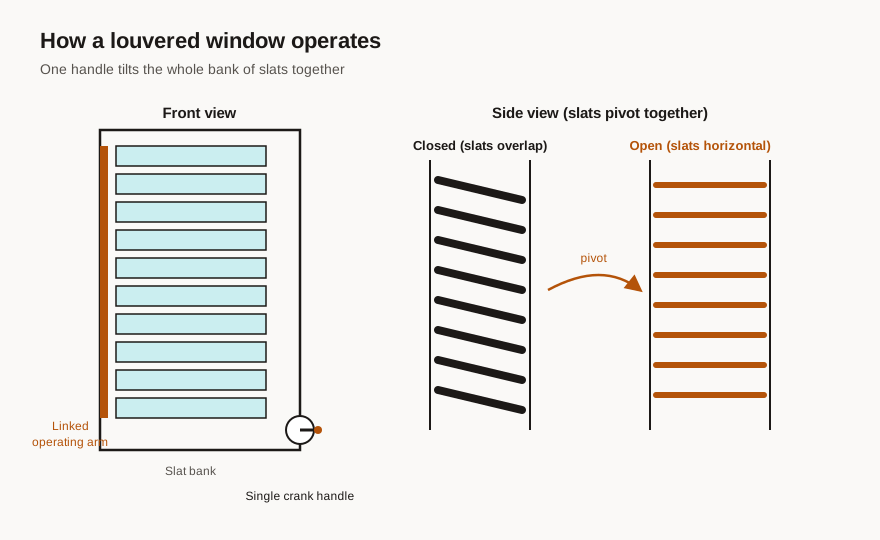
Compared with a casement or awning, there is no single large sash — there are many small ones. That gives you fine, continuous control of airflow: a small crack for a breeze, full open for a gale, fully shut for privacy. It also means many sealing edges, which is the heart of the trade-off we come to below.
Rain-proof ventilation: the slat that sheds water
This is the louvre's headline trick. Because each slat slopes down toward the outside, falling rain hits the upper face of a slat and runs off the outer edge — away from the room. Air, meanwhile, threads through the open gaps between slats and into the space.
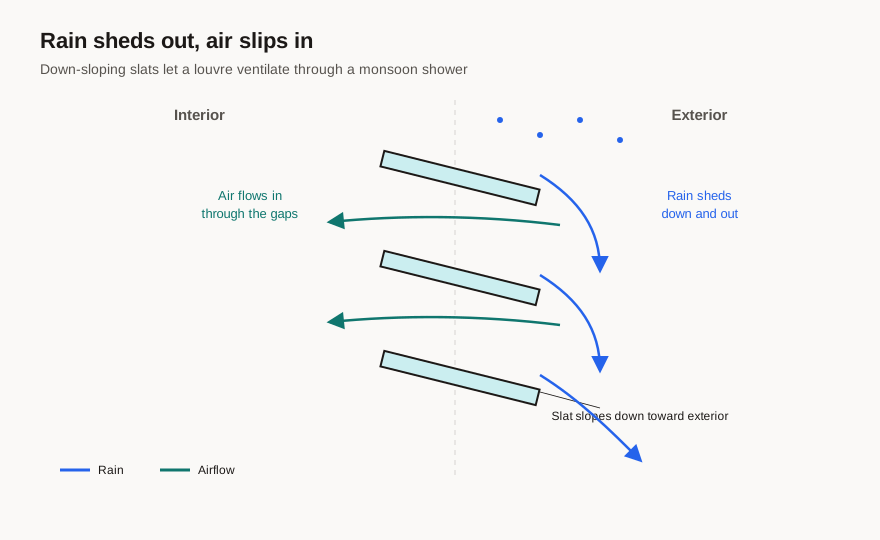
The effect is that you get genuine cross-ventilation during rain, which is invaluable for a humid bathroom or a stuffy stairwell in July. Pair a louvred window low on one wall with an opening high on the opposite side and you set up a steady draught. To plan that airflow across a whole room, use the cross-ventilation analyzer.
This is also where louvres differ from their two closest cousins:
- A jali window is a fixed, perforated screen — stone, terracotta, concrete or timber — that diffuses light and gives privacy but does not move. A louvre is operable: you tilt the slats to dial airflow up or down, or shut them completely. Choose a jali for permanent shade and a decorative screen; choose louvres when you want adjustable air and a window you can fully close.
- An awning window also sheds rain, but it does so with one top-hinged sash that props open. It seals far better when shut (a single gasket line) but gives you on/off ventilation rather than the louvre's many-gap, fine-grained control. Choose an awning where the airtight, secure, energy-efficient shut position matters more than maximum monsoon airflow.
The trade-off: many gaps, weaker seal
Every advantage of the louvre flows from having many small slats — and so does every weakness.
| Property | Why louvres behave this way |
|---|---|
| Airtightness | Many slat edges mean many places for air to leak; even shut, a louvre is leakier than a single-sash casement or awning |
| Thermal seal | The leaky envelope and thin slats give a poor U-value; not the window for an air-conditioned, sealed room |
| Acoustic seal | Multiple gaps pass sound; louvres are weak on noise where casement or laminated glazing would help |
| Security | Individual glass slats can sometimes be levered out; metal slat banks or a behind-screen grille are safer |
| Rain in a storm | In a hard, wind-driven monsoon squall, some spray can still drive through; angle and overhang matter |
The takeaway: louvres trade the airtight, secure, well-insulated shut position of a casement for unbeatable, rain-tolerant, adjustable airflow. That is exactly the right trade in a bathroom, utility area or breezy coastal room — and the wrong one in a sealed, air-conditioned bedroom.
Materials: glass, timber or aluminium
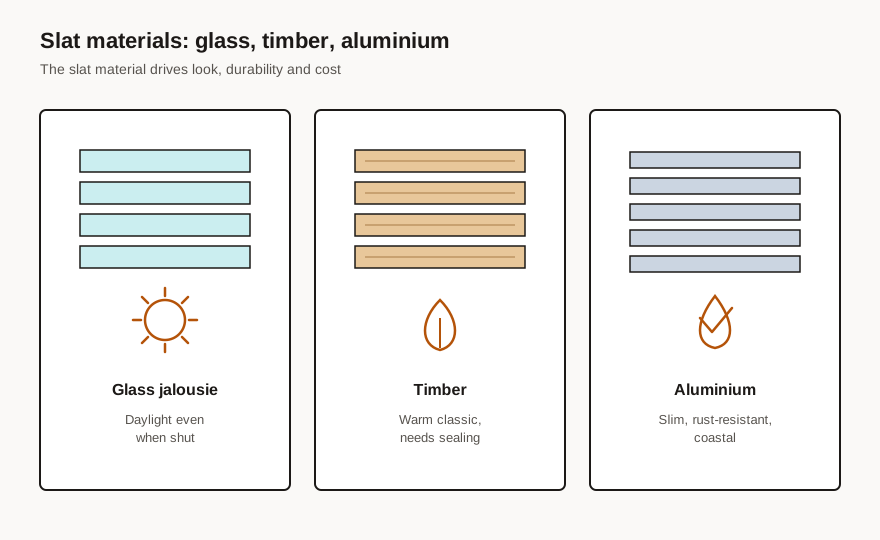
The slat material drives look, durability and cost.
| Slat material | Character | Best for | Watch-outs |
|---|---|---|---|
| Glass jalousie | Lets daylight in even when closed; clean, modern | Bathrooms, stairwells, where you want light plus air | Individual panes can be removed; least secure; clear glass gives no privacy unless frosted |
| Timber | Warm, classic, the traditional Indian and colonial look | Heritage homes, verandahs, bungalows | Needs sealing against monsoon; highest maintenance over 10 years; can warp if neglected |
| Aluminium | Slim, light, rust-resistant, low maintenance | Coastal and humid zones, service areas, modern homes | Bare aluminium conducts heat; choose powder-coated, and a thermal break only matters where you ever seal the room |
Frames follow the same logic as any window. Aluminium framing — covered by IS 1948:2024, the specification for aluminium doors, windows and ventilators — is the natural partner for louvres in coastal and humid India because it shrugs off rust and rot. uPVC is the all-round value choice for most new homes. Timber frames suit heritage work but demand the most upkeep. For fixing and glazing of metal louvre frames, fabricators work to IS 1081.
Cost in India
Louvres are mid-range. They cost more than a plain fixed pane (more hardware, more pieces) but they sit within the normal frame-material bands rather than commanding a premium like a bay or bi-fold.
| Configuration | Indicative ₹/sqft (June 2026) |
|---|---|
| Aluminium-framed glass jalousie, powder-coated | ₹450 to ₹950 |
| uPVC-equivalent louvre unit | ₹450 to ₹900 |
| Timber louvre (material plus finishing) | ₹500 to ₹1,500+ |
| Installation / fixing | around ₹200/sqft |
Prices are indicative for June 2026 and vary by city, brand, size and slat material — always confirm against itemised quotes from local fabricators.
Glazing the slats
With glass louvres your glazing choice is per-slat and necessarily single-pane — you cannot fit a double-glazed unit into a thin tilting slat. That reinforces why louvres are not the window for thermal or acoustic performance. Where it matters:
- Frosted or obscured glass for bathroom privacy while keeping daylight.
- Toughened (tempered) glass for safety on any low or reachable slat — it shatters into blunt granules rather than shards.
- For genuine insulation or noise control, do not stretch the louvre; put a casement or a double-glazed unit on that wall instead and keep the louvre for the wet, breezy openings.
Because each glass slat passes daylight even when shut, louvres rarely push your window-to-wall ratio into the demanding glazing bands of the Eco-Niwas Samhita 2018; they are usually a small, functional opening rather than a large picture window. Still, count them toward the NBC 2016 rule of thumb that openable inlet area should be at least one-tenth of a room's floor area for habitable spaces.
Pros and cons
| Pros | Cons |
|---|---|
| Ventilates through monsoon rain | Leaky when shut — poor airtightness |
| Fine, continuous airflow control | Weak thermal and acoustic seal |
| Privacy when slats are angled or timber/frosted | Less secure (glass slats can be removed) |
| Classic, climate-smart Indian and coastal look | Wind-driven storm spray can still enter |
| Easy to wipe clean, low-cost hardware | Not for sealed, air-conditioned rooms |
Choose this if / avoid if
Choose a louvered window if:
- You need a window that stays open and breathing through the monsoon — bathrooms, kitchens, service yards, stairwells.
- You live on the coast or in a humid zone and want airflow without rain ingress.
- You want fine, adjustable control of a breeze and easy privacy.
- You are restoring or matching a heritage or bungalow look (timber slats).
Avoid it if:
- The room is air-conditioned and needs an airtight, well-insulated envelope — choose a casement.
- Security is a top concern on a ground-floor or accessible opening (or pair it with a grille).
- You need strong acoustic isolation from a noisy street — choose laminated glazing in a sealed sash.
- You want a single large unobstructed view — that is a fixed or picture window, not a slatted one.
For broader airflow strategy across the whole home, read cross-ventilation in Indian homes, and to weigh louvres against casement, sliding, awning and the rest, return to the pillar, types of home windows in India.
References
- IS 1948 (aluminium doors, windows and ventilators), BIS: https://law.resource.org/pub/in/bis/S03/is.1948.1961.pdf
- IS 1081 (fixing and glazing of metal doors and windows), BIS: https://law.resource.org/pub/in/bis/S03/is.1081.1960.pdf
- IS 3362 (natural ventilation of residential buildings), BIS: https://law.resource.org/pub/in/bis/S03/is.3362.1977.pdf
- BIS Guide for Using NBC 2016: https://www.bis.gov.in/wp-content/uploads/2022/08/Booklet-Guide-for-Using-NBC-2016.pdf
- Eco-Niwas Samhita 2018 (BEE/ECBC): https://ecbc.in/econiwas.html
- uPVC windows price per sq ft 2026 cost guide (Building and Interiors): https://buildingandinteriors.com/upvc-windows-price-per-sq-ft-india-2026-cost-guide/
Export this guide
Related Guides — Deep-dive reading
Awning Windows Guide (India): Rain-Proof Ventilation for Kitchens and Baths
Top-hinged, outward-opening windows that shed rain and breathe high on the wall — the monsoon-smart choice for baths, kitchens and over picture windows.
Windows & GlazingCasement Windows Explained (India): How They Work, Cost, Pros and Cons
The side-hinged window that cranks outward to open its whole face to the breeze and seals airtight when shut — operation, ventilation, frame fit, glazing and ₹/sqft cost for Indian homes.
Windows & GlazingFixed and Picture Windows (India): Maximum View, Minimum Maintenance
Why a picture window is just a large fixed pane, the glazing maths that big glass demands, and the operable partner it must always have.
Windows & GlazingRelated Tools — Try Free
Cross-Ventilation Analyzer
Estimate airflow and air changes per hour (ACH) from room size, window areas, layout, and local wind — with NBC 2016 Part 8 compliance check.
Ventilation CalculatorBrise-Soleil Visualizer
Interactive horizontal-louvre cut-off angle calculator — sun altitude, louvre depth, and spacing inputs with a live shadow preview. Computes θ = arctan(spacing/depth) for façade shading, ECBC envelope compliance, hospital daylight design, and tropical sun-control detailing.
Sun Shading ToolWindow Maintenance Cost Calculator
Estimate annual window upkeep by frame material — yearly, per-window and 5-year cost.
Window Calculator