
Clerestory Windows Explained (India): High Daylight and Stack Ventilation
A row of windows high on the wall that pushes soft daylight deep into a room and lets hot air escape near the ceiling
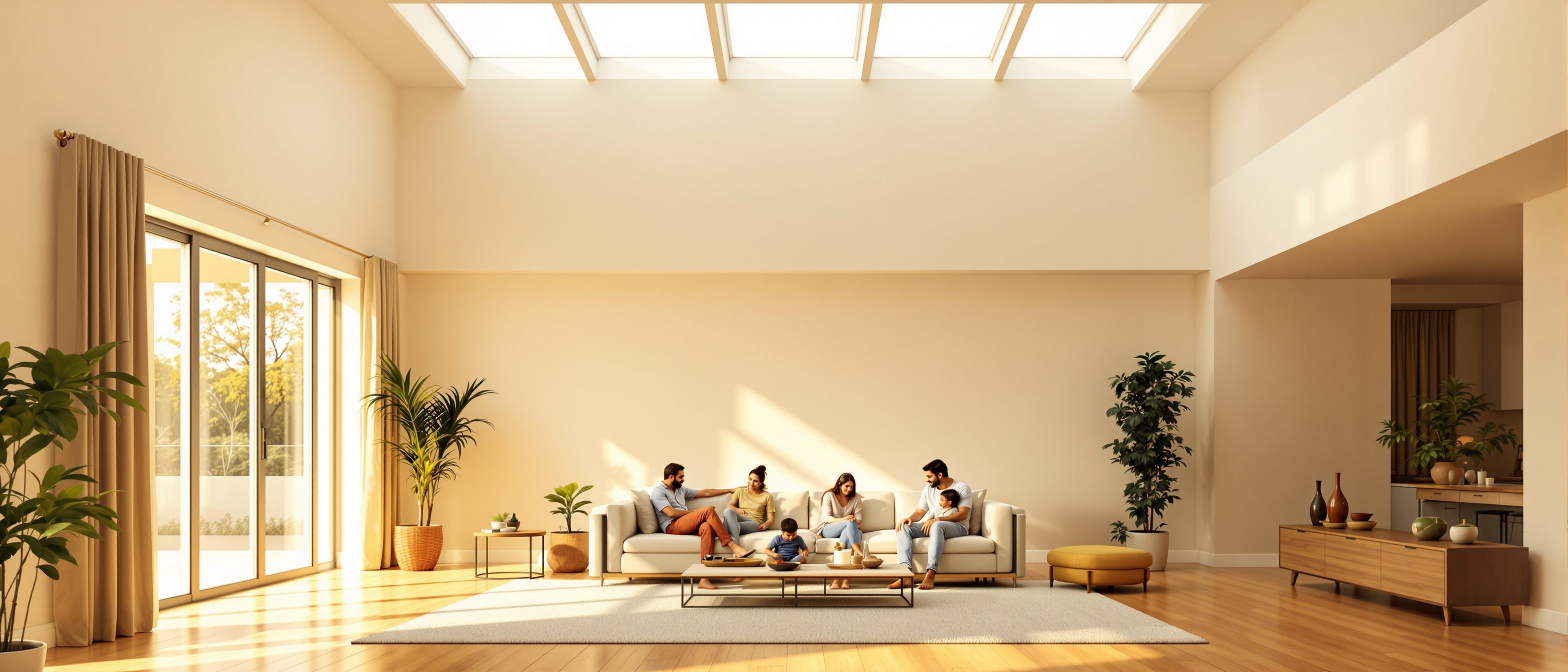
A clerestory window is a row of glazing set HIGH on a wall, above eye level and usually above the line of doors and normal windows. It is one of the oldest daylighting tricks in architecture, and in the Indian climate it solves two problems at once: it pushes soft, even, glare-controlled light deep into a room, and it lets the hottest air in the house escape near the ceiling. For deep plans, double-height living rooms and dim stairwells, it is often the single most effective window you can add.
This guide is the dedicated buyer's deep-dive on clerestory windows. For the full menu of window types see the pillar Types of Home Windows in India, and for the quick combined windows-and-doors primer see Windows and Doors Design in India. This guide goes much deeper on how a high wall opening behaves, where it pays off, and how to specify it.
How a clerestory window works
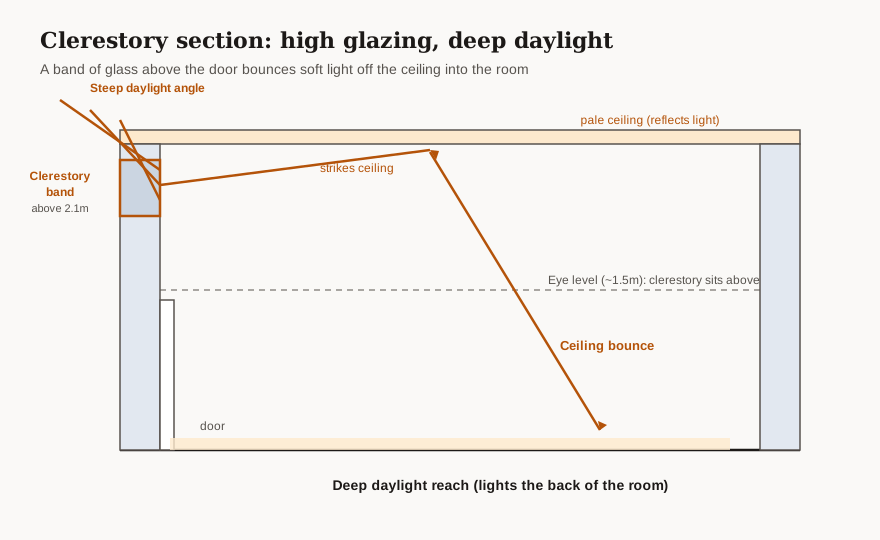
The defining feature is height, not the opening mechanism. The glazing sits in the upper band of the wall, typically above 2.1 m, so it clears furniture, eye level and the privacy zone entirely. Because the opening is high, daylight enters at a steep angle and lands on the ceiling and the far wall rather than on your face, so you get brightness without the harsh glare of a low west window.
Clerestory glazing comes in two forms:
- Fixed clerestory — sealed glass for daylight only. Cheapest, most airtight, no hardware to reach.
- Operable clerestory — the sash opens for ventilation, usually as a top-hinged awning or a side-hinged casement, operated by a long crank, a chain winder, or a motor.
If your only goal is light, fixed is simpler and cheaper. If you want the stack-ventilation benefit below, you need at least some operable units.
Daylight pushed deep into the room
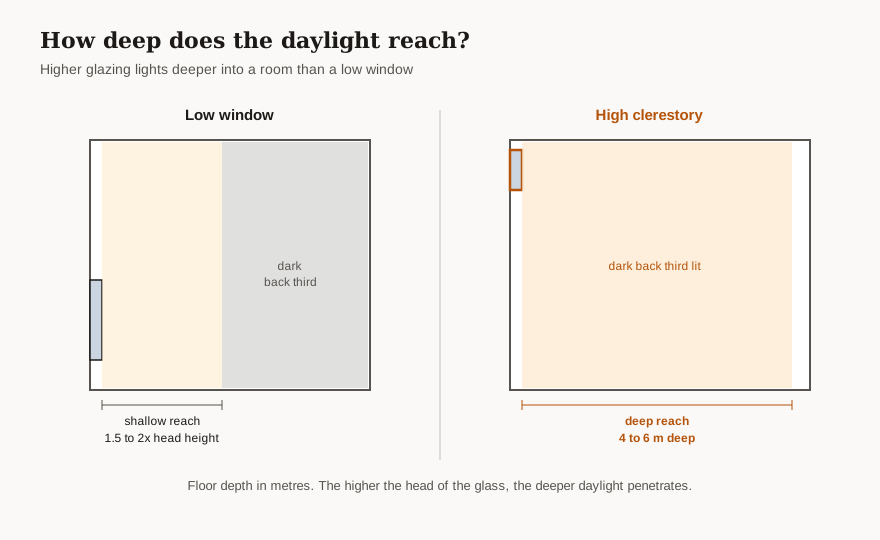
The reason architects love clerestory glazing is daylight penetration depth. As a rule of thumb, a normal side window lights a room to roughly 1.5 to 2 times the height of its head above the floor. Raise the window head to the top of a 3 m or double-height wall and that useful daylight reaches far deeper, often 4 to 6 m back, exactly the part of a deep Indian plan that otherwise stays gloomy at noon.
The light is also kinder. Because it strikes a pale ceiling first and bounces down, it arrives diffused and even, with far less of the contrast that makes a room feel patchy. This is daylight quality, not just quantity, which is why clerestories suit living rooms, studios and reading nooks. For the underlying daylighting science across the whole home, see Natural Light Planning for Indian Homes; this guide is the clerestory window type itself, where that science is put to work in one high opening.
A clerestory does not just add light. It changes WHERE the light lands, lifting the dark back third of a deep room without putting any glare at eye level.
Stack ventilation: the hidden superpower
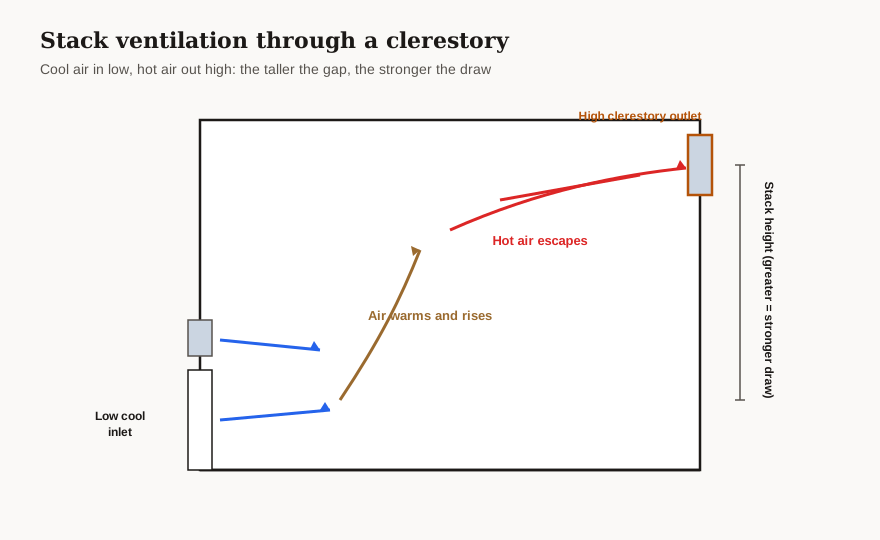
A clerestory earns its keep in summer through the stack effect. Hot air rises. If your only openings are at eye level, that hot air pools near the ceiling with nowhere to go. Put an operable opening high on the wall and the hot air escapes there, which pulls cooler air in through low inlets, a door, a low window or a courtyard opening. The result is a continuous, gentle upward current with no fan.
The two rules that make it work:
- Pair high outlets with LOW inlets. The greater the vertical distance between inlet and outlet, the stronger the draw. A high clerestory with low doors or floor-level vents is ideal.
- Open both at once. A high opening alone cannot ventilate; it needs the low inlet to feed it.
This is why clerestories are so powerful in double-height spaces and stairwells, where the vertical run is naturally tall. To size and test this for your own room, use the Cross-Ventilation Analyzer, which models both cross-flow and the stack effect. As a sizing baseline, NBC 2016 suggests openable inlet area of at least one-tenth of the floor area for habitable rooms, and IS 3362 is the code of practice for natural ventilation of residential buildings.
Privacy with light
Because the opening is above eye level, a clerestory gives you daylight without sightlines in either direction. Neighbours cannot see in and you are not looking at the compound wall next door. This makes it the natural choice on a tight urban plot where a normal window would frame a neighbour's bathroom, and for rooms where you want a bright wall but solid privacy at standing height, such as bedrooms, bathrooms and staircases.
Where a clerestory shines
| Space | Why a clerestory fits |
|---|---|
| Double-height living room | Tall wall gives huge daylight reach and a strong stack draw |
| Deep / one-side-open plan | Pushes light to the dark back third no side window can reach |
| Stairwell | Lights a circulation core safely; high glass, no fall risk at the rail |
| Bedroom / bathroom | Bright wall with full privacy above eye level |
| North wall | Steady glare-free light all day with minimal heat |
Operable vs fixed, and the glazing that controls heat
A high opening still gains heat if it faces the sun, and a south or west clerestory in an Indian summer can cook a room without the right glass. Match the glazing to the orientation.
| Glazing | What it does | Use it for |
|---|---|---|
| Single glazing | Cheapest, poor insulation | Shaded north clerestory on a tight budget |
| DGU / double glazed unit | Big jump in thermal and acoustic insulation | The sensible default for cooled homes |
| Low-E coating | Reflects radiant heat, cuts solar gain, keeps light | South / west clerestory in hot climates |
| Toughened | 4 to 5 times stronger, safe granular break | Large or high panes, mandatory feel for safety |
| Laminated | Holds together when broken, best acoustics and UV cut | Above habitable space, security |
Under Eco-Niwas Samhita 2018 the rule is simple: the more glass you add (higher window-to-wall ratio), the lower the SHGC the code demands so the wall envelope still meets RETV of 15 W/m2 or less for composite, hot-dry, warm-humid and temperate zones. A clerestory raises WWR, so on a sun-facing wall specify a low-SHGC Low-E DGU. North clerestories are the easy case: steady light, little heat.
Frame material fit
| Frame | Fit for clerestory | Indicative cost |
|---|---|---|
| uPVC | Best all-round value, good insulation, low maintenance, steel-reinforced for spans | ₹450 to ₹900/sqft |
| Aluminium | Slimmest sightlines for a clean high band; needs a thermal break or it conducts heat | ₹450 to ₹950/sqft powder-coated |
| Wood | Warm, classic, premium; needs sealing against monsoon and costs more over 10 years | ₹500 to ₹1,500/sqft+ |
For a high, hard-to-reach band the low maintenance of uPVC is a real advantage. Aluminium with a polyamide thermal break wins where you want the slimmest frame and the longest unbroken run. Whatever the frame, fixing aligns with IS 1948:2024 for aluminium windows and ventilators and IS 1081 for fixing and glazing of metal windows; add about ₹200/sqft for installation, and budget more if the units are operated by motors or long-reach winders.
Cost band
| Build | Indicative all-in |
|---|---|
| Fixed uPVC clerestory, single glazing | ₹450 to ₹650/sqft |
| Operable uPVC or aluminium, DGU | ₹700 to ₹1,100/sqft |
| Premium aluminium, Low-E DGU, motorised | ₹1,100 to ₹1,800/sqft+ |
These are indicative for June 2026 and vary by city, brand, size and glazing. Always confirm with itemised quotes from fabricators, and price the operation hardware separately, as long cranks, chain winders and motors are where high windows add cost.
Pros and cons
| Pros | Cons |
|---|---|
| Deep, soft, glare-controlled daylight | Hard to reach to clean and operate |
| Privacy with light, above eye level | Operable units need long winders or motors |
| Strong stack ventilation when paired with low inlets | Needs tall wall height to work well |
| No fall or security risk at high level | Sun-facing units need careful low-SHGC glazing |
| Frees the lower wall for furniture and storage | No view out, light only |
Choose this if / avoid if
Choose a clerestory if you have a double-height space, a deep or one-side-open plan, or a dim stairwell; you want daylight and stack ventilation without sacrificing privacy; or you need to brighten the back of a room a side window cannot reach.
Avoid or rethink if you want a view or low-level ventilation you can reach by hand; the wall is short, so there is no room above eye level for a useful band; or the wall faces the harsh west sun and you cannot fit a low-SHGC Low-E DGU and shading to control the heat.
How this differs from a skylight
People often weigh a clerestory against a roof opening. A clerestory is a high WALL opening; a skylight brings light through the ROOF. The clerestory keeps the glass on a vertical surface, which means far fewer waterproofing headaches in the monsoon, softer side-bounced light rather than fierce overhead sun, and easier weatherproofing. Reach for a roof opening only when there is no usable exterior wall, and compare the trade-offs in Skylights and Roof Windows in India.
References
- IS 1948:2024 Specification for aluminium doors, windows and ventilators (BIS): https://law.resource.org/pub/in/bis/S03/is.1948.1961.pdf
- IS 1081 Code of practice for fixing and glazing of metal doors and windows (BIS): https://law.resource.org/pub/in/bis/S03/is.1081.1960.pdf
- IS 3362 Code of practice for natural ventilation of residential buildings (BIS): https://law.resource.org/pub/in/bis/S03/is.3362.1977.pdf
- BIS Guide for Using NBC 2016: https://www.bis.gov.in/wp-content/uploads/2022/08/Booklet-Guide-for-Using-NBC-2016.pdf
- Eco-Niwas Samhita 2018 (BEE / ECBC): https://ecbc.in/econiwas.html
- uPVC windows price per sq ft 2026 cost guide (Building and Interiors): https://buildingandinteriors.com/upvc-windows-price-per-sq-ft-india-2026-cost-guide/
Export this guide
Related Guides — Deep-dive reading
Floor-to-Ceiling Windows (India): Maximum Light, and the Heat Trade-Off
Full-height glazing for Indian homes — how to win the daylight and view without losing the energy code, comfort or safety.
Windows & GlazingNorth-Facing Window Design (India): The Best Light With the Least Heat
Why the north wall gives soft, even, glare-free daylight with almost no heat, and how to design large, high-VLT windows that make the most of it.
Windows & GlazingAwning Windows Guide (India): Rain-Proof Ventilation for Kitchens and Baths
Top-hinged, outward-opening windows that shed rain and breathe high on the wall — the monsoon-smart choice for baths, kitchens and over picture windows.
Windows & GlazingRelated Tools — Try Free
Cross-Ventilation Analyzer
Estimate airflow and air changes per hour (ACH) from room size, window areas, layout, and local wind — with NBC 2016 Part 8 compliance check.
Ventilation CalculatorBrise-Soleil Visualizer
Interactive horizontal-louvre cut-off angle calculator — sun altitude, louvre depth, and spacing inputs with a live shadow preview. Computes θ = arctan(spacing/depth) for façade shading, ECBC envelope compliance, hospital daylight design, and tropical sun-control detailing.
Sun Shading ToolWindow Orientation Planner
Pick the best window type, glass and shading by wall direction — north, east, south and west.
Window Tool