
Dormer Windows (India): Light and Headroom for Sloped-Roof Rooms
How a projecting dormer turns a dark, low attic under a pitched roof into a bright, usable room, with types, structure, waterproofing, glazing and cost for Indian homes.
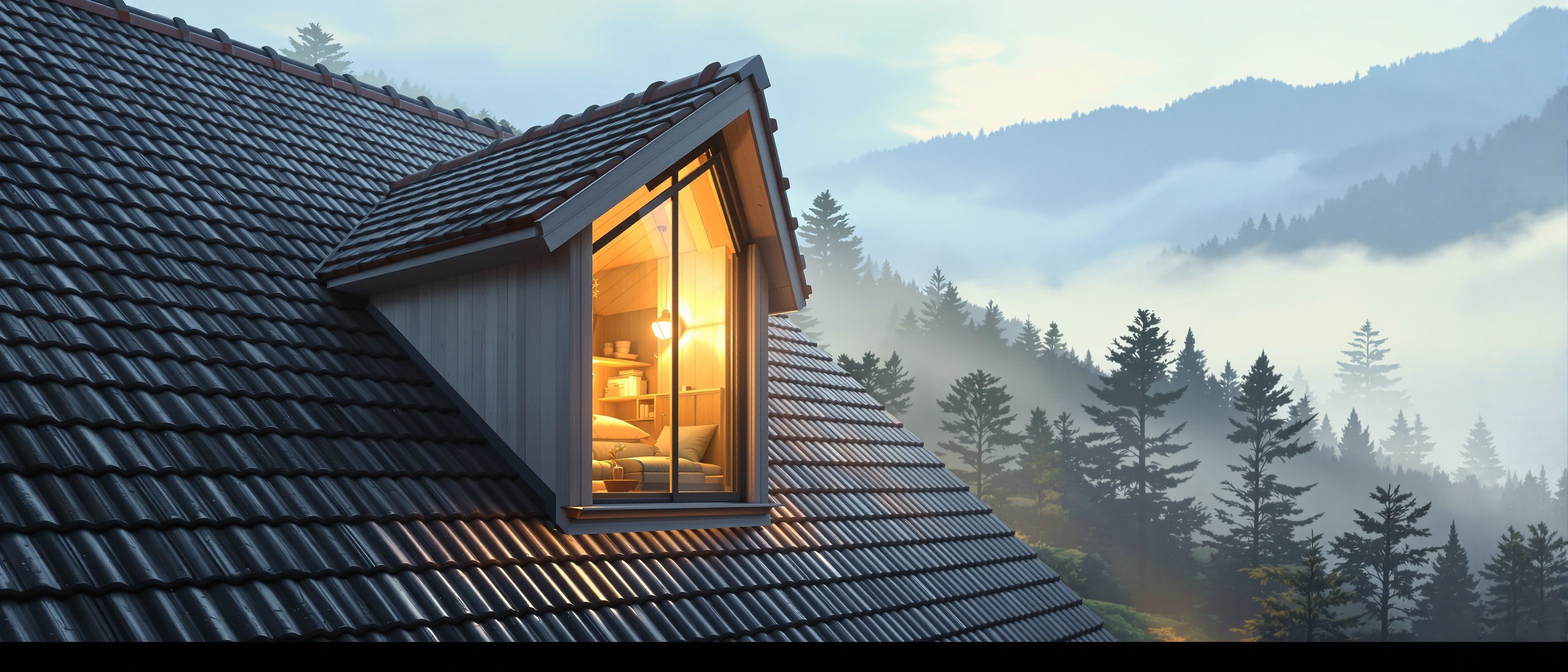
A dormer is the little house-shaped box that pops out of a sloping roof, with a vertical window set into its front face. Walk through any hill station in India, from Shimla to Coonoor to Gangtok, and you will see them everywhere, because they solve a problem that no flat-wall window can. Under a pitched roof the ceiling slopes down to almost nothing at the eaves, so the top floor or attic ends up dark, low and unusable. A dormer cuts a clean vertical opening into that slope, gives you standing headroom, and lets in proper daylight and air.
This guide is the dedicated buyer's deep-dive on dormers. For the full menu of window types, start at our pillar guide Types of Home Windows in India, and for the quick combined intro to windows and doors see Windows and Doors Design in India. This page goes much deeper on the one thing those cannot: how to turn a sloped roof into a bright, usable room.
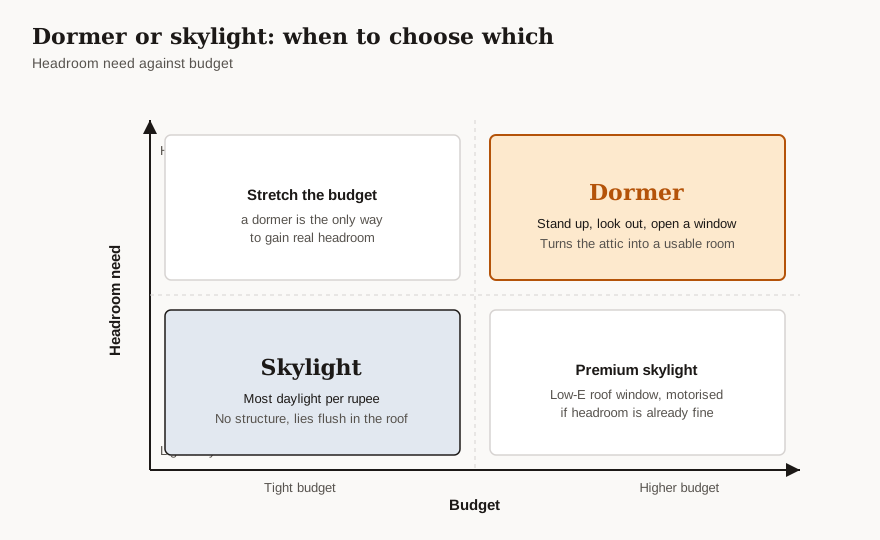
A skylight lets light fall down onto you. A dormer lets you stand up, look out, and open a window. That difference, headroom plus a vertical view, is the whole reason dormers exist.
How a dormer works
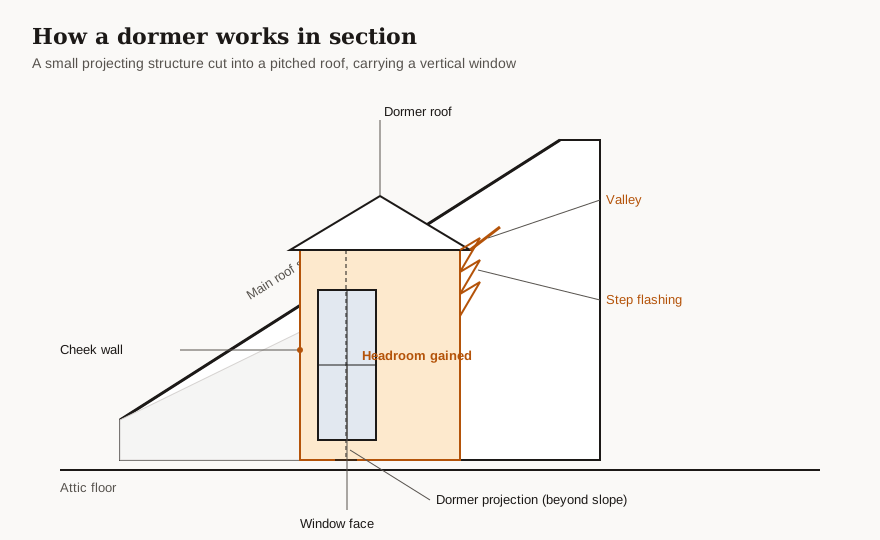
A dormer is not a window so much as a small projecting structure that carries a window. It is built up from the rafters of the existing roof and has three parts that all matter for waterproofing:
- The face holds the actual window, usually a casement or sliding sash in a vertical frame, just like a normal wall window.
- The cheeks are the two side walls of the projection, running up the slope. These are where most leaks start, so the flashing here is critical.
- The dormer roof is its own little roof (gable, hip, shed or curved) that sheds water clear of the window.
Because the box projects beyond the roof slope, it reclaims the dead triangular space under the eaves and converts it into headroom. That is the structural gift of a dormer, and also its complication: every joint where the dormer meets the main roof must be flashed and sealed against the monsoon.
Dormer types
The name of a dormer comes from the shape of its little roof. The choice is partly looks and partly how much it sheds water, which matters a great deal in high-rainfall hills and coastal Kerala.
| Type | Roof shape | Character | Notes for India |
|---|---|---|---|
| Gable | Pitched, like a tiny house | Classic, sheds rain well | The safest all-rounder for heavy-rain hills |
| Hipped | Sloped on three sides | Softer, blends with hip roofs | Good on bungalow and villa roofs |
| Shed | Single flat slope | Maximum glass and headroom | Most usable space; keep the slope steep enough to drain |
| Eyebrow | Gentle curved wave, no cheeks | Decorative, low headroom | Charming on heritage and cottage roofs |
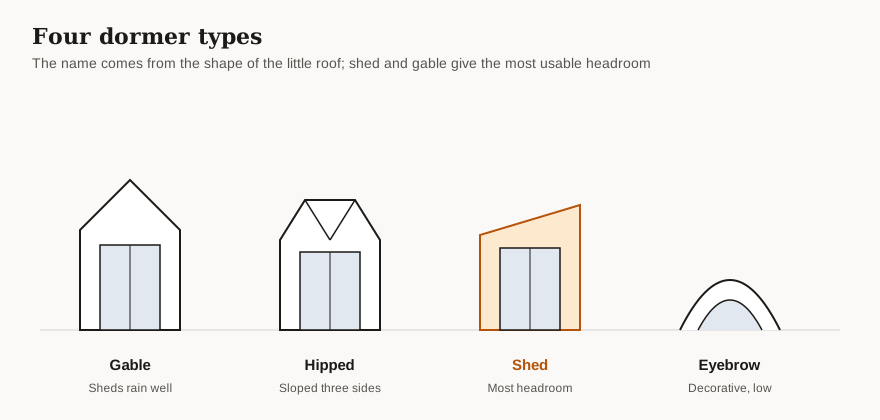
For a usable room, the shed and gable dormers give the most headroom. The eyebrow is mostly architectural jewellery: pretty, but it adds little standing room.
Light, headroom and ventilation
A dormer earns its cost on three fronts at once.
- Daylight. A vertical window in the dormer face reads as a normal window to the room, so light arrives at eye level, not just from overhead. The National Building Code 2016 rule of thumb wants openable area of at least one-tenth (10 percent) of floor area for habitable rooms; a dormer window is often the only way to hit that on a top floor with no exterior wall.
- Headroom. The projection lifts the ceiling locally so you can place a bed, a desk or a reading nook where the slope would otherwise force you to stoop.
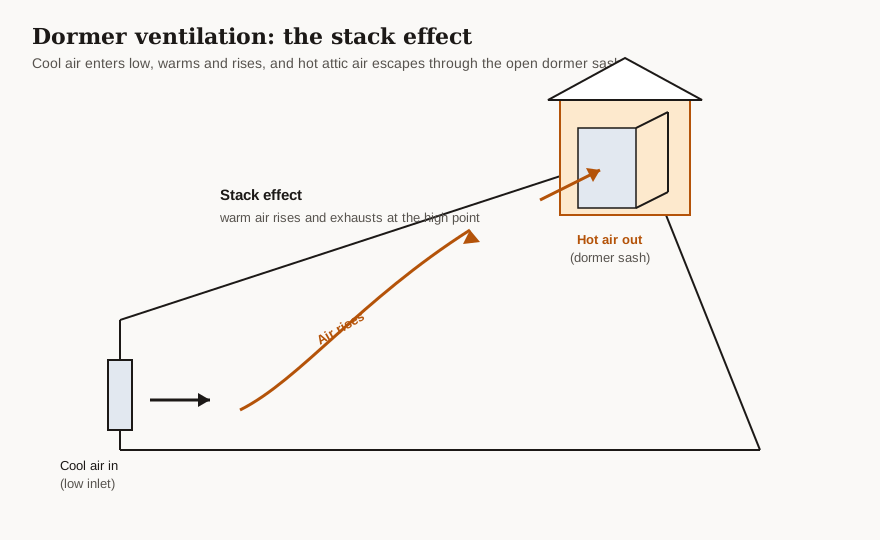
- Ventilation. Fit the dormer with an openable casement or awning sash and you get cross or stack ventilation: hot air that collects at the high point of a pitched roof has somewhere to escape. Use our Cross-Ventilation Analyzer to check that the dormer opening pairs with a lower inlet on the opposite side.
Where dormers fit in India
Dormers are a regional, not a universal, choice. They make sense wherever roofs are genuinely sloped:
- Hill stations such as Shimla, Mussoorie, Nainital, Ooty, Coonoor, Kodaikanal, Darjeeling and Gangtok, where steep roofs shed snow and rain and attics are prized living space.
- Sloped-roof villas and farmhouses with Mangalore-tile or metal pitched roofs, common across Kerala, the Western Ghats and the Northeast.
- Attic conversions, where an unused loft under a pitched roof is turned into a bedroom, studio or storage room and needs both light and a fire-escape window.
On a flat RCC roof, the common slab of most Indian city homes, a dormer makes no sense; there you would use a skylight or roof window instead. That cousin guide covers the flush-to-roof alternative in full.
Dormer versus skylight: which one
This is the decision most people actually face, so it is worth being blunt about it.
| Dormer | Skylight / roof window | |
|---|---|---|
| Sits | Projects OUT of the slope | Lies FLUSH in the roof |
| Adds headroom | Yes, this is its point | No |
| Window orientation | Vertical, eye-level view | Overhead, sky view only |
| Daylight per rupee | Lower | Higher (overhead light is strong) |
| Cost | Higher (it is a small structure) | Lower (a glazed opening) |
| Heat gain | Manageable, vertical glass | Higher, needs Low-E and shading |
| Best for | Turning attic into a usable room | Pure daylight where headroom is fine |
In short, choose a dormer when you want to use the space and stand in it; choose a skylight when you only want light and the ceiling height is already fine. Many hill homes use both, a dormer for the bed nook and a skylight over the corridor.
Structure and waterproofing
The dormer is the part of the roof most likely to leak, so this is where money is well spent. The non-negotiables:
- Framing. The dormer is built off doubled rafters (a structural opening called a trimmer) so it does not weaken the roof. Get a structural check before cutting into an old roof.
- Flashing. Step flashing up both cheeks, a head flashing over the dormer roof junction, and an apron at the base are all essential. This is the single most important detail.
- Valleys. Where the dormer roof meets the main slope, a lined valley carries water away; in heavy-rain zones make it generous.
- Cheek cladding. Cheeks are usually clad to match the roof (tile, slate, metal or boarding) and must be sealed against wind-driven monsoon rain.
Spend on the flashing, not the frame. A leaking dormer ruins the ceiling below it; a plain frame with a perfect valley will outlast a fancy frame with a sloppy junction.
Frame and glazing
The window inside the dormer follows the same logic as any wall window.
- Frame material. uPVC is the best all-round value and resists the damp, swing in temperature and termites of hill homes; expect roughly ₹250 to ₹800 per square foot. Aluminium with a thermal break suits modern villas. Timber looks beautiful and is traditional in the hills but costs 2.5 to 4 times uPVC over ten years once you count repainting against the monsoon. See Windows and Doors Design in India for the full material comparison.
- Glazing. A double glazed unit (DGU) is worth it in cold hill climates for warmth and to stop condensation. Add a Low-E coating to cut heat gain, and use toughened glass for safety. In high-rainfall and noisy locations laminated glass adds acoustic and security benefit.
- Energy code. Under Eco-Niwas Samhita 2018, more glass raises your window-to-wall ratio and pushes you toward lower-SHGC glazing to keep the envelope within RETV of 15 W per square metre. A dormer adds modest glass, so this is rarely a constraint, but match the glass to the climate.
Cost
A dormer is a small construction project, not just a window, so price it as labour plus structure plus the window, not by glass area alone.
| Item | Indicative cost (June 2026) |
|---|---|
| Dormer window (uPVC casement, the sash itself) | ₹250 to ₹800 per sqft of glazing |
| Specialty fitting and framing | ₹500 to ₹800 per sqft, often higher for the structure |
| Flashing, valley and cheek cladding | Quoted as a lump sum by the roofer |
All figures are indicative for June 2026 and vary by city, brand, size and glazing. Always confirm with itemised quotes from fabricators and a roofer, and treat the structural and waterproofing work as the bulk of the cost.
Pros and cons
| Pros | Cons |
|---|---|
| Adds real headroom and usable floor area | Costs much more than a flush skylight |
| Eye-level vertical window with a view | A leak risk if flashing is done poorly |
| Good cross and stack ventilation | Needs structural work into the roof |
| Adds character to a sloped-roof home | Only makes sense on pitched roofs |
| Lower heat gain than overhead glazing | Slower to build than fitting a window |
Choose this if / avoid if
Choose a dormer if you have a genuinely sloped roof, you want to convert an attic or top floor into a usable room, you need standing headroom as well as light, and you can budget for proper flashing.
Avoid a dormer if your roof is a flat RCC slab (use a skylight), you only need daylight and the ceiling is already tall enough, or your budget is tight, in which case a skylight or roof window gives more light per rupee with no structural work.
For the wider context of daylighting a home, see Natural Light Planning for Indian Homes, and return to the Types of Home Windows pillar to compare every option.
References
- BIS Guide for Using NBC 2016 (natural ventilation rules): https://www.bis.gov.in/wp-content/uploads/2022/08/Booklet-Guide-for-Using-NBC-2016.pdf
- IS 3362 (natural ventilation of residential buildings): https://law.resource.org/pub/in/bis/S03/is.3362.1977.pdf
- IS 1948 (aluminium doors, windows and ventilators): https://law.resource.org/pub/in/bis/S03/is.1948.1961.pdf
- Eco-Niwas Samhita 2018 (BEE/ECBC residential code): https://ecbc.in/econiwas.html
- uPVC windows price per sq ft 2026 (Building and Interiors): https://buildingandinteriors.com/upvc-windows-price-per-sq-ft-india-2026-cost-guide/
Export this guide
Related Guides — Deep-dive reading
Floor-to-Ceiling Windows (India): Maximum Light, and the Heat Trade-Off
Full-height glazing for Indian homes — how to win the daylight and view without losing the energy code, comfort or safety.
Windows & GlazingTypes of Home Windows in India (2026): Complete Comparison and How to Choose
Every window type compared on ventilation, cost and best use, plus a frame, glazing and climate framework to choose right.
Windows & GlazingAwning Windows Guide (India): Rain-Proof Ventilation for Kitchens and Baths
Top-hinged, outward-opening windows that shed rain and breathe high on the wall — the monsoon-smart choice for baths, kitchens and over picture windows.
Windows & GlazingRelated Tools — Try Free
Cross-Ventilation Analyzer
Estimate airflow and air changes per hour (ACH) from room size, window areas, layout, and local wind — with NBC 2016 Part 8 compliance check.
Ventilation CalculatorGlass Selection Tool
Single vs double (DGU) vs triple glazing and the right glass type for your climate, priority and sun.
Window ToolWindow Size Calculator
Get the right window size, glazing area and openable area for any room using NBC daylight rules.
Window Tool