
Fixed and Picture Windows (India): Maximum View, Minimum Maintenance
Why a picture window is just a large fixed pane, the glazing maths that big glass demands, and the operable partner it must always have.
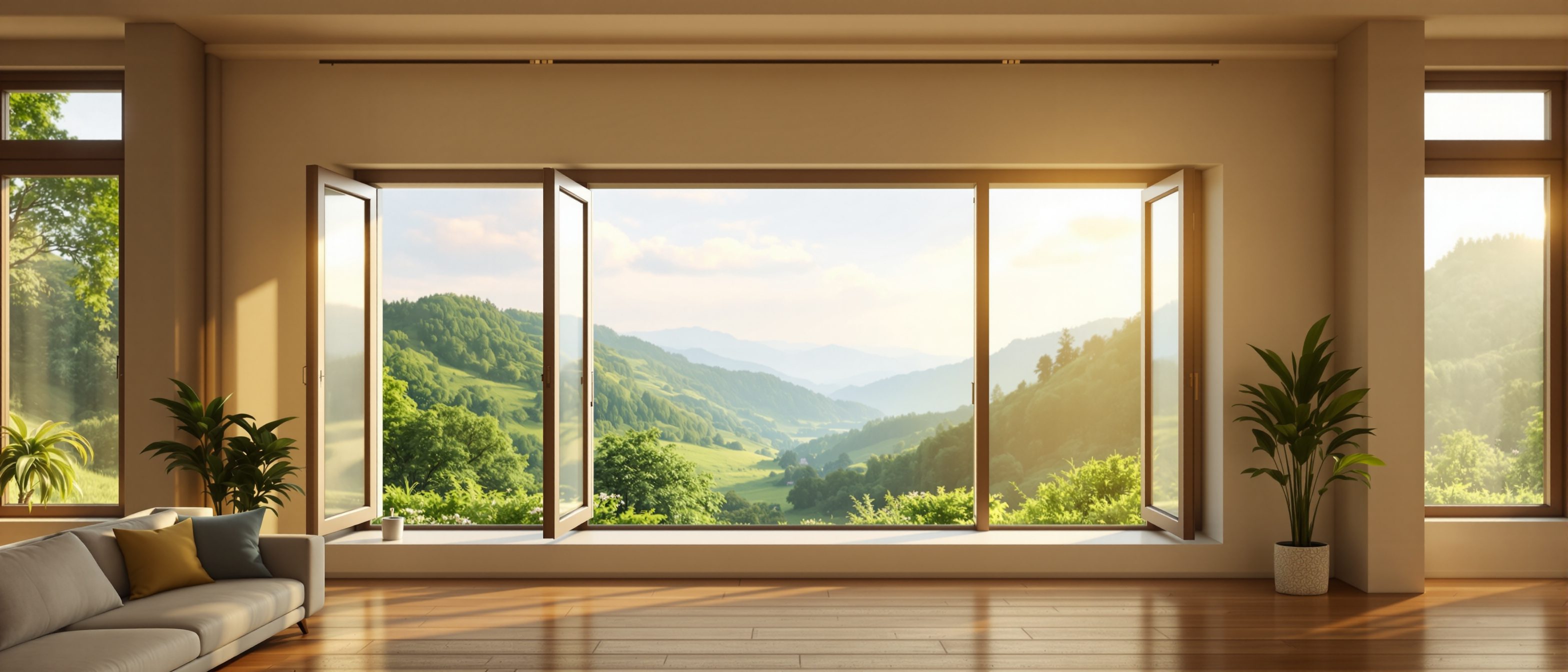
A fixed window is the simplest window there is: a sealed pane of glass in a frame that does not open. No hinges, no tracks, no cranks, no hardware. When that fixed pane is large and frames a view, builders call it a picture window because it turns the outdoors into a living picture on your wall. Small fixed lights above a door, beside a staircase, or topping a row of casements are exactly the same family, just smaller.
That single design choice, no opening, drives everything about a fixed window: the most glass, the best view, the tightest seal against dust and rain, the lowest cost per square foot, and the one unavoidable trade-off, zero ventilation. Get the pairing and the glass right and a picture window is the cheapest way to flood a room with light and a view. Get the glass wrong and that same big pane becomes a heat trap in the Indian summer.
A picture window does one job brilliantly: it sells the view. It does not move air, so it must always have an operable partner nearby.
How a fixed window "operates" (it doesn't)
There is no operation to speak of, which is the point. The glass is glazed directly into a fixed frame, often with thinner sightlines than an opening window because there is no sash, no hardware channel, and no overlap. You get more glass and less frame for the same hole in the wall.
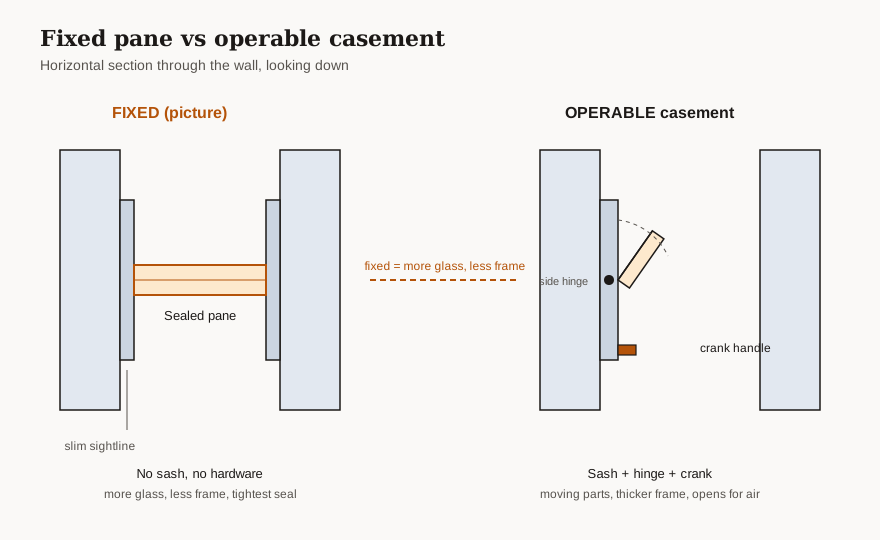
Because nothing moves, a fixed window has the best air-and-water seal of any window type and the lowest long-term maintenance, there is no mechanism to wear out, jam, or re-grease. The flip side is cleaning: a large picture window can only be cleaned from inside (and from outside if reachable), so think about access before you specify a 10-foot pane on the first floor.
Ventilation: there is none, so plan the pairing
This is the rule that governs every fixed-window decision. A fixed pane moves zero air. NBC 2016 keeps the familiar rule of thumb that habitable rooms need an openable inlet area of at least one-tenth (10 percent) of the floor area for natural ventilation (some local bye-laws ask for window area of one-seventh to one-eighth of floor area for light and ventilation combined). A fixed window contributes to the light requirement but nothing to the ventilation requirement.
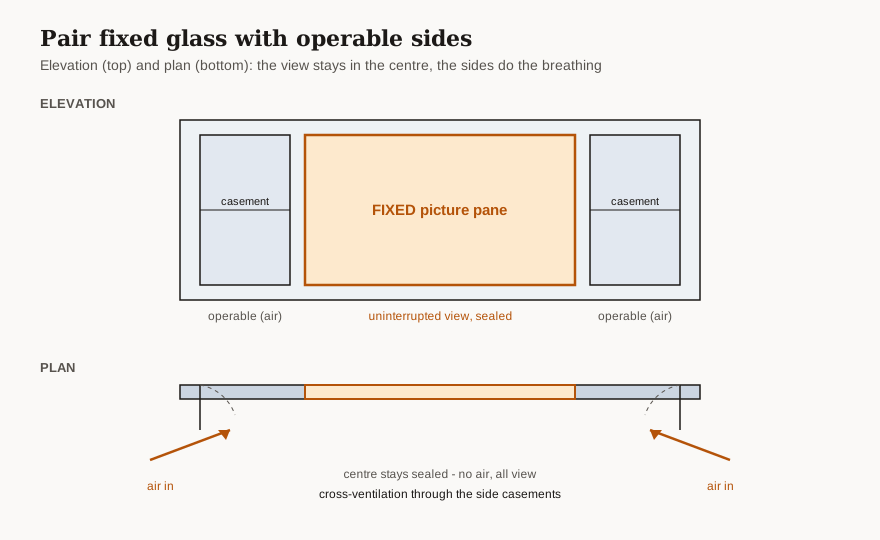
So fixed glass is almost never used alone in a habitable room. The standard, climate-smart move in India is to pair a large central picture window with operable windows, casements or awnings, on one or both sides.
| Layout | View | Ventilation | Where it works |
|---|---|---|---|
| Fixed centre + 2 operable sides | Excellent (big uninterrupted centre) | Good (sides do the air) | Living rooms, bedrooms with a view |
| Fixed light above an operable window | Adds height/light | From the operable below | Tall walls, double-height rooms |
| Fixed light above a door (transom) | Borrowed light | None | Lobbies, passages |
| Fixed pane at a stair landing | Excellent | None needed (transit space) | Stair voids, mid-landings |
| Fixed-only in a habitable room | Excellent | None, fails NBC inlet rule | Avoid unless air comes from elsewhere |
Where fixed and picture windows shine
- Framing a view — a valley, garden, skyline or courtyard deserves the largest single pane your structure and budget allow. This is the picture window's whole reason to exist.
- Fixed lights above doors and windows — transoms and clerestory-style top lights pull daylight high into a room without compromising privacy or the wall below.
- Flanking operable windows — the cheap, glassy centrepiece between two casements that actually do the breathing.
- Stair landings and double-height voids — transit and feature spaces where you want light and drama but do not need to open anything.
- Wherever a wall faces a sealed condition — next to a busy road, a dusty lane, or a neighbour where you want the light but not the air or the noise; a fixed laminated pane is the quietest, tightest option.
Frame material: let the glass lead, not the frame
Because there is no hardware to drive cost, the frame choice for fixed windows is mostly about sightlines, span and finish.
| Frame | Fit for fixed/picture windows | Indicative cost |
|---|---|---|
| Aluminium | Best for very large picture panes, slimmest sightlines, largest spans; insist on a thermal break so the frame does not conduct heat | ₹350 to ₹3,000 per sqft |
| uPVC | Best all-round value, good thermal and acoustic insulation, steel-reinforced for big spans, low maintenance | ₹250 to ₹800 per sqft |
| Wood | Premium, warm, classic, for heritage and luxury; needs sealing against the monsoon | ₹500 to ₹1,500 per sqft+ |
For a picture window, the glass matters far more than the frame. A slim aluminium frame with a thermal break, or a steel-reinforced uPVC frame, lets the view dominate while the glazing does the thermal heavy lifting.
Glazing: the most important decision for big glass
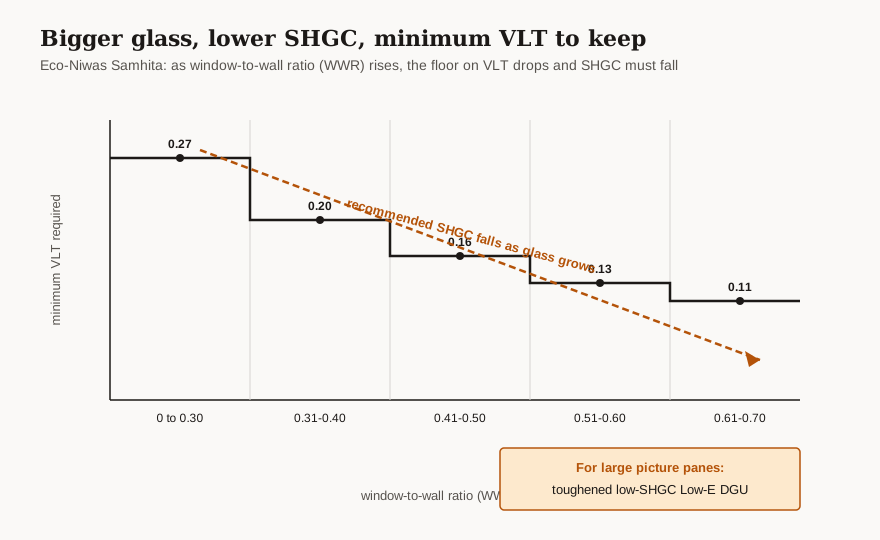
Here is the trap. A fixed window gives you the most glass per rupee, and big glass means big solar heat gain. Under the Eco-Niwas Samhita 2018 (the residential energy code), windows are the single biggest lever on a wall's Residential Envelope Transmittance Value (RETV), which must stay at or below 15 W/m² for composite, hot-dry, warm-humid and temperate zones. A large picture window pushes up your window-to-wall ratio (WWR), and the code responds by demanding lower-SHGC, more selective glazing to stay compliant.
In plain terms: the bigger and sunnier the picture window, the lower the SHGC of the glass must be. Aim for a low Solar Heat Gain Coefficient (less heat in) while keeping enough Visible Light Transmittance (VLT) for daylight. ENS sets a minimum VLT by WWR band, so you cannot simply tint the glass black to kill the heat.
| Glazing | Heat / acoustics | Use on a picture window |
|---|---|---|
| Single glazing | Poor insulation and acoustics | Only small, shaded, north-facing fixed lights |
| DGU (double glazed unit) | Big jump in thermal and acoustic insulation | The default for any sizeable picture window |
| Low-E coating | Reflects radiant heat, cuts solar gain, keeps light | Essential on large or sun-facing glass |
| Toughened (tempered) | 4 to 5 times stronger, breaks into blunt granules | Mandatory feel for large or low-set panes (safety) |
| Laminated (PVB) | Holds together when broken, best acoustics and UV-cut | Picture windows near roads, low panes, security |
Minimum VLT by WWR (Eco-Niwas Samhita 2018): WWR up to 0.30 needs VLT at least 0.27; 0.31 to 0.40 needs 0.20; 0.41 to 0.50 needs 0.16; 0.51 to 0.60 needs 0.13; 0.61 to 0.70 needs 0.11.
For any large, low, or sun-facing picture window, the safe specification is toughened low-SHGC Low-E DGU, upgraded to laminated where you want acoustic calm or security (street-facing rooms, low sills children can reach). Pair the glass with shading, a deep chajja, overhang or external louvre, so you are not relying on the coating alone.
Cost: the cheapest glass per square foot
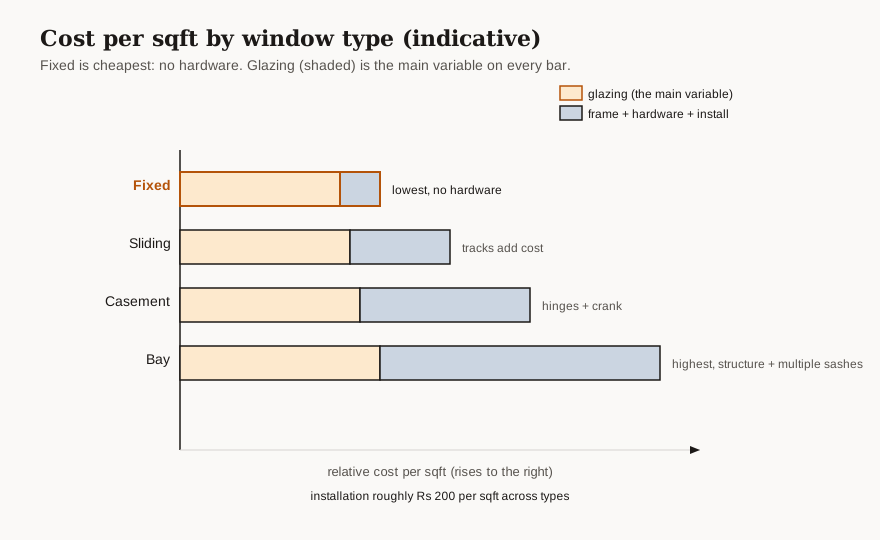
With no hinges, cranks, tracks, rollers or locks, a fixed window is the lowest-cost window type per square foot of opening, you are paying for frame, glass and fixing only. Installation runs around ₹200 per sqft. The cost then lives almost entirely in the glass you choose: a single-glazed fixed light is genuinely cheap, while a large toughened Low-E DGU picture pane is a meaningful spend, justified by comfort and energy savings rather than the window mechanism.
Pros and cons
| Pros | Cons |
|---|---|
| Maximum glass and view per rupee | Zero ventilation, must pair with operable windows |
| Tightest air and water seal of any window | Cannot be cleaned easily on upper floors |
| Lowest cost per area (no hardware) | Big glass means big heat gain without low-SHGC glazing |
| Slimmest sightlines, frame almost disappears | Raises WWR, demands code-compliant glazing |
| Lowest maintenance (nothing to wear out) | A broken large pane is costly to replace |
Choose this if / Avoid if
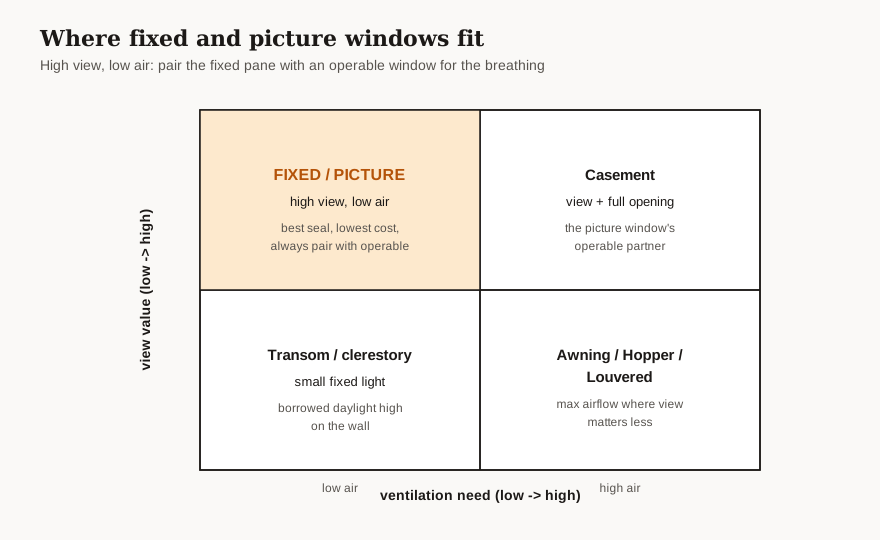
Choose a fixed or picture window if you have a view worth framing, you want the most glass for the least money, the room already gets its air from another operable window, or you need a sealed, quiet, dust-tight pane (transom lights, stair landings, road-facing walls).
Avoid it if it would be the only window in a habitable room (it will fail the NBC ventilation inlet rule), if the pane is large and sun-facing but you cannot afford low-SHGC Low-E DGU, or if the glass would sit high on an upper floor with no safe way to clean it.
Related reading
- The pillar overview of all window types: Types of Home Windows in India compares fixed against casement, sliding, awning and the rest in one selection table.
- The combined quick intro to windows and doors: Windows and Doors Design in India is the broad starting point; this guide goes deeper on fixed glass alone, its glazing maths and its mandatory operable pairing.
- Because a picture window contributes only light and not air, plan it alongside Floor-to-Ceiling Windows in India, which is full-height wall glazing (a whole glazed wall) rather than a single framed view pane, and the daylighting science in Natural Light Planning for Indian Homes.
References
- IS 1948 (aluminium doors, windows and ventilators), BIS: https://law.resource.org/pub/in/bis/S03/is.1948.1961.pdf
- IS 1081 (fixing and glazing of metal doors and windows), BIS: https://law.resource.org/pub/in/bis/S03/is.1081.1960.pdf
- IS 3362 (natural ventilation of residential buildings), BIS: https://law.resource.org/pub/in/bis/S03/is.3362.1977.pdf
- BIS Guide for Using NBC 2016: https://www.bis.gov.in/wp-content/uploads/2022/08/Booklet-Guide-for-Using-NBC-2016.pdf
- Eco-Niwas Samhita 2018 (BEE/ECBC residential): https://ecbc.in/econiwas.html
- uPVC windows price per sq ft 2026 cost guide: https://buildingandinteriors.com/upvc-windows-price-per-sq-ft-india-2026-cost-guide/
Export this guide
Related Guides — Deep-dive reading
Floor-to-Ceiling Windows (India): Maximum Light, and the Heat Trade-Off
Full-height glazing for Indian homes — how to win the daylight and view without losing the energy code, comfort or safety.
Windows & GlazingTypes of Home Windows in India (2026): Complete Comparison and How to Choose
Every window type compared on ventilation, cost and best use, plus a frame, glazing and climate framework to choose right.
Windows & GlazingEnergy-Efficient Facades in India: How the Building Skin Cuts Your Cooling, Heating & Lighting Bills
How a building facade drives cooling, heating and lighting energy in India, the three levers of solar-heat-gain control, insulation and daylighting, U-value, SHGC, VLT and WWR in plain terms, ECBC and Eco-Niwas expectations, and real Indian green buildings.
Building FacadesRelated Tools — Try Free
Cross-Ventilation Analyzer
Estimate airflow and air changes per hour (ACH) from room size, window areas, layout, and local wind — with NBC 2016 Part 8 compliance check.
Ventilation CalculatorBrise-Soleil Visualizer
Interactive horizontal-louvre cut-off angle calculator — sun altitude, louvre depth, and spacing inputs with a live shadow preview. Computes θ = arctan(spacing/depth) for façade shading, ECBC envelope compliance, hospital daylight design, and tropical sun-control detailing.
Sun Shading ToolWindow Material Comparison Tool
Compare uPVC, aluminium, wood, steel and composite windows on cost, life, upkeep and insulation.
Compare