
Corner Windows in Modern Architecture (India): The Frameless Wraparound View
Two windows meeting at a building corner for a wraparound view — the modern look, the structural coordination, glazing, waterproofing and the premium cost band.
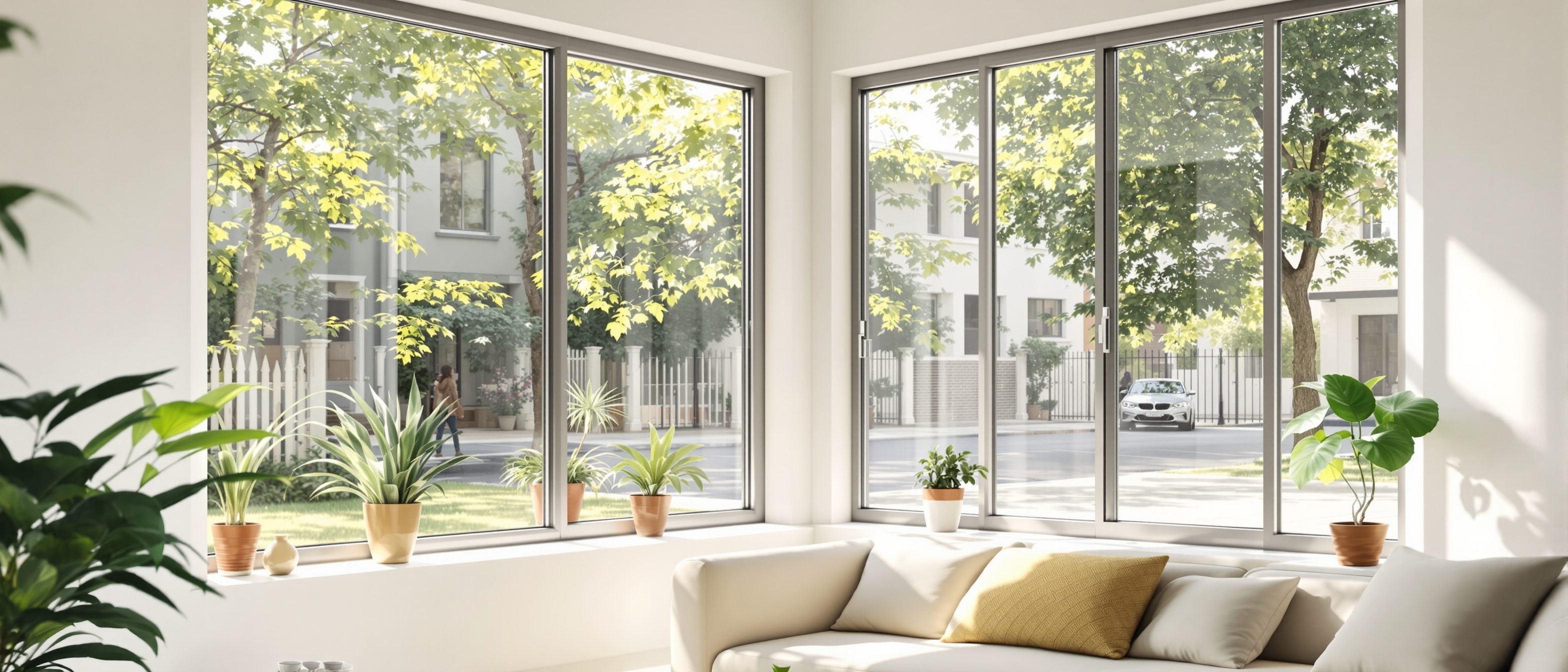
A corner window does something no ordinary window can: it dissolves the angle where two walls meet. Instead of a solid corner anchoring the room, you get glass turning the bend — sometimes with a slim post, sometimes frameless glass-to-glass — opening a wide, wraparound view and pulling daylight in from two directions at once. It is one of the most striking moves in contemporary Indian residential architecture, and also one of the most demanding to detail correctly.
This guide is the dedicated deep-dive for corner windows. For the quick combined intro to windows and doors, start with our windows and doors design overview; for the full menu of window types and how to choose between them, see the pillar guide, types of home windows in India. Here we go far deeper into the structure, glazing, waterproofing and cost that a corner window specifically demands.
A corner window is not a projecting window. It wraps the building's existing corner and stays flush with the walls — there is no bay or bow pushing outward into space.
What exactly is a corner window?
A corner window is two windows (or glazed panels) meeting at the vertical edge where two external walls join. The view sweeps around the corner — say, garden on one face and street on the other — for a panoramic, almost open-air feel from inside.
It is easy to confuse with its cousins, so let us be precise:
| Type | What it does | How it differs from a corner window |
|---|---|---|
| Bay window | Three units project OUT in an angular bay, adding floor area | Projects outward; corner window does NOT project |
| Bow window | Four to five units in a gentle curved projection | Curved projection outward; corner window stays flush |
| Floor-to-ceiling window | Full-height glass on a single plane | Full height, one wall; corner window turns the corner |
| Corner window | Two windows meet AT a building corner for a wraparound view | Wraps the corner, no projection |
So the defining trait is the turn, not the reach. A corner window can be normal head-height or run floor to ceiling — but it always happens at the corner, flush with the walls.
The big structural decision: post or no post
This is where corner windows get serious. In an ordinary wall, the corner is a structural junction — it can carry load and brace the building. Open it up with glass and you must replace that structure somewhere. There are two routes.
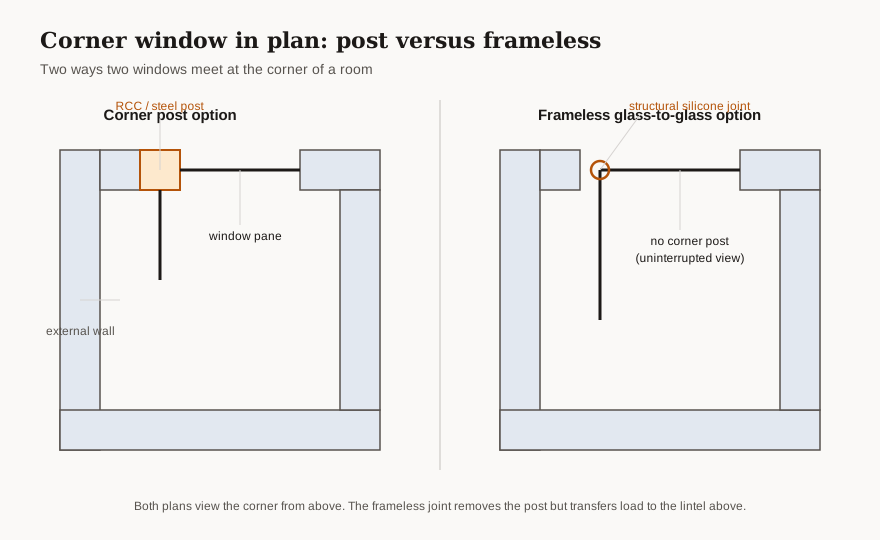
Route A — the corner post
A slim column (RCC or a steel section) sits exactly at the corner, and the two windows frame into it. The post carries the load from above; the windows are conventional. This is cheaper, simpler and far easier to make watertight, but the post interrupts the wraparound view — you see a vertical line at the corner.
Route B — the frameless glass-to-glass corner
Here the two glass panes meet directly at the corner with no post and no mullion — bonded with structural silicone in a clean butt joint. The view is uninterrupted; the corner seems to vanish. But the load that used to travel through the corner must now be transferred AROUND the opening — typically by a lintel or a beam above the window that spans to columns on either side, so the corner glass carries nothing structural. This needs a structural engineer's coordination at design stage; it cannot be retrofitted casually into a load-bearing wall.
| Aspect | Corner post | Frameless glass-to-glass |
|---|---|---|
| View at corner | Interrupted by post | Uninterrupted, dramatic |
| Structure | Post carries load | Lintel/beam transfers load around opening |
| Cost | Lower | Higher (engineering + structural glazing) |
| Waterproofing | Easier (post gives a fixing line) | Harder (silicone-bonded joint is the only barrier) |
| Best for | Most homes, budget-aware | Showcase living rooms, premium builds |
If you want the view to truly wrap, you want the frameless corner — and you must bring in a structural engineer before the slab above is poured.
Light from two directions
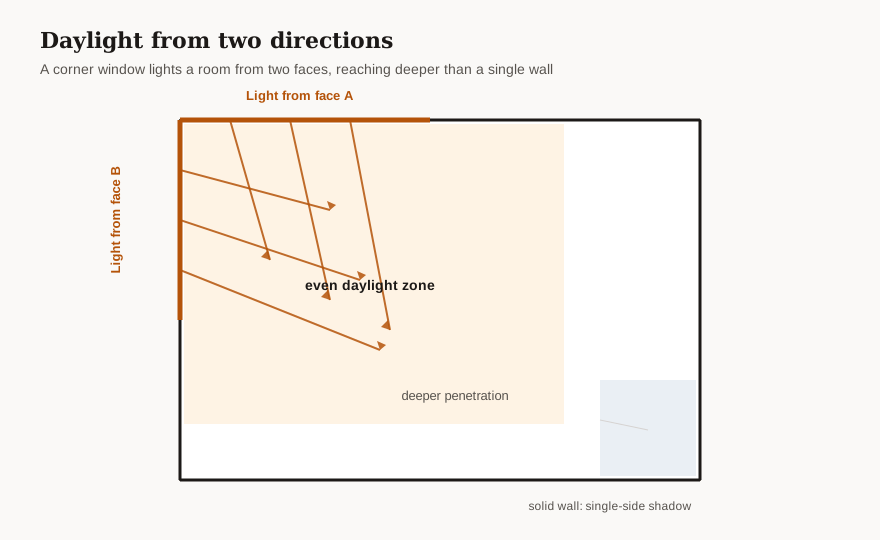
The quiet magic of a corner window is bi-directional daylight. Light entering from two faces fills a room far more evenly than a single window, washes out the harsh shadows you get from one-sided light, and makes the space feel larger and brighter through more of the day.
The flip side is that two glazed faces mean a higher window-to-wall ratio (WWR) at that corner. Under the Eco-Niwas Samhita 2018 (ENS) residential energy code, more glass tightens the rules: the wall envelope's RETV must stay at or below 15 W/m² in composite, hot-dry, warm-humid and temperate zones, and the code sets a minimum visible-light transmittance (VLT) for each WWR band (for example, VLT at least 0.27 up to WWR 0.30, dropping to about 0.16 around WWR 0.50). In short, the more glass you turn the corner with, the more the code demands low-heat, spectrally selective glazing to stay compliant.
Glare and heat at the corner
A corner facing the wrong way can become a heat and glare trap, because at certain times of day BOTH faces catch the sun. The fix is glazing and shading, not less glass.
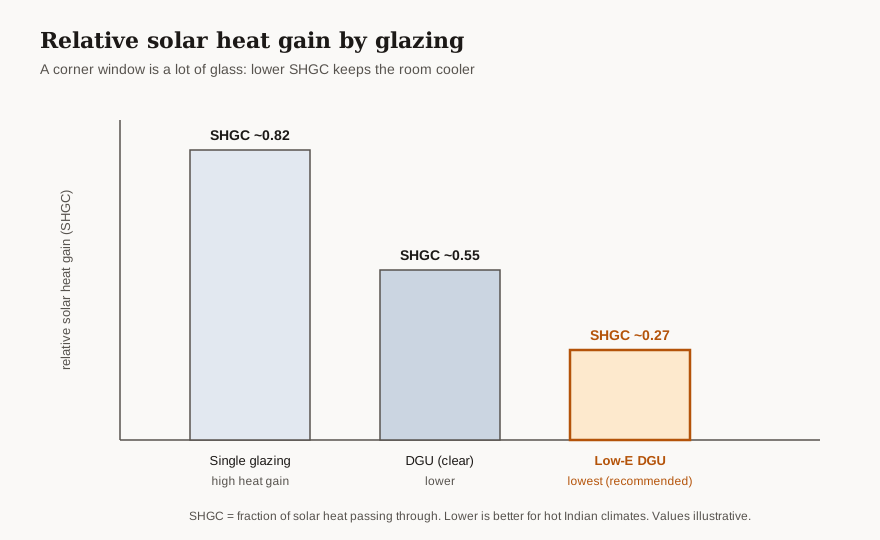
- Low-SHGC glazing is non-negotiable. Solar Heat Gain Coefficient (SHGC) measures how much solar heat the glass lets through — lower is better in Indian heat. A Double Glazed Unit (DGU) with a Low-E (low-emissivity) coating reflects radiant heat while keeping daylight, and cuts the cooling load dramatically.
- Toughened (tempered) glass is effectively mandatory at corners — large, often low panes need safety glass that breaks into blunt granules. For acoustics and UV control, laminated glass (with a PVB interlayer) is the upgrade.
- Shade the right face. A deep chajja, a fin, an overhang or a verandah on the harsher (typically west and south-west) face stops the heat before it hits the glass. Orient the wraparound to capture a north or east view where you can.
Waterproofing the joint
The corner joint is the make-or-break detail. Driving monsoon rain finds any weakness, and a frameless silicone-bonded joint is the only barrier between outside and in. Get this right:
- Use structural and weather-seal silicone rated for the joint; do not substitute ordinary sealant.
- Detail a continuous sill with a drip and a slope so water runs out, not back into the room.
- Insist on a water-tightness mock-up or test before sign-off, especially for frameless corners.
- Plan for maintenance access — silicone joints need inspection and resealing over the years.
Frame and glazing choices
| Frame material | Fit for corner windows | Indicative cost (sqft) |
|---|---|---|
| Aluminium (thermally broken) | Best for slim sightlines and large spans; bare aluminium conducts heat, so insist on a polyamide thermal break | ₹450–3,000 |
| uPVC (steel-reinforced) | Excellent insulation and value; needs steel reinforcement for the spans; per IS-grade systems | ₹250–1,500 |
| Wood (timber) | Warm, premium, classic; needs monsoon sealing and ongoing upkeep | ₹500–1,500+ |
For aluminium systems, look for compliance with IS 1948:2024 (aluminium doors, windows and ventilators), and have fixing and glazing done to IS 1081. Steel-reinforced uPVC suits most homes; thermally broken aluminium suits the largest, most minimal frameless corners.
Cost band — this is a premium window
Corner windows sit firmly in the high cost band. You are paying not only for the glazing but for the structural coordination, specialty fitting and (for frameless) structural-glazing skill.
| Cost component | Notes |
|---|---|
| Glazing and frames | Premium DGU/Low-E toughened pushes well into ₹900–1,500+/sqft on uPVC; architectural aluminium far higher |
| Structural work | Corner post, or lintel/beam transfer for the frameless route — designed by an engineer |
| Specialty fitting | Corner/specialty installation runs around ₹500–800/sqft versus roughly ₹200/sqft for standard windows |
| Frameless premium | Structural silicone glazing and water-tightness testing add a further premium |
Always treat these as indicative for June 2026 — confirm with itemised quotes from fabricators, and price the structural work separately with your engineer.
Pros and cons
| Pros | Cons |
|---|---|
| Wraparound, panoramic view | High cost (glazing plus structure) |
| Even daylight from two directions | Two glazed faces raise WWR — code demands low-SHGC glazing |
| Striking modern, contemporary look | Glare and heat risk if the corner faces the sun |
| No projection — stays flush, no extra footprint | Waterproofing the corner joint is critical and unforgiving |
| Frameless corner makes the structure disappear | Frameless needs engineer coordination at design stage; not a retrofit |
Choose this if / avoid if
Choose a corner window if:
- You have a corner with a genuine view to wrap — garden, skyline, greenery — across two faces.
- You want a contemporary, architectural statement and even, two-sided daylight.
- You are building new (or doing a deep structural renovation) so the lintel/beam transfer can be designed in.
- Your budget comfortably absorbs premium glazing plus structural work.
Avoid (or rethink) if:
- The corner faces harsh west or south-west sun with no room to shade it — heat and glare will dominate.
- You are retrofitting into a load-bearing wall without an engineer — the structural transfer is not optional.
- Budget is tight; a floor-to-ceiling window on one wall, or a single large picture window, gives view and light for less.
- You want a window seat and extra floor area — that is the job of a projecting bay or bow window.
Get the ventilation right too
A wraparound corner is mostly about light and view, not airflow — the panes are often fixed for a clean look. Pair the corner with operable casements or awnings nearby, and plan cross-ventilation across the room. Test your scheme with our cross-ventilation analyzer, and read natural light planning for Indian homes to make the most of that two-directional daylight without overheating.
References
- IS 1948 (aluminium doors, windows and ventilators), BIS: https://law.resource.org/pub/in/bis/S03/is.1948.1961.pdf
- IS 1081 (fixing and glazing of metal doors and windows), BIS: https://law.resource.org/pub/in/bis/S03/is.1081.1960.pdf
- BIS Guide for Using NBC 2016: https://www.bis.gov.in/wp-content/uploads/2022/08/Booklet-Guide-for-Using-NBC-2016.pdf
- Eco-Niwas Samhita 2018 (BEE/ECBC): https://ecbc.in/econiwas.html
- BEE ENS Residential Code (Building Envelope): https://beeindia.gov.in/sites/default/files/Residential%20Code_Building%20Envelope_Draft_rev4.pdf
- uPVC windows price per sq ft 2026 cost guide (Building and Interiors): https://buildingandinteriors.com/upvc-windows-price-per-sq-ft-india-2026-cost-guide/
Export this guide
Related Guides — Deep-dive reading
Floor-to-Ceiling Windows (India): Maximum Light, and the Heat Trade-Off
Full-height glazing for Indian homes — how to win the daylight and view without losing the energy code, comfort or safety.
Windows & GlazingAluminium Windows Guide (India): Slim, Strong, and the Thermal-Break Question
Why aluminium gives you the most glass and least frame, why bare metal conducts heat, and how a polyamide thermal break plus DGU fixes it.
Windows & GlazingBest Window Material for Hot Climates (India): Keeping 45-Degree Heat Out
For Delhi, Rajasthan, Vidarbha and Telangana homes: thermally-broken aluminium or heat-stabilised uPVC, paired with a low-SHGC Low-E DGU and external shading.
Windows & GlazingRelated Tools — Try Free
Cross-Ventilation Analyzer
Estimate airflow and air changes per hour (ACH) from room size, window areas, layout, and local wind — with NBC 2016 Part 8 compliance check.
Ventilation CalculatorBrise-Soleil Visualizer
Interactive horizontal-louvre cut-off angle calculator — sun altitude, louvre depth, and spacing inputs with a live shadow preview. Computes θ = arctan(spacing/depth) for façade shading, ECBC envelope compliance, hospital daylight design, and tropical sun-control detailing.
Sun Shading ToolWindow Material Comparison Tool
Compare uPVC, aluminium, wood, steel and composite windows on cost, life, upkeep and insulation.
Compare