

Pivot Windows Explained (India): The Dramatic, Easy-Clean Premium Window
A central-pivot sash that rotates open like a turnstile — large panes, an architectural statement, and glass you can clean on both faces from inside. The premium, easy-clean alternative to the everyday casement.
A pivot window is the showpiece of the window world. Instead of being hinged at one edge like a casement, the whole sash rotates on a spindle set at the centre of the frame — so when you open it, one half swings inward while the other half swings outward, the glass turning like a giant turnstile. The result is a single, dramatic moving pane that can be far larger than any side-hinged window, sweeps open in one gesture, and lets you reach and clean both faces of the glass from inside the room.
That theatre comes at a price, in both rupees and detailing. Pivot windows are harder to weather-seal, awkward to fit with insect screens, and their dual in-and-out swing eats clearance on both sides of the wall. This guide is the buyer's deep-dive: how the pivot mechanism works on each axis, why it cleans so easily, the trade-offs, the right frame and glazing, an indicative cost band, and a clear "choose this if / avoid this if" verdict for Indian homes.
If a casement is the reliable everyday window that seals tight and ventilates fully, the pivot is the architectural statement — large, sculptural, easy to clean, and proudly premium.
How a pivot window operates
The defining feature is the central pivot axis. A pair of pivot pins (the spindle) carries the weight of the sash at its midpoint and lets it rotate. Because the load sits on the centre, a pivot can hold a much larger and heavier glass pane than an edge-hinged window of the same hardware grade — which is exactly why architects reach for it when they want a single big moving pane.
There are two ways to set that axis, and they behave quite differently.
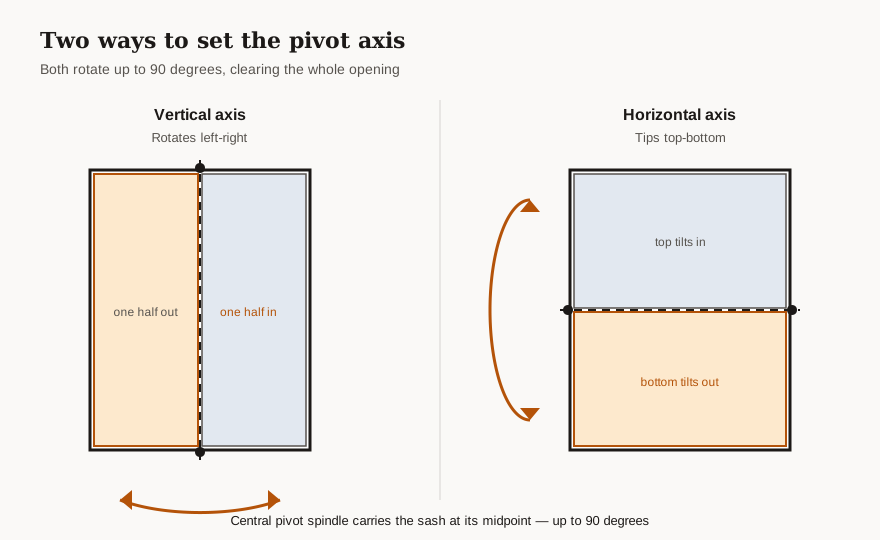
| Axis | How it rotates | Feel and best use |
|---|---|---|
| Vertical-axis pivot | Spins left-to-right around a vertical spindle, like a revolving door panel | Tall, dramatic; directs breeze sideways; the classic "statement" pivot for living and entrance walls |
| Horizontal-axis pivot | Tips top-to-bottom around a horizontal spindle | Top tilts in, bottom tilts out (or vice versa); sheds some rain off the upper face; good high on a wall |
In both cases the sash typically rotates up to about 90 degrees, and many systems let it lock at intermediate angles for trickle ventilation. Crucially, the whole opening can be cleared of glass — unlike a sliding window, where one sash always overlaps the other, a pivot moves the entire pane out of the daylight opening when fully turned.
Ventilation behaviour
Pivot windows ventilate well. Because the pane swings clear, you get close to the full opening area for airflow — better than a sliding window's roughly 50 percent, and broadly comparable to a casement. The vertical-axis type is especially good at scooping and deflecting a cross-breeze: angle the sash and it acts like a sail, steering air into the room. A horizontal-axis pivot set high on a wall helps stack ventilation, letting hot air escape near the ceiling.
For sizing the openable area, the working rule from NBC 2016 is an openable inlet of at least one-tenth (10 percent) of the room's floor area for habitable rooms — always check your local bye-laws, as some demand window area of 1/7 to 1/8 of floor for light and ventilation combined. IS 3362 covers natural ventilation of residential buildings if you want the underlying basis.
The headline benefit: cleaning both faces from inside
This is the pivot's quiet superpower and the reason it earns a place in high-rise apartments. When you rotate the sash to 90 degrees (or more, on a reversible system), the outer face of the glass swings into the room, so you can wipe both sides standing safely indoors — no leaning out of a third-floor window, no hiring a cradle, no risk.
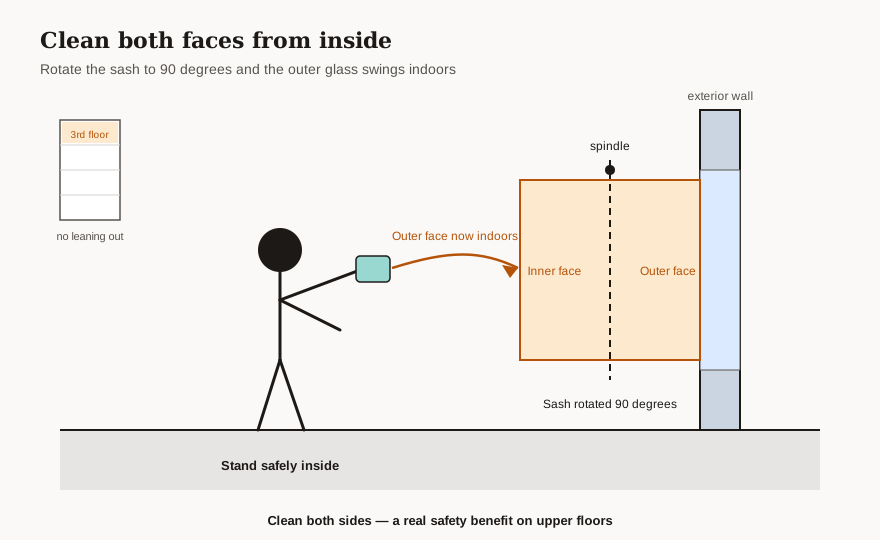
For Indian cities thick with construction dust, monsoon grime and pigeon traffic, glass that you can keep crystal-clear from your own floor is a genuine, recurring convenience — and for upper floors it is a real safety feature.
The trade-offs you must plan for
A pivot window asks for careful detailing. None of these are deal-breakers, but you should know them before you commit.
| Trade-off | What it means in practice |
|---|---|
| Harder to weather-seal | The seal must wrap a rotating sash, not press flat against a fixed stop. Quality hardware and gaskets matter; budget systems can let in driving monsoon rain |
| Insect screens are awkward | Because the sash sweeps through the opening on both sides, a fixed mesh is difficult; you usually need a roller or magnetic screen, or accept that screening is limited |
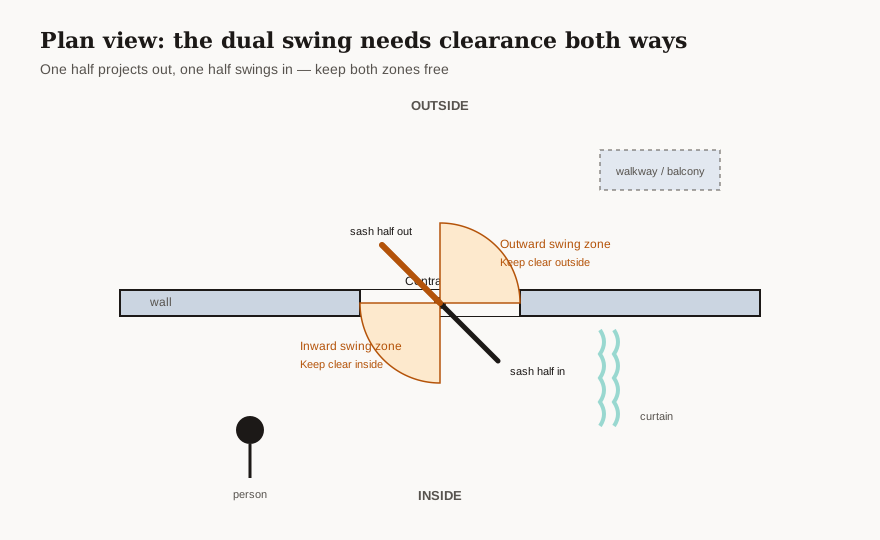
| Dual swing intrudes both ways | Part of the sash projects outward (a hazard over a walkway or balcony edge) and part swings inward (it can foul curtains, furniture or a person standing close) |
| Premium cost | Specialist pivot hardware and large glass push this into the high band |
| Not fully open-able like a door | The centre spindle means the opening is split; you cannot walk through it the way you can a French or sliding door |
Plan the clearance early. A pivot needs free air on both faces of the wall — keep it away from tight walkways outside and from furniture or door swings inside.
Frame material fit
Pivot windows live or die by their hardware and frame stiffness, because a big sash spinning on a central pin needs a rigid, true frame.
- Aluminium (thermally broken) — the natural home for pivots. Slim sightlines and high strength suit the large panes pivots are chosen for. Insist on a thermal break (polyamide) so the bare metal does not conduct heat. Indicative ₹450–950/sqft for powder-coated systems, with premium architectural pivot systems running well above that. IS 1948:2024 is the specification to quote for aluminium windows.
- uPVC — possible and lower-maintenance, but large pivot sashes need steel reinforcement inside the profile to stay true. Best for medium-size pivots rather than the very largest panes. Indicative ₹600–1,500/sqft for premium DGU work.
- Wood (timber) — beautiful for a heritage or luxury pivot and historically the original pivot material, but heavy and demanding; it needs sealing against the monsoon and costs ₹500–1,500/sqft and up, with higher maintenance over a decade.
Whatever the frame, the pivot hardware grade is non-negotiable — this is where a cheap window leaks and sags.
Glazing advice
Pivots are usually large, so the glazing choices that matter for big windows apply doubly here.
| Glazing | Why it matters for a pivot |
|---|---|
| DGU (double glazed unit) | Two panes plus a spacer; the thermal and acoustic default for a large pane facing the outdoors |
| Low-E coating | Reflects radiant heat and cuts solar heat gain while keeping daylight — essential for Indian sun on a big glass area |
| Toughened (tempered) | Safety glass that shatters into blunt granules; effectively mandatory for a large pane at or near floor level |
| Laminated | A PVB interlayer holds the glass together if broken — best security and acoustics, worth it on a ground-floor statement pivot |
A pivot raises the window-to-wall ratio (WWR) of a room sharply. Under Eco-Niwas Samhita 2018, more glass demands lower-SHGC, spectrally selective glazing to keep the envelope's RETV at or below 15 W/m squared, and the code sets a minimum visible-light transmittance for each WWR band. In plain terms: the bigger and more dramatic your pivot, the more you need good low-SHGC DGU plus shading to stay both comfortable and compliant.
Cost band
Pivot windows sit firmly in the high cost band — the combination of specialist rotating hardware and large, often safety-rated glass does that.
| Item | Indicative June 2026 |
|---|---|
| Aluminium pivot system (powder-coated, DGU) | ₹450–950/sqft, premium architectural systems higher |
| uPVC pivot (premium, DGU, steel-reinforced) | ₹600–1,500/sqft+ |
| Timber pivot (heritage/luxury) | ₹500–1,500/sqft+ |
| Specialty fitting (large/heavy sash) | ₹500–800/sqft on top |
All figures are indicative — confirm with itemised quotes from fabricators, since pivot pricing swings heavily with pane size, hardware brand and glazing spec.
Pros and cons
| Pros | Cons |
|---|---|
| Allows very large, dramatic single panes | High cost; premium hardware |
| Striking architectural statement | Harder to weather-seal than a casement |
| Clean both glass faces from inside (safe on upper floors) | Insect screening is awkward |
| Good ventilation; can deflect a breeze and aid stack airflow | Swing intrudes both inside and outside |
| Whole opening clears (no overlapping sash) | Not a walk-through opening; centre spindle splits the opening |
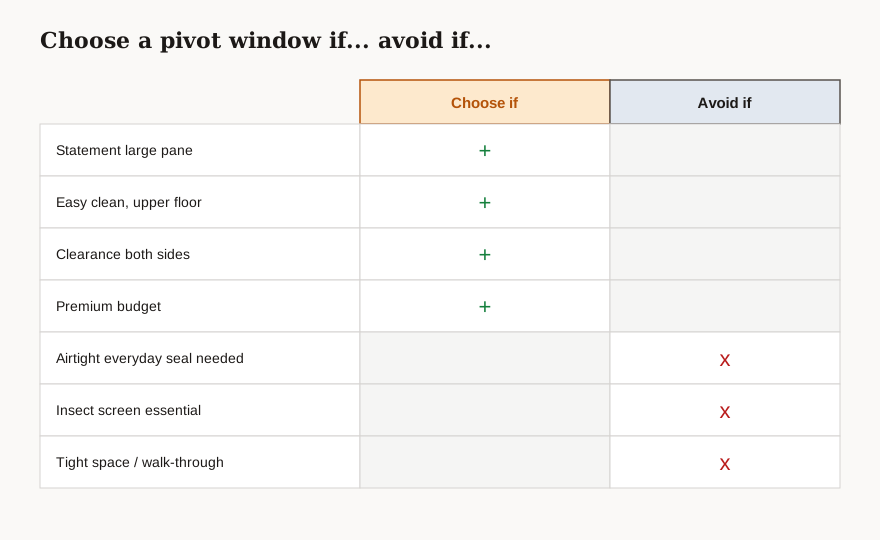
Choose this if / avoid this if
Choose a pivot window if:
- You want a statement window — a large, sculptural pane that becomes the focus of a living room, stairwell or entrance wall.
- The window is on an upper floor and you value cleaning both glass faces safely from inside.
- You have clearance on both sides of the wall and no walkway directly outside.
- You have the budget for premium hardware and large glazing and will not cut corners on the seal.
Avoid a pivot window if:
- You need an airtight everyday window that seals reliably against driving rain on a tight budget — a casement does that better and cheaper.
- Insect screens are essential (kitchens, mosquito-heavy areas) and you do not want to manage a roller or magnetic screen.
- The opening is in a tight apartment where swing clearance inside or outside is scarce — a sliding window is the space-saving answer.
- You want the glass to walk through to a balcony — choose a French or sliding door instead.
How this guide relates to our others
This is the dedicated deep-dive for the pivot window. For the bigger picture and to compare all eighteen window types side by side, start at our pillar, Types of Home Windows in India. For a quick combined intro to both windows and doors, see Windows and Doors Design in India — this pivot guide goes far deeper on operation, sealing and cost than that overview does.
The window most people weigh against a pivot is the casement. Read Casement Windows in India: the casement is the airtight, everyday, outward-opening choice that seals tight and screens easily, while the pivot is the premium, large-pane, easy-clean statement. Pick the casement for reliable daily ventilation and tight budgets; pick the pivot when drama, big glass and clean-from-inside convenience are the goal. To size and balance the airflow either window delivers, try our Cross-Ventilation Analyzer.
References
- IS 1948 (aluminium doors, windows and ventilators), BIS: https://law.resource.org/pub/in/bis/S03/is.1948.1961.pdf
- IS 3362 (natural ventilation of residential buildings), BIS: https://law.resource.org/pub/in/bis/S03/is.3362.1977.pdf
- BIS Guide for Using NBC 2016: https://www.bis.gov.in/wp-content/uploads/2022/08/Booklet-Guide-for-Using-NBC-2016.pdf
- Eco-Niwas Samhita 2018 (BEE/ECBC): https://ecbc.in/econiwas.html
- uPVC windows price per sq ft 2026 (Building and Interiors): https://buildingandinteriors.com/upvc-windows-price-per-sq-ft-india-2026-cost-guide/
Export this guide
Related Guides — Deep-dive reading
Floor-to-Ceiling Windows (India): Maximum Light, and the Heat Trade-Off
Full-height glazing for Indian homes — how to win the daylight and view without losing the energy code, comfort or safety.
Windows & GlazingAwning Windows Guide (India): Rain-Proof Ventilation for Kitchens and Baths
Top-hinged, outward-opening windows that shed rain and breathe high on the wall — the monsoon-smart choice for baths, kitchens and over picture windows.
Windows & GlazingSliding Windows Explained (India): The Apartment Favourite, Costed and Compared
How sliding windows operate, why they ventilate only half their opening, what uPVC sliders cost in rupees per square foot, and exactly when to choose one over a casement or bi-fold.
Windows & GlazingRelated Tools — Try Free
Cross-Ventilation Analyzer
Estimate airflow and air changes per hour (ACH) from room size, window areas, layout, and local wind — with NBC 2016 Part 8 compliance check.
Ventilation CalculatorFuture Home Comfort Score
Score your home 0 to 100 on daylight, ventilation, thermal and acoustic comfort and find the weak link.
Window ToolWindow Cleaning Cost Calculator
Estimate professional window cleaning cost per visit and per year by access and frequency.
Window Calculator