
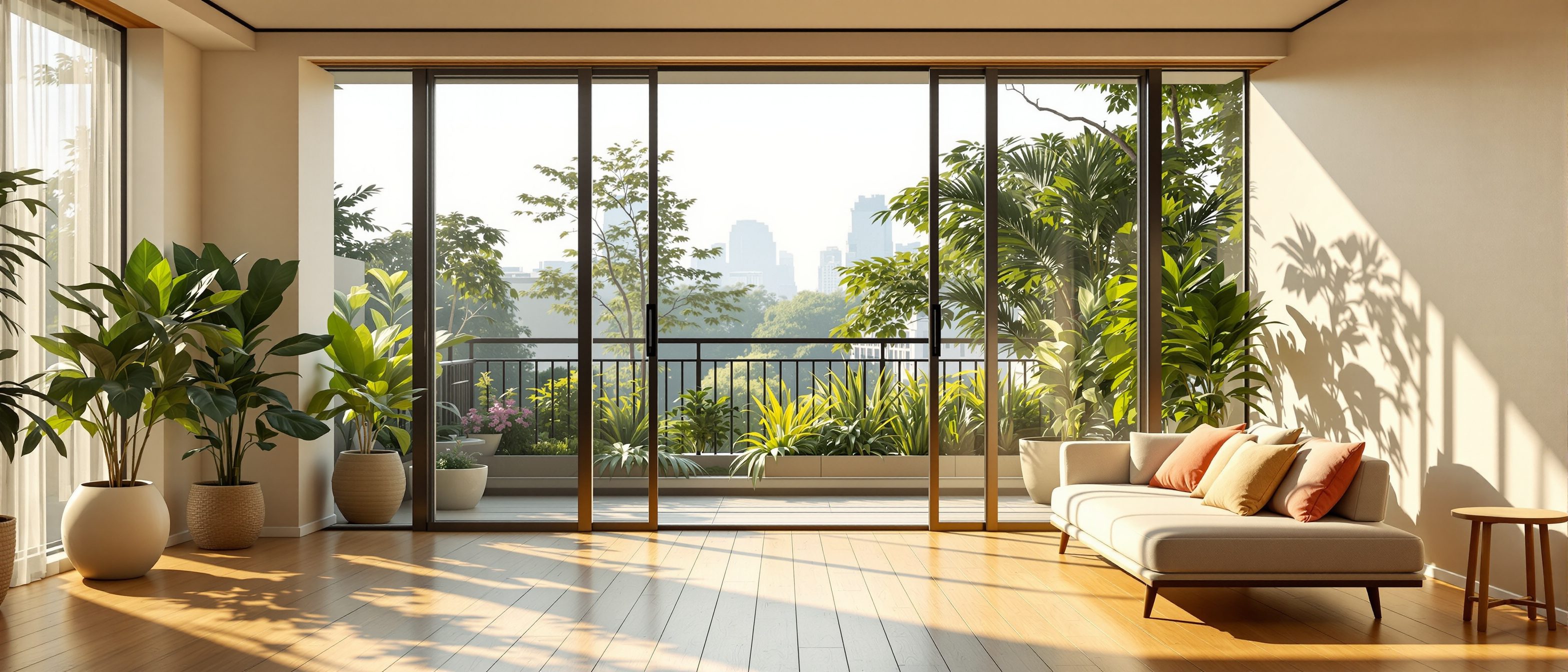
Floor-to-Ceiling Windows (India): Maximum Light, and the Heat Trade-Off
Full-height glazing for Indian homes — how to win the daylight and view without losing the energy code, comfort or safety.
Nothing changes a room the way a wall of glass does. A floor-to-ceiling window dissolves the line between inside and out, pours daylight deep into the plan, and makes even a modest flat feel twice its size. It is the single most aspirational fenestration choice in Indian homes today.
It is also the one most likely to backfire. Full-height glazing is a heat-gain machine in a country where the sun is the enemy for nine months of the year, and India's residential energy code now actively pushes back against large unshaded glass. Done right, a floor-to-ceiling window is breathtaking. Done wrong, it is a greenhouse you pay to cool. This guide is the buyer's deep-dive on getting it right.
A floor-to-ceiling window is a full-height wall of glass. A picture window is a single framed pane that frames one view; a glass curtain-wall facade is a structural building skin. This guide is about one room's glazed wall — the homeowner-scale decision.
What "floor-to-ceiling" actually means
Full-height glazing runs from finished floor to ceiling (or to a structural beam just below it), as a single composition. It can be:
- Fixed — sealed panes for maximum view and the tightest seal, with no ventilation of their own.
- Sliding — large sashes on tracks, the most common operable choice in Indian apartments because they need no swing clearance (see our sliding window deep-dive).
- A mix — fixed picture panes flanking an operable sliding or casement bay, which is usually the smartest layout: maximum glass where you want the view, real airflow where you need it.
Because it covers a whole wall, this is not a "window" decision so much as a building-envelope decision — which is exactly why the energy code cares so much about it.
The big payoff: light, view and a sense of space
| Benefit | Why full-height beats a normal window |
|---|---|
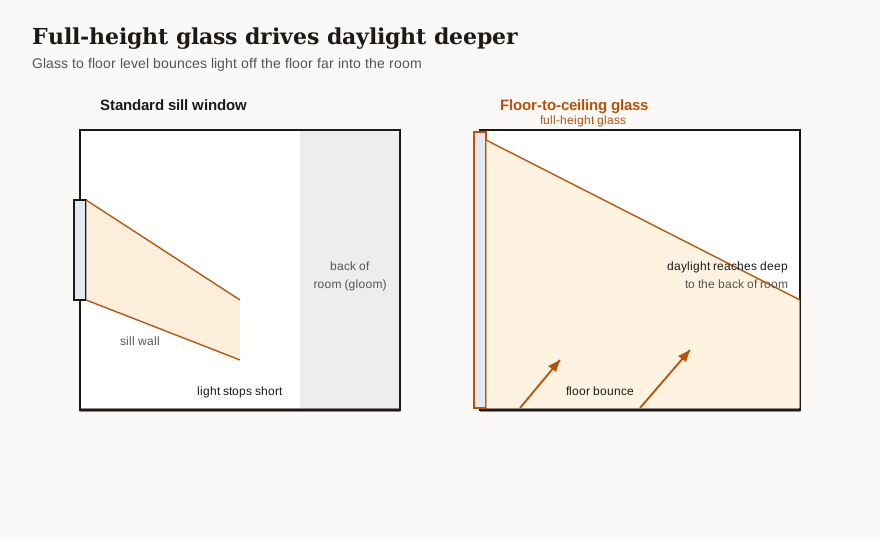
| Daylight | Glass to floor level bounces light off the floor deep into the room — far less back-of-room gloom |
| View | An uninterrupted vista; nature, skyline or garden becomes part of the room |
| Sense of space | The eye reads outdoor space as part of the room, so even a 3 BHK flat feels larger |
| Indoor-outdoor flow | Sliding versions open to a balcony, deck or garden for true threshold-free living |
For getting daylight to do real work without the heat penalty, pair this guide with natural light planning for Indian homes — placement, orientation and room depth matter as much as glass area.
The big India trade-off: heat, glare and the energy code
Here is the uncomfortable truth. Every square foot of extra glass is a square foot that lets solar heat in. A west- or south-facing wall of clear glass can turn a living room into an oven by 4 pm, drive up air-conditioning bills, fade your furniture, and throw harsh glare across screens and seating.
This is why Eco-Niwas Samhita 2018 (the BEE residential energy code) governs large glazing so directly. The mechanism works through three numbers you should know before you sign a quote:
- WWR (window-to-wall ratio) — non-opaque area divided by external wall area. A full-height window pushes WWR up sharply.
- SHGC (solar heat gain coefficient) — how much solar heat the glass lets through. Lower is cooler.
- RETV (Residential Envelope Transmittance Value) — the heat-transmittance of your wall envelope (excluding roof), which the code requires to be 15 W/m² or lower for composite, hot-dry, warm-humid and temperate zones. Windows are the single biggest lever on RETV.
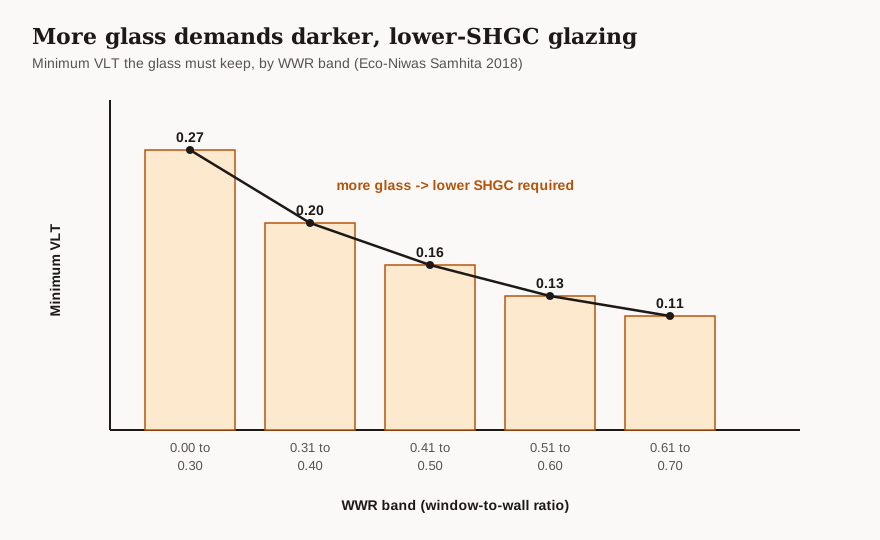
The logic is simple: the more glass you have, the lower the SHGC the code forces you to use. A wall of clear single glazing simply cannot comply.
| WWR band | Minimum VLT the glass must keep |
|---|---|
| 0.00 to 0.30 | 0.27 |
| 0.31 to 0.40 | 0.20 |
| 0.41 to 0.50 | 0.16 |
| 0.51 to 0.60 | 0.13 |
| 0.61 to 0.70 | 0.11 |
(VLT is visible light transmittance — how much daylight the glass passes. As you add glass, the code lets the glass be darker to keep heat out, but never so dark that the room loses usable light.)
What this means for your glass spec
To make a full-height window comply and actually feel comfortable, you almost always need:
- A DGU (double glazed unit) — two panes with an air or argon gap, for thermal and acoustic insulation.
- A Low-E (low-emissivity) or spectrally selective coating — reflects radiant solar heat while keeping daylight, the key to low SHGC without a dark cave.
- Toughened or laminated safety glass — non-negotiable at floor level (more on safety below).
A clear single pane is the wrong answer for a wall of glass anywhere in India.
Shading: the part everyone forgets
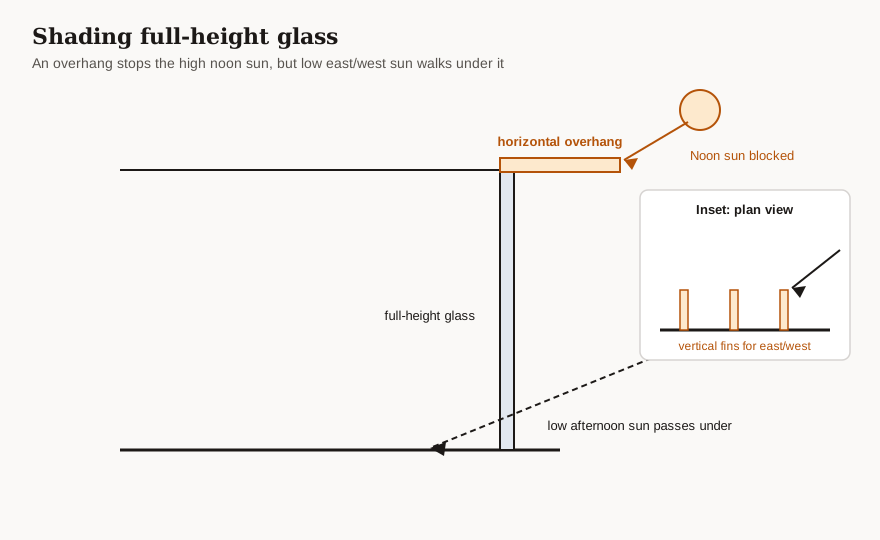
Glass spec alone is not enough. The cheapest heat you can stop is the heat that never hits the glass. External shading — an overhang, a deep balcony slab, a brise-soleil fin, vertical louvres, or even a pergola — does far more than any internal curtain, because it blocks the sun before it passes through.
For full-height glass the geometry is unforgiving: a normal eyebrow overhang shades the top of the glass but the low afternoon sun walks right under it to the floor. South glazing wants a horizontal overhang sized to the sun's high midday angle; east and west glass needs vertical fins or louvres because the sun there is low and side-on. Internal blinds and reflective films are the last line of defence, not the first.
Safety, privacy and cleaning
Safety. Glass that reaches the floor is glass people walk into and children lean on. Use toughened glass (4 to 5 times stronger, shatters into blunt granules) at minimum, and laminated glass (a PVB interlayer holds shards in place when broken) where there is a fall risk — any opening above ground level. Add manifestation (a visible band, frit or pattern at eye and knee height) so people see the glass, and consider a low rail or grille for child safety on upper floors. This is a code-and-conscience item, not an upsell.
Privacy. A glass wall at street or neighbour level shows everything. Plan for sheer-plus-blackout layered drapes, motorised blinds, switchable (electrochromic) glass for premium budgets, or simply orient the wall toward a garden or open view rather than the building opposite.
Cleaning. A two-storey or hard-to-reach pane is a real maintenance cost — plan access (an openable section, a walkable balcony, or professional cleaning) before you build, not after.
Frame and material fit
| Frame | Fit for full-height glazing |
|---|---|
| Aluminium (thermal-break) | The natural choice — strongest, slimmest sightlines for the biggest spans and most glass; insist on a polyamide thermal break or bare aluminium will conduct heat straight in |
| uPVC (steel-reinforced) | Excellent thermal and acoustic value; steel reinforcement carries large spans; best all-round value for most homes |
| Wood | Beautiful and warm but heavy, costlier, and needs sealing against the monsoon; reserve for heritage or luxury |
Aluminium windows should conform to IS 1948:2024; fixing and glazing of metal frames follows IS 1081.
Cost band
Full-height glazing sits firmly in the high band — it combines large glass area, performance glazing, strong frames and specialist installation.
| Component | Indicative June 2026 (confirm with itemised quotes) |
|---|---|
| uPVC, performance DGU | ₹900 to ₹1,500+ per sqft |
| Aluminium architectural system, thermal-break + DGU | ₹950 to ₹3,000 per sqft |
| Toughened/laminated upgrade | adds to the glass line item |
| Specialty fixing (large sliding, structural) | ₹500 to ₹800 per sqft |
These are indicative and vary widely with city, brand, size and glazing — always get itemised quotes from fabricators.
Pros and cons
| Pros | Cons |
|---|---|
| Maximum daylight and view | Highest heat gain of any window type |
| Dramatic sense of space | Glare and furniture fade if unshaded |
| Indoor-outdoor flow (sliding) | Forces low-SHGC DGU/Low-E to meet the code |
| A genuine wow factor and resale appeal | Safety glass, manifestation and shading add cost |
| Strong fit with modern interiors | Privacy and cleaning need real planning |
Choose this if / avoid this if
Choose floor-to-ceiling glazing if you have a view worth framing (garden, skyline, greenery), a north or well-shaded elevation, the budget for performance DGU plus external shading, and you want a room that feels open and luminous.
Avoid it if the wall faces unshaded west or south sun with no overhang, you are tight on budget, the outlook is a neighbour's wall, or comfort and energy bills matter more than the wow factor — a generous picture window plus operable windows will give you most of the view at a fraction of the heat.
Where this fits in the bigger picture
This guide is a single-type deep-dive. For the full menu of window types and how to choose between them, start at the pillar, types of home windows in India. For the quick combined windows-and-doors primer, see windows and doors design in India — this guide goes much deeper on the heat, code and safety specifics of full-height glass than that overview can. And before you commit a whole wall to glass, run the orientation logic in natural light planning for Indian homes.
References
- Eco-Niwas Samhita 2018 (BEE/ECBC residential code): https://ecbc.in/econiwas.html
- BEE ENS Residential Code, Building Envelope: https://beeindia.gov.in/sites/default/files/Residential%20Code_Building%20Envelope_Draft_rev4.pdf
- IS 1948 (aluminium doors, windows and ventilators), BIS: https://law.resource.org/pub/in/bis/S03/is.1948.1961.pdf
- IS 1081 (fixing and glazing of metal doors and windows): https://law.resource.org/pub/in/bis/S03/is.1081.1960.pdf
- BIS Guide for Using NBC 2016: https://www.bis.gov.in/wp-content/uploads/2022/08/Booklet-Guide-for-Using-NBC-2016.pdf
- uPVC windows price per sq ft 2026 (Building and Interiors): https://buildingandinteriors.com/upvc-windows-price-per-sq-ft-india-2026-cost-guide/
Export this guide
Related Guides — Deep-dive reading
Energy-Efficient Facades in India: How the Building Skin Cuts Your Cooling, Heating & Lighting Bills
How a building facade drives cooling, heating and lighting energy in India, the three levers of solar-heat-gain control, insulation and daylighting, U-value, SHGC, VLT and WWR in plain terms, ECBC and Eco-Niwas expectations, and real Indian green buildings.
Building FacadesBrise-Soleil, Louvre and Fin Facades in India: Fixed External Sun-Shading That Beats the Heat
A plain-English guide to fixed external shading — horizontal louvres, vertical fins, eggcrate, baguettes and chajjas — and how to size and orient them by facade direction so they actually stop the sun before it hits your glass.
Building FacadesFixed and Picture Windows (India): Maximum View, Minimum Maintenance
Why a picture window is just a large fixed pane, the glazing maths that big glass demands, and the operable partner it must always have.
Windows & GlazingRelated Tools — Try Free
Brise-Soleil Visualizer
Interactive horizontal-louvre cut-off angle calculator — sun altitude, louvre depth, and spacing inputs with a live shadow preview. Computes θ = arctan(spacing/depth) for façade shading, ECBC envelope compliance, hospital daylight design, and tropical sun-control detailing.
Sun Shading ToolCross-Ventilation Analyzer
Estimate airflow and air changes per hour (ACH) from room size, window areas, layout, and local wind — with NBC 2016 Part 8 compliance check.
Ventilation CalculatorWindow Orientation Planner
Pick the best window type, glass and shading by wall direction — north, east, south and west.
Window Tool