
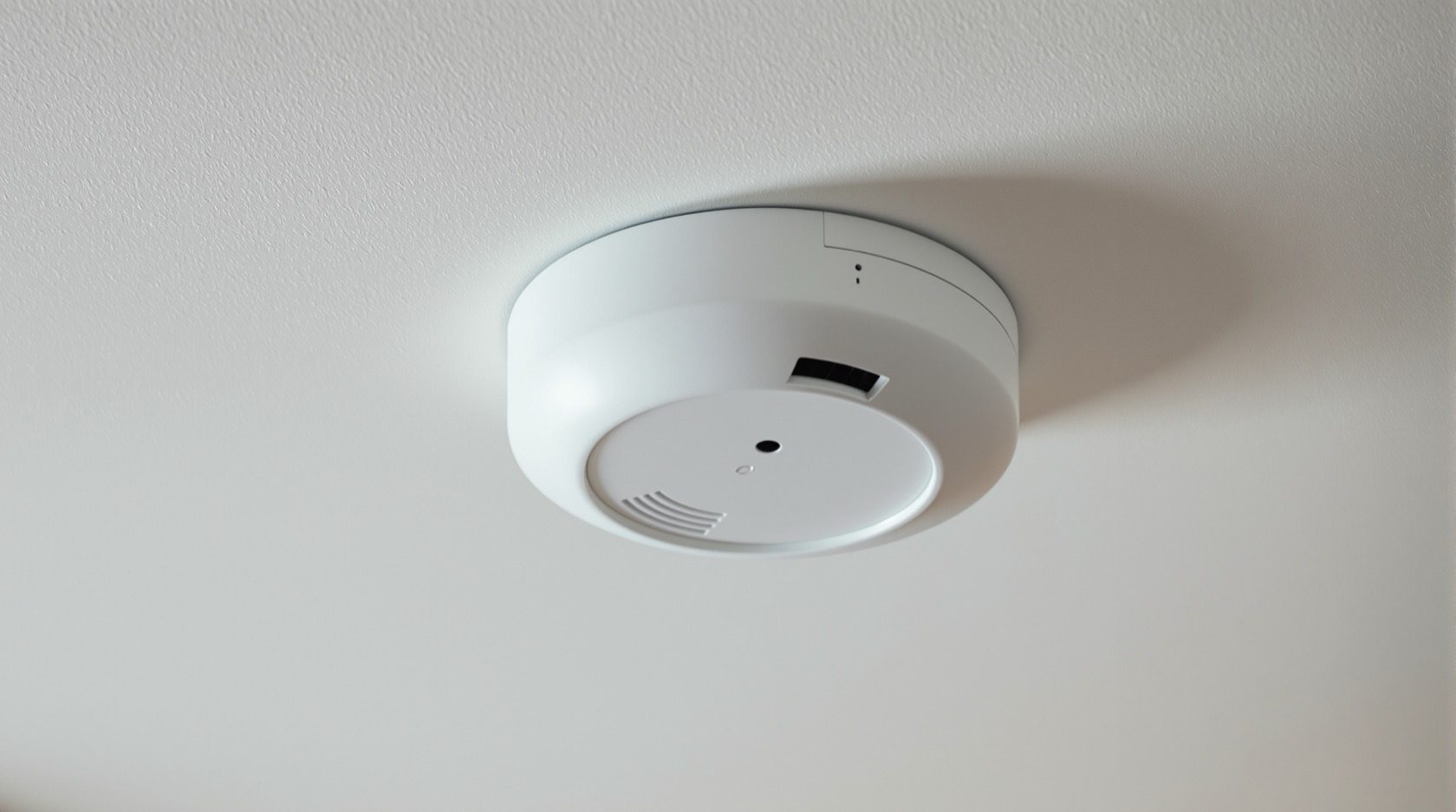
Smoke Detectors in India (2026): Photoelectric vs Ionisation, Placement & Testing
The single most important fire-safety device every Indian home should own - how smoke detection works, which type to buy, exactly where to fit it, and how to keep it alive for a decade.
If you buy one fire-safety device for your home, make it a smoke detector. Everything else in a home fire-safety kit - the extinguisher, the fire blanket, the escape plan - only works if you are awake and know a fire has started. A fire at 2am fills a sleeping house with smoke long before heat or noise ever reaches the bedroom, and it is the smoke, not the flame, that kills most people in a house fire. Smoke detectors are the device that catches that smoke early and screams the household awake while there is still time to walk out. They cost very little, most Indian homes still have none, and fitting them is a job you can do yourself this weekend.
This is the smoke-detector chapter of Studio Matrx's fire-safety library, and it sits under the complete guide to fire safety in India. It goes deeper than the alarm section of the whole-house home fire-safety guide, which remains the right place to start for the escape plan, the fire classes and the extinguisher. Here we stay on the ceiling: how detection actually works, which type to buy, where each one goes, and how to keep it alive for ten years.
Scope and safety - read this first. A standalone smoke alarm you buy off the shelf and screw to the ceiling yourself is entirely homeowner-doable, and you should do it today. But a building-wide automatic fire detection and alarm system - the kind with a control panel, call points and sounders wired through an apartment tower, office or school - is a statutory system designed, installed and certified by a licensed fire-alarm contractor to IS 2189 : 2026 and tied to the building's Fire NOC. This guide covers the alarm you own; it is educational guidance, not legal advice or a substitute for a licensed professional. And one rule overrides everything below: when an alarm sounds, do not investigate - get everyone out and call the fire brigade on 101 or 112.
Why smoke, and why early, is the whole game
A fire kills mostly by smoke and toxic gas, and it does so fast. A smouldering sofa or a shorted wire in a false ceiling can pour out choking smoke for many minutes before it breaks into open flame - and long before it produces enough heat to wake anyone. By the time a sleeping person smells smoke, they may already be too disoriented to find the door. The entire value of a smoke detector is that it senses that early smoke and raises the alarm minutes sooner than a human ever would, turning those minutes into a safe, orderly walk out of the house.
That head start is why detection is the first and cheapest pillar of fire safety, and why "we would smell it" is a dangerous myth - people asleep do not smell smoke, they are overcome by it. A working alarm on the ceiling is the difference.
How the two smoke sensors work
There are two ways a household smoke detector senses smoke, and the difference matters when you choose one.
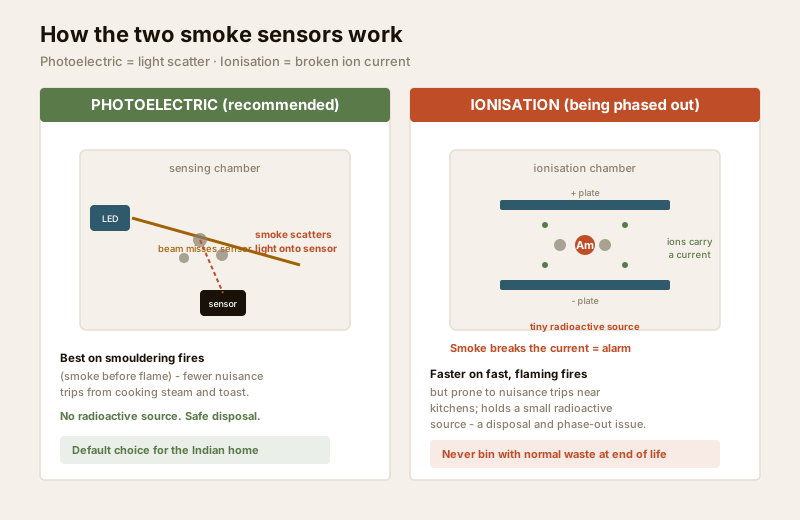
Photoelectric (optical) - the recommended default
A photoelectric detector shines a small light beam inside a dark sensing chamber, angled so the beam normally misses a light sensor sitting off to the side. When smoke drifts into the chamber, its particles scatter the light onto the sensor, and the alarm sounds. Photoelectric sensing is best at catching the slow, smoky, smouldering fires that start most fatal house fires - a cigarette in a sofa, an overloaded socket cooking away behind furniture - and it is far less prone to nuisance alarms from cooking steam or a slice of burnt toast. It holds no radioactive material, so it is simpler to dispose of at end of life. For the Indian home, a photoelectric smoke alarm is the sensible default choice.
Ionisation - faster on flames, but being phased out
An ionisation detector uses a tiny radioactive source to ionise the air between two charged plates, creating a small steady electric current. Smoke entering the chamber disrupts the ions and breaks that current, triggering the alarm. Ionisation units react a little faster to fast, flaming fires with little visible smoke - but they are markedly more prone to nuisance trips near kitchens, and they contain a small radioactive source (typically americium), which raises a disposal problem and is why they are being phased out in many markets in favour of photoelectric. Do not throw a spent ionisation alarm in with normal household waste; follow the manufacturer's take-back or e-waste route.
| Feature | Photoelectric (optical) | Ionisation |
|---|---|---|
| Best at detecting | Smouldering, smoky fires (most fatal home fires) | Fast, flaming fires with little smoke |
| Nuisance trips (cooking, steam) | Fewer | More - a common reason people wrongly disable them |
| Radioactive source | None | Yes, a tiny source - disposal / phase-out issue |
| End-of-life disposal | Ordinary e-waste route | Manufacturer take-back / e-waste, never normal bin |
| Homeowner recommendation | Recommended default for Indian homes | Being phased out - choose photoelectric instead |
If you want both strengths, buy a dual-sensor alarm (photoelectric plus a second sensing method in one unit) or, better, simply fit good photoelectric alarms throughout - the smouldering-fire advantage matters more in a real home.
A word on optical beam detectors
For very large volumes - a warehouse, an atrium, a temple hall, a big auditorium - a single ceiling point sensor cannot cover the space, and designers use an optical beam smoke detector: a projector at one wall shoots an infrared beam across the space to a receiver (or a reflector), and rising smoke that crosses the beam dims it and triggers the alarm. These are part of a professionally designed system to IS 2189 : 2026, not a home purchase - mentioned here only so you recognise them. For any large or public building, that whole system belongs to a licensed fire-alarm contractor and the commercial-building security guidance.
Where to place a smoke detector
A smoke alarm on the wrong part of the ceiling either misses the fire or nuisance-trips until someone silences it. Placement is where most home installations go wrong, so get this right.
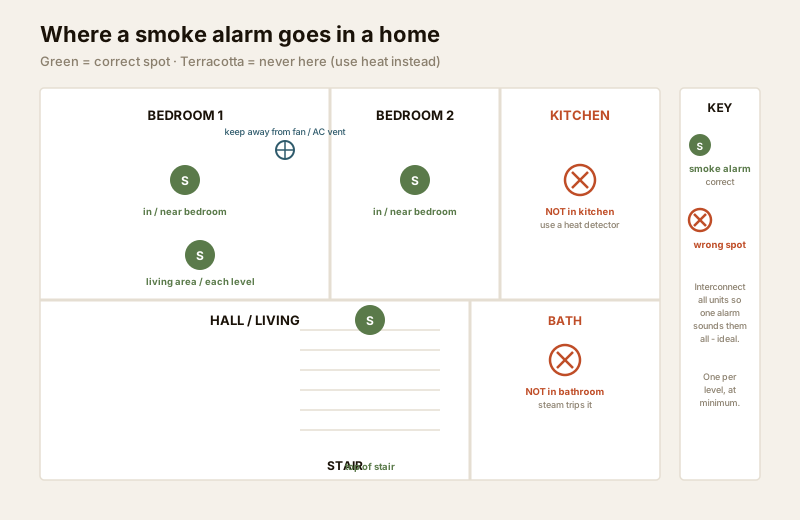
Put an alarm:
- Inside or just outside every bedroom. Fires that kill happen while people sleep, and a closed bedroom door slows smoke - so the alarm needs to be where sleepers will hear it. An alarm in the passage outside the bedrooms, plus one inside any room where someone sleeps with the door shut, is the core of a home system.
- On every level of the house. A fire that starts downstairs must wake people upstairs, so fit at least one alarm per floor, including any mezzanine or barsati.
- At the top of the staircase. Stairwells act as chimneys that carry smoke up through the house; an alarm at the top of the stair catches that early rising smoke.
- In the main living area and any room with a lot of electrical load or a fireplace.
Never put a smoke alarm:
- Inside the kitchen. Cooking smoke, oil vapour and steam will trip a smoke alarm constantly - and a nuisance-tripping alarm is one someone eventually disables, which is the real danger. Protect the kitchen with a heat detector instead, which ignores smoke and steam and responds to the temperature of a genuine fire. See the companion heat detectors guide and the kitchen fire-safety guide.
- Inside a bathroom. Shower steam reads as smoke and trips the alarm.
- Right beside a ceiling fan or an AC vent or supply grille. Moving air blows smoke away from the sensor and delays or prevents detection - keep alarms well clear of fans and vents.
- Tucked into a corner where wall meets ceiling. That pocket of dead air is the last place smoke reaches; keep ceiling-mounted alarms out toward the open ceiling, and follow the spacing on the product's instructions.
Interconnection - the upgrade worth making
An ordinary standalone alarm sounds only itself. If a fire starts in the ground-floor kitchen and the only alarm that sounds is the one downstairs, the family asleep on the first floor may never hear it. Interconnected alarms fix this: when any one alarm detects smoke, all of them sound together, so a fire anywhere wakes everyone everywhere. Interconnection can be wired (during construction or a rewire) or, more practically for an existing Indian home, wireless - a set of radio-linked alarms that talk to each other with no cabling. Interconnected alarms are the ideal for a multi-room or multi-storey home and are still rare in Indian houses; if you are buying a set, buying an interconnected one is the single best upgrade.
Mains versus battery - and why backup matters in India
| Power type | How it works | Best for | The India caveat |
|---|---|---|---|
| Battery only | Runs entirely on a replaceable or sealed 10-year cell | Renters, quick retrofit, any home with no wiring provision | You must respond to the low-battery chirp - never ignore it |
| Sealed 10-year battery | Non-removable lithium cell lasts the unit's life | Homeowners who want fit-and-forget with no annual battery swap | Whole unit is replaced at end of life |
| Mains-powered with battery backup | Wired to house supply, with a backup cell inside | New builds and rewires; most reliable long-term | Frequent Indian power cuts mean the backup battery is essential - a mains-only alarm is dark during a load-shed |
The Indian-specific point is simple: because power cuts are routine, any mains-powered alarm must also keep a backup battery, so it still protects the house during a load-shed - which is often exactly when candles, inverters and generators raise the fire risk. A sealed 10-year battery unit sidesteps the annual battery change entirely and is a good choice for most homes.
Test it, maintain it, replace it
An alarm on the ceiling is not protection - a working alarm is. A smoke detector is a machine with a lifespan, and it needs a few minutes of attention on a simple schedule.
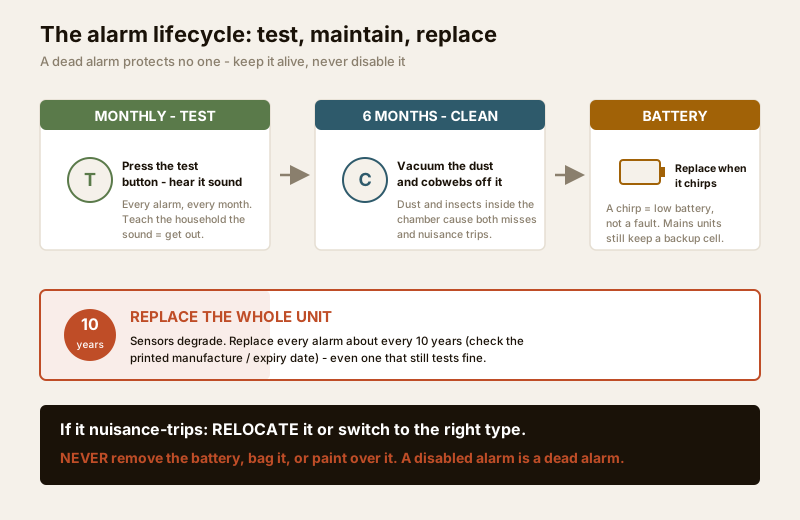
- Test every month. Press and hold the test button until the alarm sounds - this confirms the sensor, electronics and sounder all work. Do it for every alarm, on a fixed day each month, and use it to teach the whole household that this sound means get out now.
- Clean it about every six months. Dust, cobwebs and insects inside the chamber cause both missed fires and nuisance trips. Vacuum gently over and around the alarm with a brush attachment - do not open the unit or spray anything into it.
- Change the battery the moment it chirps. A single periodic chirp is the low-battery warning, not a fault. Replace the cell at once; never pull the battery to stop the chirp and leave it out. A sealed 10-year unit instead signals end of life and is replaced whole.
- Replace the whole unit at about ten years. The sensing element degrades with age even if the self-test still passes, so smoke alarms carry a manufacture or expiry date and should be replaced roughly every ten years. Check the date printed on the back before you buy, and diarise the replacement.
Never disable it - pick the right type instead
This is the most important operating rule in the guide, because it is the one most often broken. If an alarm keeps nuisance-tripping, the answer is to move it or change its type - never to disable it. An alarm near the kitchen doorway that trips on cooking steam should be relocated further into the hall, or the kitchen should be protected by a heat detector instead. What you must never do is take out the battery, cover the alarm in a plastic bag, paint over it, or unplug it - because a disabled alarm is a dead alarm, and the fire it fails to catch does not care why it was silenced. Fire investigators find missing or removed batteries in home after home that burned. Choose the right detector for the room, place it well, and let it do its job.
What this device is not
A smoke detector senses smoke - and only smoke. It is not a heat detector (which you want in kitchens and garages), not a carbon-monoxide alarm (CO is an odourless toxic gas from generators, geysers and gas heaters - a separate device), and not an LPG or gas-leak detector (which senses combustible cooking gas and must be mounted at the right height for the gas). These are genuinely different instruments for different dangers; a complete home may want more than one. See the companion guides on carbon-monoxide detectors, gas detectors and LPG leak detectors, and use the fire-detector selector to match device to risk.
For the whole-house picture - the escape plan, the extinguisher and the fire classes - return to the home fire-safety guide; flat-dwellers should read the apartment fire-safety guide for how home alarms sit alongside the society's statutory system, and everyone can run the home fire-safety scorecard as a ten-minute self-check.
When you need a professional or a statutory system. For your own home, buying and fitting standalone or wireless-interconnected alarms is entirely yours to do. But the moment you are dealing with a whole building - an apartment tower, an office, a school, a hospital or a hotel - the law requires a designed automatic fire detection and alarm system to IS 2189 : 2026 and the National Building Code (via SP 7 : 2026, Part 4 Fire and Life Safety), with a control panel, zoned detectors, call points and sounders, commissioned and certified by a licensed fire-alarm contractor and tied to the premises Fire NOC under your State Fire Services Act and Rules. That is not a retail purchase and not DIY - route it to a qualified fire-safety consultant. The office, high-rise, hospital and hotel guides, and the wider building security systems guide, set that compliance picture.
Key takeaways
- A smoke detector is the single most important fire-safety device - it senses early smoke and wakes a sleeping house in time to escape, and most Indian homes still have none.
- Choose photoelectric as your default - it is better on the smouldering fires that kill most people and trips less on cooking steam; ionisation reacts faster to flames but is nuisance-prone and holds a tiny radioactive source that is being phased out.
- Place alarms inside or near every bedroom, on every level and at the top of the stair - never in the kitchen or bathroom (use a heat detector there), and keep them well clear of fans and AC vents.
- Prefer interconnected alarms and a battery backup - so a fire anywhere sounds every alarm, and a power cut never leaves the house unprotected.
- Test monthly, clean twice a year, change the battery when it chirps, replace the unit at about ten years - and never disable a nuisance-tripping alarm; relocate it or change its type instead, because a disabled alarm is a dead alarm.
References
- IS 2189 : 2026, Bureau of Indian Standards - Selection, Installation and Maintenance of Automatic Fire Detection and Alarm System, Code of Practice. The core code for designed building detection systems, including where beam and point smoke detectors are used. (Note: the older smoke-detector component spec IS 11360 is withdrawn - do not rely on it.) Verify the current edition via the BIS catalogue: https://www.services.bis.gov.in/
- National Building Code of India, SP 7 : 2026 (the NBC), Part 4 "Fire and Life Safety" - the framework requiring automatic fire detection and alarm systems in buildings by occupancy and height; the older SP 7 : 2016 edition is withdrawn but still widely quoted. Verify the current edition via the BIS catalogue: https://www.services.bis.gov.in/
- The relevant State Fire Services Act and Rules and the Model Building Bye-Laws (MoHUA) - these set when a Fire NOC and a certified building detection and alarm system are legally required for a given premises.
- Manufacturer datasheets and installation instructions for the specific smoke alarm you buy - the authority for its sensing type, mounting spacing, battery type and printed replacement date; always follow the unit's own instructions.
This is an educational overview, not legal advice, and not a substitute for a licensed fire-safety consultant. Building-wide automatic fire detection and alarm systems, the Fire NOC and any statutory installation are qualified professional tasks - engage licensed fire professionals and the State Fire Services, and verify any standard's current status via the BIS catalogue before relying on it.
Export this guide
Related Guides — Deep-dive reading
Smoke Detector vs Heat Detector in India (2026): Which Belongs Where
An honest, even-handed head-to-head for Indian homes: what a smoke detector and a heat detector each sense, why the smoke detector is the primary early-warning device, and where a heat detector belongs instead — kitchens, garages and dusty or steamy rooms — because a proper design uses both, chosen to the code and the space.
SecurityHow to Choose a Fire Alarm in India (2026): A Life-Safety, Code-Governed Buying Guide
A fire alarm is not shopped on price or looks. It is specified to the National Building Code and the local fire officer, built from listed and certified parts, and installed by a licensed contractor. This guide shows a homeowner, manager or architect how to choose and verify one correctly.
SecurityFalse Alarm Prevention for Burglar Alarms in India: Causes & Fixes (2026)
Why home alarms cry wolf — ceiling fans, pets, heat, insects, weak batteries, power blips and poor door alignment — and how correct placement, the right sensors and simple upkeep keep the system trusted and armed.
SecurityRelated Tools — Try Free
Electrical Safety & Load Audit
Home electrical audit — 10 categories, 65+ checkpoints across earthing, RCCB, MCB, wiring, switchboards, appliance circuits, DG/inverter backup.
Safety AuditFire Detector Selector
Smoke, heat, CO, gas or flame? Pick a space and its fuels and hazards and get the right detector type(s) to consider — with the one placement rule that matters most for each, including the LPG-low vs PNG-high gas rule.
Detector SelectorFull-Room BOQ — Living, Bedroom, Kitchen, Bath
Room-wise BOQ across living, bedrooms, kitchen, utility, and bathrooms with line-item pricing.
Full-Room BOQ