
Smoke Detector vs Heat Detector in India (2026): Which Belongs Where
An honest, even-handed head-to-head for Indian homes: what a smoke detector and a heat detector each sense, why the smoke detector is the primary early-warning device, and where a heat detector belongs instead — kitchens, garages and dusty or steamy rooms — because a proper design uses both, chosen to the code and the space.
If you are fitting fire detection in an Indian home, you will meet two devices that look almost identical on the ceiling and cost roughly the same — the smoke detector and the heat detector — and a lot of confident, wrong advice about which to buy. The honest answer is that this is not a contest with a winner. They detect completely different things, they warn at different moments, and a properly designed home uses both. The real question is never "which is better" but "which belongs in this particular room".
Get that question right and you have a home that warns you early where warning matters most, and does not scream at you every time you sear a dosa. Get it wrong — and the classic mistake is to fit a smoke detector in the kitchen, have it nuisance-trip nightly, and then disable it, leaving the house with no working alarm at all — and you have made yourself less safe, not more.
Scope and how to read this. This is a neutral head-to-head to help you understand what each device does and where it belongs — not a buying guide, not a price list, and not a substitute for a designed system. Both devices are legitimate and life-safety-critical; the choice for each location is made to the National Building Code (NBC = SP 7:2026) and the nature of the space, never "the cheaper one". A smoke detector and a heat detector are not interchangeable. For an actual home design, especially in an apartment or a larger house, defer to a fire-safety professional and the code. For the wider decision — panels, wiring, interlinking — see how to choose a fire alarm.
What each device actually senses
The whole difference — and it is the entire point — is in what physically triggers the alarm.
The smoke detector — senses smoke particles, warns early
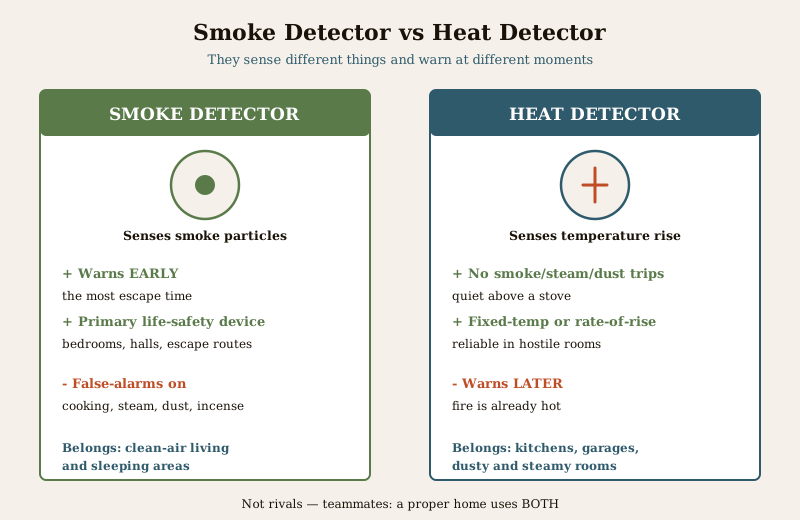
A smoke detector responds to the tiny particles of combustion suspended in the air — smoke itself. Because most household fires smoulder and smoke long before they get hot (a cigarette in a sofa, an overloaded socket, bedding against a heater), smoke reaches a ceiling detector well before dangerous heat does. That early moment is precious: it is the extra minutes that let a sleeping family wake and get out. This is why the smoke detector is the primary life-safety device in a home — it buys escape time. The trade-off is its sensitivity cuts both ways: it cannot tell the difference between the smoke of a real fire and the smoke, steam or fine dust of ordinary life. Cooking fumes, a steamy bathroom, a dusty store-room or burning toast can all set it off. That is not a fault; it is the price of an early warning. There is more detail in the dedicated smoke detectors guide.
The heat detector — senses temperature, does not nuisance-trip
A heat detector ignores smoke entirely. It watches the air temperature and alarms either when the air passes a set threshold (a fixed-temperature detector, typically triggering around a high ceiling temperature) or when the temperature climbs unusually fast (a rate-of-rise detector, which catches a rapidly developing fire before the fixed point is reached). Because it is blind to smoke, steam and dust, a heat detector almost never nuisance-trips — it will sit quietly above a stove or in a dusty garage where a smoke detector would howl daily. Its honest weakness is the flip side of that virtue: it only reacts once a fire has grown hot enough, which means it warns later than a smoke detector, often much later, after the fire is already well established. It is a reliable sentry for hostile environments, not an early-warning device. The heat detectors guide covers the two types in depth.
The head-to-head
Set side by side, each device is clearly better at a different job. Neither column is all strengths or all weaknesses.
| Dimension | Smoke detector | Heat detector |
|---|---|---|
| What it senses | Smoke particles from combustion | Air temperature (fixed threshold or fast rise) |
| Speed of warning | Early — usually alarms well before a fire gets hot | Later — only once the fire is already hot |
| Escape time given | Most — the extra minutes that save lives | Less — fire is more developed by the time it alarms |
| False / nuisance alarms | Prone to them: cooking, steam, dust, incense | Very few — ignores smoke, steam and dust |
| Best environment | Clean-air living and sleeping spaces | Smoky, steamy, dusty, fumey spaces |
| Life-safety role | Primary early-warning device | Supplementary, for places smoke cannot go |
| Where it belongs | Bedrooms, hallways, living areas, escape routes | Kitchens, garages, boiler and dusty/steamy rooms |
| Not a substitute for | (it is the benchmark) | A smoke detector's early warning |
Read the table as a division of labour, not a scoreboard. The smoke detector wins decisively on the thing that matters most — early warning and escape time — which is exactly why it is the default. The heat detector wins on reliability in exactly the places where a smoke detector's sensitivity becomes a liability. You do not pick one; you place each where its strength lands and its weakness does not.
Which belongs where — the room-by-room verdict
This is the useful part. The decision is made room by room, on one question: would a smoke detector give a genuine early warning here, or would it just nuisance-trip?
Where the smoke detector belongs (most of the home)
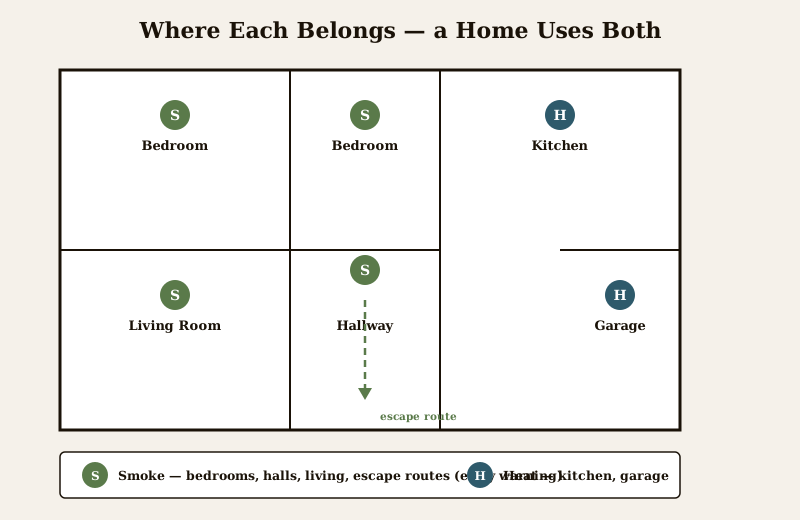
Fit smoke detectors everywhere the air is normally clean and where people sleep, gather, or must pass to get out:
- Bedrooms and outside sleeping areas — the single most important location. A fire at night kills because people are asleep; the smoke detector is what wakes them.
- Hallways and landings — the escape routes. A detector here protects the path everyone must use to leave.
- Living rooms and common areas — where electrical loads, heaters and furnishings live.
- Every level of a multi-storey home, including the top of a staircase, so smoke rising from below is caught.
These are the non-negotiable life-safety positions, and they take smoke detectors because early warning is the whole job there.
Where the heat detector belongs (the hostile rooms)
Fit a heat detector only where a smoke detector cannot do its job because it would constantly false-alarm:
- Kitchens — the classic case. Cooking smoke and frying fumes would trip a smoke detector nightly; a heat detector rides above the stove and reacts only to a real, hot fire. (Site it away from the direct plume of the burner so normal cooking heat does not trigger it.)
- Garages and car ports — vehicle exhaust and dust defeat a smoke detector; a heat detector tolerates them.
- Boiler rooms, utility and laundry spaces — steam, lint and fumes.
- Dusty store-rooms and workshops — fine dust reads as smoke to an optical sensor.
The rule is simple: a heat detector goes where a smoke detector cannot, not where you would prefer a quieter life.
The one thing you must not get wrong
Here is the message the whole guide exists to deliver, and it is worth stating without hedging.
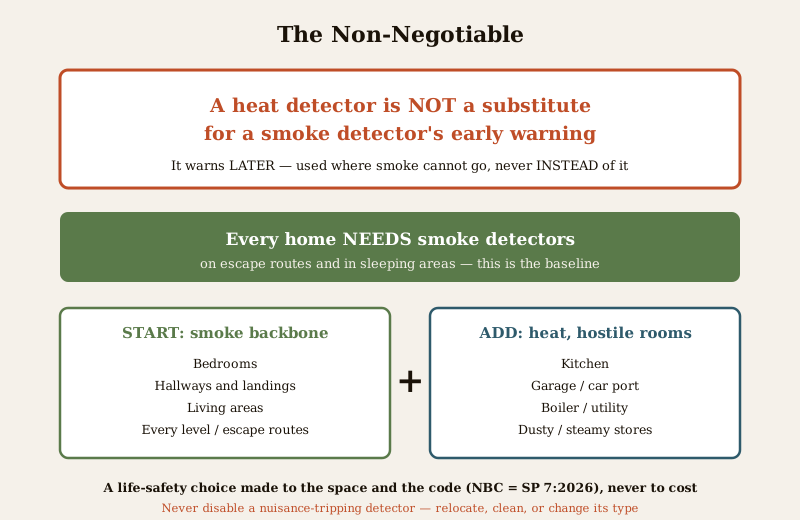
A heat detector is NOT a substitute for a smoke detector. Because it warns later — after a fire is already hot — it cannot give the early, life-saving warning that a smoke detector gives. You use a heat detector where a smoke detector cannot go, never instead of one to buy peace and quiet. Swapping a nuisance-tripping kitchen smoke detector for a heat detector is correct; deciding you will "just use heat detectors everywhere" because they do not false-alarm is a dangerous error that strips your home of early warning exactly where you sleep.
The corollary is equally firm: every home needs smoke detectors on its escape routes and in its sleeping areas. That is the baseline. Heat detectors are then added for the kitchen, the garage and the other hostile rooms — an addition to the smoke-detector backbone, never a replacement for it. If the choice were ever framed to you as "smoke or heat, pick one to save money", that framing is wrong: this is a life-safety decision made to the space and the code, not a cost trade-off.
A note on the types within each
Choosing the device is the big decision; there is a smaller one within each family.
- Smoke detectors: ionisation vs photoelectric (optical). Ionisation types react quickest to fast, flaming fires; photoelectric (optical) types react quicker to slow, smouldering fires — the smouldering-sofa scenario that causes many home deaths — and, usefully, nuisance-trip less on cooking. For a home, a photoelectric or optical smoke detector is the common, sensible default; some homes use dual-sensor units. The choice does not change where the detector goes.
- Heat detectors: fixed-temperature vs rate-of-rise. A fixed-temperature detector alarms at a set ceiling temperature; a rate-of-rise detector also alarms on a fast temperature climb, catching a quickly growing fire sooner. Rate-of-rise (often combined with a fixed point in one unit) suits a kitchen where a real fire builds fast; a fixed point suits spaces that are normally warm and where slow temperature swings are expected.
These are refinements. If they feel like too much detail, that is exactly what a fire professional settles for you when they design the system.
If it keeps false-alarming, do not disable it
The commonest reason a home ends up unprotected is a smoke detector nuisance-tripping until someone pulls its battery or takes it down — and then the real fire finds no working alarm. If a detector keeps going off, the fix is almost never to remove it. Usually it is in the wrong place (a smoke detector too near a kitchen or bathroom, when the room actually wants a heat detector), or it needs cleaning, relocating, or a different sensor type. The smoke detector false alarms guide walks through the causes and fixes. Disabling the device is the one response that is never acceptable.
How to decide — the framework
Put together, the decision for a whole home is not agonising once you hold the principle:
1. Start from the smoke-detector backbone. Smoke detectors in every bedroom, outside sleeping areas, in hallways and living rooms, and on every level — the escape routes and sleeping areas first. This is the baseline every home needs.
2. Add heat detectors only for the hostile rooms. Kitchen, garage, boiler/utility, dusty store — the places a smoke detector would nuisance-trip. Here a heat detector protects without the false alarms.
3. Never swap early warning for quiet. Do not replace a smoke detector with a heat detector, or remove one, to stop nuisance alarms — relocate it, clean it, or change the room's detector type instead.
4. Interlink where you can, and think about escape. Ideally a fire detected in one room sounds every alarm in the house; that is part of the wider system covered in how to choose a fire alarm.
5. Defer the design to a professional and the code. For an apartment, a larger home, or anything you are unsure about, a fire-safety professional designs to NBC (SP 7:2026) — device type, siting and coverage are theirs to specify, not a guess.
The honest bottom line: there is no winner, because they are teammates, not rivals. The smoke detector is the primary, early-warning, life-safety device and goes almost everywhere; the heat detector is its specialist partner for the kitchen and garage where smoke cannot detect. A safe home has both, each in its right place.
Key takeaways
- They sense different things: a smoke detector senses smoke particles and warns early; a heat detector senses temperature and warns later but does not nuisance-trip on smoke, steam or dust.
- The smoke detector is the primary life-safety device — it gives the early warning and escape time that saves lives, so it is the default for bedrooms, hallways, living areas and escape routes.
- The heat detector belongs where a smoke detector cannot go — kitchens, garages, boiler and dusty/steamy rooms — because there a smoke detector would constantly false-alarm.
- A heat detector is not a substitute for a smoke detector. It is used where a smoke detector cannot be, never instead of one for early warning.
- Every home needs smoke detectors on escape routes and in sleeping areas, with heat detectors added for the hostile rooms. A proper home uses both.
- Never disable a nuisance-tripping detector — relocate it, clean it, or change the detector type for that room instead.
- This is a life-safety choice made to the space and the code, not to cost — defer the design to a fire professional and NBC (SP 7:2026).
Where to go next
- Smoke detectors and heat detectors — the dedicated guides to each device and its types.
- How to choose a fire alarm — the wider decision: panels, interlinking and a whole-home system.
- Smoke detector false alarms — what to do when a detector keeps tripping (never disable it).
- The security comparison guide pillar for more head-to-head decisions, and the fire-safety hub.
References
- National Building Code of India (SP 7), Bureau of Indian Standards — fire and life-safety provisions, including fire detection and alarm requirements for residential occupancies. Verify the current edition (SP 7:2026) via the BIS catalogue: https://www.services.bis.gov.in/
- General fire-detection principles — smoke detection (ionisation and photoelectric/optical) for early warning in clean-air spaces, and heat detection (fixed-temperature and rate-of-rise) for environments where smoke detectors would nuisance-trip. Confirm device selection and siting with a fire-safety professional for your specific home.
This is an educational head-to-head to help a homeowner understand what smoke and heat detectors each do and where each belongs — not an installation manual or legal advice. Both are legitimate, life-safety-critical devices chosen to the space and the code, never to cost; a smoke detector and a heat detector are not interchangeable. Defer the design of any home fire-detection system to a licensed fire-safety professional and the National Building Code (SP 7:2026).
Export this guide
Related Guides — Deep-dive reading
Heat Detectors in India (2026): Fixed-Temperature vs Rate-of-Rise and Where to Use Them
The detector for places where smoke alarms cry wolf - kitchens, garages, boiler and DG rooms, dusty or steamy stores. How heat sensing works, the two trigger types, and why it is a backup, never a bedroom substitute.
SecuritySmoke Detector False Alarms in India (2026): Why It Keeps Going Off and How to Fix It Safely
Your smoke alarm keeps chirping or shrieking with no fire. A calm, ordered guide for Indian homes to find the real cause -- cooking, steam, dust, a dying battery or a detector past its life -- and fix it without ever disabling the one device that could save your family.
SecuritySmoke Detectors in India (2026): Photoelectric vs Ionisation, Placement & Testing
The single most important fire-safety device every Indian home should own - how smoke detection works, which type to buy, exactly where to fit it, and how to keep it alive for a decade.
SecurityRelated Tools — Try Free
Full-Room BOQ — Living, Bedroom, Kitchen, Bath
Room-wise BOQ across living, bedrooms, kitchen, utility, and bathrooms with line-item pricing.
Full-Room BOQApartment Video Door System Planner
Enter flats, entrances, floors and guard desk for a first-pass building intercom plan — door stations, indoor monitors, guard station, the right architecture and an indicative cost band.
Building PlannerElectrical Safety & Load Audit
Home electrical audit — 10 categories, 65+ checkpoints across earthing, RCCB, MCB, wiring, switchboards, appliance circuits, DG/inverter backup.
Safety Audit