
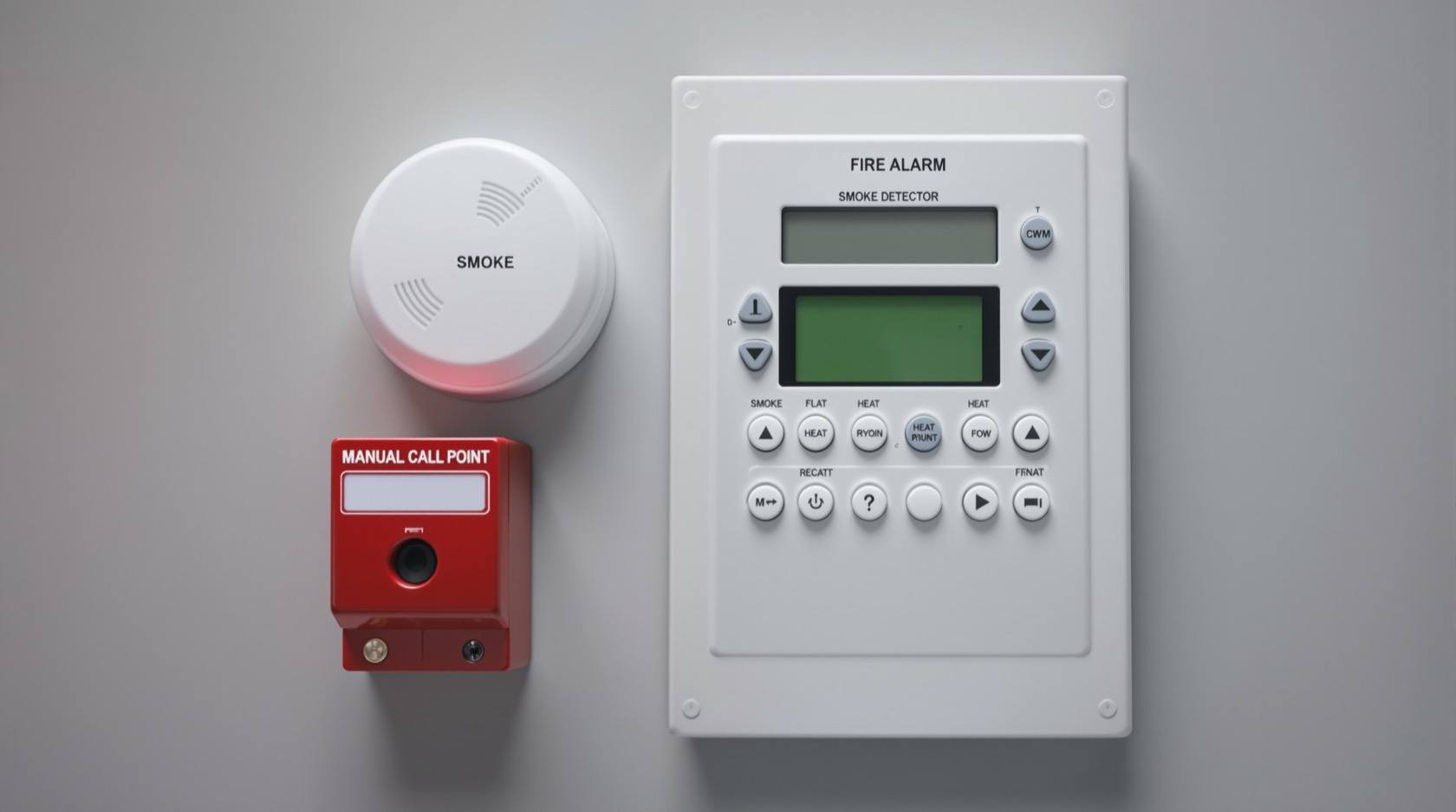
How to Choose a Fire Alarm in India (2026): A Life-Safety, Code-Governed Buying Guide
A fire alarm is not shopped on price or looks. It is specified to the National Building Code and the local fire officer, built from listed and certified parts, and installed by a licensed contractor. This guide shows a homeowner, manager or architect how to choose and verify one correctly.
A fire alarm is unlike any other purchase in a building. A camera that fails records nothing; a lock that fails leaves a door open; but a fire alarm that fails, or is wrong for the space, or is not certified, can let people sleep through the one warning that would have saved them. This is a life-safety system. It is not chosen for how it looks on the ceiling, and it is not chosen because it was the cheapest quote. It is chosen to be correct, and correctness here is defined by the code and the fire officer, not by the buyer's taste.
That reframing is the whole point of this guide. When you buy a fire alarm you are not really shopping a product off a shelf; you are commissioning a designed, certified system that must satisfy the National Building Code of India and win the approval of your local fire authority. The right detectors have to sit over the right spaces, the notification has to be loud enough to wake and move everyone, the panel has to keep working when the mains fail, and every part has to be a listed, certified device installed by a licensed fire-safety contractor. A homeowner, a facility manager or an architect specifies and verifies this. They do not "value-engineer" it down to save money, because the money saved by a fire alarm that does not sound is the most expensive saving anyone ever makes.
This guide is a decision guide, not an install manual and not a price list. It sits under the main how to choose a security system pillar and beside the wider security buying library. For the numbers, defer to the fire alarm system cost guide; for the fire-safety picture as a whole, the fire-safety hub is the map.
Scope and how to use this. This is a selection and specification guide for a buyer who wants to choose the right fire alarm system and brief a professional well. It is not an installation manual and not a price list, and it is strictly a life-safety document. See the cost guide for money. The governing rule throughout: a fire alarm is chosen to the code and to the fire officer's approval, built from certified and listed devices, and designed and installed by a licensed fire-safety contractor. Certification and fitness-for-purpose are never traded for price or appearance. Where the alarm connects to locks and doors, life-safety and escape always override, per the National Building Code (NBC = SP 7:2026).
The first filter is not price. It is certification and code.
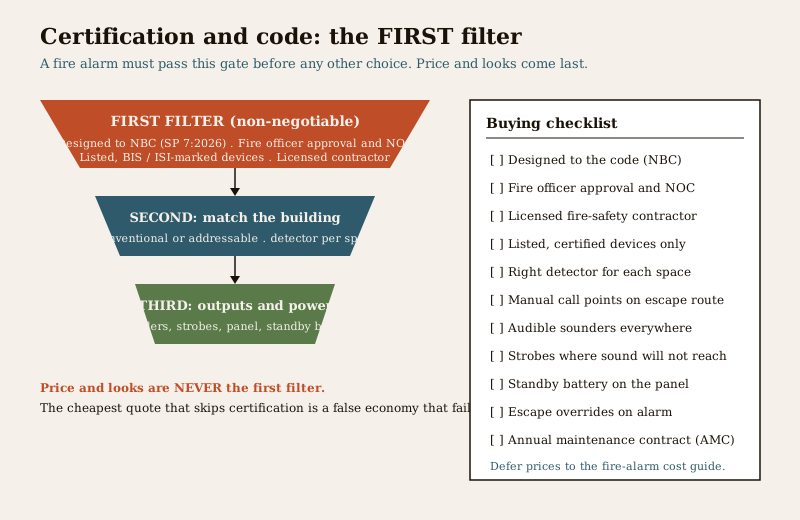
Before you compare a single feature, apply the filter that outranks all the others. A fire alarm you cannot get certified and approved is not a fire alarm; it is a wall ornament. For any building beyond a small home, the fire alarm is part of the fire-safety scheme that your local fire authority must approve, and it is tied to the building's fire No Objection Certificate (NOC). If the system is not designed to the code and built from acceptable devices, the fire officer will not sign, your occupancy or insurance may be at risk, and, far more importantly, the system may not do its job when it matters.
So the first three questions are compliance questions, and they come before "conventional or addressable" and long before "how does it look":
- Is it designed to the National Building Code (NBC = SP 7:2026)? The Code, together with the relevant Indian Standards for fire detection and alarm systems, governs where detectors go, how zones are arranged, how the system is powered, and how it must perform. Cite these generically and insist your contractor designs to the current editions rather than to habit. Verify the current status of any standard through the BIS catalogue rather than taking a number on faith.
- Will the local fire officer approve it, and is it tied to the fire NOC? For most occupancies this is not optional. The system must be part of an approved scheme, and it should be designed and certified by a licensed fire-safety contractor who will stand behind that approval.
- Are the devices listed and certified? Every detector, panel, call point and sounder should be a genuine, marked, listed product from a recognised source, with BIS/ISI marking where applicable and documented listings. No-name or uncertified devices are an instant disqualification, however cheap.
Never compromise on this. Certification and fitness-for-purpose are the price of entry, not a premium tier. The cheapest quote that skips listed devices, skips the fire officer, or skips a proper design is not a saving; it is a false economy that fails silently until the day it cannot afford to. If a vendor treats the fire NOC as your problem rather than part of their scope, that alone is a reason to walk away.
Conventional or addressable: how the building decides
Once a system can be certified, the first real design fork is the system architecture: conventional or addressable. This is not a matter of taste or budget preference; the size and occupancy of the building decide it, and the fire officer will expect the right choice.
A conventional system divides the building into a handful of wired zones. When a detector triggers, the panel tells you the zone — "first floor, east" — but not which device. Someone still has to walk the zone to find the fire. This is simple, robust and economical, and for a small building it is entirely appropriate: a small home, a small shop, a compact office where a zone is small enough that "which zone" is as good as "which device".
An addressable system gives every detector and call point its own unique address on a loop. The panel does not just say "zone 3"; it says "smoke detector 14, second-floor server room". It supports far more devices, longer loops, cause-and-effect programming (this detector triggers those doors and that sounder pattern), and detailed fault reporting so you know the moment a device is disconnected or dirty. For any large, multi-storey, multi-tenant or high-occupancy building, addressable is not a luxury; the ability to locate the exact device and to program staged responses is a functional requirement.
| Factor | Conventional | Addressable |
|---|---|---|
| How it locates a fire | By zone (a group of devices) | By individual device, exactly |
| Suits | Small home, small shop, compact single or two-storey building | Large, multi-storey, multi-tenant, high-occupancy, complex layout |
| Fault reporting | Basic, at zone level | Per device: disconnection, dirt, fault pinpointed |
| Cause-and-effect programming | Limited | Rich: stage sounders, release doors, interface with other systems |
| Relative cost | Lower | Higher, and usually justified at scale |
| Wiring | Zone circuits | Addressable loop |
The honest rule: do not put an addressable system into a two-room shop to look advanced, and never squeeze a large building onto a conventional panel to save money. Match the architecture to the building, and let the fire officer's expectation for your occupancy settle any doubt.
The detector is chosen to the space, not the other way round
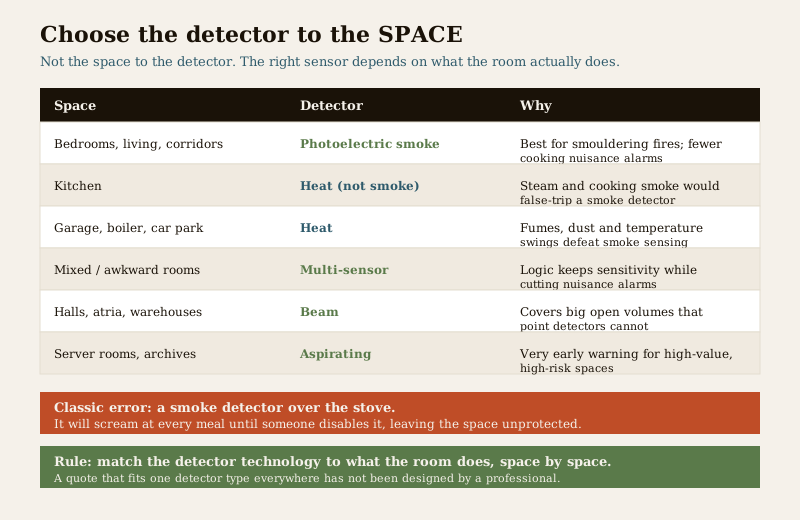
This is where buyers most often go wrong, because a detector that is excellent in one room is a menace in another. The type of detector must match what the space actually does. Put an ionisation-type smoke detector over a stove and it will scream at every roti; put a plain heat detector in a bedroom and it may not warn a sleeper until the smoke is already thick. Choosing the detector to the space is the single most technical judgement in the whole purchase, and it is exactly the sort of thing a licensed contractor earns their fee on.
The main detector families, and where each belongs:
- Photoelectric / optical smoke detectors respond well to the larger, cooler smoke particles of smouldering fires (fabric, wiring, furnishings). They are the sensible general-purpose choice for most living and sleeping spaces and corridors, and they are less prone to nuisance alarms from cooking than ionisation types. See the deeper treatment in the smoke detectors guide.
- Ionisation smoke detectors react faster to the small particles of fast, flaming fires. They are more prone to nuisance tripping near kitchens and should be kept away from cooking areas.
- Heat detectors sense temperature rise or a fixed high temperature, not smoke. They will not warn as early as a smoke detector, so they are used precisely where smoke or fumes are normal and would false-alarm a smoke detector: kitchens, garages, boiler rooms, some car parks and dusty or steamy spaces.
- Multi-sensor detectors combine smoke and heat sensing in one head and use logic to reduce nuisance alarms while staying sensitive to real fires. They are a strong choice for mixed or awkward spaces where a single technology would either miss or over-trigger.
- Beam detectors project a beam across a large open volume and sense smoke crossing it, covering big halls, atria and warehouses where ceiling-mounted point detectors would be impractically high or numerous.
- Aspirating smoke detection actively draws air through a network of pipes to sample it, giving very early warning. It suits high-value, high-risk or hard-to-reach spaces such as server rooms, archives and tall racking where the earliest possible warning is worth the cost.
| Space | Sensible detector choice | Why |
|---|---|---|
| Bedrooms, living rooms, corridors | Photoelectric / optical smoke | Best for smouldering fires; fewer cooking nuisance alarms |
| Kitchen | Heat detector (not smoke over the stove) | Cooking smoke and steam would false-trip a smoke detector |
| Garage, boiler room, car park | Heat detector | Fumes, dust and temperature swings defeat smoke sensing |
| Mixed or awkward rooms | Multi-sensor (smoke plus heat) | Logic keeps sensitivity while cutting nuisance alarms |
| Large open halls, atria, warehouses | Beam detector | Covers big volumes that point detectors cannot |
| Server rooms, archives, high-value zones | Aspirating (very early warning) | Detects smoke long before a fire takes hold |
Manual call points: the human override
Automatic detection is only half of a fire alarm. Manual call points — the "break glass" units by exits and along escape routes — let a person who sees a fire raise the alarm immediately, without waiting for smoke to reach a detector. For any building where people move through, they are a code expectation, sited on the escape routes and at exits so that no one has to travel far to raise the alarm on the way out. When you specify a system, confirm call points are included and placed on the escape paths, not treated as an afterthought.
Notification: the alarm has to actually wake and move people
A fire alarm that detects perfectly but cannot be heard has failed. Notification — the sounders and strobes — is a life-safety spec in its own right, and it is routinely undersized to save a little money. The sound has to be loud enough, everywhere, to wake a sleeping person and to be heard over machinery, music or a running tap, and it has to reach spaces where alarms are needed but sound alone will not do.
- Sounders must deliver enough audibility throughout the building, including in bedrooms with the door shut and in noisy areas. This is why coverage, not just the presence of a bell, is what you check.
- Strobes / visual alarm devices matter where sound cannot be relied on: for deaf and hard-of-hearing occupants, and in high-noise areas. In inclusive buildings they are not optional niceties; they are how some people receive the warning at all.
- In larger buildings, staged or voice notification can direct people rather than merely startle them, which addressable systems make possible.
Red flag: undersized notification. A quote that fits one token sounder to tick a box, with no thought to whether it wakes someone two rooms away with the door closed, has undersized the most important output of the whole system. Audibility and visibility coverage is a spec to verify, not to assume.
The panel and the power supply that must not quit
The control panel is the brain: it monitors the detection loops, indicates and locates alarms and faults, and drives the sounders and any cause-and-effect actions. Choose it to the architecture — a conventional panel for a conventional system, an addressable panel sized for the loops and devices, with clear indication and, ideally, fault reporting you can actually read.
Just as important, and just as often skimped: the fire alarm must keep working when the mains fail. Fires cause power cuts, and power cuts in India are ordinary in any case. A code-compliant fire alarm has a supervised power supply with a standby battery sized to run the system for the required period and then still sound the alarm. A "fire alarm" that dies with the mains is not a fire alarm. Confirm the standby supply and battery autonomy are specified and tested, and that they are part of the maintenance regime rather than a fit-and-forget.
Match the system to your building
Pulling the decisions together, the shape of the right system follows from the building:
- A small home or small shop. A conventional panel with photoelectric smoke detectors in the sleeping and living areas and corridors, a heat detector in the kitchen and any garage, manual call points on the way out, and audible sounders that reach the bedrooms. Modest, correct, certifiable. For a purely domestic single-room-level view, the smoke detectors guide is the companion piece.
- A larger home or a villa. The same detector logic across more rooms and floors, with attention to audibility so an alarm on the ground floor wakes someone asleep upstairs with the door shut.
- A commercial, multi-storey, multi-tenant or high-occupancy building. An addressable system, detectors chosen space by space, beam or aspirating detection where the volumes or risks demand it, full call-point coverage on the escape routes, sounder and strobe coverage engineered for the whole footprint, staged or voice notification where it helps, and a panel with a robust standby supply — all designed by a licensed fire-safety contractor to the code and approved by the fire officer.
Fire detection is one part of a fire-safety scheme, not the whole of it. It works alongside fire extinguishers as first-aid firefighting and everything else the fire-safety hub covers; and because it interfaces with doors and locks, it must be built so that escape always wins.
Red flags when choosing a fire alarm
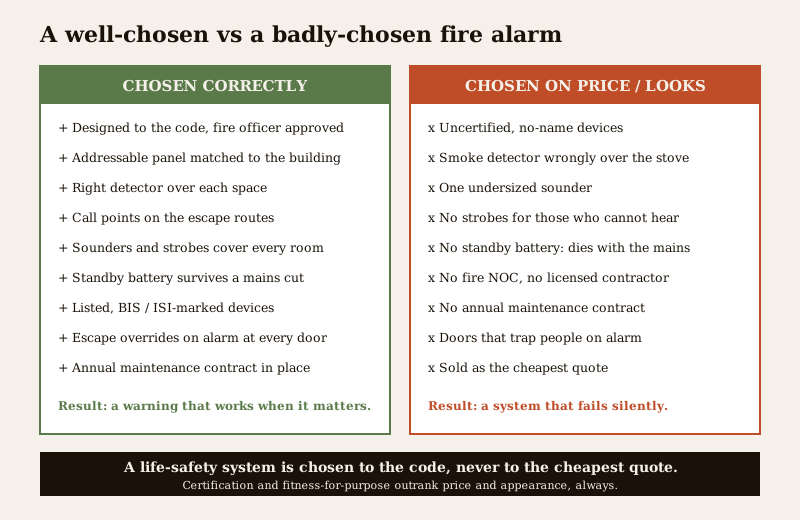
- Uncertified, no-name or grey-market devices. However cheap, a detector, panel or sounder without genuine marking and listing has no place in a life-safety system.
- The wrong detector for the space — the smoke detector over the stove, the bare heat detector in a bedroom, point detectors trying to cover a vast hall. A quote that uses one detector type everywhere has not been designed.
- Undersized notification. One token sounder, no thought to bedrooms with closed doors or to strobes where sound will not reach.
- No standby battery, or an undersized one. A system that stops when the mains do.
- No fire officer, no NOC, no licensed contractor. If compliance is treated as the buyer's problem, the vendor is not selling you a fire alarm; they are selling you parts.
- No AMC. A fire alarm is not fit-and-forget. Without an annual maintenance contract and periodic testing, detectors clog, batteries die and faults go unnoticed until the system is silently dead.
- Sold on looks or price alone. Any pitch that leads with appearance or the lowest number, rather than with certification and correctness, has the priorities backwards.
The fire alarm buying checklist
- Certification first. Designed to NBC (SP 7:2026) and the relevant Indian Standards, approved by the local fire officer, tied to the fire NOC, built from listed BIS/ISI-marked devices, designed and installed by a licensed fire-safety contractor.
- Right architecture. Conventional for a small building; addressable for a large, multi-storey, multi-tenant or high-occupancy one — matched to the building, not to budget vanity.
- Right detector per space. Photoelectric in living and sleeping areas; heat in kitchens, garages and boiler rooms; multi-sensor for mixed spaces; beam for big volumes; aspirating for high-value early warning. Never a smoke detector over a stove.
- Manual call points on the escape routes and at exits.
- Notification that reaches everyone — sounders audible in every space including bedrooms with doors shut, strobes where sound cannot be relied on.
- A panel and a supervised power supply with a standby battery sized to keep the system alive through a mains failure.
- Life-safety override. Where the alarm interfaces with locks and doors, escape always wins on alarm, per NBC.
- An AMC and a test regime so the system stays alive over its life.
- Defer price to the cost guide — and never let price move above certification and correctness.
The bottom line
Choosing a fire alarm is not really shopping; it is specifying and verifying a certified, designed system and then handing it to a licensed professional to build and stand behind. Put certification and code compliance first, always. Let the building — its size and occupancy — decide conventional or addressable. Let each space decide its detector. Size the notification to wake and move everyone, keep the panel alive on a standby battery, make sure escape always overrides on alarm, and lock in an AMC so the system stays alive. Then, and only then, look at the price — in the cost guide — knowing you will never let a rupee outrank a life.
For the wider decisions this sits within, see the how to choose a security system pillar, the neighbouring how to choose a burglar alarm guide, the security buying library and the main security hub.
Key takeaways
- A fire alarm is a life-safety purchase governed by code, not price or looks. Certification and correctness are the price of entry.
- Certification and code compliance are the first filter — design to NBC (SP 7:2026), fire officer approval and NOC, listed BIS/ISI-marked devices, a licensed contractor. A system you cannot certify is not a system.
- The building decides conventional versus addressable — small buildings by zone, large or high-occupancy buildings by addressable device-level detection and staged response.
- The space decides the detector — photoelectric in living and sleeping areas, heat in kitchens and garages, multi-sensor for mixed spaces, beam for big volumes, aspirating for high-value early warning; never a smoke detector over a stove.
- Notification must wake and move everyone — audible sounders in every space including bedrooms, strobes where sound cannot be relied on. Undersizing it is a common, dangerous economy.
- The panel must survive a mains failure on a supervised standby battery, and escape must always override the alarm at any door.
- Red flags: uncertified devices, the wrong detector for the space, undersized notification, no standby battery, no fire NOC, no AMC, and any pitch led by price or looks.
References
- National Building Code of India (SP 7), Bureau of Indian Standards — occupancy classification, fire detection and alarm requirements, means of egress, and fire-safety provisions. Verify the current edition (SP 7:2026) via the BIS catalogue: https://www.services.bis.gov.in/
- Relevant Indian Standards for fire detection and alarm systems and for fire detector and control-panel devices — confirm the current standard numbers and status through the BIS catalogue rather than relying on a cited number.
- Local fire authority requirements and the fire No Objection Certificate (NOC) — the fire-alarm scheme for most occupancies must be designed to the code, approved by the local fire officer and tied to the building's fire NOC; requirements vary by state and occupancy.
This is an educational selection and specification overview for homeowners, facility managers, architects and buyers — not legal advice, not an installation manual and not a price list. A fire alarm is a life-safety system: it must be designed to the code, approved by the local fire authority, built from listed and certified devices, and installed and maintained by a licensed fire-safety contractor. Verify any standard's current status via the BIS catalogue before relying on it, and never let price or appearance outrank certification and fitness-for-purpose.
Export this guide
Related Guides — Deep-dive reading
Conventional vs Addressable Fire Alarm in India (2026): Which System, and When
An even-handed, life-safety head-to-head for facility managers, builders, architects and consultants: a conventional system tells you which zone is in alarm; an addressable system names the exact device — so you choose to the code, the building's size and occupancy, and the fire officer, not to the cheapest quote.
SecurityFire Alarm System Cost in India (2026): What a Code-Compliant System Really Costs
An honest, building-scale look at what a fire alarm SYSTEM costs in India — the control panel, detectors, manual call points, sounders, wiring and battery backup — and how conventional versus addressable architecture, the number of zones, floors and occupancy type move the total, always as indicative bands to price against three itemised quotes and never below the code minimum.
SecuritySmoke Detector vs Heat Detector in India (2026): Which Belongs Where
An honest, even-handed head-to-head for Indian homes: what a smoke detector and a heat detector each sense, why the smoke detector is the primary early-warning device, and where a heat detector belongs instead — kitchens, garages and dusty or steamy rooms — because a proper design uses both, chosen to the code and the space.
SecurityRelated Tools — Try Free
Access-Control Battery-Backup Calculator
Size the standby battery so an access system keeps running through a power cut, with an egress life-safety note.
Battery BackupBefore vs After — Cost Reality Check
Compare what you expected to pay vs what you actually paid, category by category.
Reality CheckBurglar Alarm System Selector
Answer a few questions about your property, cabling, coverage, monitoring and power and get the right burglar alarm — wired / wireless / hybrid, self or professionally monitored — with the design non-negotiables.
Alarm Selector