
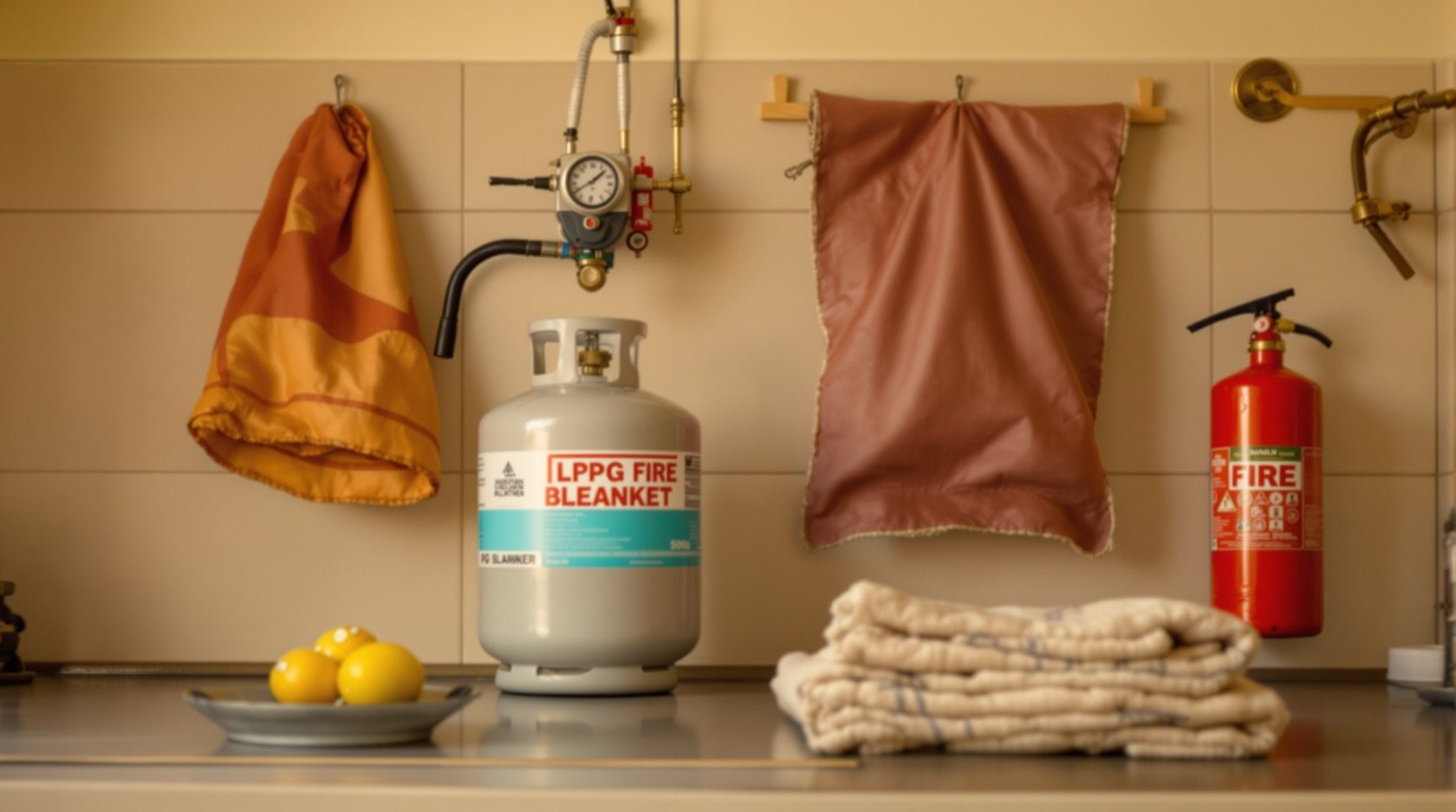
Kitchen Fire Safety in India (2026): LPG, Oil Fires and the Right Extinguisher
The kitchen starts most Indian home fires. Here is how to prevent an LPG or PNG leak, kill an oil fire the right way, and keep the small kit that actually stops a flare-up spreading.
The kitchen is where most Indian home fires begin. It is the one room where an open flame, a pan of hot oil and a pressurised gas cylinder sit together within arm's reach, every single day, often while someone is also watching a toddler or answering the door. That is not a reason to be frightened of your own kitchen — it is a reason to give it the small amount of attention it actually deserves. Kitchen fire safety is mostly a handful of cheap habits and two inexpensive devices, and it turns the two things that hurt Indian families most — a gas leak and a cooking-oil fire — from a tragedy into a non-event.
This is the kitchen chapter of Studio Matrx's fire-safety library, and it sits under the complete guide to fire safety in India. It goes deeper than the kitchen section of the broader home fire-safety guide, which is still the right place to start for smoke alarms, the fire classes and an escape plan for the whole house. Here we stay at the counter: LPG and piped gas, the oil fire, and the exact kit that stops a flare-up spreading.
Scope and safety — read this first. This guide helps you prevent, spot and respond to a kitchen fire yourself — all of it is homeowner-doable, and you should do it. But two things are not DIY. First, any change to your gas installation — a new pipe run, a PNG connection, moving a meter — is the job of the authorised gas distributor's fitter under the Gas Cylinder Rules / PESO framework, not you. Second, for a shop, restaurant or society community kitchen, the kitchen exhaust hood and duct suppression system, the Fire NOC and the extinguisher schedule are the job of licensed fire-safety professionals and the State Fire Services. This is educational guidance, not legal advice or a substitute for a licensed professional. And one rule overrides everything below: if a fire is anything more than tiny and already-contained, do not fight it — get everyone out and call the fire brigade on 101 or 112.
Why the kitchen is the number-one starting point
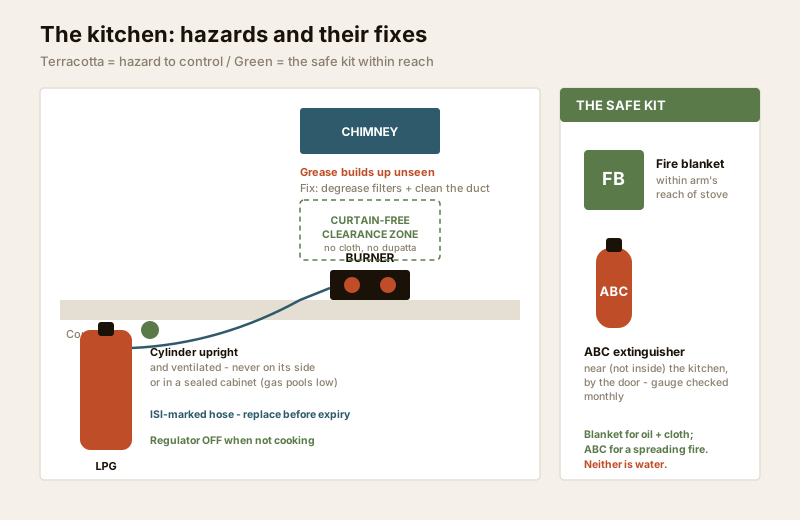
Walk through what a normal Indian kitchen contains and the risk explains itself. There is a live flame on the hob. There is oil that, once hot enough, will ignite on its own without a spark. There is an LPG cylinder — a store of pressurised, heavier-than-air fuel — or a PNG line feeding gas continuously. There is grease building up unseen in the chimney and duct. And there is cloth everywhere: the cook's dupatta or pallu, a kitchen towel, a curtain over the window behind the stove. Any one of these is manageable. The kitchen's hazard is that they all live together, and a single lapse — an unattended pan, a half-closed regulator, a leak nobody smelled — connects them.
The two hazards that dominate Indian kitchen fires, and the ones this guide is built around, are gas (LPG and PNG) leaks and cooking-oil fires. Get these two right and you have addressed the overwhelming majority of the danger.
Hazard one: LPG and PNG gas
Cooking gas is safe when it stays inside the pipe and burns at the burner. Every gas accident is really a story about gas that escaped and then found an ignition source. So the whole of gas safety is: stop leaks, detect the ones that happen, and never give escaped gas a spark.
The installation, kept honest
- Cylinder upright and ventilated. LPG is heavier than air, so it pools low. Keep the cylinder standing upright in a ventilated spot — never in a sealed cabinet, never below ground, never lying on its side. A ground-floor kitchen with a window or louvre near floor level lets a leak disperse instead of collecting.
- The regulator off when you are not cooking. Turn the regulator knob off every night and whenever you leave the house. This single habit means a hose that fails overnight leaks nothing. For PNG, close the appliance valve and know where the meter's main isolation valve is.
- The hose within its expiry. The rubber tube to the burner is ISI-marked and printed with an expiry — typically a couple of years. A cracked, perished or gnawed (rats love them) hose is the single most common leak point. Replace it on or before its date, and route it so it cannot rest against a hot pan or trailing flame.
- No leak-testing with a flame — ever. To check a joint, brush on soapy water: escaping gas blows visible bubbles. Never run a lit matchstick or lighter along a pipe to "find" a leak. The soap-bubble test is the only safe test.
If you smell gas
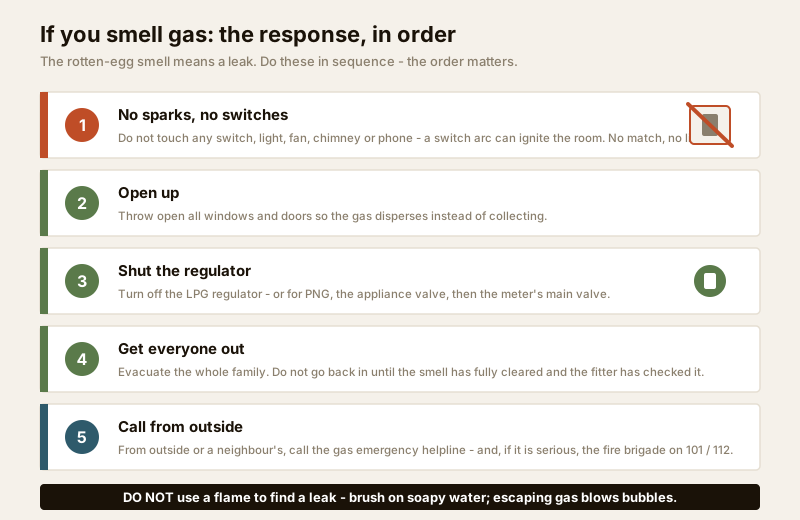
The rotten-egg smell is deliberately added so you notice a leak. The response is a fixed sequence, and the order matters:
- No sparks, no switches. Do not switch anything on or off — not a light, not a fan, not the chimney, not your phone. A switch arc is enough to ignite a gas-filled room. Do not light a match or a lighter.
- Open up. Throw open windows and doors to let the gas disperse.
- Shut the regulator (or the PNG appliance valve, then the meter valve).
- Get everyone out and, from outside or a neighbour's, call the gas emergency helpline (the number printed on your cylinder / bill) and, if the leak is serious, the fire brigade on 101 or 112.
- Do not go back in until the smell has fully cleared and you have had the installation checked by the distributor's fitter.
Hazard two: the cooking-oil fire
A pan of oil left on heat will eventually reach its ignition temperature and burst into flame on its own — no spark needed. This is a Class K fire (cooking oils and fats), and it behaves unlike any other kitchen fire. Everything about handling it comes down to one instinct you must override.
Never throw water on an oil fire
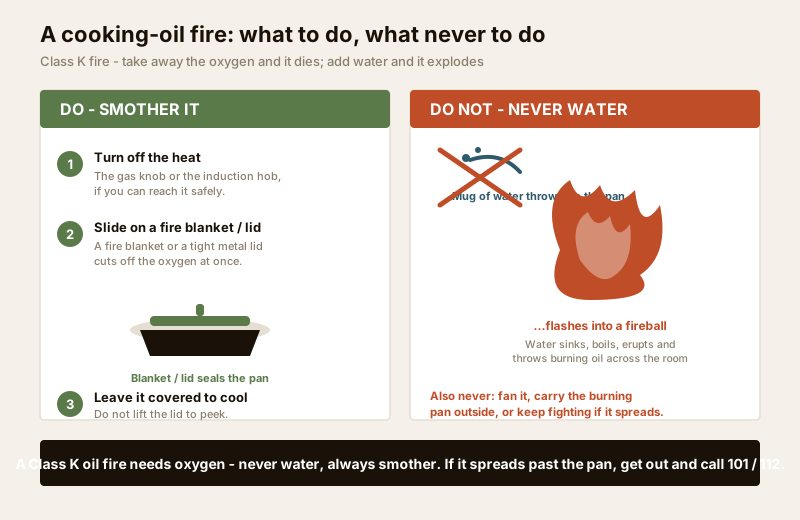
This is the most important sentence in the guide. Water is denser than oil, so it sinks straight to the bottom of the pan, where it is instantly flashed into steam. That steam expands roughly seventeen-hundred-fold in a fraction of a second and erupts upward, throwing burning oil across the room as a fireball that can reach the ceiling and set the whole kitchen — and the cook — alight. The reflex to grab a mug of water is exactly the reflex that turns a pan fire into a house fire and a hospital case. Learn it now, so the instinct is already rewired before you ever need it.
What you do instead — smother and cut the heat
Fire needs oxygen. Take the oxygen away and an oil fire dies almost at once.
1. Turn off the heat — the gas knob or the induction hob — if you can reach it safely.
2. Smother it. Slide a fire blanket over the pan, or clap on a well-fitting metal lid (or a metal tray / another pan). Leave it in place. A fire blanket kept within arm's reach of the stove is the single best thing a kitchen can own.
3. Leave it covered and let the pan cool for a long time. Lifting the lid to check re-admits oxygen and can reignite the oil. Do not move the pan.
4. If it is already spreading beyond the pan, do not fight it — get out and call 101 or 112.
| If cooking oil catches fire | Do | Do NOT |
|---|---|---|
| The instinct to fight the flame | Turn off the heat first | Do NOT throw water — it flashes into a fireball |
| Covering the pan | Slide on a fire blanket or a tight metal lid | Do NOT fan it, or carry the burning pan outside |
| After it is out | Leave it covered and let it cool fully | Do NOT lift the lid to peek — it reignites |
| If it has spread past the pan | Get everyone out, call 101 / 112 | Do NOT keep trying once it is beyond the stove |
The realistic kitchen fire kit
You do not need commercial hardware in a home. You need two things within reach of the stove, chosen for the fires a kitchen actually starts.
| Item | What it handles | The realistic home baseline |
|---|---|---|
| Fire blanket | Oil-pan fire, a burning garment | One mounted within arm's reach of the stove — the first thing you grab |
| ABC dry-powder extinguisher | Solids, flammable liquids and gas fires | One accessible unit, near (not inside) the kitchen, wall-mounted, gauge checked monthly |
| A tight metal lid / tray | A backup smother for a small pan fire | Already in the kitchen — know which lid fits which pan |
For most Indian homes, a fire blanket plus one ABC extinguisher is the right, honest baseline — the blanket for oil and cloth, the ABC for a spreading solids/liquids/gas fire, and neither is water. Buy the extinguisher to Indian standards: portable extinguishers are made to IS 15683 : 2018 and selected, installed and maintained per IS 2190 : 2024. Check the pressure gauge monthly and note the refill date — an expired or discharged extinguisher only looks like protection.
A note on class-K and commercial kitchens
In a larger or commercial kitchen — a restaurant, a canteen, a society community kitchen with deep-fryers and big oil volumes — the right dedicated tool for oil is a wet-chemical (Class K) extinguisher, which cools and chemically seals the oil surface far better than dry powder on a large fat fire. And where there is a cooking range under an exhaust hood, the code-driven answer is a fixed hood-and-duct fire-suppression system that discharges automatically over the range and into the duct, plus a strict grease-cleaning schedule for the duct. These systems, the extinguisher selection and the Fire NOC for the premises are the job of licensed fire-safety professionals and the State Fire Services — not a retail purchase. If you run or manage a commercial kitchen, the office fire-safety guide and the guidance for a commercial building set the wider compliance picture, and the hotel and hospital guides cover their high-volume kitchens.
Kitchen habits that quietly prevent fires
Prevention is free and it is where the real gains are. A few standing rules remove most of the risk before any device is needed.
- No loose cloth near the burner. The dupatta, saree pallu, kitchen towel and plastic packet catch fire when they drift over a flame. Tie loose clothing back while cooking, and keep a curtain-free clearance zone around the hob — a curtain over the window behind the stove is a classic ignition path, so keep any window dressing well clear of the burner and choose a short blind over a long, drifting curtain.
- Clean the chimney and duct grease. Grease is fuel. It builds up invisibly inside the chimney filter and duct, and a small flare-up can ignite it and run up into the duct. Degrease the chimney filters regularly and have the duct cleaned periodically — in a commercial setting this is a scheduled, non-negotiable job.
- Never leave hot oil or a lit hob unattended — not to answer the door, not for "one minute". Most oil fires start in that minute.
- Keep the toddler away from the stove. Turn pan handles inward, cook on the back burners where you can, and keep a small child out of the kitchen while frying. A pulled-down pan of hot oil is one of the worst injuries a home sees.
- Keep matches, lighters and the gas lighter out of a child's reach, and store any flammable cleaning spirits away from the hob.
- Do not overload the kitchen's electrical points. A microwave, mixer, chimney and induction hob stacked on one socket or an extension board is an electrical-fire risk of its own; run heavy appliances on their own points and see the electrical fire-safety guide and the electrical hub for the wiring side.
The kitchen DO-NOT list
Burn these into memory — each one is a habit that has turned an Indian kitchen flare-up into a tragedy.
- Do NOT throw water on an oil fire — it flashes into a fireball. Smother it.
- Do NOT use a flame to check for a gas leak. Soap-bubble test only.
- Do NOT operate any switch or light if you smell gas — an arc ignites the room.
- Do NOT leave the regulator on overnight or when you go out.
- Do NOT leave hot oil or a lit hob unattended, even briefly.
- Do NOT run a perished or expired gas hose, or store the cylinder on its side, below ground, or in a sealed cabinet.
- Do NOT hang curtains or leave cloth within reach of the burner.
- Do NOT keep fighting a fire that has spread past the pan or stove — get out and call 101 / 112.
For the whole-house picture — smoke alarms, the escape plan and the fire classes in full — return to the home fire-safety guide; for flats, the apartment fire-safety guide covers the shared risks of a society building, and the home fire-safety scorecard turns all of this into a ten-minute self-check.
When the law or your insurer requires a professional. For a home kitchen, everything above is yours to do. But for any commercial or institutional kitchen, and for changes to a gas installation, the law steps in: the kitchen exhaust hood-and-duct suppression system, the extinguisher schedule and the premises Fire NOC are governed by the National Building Code (via SP 7 : 2026, Part 4 Fire and Life Safety), your State Fire Services Act and Rules and the local Model Building Bye-Laws; the gas installation is governed by the Gas Cylinder Rules / PESO framework and your authorised distributor. Those must be designed, installed, certified and maintained by licensed professionals and cleared by the State Fire Services — never DIY, never a substitute for the statutory system. If in doubt, confirm the Fire NOC and route the work to a qualified fire-safety consultant.
Key takeaways
- The kitchen starts most Indian home fires because open flame, hot oil and a gas cylinder live together — and the two hazards to master are gas leaks and cooking-oil fires.
- Never put water on an oil fire (Class K) — it flashes the oil into a fireball. Turn off the heat and smother it with a fire blanket or a tight metal lid, then leave it covered to cool.
- Handle gas by preventing leaks: regulator off when not cooking, cylinder upright and ventilated, ISI-marked hose replaced before expiry, and the soap-bubble test — never a flame — to check a joint.
- If you smell gas, do not touch a single switch — open up, shut the regulator, get everyone out, and call the gas helpline and 101 / 112 from outside.
- Keep the small kit: a fire blanket within arm's reach of the stove and one ABC extinguisher near the kitchen; a commercial kitchen needs a wet-chemical (Class K) extinguisher and a professionally installed hood-and-duct suppression system, routed through licensed professionals and the Fire NOC.
References
- National Building Code of India, SP 7 : 2026 (the NBC), Part 4 "Fire and Life Safety" — the fire and life-safety framework, including the basis for commercial-kitchen exhaust and suppression requirements; the older SP 7 : 2016 edition is withdrawn but still widely quoted. Verify the current edition via the BIS catalogue: https://www.services.bis.gov.in/
- IS 2190 : 2024 (selection, installation and maintenance of first-aid fire extinguishers) and IS 15683 : 2018 (portable fire extinguishers, performance and construction), Bureau of Indian Standards — the standards behind kitchen extinguisher choice and upkeep. Verify current editions via the BIS catalogue: https://www.services.bis.gov.in/
- The Gas Cylinder Rules and the PESO (Petroleum and Explosives Safety Organisation) framework governing LPG cylinders, plus your authorised LPG/PNG distributor's safety guidance — the basis for cylinder, hose and regulator safety and leak response.
- The relevant State Fire Services Act and Rules and the Model Building Bye-Laws (MoHUA) — these set when a Fire NOC and a commercial-kitchen hood-and-duct suppression system are legally required for a given premises.
This is an educational overview, not legal advice, and not a substitute for a licensed fire-safety consultant or your authorised gas distributor. Commercial-kitchen suppression, the Fire NOC and any change to a gas installation are qualified professional tasks — engage licensed professionals and the State Fire Services, and verify any standard's current status via the BIS catalogue before relying on it.
Export this guide
Related Guides — Deep-dive reading
LPG Leak Detectors in India (2026): The Kitchen Gas Alarm Every Home Should Fit
Almost every Indian home cooks on LPG or PNG, and a leak pools invisibly until one spark ignites it. Here is the cheap kitchen gas alarm to fit, and the one placement rule that decides whether it works.
SecurityWet Chemical Extinguishers in India (2026): The Class-K Answer for Cooking-Oil Fires
The specialist extinguisher for deep-fat and cooking-oil fires. Here is how a wet-chemical mist saponifies hot oil to smother and cool it, why water, foam, CO2 and powder all fail, and where a commercial kitchen must carry one.
SecurityBathroom Fire Safety India: NBC 2016 Part 4, Fire-Rated Materials & Electrical Ignition
The bathroom is rarely thought of as a fire risk, yet it hides several: a leaky geyser element, an over-run exhaust-fan motor, cheap flammable PVC panels overhead, and aerosol cans stored beside a heat source. This is an honest, practical reference to fire and life safety in the Indian bathroom — the NBC 2016 Part 4 context that actually applies to homes, the real ignition sources, self-extinguishing false-ceiling and PVC materials, earth-leakage protection as fire prevention, escape considerations, and the carbon-monoxide danger of gas geysers.
BathroomsRelated Tools — Try Free
Cross-Ventilation Analyzer
Estimate airflow and air changes per hour (ACH) from room size, window areas, layout, and local wind — with NBC 2016 Part 8 compliance check.
Ventilation CalculatorFire Extinguisher Selector
The wrong extinguisher can make a fire worse. Pick a space and get the right extinguisher type(s) to consider — ABC powder, CO2, foam, wet-chemical, water or a fire blanket — matched to the fire class, with the deadly never-use warnings.
ExtinguisherApartment Video Door System Planner
Enter flats, entrances, floors and guard desk for a first-pass building intercom plan — door stations, indoor monitors, guard station, the right architecture and an indicative cost band.
Building Planner