
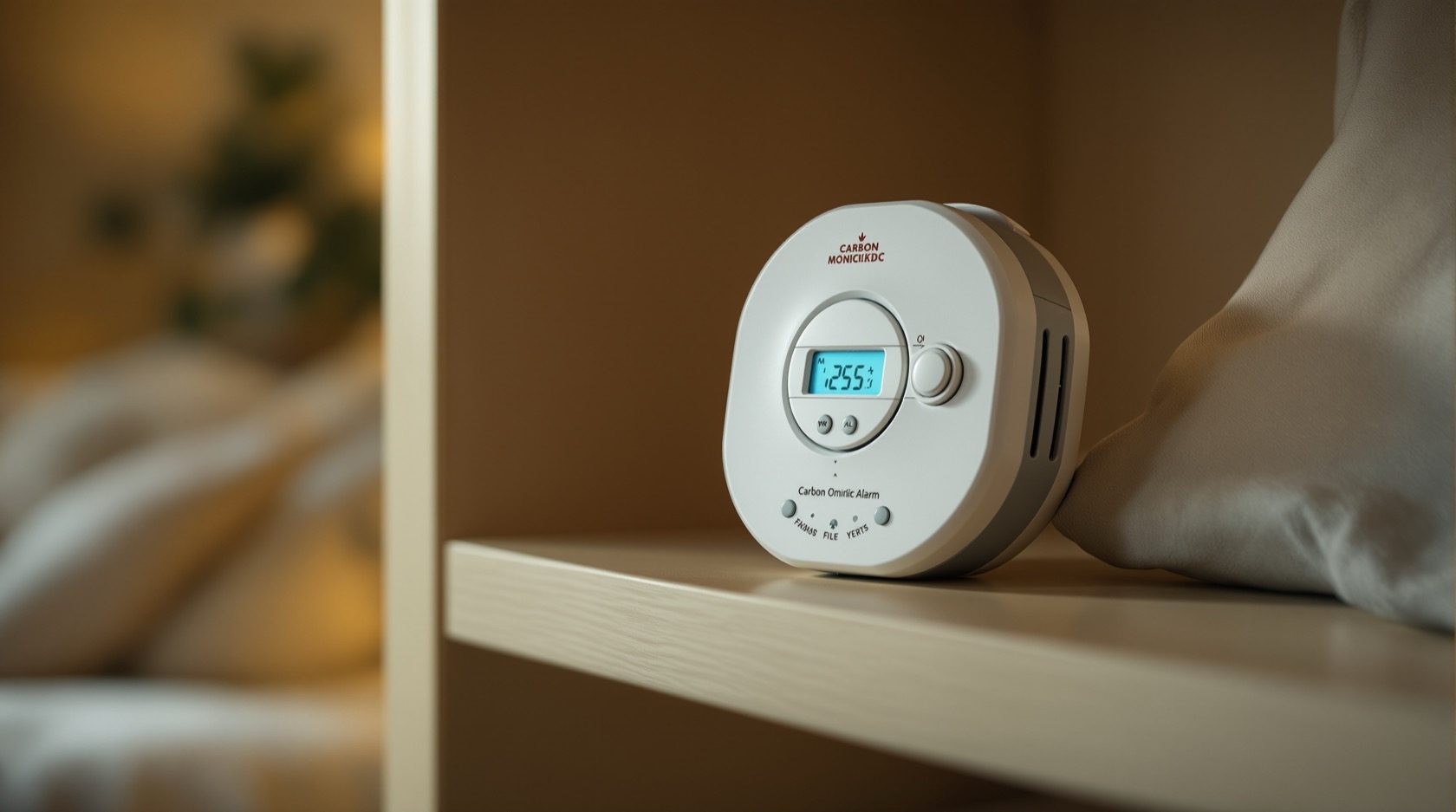
Carbon Monoxide Detectors in India (2026): The Silent Killer You Cannot Smell
Carbon monoxide is a colourless, odourless gas from generators, gas geysers and indoor braziers that kills Indians every winter. Here is why a CO alarm is a separate device, and how to choose, place and respond to one.
There is one household gas that gives you no warning at all. You cannot see it, you cannot smell it, and you cannot taste it. It does not sting your eyes or catch in your throat. By the time your body notices, through a dull headache and a wave of sleepiness, it may already be too late to save yourself. That gas is carbon monoxide, and every Indian winter it kills whole families in their sleep - not in a dramatic fire, but quietly, in a closed room with a running generator, a gas geyser or a coal brazier. Carbon monoxide detectors are the only device that can warn you in time, because they sense the one thing your body cannot.
This is the carbon-monoxide chapter of Studio Matrx's fire-safety library, and it sits under the complete guide to fire safety in India. It is a sibling to the guides on smoke detectors and gas-leak detectors - and the single most important idea in this guide is that those are three different devices doing three different jobs. If you take only one thing away, take that.
Scope and safety - read this first. A standalone home CO alarm is something you can and should buy and fit yourself - it is a retail life-safety device, not a statutory installation. What is NOT DIY: any repair to a gas geyser, generator flue or gas heater that is producing CO, and any building-wide automatic fire detection and alarm system, which is designed, installed and certified by a licensed fire-alarm contractor under IS 2189 : 2026 and tied to the Fire NOC. This is educational guidance, not legal advice. And one rule overrides everything: if a CO alarm sounds, do not investigate - get everyone out to fresh air first, then call for help from outside on 112.
What carbon monoxide actually is
Carbon monoxide, written CO, is a toxic gas produced whenever a carbon fuel - petrol, diesel, LPG, PNG, kerosene, charcoal, coal, wood - burns without enough oxygen. This is called incomplete combustion. A well-tuned, well-ventilated flame burns its fuel cleanly to carbon dioxide, which is harmless in normal amounts. Starve that same flame of air - close the room, block the exhaust, run the appliance too long in too small a space - and it starts making carbon monoxide instead.
CO is dangerous for a specific, cruel reason. When you breathe it in, it binds to the haemoglobin in your blood roughly two hundred times more readily than oxygen does. Your red blood cells fill up with CO instead of oxygen, and your organs - brain and heart first - begin to suffocate even though you are still breathing. You do not gasp or choke, because the air around you feels normal. You just get a headache, feel tired, and want to lie down. That is what makes it a silent killer.
The Indian sources that kill quietly
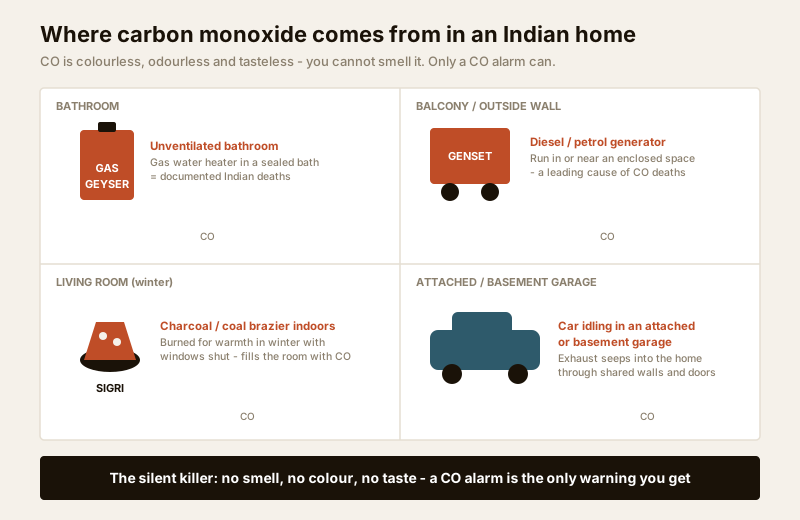
CO poisoning is not a Western problem that does not apply here. It is an under-recognised Indian hazard, and the sources are specific and common:
- Diesel and petrol generators run in or near an enclosed space. This is a leading cause. During a power cut a household or shop runs a genset in a stilt, a balcony, a corridor, a shaft or just outside a window - and the exhaust drifts straight back into the room. A generator must never run in or immediately beside an enclosed, occupied space.
- Gas geysers and water heaters in unventilated bathrooms. This is behind many documented Indian deaths. An instant gas water heater fitted inside a small, closed bathroom burns LPG or PNG while you shower; with the window shut and the exhaust starved, it fills the room with CO in minutes and the bather collapses. A gas geyser belongs outside the bathroom or in a properly ventilated space, never inside a sealed bath.
- Gas room heaters burned in a closed bedroom overnight for warmth.
- Charcoal or coal sigri braziers used indoors for winter heat. Bringing a burning brazier into a shut room to keep warm is one of the deadliest CO habits, and it recurs every cold season across north India.
- A car idling in an attached or basement garage. Exhaust seeps through shared walls, doors and floors into the home. Never warm up or run a car in a closed garage attached to the house.
For the wider picture of these ignition and fuel risks, see the kitchen fire-safety guide for gas appliances, the basement fire-safety guide for garages and generators below grade, and the whole-house home fire-safety guide.
Three different devices - say it loudly
This is the confusion that costs lives, so let us be blunt. A CO alarm, a smoke alarm and an LPG / gas-leak detector are three separate devices. Owning one does not cover the others. A smoke alarm will not detect carbon monoxide. A gas-leak detector will not detect carbon monoxide. Only a CO alarm detects CO.
| Device | What it senses | The hazard it catches |
|---|---|---|
| Smoke alarm | Smoke particles in the air | A fire - flaming or smouldering. See smoke detectors |
| LPG / gas-leak detector | Combustible gas (LPG or PNG) that has leaked but not burned | A gas leak that could explode or ignite. See gas detectors |
| Carbon monoxide (CO) alarm | Carbon monoxide - a poisonous product of burning | Poisoning from incomplete combustion - no fire, no leak needed |
The distinction matters because the CO hazard has no smoke and no gas smell. A gas leak has the deliberate rotten-egg odourant added to LPG and PNG so you notice it. A fire makes smoke you can see. Carbon monoxide gives you neither - which is exactly why it needs its own dedicated sensor.
How an electrochemical CO sensor works
Almost every home CO alarm uses an electrochemical sensor, and the principle is simple. Inside a sealed cell is a liquid electrolyte and a pair of electrodes behind a gas-permeable membrane. Carbon monoxide from the room diffuses through the membrane and is oxidised at the sensing electrode. That chemical reaction releases a tiny electrical current, and the more CO in the air, the larger the current. A small chip reads that current continuously and sounds the alarm when the concentration, measured over time, crosses a danger threshold.
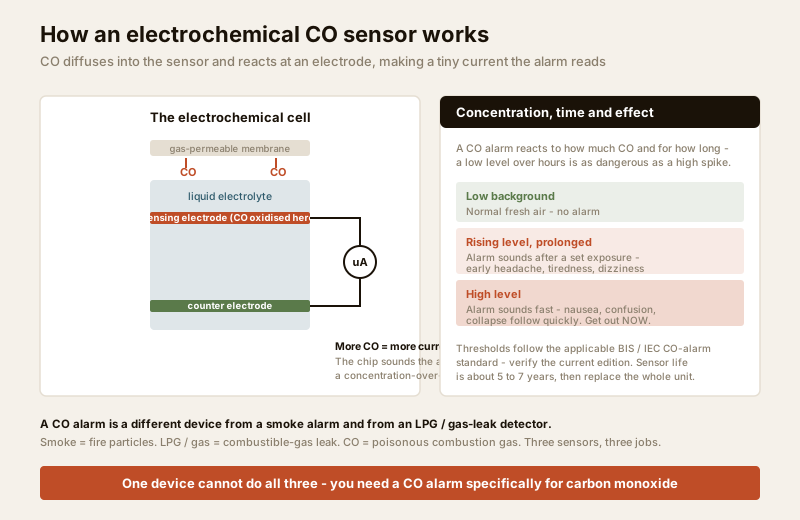
The important nuance is that a CO alarm does not fire on a single number - it weighs concentration against time. A low level of CO breathed for hours is as harmful as a high spike for minutes, because CO accumulates in the blood. So the alarm sounds sooner at high concentrations and after a longer exposure at low ones, following the response curve set by the applicable CO-alarm standard. This is deliberate, and it is why you should never dismiss an alarm as a "false" trip.
Two practical consequences follow from the sensor chemistry. First, the sensor ages - the electrochemical cell degrades over time, so a CO alarm has a finite life of roughly 5 to 7 years (check the model), after which the whole unit is replaced, not just a battery. Most have an end-of-life chirp. Second, because it is a chemical sensor, keep it away from steam, solvents and aerosols that can poison or fool it.
For the standard itself: the system-level code for automatic fire detection and alarm systems in India is IS 2189 : 2026. For the CO-alarm device specification, cite the applicable BIS / IEC CO-alarm standard and verify the current edition via the BIS catalogue - do not rely on an old number.
Symptoms of CO poisoning - and the life-saving response
Because CO poisoning mimics everyday illness, learning its signs is itself life-saving. The early symptoms are a dull, persistent headache, dizziness, nausea, tiredness and breathlessness - which is why people so often mistake it for flu, food poisoning or exhaustion and simply go to bed, where the exposure continues. As it worsens come confusion, blurred vision, loss of coordination, chest pain, collapse and unconsciousness.
Two clues separate CO from ordinary illness. First, several people - or the pets - feel unwell at the same time, in the same room. Second, everyone feels better after going outside and worse again indoors. If you notice either pattern near a fuel-burning appliance, treat it as CO until proven otherwise.
The response, whether the alarm sounds or you suspect CO, is a fixed order, and the order is what saves you:
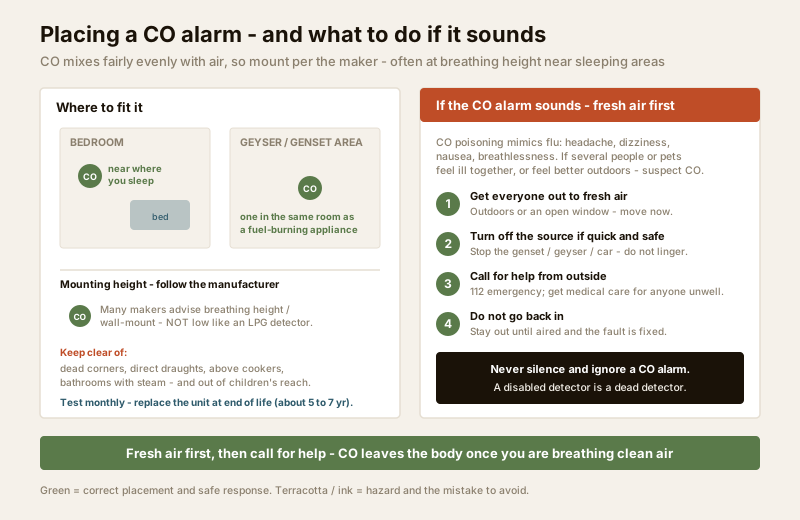
1. Get everyone out to fresh air first. Do not stop to investigate, hunt for the source or open every window - move people outdoors or to fully open air immediately. Fresh air is the antidote; CO clears from the blood once you are breathing clean air.
2. Turn off the source only if it is quick and safe on your way out - stop the generator, switch off the geyser, kill the car engine - but never linger in the CO to do it.
3. Call for help from outside. Ring 112, and get medical attention for anyone who is unwell, drowsy or has collapsed - CO poisoning needs proper treatment even if they seem to recover.
4. Do not go back in until the space has been thoroughly aired and the faulty appliance has been checked and fixed by a competent person.
Where to place a CO alarm
CO placement follows a different logic from an LPG detector. LPG is heavier than air and pools low, so an LPG detector goes near the floor. Carbon monoxide, by contrast, mixes fairly evenly with air - it is close to the same density and disperses through the room, often carried on the warm air from the appliance producing it. So you do not mount a CO alarm low. Most manufacturers advise breathing height or wall-mounting, and the single rule that overrides all general advice is: follow the placement instructions printed with your specific alarm.
Sensible principles for an Indian home:
- One near the sleeping areas, so it can wake you - CO kills most often when people are asleep and cannot feel the early symptoms.
- One in the same room as a fuel-burning appliance - the gas geyser's space, the room with a gas heater, or near where a generator's fumes could enter.
- Follow the maker's height - breathing height or as specified, not floor level. It is not an LPG detector.
- Keep it clear of direct draughts, dead corners, the immediate area above a cooker, and steamy bathrooms - and out of children's reach.
- If you use a generator, a gas geyser or a brazier at all, treat a CO alarm as essential, not optional.
Testing and maintaining it - and never disabling it
A CO alarm only protects you if it is alive. The routine is light:
| Task | How often | Why |
|---|---|---|
| Press the test button | Monthly | Confirms the horn and electronics still work |
| Replace batteries (if not sealed) | As specified, or on the low-battery chirp | A dead battery is a dead alarm |
| Keep the vents clean | Occasionally, gentle dusting | Dust can slow gas reaching the sensor |
| Replace the whole unit | At its end-of-life date, about 5 to 7 years | The electrochemical sensor wears out |
And the line that matters most: never disable a CO alarm - pick the right unit and placement instead. The commonest, deadliest mistake with any detector is pulling the battery or binning it because it chirps or nuisance-trips. A CO alarm rarely nuisance-trips, and if yours does, the answer is to move it away from steam or a draught, or replace an ageing unit - never to silence it for good. A disabled detector is a dead detector, and with CO there is no smell to fall back on.
Combined smoke and CO alarms
You can buy combined smoke-and-CO alarms that house both a smoke sensor and a CO sensor in one unit, and for many homes they are a tidy, cost-effective way to cover two hazards from one device on the ceiling or wall. They are genuinely useful - but understand what they are and are not. A combined smoke-and-CO alarm still does not detect an LPG or PNG gas leak; that remains a separate gas detector job. So the honest tally for a fuller-protected Indian home is: smoke detection, CO detection (standalone or combined with smoke), and a gas-leak detector - with the heat detector as the kitchen backup where smoke alarms nuisance-trip.
When a professional or a statutory system is required. A home CO alarm is yours to buy and fit. But the appliances that produce CO are not DIY once they misbehave: a gas geyser, gas heater, generator flue or car exhaust that is generating carbon monoxide must be inspected and repaired by a competent, authorised technician - and a gas installation change is the job of your authorised LPG / PNG distributor under the Gas Cylinder Rules / PESO framework. Separately, any non-trivial building's automatic fire detection and alarm system is governed by IS 2189 : 2026 and the National Building Code (via SP 7 : 2026, Part 4), designed and certified by a licensed fire-alarm contractor and cleared for the Fire NOC by the State Fire Services. Route those to the professionals - never a substitute for the statutory system.
Run the whole-house picture through the home fire-safety scorecard and use the fire-detector selector to match detector types to your rooms; the emergency-preparedness guide sets the escape-and-response context, and the electrical hub covers the wiring side of powered alarms.
Key takeaways
- Carbon monoxide is a colourless, odourless, tasteless poison from incomplete combustion - you cannot sense it, so a CO alarm is your only warning.
- The Indian sources are specific: generators run near enclosed spaces, gas geysers in unventilated bathrooms, gas heaters and charcoal sigris used indoors, and cars idling in an attached or basement garage.
- A CO alarm, a smoke alarm and an LPG gas-leak detector are three different devices - one cannot do another's job; a combined smoke-and-CO alarm still needs a separate gas detector.
- If a CO alarm sounds, get everyone to fresh air first, turn off the source only if quick and safe, call 112 from outside, and do not go back in until aired and fixed.
- Place per the manufacturer - CO mixes evenly with air, so mount at breathing height near sleeping areas, not low; test monthly and replace the whole unit at end of life, about 5 to 7 years. Never disable it.
References
- IS 2189 : 2026 (Selection, Installation and Maintenance of Automatic Fire Detection and Alarm System - Code of Practice), Bureau of Indian Standards - the system-level code for automatic fire detection and alarm in India. For the CO-alarm device specification, use the applicable BIS / IEC CO-alarm standard and verify its current edition via the BIS catalogue: https://www.services.bis.gov.in/
- National Building Code of India, SP 7 : 2026 (the NBC), Part 4 "Fire and Life Safety" - the fire and life-safety framework for buildings; the older SP 7 : 2016 edition is withdrawn but still widely quoted. Verify the current edition via the BIS catalogue: https://www.services.bis.gov.in/
- The Gas Cylinder Rules and the PESO (Petroleum and Explosives Safety Organisation) framework, plus your authorised LPG / PNG distributor's safety guidance - the basis for safe siting and servicing of gas geysers and appliances that can produce CO.
- CO-alarm manufacturer datasheets and installation instructions - the authority for your specific alarm's placement height, sensor life, testing routine and end-of-life replacement date. Always follow the instructions supplied with your unit.
This is an educational overview, not legal advice, and not a substitute for a licensed fire-safety consultant, your authorised gas distributor or a qualified appliance technician. A building's statutory fire detection and alarm system, and any repair to a fuel-burning appliance producing carbon monoxide, are professional tasks - engage licensed professionals and verify any standard's current status via the BIS catalogue before relying on it.
Export this guide
Related Guides — Deep-dive reading
LPG Leak Detectors in India (2026): The Kitchen Gas Alarm Every Home Should Fit
Almost every Indian home cooks on LPG or PNG, and a leak pools invisibly until one spark ignites it. Here is the cheap kitchen gas alarm to fit, and the one placement rule that decides whether it works.
SecurityGas Detectors in India (2026): Combustible-Gas Sensing, LPG vs PNG & the Mounting-Height Rule
How combustible-gas detectors sense a leak before it can explode, why gas density decides whether you mount the unit LOW for LPG or HIGH for PNG, and how to place, test and maintain one.
SecurityBathroom Fire Safety India: NBC 2016 Part 4, Fire-Rated Materials & Electrical Ignition
The bathroom is rarely thought of as a fire risk, yet it hides several: a leaky geyser element, an over-run exhaust-fan motor, cheap flammable PVC panels overhead, and aerosol cans stored beside a heat source. This is an honest, practical reference to fire and life safety in the Indian bathroom — the NBC 2016 Part 4 context that actually applies to homes, the real ignition sources, self-extinguishing false-ceiling and PVC materials, earth-leakage protection as fire prevention, escape considerations, and the carbon-monoxide danger of gas geysers.
BathroomsRelated Tools — Try Free
Fire Detector Selector
Smoke, heat, CO, gas or flame? Pick a space and its fuels and hazards and get the right detector type(s) to consider — with the one placement rule that matters most for each, including the LPG-low vs PNG-high gas rule.
Detector SelectorBurglar Alarm System Selector
Answer a few questions about your property, cabling, coverage, monitoring and power and get the right burglar alarm — wired / wireless / hybrid, self or professionally monitored — with the design non-negotiables.
Alarm SelectorCross-Ventilation Analyzer
Estimate airflow and air changes per hour (ACH) from room size, window areas, layout, and local wind — with NBC 2016 Part 8 compliance check.
Ventilation Calculator