
Pulp & Paper Industry Wastewater Treatment: COD, Colour, Fibre & AOX
Why pulp and paper mills produce some of the most stubborn effluent in Indian industry — high COD, dark lignin colour, suspended fibre and AOX — and how a well-designed ETP clarifies, digests, decolourises and recovers water for reuse.
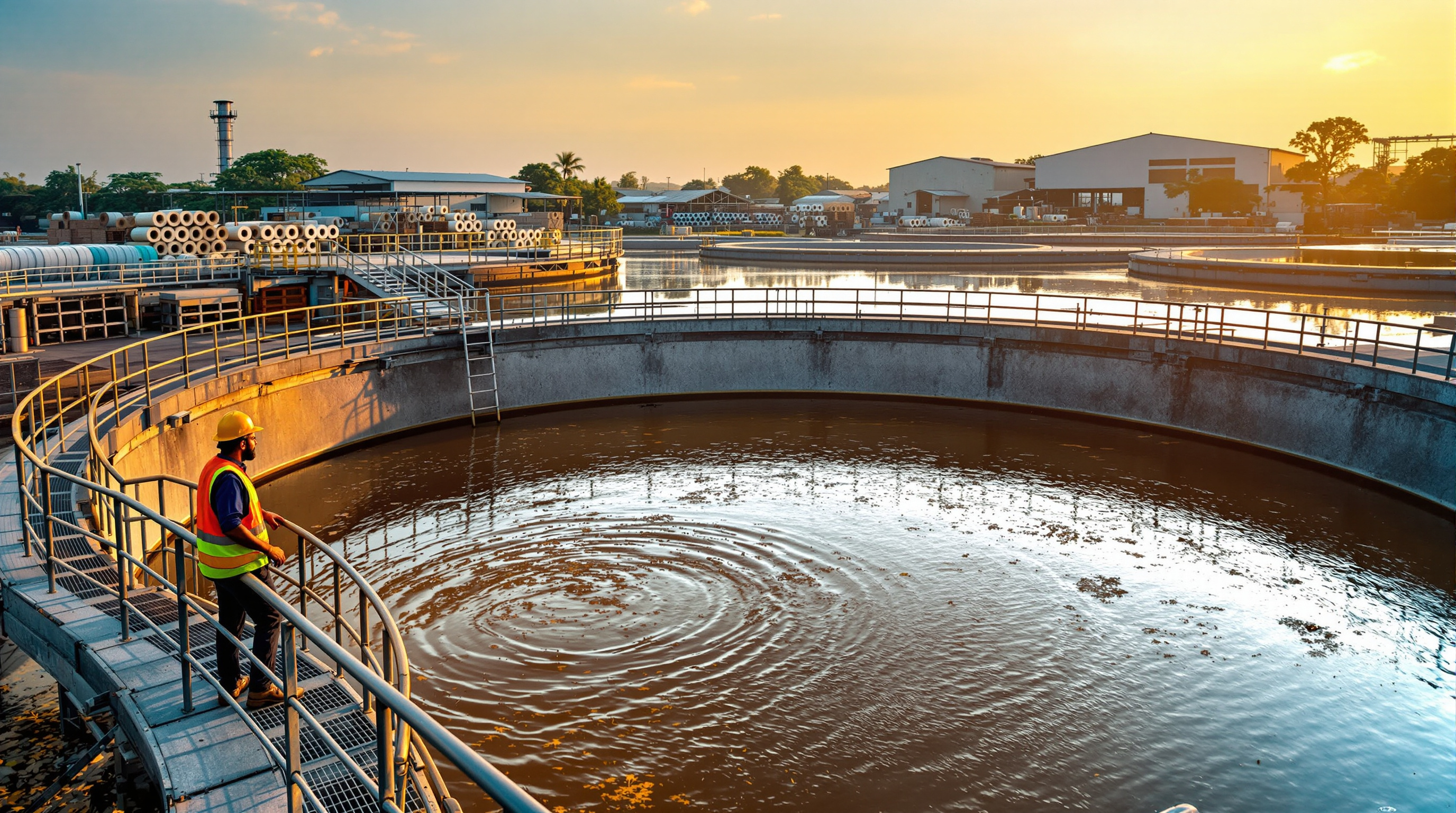
Few industries put water to work as hard as pulp and paper. A mill uses water to cook wood chips or waste paper into pulp, to wash and screen the fibre, to bleach it white, and to form and press the sheet on the paper machine. By the time that water has finished its journey it carries a punishing cocktail: dissolved organic matter measured in thousands, a deep tea-brown colour from lignin, a heavy load of escaped fibre, and — in mills that bleach with chlorine chemistry — a family of chlorinated organics called AOX. Cleaning it is one of the harder problems in industrial wastewater, and it is squarely an Effluent Treatment Plant (ETP) job, not a domestic STP one.
A paper mill's effluent can carry ten to thirty times the organic strength of ordinary sewage, plus colour and halogenated compounds a sewage plant was never built to remove. Treating it like municipal sewage is the single most common — and most expensive — design mistake.
This guide walks through what makes paper industry wastewater treatment distinctive, and the treatment train — clarification, biological treatment, colour and AOX removal, fibre recovery and water reuse — that a well-run mill relies on. If you are new to the vocabulary of BOD, COD and TSS, the primer on wastewater characteristics is worth a detour first, and the STPs vs ETPs explainer sets out why this stream needs an ETP.
What makes paper mill effluent so difficult
Not all mills are alike. An integrated pulp mill making paper from wood or bagasse (a large agro-residue sector in India) produces a very different — and far stronger — effluent than a recycled-fibre mill making kraft paper or newsprint from waste paper. But the same four problem parameters dominate the conversation.
| Parameter | Typical raw range | Why it is a problem |
|---|---|---|
| COD | 1,000–8,000+ mg/L | Very high dissolved organic load; much of it is hard-to-degrade lignin |
| BOD | 300–2,500 mg/L | Biodegradable fraction; the BOD:COD ratio is often low, signalling stubborn matter |
| Colour | Dark brown | Dissolved lignin and its derivatives; visually and chemically persistent |
| TSS (fibre) | 500–3,000+ mg/L | Escaped cellulose fibre and fillers — recoverable if caught early |
| AOX | Present in bleach streams | Chlorinated organics from elemental-chlorine bleaching; toxic, regulated |
Two features set paper apart from, say, a dairy or brewery effluent. First, the colour does not come out with conventional biological treatment — the lignin molecules are large and stable, so a mill can meet its BOD limit and still discharge visibly brown water. Second, the low BOD:COD ratio means a big slice of the COD is simply not food for ordinary microbes, so chasing the COD limit with more aeration alone rarely works.
Stage 1 — Screening, fibre recovery and equalisation
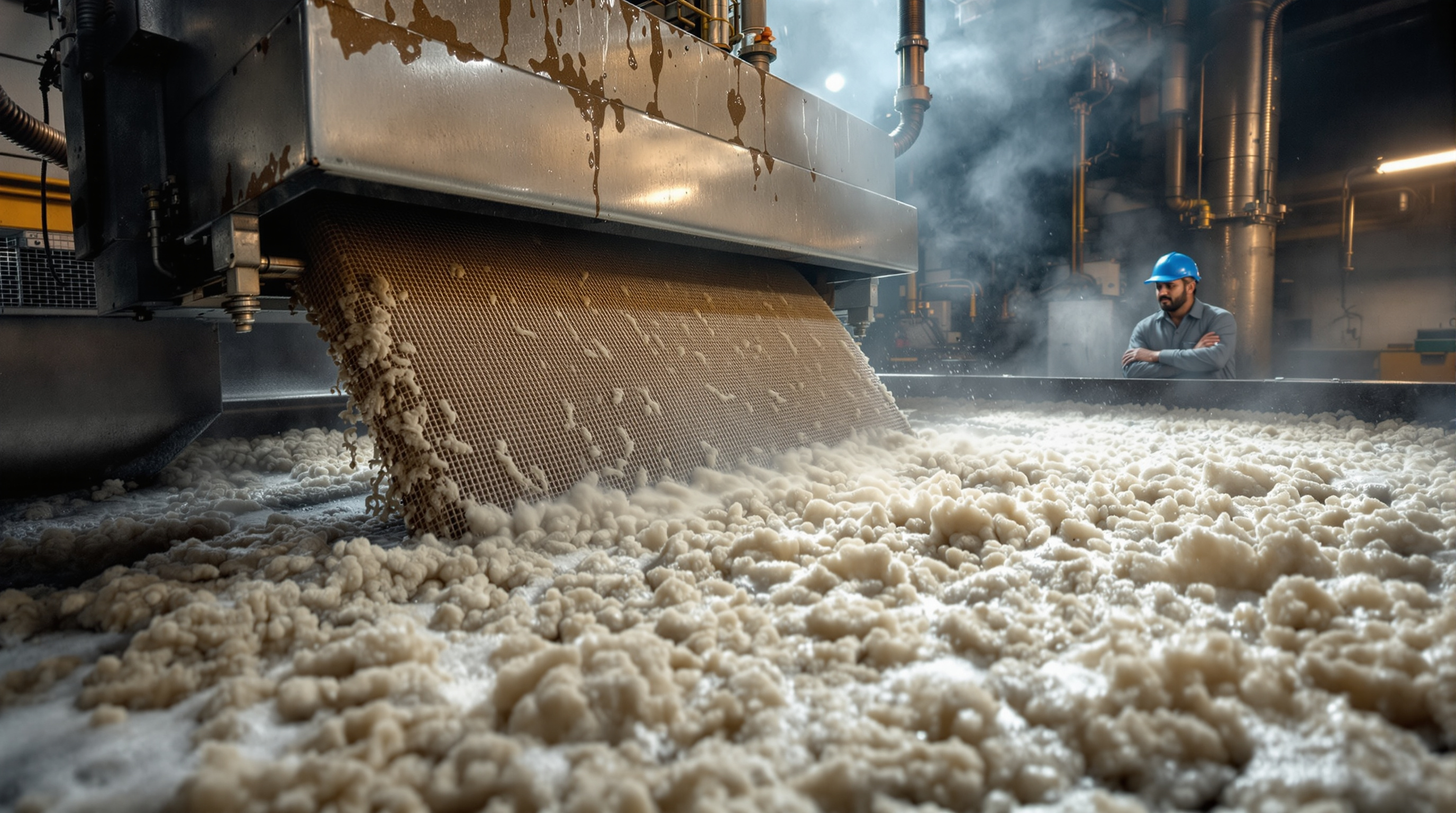
The first opportunity in the treatment train is also the most profitable: getting the fibre back. Fibre that escapes to the drain is lost raw material, and it is far cheaper to recover it than to treat it as waste downstream.
- Screening and save-alls. Coarse screens catch shives and debris; a save-all (a disc or drum filter, or a dissolved-air flotation unit) recovers fine fibre from the paper-machine white water and returns it to the stock. A good save-all can claw back several tonnes of fibre a day at a mid-size mill.
- Equalisation. Flows and loads swing wildly between pulping, bleaching and machine washing. An equalisation tank buffers those surges into a steady feed, and lets the pH be trimmed toward the near-neutral band the biology needs. See the dedicated note on equalisation for sizing logic.
Stage 2 — Primary clarification
The equalised effluent then enters a primary clarifier, usually with the help of coagulants and a flocculant to bundle the fine suspended fibre and fillers into settleable flocs. Gravity does the rest: the sludge settles to the floor and is scraped to a central hopper, while clarified water flows over the weir.
Primary clarification typically strips out the bulk of the TSS and a useful share of the COD before the biological stage. Getting this right matters — every kilogram of solids removed here is a kilogram the aeration tank does not have to labour over. The sludge generation calculator helps anticipate how much primary and biological sludge the plant will produce for dewatering.
Stage 3 — Biological treatment
This is where the biodegradable organic load — the BOD and the softer part of the COD — is destroyed by microbes. For paper effluent the choice of biology depends heavily on strength.
Anaerobic first, for strong streams. Concentrated streams (an integrated agro-based mill, or condensates) are often sent through an anaerobic reactor such as a UASB before the aerobic stage. Anaerobic treatment digests a large COD load without needing oxygen, produces far less sludge, and generates biogas the mill can burn — a genuine energy offset. It rarely reaches discharge quality alone, so it is a roughing step.
Aerobic polishing. The activated sludge process is the workhorse, and MBBR and SBR systems are common where a compact footprint or flexible operation is wanted. The aeration tank supplies the oxygen the culture needs to oxidise the organics. Two design realities always bite here:
- Nutrient dosing. Paper effluent is carbon-rich but starved of nitrogen and phosphorus, so urea and phosphoric acid (or DAP) must be dosed to keep the microbes fed and the sludge healthy.
- Retention time and loading. Because the organics are partly recalcitrant, these tanks need generous retention. Sizing them turns on the hydraulic retention time and the organic loading rate — the HRT calculator and organic loading calculator are the quickest way to sanity-check a design.
Stage 4 — Colour and AOX removal
Here is the parameter that catches mills out. After biology the water may pass its BOD limit while still running visibly brown, because dissolved lignin colour survives biological treatment. Removing it — and cutting residual COD and AOX — needs a dedicated tertiary step:
- Coagulation–flocculation with alum, ferric or specialised colour-removal polymers, precipitating the lignin colour bodies for settling or flotation.
- Advanced oxidation — ozone or Fenton-type chemistry — which breaks the colour molecules and knocks down AOX and stubborn COD together.
- Adsorption on activated carbon as a final polish.
- Prevention at source — switching bleaching from elemental chlorine to ECF (elemental-chlorine-free) chemistry, which is the most effective way to cut AOX before it ever reaches the ETP.
The cleaner and more sustainable long-term answer to AOX is process substitution, not end-of-pipe heroics — a point worth making to any mill weighing capital spend on tertiary treatment.
Water reuse and moving toward ZLD
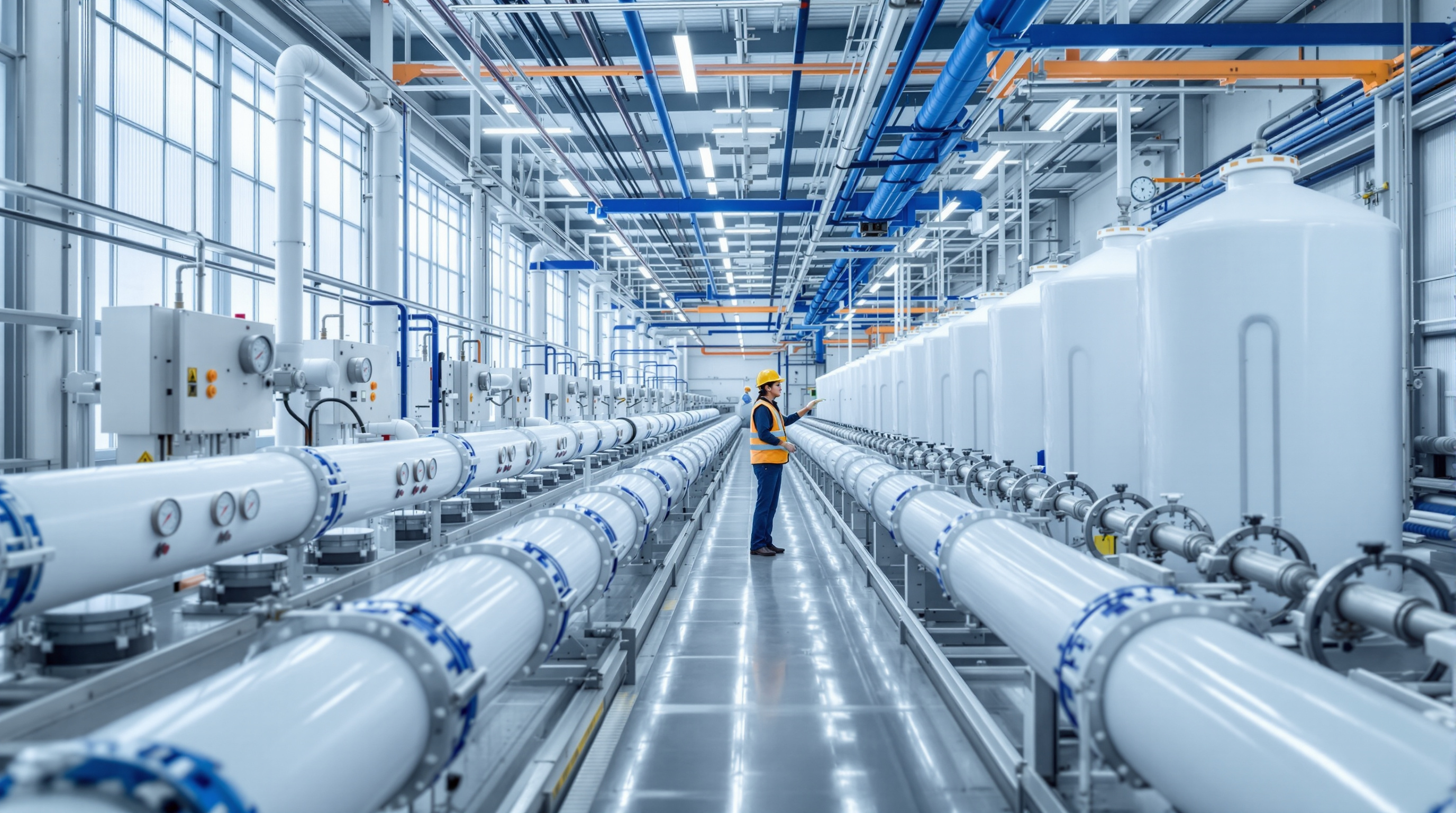
The prize at the end of the train is water. A mill that treats its effluent to a high standard can recycle a large share back into pulping, washing and equipment cooling, cutting fresh-water intake and the effluent volume it must discharge. Membrane polishing (ultrafiltration and reverse osmosis) lifts treated water to reuse grade, and mills under strict discharge conditions increasingly pursue Zero Liquid Discharge, evaporating the final reject to recover salts and leave no liquid effluent at all. ZLD is capital- and energy-intensive, so it is justified where water is scarce, discharge norms are tight, or the regulator mandates it.
Design takeaways for a paper mill ETP
- Recover fibre first. It is raw material and revenue, not just a TSS number — and it lightens every downstream stage.
- Design for COD and colour, not just BOD. A plant sized only to meet BOD will discharge brown water and fail on COD.
- Treat AOX at the source. ECF bleaching beats end-of-pipe removal on both cost and reliability.
- Match biology to strength. Add an anaerobic front-end for strong streams to harvest biogas and cut sludge.
- Reuse aggressively. Recycled treated water is often the fastest payback in the whole plant.
Paper mill effluent rewards engineering that respects its peculiarities — the fibre worth catching, the colour that hides behind a passing BOD test, the AOX best designed out rather than filtered out. For the fundamentals behind each unit process, browse the Sewage Treatment Plants guide library; for adjacent industrial streams with their own quirks, the textile and chemical industry wastewater guides make instructive companions.
Export this guide
Related Guides — Deep-dive reading
Pharmaceutical Wastewater Treatment: Why It Needs an ETP, Not an STP
Pharma effluent carries high COD, toxic and refractory compounds, swinging pH and traces of active drug ingredients — a load that overwhelms a domestic STP. Here is what makes it so hard to treat, and the ETP train engineers build to handle it in India.
Sewage Treatment PlantsDairy Industry Wastewater Treatment: ETP Design, UASB Biogas & Reuse Guide
Why milk processing produces some of the most oxygen-hungry effluent in the food sector, and how a DAF + UASB + aerobic treatment train tames its BOD, COD and fats — with biogas recovery and water reuse built in.
Sewage Treatment PlantsUpflow Anaerobic Sludge Blanket (UASB): Anaerobic Sewage Treatment Explained
The no-oxygen reactor where sewage flows up through a blanket of granular sludge, destroying pollution while producing biogas and using almost no energy — how the sludge blanket and gas-solid separator work, why Indian municipal STPs favour it, and why it always needs an aerobic polishing step.
Sewage Treatment PlantsRelated Tools — Try Free
Hydraulic Retention Time (HRT) Calculator
Compute a reactor or tank's hydraulic retention time from its volume and daily flow, and benchmark it against recommended ASP, MBBR and SBR ranges.
STP CalculatorIndustrial Wastewater Treatment Planner
Pick your dominant industrial wastewater and daily flow to see whether you need an STP or ETP, a 1–5 treatment complexity rating, and how rough capex scales.
PlannerSTP Technology Comparison Matrix
Compare Extended Aeration, MBBR, SBR, MBR and UASB across six criteria, set your priority, and see the best-fit STP technology instantly.
Comparator