
STP vs ETP: What is the Difference and Which Do You Need?
A Sewage Treatment Plant and an Effluent Treatment Plant sound interchangeable, but they solve different problems. Here is the clear, practical distinction — domestic sewage versus industrial trade effluent — and how to know whether your facility needs an STP, an ETP, both, or a shared CETP.
Two acronyms get swapped as if they mean the same thing: STP and ETP. Both are wastewater plants, both have tanks and pumps and blowers, and both exist to send clean water out the far end. But they are built to fight completely different enemies — and installing the wrong one is one of the more expensive mistakes a project can make. A domestic sewage plant dropped in front of an industrial waste stream will simply fail: the microbes die, the discharge stays illegal, and the regulator does not accept "we built a plant" as compliance.
This guide draws the line cleanly. What an STP is for, what an ETP is for, why the difference is chemistry and not size, and how to work out whether your facility needs one, the other, both, or a share of a common plant down the road.
The one-line rule: an STP treats the water that comes out of people — toilets, kitchens, washrooms. An ETP treats the water that comes out of a process — the reactor, the dye bath, the plating line. Same goal, different beast.
The full forms, and why they matter
- STP — Sewage Treatment Plant. Treats domestic sewage: the everyday wastewater of homes, offices, hotels, hospitals and institutions. The pollution is overwhelmingly organic and biological — food, faeces, soap, grease — and it is broadly the same everywhere, which is why STP design is fairly standardised. If you are new to it, start with What is a Sewage Treatment Plant? and How does an STP work?.
- ETP — Effluent Treatment Plant. Treats industrial trade effluent: the process wastewater from a factory. Its pollution is chemical — dyes, acids, alkalis, solvents, heavy metals, oils, high dissolved salts — and it changes completely from one industry to the next. A textile ETP looks nothing like an electroplating ETP.
The word effluent is doing the heavy lifting here. In everyday use "sewage," "wastewater" and "effluent" blur together, but engineers separate them deliberately — a distinction we unpack in Sewage vs Wastewater vs Effluent. "Effluent" in the ETP sense means industrial trade effluent: water that has been through a manufacturing step and carries whatever that step put into it.
The real difference is chemistry, not capacity
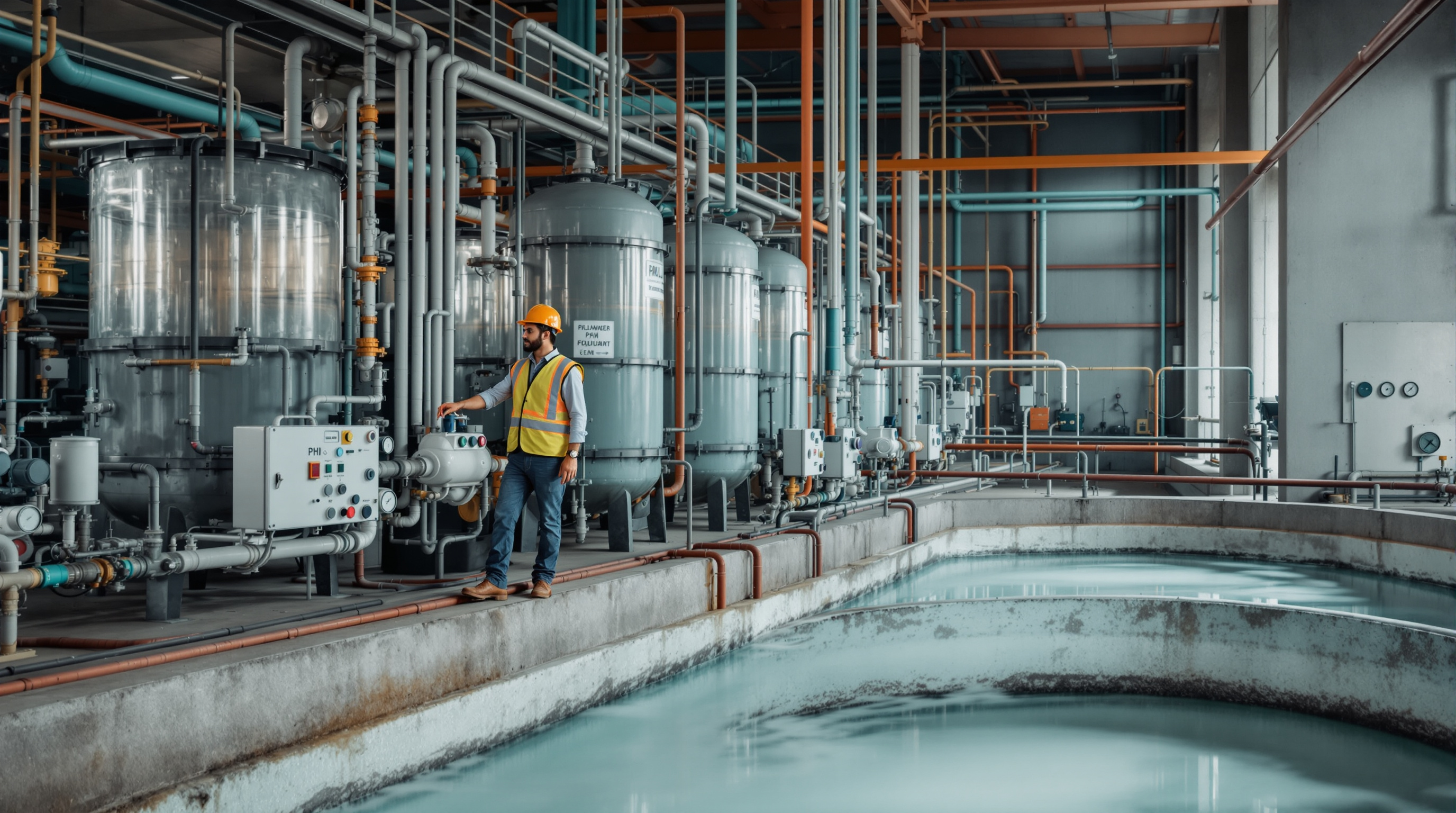
The trap is to think the difference is size — that an ETP is just a big STP. It is not. The difference is what is dissolved in the water, and that dictates the entire treatment train.
Domestic sewage is a known quantity. Its strength sits in a predictable band, its pH hovers near neutral, and its pollution is food for bacteria. So an STP can lean almost entirely on biology — grow the right microbes, give them oxygen, and let them eat the waste. That single principle underlies the Activated Sludge Process, MBBR, MBR and SBR — different hardware, same biological heart.
Industrial effluent breaks those assumptions:
- It is often toxic to the very microbes an STP relies on. Heavy metals, biocides and strong solvents don't get eaten — they kill the biological culture. Feed chromium-bearing plating water into a biological plant and you sterilise it.
- Its pH can be wildly off. Pickling lines discharge strong acid; mercerising discharges strong alkali. Bacteria only work in a narrow near-neutral band.
- It carries pollutants biology cannot touch — colour from dyes, dissolved salts, non-biodegradable COD. You measure the gap between BOD, COD and TSS: domestic sewage has a COD only modestly above its BOD, while a chemical effluent can show a huge COD with almost no biodegradable fraction. That ratio alone tells you biology won't finish the job.
So an ETP front-loads physico-chemical steps that an STP usually doesn't need: pH neutralisation, coagulation–flocculation to drop out metals and colour, chemical oxidation, sometimes electro-coagulation — before any biological stage, and often advanced polishing after. Many high-strength or toxic streams end at Zero Liquid Discharge, evaporating the water off and leaving only solids, because the regulator allows no liquid discharge at all.
STP vs ETP at a glance
| Aspect | STP (Sewage Treatment Plant) | ETP (Effluent Treatment Plant) |
|---|---|---|
| Treats | Domestic sewage — toilets, kitchens, washrooms | Industrial trade effluent — process wastewater |
| Main pollutants | Organic matter, suspended solids, pathogens | Chemicals, dyes, heavy metals, oils, salts, acids/alkalis |
| Nature of pollution | Biological, fairly consistent | Chemical, varies by industry and even by shift |
| Core treatment | Biological (microbes + oxygen) | Physico-chemical first, then biology if viable |
| Typical pH in | Near neutral (6.5–8.5) | Can be strongly acidic or alkaline |
| Design basis | Largely standardised by headcount/flow | Custom-engineered to the specific effluent |
| Where you find it | Apartments, hotels, hospitals, offices, IT parks | Textile, pharma, plating, chemical, dairy, paper mills |
| Common endpoint | Reuse for flushing, gardening, cooling | Reuse, safe discharge, or Zero Liquid Discharge |
Which do you need? A simple decision path
Start by asking where your wastewater comes from, not how much of it there is.
You need an STP if your building produces only domestic sewage — people using toilets, kitchens and washrooms — with no manufacturing process. That covers virtually every residential complex, hotel, hospital, school and office. Sizing it is a headcount exercise: estimate the flow with the Sewage Generation Calculator, convert it to a plant capacity with the STP Capacity Calculator, and check the biology holds up with the HRT and organic-loading calculators.
You need an ETP if a manufacturing or processing step generates wastewater carrying chemicals, metals, dyes, oils or extreme pH. This is the part people get wrong: an industrial unit cannot discharge trade effluent through a domestic STP. The STP isn't rated for that chemistry and will fail its consent conditions. The specifics are industry-by-industry — see textile, pharmaceutical, dairy and food-processing treatment for how differently each stream behaves.
You need both if you run a factory with people in it — which is most factories. The canteen, toilets and washrooms produce domestic sewage that goes to an STP; the production floor produces trade effluent that goes to a separate ETP. Mixing the two streams is poor practice: it dilutes the effluent (making it harder to treat efficiently and sometimes breaching "no dilution" rules) and contaminates otherwise easy sewage. Keep them separate, treat them separately.
Where a CETP fits in
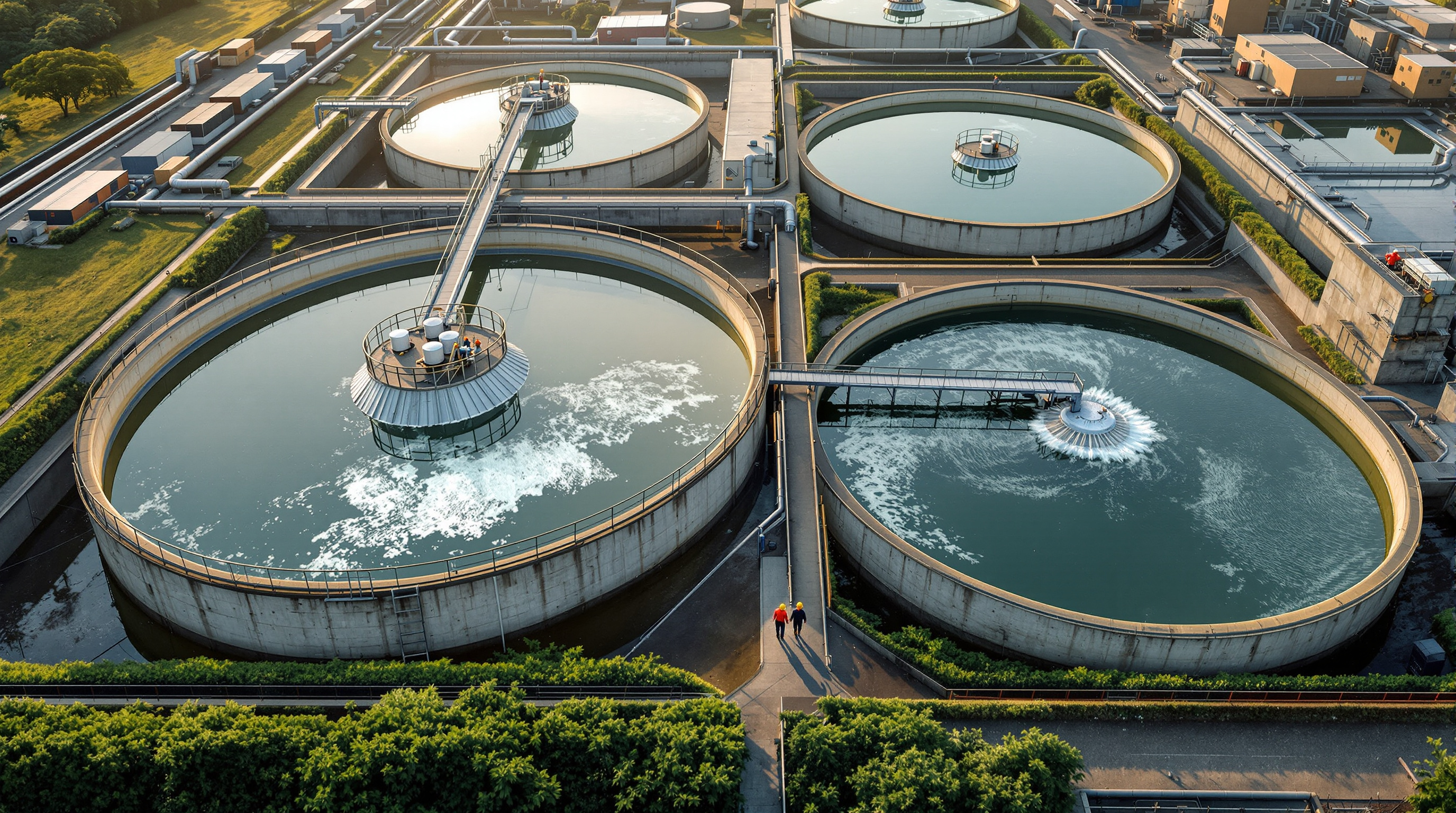
Not every small industrial unit can afford, staff and run its own ETP — and a poorly run in-house ETP is worse than none. So India's pollution-control framework promotes the CETP — Common Effluent Treatment Plant: a shared ETP serving a whole industrial estate or cluster, usually of small and medium units.
Each member factory does primary treatment on site (screening, oil removal, pH correction, sometimes primary coagulation) to bring its effluent within an agreed inlet band, then pipes it to the CETP for the heavy biological and tertiary treatment. The economics of scale make compliance reachable for units that could never justify a full plant alone. A CETP is still an ETP in kind — the "common" simply means it is shared.
Getting it wrong is expensive
The stakes are practical:
- Regulatory consent. State Pollution Control Boards issue Consent to Establish and Consent to Operate against the right kind of plant for your discharge. An STP where the process needed an ETP is a non-starter.
- Plant failure. Route toxic effluent into a biological plant and the culture crashes — days of downtime, discharge violations, and a re-seeding bill.
- Retrofitting. Discovering mid-project that you need an ETP, not the STP you designed for, means new tanks, new dosing systems and new footprint. Get the classification right at concept stage.
The bottom line
Strip away the jargon and it comes down to one question: is the water dirty from people, or dirty from a process? People-water — organic, predictable, biological — goes to an STP. Process-water — chemical, variable, sometimes toxic — goes to an ETP, purpose-built for that specific effluent, possibly ending in Zero Liquid Discharge, or feeding a shared CETP. A factory with a canteen needs both. Name the streams correctly first, and every design decision after it gets easier.
From here, browse the full Sewage Treatment Plants guide library, or if your project is straightforward domestic sewage, jump straight to the STP Capacity Calculator and turn your occupancy into a design flow in a minute.
Export this guide
Related Guides — Deep-dive reading
Pharmaceutical Wastewater Treatment: Why It Needs an ETP, Not an STP
Pharma effluent carries high COD, toxic and refractory compounds, swinging pH and traces of active drug ingredients — a load that overwhelms a domestic STP. Here is what makes it so hard to treat, and the ETP train engineers build to handle it in India.
Sewage Treatment PlantsAutomobile Industry Effluent Treatment: Oil, Paint-Shop Chemicals & Metals
Why a car plant's wastewater needs an ETP and not a domestic STP — the oil and grease, phosphates, paint-shop solvents and heavy metals it carries, and the oil-separation, physico-chemical, biological and metal-removal train that cleans it for reuse or zero liquid discharge.
Sewage Treatment PlantsSTP for Industrial Parks & SEZs: Treating Worker & Canteen Sewage the Right Way
Industrial estates and SEZs need a common STP for the domestic sewage of thousands of workers and canteens — kept strictly separate from the trade effluent that goes to a CETP or ETP. Here is how to profile, size, treat and reuse it.
Sewage Treatment PlantsRelated Tools — Try Free
Industrial Wastewater Treatment Planner
Pick your dominant industrial wastewater and daily flow to see whether you need an STP or ETP, a 1–5 treatment complexity rating, and how rough capex scales.
PlannerRainwater Tank Sizer
How big should your rainwater tank be? Computes annual harvest, recommended tank capacity in litres, water-bill savings, and payback — for 10 Indian cities.
RWH CalculatorSTP Capacity Calculator
Size a sewage treatment plant in KLD from your building's occupancy — water demand, sewage generated and recommended STP capacity.
STP Calculator