
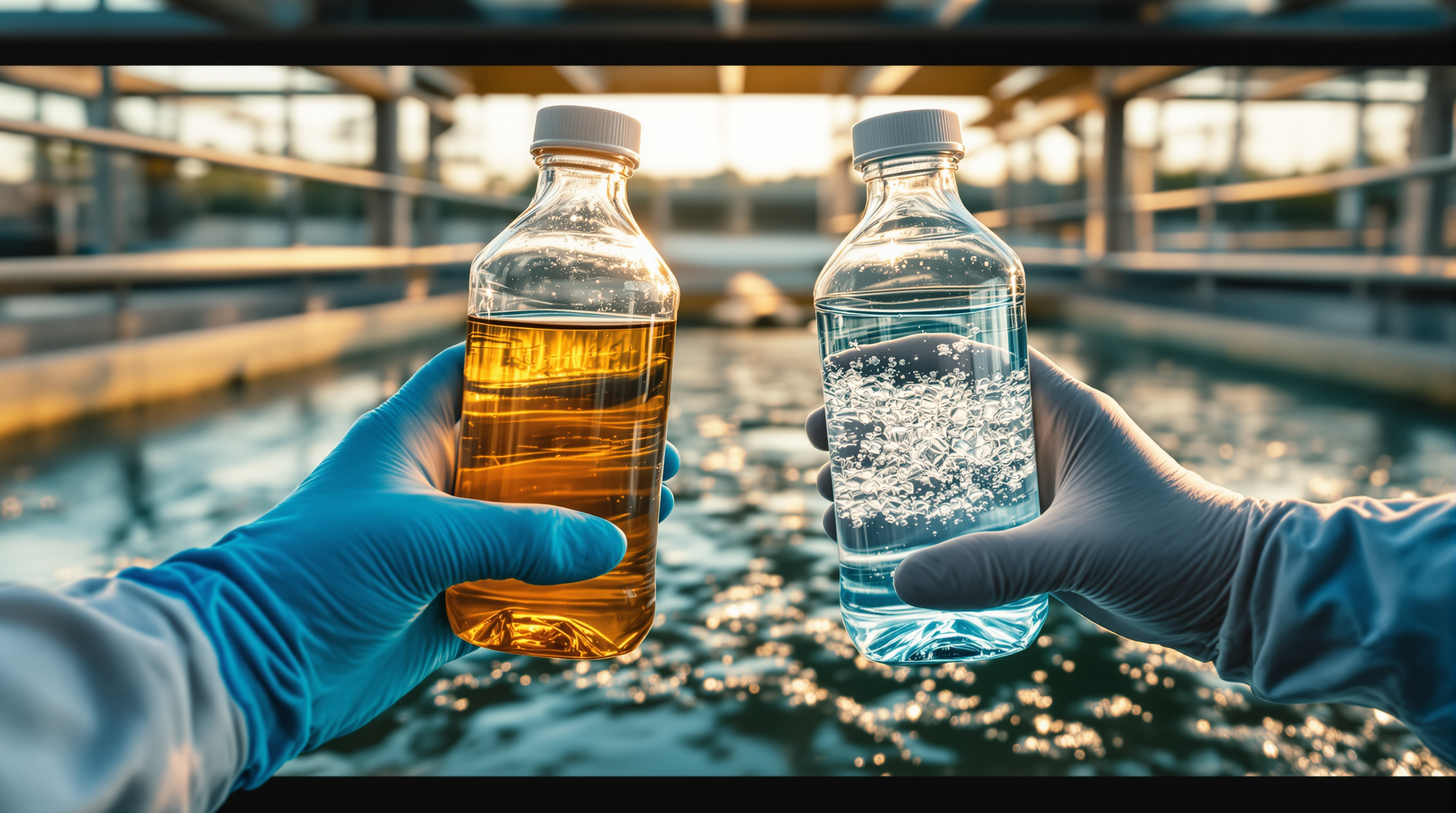
Wastewater Characteristics Explained: BOD, COD, TSS and pH
The four numbers that tell you how dirty sewage is and how well your STP is cleaning it — BOD, COD, TSS and pH — explained in plain language, with typical raw-sewage values, treated-water targets, and why each one matters.
Ask an STP operator whether their plant is working, and they will not describe the tanks or the blowers. They will quote you four numbers: BOD, COD, TSS and pH. These are the vital signs of wastewater — the way engineers measure how dirty sewage is when it comes in, and how clean the water is when it leaves. Every discharge norm, every performance report, and every pollution-control inspection in India turns on them.
This guide explains those four parameters in plain language, plus a short note on the nutrients and greases that matter too. No chemistry background is assumed. By the end you will be able to read a water-test report the way an engineer does — and know instantly whether an STP is doing its job.
Sewage does not look dirtier or cleaner in a way your eyes can trust. Two glasses of water can look identical while one is safe and the other is heavily polluting. The only honest measure is the laboratory number — which is why these four parameters run the entire industry.
If you are new to the subject, it helps to first understand what a sewage treatment plant actually is and how an STP works stage by stage. This guide zooms into the numbers those stages are trying to move.
BOD — the headline strength of sewage
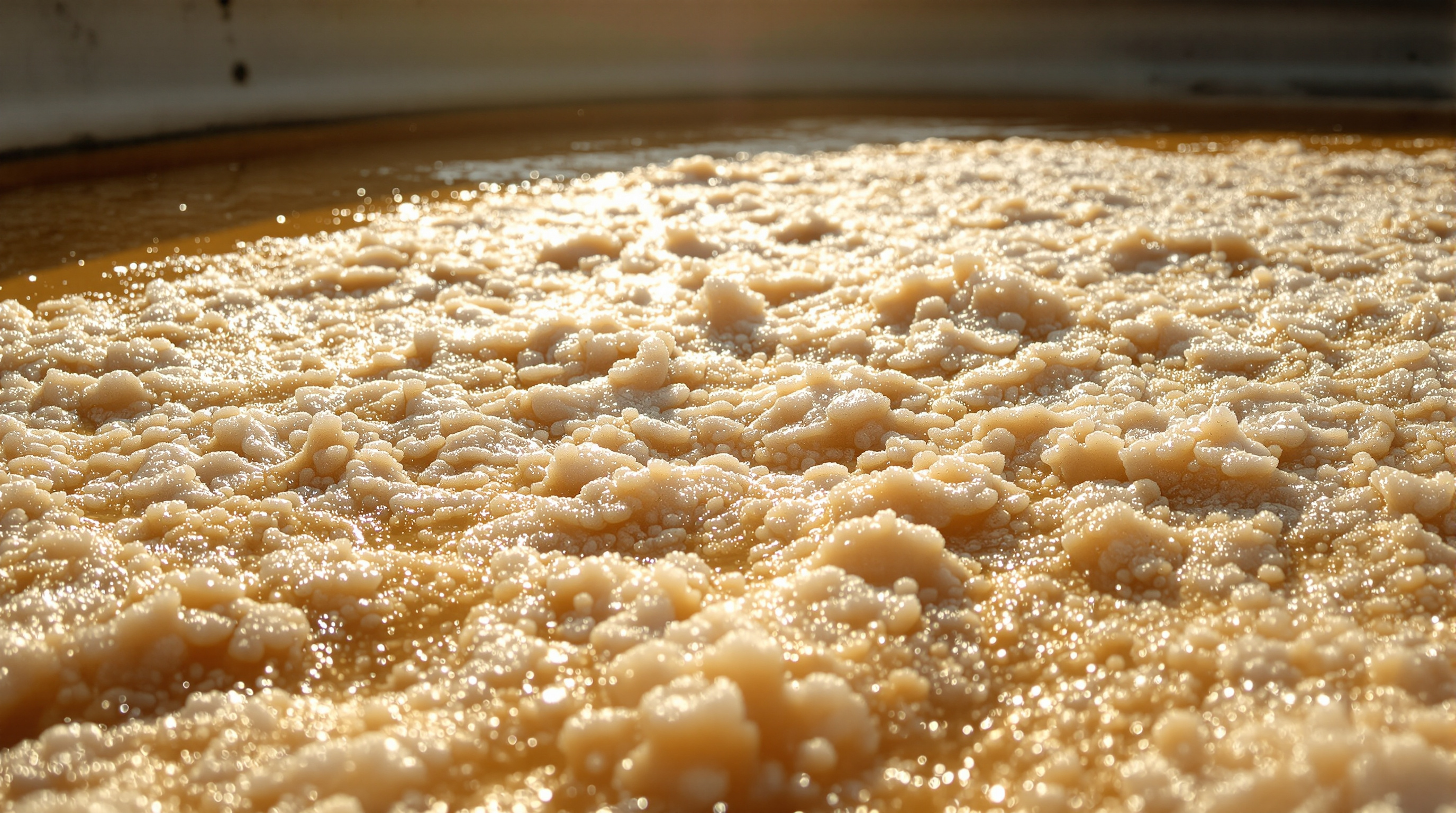
BOD stands for Biochemical Oxygen Demand. It measures how much oxygen the microbes in water need in order to eat all the organic waste — the food scraps, faeces, soap and oils dissolved in it. The more waste there is, the more oxygen the microbes consume, and the higher the BOD.
Why does oxygen matter? Because that is exactly what happens when sewage reaches a lake or river. The natural microbes there begin devouring the waste, and in doing so they strip the oxygen out of the water — suffocating fish and everything else that lives in it. A high-BOD discharge is, quite literally, an oxygen thief. That is why BOD is treated as the single most important measure of how polluting a wastewater is.
- Raw domestic sewage typically runs a BOD of around 250–350 mg/litre.
- Treated water from a well-run STP should come out below 10 mg/litre, and Indian discharge norms for reuse and disposal sit directionally in the 10–30 mg/litre band depending on where the water goes.
Driving BOD down is the main job of the biological stage of an STP — the aeration tank, where billions of bacteria are fed oxygen so they can eat the waste in a controlled tank instead of in a river.
COD — the total chemical load
COD stands for Chemical Oxygen Demand. It answers a similar question to BOD — how much oxygen would it take to break down everything in the water — but instead of relying on microbes over several days, the test uses a strong chemical to oxidise all the organic matter in a couple of hours, including the parts microbes cannot easily digest.
Because it captures more, COD is always higher than BOD for the same sample. And the gap between them is genuinely useful information.
- Raw domestic sewage typically has a COD of around 500–800 mg/litre.
- Treated water targets sit directionally around 50–250 mg/litre depending on the discharge route.
The COD:BOD ratio — a quick read on treatability
Divide COD by BOD and you get a number that tells you what kind of waste you are dealing with:
- A ratio around 1.5 to 2.5 means the waste is mostly biodegradable — ordinary domestic sewage that microbes will happily eat. An STP will handle it well.
- A ratio of 3 or higher is a warning sign. It means a large share of the pollution is not easily biodegradable — often a hint of industrial chemicals, cleaning agents or hard-to-digest compounds that the biological stage alone will struggle with.
This is why a facility that mixes domestic and industrial waste may need an ETP rather than a plain STP — a distinction covered in the STP vs septic tank guide and across the wider STP library.
TSS — how much solid is floating in the water

TSS stands for Total Suspended Solids. It is the combined weight of all the fine particles suspended in the water — the bits that make sewage look cloudy and that would settle out or clog a filter if left in. It is measured by passing a sample through a fine filter and weighing what is caught.
TSS matters for three reasons. Cloudy water cannot be reused for flushing or irrigation without clogging pipes and nozzles; suspended particles shield bacteria from disinfection, so high TSS undermines the final chlorination or UV step; and solids that settle in a lake or drain smother the bed and rot.
- Raw domestic sewage typically carries a TSS of around 200–400 mg/litre.
- Treated water should come out below 10–30 mg/litre, directionally in line with Indian reuse norms.
Most TSS is removed physically — first by settling under gravity, then by the clarifier after the biological stage, and finally polished out by the sand filter in tertiary treatment.
pH — keeping the water in the comfort zone
pH measures how acidic or alkaline the water is, on a scale from 0 (strongly acidic) to 14 (strongly alkaline), with 7 being neutral. Unlike BOD, COD and TSS, the goal here is not to push pH as low as possible — it is to keep it in a narrow, near-neutral band.
- Raw domestic sewage usually sits close to neutral, roughly pH 6.5 to 8.0.
- Discharge norms in India typically require treated water in the 5.5 to 9.0 range, and for reuse you want it near neutral.
pH matters most inside the plant. The bacteria that do all the cleaning are living organisms, and like most life they only thrive in a comfortable range around neutral. A sudden slug of acidic or alkaline waste — say, from someone dumping chemicals down a drain — can shock and kill the biological culture, and a dead culture means the STP stops treating until the microbes rebuild over days. Operators watch pH partly as an early-warning alarm for exactly this.
The numbers at a glance
Here is how the four core parameters typically change as water passes through an STP. Treat these as indicative ranges for ordinary domestic sewage — actual norms vary by discharge route and are set directionally by CPCB and state pollution boards.
| Parameter | What it measures | Raw sewage (typical) | Treated water (target) | Why it matters |
|---|---|---|---|---|
| BOD | Oxygen microbes need to eat organic waste | 250–350 mg/L | Below 10–30 mg/L | Headline pollution strength; high BOD suffocates rivers |
| COD | Total oxygen to break down all matter chemically | 500–800 mg/L | ~50–250 mg/L | Flags industrial or hard-to-digest waste |
| COD:BOD ratio | Share of waste that is biodegradable | ~1.5–2.5 | — | Above ~3 signals waste an STP alone can't handle |
| TSS | Weight of suspended particles | 200–400 mg/L | Below 10–30 mg/L | Cloudiness; clogs reuse lines; shields bacteria |
| pH | Acidity / alkalinity | 6.5–8.0 | 5.5–9.0 (near neutral for reuse) | Wrong pH kills the microbes doing the work |
The supporting cast: nutrients and FOG
Four parameters run the headlines, but two more deserve a mention because they cause real trouble when ignored.
- Nitrogen and phosphorus are nutrients. Released untreated into a lake, they act like fertiliser — triggering explosive algae blooms that then die, rot, and strip the water of oxygen all over again. Norms increasingly cap nitrogen (measured as ammonia or total nitrogen) and phosphorus, and removing them needs specific biological stages beyond basic BOD reduction.
- FOG — Fats, Oils and Grease — comes mostly from kitchens. It floats, coats surfaces, blocks pipes and starves the biological process of oxygen. It is caught early, at the oil-and-grease trap in preliminary treatment, before it can foul the plant.
Where these come from in the first place depends on the source of the water — a theme explored in the greywater vs blackwater guide, since kitchen and toilet streams carry very different loads.
Why these numbers rule the whole system
Every stage of an STP exists to move one or more of these numbers, in sequence:
- Preliminary and primary treatment knock down TSS and remove FOG.
- Secondary (biological) treatment is the workhorse that destroys most of the BOD and COD, while operators guard the pH to keep the microbes alive.
- Tertiary treatment polishes the last of the TSS, disinfects, and where required strips nitrogen and phosphorus.
You can trace exactly which parameter each step targets in the sewage treatment process flow guide. And once you understand that the whole plant is really a machine for moving four numbers, sizing one becomes far more intuitive — the STP Capacity Calculator turns a building's headcount into the daily load a plant must treat to hold those numbers in the safe zone.
The bottom line
Wastewater has no honest appearance — only honest numbers. BOD tells you how much oxygen the pollution will steal; COD captures the full chemical load and, against BOD, reveals whether the waste is even treatable by microbes; TSS measures the cloudiness that must be filtered out; and pH keeps the living heart of the plant in its comfort zone. Learn to read those four figures, add a glance at nutrients and grease, and you can judge any sewage sample — and any STP — the way an engineer does: not by how the water looks, but by what the report says.
Export this guide
Related Guides — Deep-dive reading
How Does an STP Work? A Step-by-Step Explanation
Follow a single drop of sewage from the building drain to reusable water — through screening, settling, the living microbial heart of the plant, and final polishing — with every stage explained in plain language and no engineering background assumed.
Sewage Treatment PlantsBiological Culture Management in an STP: The Heart of Good O&M
The microbes in your aeration tank do the actual work of cleaning sewage. Keep them healthy — the right MLSS, food, oxygen and nutrients — and everything else falls into place. Here is how operators manage the living culture, diagnose bulking and foaming, and recover after a crash.
Sewage Treatment PlantsThe Sewage Treatment Process Flow, Explained: Every Stage From Inlet to Reuse
Follow a drop of sewage through a typical STP — inlet, screening, aeration, clarifier, filtration, disinfection and reuse — as one connected flow, with a block diagram and a unit-by-unit table, in plain language.
Sewage Treatment PlantsRelated Tools — Try Free
STP Capacity Calculator
Size a sewage treatment plant in KLD from your building's occupancy — water demand, sewage generated and recommended STP capacity.
STP CalculatorBOD Load Calculator
Calculate the organic (BOD) load on an STP in kg/day and the removal efficiency required to meet discharge norms from flow and inlet/outlet BOD.
STP CalculatorChlorine Dose Calculator
Compute chlorine demand for water and sewage disinfection from daily flow and dose, returning chlorine consumption in kg/day and kg/month.
STP Calculator