
Chemical Industry Wastewater Treatment: ETP Design for Toxic, High-COD Effluent
Why chemical-plant effluent is one of the hardest waters to treat, and how a multi-stage ETP — physico-chemical, biological, advanced oxidation and ZLD — brings variable, toxic, high-COD/TDS streams down to a dischargeable standard in the Indian regulatory context.
Of all the waters an engineer is asked to treat, chemical-industry effluent is among the most unforgiving. A municipal sewage plant faces a predictable, dilute, biodegradable waste. A chemical plant hands you the opposite: a stream that changes character from one batch to the next, carries organic loads ten to a hundred times stronger than sewage, is often acidic or alkaline enough to burn, and contains molecules that no microbe on earth wants to eat. Treating it is not a single process but a carefully sequenced train of processes, each removing what the previous stage could not.
This guide sets out how chemical industry wastewater treatment actually works — what makes the effluent so difficult, why it needs an Effluent Treatment Plant (ETP) rather than a domestic STP, and how the modern multi-stage train, ending in Zero Liquid Discharge, brings it to a dischargeable standard.
Chemical effluent breaks the one assumption a normal treatment plant is built on — that the waste is biodegradable. Half the engineering here is about making a toxic, refractory water treatable in the first place.
Why chemical effluent is a category of its own
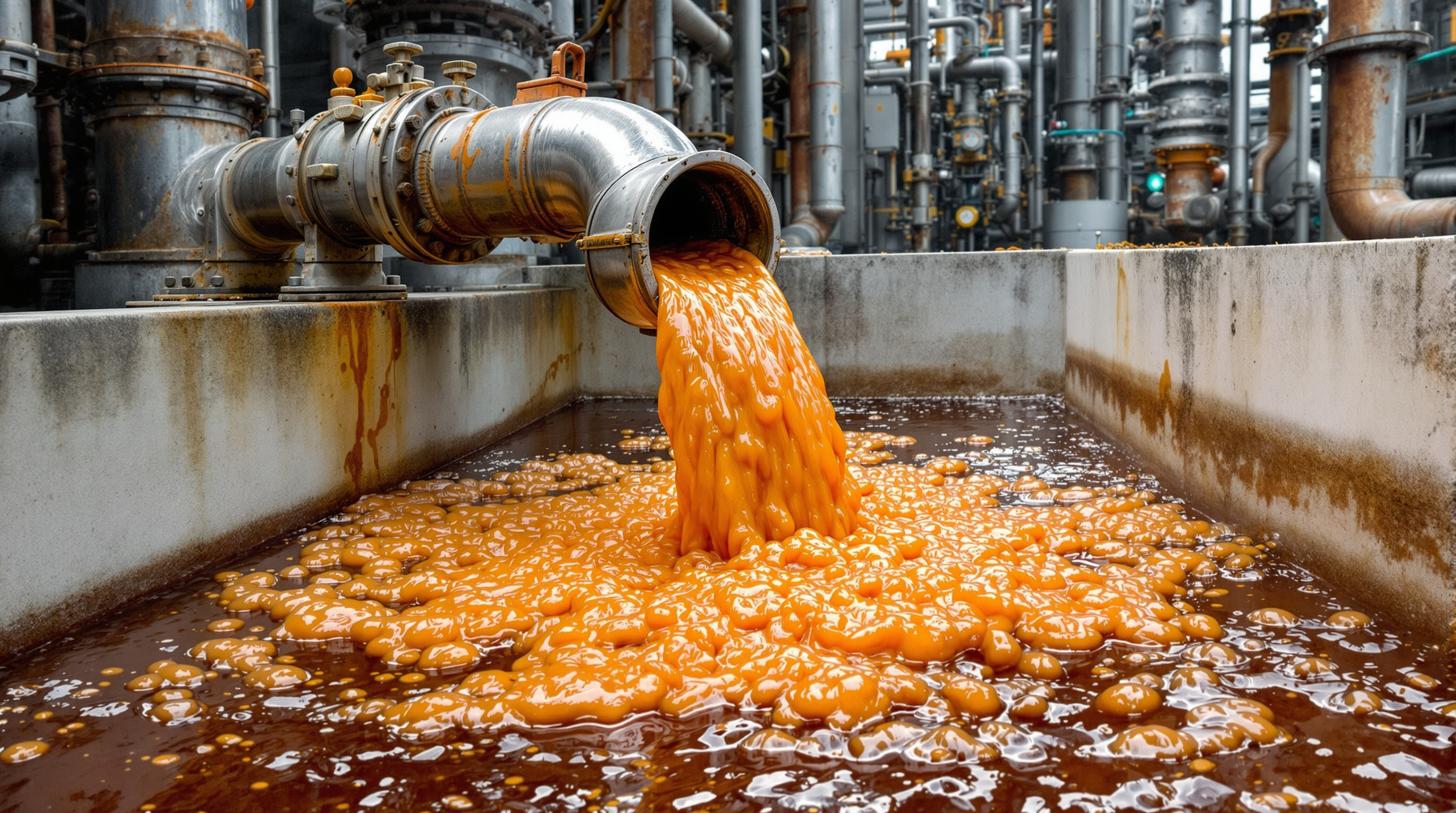
Domestic sewage varies within a narrow band. Chemical effluent does almost the reverse — it is defined by its variability and its toxicity. A single site making dyes, agrochemicals, resins or specialty intermediates may discharge a dozen different waste streams, each with its own signature, and the mix shifts every time the production campaign changes.
The problems cluster into four headaches:
- Extreme, swinging strength. COD can run from a few thousand to over 50,000 mg/L, with the COD-to-BOD ratio often above 3 or 4 — a direct signal that much of the load is not biodegradable.
- High TDS and salinity. Neutralisation of strong acids and alkalis, plus process salts, drive Total Dissolved Solids to tens of thousands of mg/L — high enough to poison biological cultures and to force evaporation-based recovery downstream.
- Refractory and toxic organics. Phenols, aromatic amines, halogenated compounds, solvents and colour bodies resist microbial attack and actively inhibit the very bacteria you rely on.
- Hazardous character. Heavy metals, cyanides and reactive species mean the sludge and concentrate are often hazardous waste, regulated for handling, storage and disposal under India's hazardous-waste rules.
This is why the correct plant is an ETP, not an STP. The distinction matters both technically and legally; if that boundary is fuzzy for your project, the STP vs ETP guide draws the line clearly. Sister industries face closely related versions of the same problem — the pharmaceutical and textile effluent guides are worth reading alongside this one.
The treatment train, stage by stage
No single reactor cleans chemical effluent. The design philosophy is a train: condition the water, strip out what physics and chemistry can remove cheaply, let biology do the bulk organic destruction, then use advanced processes to finish the refractory remainder and recover the water.
1. Segregation and equalisation
Good treatment starts before the ETP, at the process. Concentrated toxic streams — spent solvents, high-metal or high-cyanide liquors — are segregated at source and sent for dedicated recovery or hazardous disposal, rather than diluted into the main flow where they would sabotage biology. What remains is collected in a large, well-mixed equalisation tank that dampens the surges in flow, pH and concentration into something the plant can treat steadily. On a stream this variable, generous equalisation volume is not a luxury; it is the difference between a stable plant and one that trips daily.
2. Physico-chemical treatment
Here chemistry removes what biology cannot. Typical unit operations:
- Neutralisation — dosing acid or lime to bring extreme pH into a workable 6.5–8.5 band.
- Coagulation–flocculation — alum, ferric or polymer dosing to bundle colloids, colour and some metals into settleable flocs.
- Chemical precipitation — lime or sulphide to drop heavy metals out as hydroxides or sulphides.
- Clarification / DAF — a clarifier or dissolved-air flotation unit to separate the flocs and lift oil and grease.
This stage can knock down a large share of TSS, metals, colour and a useful slice of COD before the water ever reaches the biology.
3. Biological treatment
Whatever COD is biodegradable is destroyed here, cheaply, by microbes — the same principle as the activated sludge process. Because chemical effluent is strong, the biology is often anaerobic followed by aerobic: a high-rate anaerobic reactor such as a UASB first digests the bulk load and yields biogas, then an aerobic stage — extended aeration, MBBR, SBR or MBR — polishes the residual organics and nitrogen. Acclimatised, specialised cultures are essential; ordinary sewage sludge will not survive the toxins. Getting the loading right is critical, and the organic loading calculator and HRT calculator help translate COD and flow into reactor sizing.
4. Advanced / tertiary treatment
After biology, a stubborn residue of refractory COD and colour always remains — the molecules no microbe would touch. Advanced Oxidation Processes (AOPs) attack these directly by generating hydroxyl radicals:
- Fenton and photo-Fenton oxidation
- Ozonation, sometimes ozone + peroxide or ozone + UV
- Wet air oxidation or catalytic oxidation for very high loads
- Activated carbon adsorption as a polishing guard
AOPs are powerful but energy- and chemical-intensive, so they are aimed only at the hard residual fraction, not the bulk load — which is exactly why the cheaper stages run first.
Putting numbers to it
Indicative — real effluent must be characterised by lab analysis, and discharge limits are set by the CPCB/SPCB consent for the specific site and receiving environment.
| Parameter | Raw chemical effluent (typical range) | After full ETP train | Why it is hard |
|---|---|---|---|
| COD | 4,000–50,000+ mg/L | < 250 mg/L | Large refractory fraction resists biology |
| BOD | 1,000–15,000 mg/L | < 30 mg/L | High but only partly biodegradable |
| TDS | 5,000–40,000+ mg/L | Recovered / evaporated | Salts poison biology; force ZLD |
| pH | 1–13 (swinging) | 6.5–8.5 | Extreme and variable; needs neutralisation |
| Heavy metals / phenols | Stream-specific | Below consent limits | Toxic, bioaccumulative, hazardous sludge |
The point of the table is the gap between the two columns — closing it is the entire job, and it is why one reactor can never do the work of a train.
Zero Liquid Discharge and the salt problem
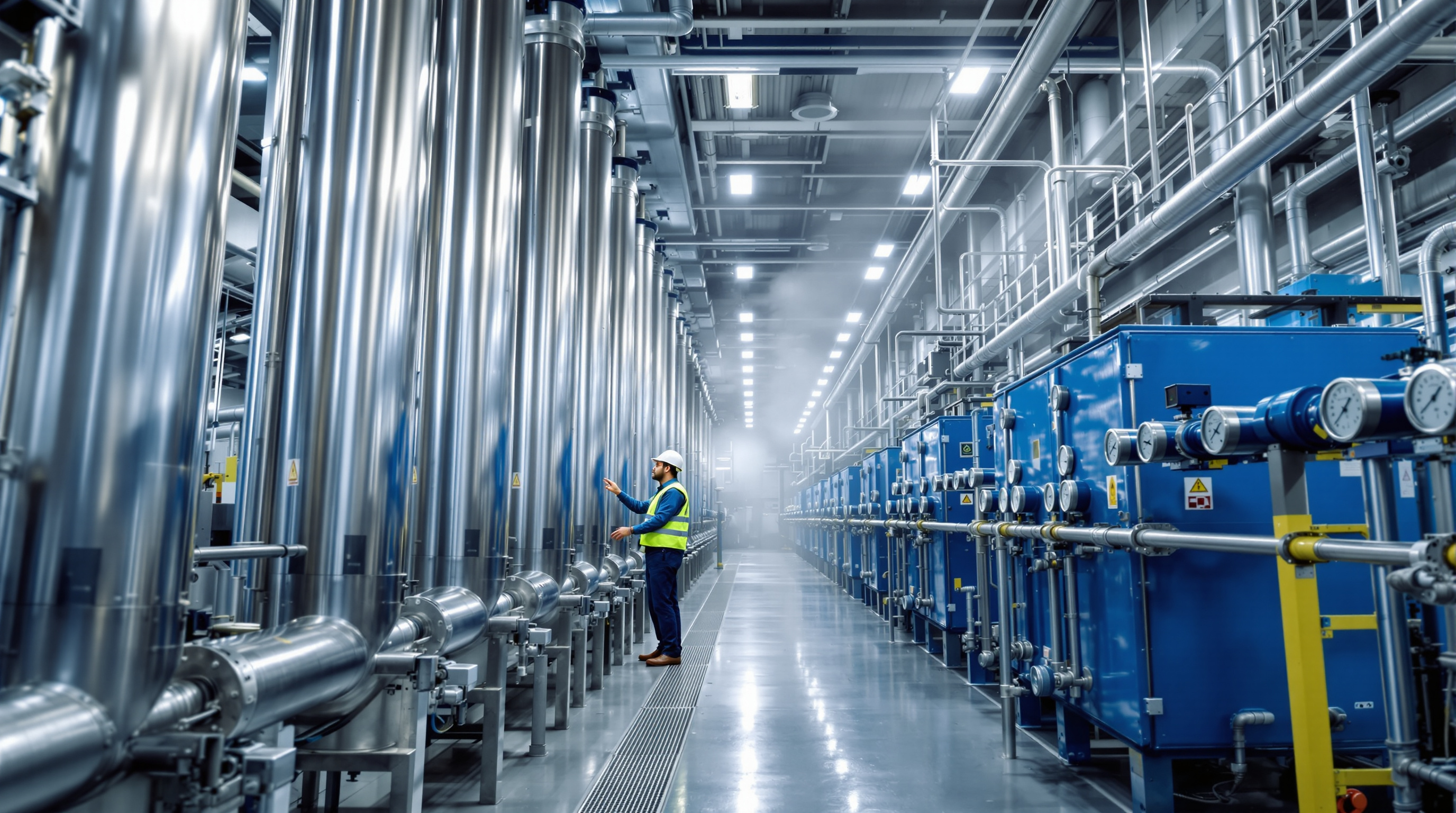
For most Indian chemical plants the regulatory endpoint is now Zero Liquid Discharge (ZLD) — no liquid effluent leaves the site at all. High TDS makes this both necessary and difficult: even perfectly treated water still carries dissolved salt that cannot simply be released to a river.
A ZLD tail typically runs the treated water through ultrafiltration and reverse osmosis to recover the bulk as reusable water, then concentrates the RO reject in a multiple-effect evaporator (MEE) and finishes it in an agitated thin-film dryer (ATFD), leaving a dry salt cake for disposal. This is the most capital- and energy-intensive part of the plant, and its economics turn on how much water was recovered — and how much salt was avoided — upstream. The dedicated Zero Liquid Discharge guide covers the configuration in depth.
Handling the residues
A chemical ETP does not make waste disappear; it concentrates it into manageable residues:
- Chemical and biological sludge — dewatered on filter presses; often classified as hazardous and sent to an authorised TSDF or co-processing. Estimate volumes early with the sludge generation calculator.
- Evaporator salt cake — the concentrated ZLD end-product, drummed and disposed under hazardous-waste rules.
- Recovered solvents and biogas — genuine by-products that offset operating cost.
Careful, documented handling of these streams is as much a part of compliance as the discharge quality itself.
The bottom line
Chemical industry wastewater treatment is an exercise in sequencing: segregate the worst streams at source, equalise the rest, let physics and chemistry remove what they cheaply can, hand the biodegradable load to acclimatised microbes, oxidise the refractory remainder, then recover the water and lock up the salt through ZLD. No stage is optional and none works alone — the plant is the train.
If you are scoping such a system, start from an honest characterisation of every stream, then size the biological core using the organic loading and HRT fundamentals. The wider Sewage Treatment Plants guide library covers each unit process — clarifiers, aeration, membranes, ZLD — in the depth a real design demands.
Export this guide
Related Guides — Deep-dive reading
Pharmaceutical Wastewater Treatment: Why It Needs an ETP, Not an STP
Pharma effluent carries high COD, toxic and refractory compounds, swinging pH and traces of active drug ingredients — a load that overwhelms a domestic STP. Here is what makes it so hard to treat, and the ETP train engineers build to handle it in India.
Sewage Treatment PlantsTextile Industry Wastewater Treatment: The Complete Engineering Guide
Why textile and dyeing effluent is one of the hardest industrial wastewaters to treat — its colour, high TDS, swinging pH and refractory dyes — and the coagulation-to-membrane treatment train, colour removal and Zero Liquid Discharge that India now demands.
Sewage Treatment PlantsZero Liquid Discharge (ZLD): When No Water Leaves the Site
What zero liquid discharge actually means, the biological-plus-RO-plus-evaporator train that recovers nearly all the water and leaves only dry solids, why it is expensive and energy-hungry, when it is mandated, and the lighter near-ZLD options that make sense for most buildings.
Sewage Treatment PlantsRelated Tools — Try Free
Hydraulic Retention Time (HRT) Calculator
Compute a reactor or tank's hydraulic retention time from its volume and daily flow, and benchmark it against recommended ASP, MBBR and SBR ranges.
STP CalculatorIndustrial Wastewater Treatment Planner
Pick your dominant industrial wastewater and daily flow to see whether you need an STP or ETP, a 1–5 treatment complexity rating, and how rough capex scales.
PlannerSTP Technology Comparison Matrix
Compare Extended Aeration, MBBR, SBR, MBR and UASB across six criteria, set your priority, and see the best-fit STP technology instantly.
Comparator