
Textile Industry Wastewater Treatment: The Complete Engineering Guide
Why textile and dyeing effluent is one of the hardest industrial wastewaters to treat — its colour, high TDS, swinging pH and refractory dyes — and the coagulation-to-membrane treatment train, colour removal and Zero Liquid Discharge that India now demands.
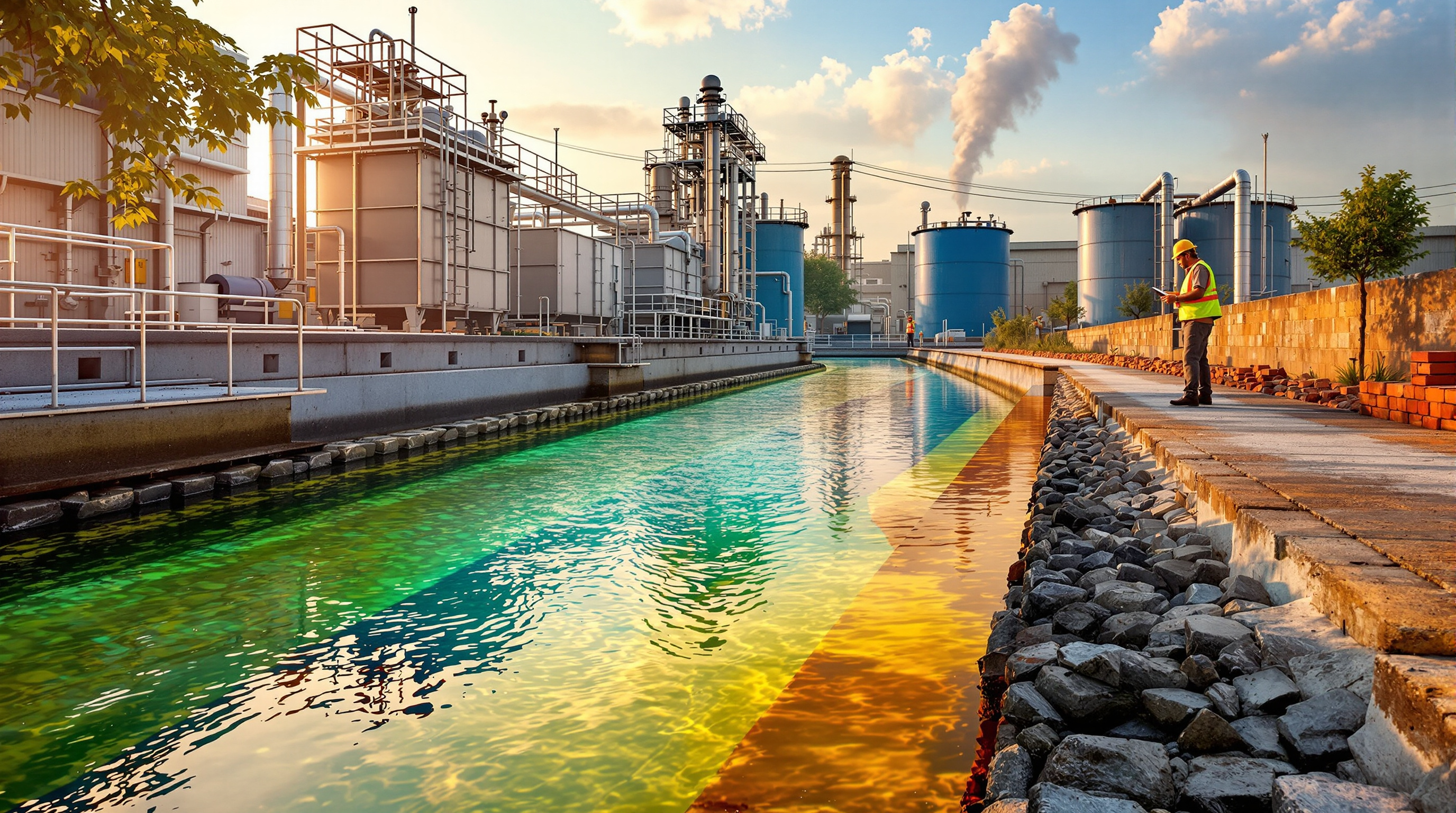
Walk past the outfall drain of an unregulated dyeing unit and you can read the day's production in the water: indigo one hour, crimson the next, a deep inky black by evening. Textile effluent is the most visibly polluting industrial wastewater in India — and the colour is only the part you can see. Behind it sits a punishing cocktail of dissolved salt, swinging pH, high organic load and synthetic dyes engineered, deliberately, not to fade. That last property is exactly what makes them so hard to remove.
This guide is the engineering starting point for treating that effluent. It is written for professionals designing, tendering or operating a textile Effluent Treatment Plant (ETP) — and it is worth saying at the top: this is emphatically an ETP problem, not a domestic STP one. The chemistry is different enough that a standard sewage plant dropped onto a dyehouse drain will simply fail.
Textile dyes are designed to survive washing, sunlight and sweat for the life of a garment. A biological reactor that happily eats sewage will barely touch them — which is why textile treatment leans on chemistry and membranes, not just microbes.
Why textile effluent is so difficult
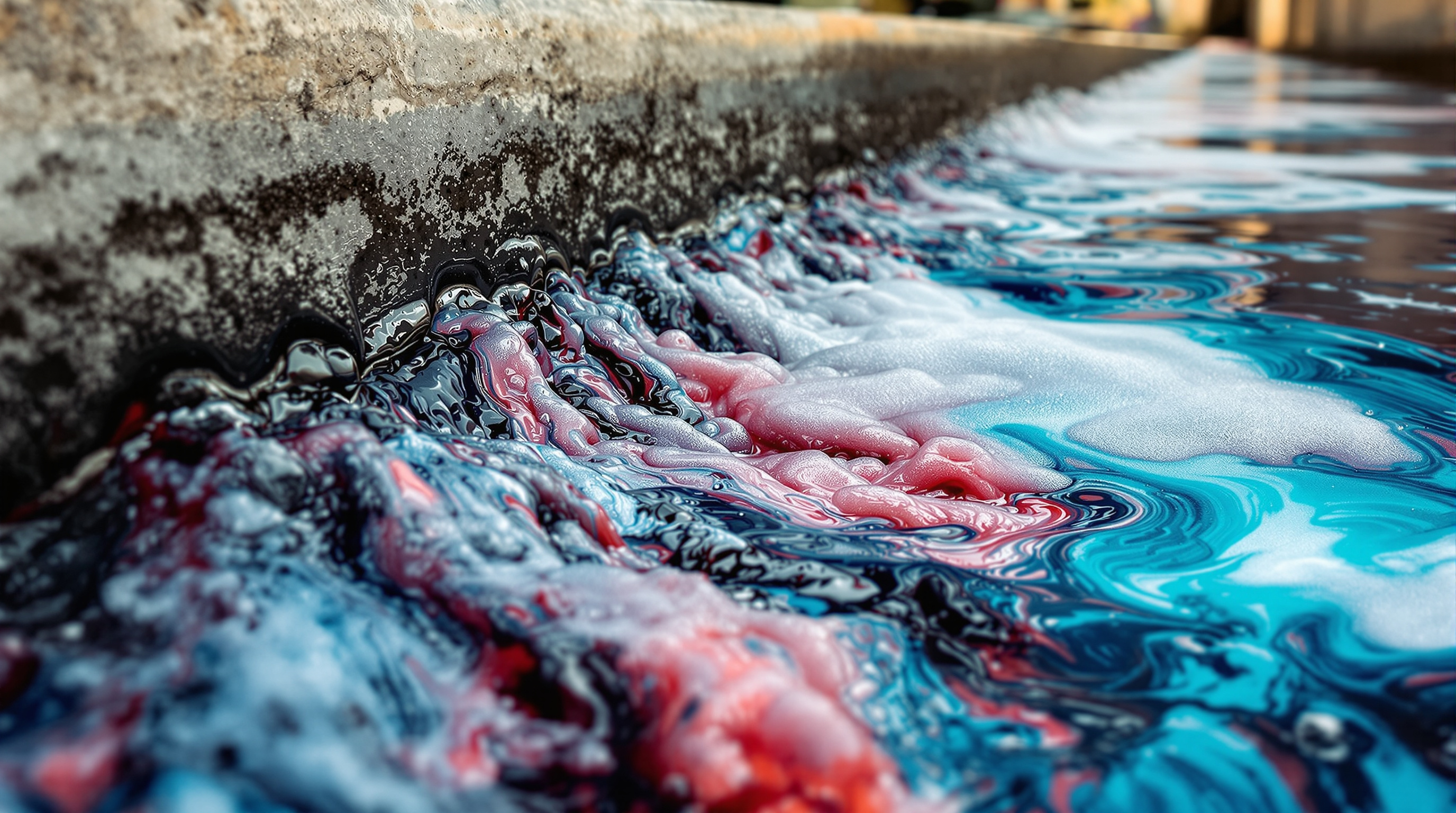
Every wastewater is defined by its characteristics — BOD, COD, TSS and pH. Textile effluent scores badly on almost all of them, and adds two that domestic sewage never has: intense colour and very high dissolved solids.
- Colour and refractory dyes. Reactive, disperse, vat and azo dyes give the effluent its colour and resist biological breakdown. They are "refractory" — the microbes in an aeration tank cannot digest them, so colour passes straight through a purely biological plant.
- High TDS / salinity. Dyeing and especially the salt-heavy reactive-dye and mercerising baths push Total Dissolved Solids into thousands, sometimes tens of thousands, of mg/L. Salt does not settle, does not biodegrade, and poisons the reuse options.
- Variable, alkaline pH. Scouring and mercerising are strongly caustic; some finishing baths are acidic. pH can swing from below 5 to above 11 between batches.
- High and variable COD. Sizing agents (starch, PVA), surfactants and dye auxiliaries drive COD well above BOD, and the BOD:COD ratio is low — a direct signal that much of the load is not readily biodegradable.
- Temperature and shock loads. Hot dye baths and batch discharges mean flow, temperature and concentration all lurch through the day.
A typical raw textile effluent might land somewhere in these ranges — but every mill is different, and a real characterisation study is non-negotiable before design.
| Parameter | Typical raw textile effluent | Why it matters |
|---|---|---|
| pH | 5 – 11 (often alkaline) | Must be corrected before biology and coagulation |
| COD | 800 – 2,500 mg/L | High, and dominated by non-biodegradable fraction |
| BOD | 250 – 700 mg/L | Low BOD:COD ratio flags refractory load |
| TSS | 100 – 500 mg/L | Fibre, lint, undissolved dye and precipitates |
| TDS | 2,000 – 15,000+ mg/L | The salinity problem — drives the need for RO/ZLD |
| Colour | 500 – 3,000 Pt-Co | Highly visible; a discharge parameter in its own right |
The treatment train, stage by stage
No single process cleans textile effluent. The answer is a train — a sequence where each stage removes what the previous one could not. A well-designed textile ETP typically runs through five blocks.
1. Preliminary and equalisation
Screening removes lint and fibre; an equalisation tank then does the heavy lifting of taming variability. Because the mill discharges in batches — an alkaline scour here, a salty dye bath there — the equalisation tank blends hours of flow into a single averaged stream with a steadier pH, temperature and load. This stage is more important in textiles than almost anywhere else; skimp on it and every downstream process fights a moving target. Sizing it correctly is a retention-time exercise you can rough out with the Hydraulic Retention Time Calculator.
2. Neutralisation and physico-chemical treatment (coagulation–flocculation)
The equalised effluent is pH-corrected (usually acid dosing to knock down the alkalinity), then coagulated. Adding coagulants — alum, ferric chloride, or poly-aluminium chloride — plus a polymer flocculant makes the fine colloidal matter and a large fraction of the dye clump into settleable flocs, which drop out in a settling tank or float up in a Dissolved Air Flotation (DAF) unit. This single stage can strip a big share of colour, TSS and some COD before the water ever reaches the microbes. It also generates the plant's largest sludge stream — chemical sludge that must be thickened, dewatered and disposed of as (often hazardous) waste.
3. Biological treatment
Now the biodegradable organics — sizing agents, surfactants, the BOD fraction — are handed to the microbes. The workhorse options are the same families used across industry:
- The classic Activated Sludge Process — robust and well understood.
- MBBR, where biofilm on floating carriers tolerates shock loads and saves footprint.
- SBR, which suits the inherently batch nature of a dyehouse.
- MBR, coupling biology with membrane filtration to produce very clear water where footprint is tight and reuse is the goal.
Where COD is very high, an anaerobic stage such as a UASB can be placed ahead of the aerobic reactor to shed load cheaply. Because the biodegradable fraction is modest, honest organic-load and F/M design matters — the Organic Loading Calculator helps keep the reactor from being over- or under-fed. What biology will not do is remove colour or salt, which is why two more stages usually follow.
4. Colour removal (tertiary polishing)
Even after coagulation and biology, residual colour from refractory dyes usually remains — and colour is itself a regulated discharge parameter. Options here include:
- Activated carbon adsorption, which mops up dissolved dye and organics.
- Ozonation or advanced oxidation (AOPs), which chemically cleave the dye chromophores that give the colour.
- Electrocoagulation, an electrically driven cousin of chemical coagulation effective on stubborn dyes.
5. Membranes, RO and the salt problem
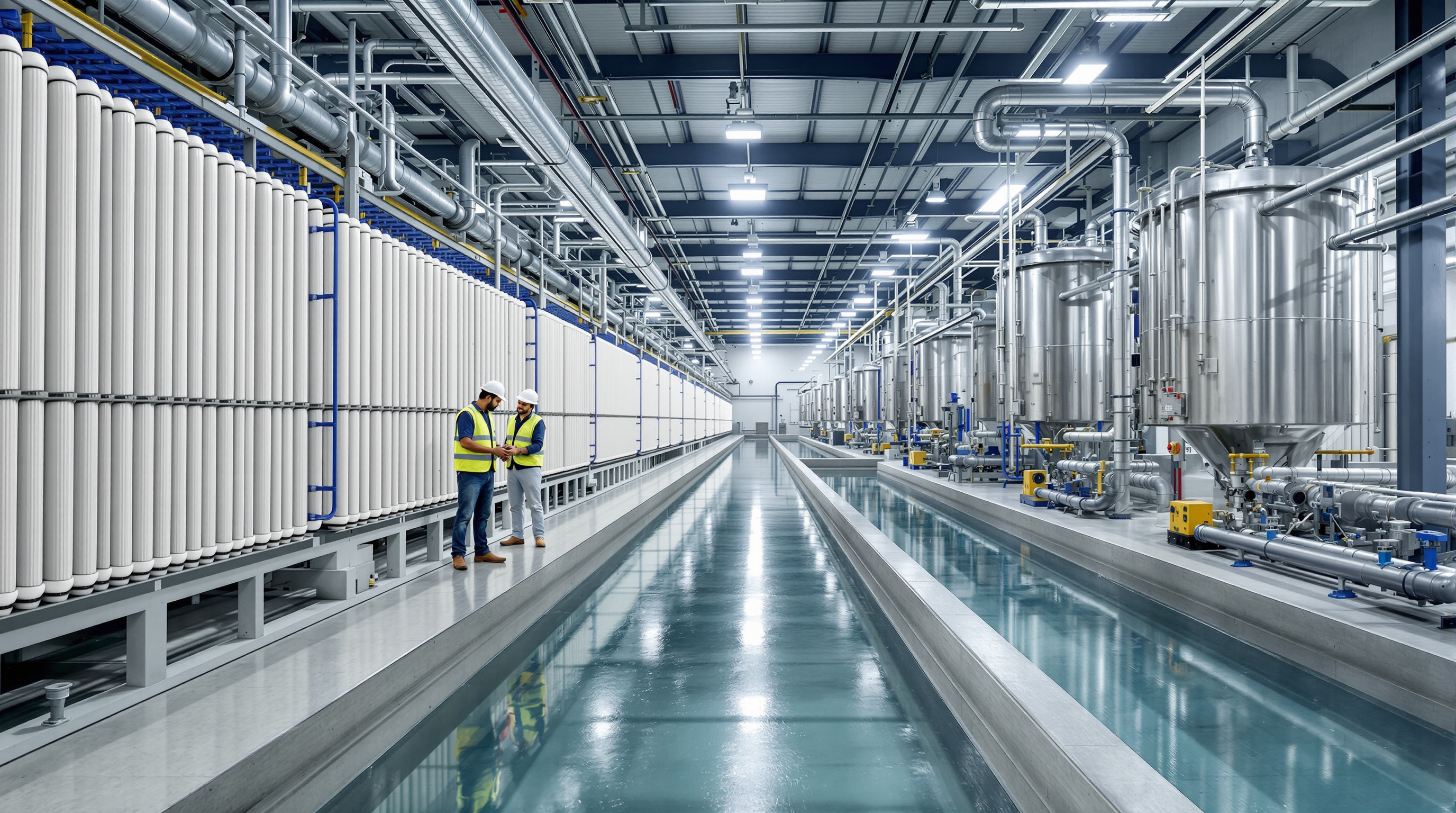
Colour can be removed, but the dissolved salt cannot — and this is where textile treatment parts ways with almost every other effluent. Once colour and organics are polished out, the water still carries thousands of mg/L of TDS. Reverse Osmosis (RO), usually after ultrafiltration, separates the stream into clean permeate for reuse and a concentrated reject. The permeate is genuinely valuable — reused in the mill for washing, dyeing make-up or utilities. The reject, a small volume of very salty brine, is the crux of the whole design.
Why ZLD is often mandatory in India
Textile clusters — Tirupur, Panipat, the dyeing belts of Gujarat and Rajasthan — became infamous for salting and colouring the rivers and groundwater around them. The regulatory response has been unusually hard: for many textile and dyeing units, pollution-control authorities now direct Zero Liquid Discharge — no liquid effluent leaves the site at all.
ZLD extends the train past RO. The salty RO reject goes to thermal evaporation (often a Multiple-Effect Evaporator) and finally a crystalliser or drying stage, recovering the water as distillate and the salt as a solid. It is energy-intensive and expensive to run — which is precisely why maximising reuse and minimising reject volume upstream (tight coagulation, efficient RO recovery) is where the real design economics live. For many operators, ZLD reframes the ETP from a cost centre into a water-and-salt recovery plant.
Design and compliance realities
A few things separate a textile ETP that works from one that lurches from one violation notice to the next:
- Characterise before you design. Segregate streams where you can — keeping the strong, salty dye-bath liquor apart from the weaker wash water can shrink the expensive RO/ZLD train dramatically.
- Equalisation is your shock absorber. Under-sizing it is the most common root cause of downstream upsets.
- Plan for the sludge. Chemical and biological sludge — much of it hazardous — is a real disposal cost; estimate it early with the Sludge Generation Calculator.
- Meet colour and TDS, not just BOD/COD. Textile discharge norms include colour, and reuse depends on TDS; a plant tuned only for organics will still fail.
- Design for reuse. With ZLD in play, every litre of permeate recovered is a litre of freshwater not bought.
For how a textile ETP differs from an ordinary sewage plant, see STPs vs ETPs; for sister industrial streams with related chemistry, the chemical industry wastewater and paper industry wastewater guides are natural next reads.
The bottom line
Textile wastewater treatment is a chemistry-and-membrane problem wearing a biology costume. The colour, the salt and the refractory dyes mean no single process suffices: you equalise the swings, knock out colour and solids with coagulation, feed the biodegradable load to microbes, polish the residual colour, and then face the salt with RO — increasingly all the way to Zero Liquid Discharge. Built well, it turns one of India's dirtiest effluents back into a reusable resource. Built as an afterthought, it is a stream of non-compliance notices waiting to happen. The difference is almost always made in the design.
Export this guide
Related Guides — Deep-dive reading
Zero Liquid Discharge (ZLD): When No Water Leaves the Site
What zero liquid discharge actually means, the biological-plus-RO-plus-evaporator train that recovers nearly all the water and leaves only dry solids, why it is expensive and energy-hungry, when it is mandated, and the lighter near-ZLD options that make sense for most buildings.
Sewage Treatment PlantsChemical Industry Wastewater Treatment: ETP Design for Toxic, High-COD Effluent
Why chemical-plant effluent is one of the hardest waters to treat, and how a multi-stage ETP — physico-chemical, biological, advanced oxidation and ZLD — brings variable, toxic, high-COD/TDS streams down to a dischargeable standard in the Indian regulatory context.
Sewage Treatment PlantsPharmaceutical Wastewater Treatment: Why It Needs an ETP, Not an STP
Pharma effluent carries high COD, toxic and refractory compounds, swinging pH and traces of active drug ingredients — a load that overwhelms a domestic STP. Here is what makes it so hard to treat, and the ETP train engineers build to handle it in India.
Sewage Treatment PlantsRelated Tools — Try Free
Hydraulic Retention Time (HRT) Calculator
Compute a reactor or tank's hydraulic retention time from its volume and daily flow, and benchmark it against recommended ASP, MBBR and SBR ranges.
STP CalculatorIndustrial Wastewater Treatment Planner
Pick your dominant industrial wastewater and daily flow to see whether you need an STP or ETP, a 1–5 treatment complexity rating, and how rough capex scales.
PlannerSTP Technology Comparison Matrix
Compare Extended Aeration, MBBR, SBR, MBR and UASB across six criteria, set your priority, and see the best-fit STP technology instantly.
Comparator