
Luxury Apartment Design — The ₹2 to ₹15 Crore Tier in Indian Towers (2026)
Super-luxury apartment fit-out · Boffi / Poliform / Minotti · Italian Statuario · Lutron / Crestron
Super-luxury apartment design in India is no longer about marble lobbies and gold-leaf ceilings. In 2026, the ₹2 crore to ₹15 crore Mumbai, Delhi NCR, Bengaluru, Hyderabad and Chennai apartment is defined by Italian kitchen systems, German wellness rooms, Lutron or Crestron automation, Boffi or Minotti seating, and discreet bespoke joinery that takes 14 to 22 weeks to land from Como, Milan or Bologna. The buyer is a second- or third-home founder, a CXO returning from Singapore or London, a third-generation industrial family, or a globally-mobile professional who has lived in Knightsbridge, Sentosa Cove or West Village apartments and now wants the same density of finish in a Worli Sea Face or DLF Camellias floor plate.
This guide is the homeowner-facing super-luxury apartment design reference. It assumes the unit is already bought — typically a 2800 to 6500 square foot 3 BHK, 4 BHK or duplex penthouse in a Grade A tower — and walks through what the design budget actually buys at the ₹2 cr to ₹15 cr interior bracket. It is deliberately distinct from the compact-luxury angle (designing a 1200 to 1600 sqft flat to feel luxe), from the architecture-firm definition of luxury residential, and from villa work. Apartments have shared service shafts, society rules, lift constraints, structural beams, and concrete cores that simply do not exist on a private plot. Those constraints shape every decision below.
"In a ₹6 crore apartment fit-out, the line item that surprises clients most is not the Boffi kitchen or the Minotti sofa — it's the 22-week project management, the import-duty cushion, the marble-yard trip to Carrara, and the cost of doing it all while a building's society committee watches the service lift." — common refrain from senior project leads at Mumbai and Delhi luxury design studios
If you are not yet in this tier, the compact luxury apartment and premium apartment interiors guides are the right starting points. If you are commissioning an architectural firm rather than fitting out a developer-built shell, see defining luxury residential architecture in India. If you are weighing apartment versus standalone, luxury villa architecture in India covers the alternative.
This guide refreshes every 12 months. Last verified: May 2026 · Next verify: May 2027.
What Luxury Apartment Design Actually Means in 2026 India
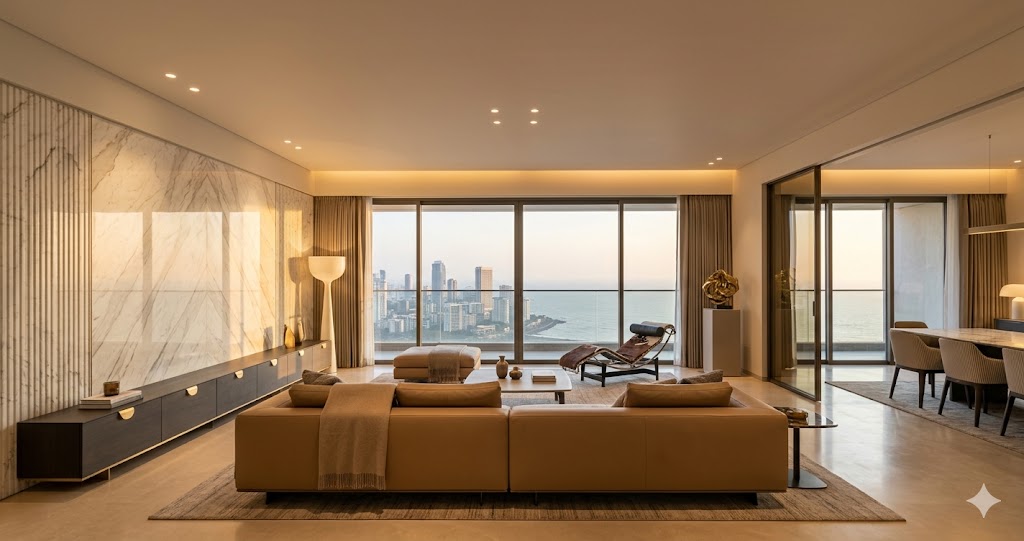
A super-luxury apartment fit-out in India today is the design and execution programme for a residential unit where the interior budget alone sits between ₹2 crore and ₹15 crore, where the carpet area is typically 2800 to 6500 square feet, and where the buyer expects a finish density comparable to Knightsbridge, Marina Bay or West Village apartments at the same price-per-square-foot of interior spend.
The unit is almost always in a named Grade A tower — Lodha Altamount, Lodha Park or Oberoi Sky Heights on Worli Sea Face; DLF Camellias, Ireo Grand Arch or M3M Golf Estate Tower in Gurugram; Embassy One, Prestige Golfshire Tower or Sobha Indraprastha in Bengaluru; My Home Avatar or Lodha Bellissimo in Hyderabad; Olympia Opaline or Prestige Falcon City Tower in Chennai. The shell is delivered by the developer at "bare" or "semi-finished" level, and the entire interior — kitchen, wardrobes, flooring, ceiling, lighting, automation, joinery, sanitary, soft furnishing — is replaced or built up from scratch.
The five things this is NOT:
1. It is not a compact-luxury fit-out. The compact-luxury angle (1200 to 1600 sqft, ₹40 lakh to ₹1.2 cr interior spend) is about extracting maximum density from a small plate. Super-luxury is the opposite problem — managing scale, sequencing imports, and resisting the temptation to over-fill.
2. It is not villa or farmhouse design. Villas have private utilities, no society approval, easier crane access, and full elevation control. Apartments have shared shafts, lift weight limits, structural beams that cannot be cut, and committee oversight.
3. It is not the developer-supplied "furnished" or "designer" variant. When Lodha or DLF or Oberoi offers a furnished option, that typically lands at ₹600 to ₹1500 per sqft of carpet area in finish-equivalent value. Super-luxury fit-out runs ₹8000 to ₹35000 per sqft of carpet area.
4. It is not the same as commissioning architecture. The shell exists. You cannot move the bathroom plumbing wall by two metres or change the column grid. The work is interior-only, bound by what the structural and MEP drawings allow.
5. It is not the same as renovating an older luxury flat. A 12-year-old Pali Hill or Defence Colony flat needs structural assessment, plumbing replacement, and electrical-load upgrades before any finish work begins. A new Grade A tower shell is electrically and hydraulically modern from day one.
The defining quality of this tier is finish density with restraint. Every surface — floor, wall, ceiling, joinery face, sanitary, switch plate, door handle, skirting — is specified, sampled, and approved individually. There are no off-the-shelf catalog substitutions. The Boffi or Poliform kitchen is sized to the millimetre against the actual wall, not the developer drawing. The Minotti or B&B Italia sofa is fabric-selected in showroom and shipped from Italy with a 16 to 22 week lead time. The Lutron or Crestron automation is programmed by a certified integrator, not bolted on at the end.
Why Luxury Apartment Design Matters Now
Three forces converged between 2022 and 2026 to make this segment one of the fastest-growing in Indian residential interiors.
First, Grade A inventory expanded sharply. Knight Frank India's wealth and luxury residential reports across 2023 to 2025 tracked sustained growth in transactions above ₹10 crore in Mumbai, Delhi NCR and Bengaluru. Lodha Altamount, Lodha Park, Oberoi 360 West, Oberoi Sky Heights, DLF Camellias, DLF Magnolias, M3M Golf Estate, Embassy One, Prestige Golfshire Tower and Sobha Indraprastha all delivered fresh inventory in this window. Each sold-out tower produced several hundred owners needing to fit out 3000 to 6000 sqft apartments — and very few wanted the developer's standard finish.
Second, the global-luxury supply chain into India matured. Between 2020 and 2025, Boffi, Poliform, Molteni, Minotti, Cassina, B&B Italia, Flexform, Edra, Hermes Home, Loro Piana Interiors, Fendi Casa, Bisazza and Mutina all opened authorised India showrooms or appointed exclusive distributors. Wolf Sub-Zero, Miele and Liebherr became routinely importable. Lutron and Crestron certified more Indian integrators. What needed a Milan trip in 2015 can now be specified and ordered from Mumbai, Delhi or Bengaluru in 2026 — though lead times remain 14 to 22 weeks.
Third, the buyer profile shifted. The 2026 super-luxury buyer has typically lived in Singapore, London, Dubai, San Francisco or New York and has internalised what a ₹2 lakh per sqft apartment looks like in those markets. They are not impressed by gold-leaf ceilings. They want Italian Statuario book-matched on a single feature wall, Mutina handmade ceramic in the powder room, a Boffi or Poliform kitchen island with a 60mm Carrara waterfall, and Lutron Palladiom keypads that look like jewellery. Taste has moved from showiness to restraint.
Per JLL India and Anarock luxury reports across 2024 and 2025, the segment is growing roughly 18 to 25 per cent year-on-year in transaction volume in the top three metros, with fit-out spend rising even faster. The question is no longer whether to import — it is how to manage the import, the customs, the society approvals, the marble selection, and the 9 to 14 month programme.
The Eight Defining Characteristics
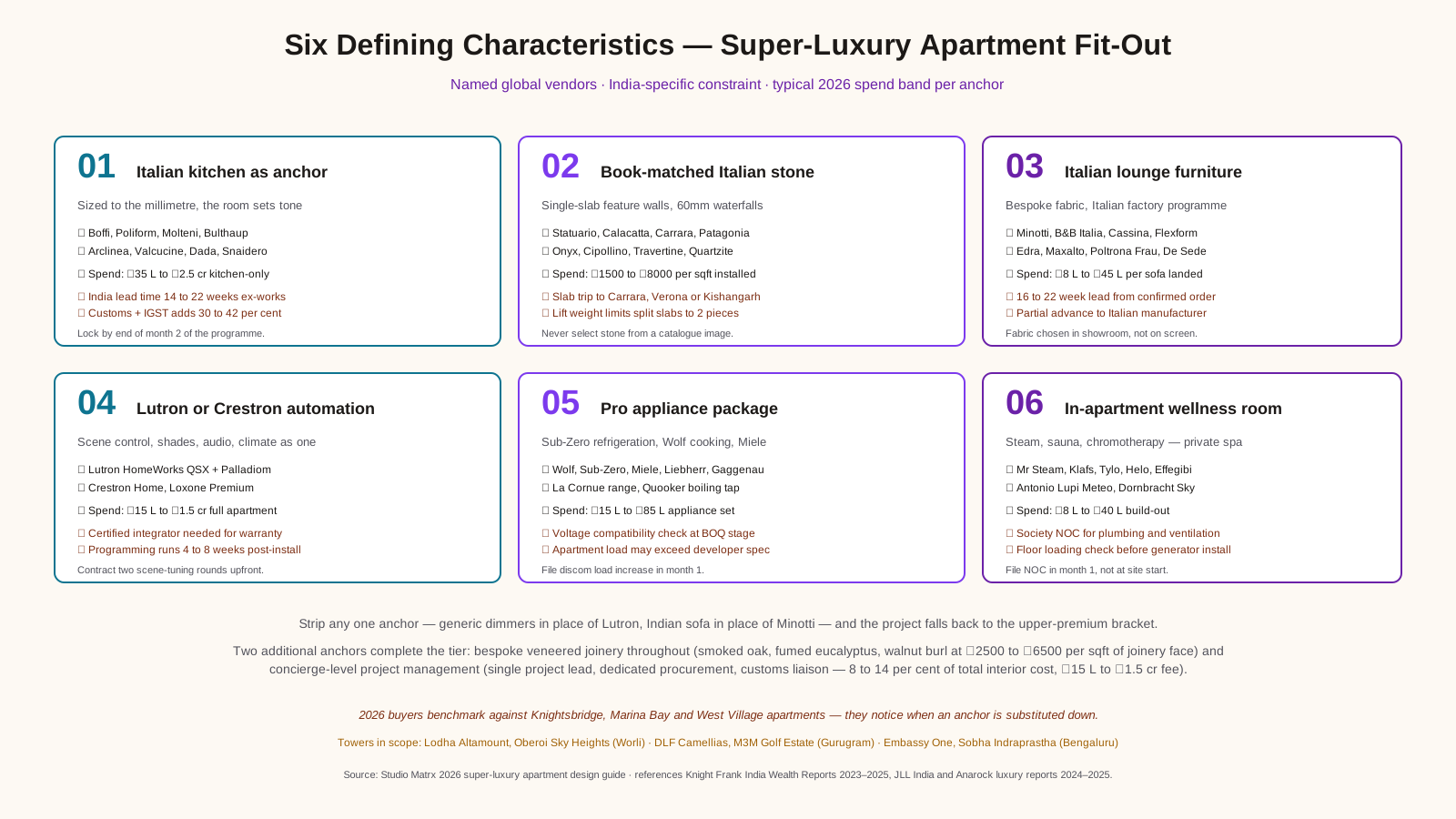
| Characteristic | What it means | India-specific note | Typical cost or constraint |
|---|---|---|---|
| Imported Italian kitchen as anchor | Boffi, Poliform, Molteni, Bulthaup, Arclinea or Valcucine as the kitchen system, sized to the millimetre | India lead time 14 to 22 weeks; customs duty plus IGST adds 30 to 42 per cent over Italian retail | ₹35 lakh to ₹2.5 crore for kitchen alone |
| Italian or Spanish stone, book-matched | Statuario, Calacatta, Carrara, Patagonia, Taj Mahal quartzite, slabbed and book-matched on feature walls | Slab selection trip to Carrara, Verona or Jaipur Kishangarh yard before purchase | ₹1500 to ₹8000 per sqft installed |
| Italian or German lounge furniture | Minotti, B&B Italia, Cassina, Flexform, Edra, Poliform sofas and chairs; bespoke fabric selection | 16 to 22 week lead time from order; partial advance to manufacturer | ₹8 lakh to ₹45 lakh per sofa |
| Lutron or Crestron premium automation | Scene control, motorised shades, audio zones, climate, security on one app and physical keypads | Requires certified integrator; programming runs 4 to 8 weeks post-installation | ₹15 lakh to ₹1.5 crore for full apartment |
| Imported sub-zero and pro appliances | Wolf, Sub-Zero, Miele, Liebherr, Gaggenau, La Cornue range; built-in coffee and wine | Voltage compatibility check; India-specific service warranty terms | ₹15 lakh to ₹85 lakh for appliance package |
| Wellness room — steam, sauna or chromotherapy | Mr Steam, Klafs, Tylo steam and sauna systems; in-apartment spa room | Society NOC for water and ventilation modifications; floor loading check | ₹8 lakh to ₹40 lakh for wellness room build-out |
| Bespoke veneered joinery throughout | Smoked oak, fumed eucalyptus, walnut burl, lacquered MDF; concealed handles and push-open | Made by specialist Indian joiners using imported Hettich or Blum hardware | ₹2500 to ₹6500 per sqft of joinery face |
| Concierge-level project management | Single project lead, weekly client updates, dedicated procurement, customs liaison | 9 to 14 month execution window; 8 to 14 per cent of total interior cost | ₹15 lakh to ₹1.5 crore in management fee alone |
The eight together define the tier. Strip any one out — say, skip Lutron and use generic dimmers — and the apartment falls back into the upper-premium bracket. The taxonomy is intentionally tight because the buyer in this segment is benchmarking against named global references and notices the gap when something is substituted down.
A Worked Example
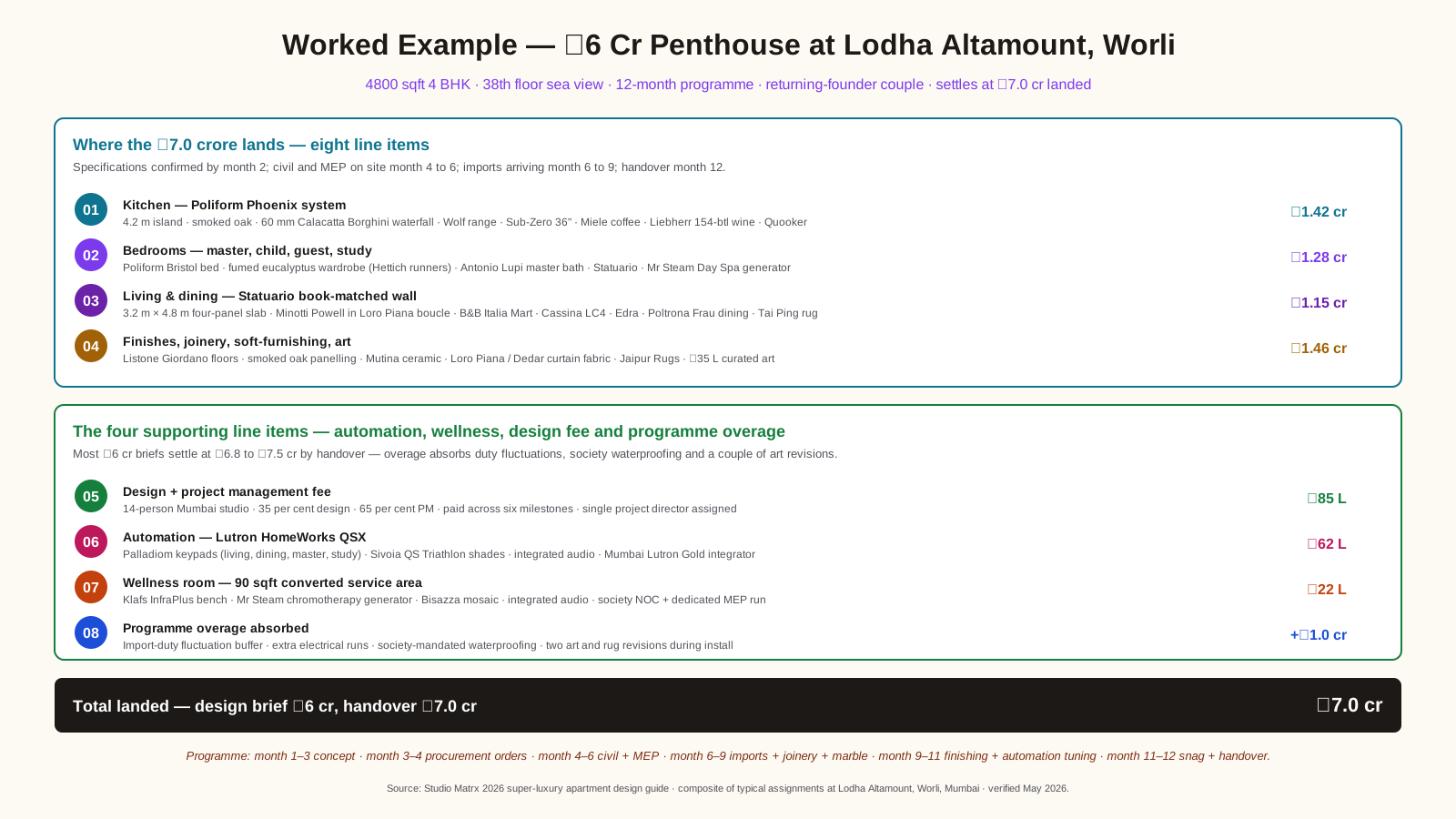
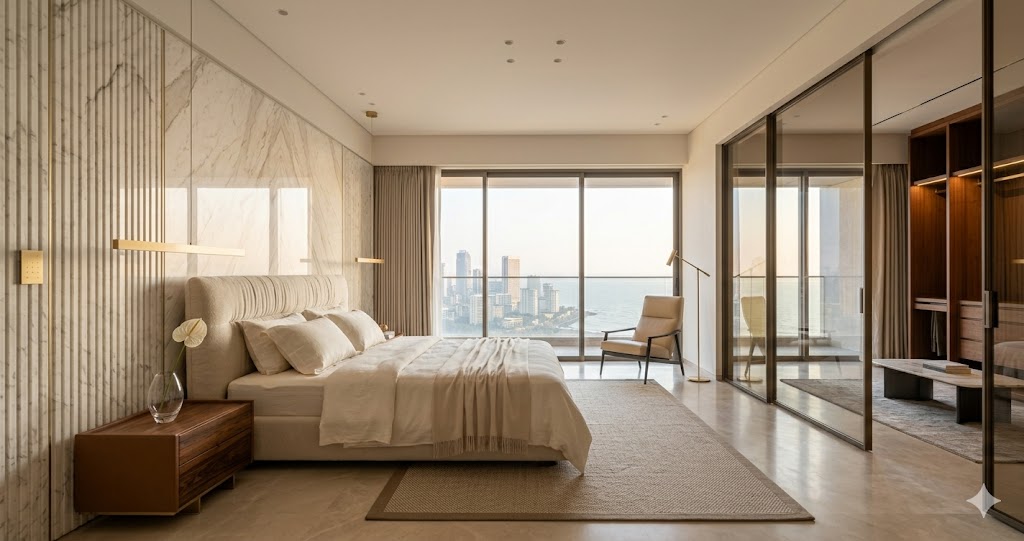
Consider the ₹6 crore design budget for a 4800 sqft 4 BHK penthouse at Lodha Altamount, Worli, Mumbai — a real composite of typical assignments at this address.
The shell. The unit is on the 38th floor with sea views to the south-west and city views to the east. The developer-delivered shell has Italian marble in living, vitrified in service areas, modular kitchen carcass, basic CP fittings, two-tone interior paint, and standard electrical points. The owner — a returning founder couple with a ten-year-old child — wants the entire interior replaced with a contemporary minimalist scheme that holds its own against the West Village apartment they vacated.
The programme. Twelve months from concept lock to handover. The design firm — a 14-person Mumbai studio with seven previous Altamount and Worli projects — assigns a project director, a senior designer, a junior, a procurement lead, and an external Lutron integrator. The owner signs an ₹85 lakh design and project management fee, structured as 35 per cent design and 65 per cent project management, paid across six milestones.
The kitchen. A Poliform Phoenix kitchen with a 4.2-metre island, smoked-oak base units, painted-glass overheads, and a 60mm Calacatta Borghini waterfall. Wolf 90cm gas range, Sub-Zero 36-inch refrigerator, Miele built-in coffee, Liebherr 154-bottle wine column, Quooker boiling-water tap. Total kitchen: ₹1.42 cr (Poliform system ₹78 L landed, appliances ₹38 L, Calacatta slab ₹16 L, balance MEP and supervision). Poliform lead time: 18 weeks ex-works.
The living and dining. Statuario Venato book-matched feature wall behind the TV — a single slab cut into four matched panels, 3.2m by 4.8m. Minotti Powell sofa in Loro Piana wool boucle (₹38 L), B&B Italia Mart chairs, Cassina LC4 chaise, Edra Standard sofa in the second sitting. Custom Tai Ping rug, Poltrona Frau dining chairs around a 3.6m solid walnut table. Total: ₹1.15 cr.
The bedrooms. Master: Poliform Bristol bed, B&B Italia bedside, Flos lighting, walk-in wardrobe in fumed eucalyptus with Hettich runners. Master bath: Antonio Lupi vanity, Boffi mixer, Statuario floor and walls, Mr Steam Day Spa generator for rainshower-steam. Child's room: Poliform Tetris wardrobe, oak study desk. Guest and study finished slightly more restrained. Total: ₹1.28 cr.
The wellness room. A 90 sqft converted service area as a chromotherapy steam room — Klafs InfraPlus bench, Mr Steam generator, Bisazza mosaic, integrated audio. ₹22 L including society NOC, waterproofing and dedicated MEP run.
The automation. Lutron HomeWorks QSX with Palladiom keypads in living, dining, master and study; motorised Sivoia QS Triathlon shades on every window; integrated audio across living, dining, master and wellness; unified climate overlay. Programmed by a Mumbai Lutron Gold integrator. Total: ₹62 L.
Finishes, joinery, soft-furnishing and art. Smoked oak panelling in entry and corridor, fluted oak on master bed wall, painted lacquer in child's room, micro-cement in guest bath. Gyp-board ceilings with cove lighting and Flos / Davide Groppi pendants. Listone Giordano engineered flooring in bedrooms, Statuario in living-dining, Mutina ceramic in bathrooms. Loro Piana and Dedar curtain fabric, Jaipur Rugs for bedrooms, curated art across five walls (₹35 L art budget), accent objects from Spazio and Beruru. Joinery and finishes ₹98 L; soft-furnishing and art ₹48 L.
Adding up. Design and PM ₹85L + kitchen ₹1.42 cr + living-dining ₹1.15 cr + bedrooms ₹1.28 cr + wellness ₹22L + automation ₹62L + finishes ₹98L + soft-furnishing ₹48L = ₹7.0 crore. Most ₹6 cr briefs settle at ₹6.8 to ₹7.5 cr by handover — overage absorbed across import-duty fluctuations, extra electrical runs, society-mandated waterproofing, and a couple of art and rug revisions.
The 12-month programme: month 1 to 3 concept, mood, BOQ; month 3 to 4 procurement orders placed; month 4 to 6 civil and MEP on site; month 6 to 9 imports arriving in waves, joinery, marble; month 9 to 11 finishing, automation programming, soft-furnishing; month 11 to 12 snag, art install, handover.
Luxury Apartment Design vs Adjacent Categories
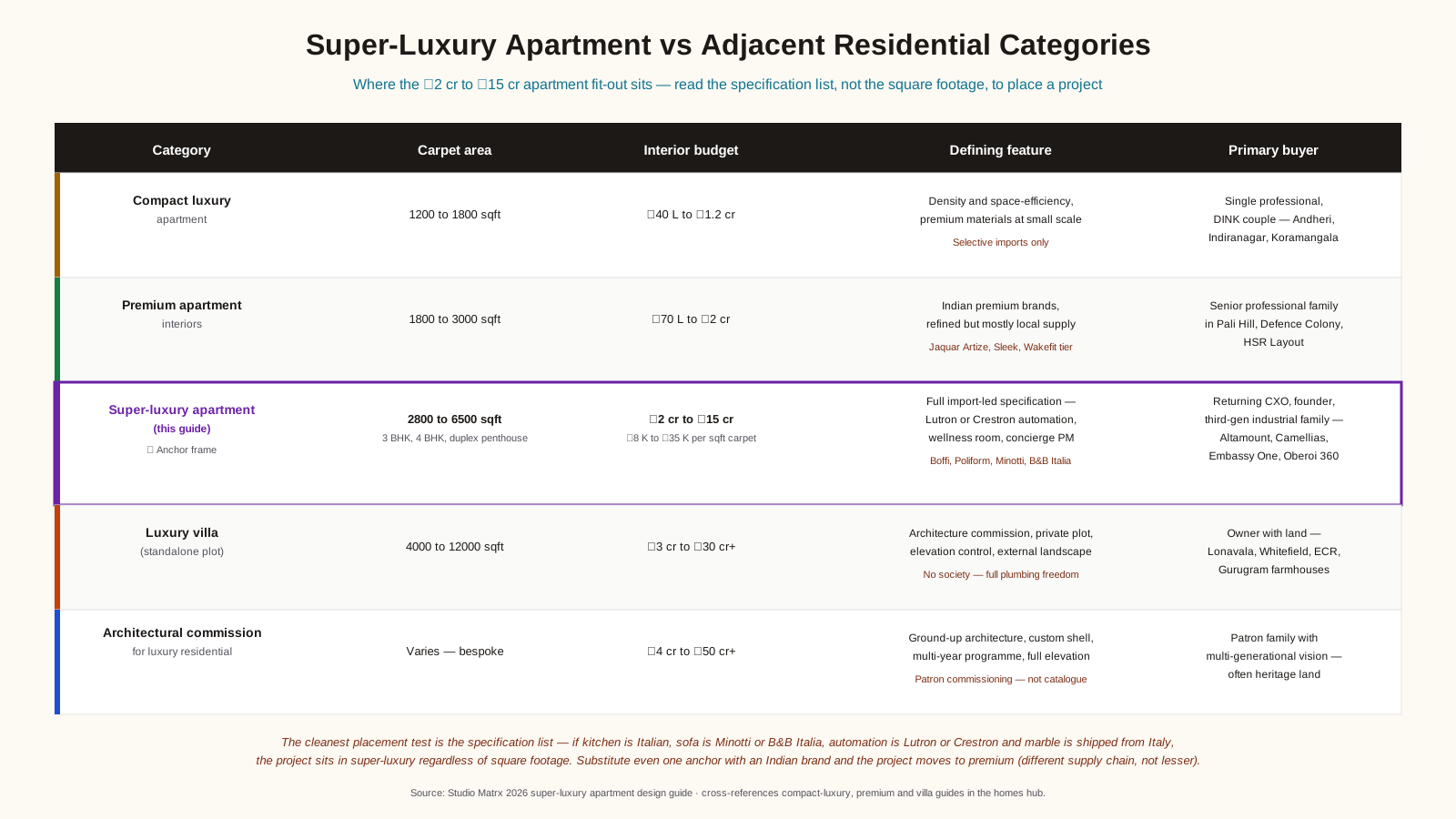
| Category | Carpet area | Interior budget | Defining feature | Primary buyer |
|---|---|---|---|---|
| Compact luxury apartment | 1200 to 1800 sqft | ₹40 lakh to ₹1.2 cr | Density and space-efficiency, premium materials in smaller scale | Single professional or DINK couple in Andheri, Indiranagar, Koramangala |
| Premium apartment interiors | 1800 to 3000 sqft | ₹70 lakh to ₹2 cr | Indian premium brands, selective imports, refined but mostly local supply chain | Senior professional family in Pali Hill, Defence Colony, HSR Layout |
| Super-luxury apartment (this guide) | 2800 to 6500 sqft | ₹2 cr to ₹15 cr | Full import-led specification, Lutron or Crestron, wellness room, concierge PM | Returning CXO, founder, third-gen industrial family in Altamount, Camellias, Embassy One |
| Luxury villa | 4000 to 12000 sqft | ₹3 cr to ₹30 cr+ | Architecture commission, private plot, elevation control, external landscape | Owner with land in Lonavala, Whitefield, ECR, Gurugram farmhouses |
| Architectural commission for luxury residential | Varies | ₹4 cr to ₹50 cr+ | Ground-up architecture, custom shell, multi-year programme | Patron family with multi-generational vision |
The boundaries blur at the edges. A 2200 sqft Worli flat with a ₹2.5 cr fit-out could be called either compact luxury or super-luxury depending on how one frames the carpet area versus the spend density. The cleaner test is the specification list: if the kitchen is Italian, the sofa is Minotti or B&B Italia, the automation is Lutron or Crestron, and the marble is shipped from Italy, the project sits in the super-luxury bracket regardless of square footage. If even one of those is substituted to an Indian brand, the project is in the premium bracket — which is not a lesser category, just a different one with a different supply chain and different lead times.
Materials, Finishes and Brand Landscape
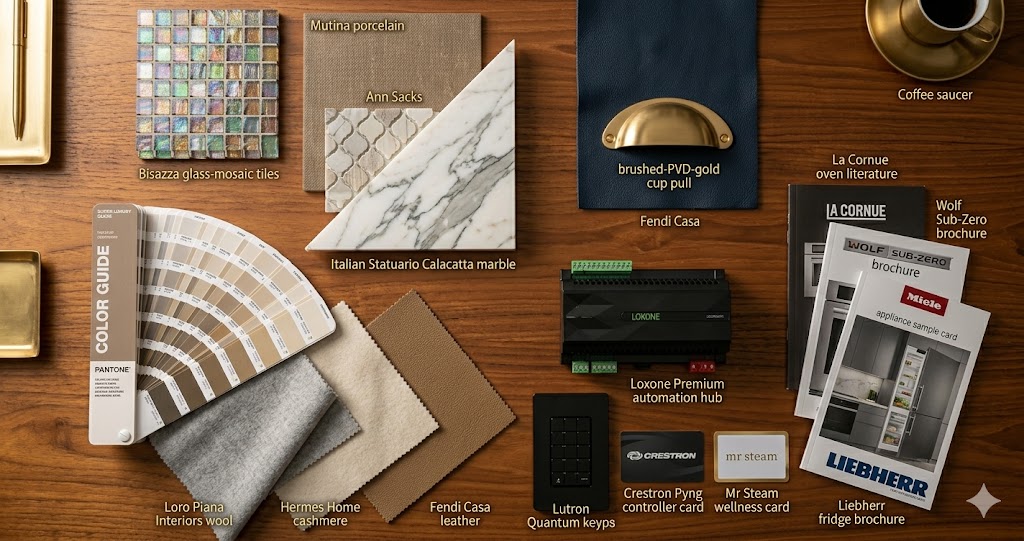
The super-luxury apartment in India in 2026 is built from a tight palette of named global vendors. The selection below is the working menu most senior design studios in Mumbai, Delhi and Bengaluru reference when starting a brief at this tier.
Kitchen systems. Boffi, Poliform, Molteni & C, Bulthaup, Arclinea (Boffi-owned), Valcucine, Dada (Molteni group) and Snaidero are the regularly-imported Italian systems. Boffi Code, Poliform Phoenix and Bulthaup B3 are the most-specified ranges. Häcker, Nolte, Leicht and Veneta Cucine sit one rung below — German engineering with faster 8 to 12 week lead times and lower duty exposure.
Lounge furniture. Minotti, B&B Italia, Cassina, Flexform, Molteni, Poliform, Edra, Maxalto, Living Divani, Vitra, Knoll, Poltrona Frau and De Sede form the regularly-imported list. Hermes Home, Loro Piana Interiors, Fendi Casa and Armani Casa add the fashion-house overlay. Indian production at this tier — Beyond Designs, Beruru, Pushp Vatika — supplies bespoke dining and accent pieces where import lead time does not work.
Stone and tile. Italian Statuario, Calacatta Borghini, Calacatta Vagli, Carrara, Patagonia, Cipollino, Onyx, Travertine. Spanish Macael, Portuguese Estremoz, Brazilian Patagonia, and graded Indian Makrana. Bisazza glass mosaic, Mutina ceramic, Ann Sacks tile, and Hermes-branded ceramic for powder-room signatures. Slab selection at Carrara, Verona or Kishangarh.
Sanitaryware. Antonio Lupi, Boffi, Agape, Gessi, Dornbracht, Vola, Duravit, Villeroy & Boch, Toto Neorest, Kohler Special Selection. Indian premium (Jaquar Artize, Kohler India high-end) appears in secondary or staff bathrooms.
Appliances. Sub-Zero refrigeration, Wolf cooking, Miele built-ins, Liebherr wine columns, Gaggenau full-set, La Cornue ranges, Quooker taps, Falmec or Elica hoods. Coffee: Miele CM7 or Jura Z10. Wine columns sized 154 to 254 bottles for dedicated cellars.
Automation. Lutron HomeWorks QSX with Palladiom keypads is the luxury benchmark for lighting and shades; Crestron Home for unified whole-house control; Loxone Premium for German engineering at a lower keypad budget; Control4 in mid super-luxury. Audio: Bowers & Wilkins, Bang & Olufsen, Sonance in-ceiling, Sonos Pro distributed. Lighting: Flos, Davide Groppi, Foscarini, Vibia, Artemide, Tom Dixon, Bocci.
Wellness. Mr Steam (USA) and Klafs (Germany) lead the residential steam-and-sauna market in India; Tylo, Helo and Effegibi appear in alternative specs. Chromotherapy showers: Antonio Lupi Meteo, Dornbracht Sensory Sky, Gessi Private Wellness.
Veneers, finishes, hardware, fabric. Tabu and Decospan veneers; Listone Giordano and Cadorin engineered flooring; Beton Ciré or Tadelakt micro-cement; Farrow & Ball or Benjamin Moore palettes; Edelman Leather wall finishes. Hettich and Blum hardware (strong India service), Salice hinges, Linnea or FSB door handles, Dauby brass. Fabric: Loro Piana Interiors, Dedar, Rubelli, Designers Guild, Pierre Frey, Hermès, Romo, Sarita Handa. Rugs: Tai Ping, Jaipur Rugs Manchaha, Hands, Obeetee bespoke.
A typical ₹6 cr brief uses roughly 25 to 35 named global brands combined, with kitchen, sofa and stone choices anchoring the rest.
Eight Pitfalls Common in 2026 India
1. Underestimating import lead times. Boffi, Poliform, Minotti and B&B Italia all run 14 to 22 weeks from order to ex-works. Add three to four weeks shipping, two weeks customs clearance, and one to two weeks site installation. The total of 22 to 30 weeks must be locked into the programme at month 1. Owners who change their mind on the kitchen at month 4 cannot recover the timeline.
Mitigation. Lock kitchen, primary sofa and dining table by end of month 2. All other specifications can flex into month 4. Build a written change-order penalty for items already ordered.
2. Society NOC and committee approval lag. Wellness room conversions, additional water plumbing for a steam shower, modifications to fire-safety routing, and any window or façade change requires society and sometimes municipal NOC. Lodha, Oberoi and Embassy towers all have committee processes that take 4 to 12 weeks.
Mitigation. File society NOCs in month 1 of design, not month 4 when site work starts. Carry a parallel scheme that does not need committee approval as backup.
3. Customs duty and IGST shock. Italian furniture and kitchen systems attract basic customs duty plus IGST plus social welfare surcharge, typically landing imports at 30 to 42 per cent above ex-works price. Owners briefed on Italian retail get blindsided.
Mitigation. Quote all imported items at landed-Mumbai or landed-Delhi cost, not ex-works. Build a 5 to 8 per cent duty-fluctuation buffer into the budget.
4. Lift weight and dimension constraints. Even Grade A towers have service lift weight limits (often 1000 to 1500 kg) and door dimensions (typically 1200mm wide by 2400mm tall). A 3.6-metre solid walnut dining table or a 4-metre stone slab may not fit.
Mitigation. Confirm service lift dimensions and weight limit in month 1. Specify segmented dining tables and book-matched stone in two-piece slabs where the lift is the constraint. Plan crane hire for façade lifts only as a last resort and budget ₹3 to 8 lakh for the day.
5. Electrical load and DG backup mismatch. Wolf range, Liebherr wine columns, steam generators and Lutron systems together can push apartment load 30 to 50 per cent above the developer-supplied allowance. Many Grade A towers cap DG backup at 5 to 8 kW per apartment.
Mitigation. Calculate the appliance and wellness load at the BOQ stage. Apply for additional sanctioned load with the discom in month 1. Provide critical-circuit prioritisation in the Lutron programming so the DG can serve essentials first.
6. Marble selection without yard trip. Carrara, Verona and Kishangarh yards each have specific veining, colour and shape. Selecting marble from a 200dpi catalogue image leads to delivered stone that does not match expectation.
Mitigation. Mandate either a Carrara or Kishangarh yard trip with the project lead and the owner, or a video-call slab selection with a trusted Indian importer (R K Marbles, Bhandari Marbles, Classic Marbles all run this service for premium accounts).
7. Vastu, society and Western minimalism clash. A returning-founder client may have an internalised West Village minimalism but a parent generation that expects Vastu-compliant kitchen orientation, pooja room placement, and entrance treatment.
Mitigation. Run the Vastu overlay at concept stage, not after layout lock. See Vastu modern homes and pooja room design India for the framework. Most super-luxury layouts can accommodate the major Vastu rules without compromising minimalist aesthetic.
8. Automation programming abandoned mid-project. Lutron and Crestron programming is a 4 to 8 week post-installation activity that requires owner availability for scene-tuning sessions. Many owners hand off too early and end up with a system they never use to capability.
Mitigation. Contract for two scene-tuning rounds — one at month 11 (initial occupancy) and one at month 14 (after settling in). Pay the integrator a small retainer for the second round.
India-Specific Considerations
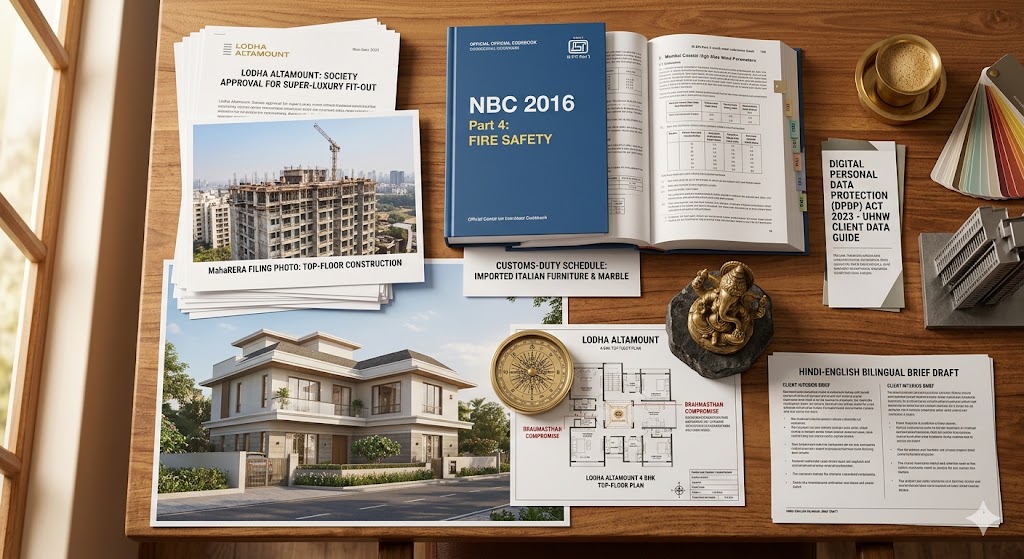
National Building Code 2016 and IS code compliance. Even though the shell is developer-delivered, interior modifications must respect NBC 2016 Part 4 (fire and life safety) — minimum corridor widths, exit door swings, smoke detector spacing, and fire-rated doors at apartment entries. IS 13808 for smoke detectors and IS 2189 for fire alarms govern detection. Electrical work follows IS 732 (wiring) and IS 3043 (earthing). Any plumbing modification for a wellness room follows IS 1172 (water supply) and IS 2065 (drainage). The design firm's MEP consultant should sign off compliance in writing as part of handover.
DPDP Act 2023. Lutron, Crestron and Loxone systems, plus smart speakers, intercom, doorbell cameras and the building's facial-recognition entry system, all collect personal data. The Digital Personal Data Protection Act 2023 governs how this data is stored and shared. The owner has rights to know what is collected and to require deletion. For super-luxury apartments, where the buyer is often a public figure, a CXO, or a high-net-worth individual, the privacy posture matters. See the smart home design India guide for the cybersecurity and DPDP detail.
Vastu compatibility. Even at the super-luxury tier, Vastu remains influential — particularly for the entrance, kitchen, pooja room and master bedroom. The five rules that most apartment owners hold to are: north or east entrance preferred; kitchen in south-east (Agni) with cook facing east; pooja room in north-east (Ishanya); master bedroom in south-west (Nairutya); and water sources in north-east. Most well-designed Grade A apartments accommodate these without major modification. See Vastu modern homes, Vastu for kitchen, Vastu for bedroom and pooja room design India.
Society and RWA rules. Each Grade A tower has its own Resident Welfare Association or society rules covering: working hours (typically 9am to 6pm, no Sunday work, no work during religious holidays), debris removal (slot-booked service lifts), noise levels, common-area protection (lift padding, lobby floor protection), and modification approvals. Wellness rooms, additional water plumbing, façade changes, AC outdoor unit changes, and balcony enclosures almost always require committee approval. Build all of this into the month-1 society liaison plan.
Climate zones. Mumbai (warm-humid coastal), Delhi NCR (composite — hot summer, cold winter), Bengaluru (moderate temperate), Hyderabad (warm-humid moving to hot-dry), Chennai (warm-humid coastal). Each climate dictates different finish behaviours. Solid wood floors warp faster in Mumbai humidity and need engineered alternatives. Delhi winters can crack imported Italian leather if humidity is not controlled. Bengaluru's moderate climate is the easiest for finish longevity. Specify climate-appropriate substrates and finishes from day one. See tropical architecture India for the climate framework.
Regional vendor differences. Mumbai has the deepest super-luxury vendor network — Boffi, Poliform, Minotti, B&B Italia, Cassina all have showrooms or studios. Delhi NCR has strong Crestron and Lutron integrator presence and excellent stone supply through Kishangarh. Bengaluru has the most mature smart-home and automation supply chain. Hyderabad and Chennai often pull from Mumbai or Delhi for the most niche imports, adding 1 to 2 weeks to lead time. The procurement strategy must respect the city.
GST, customs and import structure. Imported furniture attracts basic customs duty (typically 10 to 20 per cent depending on classification), IGST (18 per cent on most furniture, 28 per cent on some categories), and social welfare surcharge. Total landed cost typically runs 30 to 42 per cent above ex-works. The design firm or a specialist import agent handles the customs filing; the owner pays the duty against bills of entry.
The Budget Bands for 2026 India
The super-luxury apartment tier is internally tiered. Treating it as one band obscures the meaningful sub-segments.
| Tier | Interior spend | Carpet area | Specification anchor | What you get |
|---|---|---|---|---|
| Entry super-luxury | ₹2 to ₹3.5 cr | 2200 to 3500 sqft | Poliform or Molteni kitchen, B&B Italia or Flexform sofa, Lutron Caseta or RA2 automation, Italian stone selectively, Mr Steam wellness | A coherent imported scheme with one or two showpiece walls; selective imports balanced with Indian bespoke joinery |
| Mid super-luxury | ₹3.5 to ₹6 cr | 3000 to 4500 sqft | Boffi or Poliform kitchen, Minotti or B&B Italia main sofa, full Lutron HomeWorks, Statuario book-matched feature wall, full wellness room, Wolf-Sub-Zero appliance package | Comprehensive global-luxury fit-out across all spaces; the segment described in the worked example above |
| High super-luxury | ₹6 to ₹10 cr | 4000 to 6000 sqft | Boffi or Bulthaup kitchen, multi-brand lounge (Minotti + B&B + Edra), Crestron full-house, La Cornue range, dedicated wine cellar, spa room with chromotherapy shower and steam | Multi-room signature programme with art-collector level finishes; bespoke joinery extensive; full house automation with multiple keypads per room |
| Ultra super-luxury / penthouse | ₹10 cr to ₹15 cr+ | 5500 to 10000+ sqft (often duplex) | Fully bespoke kitchen by Boffi Studio or Molteni Dada, Hermes Home and Loro Piana Interiors signature furniture, Crestron with biometric layer, full wellness floor (steam + sauna + cold plunge + gym), private elevator lobby | One-of-one apartment in a named building; typically duplex or full-floor; art and design programme curated alongside fit-out |
The mid super-luxury band (₹3.5 to ₹6 cr) is the largest by volume of projects across the top five Indian metros. The high and ultra bands are concentrated in Mumbai (Altamount, Worli, Bandra), Gurugram (Camellias, Magnolias, Aralias) and selectively Bengaluru (Embassy One, UB City Skyz).
When Luxury Apartment Design Is NOT the Right Fit
There are several scenarios where the super-luxury apartment programme is the wrong frame, even for an owner who can afford it.
Short-stay or transient ownership. If the apartment will be used for under 18 to 24 months — for instance, a 1 to 2 year India posting before relocation — the 12 to 14 month fit-out programme does not pay back. A premium ready-to-move developer-finished option or a furnished rental in the same building is better.
Apartment used as occasional pied-à-terre. An apartment occupied 30 to 60 nights a year by a global-mobility family does not need a wellness room, full kitchen system, and Lutron programming. A premium fit-out (₹70 lakh to ₹2 cr) achieves more than enough density of finish for low-occupancy use.
Owner uncomfortable with 12-month execution window. Some owners cannot tolerate 12 months of weekly design reviews, slab selection trips, fabric choices, and committee paperwork. For these owners, a turnkey premium developer offering or a smaller-scoped project lead by a single boutique designer is a better fit.
Building shell is constraining. Some older "luxury" apartment buildings — pre-2015 stock in Worli, South Delhi, Pali Hill — have low slab-to-slab heights (under 3 metres), structural beams in inconvenient places, or service shaft configurations that constrain kitchen and bathroom planning. In these cases, super-luxury spec applied to a constrained shell delivers diminishing returns. Compact luxury or premium fit-out is more honest.
Owner taste is genuinely traditional. Super-luxury in 2026 India is predominantly contemporary or minimalist. If the owner's taste is genuinely classical Indian, Indo-Saracenic, traditional Maharashtrian wada, or heavy Italianate, the imported-Italian-minimalism vendor list is the wrong menu. A specialist heritage and traditional residential firm is the right partner.
Building does not allow modification scope. A few society constitutions and apartment-buyer agreements explicitly forbid certain modifications — façade changes, balcony enclosures, AC outdoor relocations, additional water plumbing. If the super-luxury vision depends on these and the society will not allow them, the project must scale back or relocate.
For owners in any of these cases, premium apartment interiors, apartment interior planning India or compact luxury apartment are the better starting frames.
The 5-Year Trajectory: 2030 Outlook
Five forces will reshape the super-luxury apartment design segment between 2026 and 2030.
The import supply chain will normalise further. Boffi, Poliform, Minotti, B&B Italia and Molteni are all investing in India distribution. By 2028, expect lead times to compress from 18 to 22 weeks down to 12 to 16 weeks as more stock is held in Indian warehouses. Customs duty will likely remain at current levels (no major rate change is signalled in 2026 budget documents), but the procurement and logistics overhead will reduce.
Automation will move from premium add-on to default expectation. Lutron Caseta, Crestron Home and Loxone will become standard in even entry super-luxury, much as central AC moved from luxury to standard between 2010 and 2020. The differentiation will move up-stack to AI-driven scene learning, biometric access, and integrated health and wellness sensors.
Wellness rooms will expand beyond steam. The 2026 standard is steam-and-chromotherapy. By 2030 expect cold plunge integration, infrared sauna, halotherapy salt rooms, and red-light therapy panels as routine wellness-room components. The supply chain — Klafs, Mr Steam, Therabody, JOOVV, NormaTec — is already mature in the USA and Europe and will land in India by 2027 to 2028.
Climate and sustainability will become a buyer requirement. Currently sustainability sits in the architectural commission segment more than the apartment fit-out. By 2028, expect super-luxury buyers to ask for low-VOC paint, recycled-content stone, FSC-certified veneers, low-embodied-carbon joinery, and energy-monitoring overlays as standard. See sustainable interiors India for the framework that will become baseline.
AI design tools will compress the concept-to-mood phase. What currently takes 6 to 10 weeks of concept and mood-boarding will compress to 2 to 4 weeks as tools like AI interior design and AI home visualization mature. The detailed-specification, procurement, customs, joinery and installation phases will remain manual and time-bound, but the concept phase will speed up materially.
The buyer demographic will broaden. Currently the super-luxury apartment buyer is heavily Mumbai, Delhi NCR, Gurugram, Bengaluru, Hyderabad, Chennai. By 2030 expect Pune (Kalyani Nagar, Koregaon Park), Kochi (Marine Drive), Ahmedabad (Bopal, Thaltej), Lucknow (Gomti Nagar) and Jaipur (Jagatpura) to develop credible super-luxury tower inventory and a buyer base that will commission ₹2 cr+ fit-outs. The supply chain will follow the demand.
Frequently Asked Questions
Q. What is the realistic interior budget for a 4 BHK at Lodha Altamount, DLF Camellias or Embassy One?
For a 3500 to 5000 sqft 4 BHK in any of these towers, expect ₹4 to ₹8 cr for a comprehensive super-luxury fit-out. The mean across recent projects sits around ₹5.5 to ₹6.5 cr. Below ₹4 cr, the project will be premium rather than super-luxury. Above ₹8 cr, the project enters high super-luxury with multi-brand lounges, full house automation, and signature art programme.
Q. How long does a super-luxury apartment fit-out actually take?
9 to 14 months from concept lock to handover. 9-month projects lock kitchen, sofa and stone by month 2. 14-month projects absorb design changes, owner travel, society delays and customs edge cases.
Q. Should I use the developer's recommended designer or appoint independently?
Most owners appoint independently. Developer-recommended designers are competent but typically work to a standard catalogue and finish list that does not flex to super-luxury bespoke specification. An independent senior firm with 5 to 15 prior projects in the same tier (and ideally in the same building) is the better fit. See choosing an interior designer in India.
Q. Can I do a super-luxury fit-out while living in the apartment?
No. A 12-month fit-out at this scale requires the apartment to be empty. Owners typically move to a serviced apartment, family second home, or temporary lease. Some owners with multi-property holdings simply move between homes; many take a 12-month lease nearby. Budget ₹15 to ₹50 lakh for alternative accommodation depending on city and family size.
Q. How much should I budget for art and accessories on top of the fit-out?
Art and accent objects typically run 5 to 12 per cent of the interior budget. For a ₹6 cr fit-out, that is ₹30 lakh to ₹70 lakh for an initial art programme, with the expectation that the collection grows over years. Many owners now appoint an art consultant alongside the designer specifically for this.
Q. Is it worth importing the entire furniture suite, or should some pieces be Indian-made?
Mix. The kitchen system, primary sofa, dining chairs, and headline bed are almost always imported (no Indian equivalent at the same finish and engineering level). Dining table, console tables, accent seating, bedside tables, study tables, and bespoke joinery are often Indian-made by specialist studios — Beyond Designs, Beruru, Pushp Vatika, Studio Renn — at the same finish quality as imports with one-third the lead time.
Q. What is the difference between Lutron HomeWorks and Crestron Home for an Indian apartment?
Lutron HomeWorks QSX is the lighting and shade specialist — its Palladiom keypads are the visible-jewellery benchmark and its scene control is industry-leading. Crestron Home is the unified-control specialist — single app for lights, shades, audio, climate, security, and access. For an apartment up to 6000 sqft, Lutron HomeWorks with a separate Sonos audio system is often cleaner and more reliable. For larger apartments or duplexes with extensive audio-video distribution, Crestron is typically the better fit. Loxone Premium is the German engineering alternative at a lower keypad budget but with less polished UX.
Q. How do I handle the Vastu requirement in a contemporary minimalist scheme?
The five major Vastu rules (entrance, kitchen, pooja, bedroom, water) can be accommodated in 90 per cent of well-designed contemporary apartments without aesthetic compromise. Address Vastu at concept stage with a consultant the family trusts. Most super-luxury layouts work; where there is a hard clash, the design firm can typically propose two or three alternatives that resolve it. See Vastu modern homes for the framework.
Q. What automation should I install if I want the lowest UX complexity?
A Lutron Caseta or RA2 system controlling lights and shades, plus Sonos for audio, plus a separate climate control kept manual on wall thermostats. This is the lowest-complexity premium setup. Save the Crestron and full-Lutron HomeWorks for owners who genuinely want scene control across all subsystems and are willing to invest in the tuning rounds.
Q. Is a wellness room actually used, or does it become an expensive ornament?
Mixed. Roughly half the wellness rooms built into super-luxury apartments are used weekly; the other half become occasional-use spaces. The deciding factor is whether the owner already has a wellness routine (gym, yoga, spa visits) into which the home wellness room integrates. If the owner builds the wellness room hoping it will create a habit, usage tends to drop after the first few months. If the owner is replacing an existing studio or spa membership with a home equivalent, usage stays high.
References
1. National Building Code of India 2016, Bureau of Indian Standards — particularly Part 4 (Fire and Life Safety) for residential interiors.
2. Bureau of Indian Standards — IS 732 (Code of Practice for Electrical Wiring Installations), IS 3043 (Earthing), IS 1172 (Water Supply), IS 2065 (Drainage), IS 13808 (Smoke Detectors), IS 2189 (Fire Alarms).
3. Knight Frank India — The Wealth Report India editions 2023, 2024 and 2025; Luxury Residential reports tracking ₹10 cr+ transactions across Mumbai, Delhi NCR, Bengaluru.
4. JLL India Residential Market Research — quarterly luxury residential market reports 2024 and 2025.
5. Anarock Property Consultants — Luxury Housing Reports India 2024 and 2025; tracking ₹2 cr+ and ₹5 cr+ apartment transactions.
6. CBRE India — India Residential Market Snapshot, premium and luxury segment editions 2024 and 2025.
7. Houzz India — annual Home Renovation Trends Study India editions 2023, 2024 and 2025.
8. India Brand Equity Foundation (IBEF) — Real Estate Sector Reports 2024 and 2025.
9. Digital Personal Data Protection Act 2023, Ministry of Electronics and Information Technology, Government of India.
10. Goods and Services Tax — IGST and customs duty schedules for imported furniture and kitchen systems, Central Board of Indirect Taxes and Customs.
11. Magicbricks Research — Premium and Luxury Residential Insights 2024 and 2025.
12. Architectural Digest India and Elle Decor India — published case studies of Mumbai, Delhi NCR and Bengaluru super-luxury apartments 2023 to 2025.
13. Confederation of Real Estate Developers' Associations of India (CREDAI) — quarterly residential market reports.
Related Guides
- Compact luxury apartment — the 1200 to 1800 sqft luxury-in-compact angle for smaller plates
- Defining luxury residential architecture in India — the architecture-firm-level definition of luxury residential
- Luxury villa architecture in India — the standalone-plot alternative to apartment living
- Premium apartment interiors — the ₹70 lakh to ₹2 cr premium bracket below super-luxury
- Choosing an interior designer in India — how to evaluate and appoint the right firm for super-luxury work
- Japandi apartment — the Japanese-Scandinavian minimalism direction popular in 2026 super-luxury briefs
Export this guide
Related Guides — Deep-dive reading
Penthouse Design — Top-Floor Luxury in Indian Towers (2026)
DLF Camellias / Lodha Altamount / Oberoi Sky Suites · Private terraces · ₹15-150 crore market
Design StylesPremium Apartment Interiors — The ₹15-40 Lakh Tier for Indian 3 BHKs (2026)
Above budget-luxury · Below super-luxury · Materials, brands, contractor-tier reality
Design StylesStudio Apartment Design — The 1RK 250-450 sqft Indian Cornerstone (2026)
1RK studio · 5 zones in 350 sqft · Bed-as-sofa · Co-living adjacent · Mumbai BKC ₹35K rent
Design StylesRelated Tools — Try Free
Cross-Ventilation Analyzer
Estimate airflow and air changes per hour (ACH) from room size, window areas, layout, and local wind — with NBC 2016 Part 8 compliance check.
Ventilation CalculatorApartment Furniture Size Chart
Standard furniture dimensions for Indian apartments — sofas, beds, tables, dining, storage.
Reference ChartElectrical Safety & Load Audit
Home electrical audit — 10 categories, 65+ checkpoints across earthing, RCCB, MCB, wiring, switchboards, appliance circuits, DG/inverter backup.
Safety Audit