
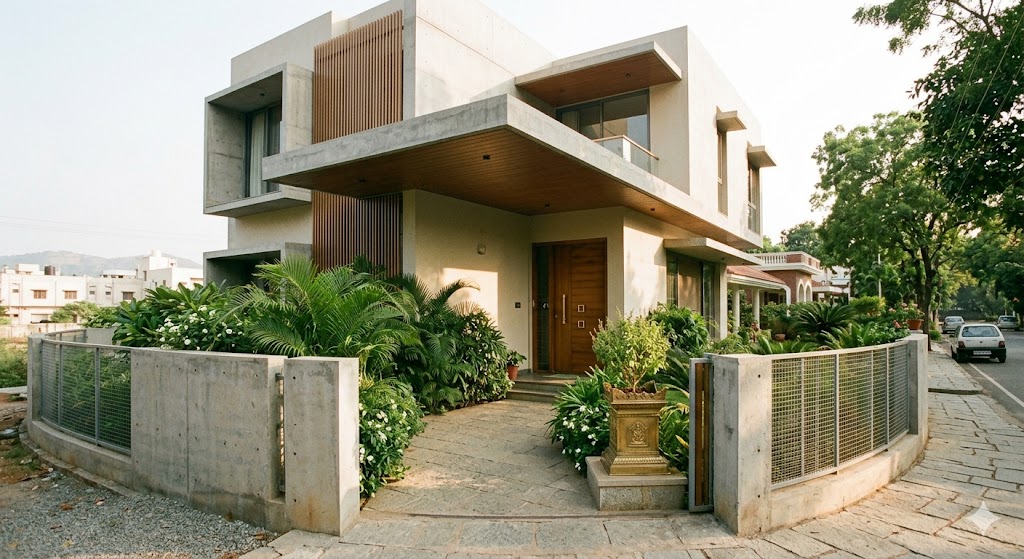
Vastu Shastra for Modern Homes
A Scientific Approach — Directions, Room Planning, Colours & Architect's Guide
Vastu Shastra is India's ancient architectural science — a 5,000-year-old system that prescribes how buildings should be oriented, planned, and constructed in harmony with natural forces. It is referenced in the Vedas, elaborated in texts like the Mayamatam and Manasara, and has been practised continuously in Indian construction for millennia.
In modern India, Vastu occupies a complex space. An estimated 70-80% of Indian homebuyers consider Vastu before purchasing or building a home. Yet the design community is deeply divided — some architects dismiss it entirely as superstition, while others follow it rigidly without questioning. Neither extreme serves the client well.
The truth is nuanced: much of traditional Vastu has a scientific basis rooted in solar orientation, wind patterns, thermal comfort, and natural lighting — all legitimate architectural concerns. Some principles align perfectly with modern building science. Others are cultural beliefs that have no verifiable physical effect but matter deeply to the client's peace of mind.
This guide takes a balanced, scientific approach — explaining what Vastu recommends, why it recommends it, which principles have architectural logic, and how architects and homeowners can integrate Vastu with modern design without compromising functionality.
The Scientific Basis of Vastu
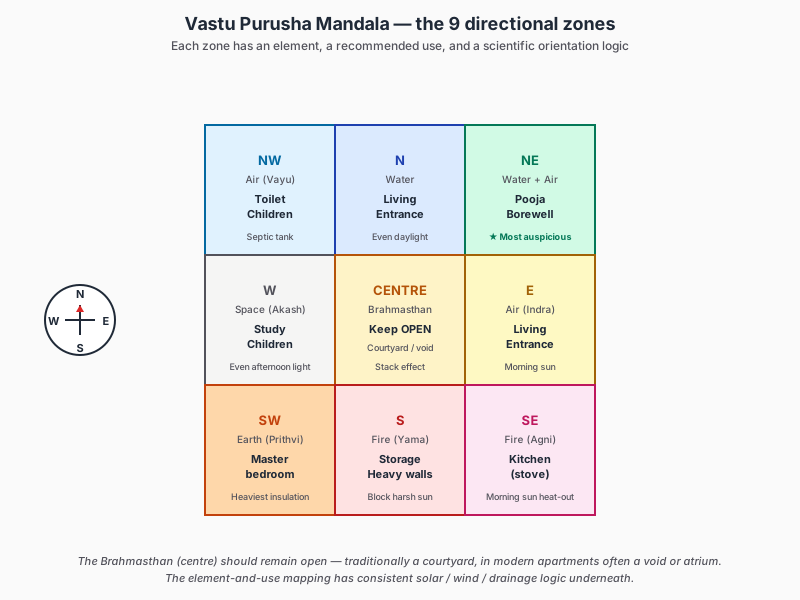
The 9-zone Vastu Purusha Mandala is the foundational diagram. Each zone has an element, a recommended use, and an architectural reasoning rooted in solar path, prevailing winds, and drainage logic — explored in the sections below.
Solar Orientation — The Core Logic
Vastu's fundamental principle is solar orientation — designing around the sun's path. In the Northern Hemisphere (where India lies), the sun:
- Rises in the East (morning sun — gentle, warming, rich in UV-A — kills bacteria, promotes vitamin D)
- Reaches peak intensity from the South (harsh afternoon sun — maximum heat gain)
- Sets in the West (evening sun — glare, heat)
| Vastu Principle | Scientific Basis |
|---|---|
| Entrance facing North or East | North = even light all day (no direct sun). East = morning sun at entry — psychologically welcoming |
| Master bedroom in Southwest | SW receives least morning sun = cooler in mornings = better sleep. Thickest walls on south/west reduce heat gain |
| Kitchen in Southeast | Morning sun reaches SE first — natural light for cooking. Heat from cooking vents eastward with prevailing winds |
| Pooja room in Northeast | First light of the day. Calm, quiet orientation. Traditionally, prayers were at sunrise |
| Living room in North/East | Maximum natural light. Northern light is even and glare-free — ideal for social spaces |
| Avoid toilets in Northeast | NE corner gets the most beneficial morning light — "wasting" it on a toilet is poor space planning |
| Open spaces in North/East | Allows morning sun to penetrate deeper into the house |
| Heavy construction in South/West | Thicker walls on the south and west sides insulate against afternoon heat gain |
Wind Patterns — Ventilation Logic
India's predominant wind patterns (for most of the subcontinent):
- Summer: Southwest monsoon winds (June-September)
- Winter: Northeast trade winds (October-February)
| Vastu Principle | Wind Logic |
|---|---|
| Windows on North and East | Catches northeast winter breeze (pleasant, cool) |
| Fewer/smaller windows on South and West | Reduces hot southwest wind entry in summer |
| Cross ventilation through the house | Vastu encourages open north and east, heavier south and west — creating natural airflow |
| Courtyard in centre (Brahmasthan) | The courtyard creates a stack effect — hot air rises in the centre, drawing cool air from perimeter rooms |
Water and Drainage
| Vastu Principle | Scientific Basis |
|---|---|
| Water source (borewell/sump) in Northeast | In many parts of India, groundwater flow is from NE to SW. Placing the source upstream (NE) yields cleaner water |
| Drainage toward North or East | Natural ground slope in many Indian sites. Prevents waterlogging near the heavier (SW) part of the building |
| Septic tank in Northwest | Downwind of the house (prevailing winds carry odour away from living areas) |
Room-by-Room Vastu Guide
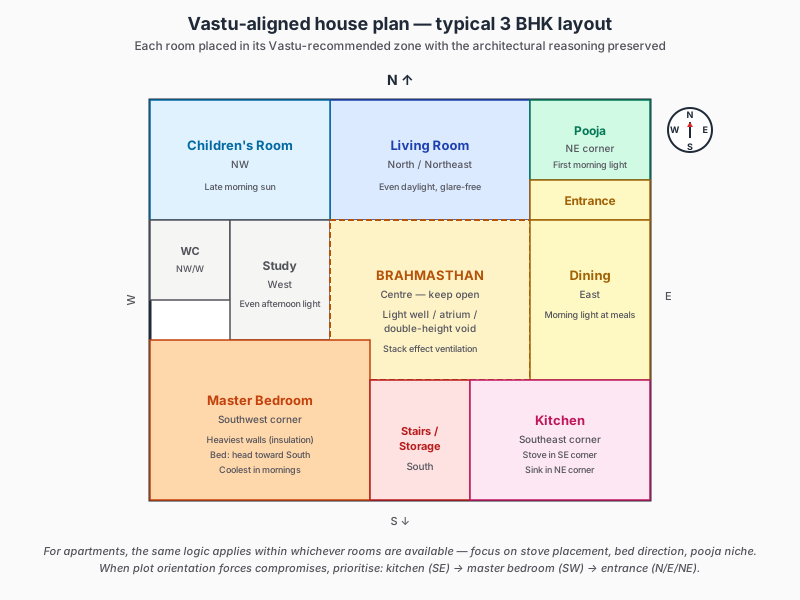
A typical 3 BHK plan with each room placed in its Vastu-recommended zone. When plot orientation forces compromises, prioritise: kitchen (SE) → master bedroom (SW) → entrance (N/E/NE).
Main Entrance
| Direction | Vastu Rating | Scientific Reason |
|---|---|---|
| North | Excellent | Even natural light, no direct glare. Welcoming. |
| East | Excellent | Morning sun at entry — energising, kills bacteria at threshold |
| Northeast | Most auspicious | Combines benefits of both north and east |
| West | Acceptable | Evening sun can cause glare. Use a porch or canopy. |
| South | Acceptable with remedies | Direct afternoon sun = heat. Design a shaded entryway. |
| Southwest | Avoid | Vastu considers it inauspicious. Practically — poorest light quality at entry. |
Modern adaptation: If your plot forces a south or west entrance, it's fine architecturally. Use a deep porch, pergola, or foyer to shade the entrance. The Vastu concern is heat and glare — solve that through design, not superstition.
Master Bedroom
| Vastu Recommendation | Scientific Basis |
|---|---|
| Location: Southwest corner | Coolest in the morning (late sun), warmest wall insulation on south/west |
| Bed direction: Head toward South | Aligns with earth's magnetic field (head toward pole, feet toward equator). Some sleep research supports this. |
| Avoid: Bed under beam | Psychologically oppressive. Also a structural concern — beams sometimes have service runs that produce noise. |
| Avoid: Mirror facing bed | Reflections at night can disturb sleep — a reasonable sleep hygiene recommendation |
| Colours: Soft pastels, earth tones | Calming, sleep-promoting — consistent with colour psychology research |
Kitchen
| Vastu Recommendation | Scientific Basis |
|---|---|
| Location: Southeast | Morning sun for natural light during cooking. Heat from cooking dissipates eastward. |
| Cooking facing East | Cook faces morning sun — good natural light on the cooking surface |
| Avoid: Kitchen directly below or above toilet | Hygiene concern — plumbing leaks can contaminate food preparation area |
| Avoid: Kitchen in Northeast | NE gets the best morning light — dedicating it to cooking (a utilitarian function) "wastes" the premium orientation |
| Water source: Northeast of kitchen | Practical — sink near the NE corner keeps the fire (stove) and water (sink) separated, reducing splash on hot surfaces |
Modern adaptation: In apartment living, kitchen placement is often fixed. Focus on: stove away from the sink (fire-water separation), good exhaust ventilation, and natural light on the cooking surface.
Pooja Room
| Vastu Recommendation | Scientific Basis |
|---|---|
| Location: Northeast | First morning light enters this corner — natural illumination during prayer time |
| Facing: East or North while praying | Faces the morning sun (east) or even north light — both are calm, gentle lighting |
| Avoid: Under staircase | Limited height, dark, cramped — not a dignified space for worship |
| Avoid: Attached to bedroom | Separate sacred and personal spaces — also practical for incense ventilation |
| Colours: White, saffron, light yellow | Traditionally sacred colours; light colours reflect morning light beautifully |
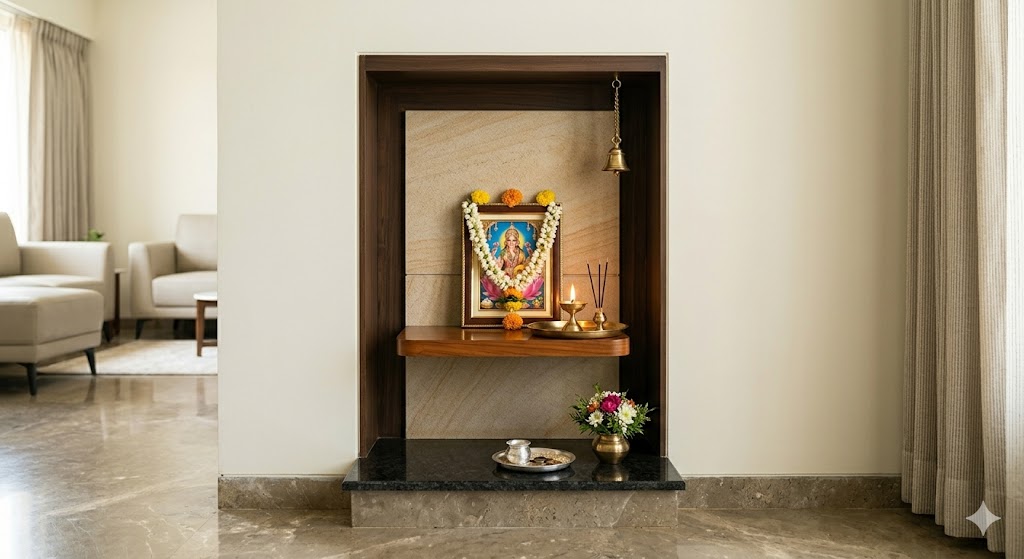
In modern apartments, a wall-mounted pooja niche in the northeast corner of the living room is the cleanest way to honour the principle without dedicating a full room — restrained, naturally lit, and easy to maintain.
Living Room
| Vastu Recommendation | Scientific Basis |
|---|---|
| Location: North or East | Maximum natural light. Northern light is even and glare-free — ideal for socialising |
| Heavy furniture: South or West wall | Keeps the north and east sides open for light and air |
| Electronics (TV): Southeast | Vastu associates SE with fire/energy. Practically, TV on SE wall means viewers face NE — reduced glare from windows |
| Colours: Warm neutrals, earth tones | Welcoming, social — consistent with colour psychology |
Study / Home Office
| Vastu Recommendation | Scientific Basis |
|---|---|
| Location: West or Southwest | West — even afternoon light for reading. SW — quiet, stable corner. |
| Facing: North or East while working | North = even light, no glare on screen. East = energising morning light. |
| Avoid: Facing South | Afternoon sun on the face = glare, heat, distraction |
| Bookshelf: Southwest | Heavy items in SW (Vastu logic). Practically, keeps the lighter NE corner open for natural light. |
Children's Room
| Vastu Recommendation | Scientific Basis |
|---|---|
| Location: West or Northwest | Morning sun doesn't disturb sleep (west rooms get sun later). NW = airy, ventilated. |
| Study desk: Facing East or North | Same logic as study room — even light, energising orientation |
| Avoid: Southwest | SW = master bedroom territory. Hierarchy of rooms. |
| Colours: Soft greens, light blues, pastels | Calming yet creative — consistent with child psychology research |
Bathroom and Toilet
| Vastu Recommendation | Scientific Basis |
|---|---|
| Location: Northwest or West | NW receives wind — helps ventilate. West = less premium orientation (afternoon sun). |
| Avoid: Northeast | NE gets the most valuable morning light. Also, plumbing in NE can contaminate water source if borewell is nearby. |
| Avoid: Centre of house | No ventilation in the centre. Also blocks the Brahmasthan (central open space). |
| Drainage: North or East | Follows natural ground slope in many sites |
Staircase
| Vastu Recommendation | Scientific Basis |
|---|---|
| Location: South, West, or Southwest | Keeps the staircase (a utilitarian element) away from the premium NE-N-E zone |
| Direction: Clockwise ascending | Ergonomic — most people naturally turn right when climbing |
| Avoid: Centre of house | Blocks the Brahmasthan. Also creates dark, poorly ventilated corridors. |
| Avoid: Northeast** | Same logic — NE is premium orientation space, not for utility |
Vastu for Apartments
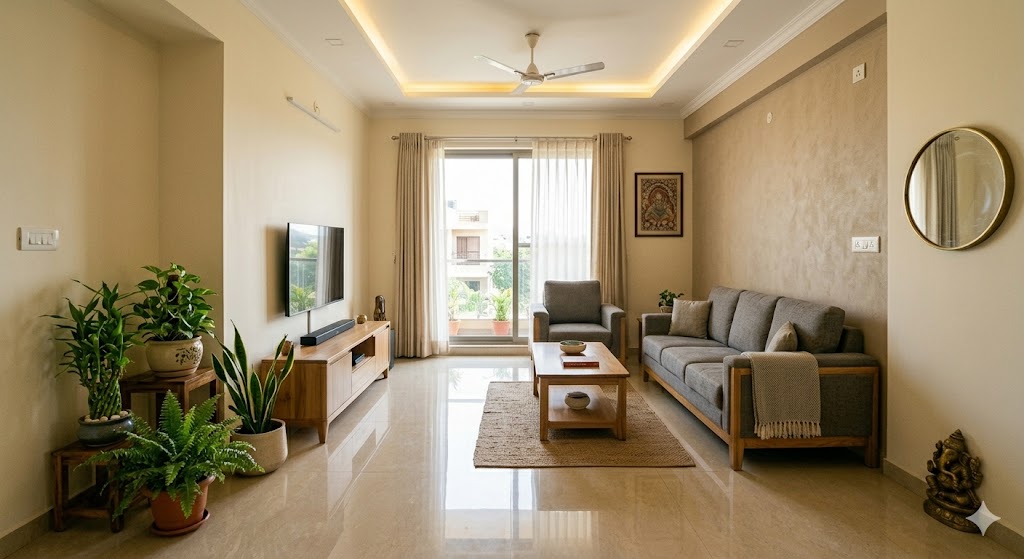
Vastu for apartments is different from independent houses because you cannot control plot orientation or building structure. Focus on what you can control:
| Element | What You Can Do |
|---|---|
| Entrance | Choose a flat with north or east-facing entrance if possible |
| Kitchen | Place stove in SE corner of the kitchen, sink in NE |
| Master bedroom | Use the SW bedroom if multiple options exist |
| Pooja | Place in NE corner of any room, or dedicate a NE-facing niche |
| Bed direction | Head toward South or East wall |
| Study desk | Face North or East |
| Colours | Follow direction-based colour recommendations per room |
| Mirrors | Avoid facing bed; place on north wall to "expand" space |
| Plants | Indoor plants in NE and East — brings life energy and improves air quality |
Vastu and Colour
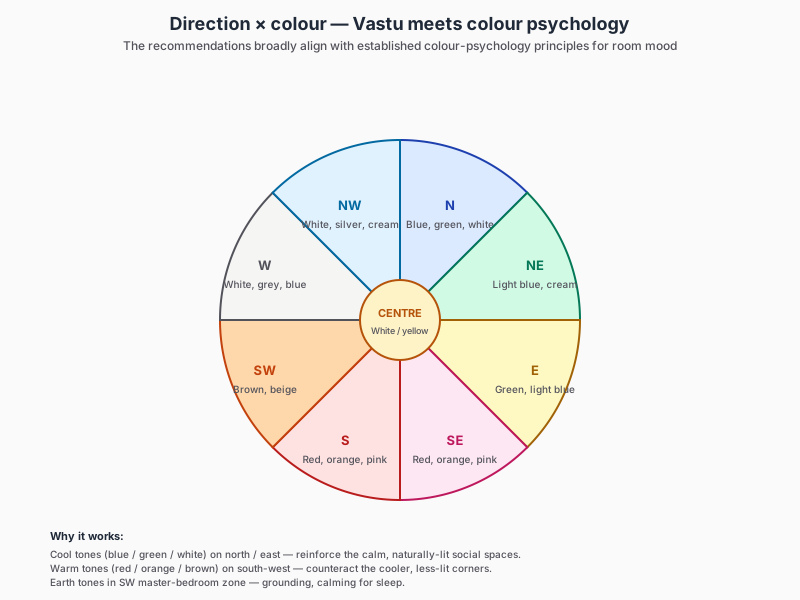
The Vastu colour palette broadly aligns with established colour-psychology principles — cool tones for calm/social rooms in the lit zones, warm tones for active/cooking spaces in the heated zones, earth tones in the sleep zone for grounding.
| Direction | Element | Recommended Colours | Avoid |
|---|---|---|---|
| North | Water | Blue, green, white | Red, orange |
| South | Fire | Red, orange, pink | Blue, black |
| East | Air | Green, light blue, white | Dark shades |
| West | Space | White, grey, blue | Green, red |
| Northeast | Water + Air | Light blue, white, cream | Dark colours |
| Southeast | Fire | Red, orange, pink | Blue, green |
| Southwest | Earth | Brown, beige, yellow, muddy tones | Blue, white (too light) |
| Northwest | Air | White, grey, silver, cream | Red, orange |
| Centre | Space (Akash) | White, light yellow | Any heavy/dark colour |
Modern take: These colour recommendations broadly align with colour psychology — warm colours in social/active areas (south, southeast), cool colours in calm/rest areas (north, northeast). The Vastu colour system is actually a reasonable interior colour framework.
What Architects Should Know
The Architect-Vastu Conflict
Many architects resist Vastu because:
- It constrains design freedom
- Some Vastu consultants give contradictory or extreme advice
- The scientific basis is not always acknowledged
The pragmatic approach:
1. Ask the client early. "Is Vastu important to you? How strictly do you want to follow it?" Do this in the first meeting — not after you've completed the concept design.
2. Integrate Vastu during design, not after. Retrofitting Vastu into a completed design is painful and results in poor architecture.
3. Separate science from belief. Implement the scientifically valid principles (solar orientation, ventilation, spatial hierarchy) as good architecture. For the belief-based principles, respect the client's faith without arguing.
4. Collaborate with the Vastu consultant. If the client has a Vastu advisor, involve them during design development, not at the final presentation.
5. Document the Vastu compliance. Include a Vastu compliance sheet in your design presentation showing how each room aligns with Vastu principles.
When Vastu Conflicts with Good Design
| Conflict | Resolution |
|---|---|
| Plot faces south — client wants NE entrance | Design a south-facing entrance with a deep porch/foyer that opens internally toward NE. Or use a side entrance facing east if plot allows. |
| Kitchen must be in NW (not SE) due to plumbing | Place the stove in the SE corner of the kitchen, even if the kitchen room itself is in NW. Vastu consultants generally accept this compromise. |
| Staircase ends up in NE | Use an open staircase design — allows light to pass through. Or shift slightly toward the N or E wall. |
| No space for pooja room | Create a pooja niche or wall-mounted temple in the NE corner of the living room. |
| Brahmasthan (centre) has a column | This is structural — it cannot be avoided. Ensure the column is not a full wall. Keep the centre as open as possible. |
Common Vastu Myths — Debunked
| Myth | Reality |
|---|---|
| "South-facing houses are unlucky" | No scientific basis. South-facing simply needs better sun management (shading, insulation). Many successful buildings face south. |
| "Toilets in certain directions cause disease" | Hygiene depends on plumbing, ventilation, and cleaning — not compass direction. But Vastu's concern about toilets near kitchens or water sources has practical logic. |
| "Cutting trees on-site brings bad luck" | This is environmental ethics, not architecture. Preserve trees where possible — they provide shade and value. But don't let one tree ruin an entire plan. |
| "Vastu defects can be fixed with mirrors, pyramids, and crystals" | There is no scientific evidence for these "remedies." If a Vastu problem is design-related (poor ventilation, bad orientation), fix it through design — not accessories. |
| "Vastu applies only to Hindus" | Vastu is an architectural science, not a religious practice. Its principles of solar orientation and ventilation are universal. Similar systems exist in Chinese Feng Shui and Western building orientation theory. |
| "Every Vastu rule must be followed" | No ancient text mandates 100% compliance. Even traditional Vastu texts offer hierarchies and alternatives. Focus on the major principles (entrance, master bedroom, kitchen) and be flexible on minor ones. |
Vastu for Different Plot Shapes
| Plot Shape | Vastu Assessment | Design Strategy |
|---|---|---|
| Square | Most auspicious — balanced in all directions | Ideal for courtyard-style planning |
| Rectangle (N-S longer) | Good — balanced east-west light | Place rooms along east-west axis for optimal light |
| Rectangle (E-W longer) | Good — maximises north-south cross-ventilation | Long facades face north and south |
| L-shaped | Acceptable — needs careful room placement | Fill the missing corner with garden/landscaping |
| Triangular | Challenging — uneven energy distribution | Use landscaping to create a visual rectangle. Place building in the most regular portion. |
| Irregular | Challenging | Work with an architect to create a regular building footprint within the irregular plot |
Vastu Checklist for Homeowners
Before finalising your house design, verify:
- [ ] Entrance — North, East, or Northeast (preferred). If south/west, ensure deep porch and shading.
- [ ] Master bedroom — Southwest corner. Head of bed toward South wall.
- [ ] Kitchen — Southeast. Stove in SE corner. Sink in NE corner of kitchen.
- [ ] Pooja room — Northeast. Facing East or North while praying.
- [ ] Living room — North or East. Heavy furniture on south/west walls.
- [ ] Study — West or North. Desk facing North or East.
- [ ] Toilets — Not in Northeast. Preferably Northwest or West.
- [ ] Staircase — South, West, or Southwest. Clockwise ascending.
- [ ] Brahmasthan (centre) — Keep open. No heavy columns or walls if possible.
- [ ] Water source — Northeast (borewell, sump, overhead tank inlet).
- [ ] Septic tank — Northwest (downwind).
- [ ] Colours — Follow direction-based colour chart per room.
- [ ] Windows — Larger on North and East; smaller on South and West.
- [ ] Slope of land/terrace — Toward North or East (if natural ground permits).
Key Takeaways
- Vastu has a strong scientific core — solar orientation, wind patterns, ventilation, and spatial hierarchy are legitimate architectural principles
- The best approach is selective integration — implement the principles that align with building science, respect the cultural ones for client peace of mind
- Ask about Vastu in the first client meeting — integrating it during design is 10x easier than retrofitting after
- North and East entrances are preferred because they receive the best natural light — this is good architecture regardless of Vastu
- Southeast kitchen makes thermal sense — morning sun for cooking, heat vents away from living areas
- Southwest master bedroom is the coolest orientation for sleeping — late sun, maximum insulation on south/west walls
- Vastu "remedies" (mirrors, pyramids) have no scientific basis — if there's a real design problem, fix it through design
- Vastu is not religion — it's an architectural tradition. Its solar and ventilation logic applies to all buildings, regardless of faith
- Don't let Vastu override structural safety or building bylaws — no Vastu rule is more important than a safe, legal building
References:
- Mayamatam — Traditional Indian Architectural Treatise (translated by Bruno Dagens)
- Manasara — Ancient Indian Architectural Text
- Varahamihira — Brihat Samhita (6th century CE, chapters on architecture)
- Samarangana Sutradhara — 11th century architectural text by King Bhoja
- National Building Code of India (NBC) 2016 — Part 8, Building Services (orientation and ventilation)
- Bureau of Indian Standards — IS SP 41 (Handbook on Functional Requirements of Buildings)
- Kautilya's Arthashastra — Town planning principles
- Indian Institute of Architects — Sustainable Design Guidelines
- GRIHA (Green Rating for Integrated Habitat Assessment) — Solar orientation standards
- Research papers: "Scientific Validation of Vastu Shastra" — Journal of Scientific and Industrial Research (JSIR)
Export this guide
Related Guides — Deep-dive reading
Orientation, Light & Views: Designing With Your Space, Not Against It
How reading your plot's sun, breeze and views — and placing each room on the right face — gives an Indian home that is cooler, brighter and quietly right, instead of one that fights its site forever.
Design PrinciplesUnderstanding Sun Path Analysis for Your Home
How the sun actually moves over an Indian site through the day and the year — and why that single fact quietly decides where your kitchen, bedroom and living room should sit.
Site PlanningDesigning a Naturally Energy-Efficient Indian Home
Comfort first, gadgets last — passive design, orientation, insulation, ventilation and the climate wisdom that cuts Indian energy bills
SustainabilityRelated Tools — Try Free
Cross-Ventilation Analyzer
Estimate airflow and air changes per hour (ACH) from room size, window areas, layout, and local wind — with NBC 2016 Part 8 compliance check.
Ventilation CalculatorVastu Window Planner
Vastu guidance for window placement and size by wall direction and room — rating and remedies.
VastuWindow Orientation Planner
Pick the best window type, glass and shading by wall direction — north, east, south and west.
Window Tool