
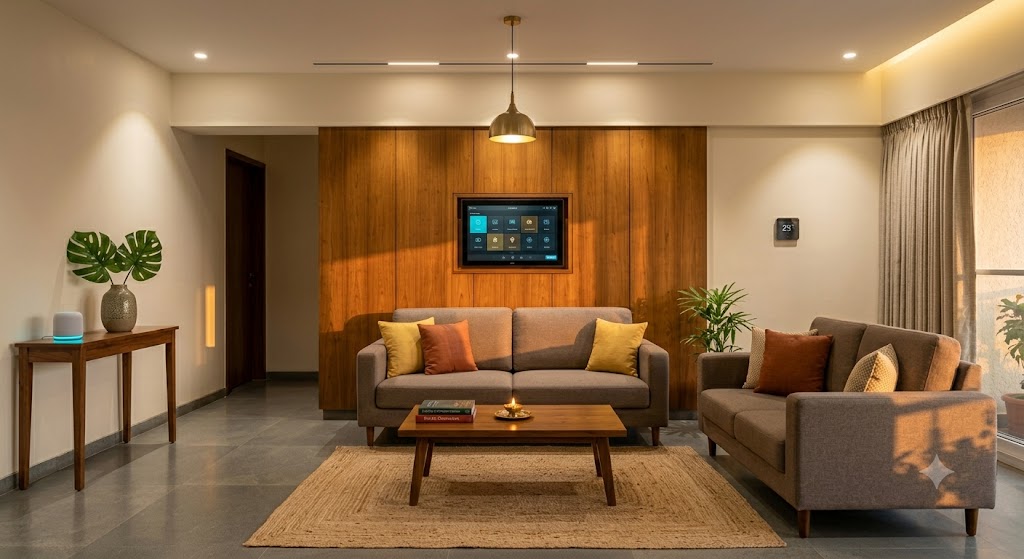
Smart Home Design in India — Systems, Ecosystems, Wired vs Wireless & Costs
The Five System Categories, Wired vs Wireless Decision, Ecosystem Comparison, Pre-Construction Integration & Four Cost Bands
In 2026 India, "smart home" has moved from luxury novelty to mainstream consideration. Roughly 40% of new homes built or fitted out in Tier-1 Indian cities now include at least one smart-home category — smart lighting, a smart lock, a video doorbell, or voice control. The market is mature enough that the entry-level decision is no longer whether to smart-up a home, but which subset and at what budget tier.
Yet most Indian smart-home conversations are dominated by marketing — feature lists from brand websites and aspirational influencer content — rather than by working architectural integration logic. The result: homeowners over-spec on entertainment they rarely use, under-spec on security where it would have prevented an incident, and forget entirely the pre-construction wiring decisions that determine whether a system is upgradable or locked in.
This guide is the working reference. It covers the five smart-home system categories (with what each delivers, what it costs, and what household profile actually benefits), the critical wired-versus-wireless decision that must be made at plan stage for new construction, the five major ecosystems available in India (Alexa, Google, Apple, Matter, KNX/Crestron) and which fits which user, the five-stage pre-construction integration timeline, four cost bands from Entry to Luxury, the payback and value analysis showing why smart-home value is largely non-financial, common mistakes, and a pre-construction checklist.
A smart home in 2026 India is not a feature list. It is an infrastructure decision — wired or wireless, ecosystem-anchored or open, security-priority or entertainment-priority. Get the infrastructure decision right at the plan stage and the rest is just devices. Get it wrong and you spend the next 15 years living with a system that doesn't fit.
What "Smart Home" Actually Means in 2026 India
The term "smart home" is used loosely. The working definition for this guide:
A smart home is a residence in which two or more device categories are connected to a common control layer, accessible via app, voice, or touch panel, with automation routines that execute without manual intervention.
A house with one Wi-Fi camera is not a smart home; it is a security upgrade. A house with smart bulbs but no automation is not a smart home; it is gadgets in light fittings. A smart home is the system-level integration where devices in two or more categories coordinate.
The most common entry-level smart home in India 2026 has:
- 1 voice hub (Echo Dot or Echo Show)
- 3–4 smart bulbs or 1–2 smart switches
- 1 smart lock or video doorbell
- 1 smart AC integration (often via IR bridge)
- Automation routine: "good morning" turns on bedroom lights and music; "good night" turns off all lights and locks the door
Total investment: ₹ 30,000 – 70,000. Implementation time: a weekend. This is the lower-bound "smart home" — accessible to roughly any urban Indian household with a smartphone.
The upper bound is the ₹ 50 lakh + KNX/Crestron luxury installation in a 5,000 sft villa, with whole-home control, multi-room audio, full security CCTV, climate zoning, and dedicated touch panels in every room.
The choice between these two ends and the 6-7 bands in between is what this guide unpacks.
The Five Smart Home System Categories
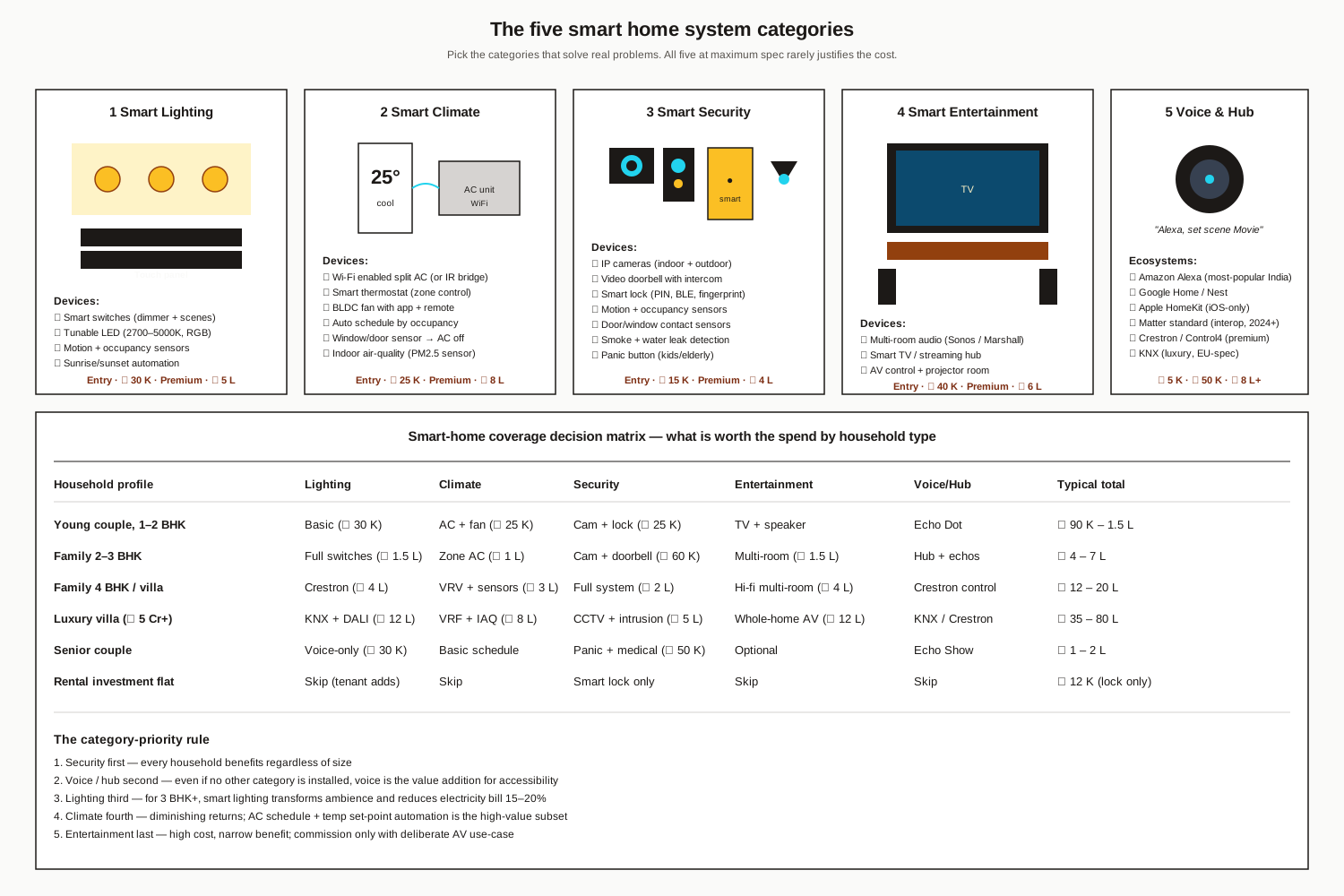
The figure above is the working menu. Five categories, each with its own brands, costs, and decision logic.
1. Smart Lighting
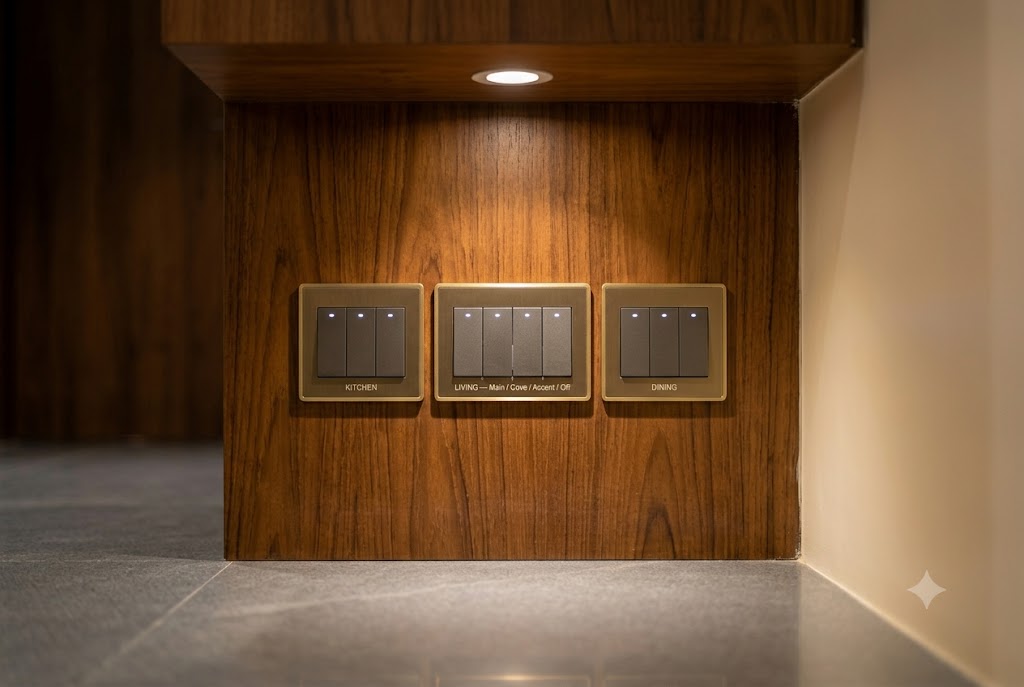
The most-transformative category for daily experience and the easiest to retrofit. Smart lighting in India typically deploys:
- Smart switches (touch or capacitive) — ₹ 800 – 3,500 per gang. Indian brands: Wipro, Syska, Philips Hue (Wi-Fi); Lutron, Crestron (wired premium)
- Smart bulbs / LED strips — ₹ 500 – 1,500 per bulb. Philips Hue, Syska, Xiaomi
- Tunable LED (2700–5000K, RGB) — adjustable colour temperature plus full RGB. Doubles as ambient and task light
- Motion/occupancy sensors — ₹ 1,500 – 4,000. Auto on/off based on room occupancy
- Sunrise/sunset automation — sun-position-based lighting that mimics circadian rhythm
Investment: Entry ₹ 30 K (3-4 smart bulbs + Echo Dot) → Premium ₹ 5 L (whole-home tunable LED + Crestron control).
Value: Convenience, ambience (scenes for movie/dinner/sleep), electricity savings 15–20%.
2. Smart Climate
The hot-climate India-relevant category. Smart climate in India typically deploys:
- Wi-Fi-enabled split AC — Daikin, Voltas, LG, Samsung — ₹ 35 K – 80 K per AC unit (premium over standard 10–15%)
- IR bridge (₹ 2,000) — adds Wi-Fi to any existing AC with IR remote
- Smart thermostat — works with central AC or multi-zone — ₹ 8,000 – 25,000
- BLDC fan with app + remote — Atomberg, Crompton, Havells — ₹ 5,500 – 12,000 per fan
- Auto schedule by occupancy — AC turns on when family arrives home, off when leaves
- Window/door sensor → AC off — saves 20–30% on AC bill in real-world use
Investment: Entry ₹ 25 K (IR bridge + smart fans) → Premium ₹ 8 L (full VRV zoned with IAQ sensors).
Value: Electricity savings 20–30%, comfort optimisation, AC longevity.
3. Smart Security
The category that pays for itself fastest and that almost every Indian household benefits from. Smart security in India typically deploys:
- IP cameras (indoor + outdoor) — Mi, TP-Link, CP Plus, Hikvision — ₹ 1,500 – 8,000 per camera
- Video doorbell — Mi, eufy, Ring (international) — ₹ 4,000 – 25,000
- Smart lock — Yale, Godrej, Ozone — ₹ 12,000 – 40,000 (PIN, BLE, fingerprint, key fallback)
- Motion/occupancy sensors — ₹ 1,500 – 4,000
- Door/window contact sensors — ₹ 800 – 2,500 each
- Smoke + water-leak detection — ₹ 2,500 – 6,000 (insurance-grade)
- Panic button for elderly or kids — ₹ 1,500 – 3,500
Investment: Entry ₹ 15 K (smart lock + 1 camera) → Premium ₹ 4 L (full CCTV + intrusion + leak detection).
Value: Crime deterrence, peace of mind, insurance premium reduction (5–15% with full security), elderly accessibility.
4. Smart Entertainment
The narrow-benefit, high-cost category that owners often regret over-spec'ing. Smart entertainment in India typically deploys:
- Multi-room audio (Sonos, Marshall, Bose) — ₹ 25,000 – 1.5 L per zone
- Smart TV / streaming hub (Apple TV, Fire TV Stick, Chromecast) — ₹ 4,000 – 25,000
- AV control + projector room — premium-only — ₹ 5 – 25 L for dedicated home theatre
Investment: Entry ₹ 40 K (Sonos One + Echo) → Premium ₹ 6 L (whole-home multi-room).
Value: Limited daily use for most households. Specify only if there is a deliberate AV use-case (movie nights, parties, professional music).
5. Voice and Hub Control
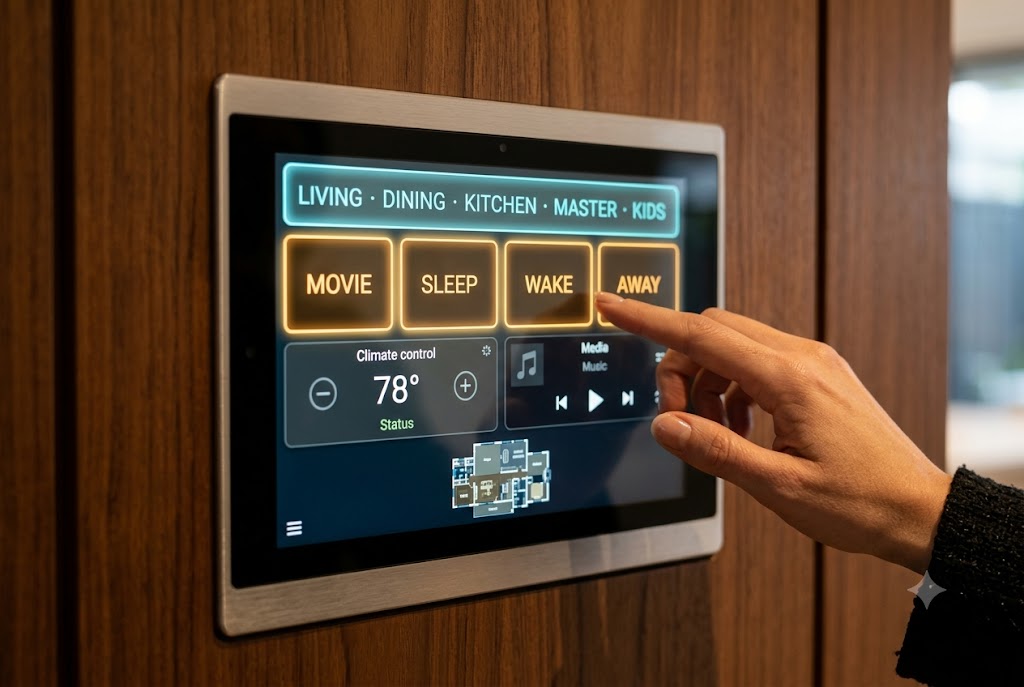
The integration layer that makes the rest work as a system rather than as isolated apps. Indian options:
- Amazon Alexa — ~70% Indian market share. Echo Dot (₹ 4,000), Echo Show 8 (₹ 9,000), Echo Hub (₹ 18,000 wall-mount)
- Google Home / Nest — ~15% share. Nest Mini (₹ 3,500), Nest Hub Max (₹ 14,000)
- Apple HomeKit — ~5% share, iOS-only. HomePod (₹ 9,000), HomePod mini (₹ 9,000), Apple TV 4K (₹ 18,000)
- Matter standard (2024+) — open interop layer, supported by Alexa, Google, Apple
- Crestron / KNX / Control4 — wired pro systems, ₹ 1 L – 8 L+ hub cost
Investment: Voice-only entry ₹ 5,000 (Echo Dot) → Luxury KNX ₹ 8 L+.
The Category-Priority Rule
For most Indian households, the priority order (highest value first):
1. Security — every household benefits regardless of size
2. Voice/Hub — even alone, voice is the value addition for accessibility (elderly, hands-busy use)
3. Lighting — for 3 BHK+, smart lighting transforms ambience and reduces electricity bill 15–20%
4. Climate — diminishing returns; AC schedule + temperature set-point automation is the high-value subset
5. Entertainment — high cost, narrow benefit; commission only with deliberate AV use-case
This priority differs from the marketing-driven order (which tends to put entertainment and lighting first). Follow the value-based priority.
The Critical Decision — Wired vs Wireless
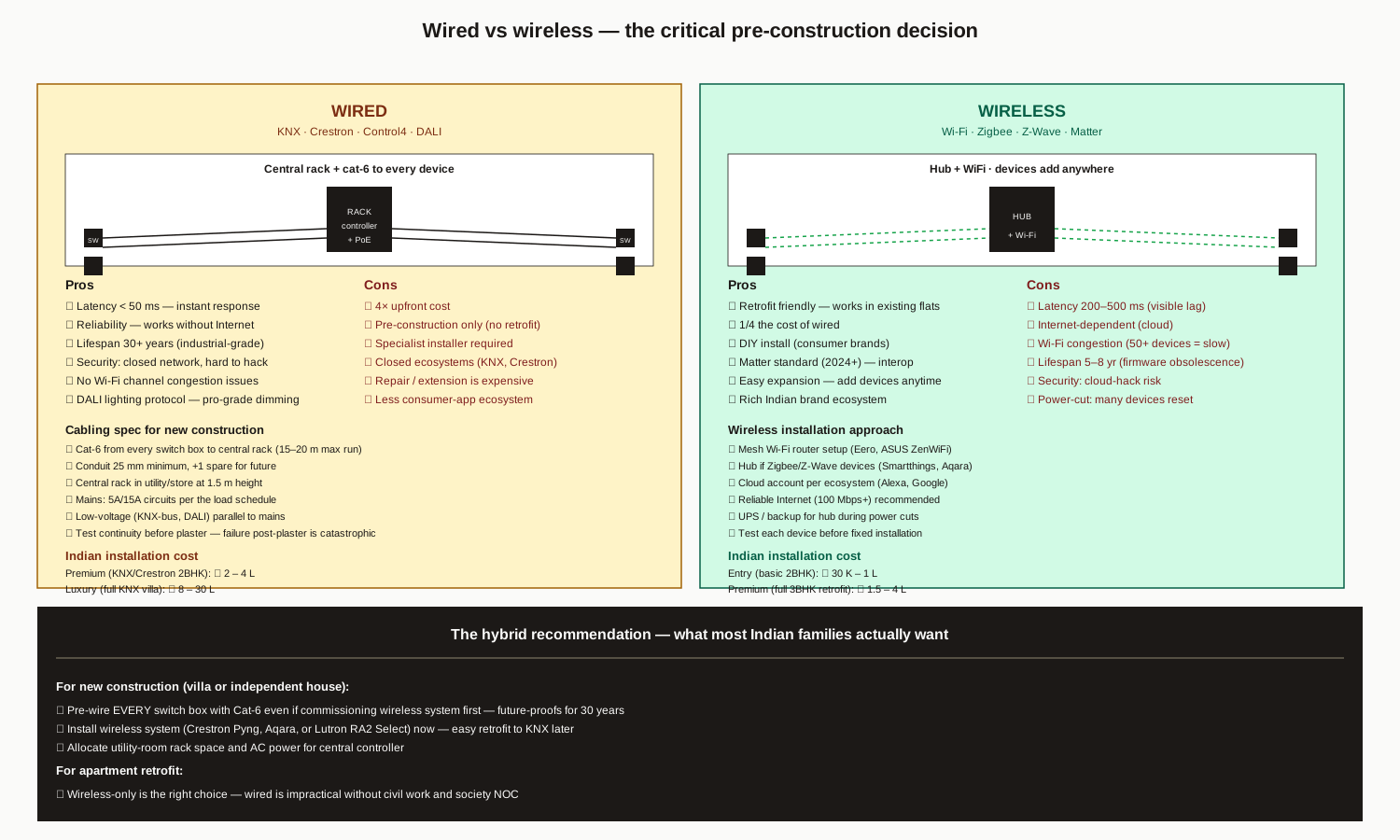
The wired-vs-wireless decision is the most consequential smart-home decision an owner makes. It must be locked at the plan stage of any new construction — once carcassing is done, the option to wire is essentially closed without civil work.
Wired Systems (KNX, Crestron, Control4)
- Cat-6 low-voltage cable from every switch box to a central rack
- Pre-construction integration during carcassing stage
- Central controller in utility/store room
- Closed ecosystem (KNX, Crestron, Control4) with industrial reliability
- Pros: sub-50 ms latency, Internet-independent, 30+ year lifespan, secure (closed network), DALI lighting protocol
- Cons: 4× upfront cost vs wireless, pre-construction only (no retrofit), specialist installer required, less consumer-app ecosystem
Indian installation cost: Premium (KNX 2BHK) ₹ 2 – 4 L; Luxury (full KNX villa) ₹ 8 – 30 L.
Wireless Systems (Wi-Fi, Zigbee, Z-Wave, Matter)
- Hub + Wi-Fi router, devices add anywhere
- Retrofit-friendly — works in existing flats
- Consumer brands with rich Indian distribution
- Pros: 1/4 cost of wired, DIY install, Matter standard (2024+) ensures interop, easy expansion
- Cons: 200–500 ms latency (visible lag), Internet-dependent, Wi-Fi congestion at 50+ devices, 5–8 year firmware lifespan, cloud-hack security risk
Indian installation cost: Entry (basic 2BHK) ₹ 30 K – 1 L; Premium (full 3BHK retrofit) ₹ 1.5 – 4 L.
The Hybrid Recommendation
For new construction (villa or independent house):
- Pre-wire every switch box with Cat-6 even if commissioning wireless now — future-proofs for 30 years
- Install wireless system today (Crestron Pyng, Aqara, or Lutron RA2 Select) — easy retrofit to KNX later
- Allocate utility-room rack space and AC power for central controller
For apartment retrofit: wireless-only is the right choice — wired is impractical without civil work and society NOC.
Cabling Specification for New Construction
If you commit to wired or hybrid:
- Cat-6 from every switch box to central rack (15–20 m max run)
- 25 mm PVC conduit minimum, plus 1 spare for future expansion
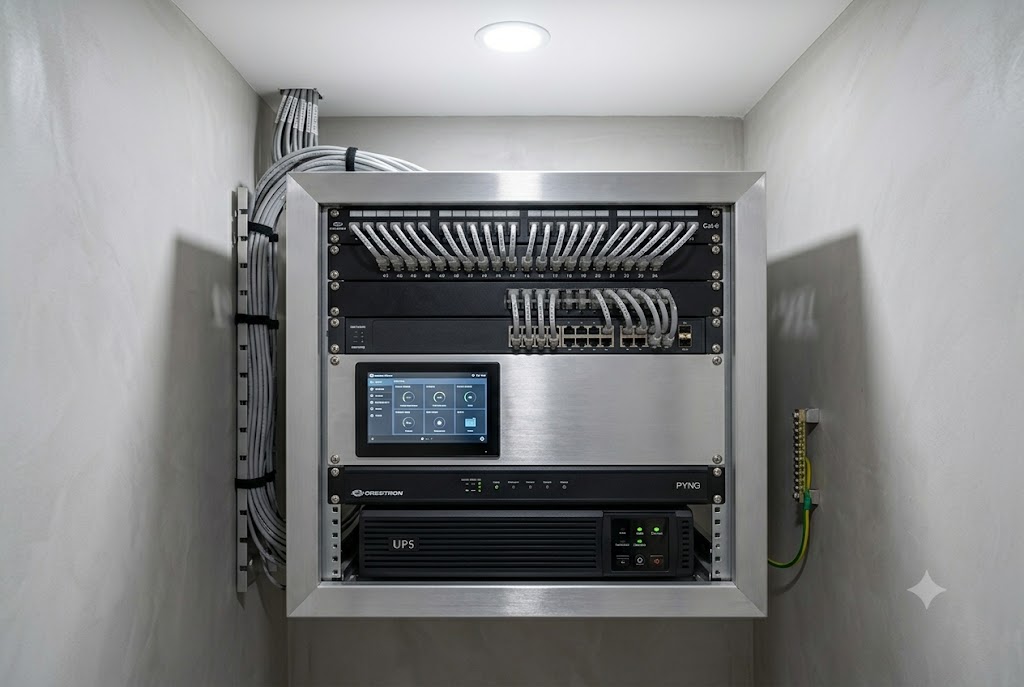
- Central rack in utility/store at 1.5 m height — provide AC supply, network drop, ventilation
- Mains 5A/15A circuits per the load schedule; MCB per circuit
- Low-voltage (KNX bus, DALI) parallel to mains, separate conduit
- Test continuity before plaster — failure post-plaster is catastrophic
For the broader pre-construction integration with electrical and MEP, cross-link to Building a House in India.
Five Major Ecosystems — Indian Comparison
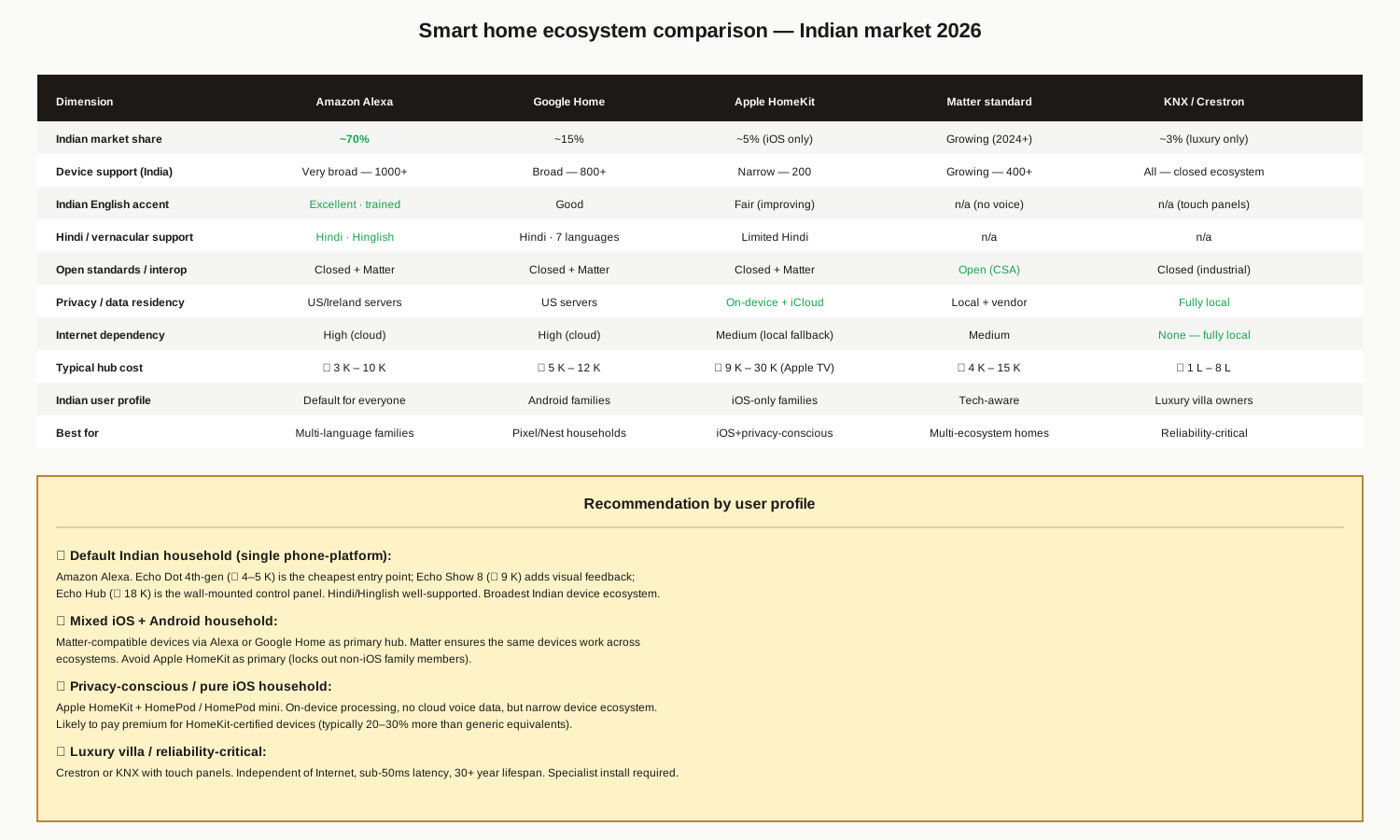
The Indian smart-home ecosystem market is dominated by Amazon Alexa (~70% share), with Google Home (~15%), Apple HomeKit (~5%, iOS-only), and a long tail of Matter and pro systems. Picking the wrong ecosystem locks an owner into a 7–10 year hardware investment with limited interoperability.
Amazon Alexa — Default for Most Indian Households
- 1,000+ Indian-available devices
- Excellent Indian English accent recognition (trained on Indian speakers)
- Hindi and Hinglish support
- Echo Dot 4th gen (₹ 4–5 K) is the cheapest entry point
- Echo Hub (₹ 18 K) is the wall-mounted control panel for premium homes
- Cloud-based — depends on Internet, AWS US/Ireland servers
- Best for: multi-language families, first-time smart-home buyers, broad device variety
Google Home — For Pixel/Nest Households
- ~800+ Indian devices
- Strong Indian accent support; 7 Indian language support
- Nest Mini (₹ 3,500), Nest Hub Max (₹ 14,000)
- Tighter integration with Pixel phones and Chromecast
- Best for: Android-first families, Google ecosystem users
Apple HomeKit — Privacy-Conscious iOS-Only
- ~200 Indian-available devices (narrower ecosystem)
- On-device voice processing (better privacy)
- HomePod (₹ 9,000), HomePod mini (₹ 9,000), Apple TV 4K hub (₹ 18,000)
- HomeKit-certified devices typically 20–30% premium over generic
- Best for: pure iOS households, privacy-conscious users
Matter Standard — The Interop Layer
- Open standard (Connectivity Standards Alliance, 2022+)
- Supported by Alexa, Google, Apple, Samsung
- Ensures the same Matter-certified device works across all three ecosystems
- Growing rapidly in 2024–2026
- Best for: multi-platform households (mixed iOS + Android), future-proofing
KNX / Crestron / Control4 — Luxury Wired
- Industrial-grade reliability
- Internet-independent, fully local processing
- Touch panels in each room (no voice required)
- Hub cost ₹ 1 L – 8 L+
- Full installation ₹ 8 – 80 L+
- Best for: luxury villas, reliability-critical use, on-prem privacy
Choosing the Ecosystem
The decision factors:
1. Phone-platform mix in the household — iOS-only families benefit from HomeKit; Android-only from Google; mixed should anchor on Alexa or Matter
2. Indian language requirement — Alexa is strongest in Hindi/Hinglish; Google is competitive
3. Privacy stance — Apple > Matter > Google ≈ Amazon (cloud-processing levels)
4. Budget tier — Entry/Mid → Alexa; Premium/Luxury → Crestron/KNX
5. Device variety needed — Alexa has the broadest catalogue
Pre-Construction Integration Timeline
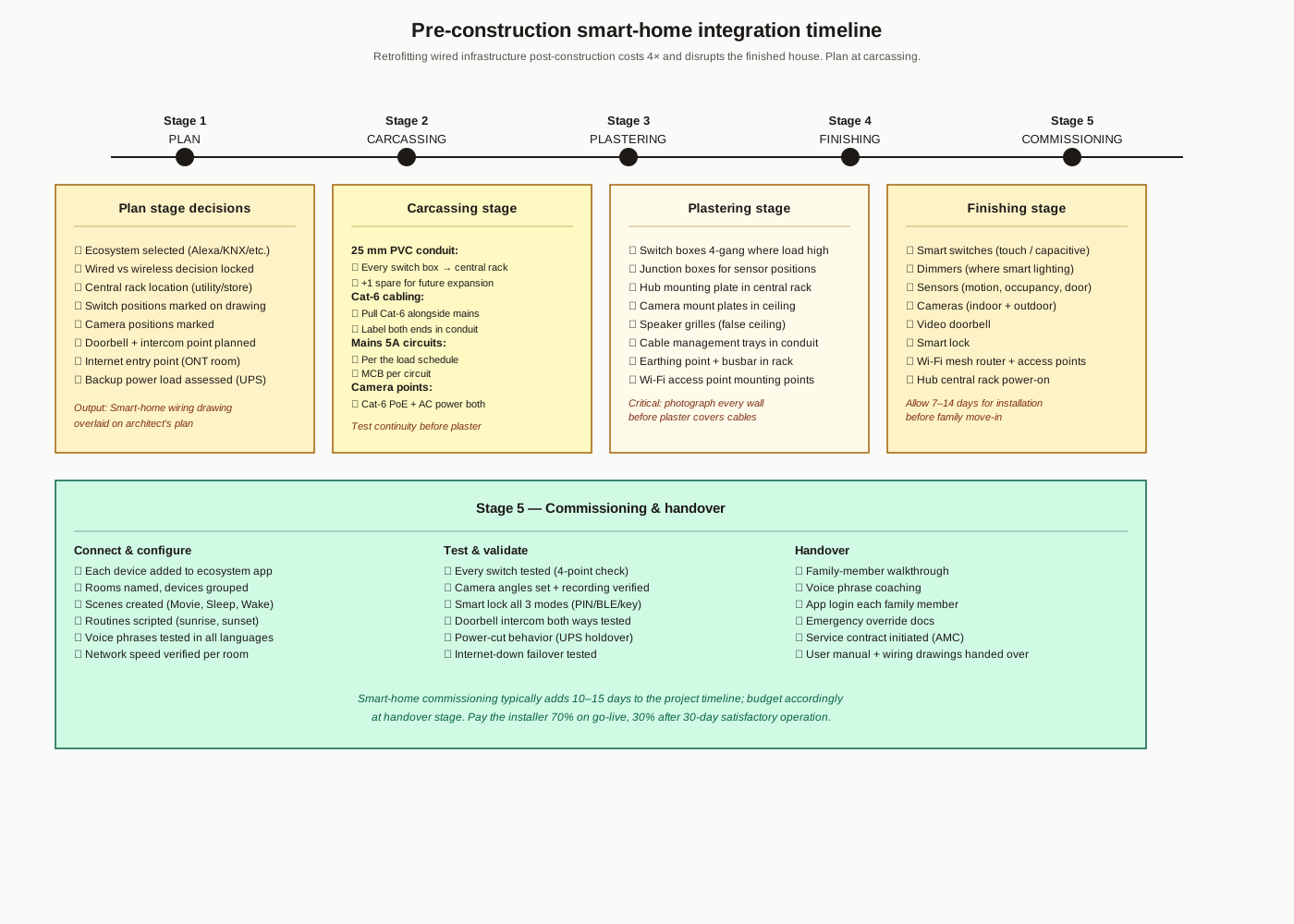
The figure above is the working integration timeline. For new construction, integrate smart-home decisions at each of these five stages, in order.
Stage 1 — Plan Stage (Architect Phase)
- Ecosystem selected (Alexa / Google / Apple / KNX)
- Wired vs wireless decision locked
- Central rack location identified (typically utility room or store)
- Switch positions marked on architect's drawings
- Camera positions marked on plan
- Doorbell + intercom point planned
- Internet entry point (ONT room) located
- Backup power load assessed (UPS sizing)
Output: Smart-home wiring drawing overlaid on architect's plan.
Stage 2 — Carcassing Stage (Civil/Structural)
- 25 mm PVC conduit from every switch box to central rack
- +1 spare conduit for future expansion
- Cat-6 cabling pulled alongside mains, both ends labelled
- Mains 5A/15A circuits per the load schedule, MCB per circuit
- Low-voltage (KNX bus, DALI) cabling parallel to mains
- Camera points: Cat-6 PoE + AC power both routed
Critical: test cable continuity before plaster — failure post-plaster requires demolition.
Stage 3 — Plastering Stage
- Switch boxes 4-gang where load is high (kitchen, living, bedroom)
- Junction boxes for sensor positions
- Hub mounting plate in central rack
- Camera mount plates in ceiling
- Speaker grilles cut in false ceiling
- Cable management trays in conduit runs
- Earthing point + busbar in rack
Critical: photograph every wall before plaster covers cables.
Stage 4 — Finishing Stage
- Smart switches (touch or capacitive) installed
- Dimmers where smart lighting present
- Sensors mounted (motion, occupancy, door contact)
- Cameras installed indoor + outdoor
- Video doorbell installed
- Smart lock installed
- Wi-Fi mesh router and access points mounted
- Hub central rack powered on
Allow 7–14 days for finishing-stage installation before family move-in.
Stage 5 — Commissioning and Handover
- Each device added to ecosystem app
- Rooms named, devices grouped
- Scenes created (Movie, Sleep, Wake)
- Routines scripted (sunrise, sunset, away, home)
- Voice phrases tested in all family languages
- Network speed verified per room
- Each switch tested (4-point check)
- Camera angles set + recording verified
- Smart lock all 3 modes tested (PIN/BLE/key)
- Doorbell intercom both ways tested
- Power-cut behaviour tested (UPS holdover)
- Internet-down failover tested
- Family member walkthrough + voice phrase coaching
- App login each family member
- Service contract initiated (AMC)
- User manual + wiring drawings handed over
Pay the installer 70% on go-live, 30% after 30-day satisfactory operation.
Four Cost Bands — What ₹30K to ₹50L+ Buys
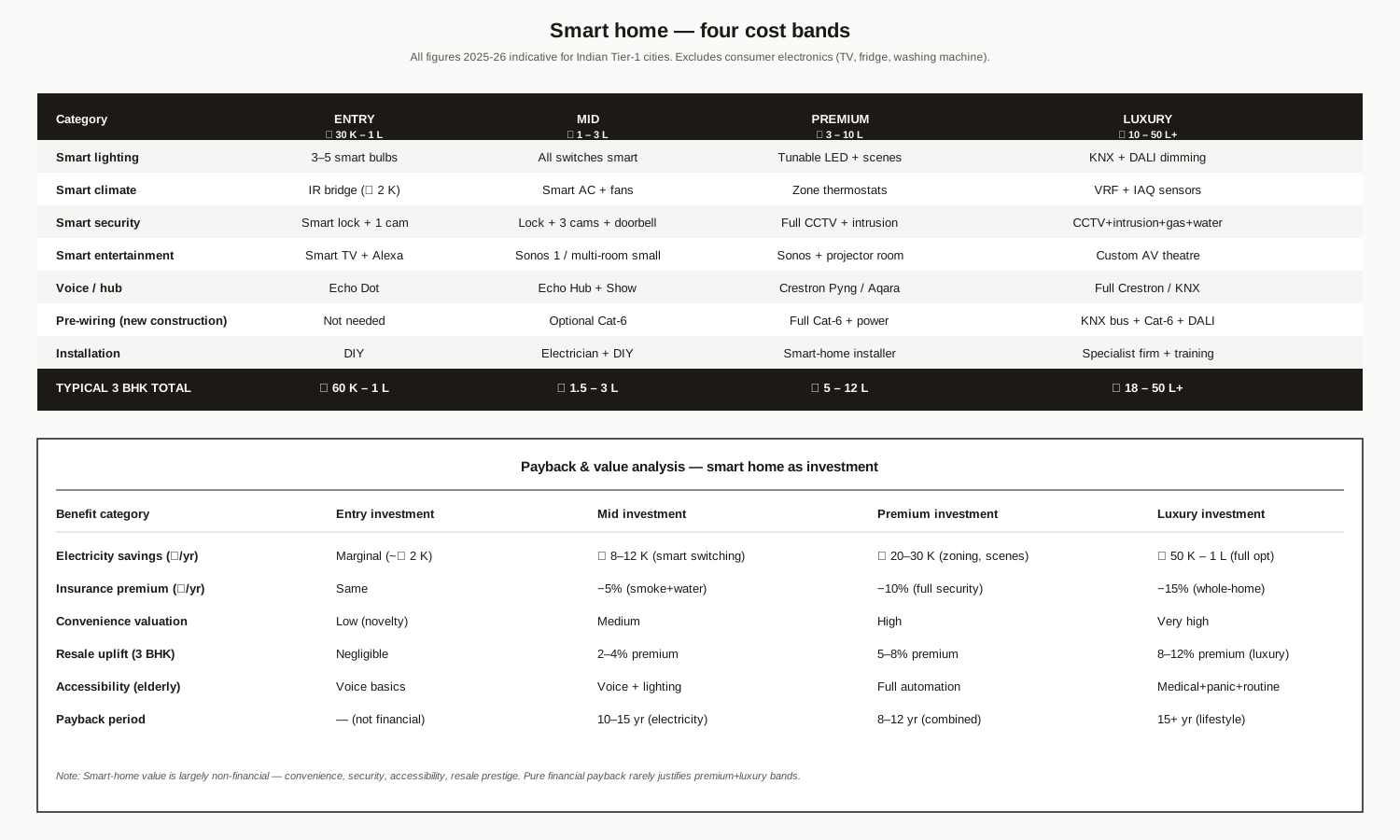
Smart-home spend in India ranges from ₹ 30,000 entry to ₹ 50 lakh + luxury — a 150× spread. Each band corresponds to a different household profile.
Entry (₹ 30 K – 1 L)
Specification: 3–5 smart bulbs, IR bridge for AC, smart lock + 1 camera, Echo Dot, smart TV.
3 BHK typical: ₹ 60 K – 1 L.
Profile: young couple, 1–2 BHK, smartphone-first lifestyle, DIY install.
Mid (₹ 1 – 3 L)
Specification: all switches smart, smart AC + fans, lock + 3 cameras + doorbell, single multi-room speaker, Echo Hub.
3 BHK typical: ₹ 1.5 – 3 L.
Profile: family 2–3 BHK, mid-career professionals, electrician-assisted install.
Premium (₹ 3 – 10 L)
Specification: tunable LED + scenes, zoned thermostats, full CCTV + intrusion, Sonos + projector room, Crestron Pyng or Aqara hub, full Cat-6 pre-wiring.
3 BHK typical: ₹ 5 – 12 L.
Profile: family 4 BHK / villa, senior corporate, smart-home installer.
Luxury (₹ 10 – 50 L+)
Specification: KNX + DALI dimming, VRF + IAQ sensors, full CCTV + intrusion + gas + water leak, whole-home AV, KNX or Crestron control panels in every room.
3 BHK typical: ₹ 18 – 50 L+.
Profile: luxury villa (₹ 5 Cr+), UHNI owner, specialist firm with training and AMC.
Payback and Value Analysis
Smart-home value is largely non-financial. The table from the figure:
| Benefit | Entry | Mid | Premium | Luxury |
|---|---|---|---|---|
| Electricity savings/yr | ~₹ 2 K | ₹ 8–12 K | ₹ 20–30 K | ₹ 50 K – 1 L |
| Insurance premium reduction | Same | −5% | −10% | −15% |
| Resale uplift (3 BHK) | Negligible | 2–4% | 5–8% | 8–12% |
| Pure financial payback | — | 10–15 yr | 8–12 yr | 15+ yr |
Smart-home value is convenience, security, accessibility, resale prestige. Pure financial payback rarely justifies premium and luxury bands; convenience and security do.
For the broader interior cost context that smart-home fits within, cross-link to Apartment Interior Planning or Contemporary House Elevation.
Eight Common Smart Home Design Mistakes
1. Over-Spec at Entry
Buying a full Crestron system for a 1 BHK rental. The ROI is negative because the daily use-cases don't justify the spend. Fix: match the band to the use-case.
2. Ecosystem Lock-In Without Future Planning
Buying 30 Apple HomeKit devices, then moving to an Android-first home. Fix: prefer Matter-certified devices for cross-ecosystem flexibility.
3. No Internet Failover
A wireless smart home where every device breaks when the Internet goes down. In Indian cities with 10–30 hour annual ISP outage, this means 1–3 days/year of smart features being unavailable. Fix: local-control hub (Aqara, Crestron Pyng) that works without Internet, or KNX/wired for full local control.
4. Cluttered Voice Phrases
50 different voice phrases that no family member can remember. Fix: standardise scene names ("scene movie", "scene sleep", "scene morning") — easier to remember.
5. Camera Coverage Holes
Cameras in obvious places (front door, living room) but blind spots in back garden, side passage, terrace. Fix: plan cameras to eliminate blind spots, not to fill obvious locations.
6. No UPS for the Hub
Power-cut hits and the entire smart-home stops, including the smart lock and security cameras. Fix: UPS backup for hub + router + critical devices.
7. Cloud-Only Security Cameras
Security footage stored only on the camera vendor's cloud — and the vendor goes out of business (or hikes pricing). Fix: local NVR storage in addition to cloud, especially for premium systems.
8. Skipping Pre-Construction Pre-Wiring
Building a new villa, choosing wireless smart home, and skipping the Cat-6 pre-wiring. Five years later, the family wants to upgrade to KNX and faces a full civil-work cost. Fix: always pre-wire Cat-6 to every switch box at carcassing, regardless of current ecosystem choice.
Vastu Considerations for Smart Home
Most smart-home elements have no Vastu implication — they sit alongside conventional electrical and don't affect the energetic logic of a plan. Three exceptions worth noting:
- Camera placement should not face the brahmasthan or the bed directly (privacy ergonomics, not strict Vastu)
- Smart hub central rack should not be in NE corner (heavy electronic load is better in SW or S)
- Voice speaker primary positions in foyer (welcome announcement) and master bedroom (alarm + routines) — both are Vastu-neutral
The full Vastu framework: Vastu House Plan — Complete Indian Layout Reference.
Pre-Construction Smart Home Checklist
Plan stage
- [ ] Ecosystem selected (Alexa / Google / Apple / KNX)
- [ ] Wired vs wireless decision locked
- [ ] Cost band identified (Entry / Mid / Premium / Luxury)
- [ ] Central rack location identified
- [ ] Camera, doorbell, switch positions marked on plan
- [ ] Internet capacity and backup UPS sized
Carcassing stage
- [ ] 25 mm conduit from every switch box to central rack
- [ ] Cat-6 cable pulled and labelled (if wired or hybrid)
- [ ] Low-voltage cable parallel to mains
- [ ] Continuity tested before plaster
Plastering stage
- [ ] Switch boxes appropriately sized (4-gang where needed)
- [ ] Camera mount plates installed
- [ ] Photograph every wall before plaster
Finishing stage
- [ ] All devices installed and tested individually
- [ ] Hub central rack powered and configured
Commissioning
- [ ] All routines and scenes tested
- [ ] Family walkthrough completed
- [ ] AMC initiated
- [ ] User manual and drawings handed over
References
1. Connectivity Standards Alliance (2024). Matter Specification 1.3. (Smart-home interop standard.)
2. KNX Association (2023). KNX Specifications and Application Notes.
3. Crestron Electronics India (2025). Crestron India Product Catalogue.
4. Lutron Electronics (2024). RadioRA Select & Caséta Wireless Product Guide.
5. Bureau of Indian Standards (2016). NBC 2016, Part 4 — Fire and Life Safety (electrical sections relevant to smart-home).
6. TRAI / DoT (2024). Broadband and Internet Quality of Service in India — Quarterly Reports. (Internet reliability context.)
7. Amazon India Alexa Documentation (2025). Alexa Skills Kit India Catalogue.
8. Google India (2024). Nest and Google Home India Compatibility List.
9. Apple India (2025). HomeKit-Certified Device Catalogue India.
10. Statista Smart Home India (2025). Smart Home Market Report — India Tier-1 to Tier-3.
11. PwC India (2024). Connected Home in India — 2024 Outlook.
Author's note: A smart home in 2026 India works at every budget tier — ₹ 30,000 entry buys a meaningful upgrade in convenience and security; ₹ 50 lakh luxury buys a Crestron-grade system that runs without Internet for 30 years. The mistake is to choose the band before clarifying the use-case. Most Indian families benefit most from security (smart lock + cameras + doorbell), then voice (Echo Dot for the elderly), then lighting (smart switches that work without re-wiring), then climate (smart AC schedule). Entertainment is the band with the highest cost and the narrowest benefit; commission it only when there is a deliberate AV use-case. The pre-construction decision — wired or wireless — is the one that has 30-year consequences; lock it at plan stage, not at carcassing. The ecosystem decision (Alexa, Google, Apple, KNX) is the second 7-year consequence; pick the one that matches the household's phone-platform mix and language preference. Get those two decisions right and the rest is just adding devices to a working infrastructure.
Disclaimer: Smart-home device specifications, brand availability, and pricing change rapidly; figures cited are 2025-26 indicative and vary by promotion period and procurement channel. Indian smart-home market share figures reflect Statista 2025 estimates and may shift with platform launches. Indian language support varies by ecosystem release; verify current support before commitment. Internet reliability assumptions are based on TRAI / DoT 2024 broadband quality reports for Tier-1 cities; outage frequency in Tier-2 and Tier-3 cities is higher. Vastu rules cited follow the framework in Vastu House Plan; regional practitioner schools may apply additional rules. Studio Matrx, its authors and contributors accept no liability for decisions made on the basis of this guide; engage a certified smart-home installer (for premium or luxury bands), a licensed electrician (for pre-wiring), and an MEP consultant (for load assessment and integration) for project-specific application.
Export this guide
Related Guides — Deep-dive reading
Smart Home Security Systems in India: CCTV, Sensors, Alarms & AI
How to think in layers — perimeter, entry, interior — and build a system that actually protects an Indian home: AI cameras, video door phones, door and glass-break sensors, alarms, panic buttons, gate automation, monitoring and DPDP-aware privacy, with real brands and rupee costs.
Smart HomePoE vs Wi-Fi CCTV: Which Home Security Cameras Are Better?
One camera type runs power and video down a single Cat6 cable to an NVR and almost never drops out; the other clips to a wall in minutes and streams over your home Wi-Fi. This guide settles PoE vs Wi-Fi CCTV for Indian homes — reliability, video quality and bandwidth, cabling and power, retrofit versus new-build effort, NVR versus SD and cloud storage, hacking risk, real rupee costs, scalability and outdoor use — and gives a clear verdict for each kind of home.
Smart HomeLighting Controls & Dimming Design: Zones, Scenes & Switches (2026)
How to plan lighting control so an Indian home's light is flexible — split each room's layers onto separate switches, choose dimmers that actually work with LEDs, add two-way switching where you need it, and layer scenes on top. The design decisions you must settle before the electrician wires.
LightingRelated Tools — Try Free
Smart Home Cost Calculator
13 device categories across 5 ecosystems (Apple HomeKit, Alexa, Google Home, Mi, Wipro). Live floor-plan that lights up as you add devices, per-room and per-category breakdown.
Smart Home CalculatorCircadian Light Meter
Patient-centric circadian lighting visualizer for Indian healthcare design — time-of-day × intensity → CCT, melanopic lux (EML / mEDI), melatonin suppression, and an alertness curve. Calibrated against WELL v2 L03 Circadian Lighting Design, CIE S 026:2018, Brainard 2001, and Lucas et al. 2014.
Circadian ToolApartment vs Villa Interior Planning Guide
Compare ceiling height, structural flexibility, lighting, storage, and services between apartments and villas.
Planning Guide