
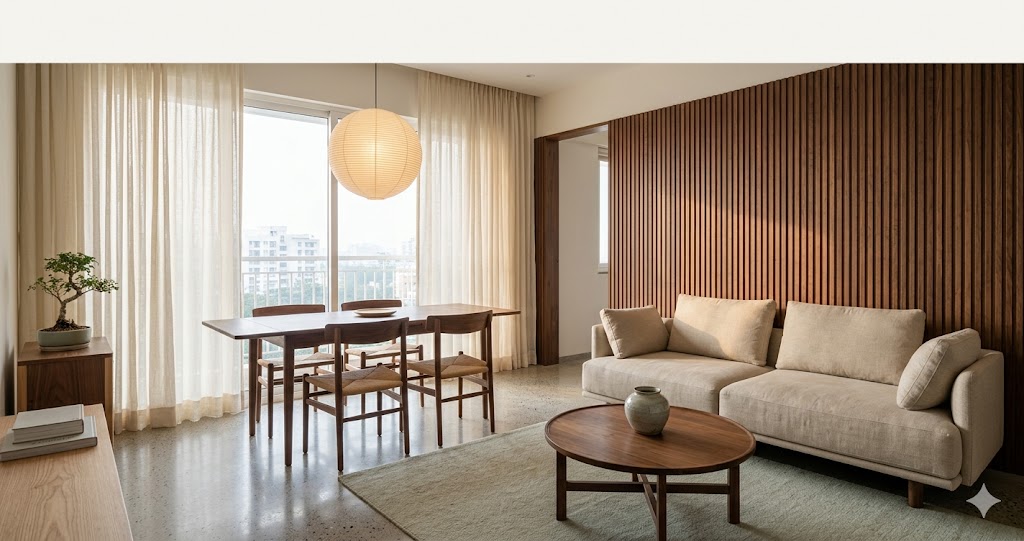
Japandi Apartment — A 2026 Style Guide for Compact Indian Homes
Japanese restraint × Scandinavian function · Low furniture · Two-wood discipline
Japandi is the most natively-aligned global interior style for compact Indian urban apartments. It was developed for spatial conditions almost identical to ours — the Tokyo apartment median of ~700 sft, the 9-foot ceiling, the single-bathroom layout, the dual-purpose-everything reality. When the Japanese spatial vocabulary meets Scandinavian functional minimalism, the result fits a 600 sft 1 BHK in Powai or Koramangala more naturally than it fits a 3,000 sft suburban American house. This is the design language for India's compact urban future — and 2026 is the year it stops being a niche style and becomes the default vocabulary for premium 1-2 BHK interior design in Mumbai, Bengaluru, Pune, Hyderabad, and Chennai.
This is a 22-minute working reference for homeowners and interior designers building Japandi interiors in Indian apartments of 450-1,200 sft. It covers the Japanese + Scandinavian DNA and how they combine, the five structural principles, a fifteen-tone working palette with hex codes and Indian paint references, six-zone application across a compact 1-2 BHK, sourcing guidance for Indian fabrication (Phantom Hands Wegner reissues, Sage Living, Auroville pottery, Bauwerk), three budget tiers from ₹2.5 L DIY to ₹50 L bespoke, ten common pitfalls, how Japandi differs from warm minimal and Scandi and wabi-sabi, and the diagnostic seven-question test for whether your room actually qualifies.
Japandi was invented for the Tokyo flat and refined in the Copenhagen apartment. The Mumbai 1 BHK and the Bengaluru builder-floor 2 BHK sit at exactly the spatial midpoint of those two cities — same square footage, same ceiling height, same single-bathroom geometry, same need for dual-purpose furniture. No global style adapts to the compact Indian apartment with less translation effort than Japandi. The discipline is restraint; the reward is space; the language is already half-yours through Indian craft tradition.
For complementary depth see Warm Minimal Interiors, Earthy Interior Palette, Compact Luxury Apartment Guide, Space-Efficient Homes Guide, Smart Storage Interiors, and Fluted Panel Design Guide.
This guide refreshes every 12 months — palette + sourcing trends shift annually. Last verified: May 2026 · Next verify: May 2027.
What Japandi Is (and Isn't)
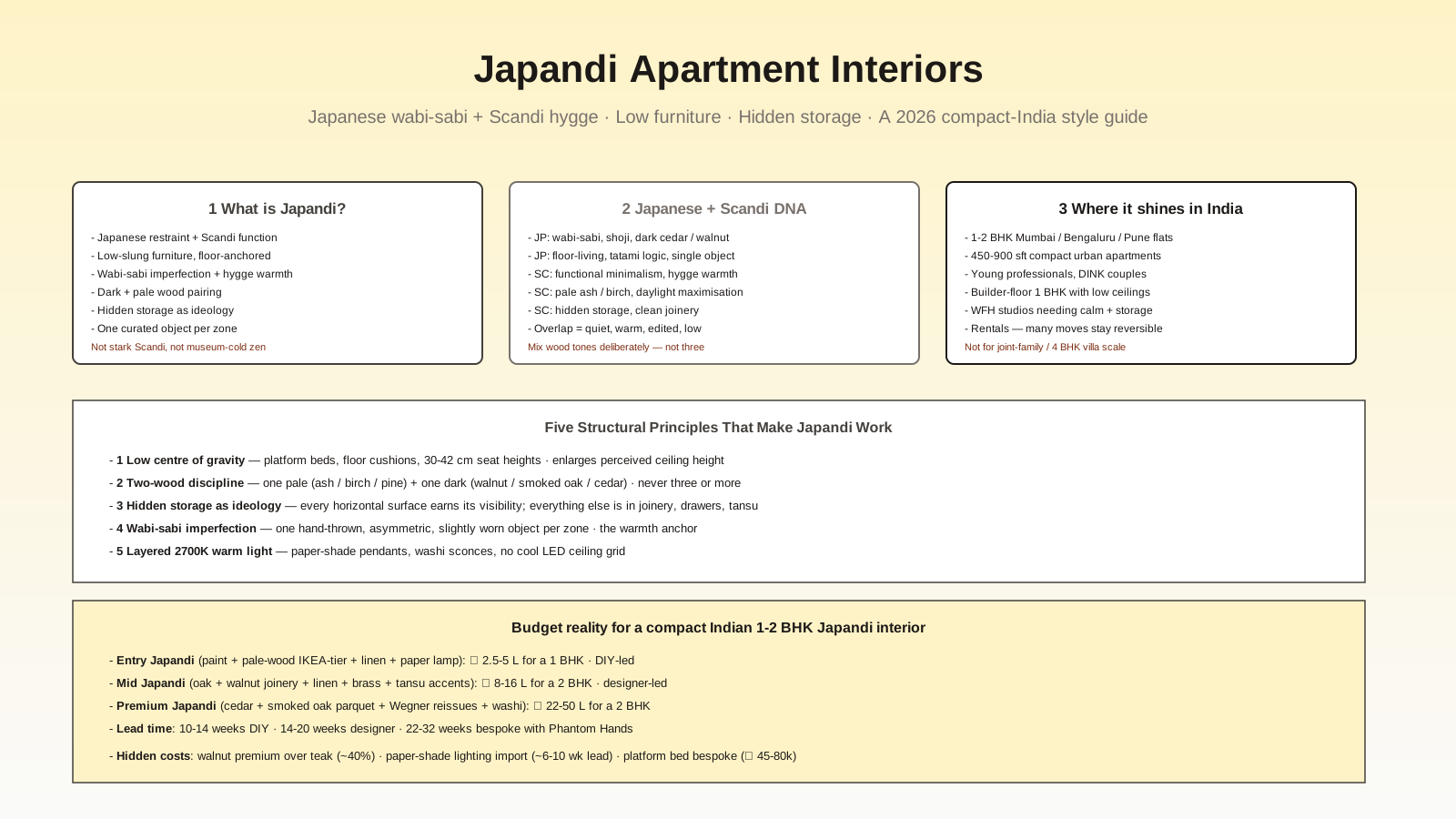
Japandi is the deliberate fusion of Japanese restraint and Scandinavian functionality into a single quiet, low-furniture, warm-material, hidden-storage interior vocabulary. It emerged from Western design press around 2017-2019 as a marketing label, but the actual material conversation between Japan and Denmark has been continuous since the 1950s — Wegner studied Japanese joinery, Juhl borrowed shibui restraint, and the entire Danish mid-century vocabulary owes more to Kyoto than most Scandi histories acknowledge.
The core idea: two traditions, one quiet language. Take Japanese discipline (wabi-sabi imperfection, low furniture, single-object curation, dark cedar and walnut, the concept of ma — the meaningful space between things), then layer Scandinavian function (hidden storage, hygge warmth, pale ash and birch, clean Wegner-Mogensen geometric form, daylight maximisation). The overlap zone — quiet, warm, low, edited, function-first — is Japandi.
Five things Japandi is NOT
1. Not Scandinavian minimalism — Scandi runs cooler, paler, single-wood. Japandi adds Japanese dark-wood anchor (walnut, smoked oak, cedar) and the wabi-sabi imperfection layer that prevents IKEA-generic flatness.
2. Not pure Japanese minimalism — Pure Japanese zen runs colder and more austere. Japandi adds Scandi hygge — wool throws, paper-shade pendants, soft seating — that prevents museum-cold sterility.
3. Not warm minimalism — Warm minimal is broader, taller, more Mediterranean-leaning, with curvilinear forms. Japandi is darker, lower, more geometric, more disciplined. The closest cousin, but distinct vocabulary.
4. Not just "neutral interior with dark wood" — A grey sofa next to a walnut table is not Japandi. Japandi requires the two-wood discipline, the low-furniture geometry, the wabi-sabi accent moment, and hidden-storage ideology together.
5. Not theatrical Japonisme — Cherry-blossom wallpaper, faux paper lanterns, decorative shoji that does not slide, dragon prints — these are Japan-themed decoration, the opposite of Japandi's restraint discipline.
The Japanese + Scandinavian DNA
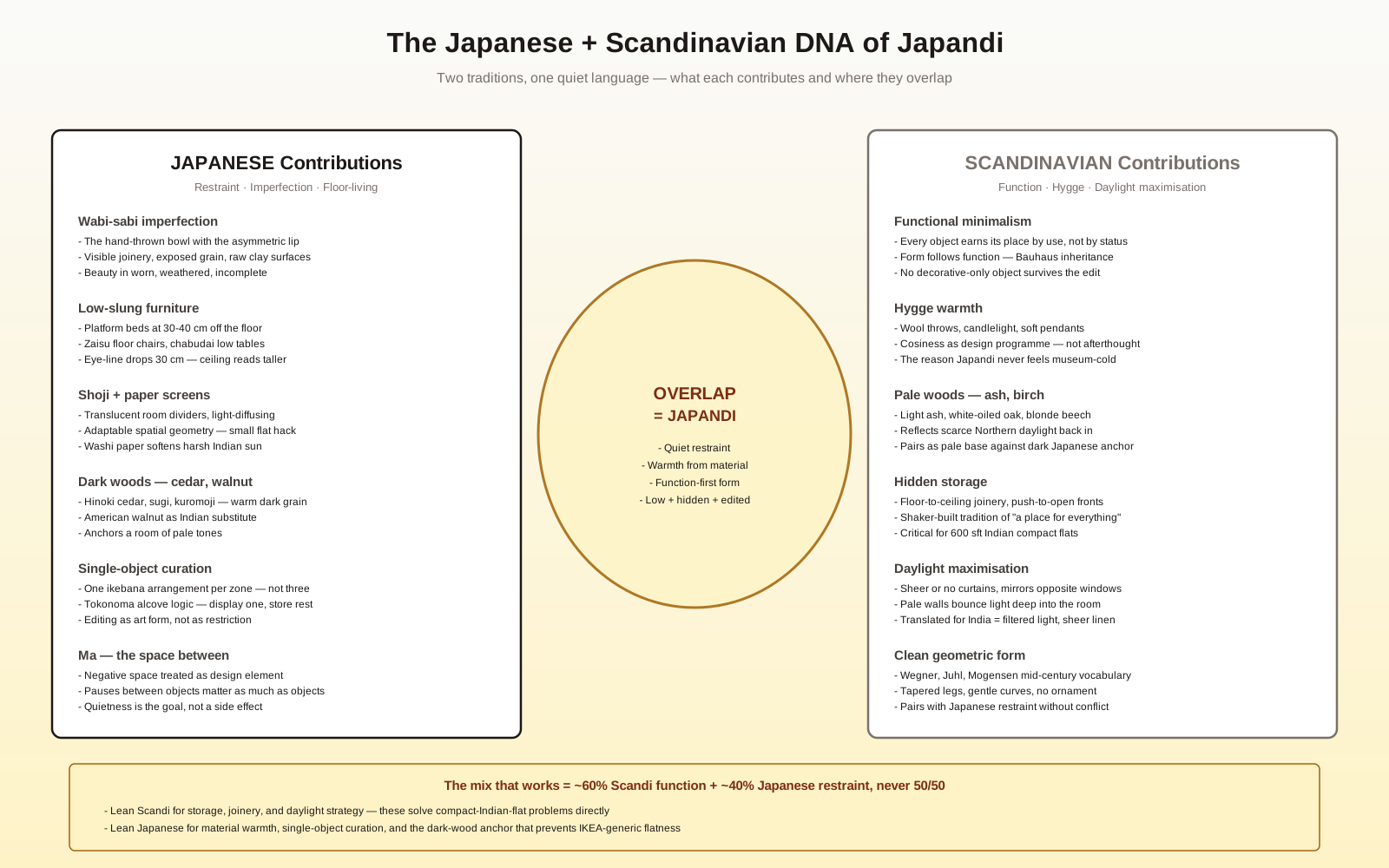
What Japan contributes
The Japanese gift to Japandi is the philosophy layer. Wabi-sabi — the celebration of imperfection, transience, and the patina of use — is the antidote to IKEA-generic flatness. The hand-thrown bowl with the asymmetric lip, the visible joinery on the bench, the raw clay surface of the vase, the slight slump of a hand-troweled lime plaster wall — these are not flaws to be corrected, they are the warmth carriers. A Japandi room without at least one explicitly wabi-sabi object is a Scandi room with darker wood.
Low-slung furniture drops the eye-line by 30 cm, which makes a 9-foot ceiling read like a 10-foot ceiling — critical for Indian builder-floor stock. Platform beds at 30-40 cm, sofas at 38-42 cm seat height, chabudai low dining tables, occasional floor cushions. The geometry is the most visible Japandi signature.
Shoji + paper screens translate into compact-Indian-flat utility as sliding room dividers — a single shoji-track panel separates the WFH nook from the living room in daytime and tucks away at night. Critical: shoji must function as a slider, not as decorative wall art (see Pitfall 10).
Dark woods — Japanese cedar (sugi, hinoki), kuromoji, and American walnut as the practical Indian substitute — provide the anchor contrast against pale base walls and pale ash joinery. Single-object curation comes from the tokonoma alcove tradition: one ikebana, one scroll, one vessel — never three. And ma — the meaningful space between objects — is the negative-space discipline that prevents clutter creep.
What Scandinavia contributes
The Scandinavian gift to Japandi is the function layer. Functional minimalism — every object earns its place by use, not status — comes from the Bauhaus-via-Copenhagen tradition. Hygge warmth is the critical layer that prevents Japandi from sliding into museum-cold zen: wool throws, candlelight, paper-shade pendants, soft seating, the small comforts of a cosy small room.
Pale woods (ash, birch, white-oiled oak) form the bright base that bounces daylight in light-deficit Northern winters — translated for India, the pale base reflects warm Indian sun and prevents the dark Japanese anchor from dominating. Hidden storage comes from the Shaker-built Northern European tradition: floor-to-ceiling joinery, push-to-open fronts, "a place for everything." This is the single most Indian-flat-saving element of the entire vocabulary.
Daylight maximisation (sheer curtains, mirrors opposite windows, pale walls) translates into Indian sheer linen + reflective surfaces but with the heat-management layer Indian flats require. And clean geometric form — the Wegner, Juhl, Mogensen mid-century vocabulary of tapered legs and gentle curves — pairs cleanly with Japanese restraint without conflict.
The mix that actually works
Lean ~60% Scandinavian for the structural and functional decisions: storage strategy, joinery, daylight handling, geometric furniture form. Lean ~40% Japanese for the material warmth, the single-object curation, the dark-wood anchor, the wabi-sabi accent. The pure 50/50 mix often collapses into visual confusion — function needs to lead, restraint follows.
Five Structural Principles
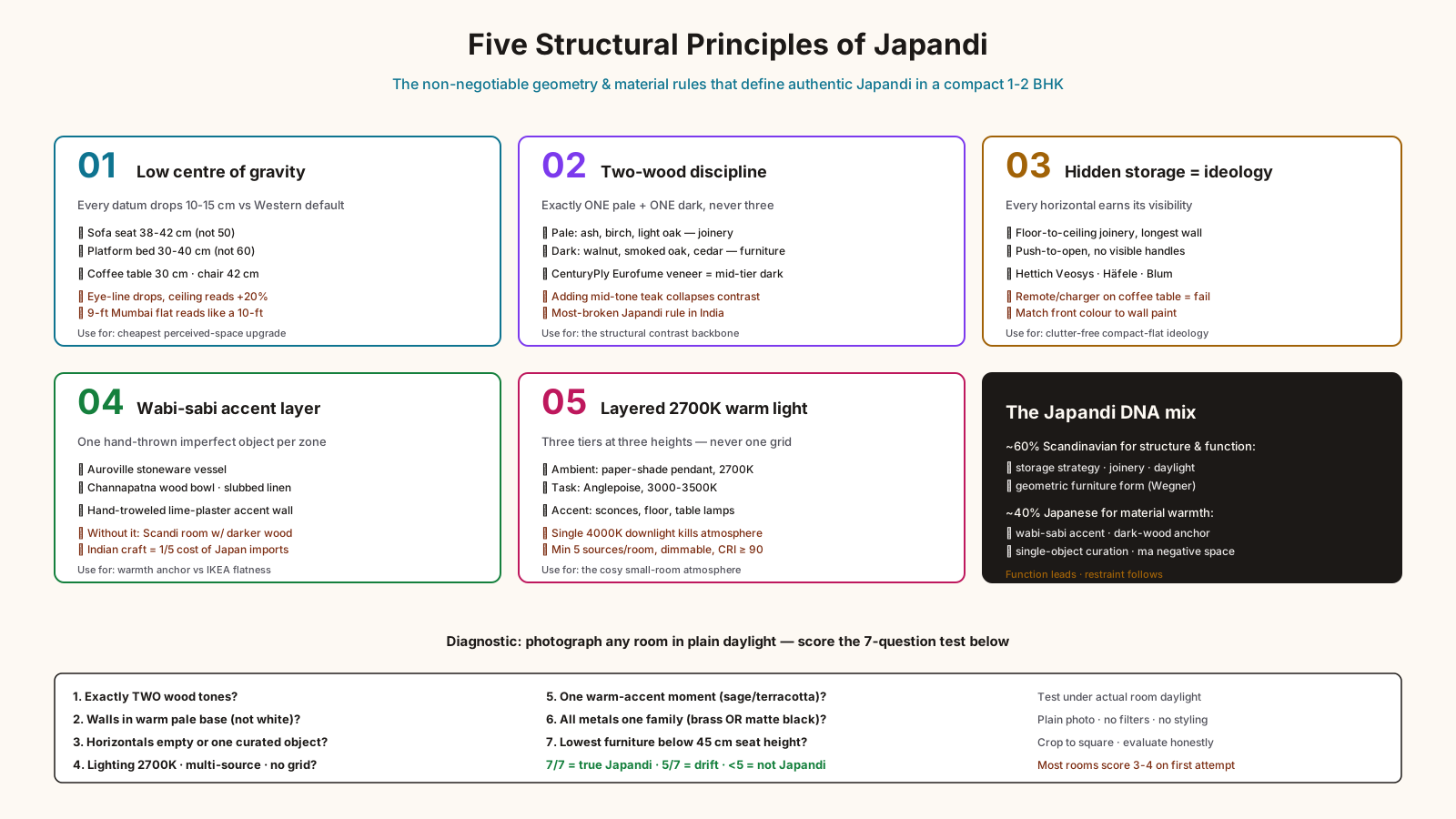
1. Low centre of gravity
Every horizontal datum drops 10-15 cm versus Western default. Sofa seat at 38-42 cm (not 50), platform bed at 30-40 cm (not 60), dining chair at 42 cm (not 48), coffee table at 30 cm (not 45). The eye-line drops, the perceived ceiling height grows by ~20 percent, and a 9-foot Mumbai builder-floor flat reads like a 10-foot premium apartment. This is the cheapest perceived-space upgrade available to a compact Indian apartment.
2. Two-wood discipline
Pick exactly one pale wood (ash, birch, light oak) and exactly one dark wood (walnut, smoked oak, cedar). Use the pale for joinery, doors, and structural surfaces; use the dark for furniture, accent walls, and signature pieces. Never three or more wood tones — the most-broken Japandi rule in India is the addition of mid-tone teak as a "third option," which collapses the contrast.
3. Hidden storage as ideology
Every horizontal surface earns its visibility. If a remote, a charger, a stack of mail, or a water bottle lives on a coffee table, the room is not Japandi. Floor-to-ceiling joinery on the longest wall of each room — push-to-open, no visible handles, matched to wall colour — holds everything else. Hettich and Häfele push-to-open systems are the workhorse hardware; specify them in every room.
4. Wabi-sabi imperfection layer
One hand-thrown, asymmetric, slightly worn, hand-finished object per zone — the warmth anchor that prevents Scandi flatness. A hand-thrown Auroville stoneware vessel, a Channapatna wood bowl, a slubbed raw-linen cushion, a hand-troweled lime-plaster accent wall, a slightly warped reclaimed teak shelf. This is where Indian craft tradition delivers Japandi authenticity at one-fifth the cost of Japanese imports.
5. Layered 2700K warm light
Three tiers of light at three heights: ambient (paper-shade pendant or washi lantern, 2700K), task (Anglepoise-style at desk or bedside, 3000-3500K), accent (wall sconces, floor lamps, table lamps, all 2700K). Never a single overhead LED downlight grid — the death of Japandi atmosphere. Minimum five sources per room, all dimmable, CRI ≥ 90.
The 15-Tone Japandi Palette
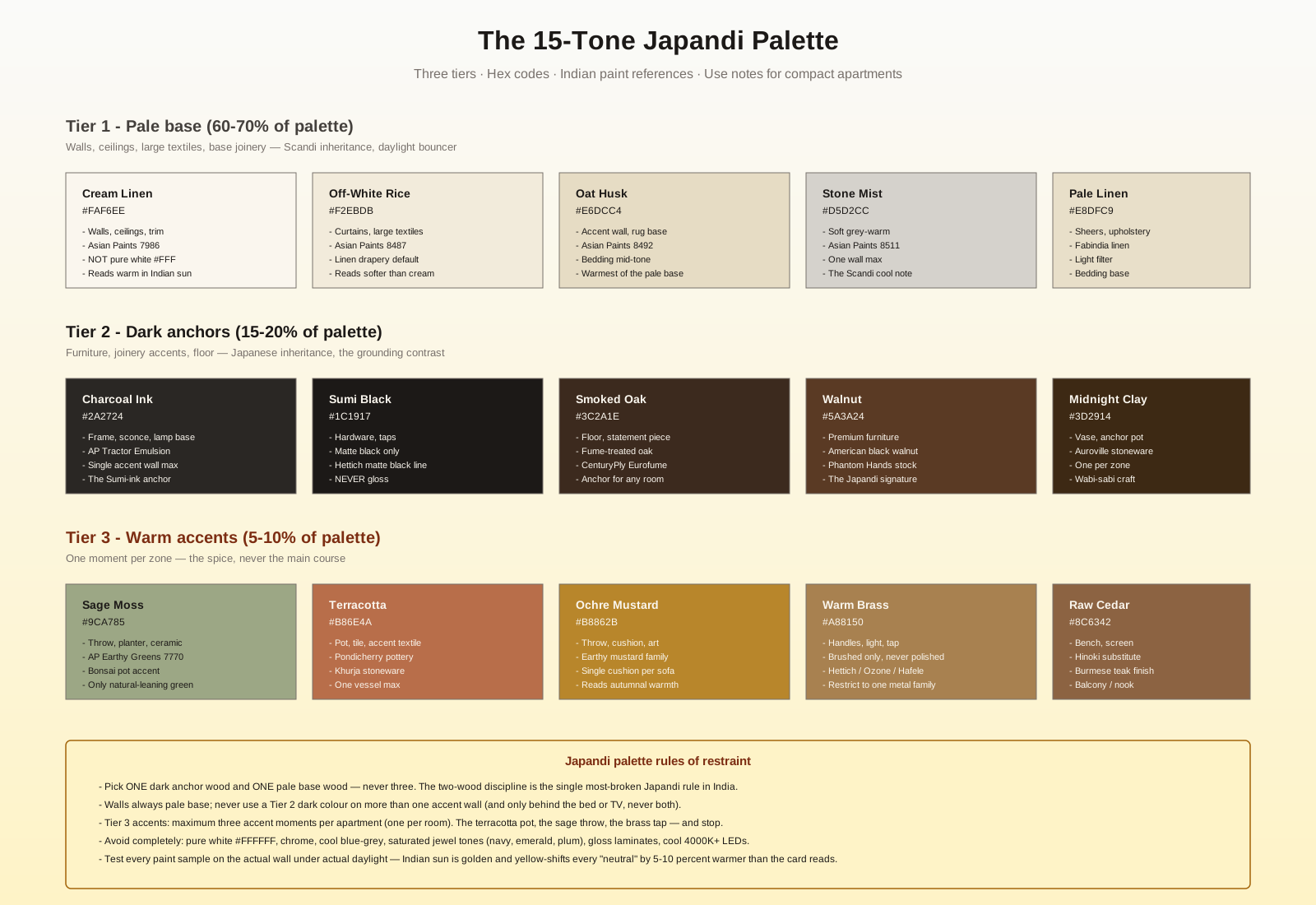
Tier 1 — Pale base (60-70% of palette)
| Tone | Hex | Use | Indian paint reference |
|---|---|---|---|
| Cream Linen | #FAF6EE | Walls, ceilings, trim | Asian Paints 7986 (NOT pure white) |
| Off-White Rice | #F2EBDB | Curtains, large textiles | Asian Paints 8487 · Dulux Wholewheat |
| Oat Husk | #E6DCC4 | Accent wall, rug base | Asian Paints 8492 |
| Stone Mist | #D5D2CC | Soft grey-warm wall | Asian Paints 8511 · the Scandi cool note |
| Pale Linen | #E8DFC9 | Sheers, upholstery | Fabindia linen weight |
The base neutral test: paint a small swatch on the actual wall under actual room daylight before committing. Warm whites can shift dramatically against ambient yellow Indian sunlight — what reads as "cream" on a sample card can read as "yellow" on the wall. Always test in both morning and evening light.
Tier 2 — Dark anchors (15-20% of palette)
| Tone | Hex | Use | Sourcing notes |
|---|---|---|---|
| Charcoal Ink | #2A2724 | Frame, sconce, lamp base | The sumi-ink anchor |
| Sumi Black | #1C1917 | Hardware, taps | Matte black only · never gloss |
| Smoked Oak | #3C2A1E | Floor, statement piece | CenturyPly Eurofume |
| Walnut | #5A3A24 | Premium furniture | American black walnut · Phantom Hands |
| Midnight Clay | #3D2914 | Vase, anchor pot | Auroville stoneware · one per zone |
Walnut reads warmer than smoked oak of the same Munsell value — the underlying red note in walnut grain pairs better with Indian warm sun than the cooler smoked-oak grey. For premium spec, walnut is the Japandi signature. For mid-tier, smoked oak veneer delivers 80% of the visual at 50% of the cost.
Tier 3 — Warm accents (5-10% of palette)
| Tone | Hex | Use | Indian craft source |
|---|---|---|---|
| Sage Moss | #9CA785 | Throw, planter, ceramic | The only natural-leaning green allowed |
| Terracotta | #B86E4A | Pot, tile, accent textile | Pondicherry · Khurja pottery |
| Ochre Mustard | #B8862B | Throw, cushion, art | Earthy mustard family |
| Warm Brass | #A88150 | Handles, light, tap | Brushed only · Hettich / Häfele / Ozone |
| Raw Cedar | #8C6342 | Bench, screen, balcony | Burmese teak finish |
Three accent moments per apartment, not thirty. One terracotta vessel in the living room; one sage throw in the bedroom; one brass tap in the kitchen. The accents are the spice — not the palette.
What to avoid completely
- Pure white #FFFFFF — clinical, cold, no undertone, kills the warm wood pairing
- Cool grey (#94A3B8, #B0B7BE) — kills warmth on contact, reads as office
- Chrome / polished steel — visually cold, fingerprints loudly, clashes with both brass and matte black
- High-gloss laminates — reflect overhead light, defeat the matte material discipline
- Saturated jewel tones (navy, forest, plum, emerald) — belong to dramatic modern, not Japandi
- Three-or-more wood tones — single most-broken Japandi rule; collapses the discipline
Compact Apartment Application — Indian 1-2 BHK (600-900 sft)
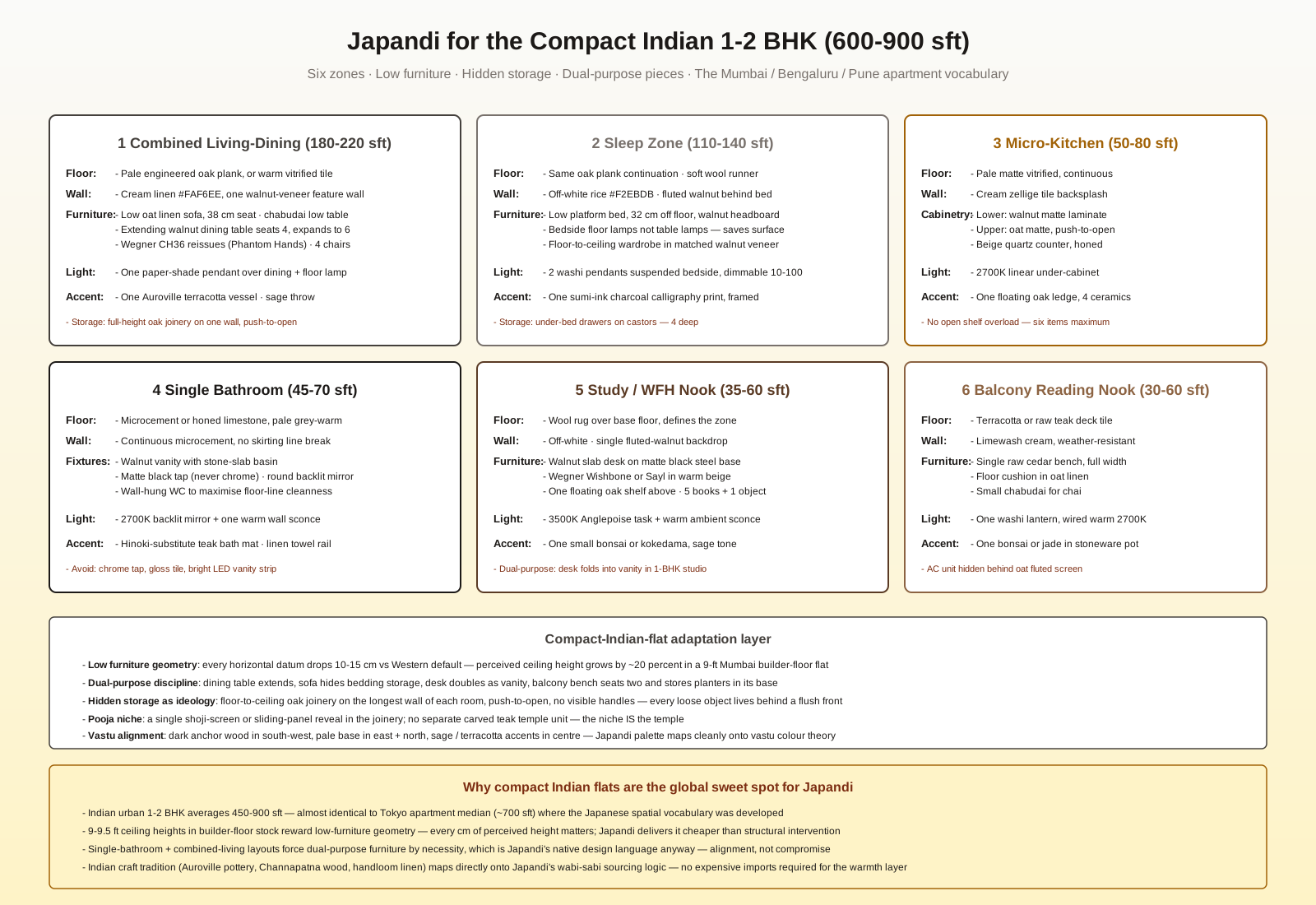
Combined living-dining — the anchor zone (180-220 sft)
The combined living-dining is the largest single zone in a compact Indian 1-2 BHK and sets the Japandi tone for the entire apartment. Floor is pale engineered oak plank or warm matte vitrified tile in a pale base tone — never gloss, never cool grey. Walls are cream linen #FAF6EE with one walnut-veneer feature wall behind the seating cluster (fluted detail optional for visual rhythm).
The sofa is oat-coloured heavy linen, low-slung (seat 38-42 cm), modular if possible (2+1 or 3+chaise) for layout flexibility. Coffee table is a chabudai low table in walnut or smoked oak — never glass, never high-gloss. Dining table is an extending walnut piece that seats 4 daily and expands to 6 for guests; chairs are Hans Wegner CH36 or Wishbone reissues from Phantom Hands (Bangalore makes them in Indian-priced reissues at ₹18-32k per chair, versus ₹120k+ for imported Carl Hansen originals).
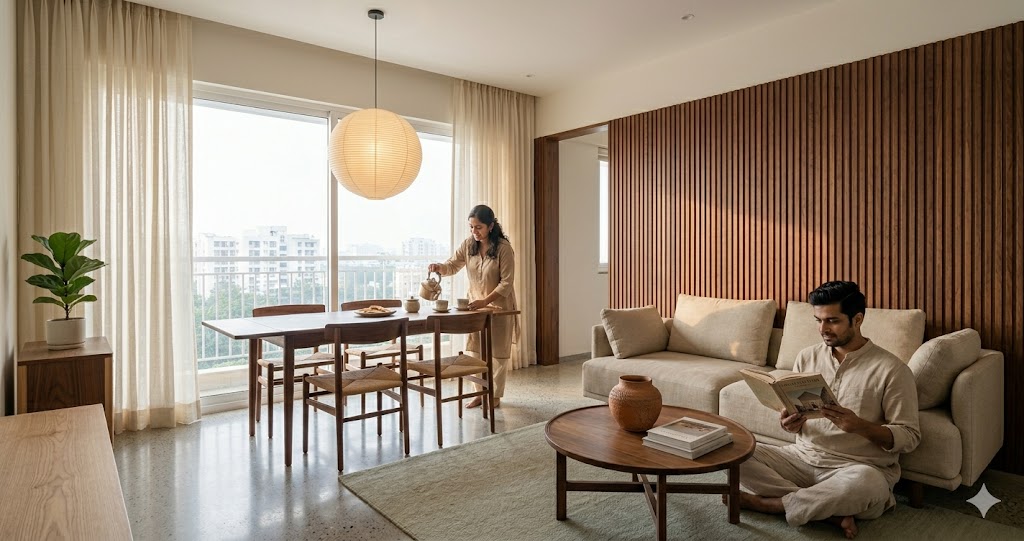
Lighting layers: one paper-shade pendant or washi lantern over the dining table at 2700K, one floor lamp at the sofa, two wall sconces flanking any art piece. No recessed downlight grid. The accent layer is one large hand-thrown Auroville terracotta vessel, one woven pale wool rug (6×9 ft maximum for a compact flat — oversized rugs eat the negative space), and full-height oak push-to-open joinery on one wall for hidden storage.
Sleep zone — the rest zone (110-140 sft)
The Japandi master bedroom is the most signature room of the style. Bed is a low platform at 30-40 cm off the floor with a walnut headboard — the geometry alone makes the room read 20-25% taller. Walls are off-white rice #F2EBDB with a single fluted-walnut feature wall behind the bed (shadow-gap joinery, no contrasting laminate). Wardrobe is floor-to-ceiling in matched walnut veneer, push-to-open, no visible handles.
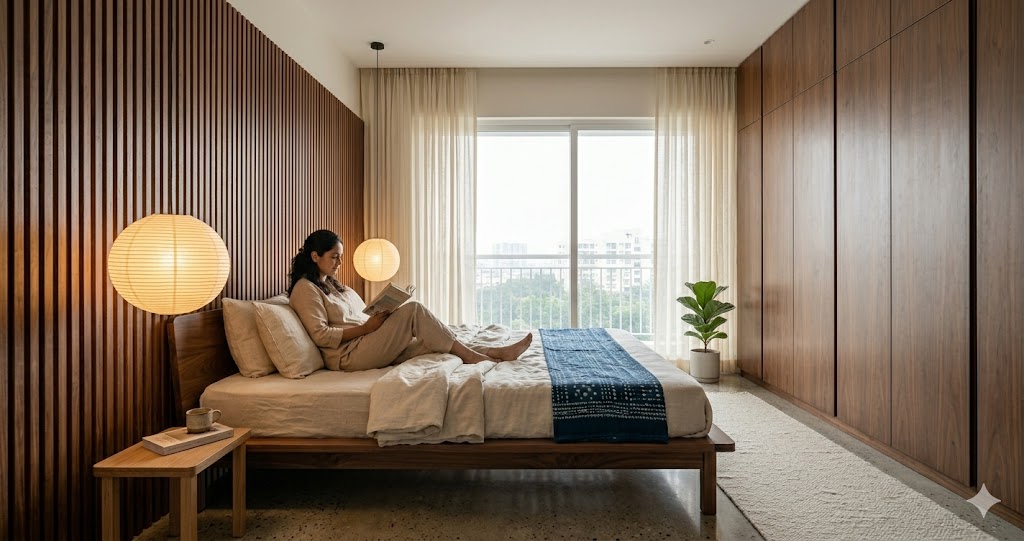
Side tables are eliminated in favour of two washi paper pendants suspended bedside (saves bedside real estate, characteristic Japandi move). Bedside floor lamps or wall-mounted reading sconces flank the bed. All bedroom lighting at 2700K, dimmable to 10% for sleep. Floor is the continuation of the oak plank from the living, with a single hand-knotted pale wool runner alongside the bed. Under-bed storage drawers on castors hold off-season clothing and linens.
Micro-kitchen — the most-touched zone (50-80 sft)
Compact Indian kitchens benefit enormously from the Japandi two-wood discipline: lower cabinets in walnut matte laminate (Greenlam SwitchSuede, Merino Soft Matte) and upper cabinets in oat or cream matte laminate. The contrast prevents the visual heaviness of all-dark lower cabinets in a small kitchen. Counter is beige quartz, travertine, or honed limestone. Backsplash is cream zellige tile or a single stone slab to ceiling — never patterned or busy.
Hardware is brushed brass cup pulls or no-handle push-to-open (Hettich Veosys, Häfele systems). Under-cabinet lighting is 2700K linear LED (never the standard 4000K kitchen strip — kills the wood warmth). Open shelf is one single floating oak ledge for four to six ceramic items only, never twelve. The pooja niche, where applicable, integrates into the joinery wall via a sliding panel reveal — never as a separate carved-teak temple unit (the niche IS the temple).
Single bathroom — the daily ritual zone (45-70 sft)
The compact Japandi bathroom uses continuous microcement or honed limestone for floor and walls — no skirting line break, which makes the small room read taller. Vanity is walnut or smoked oak with a stone slab basin (round, hand-formed, off-axis where possible — the wabi-sabi accent moment). Tap is matte black or brushed brass — never chrome, never both metals.
Mirror is round, frameless or thin-brass-framed, backlit warm 2700K (never the 4000K vanity-strip default). One hinoki-substitute teak bath mat on the floor, one linen towel rail with a single linen towel. Wall-hung WC to maximise the clean floor line. The bathroom is the smallest zone where the discipline reads most powerfully.
Study / WFH nook — the focus zone (35-60 sft)
WFH realities mean every 1-2 BHK now needs a focus zone. Desk is a walnut slab on a matte black powder-coated steel base (or a fold-down wall-mounted desk in a true 1-BHK studio). Chair is a Wegner Wishbone reissue (Phantom Hands), a Herman Miller Sayl in warm beige, or a Hans Wegner CH36. Above the desk: one floating oak ledge with five books and one small ceramic or bonsai accent.
Wall behind the desk is off-white with one fluted-walnut backdrop panel for video-call backdrop. Lighting is a 3500K Anglepoise-style task lamp plus a warm 2700K ambient wall sconce plus generous daylight from a window if possible. In a true studio flat, this same desk doubles as a vanity in the morning routine — dual-purpose discipline is the Japandi-meets-compact-Indian default.
Balcony reading nook — the breathing zone (30-60 sft)
The Indian balcony, often treated as utility-only or skipped entirely in interior briefs, becomes the Japandi-signature breathing zone. Floor is terracotta or raw teak deck tile. Walls are limewash cream (weather-resistant, Bauwerk certified). Furniture is a single raw cedar bench full-width with one floor cushion in oat linen and a small chabudai for chai.
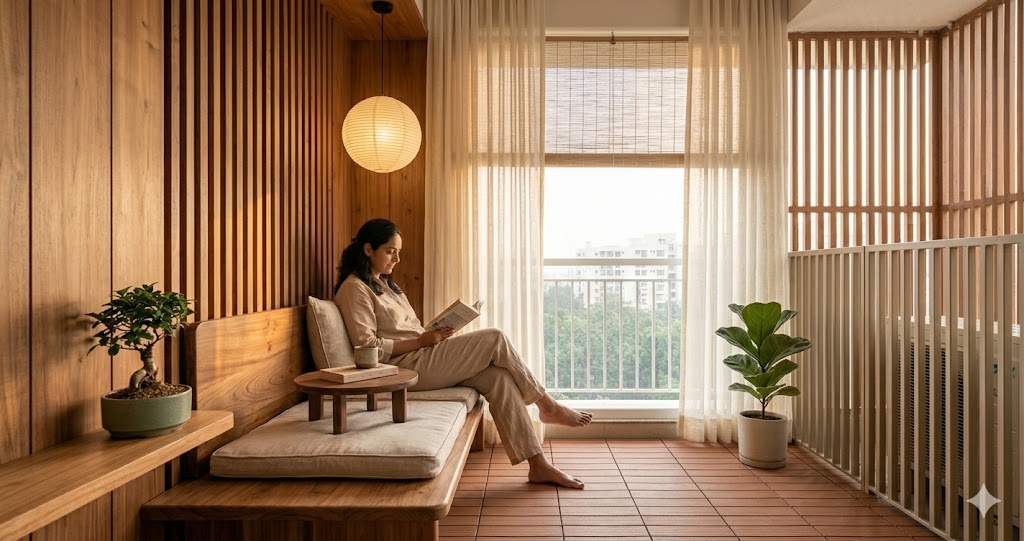
Lighting is one washi paper lantern wired with a warm 2700K bulb. Plants are one bonsai or a single jade in a sage stoneware pot — never multi-planter clutter. The AC outdoor unit, the eternal Indian-balcony eyesore, is hidden behind an oat-coloured fluted screen. The balcony is the easiest Japandi win in any Indian apartment because it operates outside the joint-family negotiation that often constrains the indoor decisions.
Furniture and Sourcing — The Indian Map
The single biggest sourcing breakthrough for Japandi in India is Phantom Hands (Bangalore), which manufactures licensed Hans Wegner and Pierre Jeanneret reissues in solid teak and walnut at Indian price points (₹18-32k per chair versus ₹120-180k for imported Carl Hansen originals). Phantom Hands alone makes premium Japandi achievable at mid-tier budgets.
Furniture
- Phantom Hands (Bangalore) — Hans Wegner CH36, Wishbone, Pierre Jeanneret reissues; the gold standard for Japandi
- Sage Living (Mumbai) — Linen upholstery, oak case goods, low-slung sofa specialists
- Beyond Designs (Delhi NCR) — Premium bespoke joinery, walnut and smoked oak expertise
- Tectona Grandis (Bangalore) — Solid teak furniture, custom-low geometry orders
- Wakefit / Pepperfry — Entry-tier linen sofa, oak veneer beds, decent platform geometry
- Urban Ladder — Reliable mid-tier, walnut-stained pieces
Lime plaster, microcement, limewash
- Bauwerk Colour (Australia, certified Indian applicators) — Premium limewash and lime plaster
- Marrakech Design (Italian) — Lime plaster, designer specifications
- Domus Innova (Spanish) — Microcement systems, certified applicator network in metros
- Tadelakt India — Moroccan-tradition lime plaster, niche applicator base
Textiles
- Fabindia (linen line) — Affordable linen drapery and bedding, pale base tones
- Jaipur Rugs — Hand-knotted wool runners, custom sizing for compact rooms
- Obeetee — Premium wool, larger rug formats
- Anokhi — Block-printed cotton for the single accent throw
- Good Earth — Premium textiles, ceramic, lifestyle (luxury tier)
Ceramic and pottery (the wabi-sabi anchor)
- Auroville pottery studios — Hand-thrown stoneware, terracotta, the Japandi accent default
- Mai Hauus (Auroville) — Modern ceramic, Auroville school
- Andretta Pottery (HP) — Studio ceramics, signature pieces
- Sanjhi pottery (Mathura) — Traditional craft, contemporary forms
- Khurja pottery (UP) — Affordable terracotta and stoneware
Lighting
- Klove — Studio Mumbai-spec sculptural pendants, premium washi-inspired
- Beem Light Atelier (Bangalore) — Contemporary warm pendants, paper-shade range
- White Teak — Mid-tier, decent warm minimal range
- Foscarini, Flos, Vibia (imported via Magnum Opus / Lights & Shadows) — Premium tier
Hardware (the matte black or brass discipline)
- Hettich — Workhorse, matte black and brushed brass available, German engineering
- Häfele — Premium, full warm range, push-to-open systems
- Ozone — Mid-tier, decent brass finishes
- Blum — Austrian, premium hinges and drawer systems
Three Budget Tiers — All-in Estimates
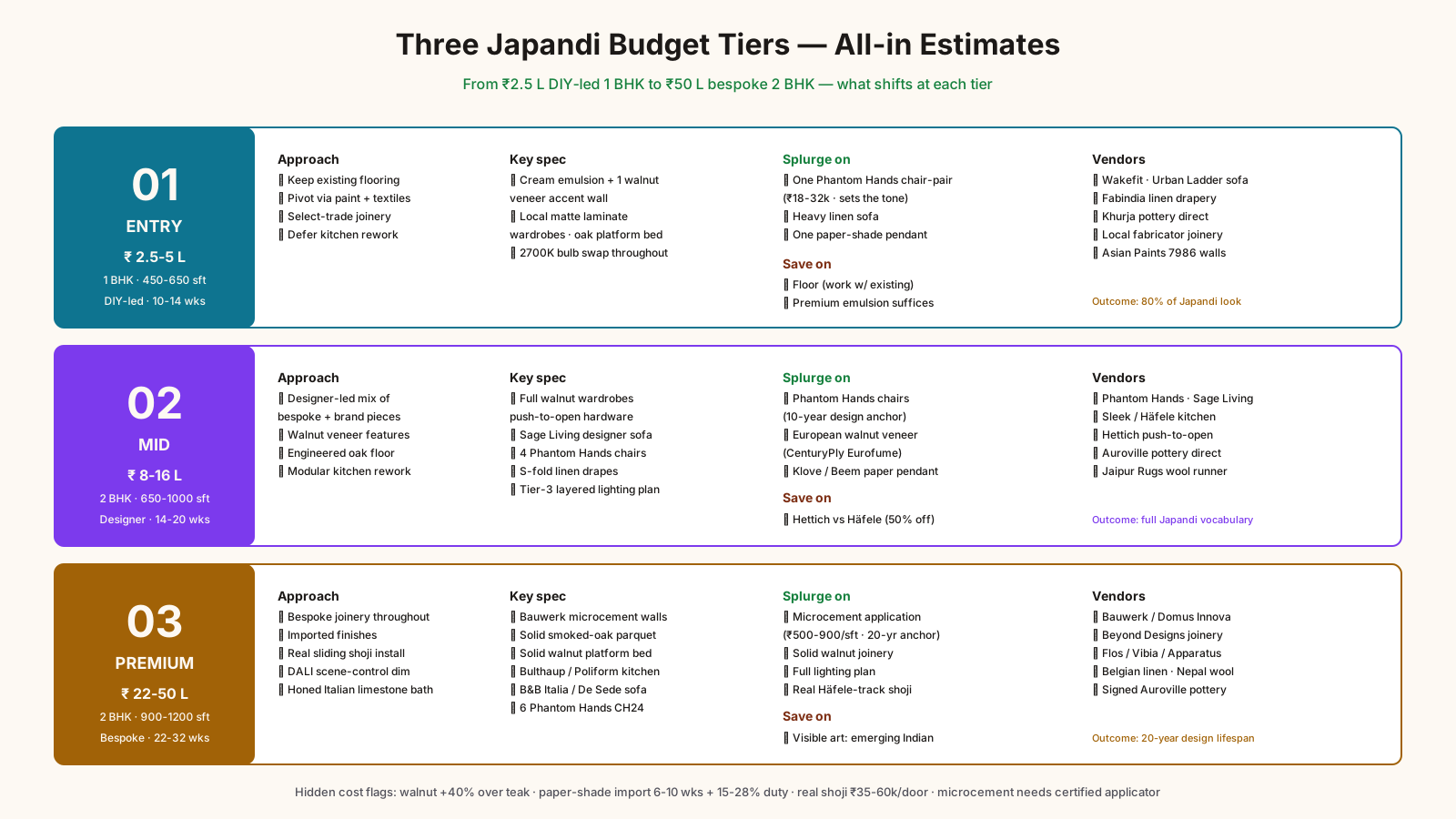
Entry tier — ₹ 2.5-5 L for a 1 BHK (450-650 sft)
DIY-led with select trades. Keep existing flooring; pivot through paint, textiles, and select joinery. Save on: kitchen rework (defer to phase 2), floor (work with existing), paint brand (premium emulsion is enough). Splurge on: one Phantom Hands chair or pair (sets the design tone for the whole flat), heavy linen sofa, lighting fittings.
Typical mix: cream emulsion paint walls, one walnut-veneer accent wall, beige matte laminate wardrobes from a local fabricator, partial kitchen rework with matte laminate fronts, linen sofa from Wakefit / Urban Ladder, walnut-stained chabudai coffee table, oak veneer platform bed, 2-3 pale wool runners, off-white linen ready-made curtains, 2700K bulb replacement throughout, two floor lamps, one paper-shade pendant, 4-6 Auroville ceramic accents. Lead time 10-14 weeks DIY-led.
Mid tier — ₹ 8-16 L for a 2 BHK (650-1,000 sft)
Designer-led, mix of bespoke and brand. Walnut veneer feature walls in living and master, engineered oak floor in living, designer linen sofa (Sage Living, Beyond Designs), walnut chabudai coffee table, full walnut-veneer wardrobes with push-to-open hardware, modular kitchen in walnut + oat matte (Häfele, Sleek), layered tier-3 lighting plan, one paper-shade pendant (Klove or Beem), four Phantom Hands Wegner reissues for dining, S-fold linen drapes throughout, hand-thrown Auroville stoneware accents, one small bonsai or kokedama.
Save on: hardware brand (Hettich at half the Häfele price for the same matte black finish), ceramic source (direct from Auroville or Khurja saves 40-60% over retail), lime plaster substitute (one limewash accent wall achieves 80% of the visual at 30% of the cost). Splurge on: the Phantom Hands chairs (the design anchor for ten years), walnut veneer quality (European walnut from CenturyPly reads richer than Vietnamese), the one paper-shade pendant. Lead time 14-20 weeks designer-led.
Premium tier — ₹ 22-50 L for a 2 BHK (900-1,200 sft)
Bespoke joinery, imported finishes. Microcement walls in two rooms (Bauwerk certified applicator), Bauwerk limewash accents, solid smoked-oak parquet floor in living and master, honed Italian limestone in bath, solid walnut bespoke platform bed, Bulthaup or Poliform-spec micro-kitchen, B&B Italia or De Sede low sofa, walnut chabudai, solid walnut bespoke dining table, six Phantom Hands Wegner CH24 Wishbones, DALI dimming with scene control, Flos / Vibia / Apparatus pendants, Belgian linen and Nepalese wool textiles, signed Auroville pottery, original Indian art commission, real sliding shoji on Häfele tracks separating the WFH nook from the living.
Save on: visible art (commission emerging Indian artists, save 70-90% over imported galleries). Splurge on: microcement application, solid walnut joinery (the warmth anchor for the next twenty years), the lighting plan (it photographs and the eye reads it continuously), the real shoji install. Lead time 22-32 weeks bespoke.
Hidden costs
- Walnut premium over teak: ~40% more expensive in solid form, ~20% more in veneer
- Paper-shade lighting import: 6-10 weeks shipping + customs (15-28% duty on lighting fixtures)
- Bespoke platform bed: ₹ 45-80k for a solid walnut platform with under-bed drawers
- Real shoji slider on Häfele track: ₹ 35-60k per door, requires installer familiar with the system
- Microcement application: needs certified Bauwerk or Domus Innova applicator — ₹ 500-900 per sft applied
- Hand-knotted wool runner: ₹ 1,800-3,500 per sft for Jaipur Rugs custom small sizes
Ten Pitfalls That Kill the Style
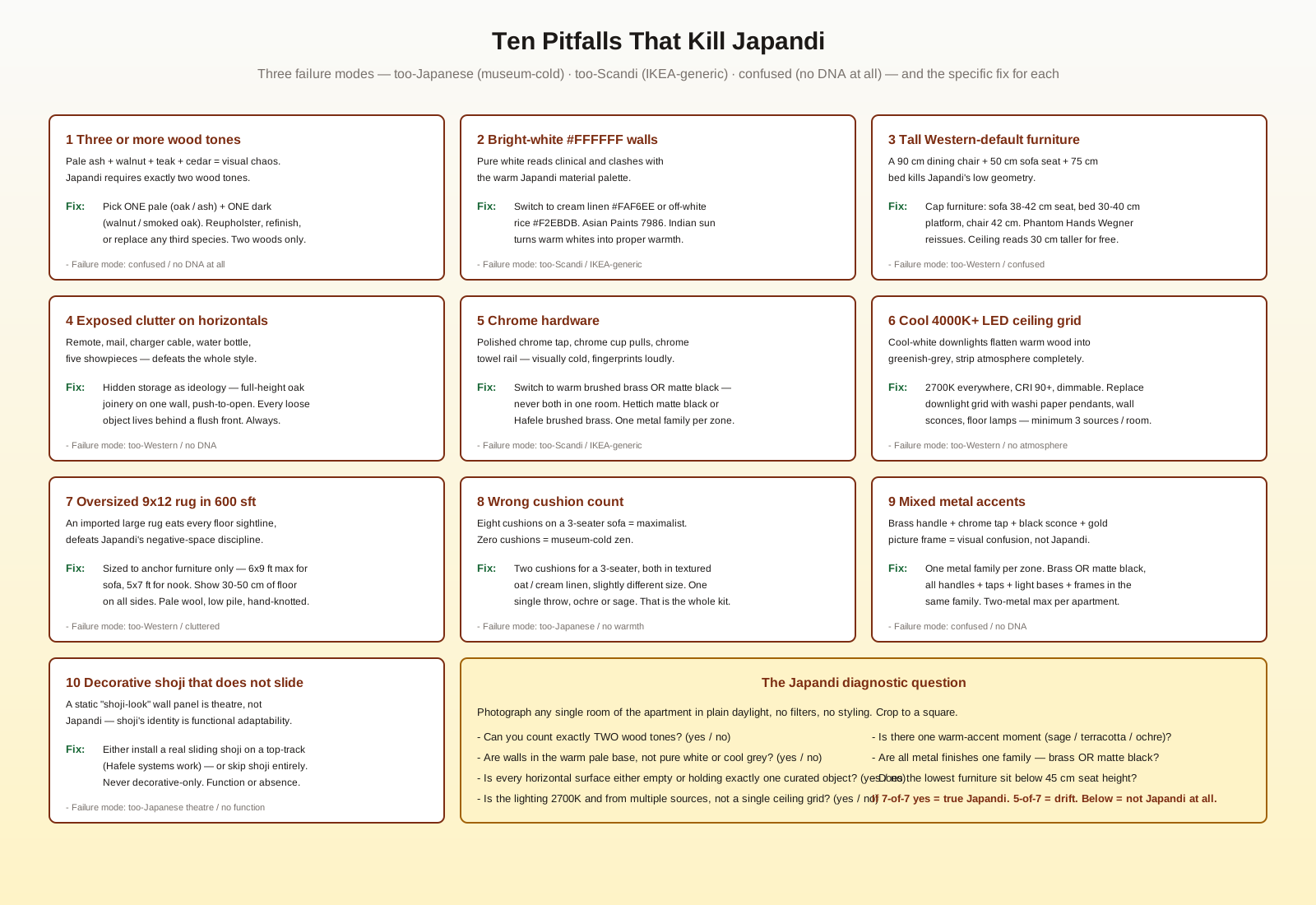
1. Three or more wood tones. Pale ash + walnut + teak + cedar = visual chaos, defeats the two-wood discipline. Fix: pick exactly one pale and one dark; reupholster, refinish, or replace the third species.
2. Bright-white #FFFFFF walls. Reads clinical, clashes with the warm wood pairing, kills the whole atmosphere. Fix: switch to cream linen #FAF6EE or off-white rice #F2EBDB.
3. Tall Western-default furniture. A 50 cm sofa seat + 60 cm bed + 48 cm chair kills Japandi's low geometry signature. Fix: cap furniture at 38-42 cm sofa, 30-40 cm bed, 42 cm chair — Phantom Hands Wegner reissues hit the spec natively.
4. Exposed clutter on horizontals. Remote, mail, charger, water bottle, five showpieces on a coffee table defeats the discipline. Fix: full-height push-to-open joinery on one wall holds everything; horizontals stay empty or hold one curated object.
5. Chrome hardware. Polished chrome tap, chrome pulls, chrome towel rail = visually cold, fingerprints loudly. Fix: switch to warm brushed brass OR matte black — one metal family per room.
6. Cool 4000K+ LED ceiling grid. Flattens warm wood into greenish-grey, strips atmosphere completely. Fix: 2700K throughout, CRI 90+, dimmable, minimum 3 sources per room, never a single downlight grid.
7. Oversized 9×12 rug in a 600 sft flat. Eats every floor sightline, defeats the negative-space discipline. Fix: 6×9 ft max for a 3-seater, 5×7 ft for a nook, show 30-50 cm of floor on all sides.
8. Wrong cushion count. Eight cushions on a 3-seater = maximalist clutter; zero cushions = museum-cold zen. Fix: two cushions in textured oat / cream linen, one single throw in ochre or sage — that is the whole kit.
9. Mixed metal accents. Brass handle + chrome tap + black sconce + gold frame = visual confusion. Fix: one metal family per zone, two-metal maximum per apartment, brass OR matte black, never both.
10. Decorative shoji that does not slide. A static "shoji-look" wall panel is Japan-themed theatre, not Japandi — shoji's identity is functional adaptability. Fix: either install a real sliding shoji on a Häfele track, or skip shoji entirely.
The diagnostic seven-question test
Photograph any single room in plain daylight, no filters, no styling, cropped to a square. Answer:
1. Are there exactly TWO wood tones visible?
2. Are walls in the warm pale base (not white, not cool grey)?
3. Is every horizontal either empty or holding exactly one curated object?
4. Is the lighting 2700K from multiple sources, not one ceiling grid?
5. Is there exactly one warm-accent moment (sage / terracotta / ochre)?
6. Are all metal finishes one family (brass OR matte black)?
7. Does the lowest furniture sit below 45 cm seat height?
7-of-7 yes = true Japandi. 5-of-7 = drift, needs correction. Below 5 = not Japandi at all.
How Japandi Differs from Adjacent Styles
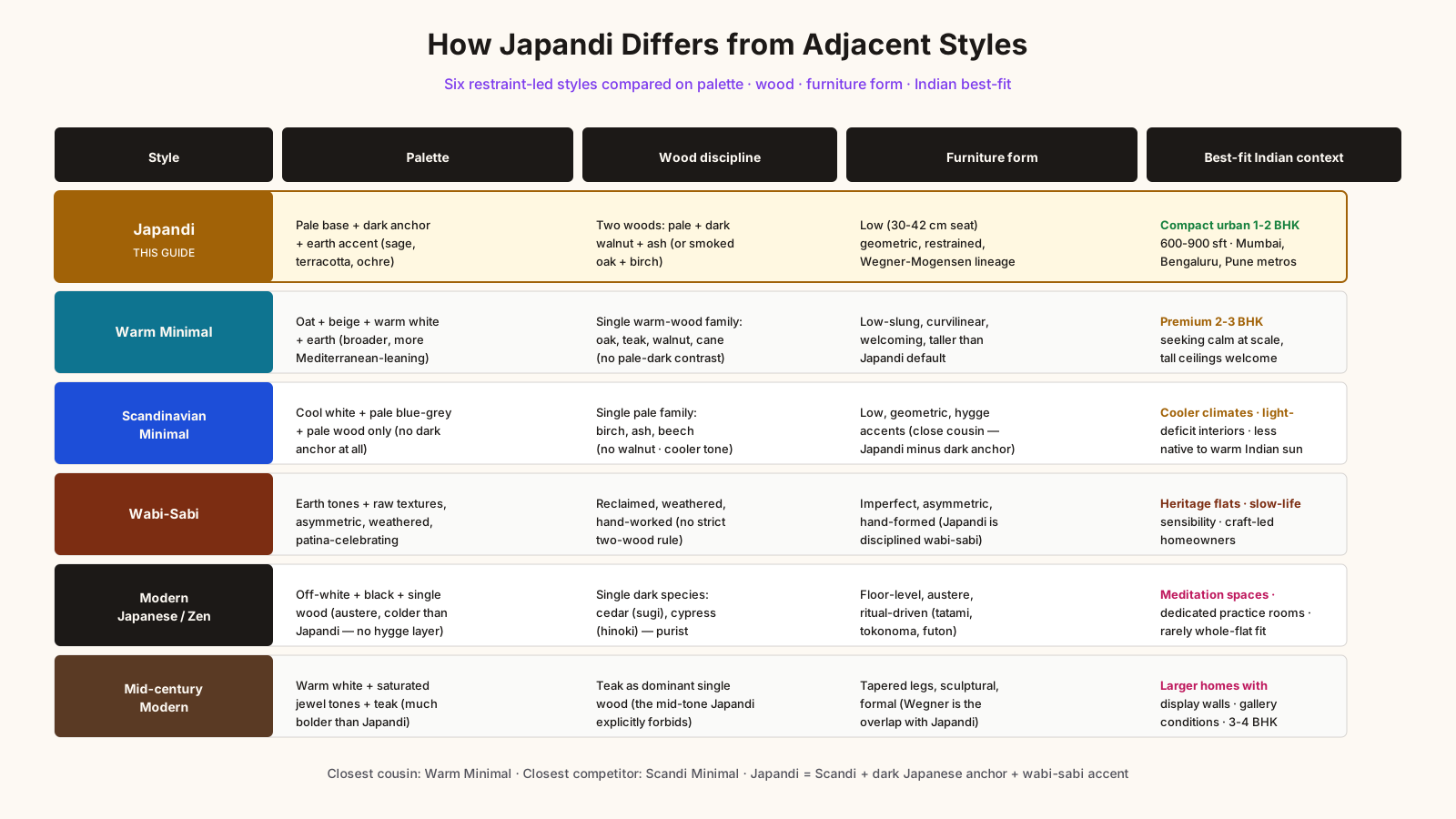
| Style | Palette | Wood | Furniture form | Best for |
|---|---|---|---|---|
| Japandi | Pale base + dark anchor + earth accent | Two woods: pale + dark (walnut + ash) | Low (30-42 cm), geometric, restrained | Compact urban 1-2 BHK |
| Warm Minimal | Oat + beige + warm white + earth | Oak, teak, walnut, cane (single warm family) | Low-slung, curvilinear welcome | Premium 2-3 BHK seeking calm |
| Scandinavian Minimal | Cool white, pale blue-grey, pale wood only | Birch, ash, beech (single pale family) | Low, geometric, hygge accents | Cooler climates, daylight-deficit |
| Wabi-Sabi | Earth tones + raw textures, asymmetric | Reclaimed, weathered, hand-worked | Imperfect, asymmetric, hand-formed | Heritage, slow-life sensibility |
| Modern Japanese / Zen | Off-white + black + single wood | Single dark species (cedar / cypress) | Floor-level, austere, ritual | Meditation spaces, dedicated practice |
| Mid-century Modern | Warm white + saturated jewel + teak | Teak as the dominant single wood | Tapered legs, sculptural, formal | Larger homes with display walls |
The closest cousin is warm minimalism (overlap on warm material discipline, hidden storage, layered light). The clearest differences: Japandi uses two woods deliberately versus warm minimal's single warm-wood family; Japandi runs lower furniture; Japandi requires the explicit wabi-sabi imperfection layer that warm minimal welcomes but does not mandate. The closest competitor is Scandi minimal — Japandi is essentially Scandi with the dark Japanese wood anchor and the wabi-sabi accent added.
When Japandi Is the Wrong Style for You
Japandi is the right answer for ~50% of compact urban Indian apartments (1-2 BHK). It is the wrong answer for:
- Joint-family households with multi-generational object accumulation — the discipline of one curated object per zone does not survive three generations of inherited furniture
- Families with three or more children under 10 — the negative-space discipline does not survive Lego season; the wabi-sabi pottery does not survive a cricket bat indoors
- Large 3-4 BHK villas (1,800+ sft) — Japandi's low-furniture geometry was developed for compact rooms; at villa scale, the proportions collapse and the room reads under-furnished
- Homeowners who derive joy from collecting and displaying — books, art, sculpture, antiques. Japandi forces aggressive curation that can feel like deprivation
- Homes where the primary entertaining is large extended family gatherings (12+ guests) — low Japandi seating geometries seat 6-8 comfortably, not 15
If any of the above describes you, consider Warm Minimal Interiors (similar restraint, more forgiving on scale), Earthy Interior Palette (similar warmth, more colour latitude), or contemporary Indian eclectic (works with collections and joint-family inheritance).
Where to Go Next
- For sister-style depth — Warm Minimal Interiors
- For palette deep-dive — Earthy Interior Palette
- For tight compact-flat constraints — Compact Luxury Apartment Guide
- For dual-purpose furniture in small flats — Space-Efficient Homes Guide
- For the hidden-storage discipline — Smart Storage Interiors
- For walnut feature walls — Fluted Panel Design Guide
- For wardrobe finish specifics — Wardrobe Finish Ideas
- For kitchen layout planning — Modular Kitchen Design Guide
- For ceiling planning — False Ceiling Design Guide
References
1. Tanizaki, J. (1933 / 2001 trans.) In Praise of Shadows. Vintage. (Foundational essay on Japanese aesthetic of soft light, shadow, patina — the philosophical root of the Japandi material palette.)
2. Vervoordt, A. (2010). Wabi Inspirations. Flammarion. (The definitive Western reference on wabi-sabi material depth and imperfection as design language.)
3. Wegner, H. + Oda, N. (2014). Hans J. Wegner — Just One Good Chair. Hatje Cantz. (The monograph on the Danish master whose chairs are the single most-specified Japandi furniture piece.)
4. Pallasmaa, J. (2012). The Eyes of the Skin — Architecture and the Senses. Wiley. (Tactility theory underlying both Japanese and Scandinavian material restraint.)
5. Koren, L. (1994). Wabi-Sabi for Artists, Designers, Poets and Philosophers. Imperfect Publishing. (Compact reference on the wabi-sabi accent discipline.)
6. Sparke, P. (2008). Japanese Design. Carlton Books. (Survey of Japanese design from Edo through contemporary — context for the cedar / shoji / tatami vocabulary.)
7. Fiell, C. + Fiell, P. (2013). Scandinavian Design. Taschen. (Survey of Scandinavian functional minimalism, Wegner / Juhl / Mogensen context.)
8. Zumthor, P. (2006). Atmospheres. Birkhäuser. (Atmospheric warmth without ornament — theory underlying Japandi's layered 2700K lighting discipline.)
9. Bawa, G. + Robson, D. (2002). Geoffrey Bawa — The Complete Works. Thames & Hudson. (Tropical restraint + material warmth, foundational Indian reference for compact-apartment Japandi adaptation.)
10. Doshi, B.V. (2019). Balkrishna Doshi — Architecture for the People. Vitra Design Museum. (Compact-dwelling material philosophy that aligns with Japandi for Indian context.)
11. Bauwerk Colour Application Guide (2024). Limewash and lime plaster application standards for Indian climate.
12. IS 2046:1995. Indian Standard for High-Pressure Decorative Laminates. (For matte laminate specification — Japandi requires matte / suede finishes only.)
Author's note: Japandi is the style I would specify in 60-70% of new compact 1-2 BHK Indian apartment commissions in 2026. The reason is geometric alignment — every other global style was developed for larger spatial conditions and translated downward to fit compact flats, with compromise and loss. Japandi was developed natively for the compact apartment (Tokyo median ~700 sft, Copenhagen median ~750 sft) and translates upward to Indian conditions with no loss at all. The only adaptation required is the Indian-craft sourcing layer, which actually delivers Japandi's wabi-sabi accent at a fraction of the cost of Japanese imports — Auroville pottery, Channapatna wood, Fabindia linen, Phantom Hands Wegner reissues are not substitutes for the Japanese / Scandinavian originals, they are arguably more authentic to the wabi-sabi spirit than the gallery-priced Japanese pieces. Built right, Japandi is the longest-lifespan style available to a compact-apartment Indian homeowner in 2026 — it will read as current in 2036 because it is built on geometric and material truth, not on trend colour.
Disclaimer: Material costs, brand sources, and paint references are 2026 indicative and shift with currency, import duties, and supply. Verify sourcing with current vendor quotes. Hex codes are approximate references — always confirm against a physical paint swatch under the room's actual daylight before committing. Vendor mentions are illustrative; Studio Matrx has no commercial relationship with any brand named. Wegner reissues from Phantom Hands are licensed Indian production; verify licensing status with the brand at time of order. Studio Matrx, its authors and contributors are not responsible for procurement or installation outcomes based on this guide.
Export this guide
Related Guides — Deep-dive reading
Warm Minimal Interiors — A 2026 Style Guide for Indian Homes
Restraint with warmth · Oat & oak & linen · Curated negative space
Design StylesCompact Luxury Apartment — A 2026 Working Reference for Premium 1-2 BHK Indian Homes
Four-pillar discipline · Ten signature moves · Three budget tiers ₹22-90L
Room PlanningEarthy Interior Palette — A 2026 Style Guide for Indian Homes
Rooted · Regional · Biophilic · Indian craft-anchored
Design StylesRelated Tools — Try Free
Circadian Light Meter
Patient-centric circadian lighting visualizer for Indian healthcare design — time-of-day × intensity → CCT, melanopic lux (EML / mEDI), melatonin suppression, and an alertness curve. Calibrated against WELL v2 L03 Circadian Lighting Design, CIE S 026:2018, Brainard 2001, and Lucas et al. 2014.
Circadian ToolApartment vs Villa Interior Planning Guide
Compare ceiling height, structural flexibility, lighting, storage, and services between apartments and villas.
Planning GuideCross-Ventilation Analyzer
Estimate airflow and air changes per hour (ACH) from room size, window areas, layout, and local wind — with NBC 2016 Part 8 compliance check.
Ventilation Calculator