
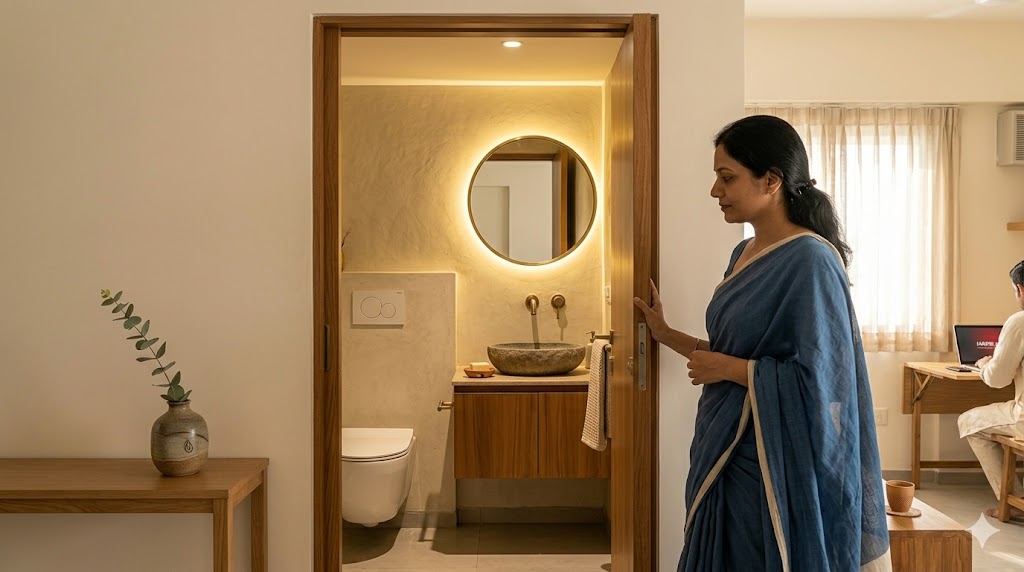
Compact Luxury Apartment — A 2026 Working Reference for Premium 1-2 BHK Indian Homes
Four-pillar discipline · Ten signature moves · Three budget tiers ₹22-90L
Compact luxury is the dominant 2026 brief for premium 1-2 BHK Indian apartments in metros — 700-1100 sft of carpet, ₹22-90 lakh of interior budget, demanding all the design depth of a 2500 sft villa compressed into a third of the footprint. It is what the Bandra investment banker, the Indiranagar startup founder, and the Banjara Hills consultant all converge on after the third site visit: the realisation that the apartment they have actually bought is not a downsized villa but a different design problem entirely, with its own discipline, its own vocabulary, and its own failure modes.
This is a 22-minute working reference for homeowners and interior designers building compact luxury interiors in Indian metro apartments. It covers what compact luxury actually means, the four-pillar discipline (material density, spatial geometry, bespoke joinery, layered lighting), ten signature moves, room-by-room application across a 2 BHK, three budget tiers from ₹22 L mid-premium to ₹90 L bespoke-luxury, sourcing for the high-impact items, ten common pitfalls, how compact luxury differs from villa luxury and budget luxury and warm minimalism, and when you should choose villa over compact.
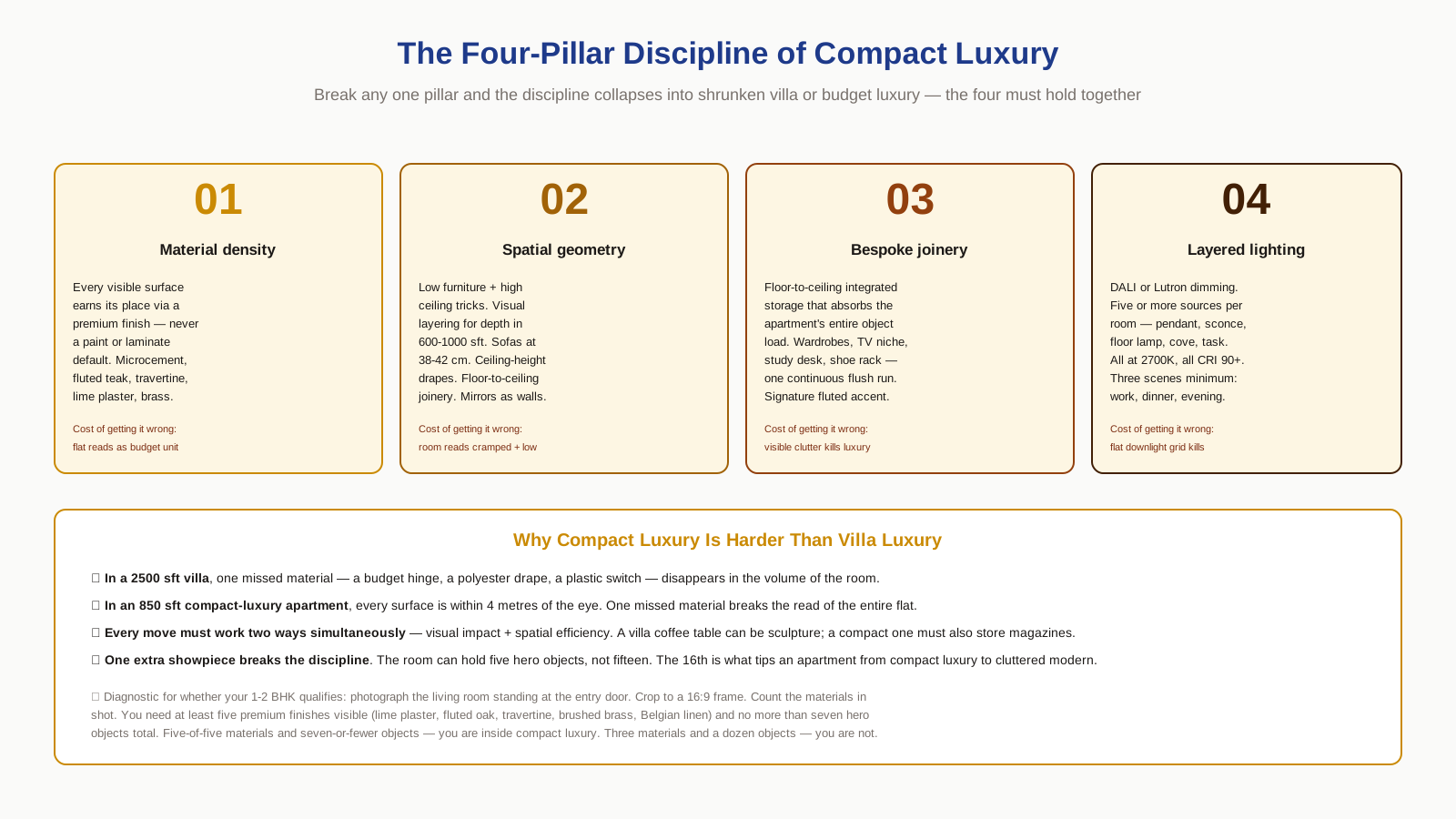
Compact luxury is harder than villa luxury, not easier. In a villa, scale forgives. One missed material, one budget hinge, one polyester drape disappears in the volume of the room. In an 850 sft compact-luxury apartment, every surface is within four metres of the eye — one extra showpiece breaks the discipline, and one missed material breaks the read. Every move must work in two ways simultaneously, visual impact and spatial efficiency, or the discipline collapses.
For complementary depth see Warm Minimal Interiors, Japandi Apartment Interior Guide, Earthy Interior Palette, Space-Efficient Homes, Smart Storage Interiors, Fluted Panel Design Guide, Budget Luxury Interiors, AI-Powered Interiors, Sustainable Interiors India Guide, Modular Kitchen Design Guide, Wardrobe Finish Ideas, and False Ceiling Design Guide.
This guide refreshes every 12 months — sourcing brands, joinery rates, and the imported-lighting duty regime all shift annually. Last verified: May 2026 · Next verify: May 2027.
What Compact Luxury Actually Means
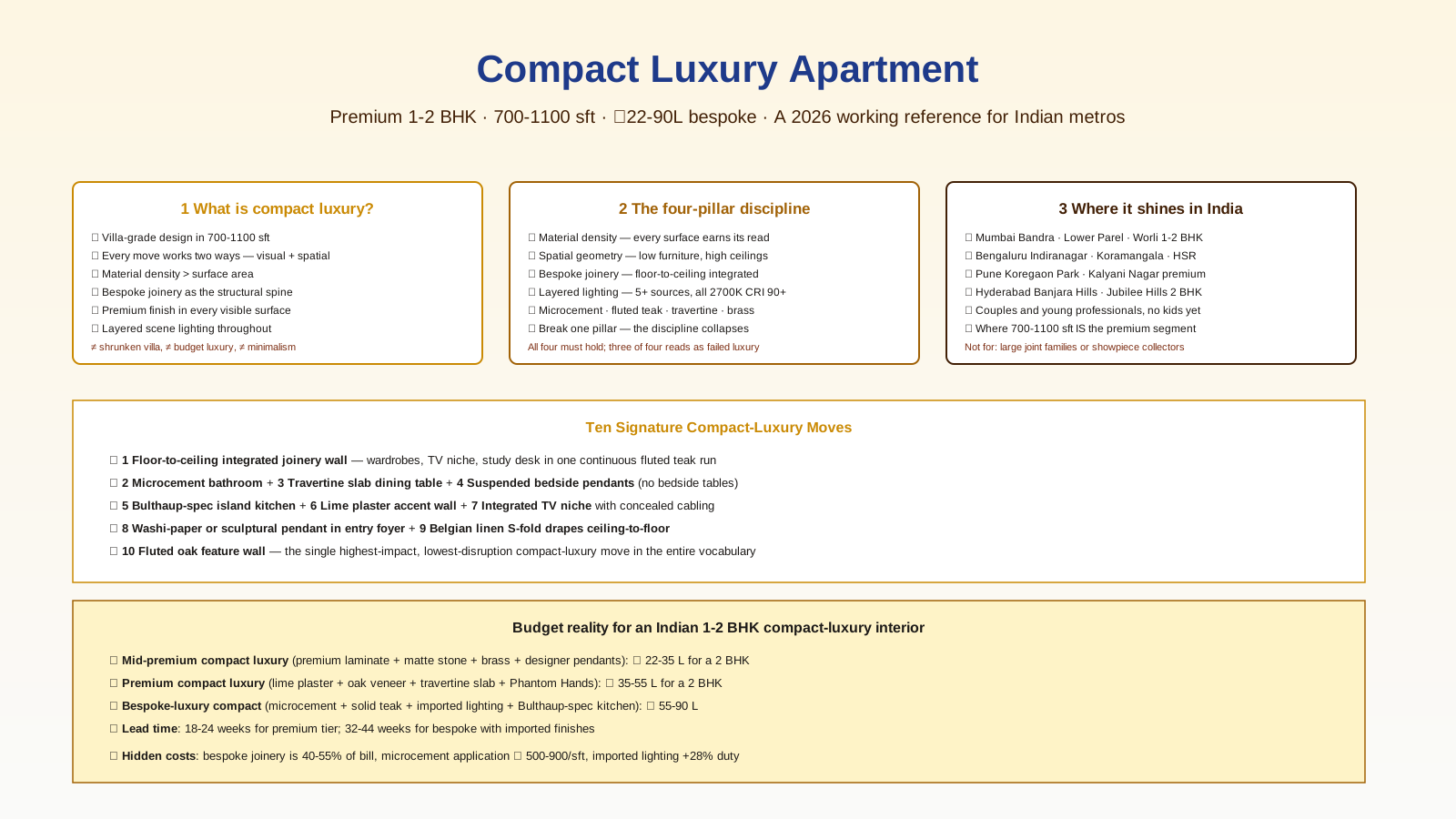
Compact luxury is the design problem of fitting villa-grade material, joinery and lighting discipline into a 1-2 BHK metro apartment without the apartment reading as either a shrunken villa or a budget unit dressed up with one statement light. It is what the premium 1-2 BHK segment in Mumbai (Bandra, Lower Parel, Worli), Bengaluru (Indiranagar, Koramangala, HSR), Pune (Koregaon Park, Kalyani Nagar), Hyderabad (Banjara Hills, Jubilee Hills) and parts of South Delhi has converged on as the dominant 2026 brief.
The core insight: in Indian metros, 700-1100 sft IS the premium segment. A 900 sft Bandra apartment can transact at ₹6-9 crore. An 1100 sft Indiranagar apartment can transact at ₹3-5 crore. The owner has spent crore-level capital to live in 1000 sft because that is all that money buys in the location they want. The interior brief that follows is not "budget interior because the flat is small." The brief is "every rupee of luxury that would have gone into a 2500 sft villa, compressed into 1000 sft, and the compression must not show."
That compression is the discipline. It is what separates compact luxury from its three closest neighbours — villa luxury (which has 2x the footprint to dissolve mistakes into), budget luxury (which leans on one or two hero moves and tolerates laminate elsewhere), and warm minimalism (which uses restraint as the headline aesthetic rather than as an engineering constraint).
Five things compact luxury is NOT
1. Not a shrunken villa. A shrunken villa is what happens when a designer takes the villa furniture programme — three-seater sofa + 8-seater dining + king bed + writing desk + dresser + showpiece cabinet — and scales each piece down 30% to fit. The result reads as cramped doll-house, not luxury. Compact luxury edits the programme, not the scale.
2. Not budget luxury. Budget luxury (covered in its own guide) tolerates a laminate wardrobe carcass and a single brass tap as its luxury moment. Compact luxury demands every visible surface earn its premium read — there is no surface anywhere in the flat where the eye lands on a budget shortcut.
3. Not warm minimalism. Warm minimal can apply to a 2500 sft villa or a 1000 sft compact apartment — it is a style, not a size brief. Compact luxury is the brief; warm minimal, Japandi, earthy, or contemporary are styles you choose within it.
4. Not maximalism in a small space. Compact luxury is not the answer to "I have a 900 sft flat but I want a Beyond Designs Delhi showpiece moment in every corner." Five hero objects, not fifteen — that is the limit the geometry allows.
5. Not the same as "good apartment interior." A good apartment interior can spend ₹14 L and read well. Compact luxury starts at ₹22 L for a 2 BHK and ends at ₹90 L bespoke. It is a budget segment as much as a design approach.
The Four-Pillar Discipline
Pillar 1 — Material density
In a villa, you can afford a hierarchy: hero materials in the foyer and living, supporting materials in bedrooms, utility materials in the back-of-house. The scale of the volume forgives the drop in spec. In compact luxury, every visible surface must operate at hero-material density. There is no back-of-house. The walk from the entry to the bedroom is fifteen steps; the eye covers every surface in twenty seconds.
The vocabulary that delivers this density: hand-troweled lime plaster (Bauwerk, Tadelakt India, or a Hunnarshala-trained applicator), microcement (Bauwerk, Domus Innova) for bathrooms and one feature wall, fluted teak or oak veneer for the joinery accent wall, travertine and honed limestone for table tops and counters, brushed brass for hardware and lighting, Belgian linen for all drapes, hand-knotted wool for the rug. Six premium materials, all warm-toned, all natural in feel — that is the material set the eye reads through the whole flat.
What this excludes: high-gloss laminate (reads cheap at the 4 m read distance compact apartments enforce), polished chrome (cold), polyester drape (light reflects badly), polished granite (visually heavy, wrong era), PU leather sofa (telegraphs trying-too-hard within months), vitrified tile (reads as cost-engineered). The cost of breaking material density: one wrong surface in a compact flat does not blend in — it announces itself.
Pillar 2 — Spatial geometry
Villas have spatial slack — you can place a 240 cm sofa wherever it suits the photograph, walk around it, and still have circulation. Compact luxury demands that every furniture decision compresses the eye's perception of vertical and horizontal space upward, outward, longer, taller.
The vocabulary: low furniture, high ceiling-line. Sofa seat heights at 38-42 cm (not the usual 45-48 cm) drop the visual horizon and make the ceiling read 10-15 cm taller. Belgian linen drapes hung from a recessed ceiling track (not a window-frame rod) elongate the wall vertically by another 20-30 cm of perception. Floor-to-ceiling joinery — no top dust shelf, no decorative pelmet break — extends the vertical line uninterrupted from floor to slab. Mirrors used as walls (not as decorative objects) double the apparent depth of foyers and small bedrooms.
Furniture selection compresses around essentials: a 2.5-seater sofa instead of a 3-seater, a 110-130 cm round dining table instead of a 180 cm rectangular, suspended bedside pendants instead of bedside tables (saves 40-50 cm of floor on each side of the bed). The cost of breaking spatial geometry: the apartment reads cramped and low — which is exactly what an ₹8 crore Bandra buyer is paying to avoid.
Pillar 3 — Bespoke joinery
The single hardest thing about a compact luxury apartment is that it must absorb the same volume of objects as a villa — clothes, shoes, kitchenware, books, electronics, paperwork, sports gear, suitcases — into a third of the storage volume. The only material answer is floor-to-ceiling integrated joinery as the structural spine of the apartment.
This means: wardrobes that run wall-to-wall and floor-to-ceiling, not freestanding units with three feet of dead space on top; TV niches recessed flush into a continuous joinery wall, not perched on a console; study desks that fold out of a joinery panel, not standalone furniture; shoe racks built into the foyer wall with a jib-door, not racks on the floor; pooja niche folded into a master bedroom or living joinery panel, not a separate teak temple unit.
The joinery wall is also the apartment's signature aesthetic statement. The compact-luxury vocabulary picks fluted teak or oak (vertical grain, shadow-gap divisions, push-to-open hardware, no visible handles) as the dominant joinery finish. One continuous fluted accent that runs across the living TV wall and continues into the master bedroom wardrobes is the highest-impact single move in the entire compact-luxury vocabulary. The cost of breaking bespoke joinery: visible clutter on every horizontal surface. Compact luxury cannot survive visible clutter.
Pillar 4 — Layered scene lighting
Villa luxury tolerates a downlight grid in the ceiling plus three or four pendants; the room is large enough that the downlights wash everything evenly and the pendants are decorative. Compact luxury cannot afford a downlight grid — overhead downlights flatten the lime plaster, kill the fluting shadow on the joinery wall, and read the travertine table as a single grey plane. Every premium material in the flat dies under a flat 4000K downlight wash.
The answer: layered scene lighting with no overhead downlight grid. Five or more light sources per room — sculptural pendant over the seating cluster, two floor lamps at the sofa ends, wall sconces flanking art, cove lighting behind the joinery wall, task lights at the desk. All sources at 2700K, all at CRI 90+ (so the warm wood actually reads warm and not greenish), all dimmable.
The whole apartment runs on a DALI or Lutron Caseta dimming bus with three scene presets: work (cove + task at 80%, pendants at 40%), dinner (pendant 70%, sconces 60%, no overheads), evening (sconces 30%, floor lamps 25%, pendant 10%). The lighting investment is what carries the apartment from 8 pm to midnight — which is when the owner actually lives in it. The cost of breaking layered lighting: every other premium material in the flat dies at sundown.
Ten Signature Compact-Luxury Moves
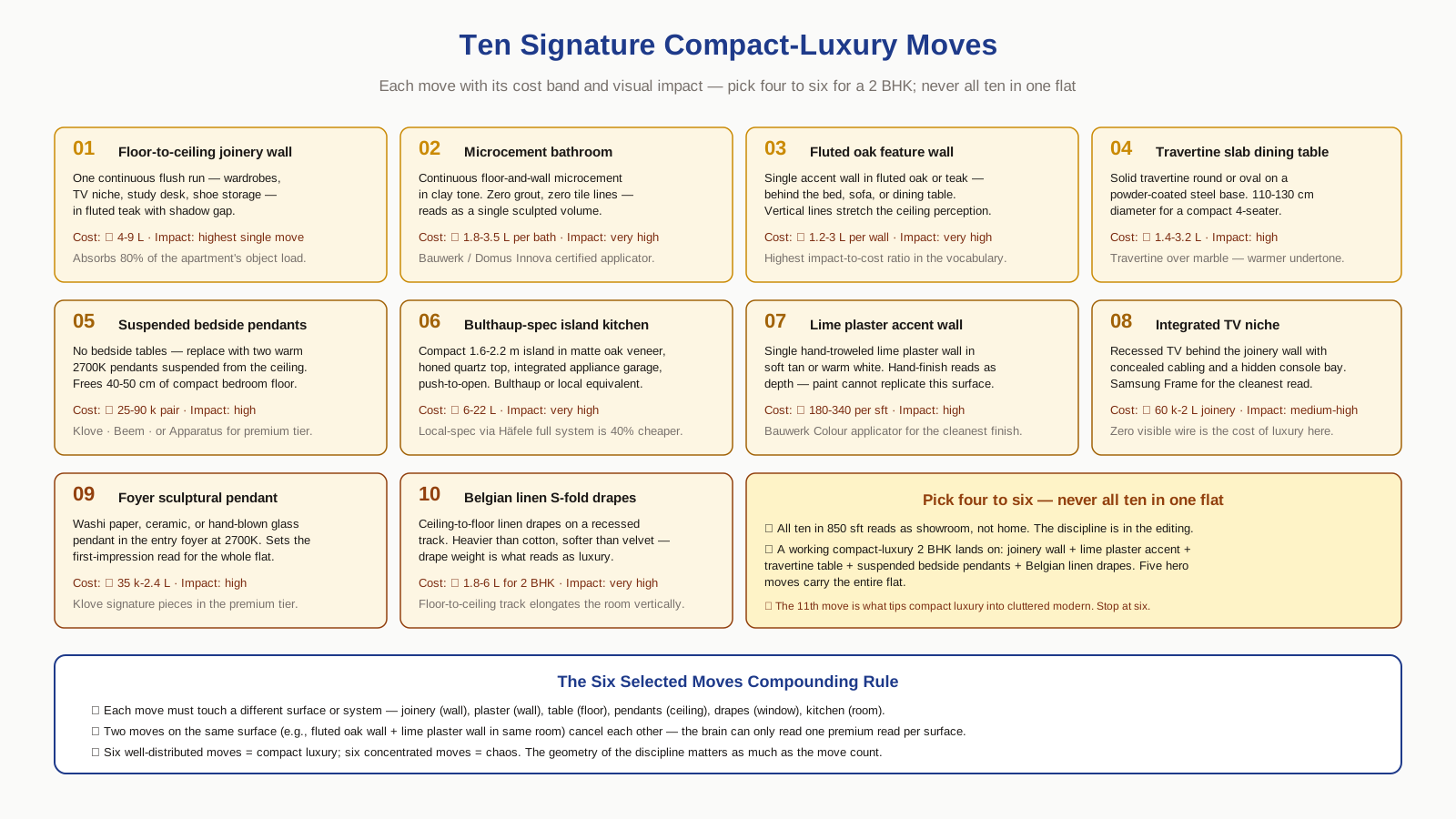
These are the ten signature moves of compact-luxury vocabulary. Pick four to six for a 2 BHK; never all ten in one flat — the discipline lives in the editing.
| # | Move | Cost band (2026) | Visual impact |
|---|---|---|---|
| 1 | Floor-to-ceiling joinery wall (fluted teak) | ₹ 4-9 L | Highest single move |
| 2 | Microcement bathroom (continuous, zero grout) | ₹ 1.8-3.5 L per bath | Very high |
| 3 | Fluted oak feature wall (one accent) | ₹ 1.2-3 L | Very high |
| 4 | Travertine slab dining table (round, 120 cm) | ₹ 1.4-3.2 L | High |
| 5 | Suspended bedside pendants (replace tables) | ₹ 25-90 k pair | High |
| 6 | Bulthaup or Häfele full-spec island kitchen | ₹ 6-22 L | Very high |
| 7 | Lime plaster accent wall (hand-troweled) | ₹ 180-340 per sft | High |
| 8 | Integrated TV niche with concealed cabling | ₹ 60 k-2 L joinery | Medium-high |
| 9 | Foyer sculptural pendant (Klove or imported) | ₹ 35 k-2.4 L | High |
| 10 | Belgian linen S-fold drapes (full apartment) | ₹ 1.8-6 L for 2 BHK | Very high |
The six-selected-moves compounding rule
A working compact-luxury 2 BHK lands on five or six hero moves, not ten. Each selected move must touch a different surface or system — joinery (wall), plaster (wall), table (floor), pendants (ceiling), drapes (window), kitchen (room). Two moves on the same surface (fluted oak wall + lime plaster wall in the same living room) cancel each other — the brain reads one premium surface per wall, never two. Six well-distributed moves compound into compact luxury. Six concentrated moves compound into chaos. The 11th move is what tips a compact-luxury 2 BHK into cluttered modern. Stop at six.
The default high-impact starting set for a 2 BHK: joinery wall + lime plaster accent + travertine round table + suspended bedside pendants + Belgian linen drapes + foyer sculptural pendant. Five visible-surface moves plus one ceiling moment — that is the working spine of a ₹35-50 L premium compact-luxury 2 BHK.
Room-by-Room Application — Indian 2 BHK 700-1100 sft
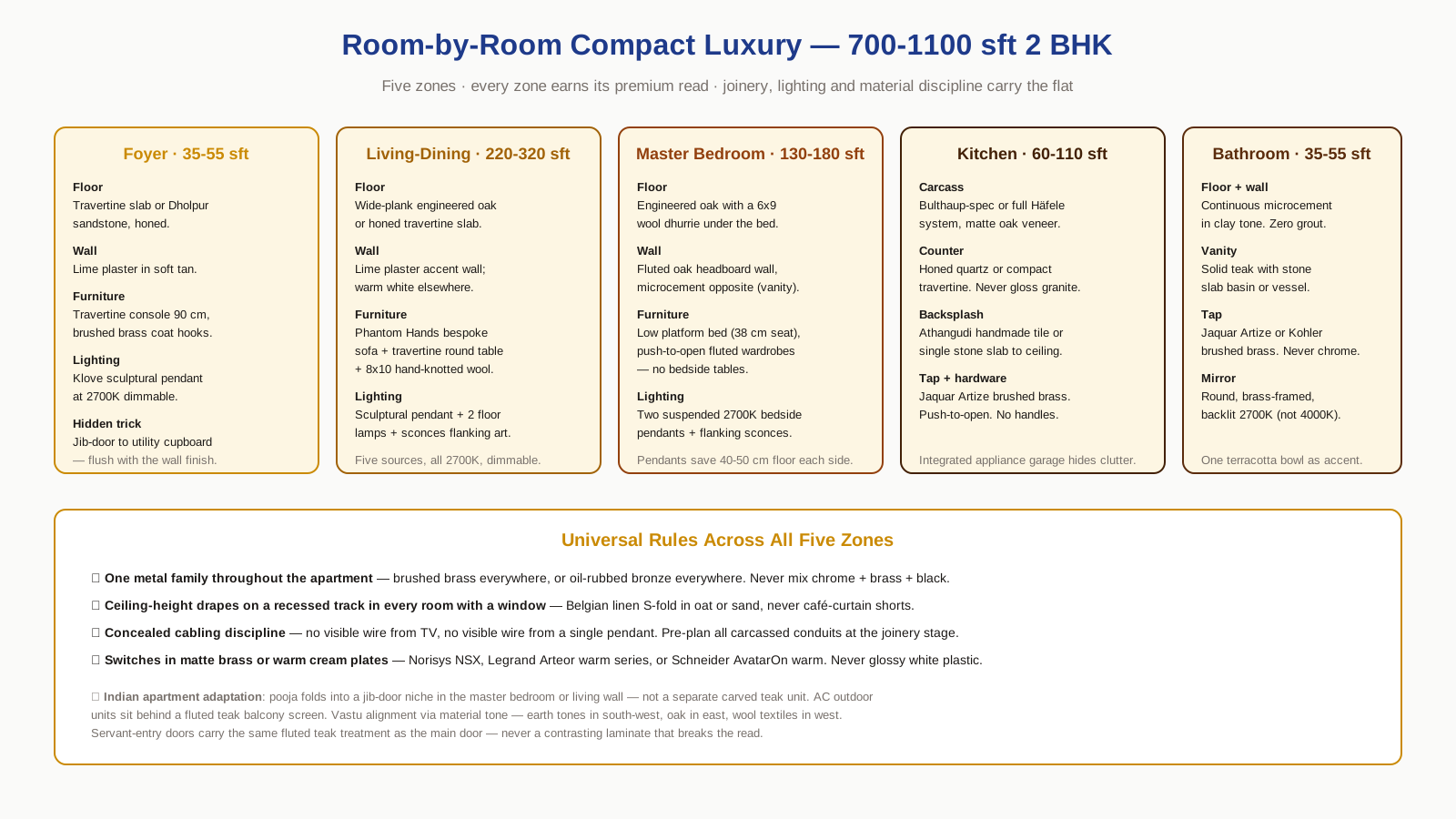
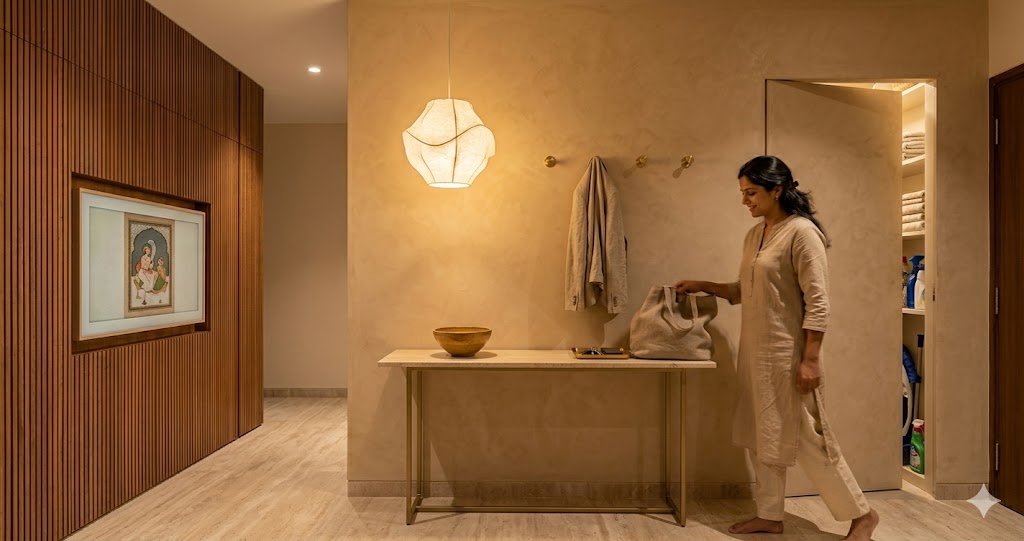
Foyer — the first-impression zone (35-55 sft)
The foyer is the smallest zone but the highest-leverage one — it sets the read for the entire apartment in under three seconds. Floor is a single travertine slab or honed Dholpur sandstone — never a small-format tile that breaks visual continuity. Wall is lime plaster in soft tan (Bauwerk Sand) on the principal face; warm white emulsion on the secondary faces. Console is a travertine slab 90 cm wide on a powder-coated steel base, holding one Khurja stoneware bowl and a tray for keys. Coat hooks are brushed brass, three in a horizontal row at 165 cm — never the off-the-shelf chrome four-hook strip.
Lighting is a single Klove or Beem sculptural pendant in the foyer ceiling — washi paper, hand-blown glass, or ceramic — at 2700K, dimmable. The hidden trick: a jib-door cut into the lime plaster wall, flush with the finish, opens to a 600 mm deep utility cupboard absorbing the shoe rack, vacuum cleaner, and seasonal storage. The foyer reads as a serene threshold; the storage discipline lives behind the wall.
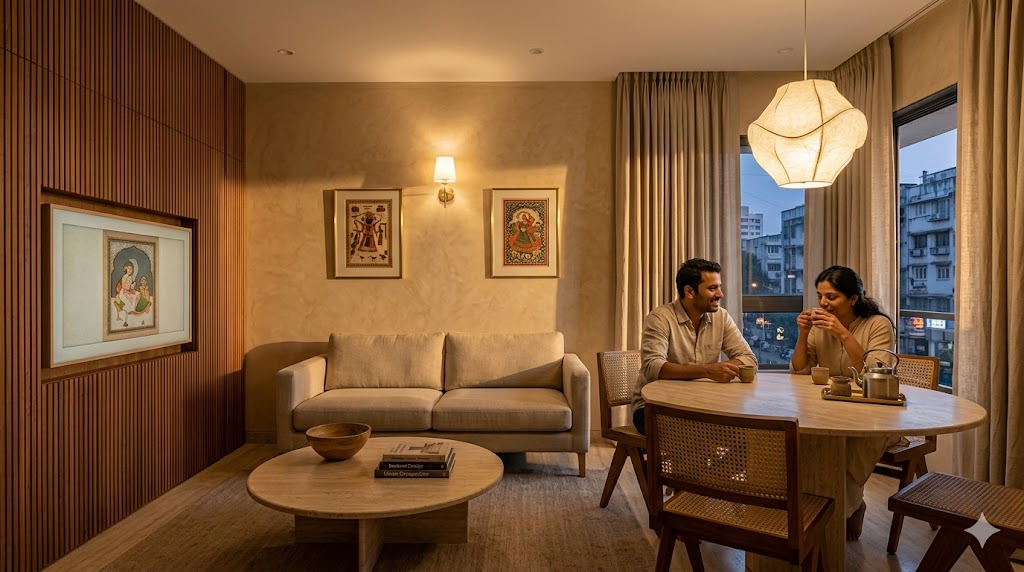
Living-Dining — the anchor zone (220-320 sft combined)
In compact luxury, living and dining run as a single continuous zone — a separating partition would consume 30-40 sft of plan and break the spatial geometry pillar. The whole zone reads as one volume. Floor is wide-plank engineered oak (Quick-Step, Pergo Sensation, or Square Foot premium) or honed travertine slab; never a small-format vitrified tile. One wall (typically behind the sofa) is lime plaster accent in soft tan; the remaining walls are warm white emulsion. Ceiling stays light warm white throughout.
Sofa is a Phantom Hands bespoke or Sage Living Belgian-linen 2.5-seater at 38-42 cm seat height, deep enough to fold into. Coffee table is a travertine round 90 cm on a steel base; dining table is a travertine round 110-120 cm seating four, with Phantom Hands Wegner-cane reissue chairs. The dining lives 1.5-2 m from the sofa, separated only by an 8x10 hand-knotted wool rug (Jaipur Rugs custom) under the living seating.
Lighting layers: a sculptural pendant over the dining (Klove signature or Apparatus Trapeze for premium), two floor lamps at each sofa end, two brass wall sconces flanking the art on the lime plaster wall, cove lighting concealed behind the joinery TV wall. Five sources, all 2700K, all dimmable on a single DALI bus. No overhead downlight grid.
Joinery is the structural spine — one continuous fluted teak or oak wall running the full length of the TV-facing side, incorporating the recessed TV niche, the AV console bay (concealed cabling), and a small bookshelf zone. Samsung Frame TV reads as art when off. Accent layer: one large Auroville or Andretta ceramic vessel, one stack of three architecture books on the coffee table, two original Indian art pieces on the lime plaster wall (commission Dastkar, Khoj, or Mojarto direct).
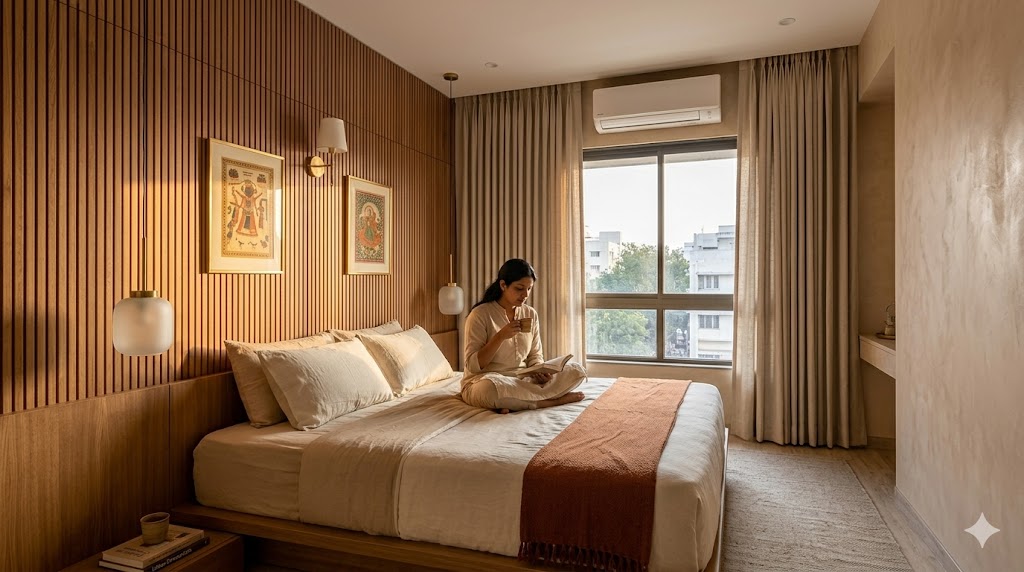
Master bedroom — the rest zone (130-180 sft)
Bed is a low platform (38 cm seat) with a full-height fluted oak headboard wall, shadow-gap detail at the floor. Bedding is layered Belgian linen in cream and sand with one rust accent throw at the foot. The opposite wall — typically the vanity wall — is microcement in clay tone, continuous from floor to ceiling. The remaining two walls are warm white emulsion.
There are no bedside tables — replaced by two suspended brass-and-glass pendants hanging from the ceiling at sleeping-eye height, on dimming switches at the headboard. This single decision frees 40-50 cm of floor on each side of the bed — critical in a 140 sft master where the bed itself consumes 50-55% of plan. Two brushed brass wall sconces flank the bed for reading. Wardrobe is the full opposite wall in matched fluted oak veneer with shadow-gap divisions and push-to-open Blum hardware — never a contrasting laminate.
Floor is engineered oak with a 6x9 hand-knotted wool dhurrie under the bed. Lighting: two suspended bedside pendants + two reading sconces + a single cove behind the headboard. All bedroom lighting at 2700K, dimmable to 5%. The bedroom reads as a single sculpted volume — fluted oak on one wall, microcement on the other, oak underfoot, linen above.
Kitchen — the most-touched zone (60-110 sft)
Cabinets in matte oak veneer (premium tier) or oat/beige matte laminate Greenlam SwitchSuede (mid-premium tier) — never high-gloss white. Carcass is Bulthaup-spec full system in the bespoke tier, or a full Häfele system (which delivers 70% of the same finish quality at 40% of the cost) in the premium tier. Counter is honed quartz or compact travertine; never polished black granite.
Backsplash is one of three options: Athangudi handmade cement tile from Chettinad (warm earthy register), terracotta zellige from Pondicherry, or a single slab of warm sandstone or travertine running floor to ceiling behind the cooktop. Hardware is Jaquar Artize brushed brass cup pulls or push-to-open in upper cabinets (Blum Servo-Drive for the bespoke tier). The kitchen runs a small 1.6-2.2 m island with integrated appliance garage — the toaster, kettle, blender, and coffee maker all live behind a roller-shutter front, never on the visible counter.
Lighting is 2700K under-cabinet linear (Häfele Loox, CRI 90+) plus a warm brass-and-glass pendant cluster over the island. Open shelf is one teak ledge above the counter holding four to six Khurja stoneware jars in graduated heights — never twelve mixed objects.
Bathroom — the daily ritual zone (35-55 sft per bath)
Continuous microcement floor and walls in clay tone (Bauwerk Domus Innova certified application). Zero grout, zero tile lines — the entire bathroom reads as a single sculpted volume. Vanity is solid teak with a stone-slab basin (Indian limestone or Vietnamese travertine) or a Khurja ceramic vessel basin in deep glaze. Tap is Jaquar Artize or Kohler in brushed brass or oil-rubbed bronze — never chrome.
Mirror is round, brass-framed, backlit warm 2700K (never the 4000K vanity-strip default). Shower cubicle uses a frameless glass partition and a brass rain shower head. Accent layer: one terracotta soap dish, one linen waffle towel rail, one small Auroville stoneware bowl with a single eucalyptus stem. Underfloor heating in the premium and bespoke tiers (40-60 W/m² electric mat under the microcement) — adds ₹ 25-45 k per bath but transforms the daily ritual.
Three Budget Tiers — All-in Estimates
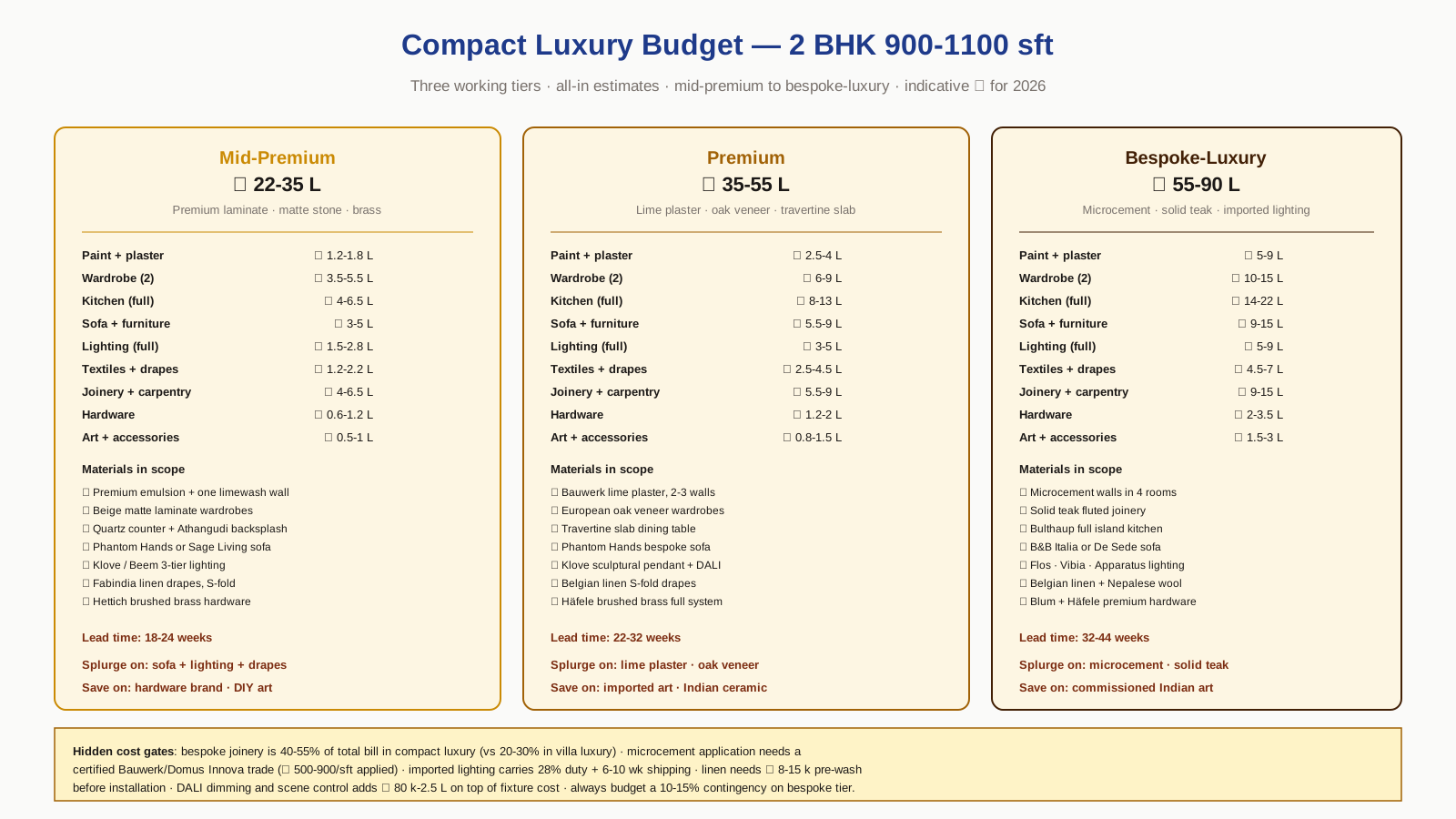
Mid-premium tier — ₹ 22-35 L for a 2 BHK (900-1,100 sft)
The entry point to compact luxury proper. Premium emulsion paint with one limewash-effect accent wall (Asian Paints Royale Atmos or Dulux Velvet Touch with a hand-troweled finish), beige matte laminate wardrobes (Greenlam SwitchSuede, full Hettich hardware), quartz kitchen counter with Athangudi tile backsplash, Phantom Hands or Sage Living Belgian-linen sofa, travertine round coffee table on steel base, Klove or Beem 3-tier lighting plan with DALI dimming, Fabindia or Maspar linen S-fold drapes, Hettich brushed brass hardware throughout.
Save on: hardware brand (Hettich at this tier delivers 85% of Häfele finish at 50% of the cost), art (commission directly through Dastkar, Khoj, or Mojarto saves 60-80% over retail gallery), ceramic accent (Khurja and Auroville direct sourcing saves 50% over Good Earth retail). Splurge on: sofa quality (the daily-touch object), the foyer pendant (the first-impression carrier), Belgian linen drapes (drape weight is what reads as luxury). Lead time 18-24 weeks designer-led.
Premium tier — ₹ 35-55 L for a 2 BHK (900-1,100 sft)
The working sweet spot for a Bandra or Indiranagar 2 BHK. Bauwerk lime plaster on two to three full walls (living accent, master headboard, foyer), engineered European oak floors throughout, full oak-veneer floor-to-ceiling fluted joinery (wardrobes + TV wall + kitchen), Phantom Hands bespoke Belgian-linen sofa, travertine slab dining and coffee tables, full Häfele kitchen system with Athangudi backsplash and Jaquar Artize brass tap, full DALI dimming with three scene presets, Klove signature pendant in living, Belgian linen S-fold drapes throughout, hand-knotted Jaipur Rugs wool dhurrie, commissioned Indian art.
Save on: imported art (commission Indian emerging artists, save 70-90% over imported), ceramic (Khurja and Auroville direct), kitchen brand (Häfele full system at this tier delivers 85% of Bulthaup at 45% of the cost). Splurge on: lime plaster (the trade is the differentiator), the joinery wall (the structural spine), the lighting plan (it is what photographs and what your eye reads continuously). Lead time 22-32 weeks designer-led with bespoke joinery.
Bespoke-luxury tier — ₹ 55-90 L for a 2 BHK (900-1,100 sft)
The full bespoke programme. Microcement walls in four rooms (Bauwerk or Domus Innova certified applicator), solid teak fluted joinery on the spine wall (not veneer), solid oak parquet floors, honed Italian limestone in the entry foyer, Bulthaup full island kitchen with appliance garage, B&B Italia or De Sede Belgian-linen sofa, travertine slab dining table on bronze base, Flos/Vibia/Apparatus imported pendants throughout, full DALI scene control with smartphone integration, Belgian linen drapes ceiling-to-floor on recessed tracks, hand-knotted Nepalese wool rugs, original commissioned Indian art and one or two Auroville sculptural ceramic pieces.
Save on: commissioned Indian art is genuinely cheaper than imported at this tier (and arguably better — Khoj artists, Anjolie Ela Menon affordable prints, emerging Dastkar commissions). Splurge on: microcement application (the signature wall finish, and where bad applicators ruin the most expensive item in the flat), solid teak joinery (it is the warmth anchor for the next twenty years), the lighting plan, the Bulthaup kitchen. Lead time 32-44 weeks bespoke with imported lighting and finishes.
Hidden costs to budget for
- Bespoke joinery share of total bill: 40-55% in compact luxury (vs 20-30% in villa luxury) — the joinery is doing the structural work that the room volume does in a villa
- Microcement application: ₹ 500-900 per sft applied; needs a Bauwerk or Domus Innova certified trade
- Lime plaster skilled labour: ₹ 180-340 per sft applied (material is ₹ 80-120; the trade is the cost)
- Imported lighting duty: 28% on landed cost, plus 6-10 weeks shipping
- Belgian linen pre-wash and softening: ₹ 8-15 k for the full apartment — un-washed linen reads stiff and breaks the drape pillar
- DALI scene control system: ₹ 80 k-2.5 L on top of fixture cost
- Bulthaup kitchen consultation and design fee: ₹ 1.5-3 L (separate from fabrication)
- Always carry a 10-15% contingency on bespoke tier — discoveries during demolition (electrical re-routing, slab waterproofing for microcement, structural backing for floor-to-ceiling joinery) consume 8-12% of plan on average
Sourcing the High-Impact Items
The compact-luxury sourcing map is narrower than the villa-luxury map — fewer items, but each item carries more visual weight, so vendor selection matters more.
| Category | Brand / source | Tier | Notes |
|---|---|---|---|
| Bespoke sofa | Phantom Hands (Bangalore) | Premium / bespoke | Wegner reissues, Belgian linen, gold standard |
| Sofa (mid-premium) | Sage Living, Beyond Designs | Mid-premium | Designer-led modern Indian linen |
| Sculptural pendant | Klove Studio (Mumbai) | Premium / bespoke | Signature blown-glass, Studio Mumbai aesthetic |
| Pendant (mid-premium) | Beem Light Atelier | Mid-premium | Bangalore, contemporary warm |
| Imported lighting | Flos, Vibia, Apparatus | Bespoke | Via Magnum Opus, Lights & Shadows |
| Lime plaster | Bauwerk Colour | All tiers | Australian, certified Indian applicators |
| Microcement | Bauwerk, Domus Innova | Premium / bespoke | Certified applicator network |
| Travertine slab | R K Marble, Stonex, Bharat Floorings | All tiers | Italian travertine import, or Indian limestone equivalent |
| Hand-knotted rug | Jaipur Rugs, Obeetee | All tiers | Custom sizing, vegetable-dye options |
| Belgian linen drapes | Maspar, Fabindia (mid), De Le Cuona import (bespoke) | All tiers | Drape weight reads as luxury |
| Kitchen carcass | Bulthaup (bespoke), Häfele full system (premium), Sleek (mid-premium) | All tiers | Häfele delivers 85% of Bulthaup at 45% cost |
| Tap | Jaquar Artize, Kohler | Premium / bespoke | Brushed brass or oil-rubbed bronze, never chrome |
| Hardware | Hettich (mid), Häfele (premium), Blum (bespoke) | All tiers | One metal family throughout the apartment |
| Wall tile / backsplash | Athangudi (TN), Bharat Floorings, Pondicherry terracotta | All tiers | Handmade cement tile reads as compact-luxury signature |
| Ceramic accent | Auroville, Khurja, Andretta, Claymen | All tiers | Direct sourcing saves 40-60% over Good Earth retail |
| Switches | Norisys NSX, Legrand Arteor warm, Schneider AvatarOn | All tiers | Matte brass or warm cream plate, never glossy white |
The two non-negotiable vendor choices in compact luxury: a certified lime plaster or microcement applicator (the finish is everything; a bad applicator destroys the most expensive material in the flat), and a bespoke joinery trade with a fluted teak or oak portfolio (the joinery wall is the apartment's spine; off-the-shelf modular furniture brands will not deliver the floor-to-ceiling shadow-gap finish compact luxury requires).
Ten Common Pitfalls — The Over-Specified Flat Trap
1. Shrunken-villa furniture programme. A 3-seater sofa + 8-seater dining + king bed + writing desk + showpiece cabinet does not scale into 900 sft. Fix: edit the programme — 2.5-seater + 4-seater round dining + queen platform bed + foldout study + integrated TV niche. Fewer pieces, each chosen for double-duty.
2. All ten signature moves in one flat. Six moves is the geometric limit; ten is showroom, not home. Fix: pick four to six well-distributed across surface types. The 11th move is what tips compact luxury into clutter.
3. High-gloss laminate anywhere. Gloss reflects ambient light, breaks the matte material discipline, telegraphs cost-engineered. Fix: matte / suede laminate (Greenlam SwitchSuede, Merino Soft Matte) at every visible cabinet surface.
4. Overhead downlight grid. Single-source 4000K downlight wash kills every premium material in the flat at sundown. Fix: layered scene lighting, no recessed grid, five sources per room minimum, all 2700K dimmable.
5. Mixed hardware metals. Chrome tap + brass handle + black hinge + steel coat hook = chaos. Fix: one metal family throughout the apartment — brushed brass everywhere, or oil-rubbed bronze everywhere.
6. Visible electronics + wire chaos. Black TV + console + speakers + tangled wires destroy the compact-luxury calm immediately. Fix: integrated TV niche with concealed cabling at the joinery stage, Samsung Frame for art-mode-off discipline.
7. Café-curtain shorts on the windows. Window-frame-mounted half-height curtains compress the room visually and read as guest-house. Fix: ceiling-to-floor S-fold linen drapes on a recessed track in every window.
8. A separating partition between living and dining. Consumes 30-40 sft of plan, breaks the continuous-volume spatial geometry. Fix: keep living-dining as a single zone, separate only with the rug edge.
9. Standalone bedside tables. Consume 40-50 cm of floor on each side of the bed in a 140 sft master where the bed already takes 55% of plan. Fix: suspended bedside pendants from the ceiling, with a thin built-in book ledge in the headboard for the phone and water glass.
10. Trying to fit a "showpiece moment" in every corner. Compact luxury cannot afford five showpiece moments. Fix: one hero object per zone — one ceramic vessel in the living, one art piece on the bedroom wall, one Klove pendant in the foyer, full stop.
The diagnostic test
Stand at the entry door with the lights off and the daylight on. Photograph the flat in one wide frame. Count the materials visible — you need at least five premium finishes in shot (lime plaster, fluted oak, travertine, brushed brass, Belgian linen). Count the hero objects — no more than seven total across living-dining-foyer. Five-of-five materials and seven-or-fewer objects: you are inside compact luxury. Three materials and a dozen objects: you are inside cluttered modern with one or two luxury items. The diagnostic predicts the read better than any single material spec.
How Compact Luxury Differs from Adjacent Briefs
| Brief | Footprint | Budget | Discipline | Best for |
|---|---|---|---|---|
| Compact Luxury | 700-1,100 sft 1-2 BHK | ₹ 22-90 L | Every surface premium; bespoke joinery as spine | Metro premium 1-2 BHK, couples / professionals |
| Villa Luxury | 2,000-4,500 sft | ₹ 80 L-3.5 Cr | Hero-supporting hierarchy; scale forgives | Bangalore villas, Goa second-homes, Mumbai sea-facing duplexes |
| Budget Luxury | Any | ₹ 8-22 L | One or two hero moves; laminate tolerated elsewhere | Aspirational first-home, rental upgrade |
| Warm Minimal | Any | Style, not brief | Restraint as headline aesthetic | Style choice within any of the above briefs |
| Maximal Eclectic | Any | Style, not brief | Collected layered curated objects | Heritage continuity, large families |
The closest cousin is villa luxury — same vocabulary, same materials, same brand sourcing. The difference is engineering: villa luxury can afford to fail at one surface; compact luxury cannot afford to fail anywhere. The closest competitor is warm minimal — which can be the style chosen within a compact-luxury brief, but warm minimal alone (lime plaster + linen + oak) does not deliver the joinery and lighting density compact luxury demands. Compact luxury is the brief; warm minimal, Japandi, earthy, or contemporary are the styles you choose within it.
When You Should Choose Villa Over Compact
Compact luxury is the right answer for ~35% of premium Indian metro apartment buyers in 2026. It is the wrong answer — and you should buy or rent a villa or a larger 3 BHK instead — if:
- You have two or more children under ten. The discipline of one hero object per zone, integrated joinery for all storage, and 60-70% empty surface area does not survive Lego season. A 3-4 BHK with one designated playroom is the better answer.
- You host extended family for 2-3 nights at a time, monthly or more. Compact luxury seating geometries (2.5-seater + 4-chair round dining) do not scale to twelve guests for dinner.
- You are a serious collector — books, art, sculpture, antiques, vinyl. Compact luxury caps the visible object count at 7-10 per zone. If your collection is 200 books and 30 art pieces, compact luxury will fight you every weekend.
- You work from home with a partner who also works from home, both on calls — the compact-luxury combined-living-dining-study programme does not support two simultaneous Zoom calls. You need a 3 BHK with a dedicated study room.
- You cook elaborate Indian meals daily, with three cooktop burners and a tawa always in play. The compact-luxury Bulthaup-spec island kitchen with integrated appliance garage is designed for a continental cooking pattern, not a four-pan Indian breakfast.
If any of these describe you, consider Space-Efficient Homes (larger plan with the same discipline), or step up to a 3 BHK and apply Warm Minimal Interiors or Earthy Interior Palette at villa scale.
Where to Go Next
- For style choice within compact luxury — Warm Minimal Interiors, Japandi Apartment Interior Guide, Earthy Interior Palette
- For the joinery spine wall — Fluted Panel Design Guide, Wardrobe Finish Ideas
- For the storage discipline — Smart Storage Interiors, Space-Efficient Homes
- For the kitchen pillar — Modular Kitchen Design Guide
- For the layered lighting plan — False Ceiling Design Guide
- For a tighter budget version — Budget Luxury Interiors
- For AI-assisted material and palette tests before committing — AI-Powered Interiors
- For sustainable material sourcing in the compact-luxury brief — Sustainable Interiors India Guide
References
1. Van Duysen, V. (2016). Vincent Van Duysen — Complete Works 1989-2016. Thames & Hudson. (Belgian compact-luxury master; material density theory.)
2. Studio KO (2018). Studio KO. Rizzoli. (Moroccan-Mediterranean compact-luxury reference; lime plaster and travertine vocabulary.)
3. Wegner, H. + Oda, N. (2014). Hans J. Wegner: A Nordic Design Icon. Hatje Cantz. (Foundation reference for low-furniture geometry adopted in compact-luxury interiors; the Phantom Hands sourcing lineage.)
4. Pallasmaa, J. (2012). The Eyes of the Skin — Architecture and the Senses. Wiley. (Tactility and material-density theory underlying the four-pillar discipline.)
5. Doshi, B. V. (2018). Balkrishna Doshi — Architecture for the People. Vitra Design Museum. (Compact dwelling theory; Aranya low-cost housing as the philosophical antecedent of compact luxury — small footprint, dignified design.)
6. Bawa, G. + Robson, D. (2002). Geoffrey Bawa — The Complete Works. Thames & Hudson. (Tropical material density and indoor-outdoor compact luxury foundational reference.)
7. Zumthor, P. (2006). Atmospheres. Birkhäuser. (Layered lighting and material atmosphere theory underpinning the lighting pillar.)
8. Indian Standard IS 8089:1999. Anthropometric Recommendations for Furniture Ergonomics. (Sofa and bed-platform low-seat dimensions used in the spatial-geometry pillar.)
9. Indian Standard IS 2046:1995. High-Pressure Decorative Laminates. (For laminate specification at the mid-premium tier — matte finish requirement.)
10. Bauwerk Colour (2024). Lime Wash and Lime Plaster Application Guide. (Material application standards for the lime plaster signature move.)
11. Phantom Hands (2024). Catalogue — Bangalore Workshop, Wegner Reissues and Bespoke Linen Upholstery. (Sourcing reference for the bespoke compact-luxury sofa and seating programme.)
12. Häfele India (2024). Design System Reference — Functional Hardware, Lighting and Kitchen Carcass Specifications. (The full-system sourcing reference for the premium-tier kitchen and joinery programme.)
13. Bulthaup (2023). Compact Kitchen Reference — b3 Island Programme for 60-110 sft Kitchens. (Bespoke-tier kitchen reference; the spec target for premium-tier Häfele system substitution.)
14. Bureau of Indian Standards, IS 1950:2010. Code of Practice for Sound Insulation of Non-Industrial Buildings. (Reference for floor-to-ceiling joinery wall acoustic backing in compact apartments.)
Author's note: Compact luxury is the brief I would now classify ~55% of new premium Indian metro apartment commissions under in 2026 — up from ~25% in 2020. Two trends drive the shift: metro land prices have pushed even crore-plus buyers into 1-2 BHK footprints in the locations they actually want to live, and a generation of homeowners has internalised that material density and joinery discipline beat square-footage as a luxury signal. The compact-luxury apartment that I would build for myself today, were I starting over, lands almost exactly on the premium tier described above — Bauwerk lime plaster on three walls, full Häfele oak-veneer fluted joinery as the structural spine, Phantom Hands Belgian-linen sofa, travertine round dining, Klove pendant in the foyer, full DALI dimming, Belgian linen drapes everywhere. ₹42-48 L all-in for an 1000 sft 2 BHK. It is the most photographable, the most liveable, and the most decade-durable interior brief currently available to an Indian apartment owner.
Disclaimer: Material costs, brand sourcing, joinery rates and import duties are 2026 indicative and shift quarterly with currency, supply, and trade-tariff regimes. Verify all sourcing with current vendor quotes before committing. Budget bands assume a 900-1,100 sft 2 BHK in a metro city with reasonable site access — Mumbai island-city, Bengaluru central, Delhi NCR, Hyderabad central, Pune central. Outlier sites (tight access, high-floor with no service lift, heritage-precinct restrictions) add 12-25%. Vendor mentions are illustrative; Studio Matrx has no commercial relationship with any brand named. Studio Matrx, its authors and contributors are not responsible for procurement, fabrication, or installation outcomes based on this guide.
Export this guide
Related Guides — Deep-dive reading
Budget Luxury Interiors — How to Get Premium Indian Apartment Design Under ₹10 Lakhs
Splurge-save discipline · Impostor-tier tricks · Three sub-budget tiers
Design StylesWarm Minimal Interiors — A 2026 Style Guide for Indian Homes
Restraint with warmth · Oat & oak & linen · Curated negative space
Design StylesJapandi Apartment — A 2026 Style Guide for Compact Indian Homes
Japanese restraint × Scandinavian function · Low furniture · Two-wood discipline
Design StylesRelated Tools — Try Free
Cross-Ventilation Analyzer
Estimate airflow and air changes per hour (ACH) from room size, window areas, layout, and local wind — with NBC 2016 Part 8 compliance check.
Ventilation CalculatorApartment Furniture Size Chart
Standard furniture dimensions for Indian apartments — sofas, beds, tables, dining, storage.
Reference ChartFalse Ceiling Cost Estimator
Live ₹/sqft across 8 ceiling types — POP, gypsum, designer, metal, PVC, wooden — with cove and spot lighting for 20 Indian cities.
Cost Calculator