
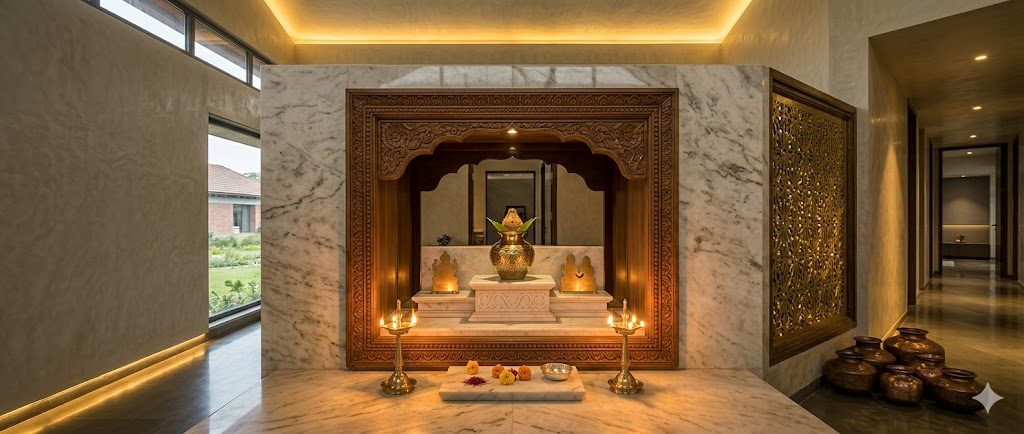
Pooja Room Design for Indian Homes
Vastu, Layouts, Materials, Lighting & Safety — A Complete Architect's Guide for Apartments, Villas & Compact Homes
The pooja room — or mandir, as it is just as often called — is one of the most universally desired and most poorly designed spaces in the Indian home. Surveys by leading interior design firms suggest over 85% of Indian homebuyers want some form of dedicated worship space, yet builder-supplied apartment plans almost never include one. The result is that millions of pooja spaces in India are improvised after move-in — a cabinet bought off Amazon, a niche carved with a hammer on a Sunday, a shelf nailed above a refrigerator — and end up working against both the rituals they are meant to serve and the apartments they sit inside.
This guide is written for the homeowner who wants to do it once and do it right. It blends Vastu fundamentals with practical Indian-home architecture — anthropometric heights, fire safety, exhaust ventilation, dedicated electrical isolation, materials specification, and costing — so that the pooja space serves morning aartis on a Tuesday, Diwali nights with twenty diyas, and the elderly relative who needs to sit on a chowki without compromising any of them.
The pooja room is the only room in the Indian home that is simultaneously religious, ergonomic, electrical, and fire-rated. Most builders give you none of that. The rest is up to you.
The Four Typologies — Pick the One That Fits Your Home
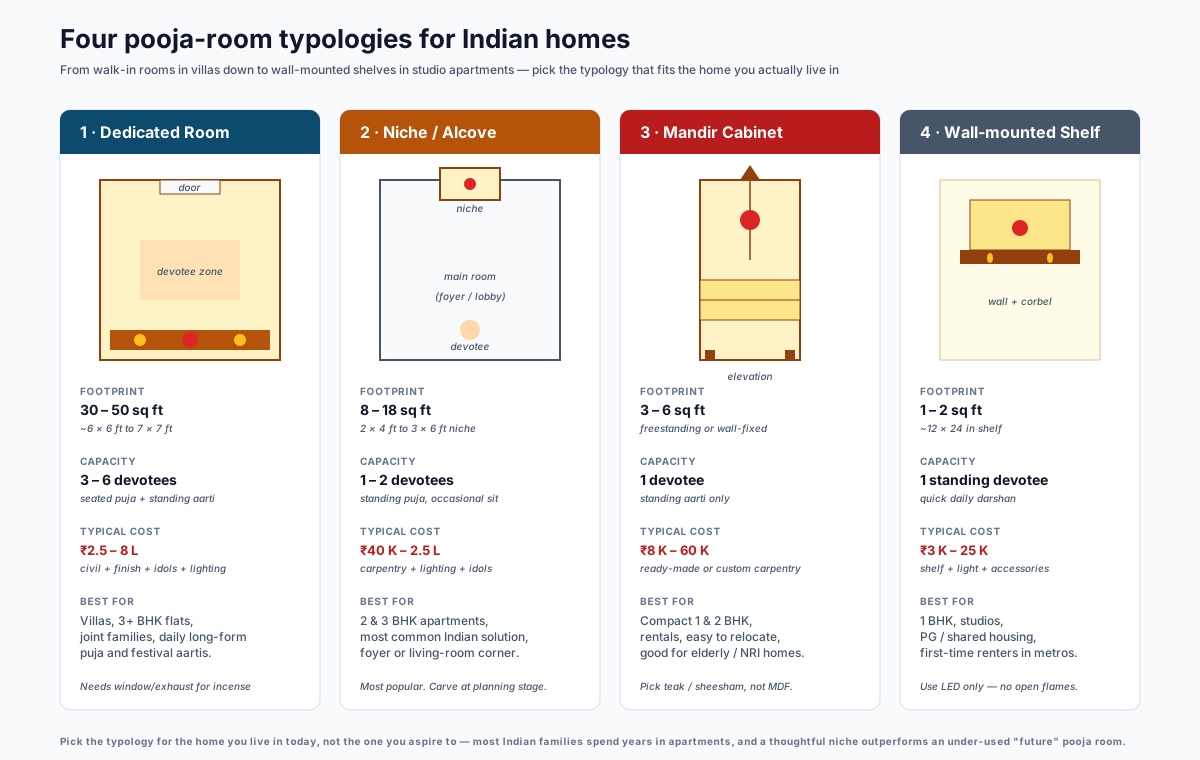
Before any Vastu or material decisions, the typology decision has to be made — and it has to be made honestly. A dedicated pooja room in a 2 BHK is almost always a fantasy that ends up under-used or repurposed; a wall-mounted shelf in a 4 BHK villa misses an obvious opportunity. The table below cuts through the aspiration.
| Typology | Footprint | Capacity | Typical Cost | Best Fit |
|---|---|---|---|---|
| Dedicated room | 30–50 sq ft | 3–6 devotees | ₹2.5 – 8 L | Villas, 3+ BHK flats, joint families |
| Niche / alcove | 8–18 sq ft | 1–2 devotees | ₹40 K – 2.5 L | 2 & 3 BHK apartments — most common solution |
| Mandir cabinet | 3–6 sq ft | 1 devotee standing | ₹8 K – 60 K | Compact 1 & 2 BHK, rentals, NRI homes |
| Wall-mounted shelf | 1–2 sq ft | 1 devotee | ₹3 K – 25 K | 1 BHK, studios, PG / shared housing |
Practical decision rule. A pooja room less than 25 square feet is functionally a niche with a door — pay for either the room (≥30 sq ft) or the niche, not the awkward middle. A wall-mounted shelf is only a serious solution if open-flame diyas are off the table; electric LED diyas are the only honest fit at that scale.
Vastu Placement — Where in the Home
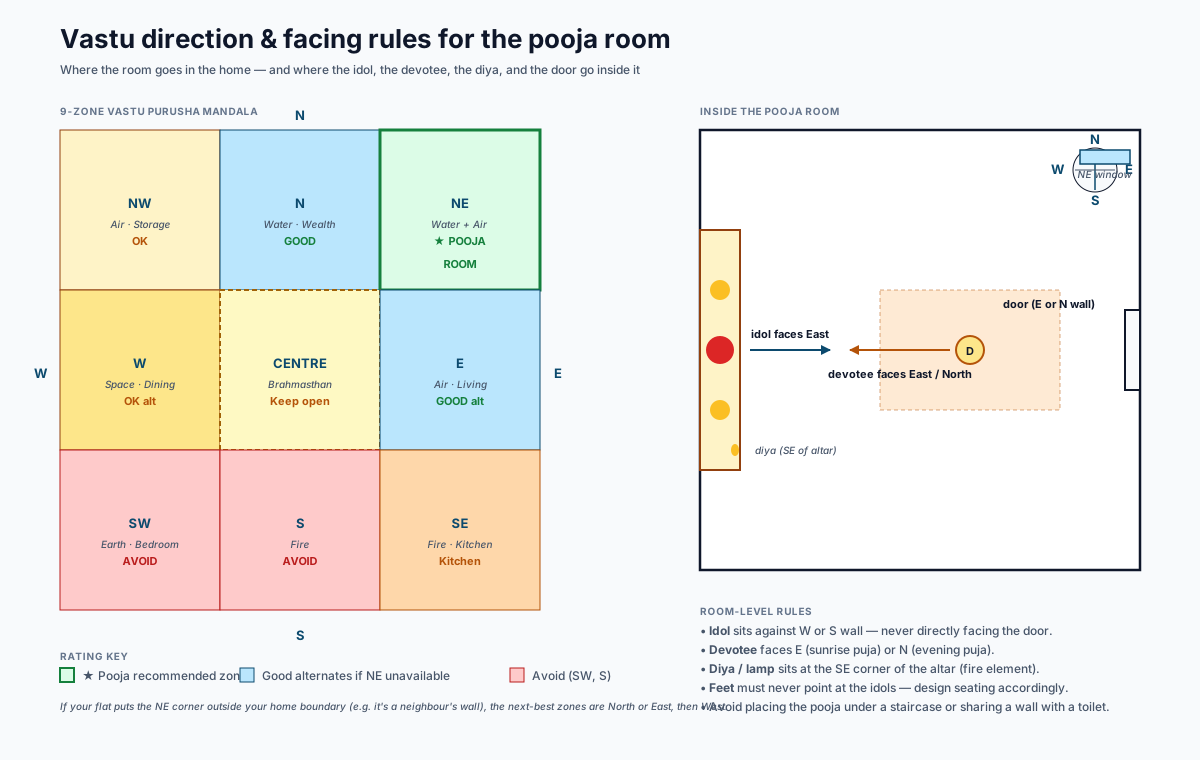
Vastu's recommendation for the pooja space is the most consistent of all room placements: the Northeast (Ishanya) corner. This recommendation has unusually strong architectural logic behind it — see the Vastu Shastra for Modern Homes guide for the deep treatment — but the short version is:
- The Northeast receives the first morning light, which is the traditional puja hour.
- Northeastern light is gentle and indirect through most of the day, easy on the eyes during prayer.
- The Northeast is conventionally kept open and light — placing the most sacred element of the home there honours the discipline.
| Vastu Zone | Pooja Recommendation | Architectural Reason |
|---|---|---|
| Northeast (Ishanya) | ★ First choice | Morning sun; gentle light; calm quadrant |
| North | Good alternative | Even daylight; water element; auspicious |
| East | Good alternative | Sunrise; air element; energising |
| West | Acceptable | Use a screened reading-style alcove |
| Southeast | Avoid | Fire zone reserved for the kitchen |
| Southwest, South | Avoid | Heavy, hot quadrant; reserved for bedrooms |
Apartment reality. Most Indian flat layouts do not put the Northeast corner inside a single household — it might be on a shared landing, in a neighbour's flat, or hard against an outer wall with no opening. In that case, work down the list above. The pooja niche carved into the Northeast of the room you have, even if that room itself is not in the Northeast of the building, is almost always acceptable. Treat the home-level direction as a strong preference, not a hard rule.
Where Not to Put It
| Avoid | Why |
|---|---|
| Under a staircase | Cramped, dark, low ceiling — undignified for puja and unsafe for incense smoke |
| Sharing a wall with a toilet | Cultural prohibition; also plumbing leaks risk damaging idols and woodwork |
| Directly inside a bedroom | Sleep-sacred separation; smoke and oil deposits accumulate in the sleep zone |
| Below an overhead water tank | Risk of leaks above sacred items |
| Facing the front door directly | The Vastu concern is energy; the practical concern is dust and shoes |
| Adjacent to a kitchen sink wall | Splash damage; conflict between water (sink) and fire (diya) elements |
Inside the Room — Idol, Devotee, Diya, Door
The room-level Vastu (right panel of the diagram above) is where most homeowners get tripped up, because the rules feel arbitrary until you sketch them.
Where the Idol Faces
| Element | Position | Reason |
|---|---|---|
| Principal idol | Against the West or South wall | So the devotee, standing facing it, looks East or North — toward the sun |
| Idol shelf height | 1200–1500 mm AFL | Deity's eye sits at or just above the average Indian standing eye height (≈ 1550 mm) |
| Multiple idols | Principal deity central; secondary deities flanking | Hierarchy is read from centre outward |
| Idol from the door | Never directly facing the door | A practical and ritual concern — eye-to-eye with the threshold is considered abrupt |
| Idol separation | Idols should not touch each other | At least 25 mm visual gap; this also helps cleaning |
Where the Devotee Stands or Sits
The devotee should face East for the morning puja and North for the evening aarti. This is why the idol sits on the West (so the standing devotee faces East to look at it) or South (so the devotee faces North).
For a standing puja, allow at least 900 mm of clear floor depth in front of the altar. For a seated puja with a chowki, allow 1200 mm — this fits the devotee, the chowki, and a 150 mm rear toe-clearance to the wall behind.
A cultural rule worth designing for: the devotee's feet must never point at the idols. This means that if you provide built-in seating, position it so that natural body-orientation places the feet away from the altar.
Where the Diya Sits
The diya — the principal oil lamp — sits at the Southeast corner of the altar surface (the fire element of the altar mirrors the kitchen's fire zone in the home). Practically, this also keeps the open flame away from where the devotee's clothing typically sits during seated puja.
Ergonomics — Heights, Clearances, Sightlines
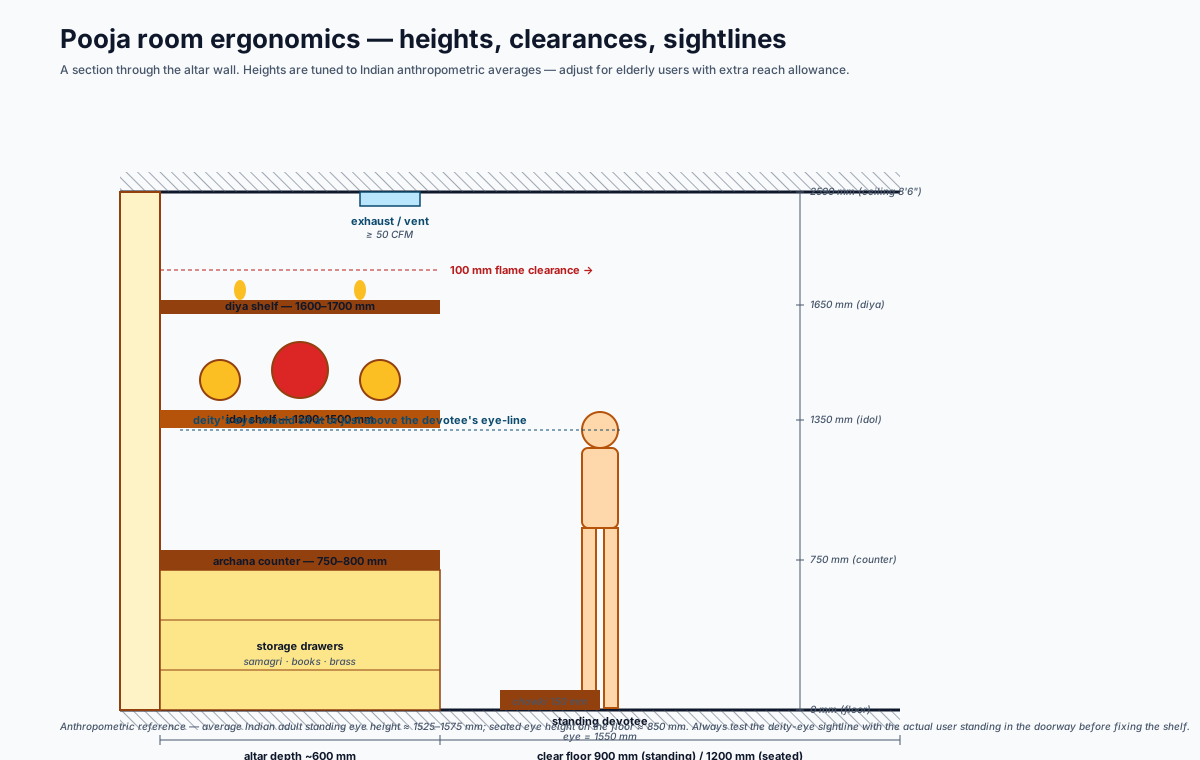
Anthropometric data for the average Indian adult — drawn from the National Institute of Design's 1997 anthropometric study and confirmed by more recent IIT studies — sets a few reliable heights:
| Element | Recommended Height (mm AFL) | Why |
|---|---|---|
| Chowki (if used) | 150 | Comfortable seated puja; below this needs a backrest |
| Archana / working counter | 750–800 (seated) · 900 (standing) | Forearm-rest height; matches kitchen counter logic |
| Principal idol shelf | 1200–1500 | Deity's eye ≈ devotee's eye when standing |
| Diya / lamp shelf | 1600–1700 | Above the idols; safe distance from rising heat to combustibles |
| Storage drawers | 0–700 | Below the counter; samagri kept low for daily access |
| Smoke detector | Ceiling, ≥ 300 mm from any diya plume | Avoid nuisance triggers during festival days |
| Ceiling height | ≥ 2400 mm (8 ft); 2600 mm preferred | Lower than 2400 mm concentrates smoke and feels oppressive |
The Deity Eye-Line Rule
This is the single most useful piece of design intelligence in this guide: the deity's eyes should sit at or just above the devotee's standing eye-line.
For the average Indian adult that is 1550 mm. If the principal idol is 150 mm tall and the deity's eye sits about 60% up the figure, the idol base needs to be at (1550 − 0.6 × 150) = 1460 mm. Round to 1450 mm. This is why the standard idol-shelf range is 1200–1500 mm — it lets you fit idols between 100 mm and 300 mm tall while preserving the eye-line.
Always test the actual sightline with the actual primary user (often a parent or grandparent) standing in the room before fixing the shelf. A 1450 mm shelf is uncomfortably high for a 1430 mm grandmother.
Apartment-Fit Options
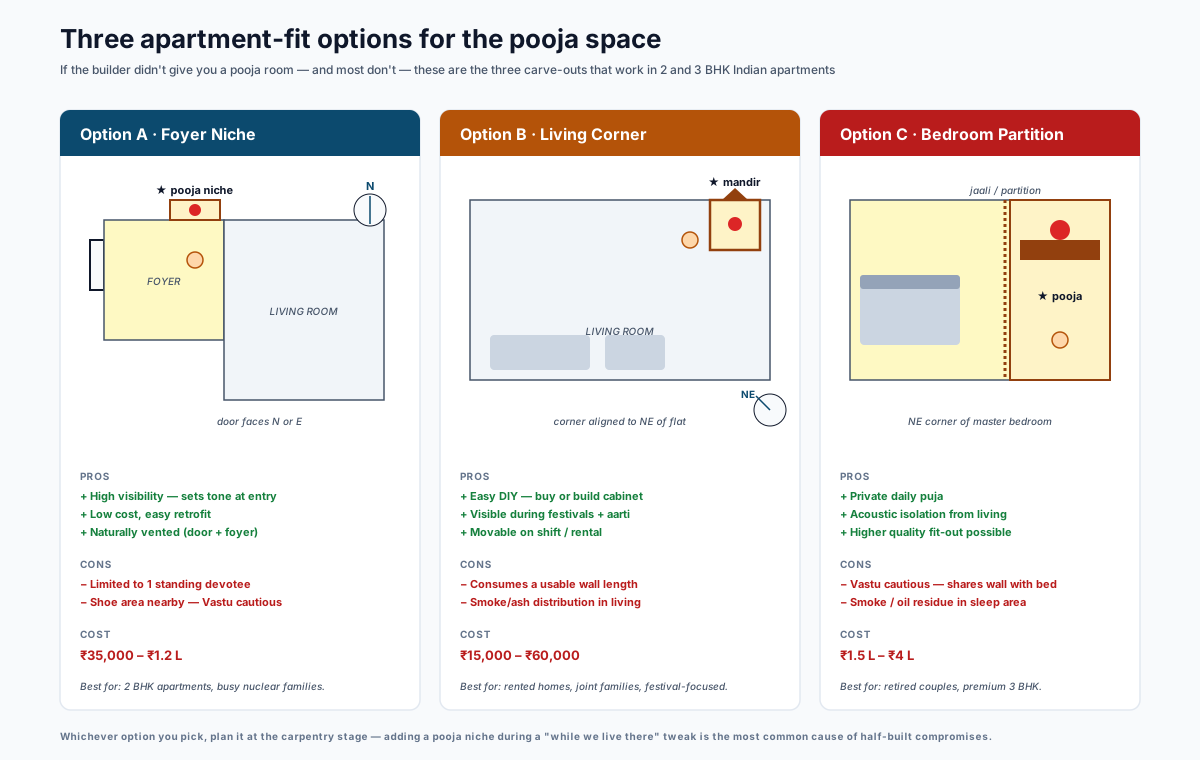
Most Indian apartments under 1500 sqft don't accommodate a dedicated pooja room, so the design problem is carving a pooja space into an existing layout. Three patterns repeat across the country.
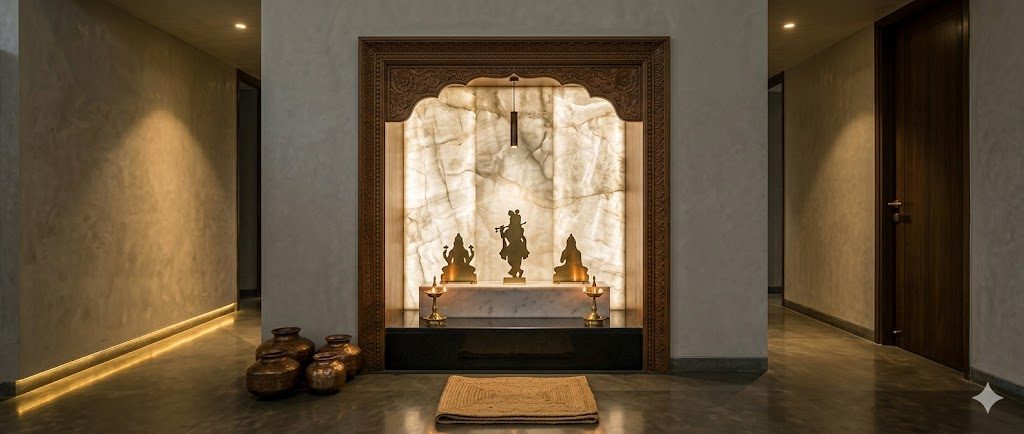
Option A — Foyer Niche
A small niche recessed into the wall between the main door and the living room. Highly visible, naturally vented through the entry door, and inexpensive (₹35 K–₹1.2 L). The drawback is shoe-rack proximity — Vastu cautions against placing footwear near the sacred zone, so the shoe storage must be 1.5–2 m away or screened.
Best for: 2 BHK apartments, nuclear families, busy households that do a daily 5-minute darshan rather than a 30-minute morning ritual.
Option B — Living-Room Corner Mandir
A freestanding or wall-fixed cabinet in the Northeast corner of the living room. Easy to install or buy ready-made, costs ₹15 K–₹60 K, and stays portable if you shift houses. The downside is that smoke and ash from daily diyas distribute through the living room — incense in the curtains, oil residue on the TV. This is the most popular apartment solution but rarely the best.
Best for: rented flats where built-ins are not allowed, joint families that gather in the living room for festivals, and households that prefer convenience over privacy.
Option C — Bedroom Partition with Jaali
A thin jaali screen or pocket door separates a small pooja niche from the master bedroom — typically in the Northeast corner of the bedroom. Costs ₹1.5 L–₹4 L (the screen and partition are the bulk of the cost) and provides private daily puja with acoustic isolation. Vastu cautious because the pooja shares a wall with the bed — mitigate by ensuring the bed does not back onto the altar wall.
Best for: retired couples doing long-form daily puja, premium 3 BHK apartments where one bedroom converts to a master suite.
Materials & Finishes
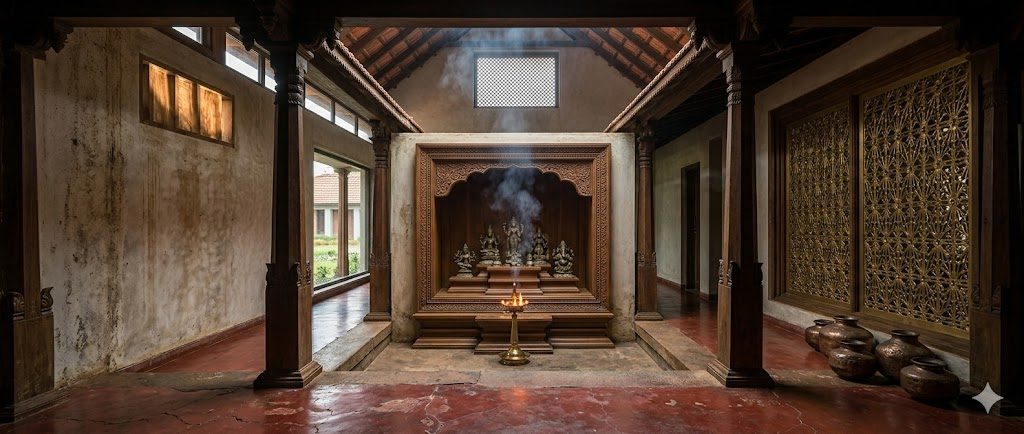
Material choice for the pooja space carries cultural, durability, and fire-safety implications. Below are the working materials by element.
The Altar Wall and Backdrop
| Material | Pros | Cons | Cost (per sqft, 2026 ₹) | Best Use |
|---|---|---|---|---|
| Marble (Makrana, Statuario) | Premium, cool, easy to wipe, fire-safe | Expensive; heavy; cold in winter | ₹250–₹1,200 | Premium villas; entire altar wall |
| Granite (Black Galaxy, Tan Brown) | Durable, easy to maintain, fire-safe | Reads heavy; limited palette | ₹120–₹300 | Counter and base where weight is OK |
| Teak wood (Burmese, Indian) | Warm, traditional, ages well | Cost; needs polish every 2–3 years | ₹400–₹1,500 | Doors, frames, principal mandir unit |
| Sheesham (Indian Rosewood) | Hardwood; cheaper than teak; rich tone | Heavier grain; harder to colour-match | ₹180–₹400 | Cabinet bodies, shelves |
| Marine plywood + veneer | Affordable; consistent; resists humidity | Glue ages; needs sealed edges | ₹65–₹180 | Built-in niches and cabinets |
| MDF / particle board | Cheapest | Flammable; swells with humidity; off-gasses | ₹30–₹90 | Avoid for surfaces near flame |
| Jaali (carved wood / MS / brass) | Beautiful screening; air-permeable | Hand-carved jaalis are expensive | ₹450–₹3,000 | Partition between pooja and adjacent room |
IS code references. Marine plywood should conform to IS 710 (boiling-water proof). Decorative veneers to IS 1328. Laminates to IS 2046. Insist on these grades in the contract — pooja-room woodwork takes more humidity and heat cycling than ordinary furniture, and the cost difference between commercial-grade and BWP-grade plywood is under 25%.
Accessories — The Brass and Copper Layer
A pooja space is partly defined by its brass kalash, copper diyas, bells, and aarti thalis. These are not just symbolic — copper and brass have antimicrobial properties (long known traditionally, confirmed by modern microbiology — see the references) which is genuinely useful for surfaces that receive prasad and water offerings.
Budget ₹3 K–₹15 K for a starter set (single kalash, two diyas, one bell, one aarti thali) and grow from there. Avoid plated brass — the plating wears off and the underlying base metal can react with ghee and turmeric.
Lighting — The Three-Layer Strategy
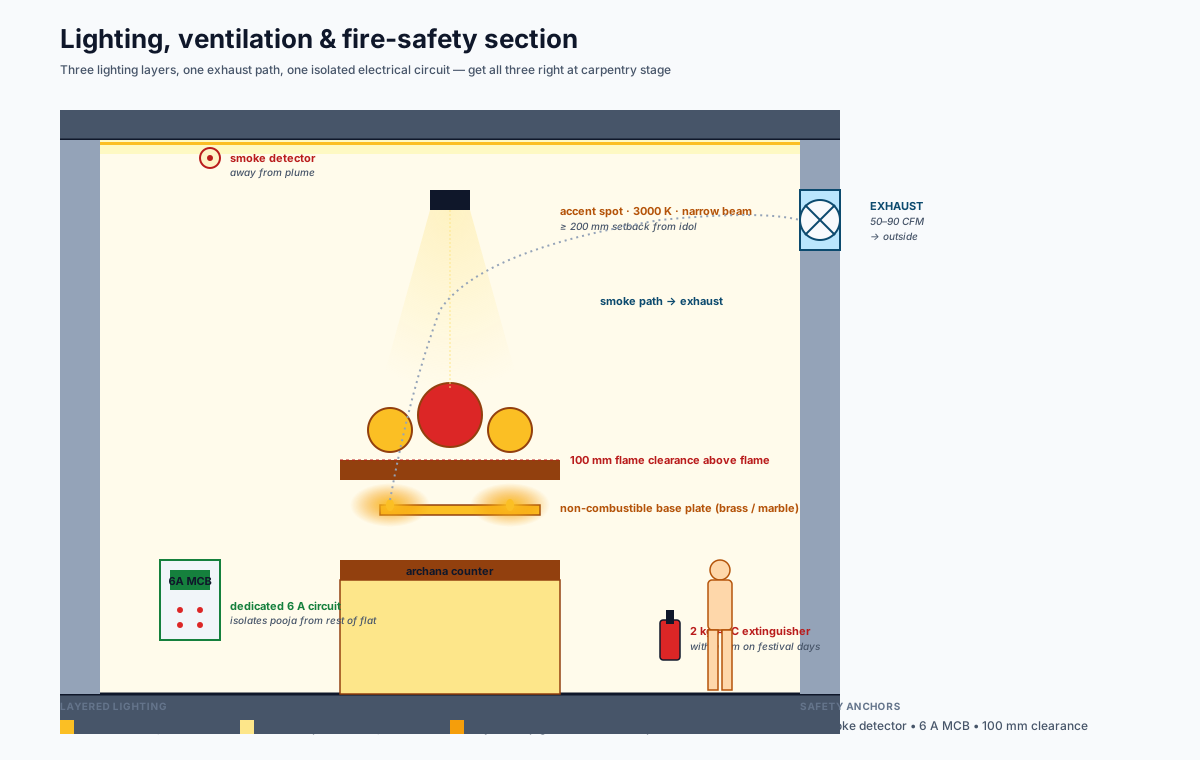
Pooja-room lighting is the most under-designed aspect of the typical Indian home — most spaces have a single tube light overhead, which flattens the depth of the altar and makes the deity look two-dimensional. A proper three-layer approach takes the space from "OK" to "remarkable".
Layer 1 — Ambient (Cove)
A continuous LED cove strip running the perimeter of the ceiling, set into a 50 mm cove pelmet. Specifications:
- Colour temperature: 2700 K (warm white)
- CRI: ≥ 90 (so brass reads as brass, not yellowed)
- Output: 80–120 lumens per metre of strip
- Driver: dimmable to 10%
- IP rating: IP44 or better (humidity from diya / camphor smoke)
Layer 2 — Accent (Idol Spot)
A narrow-beam LED spotlight (15–25° beam) aimed at the principal idol from at least 200 mm setback. Specifications:
- Colour temperature: 3000 K (slightly cooler than the cove — makes the idol pop)
- CRI: ≥ 95
- Output: 350–500 lumens (e.g., 5–7 W LED)
- Glare control: baffled or honeycomb louvre — never bare lamp visible from devotee eye-line
Layer 3 — Diya (Living Flame)
The diya is the visual heart of the pooja space, and no electric light can replicate the flickering 1700–1900 K spectrum of a true ghee or oil flame. Design space and safety around the diya, not in place of it. (Where open flame is not viable — rentals, very small children, elderly users with mobility issues — a flicker-mode LED diya at 2000 K is the honest substitute.)
The combined effect is layered, dimensional, and culturally legible. On regular days, the cove + diya alone is enough. On festival days, the accent spot lifts the idol into prominence.
Avoid
- Cool white (4000 K+) tubes — makes brass look greenish and oil look dirty.
- Bare bulbs at or above eye-line — destroys the meditative atmosphere.
- RGB strip lights — culturally jarring; reserve for festival novelty only.
- Single overhead point source — flattens the altar depth.
Ventilation & Air Quality
This is the part of pooja-room design that almost everyone overlooks until they notice the yellow-brown stain on the ceiling above the diya. Daily diya, agarbatti (incense), and camphor produce particulate matter, carbon monoxide, and benzene-class VOCs in concentrations that, in an unventilated 30 sqft niche, can briefly exceed industrial-hygiene limits.
A 2018 study by IIT Kanpur measured PM2.5 levels up to 600 µg/m³ inside small pooja rooms during 30-minute aartis (the WHO 24-hour limit is 15 µg/m³). The same study showed that a modest 50 CFM exhaust fan reduced peak PM2.5 by 78% within five minutes of the aarti ending.
Exhaust Design
| Pooja Size | Exhaust Capacity | Fan Type | Mounting |
|---|---|---|---|
| Niche / cabinet (< 15 sqft) | 30–50 CFM | 4-inch axial | Upper portion of external wall |
| Dedicated room (15–50 sqft) | 60–90 CFM | 6-inch axial or in-line | High point of external wall or duct to terrace |
| Multi-deity / multi-diya | 100–150 CFM | 6-inch inline | Dedicated duct to terrace; manual override switch |
Mount the exhaust high. Smoke and warm air rise — an exhaust at 600 mm above floor evacuates only the air around your knees. Position the centreline of the fan at 2100 mm AFL or higher, and at least 1500 mm horizontally from any open flame so it doesn't pull the flame sideways and risk extinguishing it or splashing oil.
Natural Ventilation
If the pooja room has an external wall, a high-set jaali or louvre window above 1800 mm AFL combined with a door-bottom undercut of 20 mm creates excellent passive cross-ventilation. The hot diya plume rises through the high opening and replacement air enters under the door — the same stack-ventilation principle covered in our Cross-Ventilation in Indian Homes guide.
Air Quality on Festival Days
Diwali, Karthigai, and the daily 20-diya weeks around major festivals push particulate loads to dangerous levels even with exhaust running. Two additional layers help:
1. A HEPA air purifier rated for the adjacent room (not the pooja room itself — the airflow disturbs the diya). Run it for 2 hours after the aarti.
2. Keep the door open during and immediately after large-scale lighting; close it only when the diyas have settled to low flame.
Fire & Electrical Safety
Open flame plus wood plus oil plus brass plus electrical fixtures plus a confined space is the worst combination in any home. A serious pooja room is designed around fire safety from the start.
Non-Negotiables
| Element | Specification | Why |
|---|---|---|
| Flame clearance | 100 mm above any open flame, 200 mm laterally | Prevents radiant ignition of overhead wood / fabric |
| Base plate | Brass, marble, or granite under all diyas | Non-combustible spill surface; localises any spill |
| Smoke detector | Photoelectric, ceiling-mounted, 300 mm from plume | BIS-certified; gets the alarm without nuisance trips |
| Fire extinguisher | 2 kg ABC powder, within 3 m | Lit camphor fires are sometimes water-non-responsive |
| Fire blanket | Wall-mounted, 1.0 × 1.0 m | Best for clothing or curtain ignition near aarti |
| Curtains / fabric | Either omit entirely, or use IS 11871 flame-retardant treatment | Most pooja-room fires in India start with synthetic curtains catching aarti flame |
Electrical Isolation — The Dedicated 6 A Circuit
Run the pooja room on its own 6 A MCB off the main distribution board. Why this matters:
- A short circuit elsewhere in the flat (e.g. a kitchen appliance fault during a power dip) does not cut the pooja-room lights mid-aarti.
- A pooja-room fault (e.g. an aged extension cord) trips only its own MCB and doesn't darken the whole flat.
- It simplifies isolation when the family is travelling — kill the pooja circuit, leave the fridge running.
- Insurance and society electrical audits read this as "good practice" and often pass it without query.
Cable specification: 1.5 mm² copper for the circuit. Conduit: PVC or MS. Sockets in the pooja room: maximum 2 (one for a backup diya / phone-charging, one for the exhaust fan). Switch position: outside the room, with a clear label, so the lights can be controlled without entering during late-night settle hours.
Reference the National Electrical Code (NEC 2023) for residential branch-circuit norms and IS 732 for wiring practice.
Storage — The Samagri Layer
A working pooja room accumulates a surprising amount of material — oil, ghee, agarbatti, kumkum, vibhuti, prasad containers, wicks, matchboxes, panchaloha bells, brass plates, conches, photographs, religious books, festival idols brought out once a year. Without designed storage, all of this ends up on the altar itself, cluttering the meditative space.
Suggested Storage Schedule
| Item Category | Quantity (typical Indian household) | Storage Type |
|---|---|---|
| Oil, ghee, wicks | 4–6 small containers, 1 wick coil | Sealed drawer, cool location |
| Agarbatti, dhoop | 4–8 packets | Shallow drawer with lid |
| Kumkum, haldi, chandan, vibhuti | 6–10 small katoris | Compartmented tray |
| Matchboxes, lighters | 2–3 boxes | Top drawer, child-proof if applicable |
| Brass plates, bells, conches | 6–12 pieces | Open shelf or vertical rack |
| Religious books | 5–15 volumes | Above-counter shelf, dust-resistant |
| Festival idols (Ganesh, Saraswati) | 4–8 pieces, used annually | Top-shelf cabinet, padded |
| Prasad containers | 4–6 lidded boxes | Lower drawer, easy access |
A standard pooja niche should allocate 40% of the total volume to storage below the archana counter. A standing-only mandir cabinet should have at least one full drawer at 150 mm height.
Multi-Faith & Blended Households
India's homes increasingly span faith boundaries — Hindu-Christian, Hindu-Sikh, Hindu-Muslim, Jain, Buddhist, and secular-but-spiritual households all need design solutions that work for them. The principles do not change, but the implementation does:
- Hindu + Christian — separate altar zones, one with idols and one with icons. Vastu placement applies only to the Hindu altar; the Christian altar follows lighting and sightline principles (East-facing icon, candle clearance).
- Sikh household — the Guru Granth Sahib requires a dedicated raised platform (manji sahib) with a rumala covering, a chaur sahib, and clear floor space for prostration. Direction is less prescriptive than Hindu Vastu but cleanliness and elevation are paramount.
- Jain household — Tirthankara idols (often white marble) need a similar setup to Hindu mandirs but with stricter visual separation from the kitchen and toilet zones.
- Muslim household — designated prayer space (musalla) needs an unobstructed clear floor area of at least 0.6 × 1.5 m, oriented to Qibla (West-Northwest from most of India), with provisions for prayer-mat storage and an ablution sink nearby.
- Buddhist household — a shrine table with the Buddha image elevated above the head of the seated devotee; offerings (water, lamps, incense) follow the same combustion-safety principles as the Hindu altar.
The principles of light layering, ventilation, fire safety, and electrical isolation apply universally, regardless of the faith being practised.
Modern Pooja Room Ideas — 2026 Trends
Across the practice in Indian apartments through 2026, a few directions have consistently delivered visually strong, ritually-functional spaces:
- Backlit Onyx Wall Panels. A 20 mm Indian onyx panel backlit with a warm-white LED strip turns the altar wall into a glowing surface. ₹800–₹2,500 per sqft installed.
- Brass Jaali Pocket Doors. Hand-cut MS sheet with a brass PVD coating; doubles as a screen between pooja and living. ₹3,000–₹6,000 per sqft.
- Marble Mosaic Inlay. Small marble pieces inlaid in geometric patterns (inspired by Mughal pietra dura) on the altar back. Distinctive, restrained, surprisingly affordable at ₹400–₹900 per sqft.
- Sliding Translucent Glass Doors. Acid-etched glass that hides the altar when not in use but lets devotional light pass through. ₹450–₹1,200 per sqft.
- Integrated Sound System. Wall-recessed Bluetooth speaker delivering soft mantras during morning puja. ₹4,000–₹15,000 per zone.
- Smart Lighting Scenes. A single button preset cycles cove + accent + diya-glow LED simulation — "morning puja", "evening aarti", "festival mode". ₹8,000–₹25,000 add-on to a layered scheme.
The common thread: restrained, warm, layered, and ritually honest. Avoid neon, RGB, and over-decorated spaces that read more like decor than worship.
Common Mistakes — What We See Most Often
After years of consulting on Indian-home pooja rooms, the most common avoidable mistakes are:
1. No exhaust. The ceiling stain above the diya appears within 4 months.
2. Single tube-light. Flattens the altar; reads "office cabinet".
3. MDF / particle board near flame. Off-gassing under heat + swelling under humidity.
4. Door directly facing the idol. Treat the altar like a study desk — back wall, never facing the door.
5. Footwear adjacent to entry. Move shoe storage at least 2 m away or screen it.
6. Storage built only above counter. Below-counter storage is more useful 80% of the time.
7. No dedicated electrical circuit. First small fault, everything goes dark.
8. Curtains too close to the diya. The most common pooja-room fire pattern.
9. Pooja in the south or southwest by accident. When in doubt, ask before fixing the niche carpentry.
10. Pooja-as-decor. The space exists to enable a ritual; let the ritual drive the design, not the other way round.
Cost Guide — End-to-End
For a medium-quality pooja niche of 12 sqft in a metro Indian apartment (Bengaluru, Mumbai, Chennai, Pune, Hyderabad price band, 2026):
| Component | Spec | Cost (₹) |
|---|---|---|
| Carpentry (BWP plywood + teak veneer) | 12 sqft + frame | 35,000 |
| Marble counter (Indian Makrana 18 mm) | 12 sqft | 8,000 |
| Cove LED (2700 K, dimmable, 4 m) | 4 m + driver | 3,500 |
| Accent spotlight (CRI 95, 6 W) | 1 fixture | 2,800 |
| Brass jaali (1.5 × 0.6 m) | 0.9 sqm | 18,000 |
| Exhaust fan (50 CFM, low-noise) | 1 unit + ducting | 4,500 |
| Dedicated 6 A MCB + wiring | 8 m run | 3,500 |
| Smoke detector | BIS-certified | 1,800 |
| 2 kg ABC extinguisher | wall-mounted | 1,500 |
| Brass kalash + 2 diyas + bell + thali set | starter | 8,000 |
| Total installed | 86,600 |
A basic mandir cabinet with no civil work: ₹15,000–₹30,000. A dedicated 35 sqft room with full fit-out, marble walls, jaali partition, layered lighting, and exhaust: ₹3.5–5 L. A luxury 50 sqft pooja room in a villa with onyx, marble inlay, and smart automation: ₹6–8 L.
Pre-Build Checklist
Use this before you sign off on the pooja-room carpentry drawing:
- [ ] Typology decided (room / niche / cabinet / shelf) and matches the home you actually live in
- [ ] Vastu direction in the Northeast — or the best available alternative (N, E, NE of room)
- [ ] Idol wall identified (West or South), idol shelf height confirmed for primary user's eye-line
- [ ] Devotee floor clearance ≥ 900 mm standing, ≥ 1200 mm seated
- [ ] Door does not directly face the idol
- [ ] Shoe storage at least 2 m from the pooja zone or screened
- [ ] Materials are BWP-grade plywood (IS 710), no MDF near flame
- [ ] Three-layer lighting designed (cove 2700 K, accent 3000 K, diya zone)
- [ ] Exhaust fan sized to room (30–150 CFM) and mounted high on external wall
- [ ] Dedicated 6 A MCB on the panel
- [ ] Smoke detector position marked, 300+ mm from diya plume
- [ ] Brass / marble base plate under diya area
- [ ] 100 mm flame clearance above all lamps
- [ ] Fire extinguisher (2 kg ABC) location identified within 3 m
- [ ] Storage allocation — at least 40% of volume below counter
- [ ] Festival-mode plan — Diwali, Navratri, Karthigai diya count and ventilation strategy
- [ ] Maintenance plan — oil cleaning, brass polishing, wood waxing intervals agreed
Run our Vastu Compass and Vastu Compliance Checker tools to map this against the rest of the home — the pooja room rarely works in isolation, and a Vastu-aligned pooja in a Vastu-misaligned home creates more anxiety than it resolves.
Maintenance — The Forgotten Half of the Design
A pooja room is one of the most-used rooms in the Indian home and one of the least-maintained. A simple schedule:
| Task | Frequency | Why |
|---|---|---|
| Wipe altar surface | Daily | Oil and ash deposits |
| Clean diya base plate | Weekly | Prevent oxidation patina on brass / staining on marble |
| Polish brass kalash / utensils | Monthly | Imli or tamarind paste + soft cloth; avoid abrasives |
| Wash idols (per ritual practice) | As per family tradition | Use only soft cloth; check idol-material compatibility (panchaloha vs marble vs plastic) |
| Replace agarbatti and wick stock | Monthly | Rotate; old agarbatti loses fragrance |
| Inspect exhaust fan, clean blades | Quarterly | Oil-vapour build-up reduces airflow by 30%+ in a year |
| Re-wax / re-polish wood surfaces | Annually | Beeswax or carnauba; avoid silicone polish near food-offering surfaces |
| Test smoke detector | Quarterly | Press the test button; replace battery annually |
| Refill fire extinguisher | Every 5 years (DCP) | Or per manufacturer; check pressure gauge monthly |
| Re-pierce / re-spec exhaust grille | Every 2 years | Smoke residue can clog louvre slats |
Frequently Asked Questions
Q. My apartment doesn't have a Northeast corner inside the home. What now?
Use the next-best direction — North or East of the dwelling. Inside whichever room you pick, position the niche at the Northeast corner of that room. Vastu's strongest principle is "do the best you can with what you have" — it is a system of preferences, not absolutes.
Q. Is it OK to have the pooja room in the bedroom?
Functionally acceptable, Vastu-cautious. Use Option C with a jaali partition. Ensure the bed does not back onto the altar wall and the pooja is not visible from the bed.
Q. Can the pooja face the door?
Avoid it if you can. If the layout forces it, screen the door with a curtain or jaali so the idol is not in direct line-of-sight from outside the room.
Q. Should the pooja room have a door?
For a dedicated room, yes — for acoustic and smoke isolation. For a niche, a sliding pocket door or jaali shutter that closes during festivals/non-use periods is ideal.
Q. What about electric diyas?
Practical and safe — especially for rentals and small children. They do not replace ghee/oil diyas culturally, but they do reduce day-to-day fire risk. Use 2000 K flicker-mode LEDs for the most authentic visual.
Q. Can the pooja share a wall with a toilet?
Avoid. If the layout is fixed, ensure the altar back-wall is not the shared wall — put a partition or secondary wall between the altar and the toilet wall. Address plumbing-leak risk explicitly during plumbing inspection.
Q. Where should the air conditioner go?
Not on the altar wall (vibration affects idols and air-current disturbs diyas). Best position is on the wall opposite the altar, at high level, with the diffuser angled away from the lamps.
Q. Can the pooja be in the kitchen?
Strongly discouraged. The fire zone (SE kitchen) clashes ritually with the water-air zone (NE pooja). It also raises practical safety concerns — cooking oil, gas, knives, and a sacred altar should not share a space.
Further Reading
- Vastu Shastra for Modern Homes — full directional and architectural reasoning for room placement.
- Functional House Layout — India — how to integrate the pooja zone into the overall flat layout.
- Cross-Ventilation in Indian Homes — passive ventilation principles for incense and diya smoke.
- Modular Kitchen Guide — fire-safety and exhaust principles that translate directly to the pooja niche.
- Compact Urban Home Planning — India — when every square foot matters.
Tools to Use With This Guide
- Vastu Compass — detect the orientation of your room using your phone compass.
- Vastu Compliance Checker — 21-point Vastu score for the whole home.
- Layout Planner — arrange furniture and identify the right corner for the niche.
- Lighting Planner — lux calculator and fixture schedule for layered lighting.
See it before you build it. Browse 36 pooja unit & mandir designs — wall-mounted and floor-standing temples, carved teak and white-marble mandirs, wall niches, compact apartment corners and grand pooja rooms across North and South Indian traditions — and recolour each one instantly across five finishes to find the mandir that suits your home.
References
1. National Building Code of India (NBC 2016), Part 4 — Fire and Life Safety. Bureau of Indian Standards. — Reference for clearances and detector placement.
2. IS 710 — Specification for Marine Plywood. Bureau of Indian Standards. — BWP-grade plywood for humid environments.
3. IS 1328 — Veneered Decorative Plywood. Bureau of Indian Standards.
4. IS 2046 — Decorative Thermosetting Laminates. Bureau of Indian Standards.
5. IS 732 — Code of Practice for Electrical Wiring Installations. Bureau of Indian Standards.
6. IS 11871 — Specification for Flame Retardant Treatment of Cotton Textiles. Bureau of Indian Standards.
7. National Electrical Code (NEC 2023). Bureau of Indian Standards. — Residential branch-circuit norms.
8. Saksena, S. et al. (2018). "Particulate matter emissions from household worship practices in India." Atmospheric Environment, 178, 197–204. — IIT Kanpur measurement of pooja-room PM2.5.
9. Anthropometric Data of Indian Population (NID, 1997; updated by IIT Bombay, 2014). — Reference for shelf heights and reach envelopes.
10. Schmidt, M.G. et al. (2012). "Copper surfaces reduce the rate of healthcare-acquired infections in the intensive care unit." Infection Control & Hospital Epidemiology. — Antimicrobial properties of copper, applicable to brass / copper utensils.
11. Mayamatam (10th–11th century CE) and Manasara (5th–7th century CE). Classical Vastu texts referenced in modern interpretations.
12. WHO Global Air Quality Guidelines (2021). — PM2.5 24-hour exposure limit (15 µg/m³).
Author's Note: The pooja room is one of the few rooms in the Indian home where ritual, anthropometrics, fire safety, electrical engineering, and material science all intersect. Done well, it sits as the quiet centre of family life across decades — the room that grandparents return to first, the room where children memorise their first shloka, the room that holds the family through every milestone. Done poorly, it is a stained ceiling and a sticky drawer. The difference is in the planning — most of which has to happen before the carpenter arrives, not after.
Disclaimer: Vastu interpretations vary across regional schools (North Indian, Tamil, Kerala, Bengal traditions) and family practices. The recommendations in this guide reflect mainstream consensus and are intended as practical design guidance, not religious prescription. For ritual-specific questions, consult a family priest or trusted elder. This guide is for informational and educational purposes only; Studio Matrx, its authors, and contributors accept no liability for outcomes based on it. Costs, IS code references, and product specifications are indicative as of 2026; verify before committing.
Interactive · Pooja room configurator
North-East · Small room · Ideal
Ideal
Ishanya — the most auspicious zone, ruled by Shiva. Best possible placement.
Small room · 15-25 sq.ft
2-3 BHK apartments — dedicated room for daily worship
Universal rules (apply regardless of direction)
- • Floor level should match or be higher than the rest of the home — never lower
- • Deity should face east, north, or NE — devotee faces opposite direction
- • Door of pooja room should never face south
- • No pooja room above or below toilet, kitchen, or bedroom
- • Marble, wood, or stone flooring — avoid metal or plastic
Export this guide
Related Guides — Deep-dive reading
Bathroom Fire Safety India: NBC 2016 Part 4, Fire-Rated Materials & Electrical Ignition
The bathroom is rarely thought of as a fire risk, yet it hides several: a leaky geyser element, an over-run exhaust-fan motor, cheap flammable PVC panels overhead, and aerosol cans stored beside a heat source. This is an honest, practical reference to fire and life safety in the Indian bathroom — the NBC 2016 Part 4 context that actually applies to homes, the real ignition sources, self-extinguishing false-ceiling and PVC materials, earth-leakage protection as fire prevention, escape considerations, and the carbon-monoxide danger of gas geysers.
BathroomsSecurity for People Living Alone in India (2026): Calm, Practical Habits When There Is No Second Person to Notice
Living alone is an ordinary and growing part of Indian life - the student in a new city, the working single, the elder whose children are abroad, the person after a separation. It does not call for fear. It calls for a few deliberate habits, because there is no second person in the home to notice trouble, raise the alarm, or catch an accident. This is calm self-reliance, layer by layer.
SecuritySpace-Efficient Homes — A 2026 Working Reference for Compact Indian Apartments
Five spatial multipliers · Floor plan tricks · Dual-purpose furniture
Room PlanningRelated Tools — Try Free
Cross-Ventilation Analyzer
Estimate airflow and air changes per hour (ACH) from room size, window areas, layout, and local wind — with NBC 2016 Part 8 compliance check.
Ventilation CalculatorAcoustic Privacy (STC) Visualizer
Indian healthcare acoustic visualizer — compare wall assemblies and noise sources, see received SPL after STC attenuation, and check FGI 2018 / IS 1950 / NABH speech-privacy compliance with live dual-canvas waveform.
Acoustic ToolBrise-Soleil Visualizer
Interactive horizontal-louvre cut-off angle calculator — sun altitude, louvre depth, and spacing inputs with a live shadow preview. Computes θ = arctan(spacing/depth) for façade shading, ECBC envelope compliance, hospital daylight design, and tropical sun-control detailing.
Sun Shading Tool