

How to Choose the Right Architect or Interior Designer in India
Selection Framework — Credentials, Portfolio, Fees, Interview Questions & Red Flags
Choosing an architect or interior designer is one of the most consequential decisions you'll make during your home-building or renovation journey. The right professional saves you money, prevents construction disasters, and creates a home that fits your life. The wrong one wastes your budget, causes months of delays, and leaves you with a space that doesn't feel like yours.
Yet most Indian homeowners choose their architect or designer based on just two factors: who a friend recommended and who charges the least. Neither is a reliable selection method. A designer who was perfect for your friend's modern villa may be wrong for your traditional joint-family home. And the cheapest option almost always costs more in the long run through design mistakes, change orders, and rework.
This guide provides a structured framework for evaluating and selecting architects and interior designers — covering credentials, portfolio assessment, fee structures, interview questions, red flags, and everything you need to make an informed decision.
Architect vs Interior Designer — Who Do You Need?
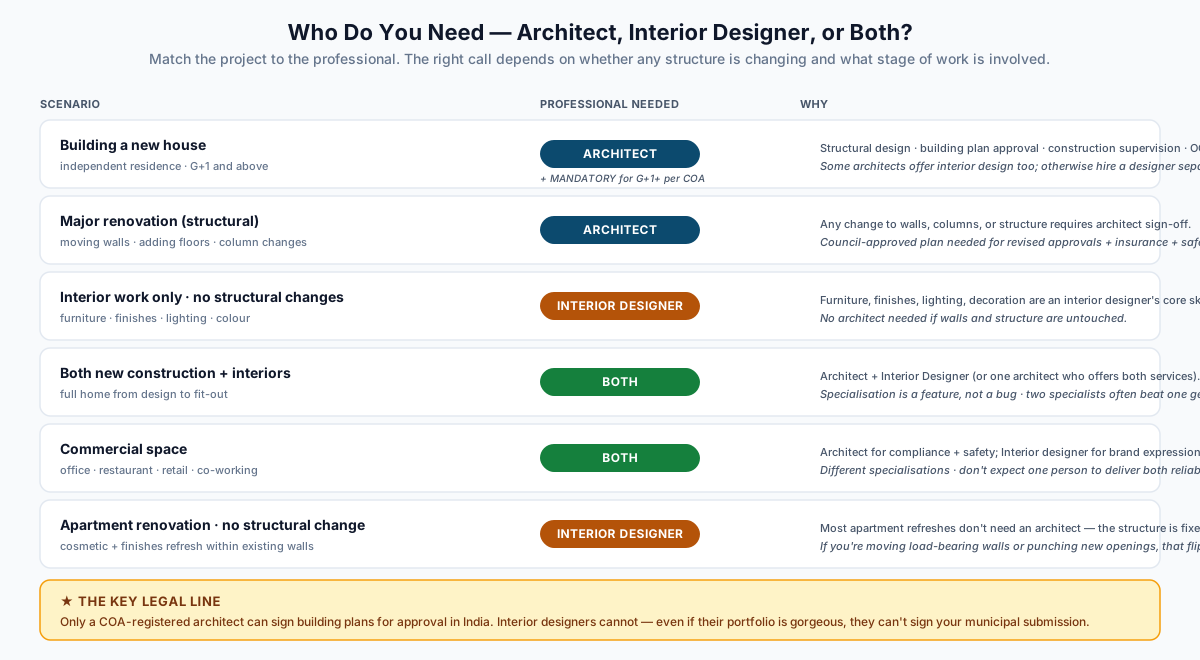
| Situation | You Need | Why |
|---|---|---|
| Building a new house | Architect (mandatory for G+1 and above) | Structural design, building plan approval, construction supervision |
| Major renovation (structural changes) | Architect | Any change to walls, columns, or structure requires an architect |
| Interior work only (no structural changes) | Interior designer | Furniture, finishes, lighting, colour, decoration |
| Both new construction + interiors | Architect + Interior designer (or architect who does both) | Some architecture firms offer interior design; otherwise hire separately |
| Commercial space (office, restaurant, retail) | Both (architect for structure/compliance, interior designer for fit-out) | Different specialisations needed |
| Apartment renovation | Interior designer (if no structural changes) | Most apartment renovations don't need an architect |
The Key Difference
| Architect | Interior Designer | |
|---|---|---|
| Regulated by | Council of Architecture (COA) — mandatory registration | Not regulated (IIID membership voluntary) |
| Can sign building plans | Yes — legally required | No |
| Structural design | Yes (with structural engineer) | No |
| Building plan approval | Yes — manages entire process | No |
| Interior design | Some architects do; many don't | Core expertise |
| Furniture and finishes | Some; usually coordinates | Core expertise |
| Minimum qualification | B.Arch (5 years) from COA-recognised college | No formal requirement (B.Des, diploma, or self-taught) |
The 6-Step Selection Framework
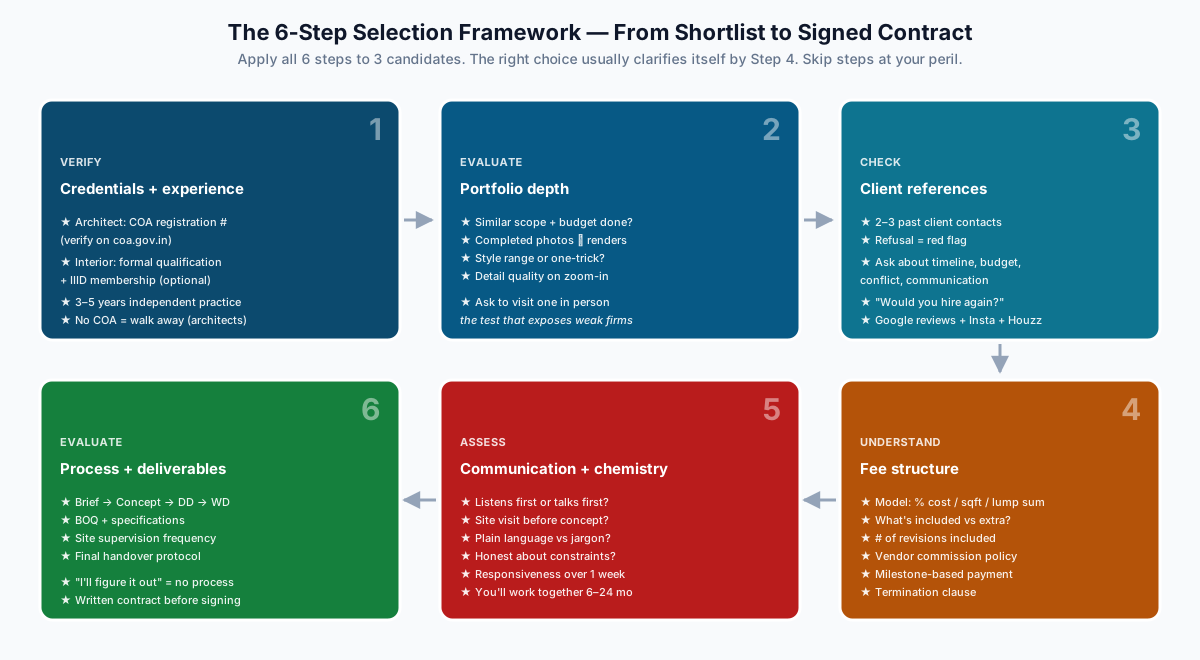
Step 1: Verify Credentials
For Architects:
- COA registration — verify at coa.gov.in. Ask for the registration number. If they're not registered, they cannot legally call themselves "Architect" or sign building plans.
- B.Arch degree from a COA-recognised institution
- Years of experience — at least 3-5 years of independent practice for residential projects
For Interior Designers:
- Formal qualification — B.Des (Interior Design), B.Arch with interior specialisation, or diploma from a recognised institute
- IIID membership — not mandatory, but indicates professional commitment
- Portfolio of completed projects — the most important credential for interior designers
| Credential | Architect | Interior Designer |
|---|---|---|
| Non-negotiable | COA registration | Completed project portfolio |
| Important | 3-5 years experience | Formal design education |
| Good to have | IIA membership, published work, awards | IIID membership, brand associations |
| Red flag | No COA number, uses "Architect" title without registration | No portfolio at all, only renders (no completed projects) |
Step 2: Evaluate the Portfolio
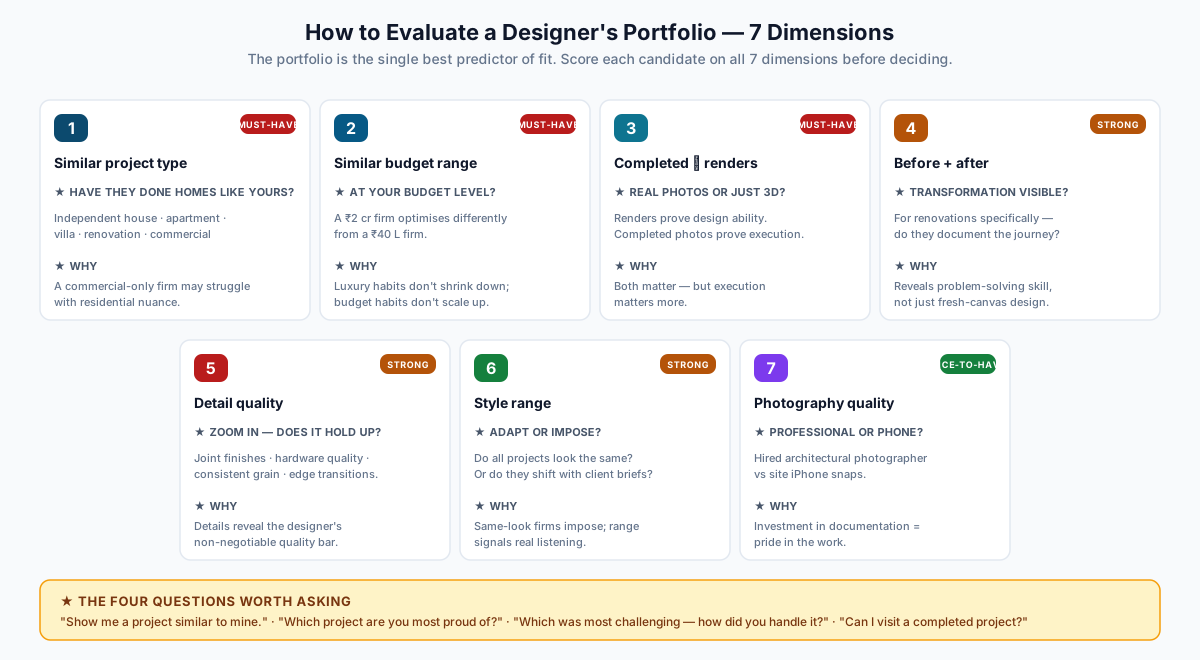
The portfolio is the single best predictor of whether a designer is right for you. Here's how to evaluate it critically:

What to look for:
| Factor | What to Check | Why It Matters |
|---|---|---|
| Similar project type | Have they done homes like yours? (independent house, apartment, villa, renovation) | A designer who's only done commercial offices may struggle with residential |
| Similar budget range | Have they worked at your budget level? | A luxury designer may not know how to optimise a ₹30 lakh budget. A budget designer may not deliver premium quality. |
| Completed vs rendered | Are the photos of real completed projects or just 3D renders? | Renders show design ability. Completed photos show execution ability. Both matter, but completed projects matter more. |
| Before and after | For renovations — do they show the transformation? | Demonstrates problem-solving, not just fresh-canvas design |
| Detail quality | Zoom into photos — are joints clean, finishes consistent, hardware quality visible? | The details reveal the designer's quality standard |
| Style range | Do all projects look the same, or can they adapt to different styles? | You want a designer who listens to your preferences, not one who imposes their signature on every project |
| Photography quality | Professional photos vs phone snapshots | Professional photos suggest the designer is proud of the work and invests in documentation |
Questions to ask about portfolio:
- "Can you show me a project similar to mine in scope and budget?"
- "Which project are you most proud of, and why?"
- "Which project was the most challenging, and how did you handle it?"
- "Can I visit one of your completed projects in person?"

Step 3: Check Client References
Ask the designer for 2-3 past client contacts. If they refuse, that's a red flag.
Questions to ask past clients:
| Question | What You're Really Asking |
|---|---|
| "Was the project completed on time?" | Do they manage timelines well? |
| "Was the final cost close to the original estimate?" | Do they manage budgets honestly? |
| "How was communication during the project?" | Are they responsive and clear? |
| "Were there any surprises or conflicts? How were they handled?" | How do they handle problems? |
| "Would you hire them again?" | The ultimate test |
| "What's one thing you wish had been different?" | Balanced feedback — no one is perfect |
| "Did they take feedback well, or did they push their own ideas?" | Do they listen or dictate? |
Also check:
- Google reviews — search their firm name. Read the negative reviews carefully.
- Social media — Instagram shows their aesthetic. Comments and engagement show client satisfaction.
- Houzz / Livspace profiles — if they're listed, check ratings and reviews.
Step 4: Understand the Fee Structure
Fee confusion is the #1 cause of architect-client disputes. Clarify everything before signing.
Architecture fees:
| Model | Typical Range | Best For |
|---|---|---|
| % of construction cost | 5-12% | Standard for new construction |
| Per sqft of built-up area | ₹50-200/sqft | Simple residential |
| Lump sum | Project-specific | When scope is clearly defined |
| Hourly | ₹1,000-5,000/hour | Consulting, small modifications |
Interior design fees:
| Model | Typical Range | Best For |
|---|---|---|
| % of project cost | 8-15% | Large residential, commercial |
| Per sqft | ₹50-300/sqft of designed area | Most common for residential |
| Design fee + execution margin | Design fee (lower) + 15-25% margin on material/labour | Full-service firms |
| Flat fee | ₹50,000 - ₹5,00,000+ | Defined scope |
Critical questions about fees:
| Question | Why It Matters |
|---|---|
| "What exactly is included in your fee?" | Avoid surprises — does it include 3D renders, site visits, material selection, vendor management? |
| "How many revision rounds are included?" | Unlimited revisions = scope creep. Good practice: 2-3 rounds included, then hourly. |
| "What is NOT included?" | Structural engineer, MEP consultant, government fees, material procurement? |
| "What is the payment schedule?" | Milestone-based is best (30% upfront, 30% at design completion, 40% at project end) |
| "Do you take any commission from vendors or contractors?" | Ethical designers say NO. Commission-based recommendations are biased. |
| "What happens if I want to stop midway?" | Termination clause — what do you owe for work completed? |
Step 5: Assess Communication & Chemistry
You'll work with this person for 6-24 months. The relationship matters as much as the skill.
During your first meeting, observe:
| Signal | Green Flag | Red Flag |
|---|---|---|
| Listening | Asks about your lifestyle, family, routines before showing their work | Talks mostly about themselves and their awards |
| Site visit | Visits your plot/home before proposing any design | Proposes design concepts without seeing the site |
| Explaining | Uses plain language, shows examples, checks your understanding | Uses jargon, assumes you know technical terms |
| Honesty | "Your budget may be tight for what you're describing — here's what's realistic" | Agrees to everything without discussing constraints |
| Responsiveness | Replies within 24-48 hours, confirms appointments | Takes a week to respond, cancels meetings |
| Team | Introduces team members who'll work on your project | Solo practitioner managing 15 projects (capacity concern) |
| Questions | Asks about your daily routines, cooking habits, storage needs, future plans | Only asks about bedroom count and plot dimensions |
Step 6: Evaluate the Process & Deliverables
Ask: "Walk me through your typical project process from start to finish."
A good design process includes:
| Stage | Deliverable | You Should Receive |
|---|---|---|
| 1. Brief | Design brief document | Written summary of your requirements, signed by both parties |
| 2. Concept | 2-3 design options | Floor plans + basic 3D views showing different approaches |
| 3. Design development | Detailed design | Finalized plans, elevations, sections, material boards |
| 4. 3D visualisation | Renders / walkthroughs | Photorealistic images of key rooms |
| 5. Working drawings | Construction-ready drawings | 50-100+ sheets for a house (architectural + structural + MEP coordination) |
| 6. BOQ | Bill of Quantities | Item-wise cost estimate for construction/interiors |
| 7. Site supervision | Regular site visits | Periodic visits during construction to ensure quality |
| 8. Handover | Final inspection + snag list | Walk-through before final payment |
If the designer's process is: "I'll give you a plan and some ideas, you manage the rest" — that's not a professional service. A complete design service includes drawings, specifications, and supervision.
Where to Find Architects & Interior Designers
| Source | Pros | Cons |
|---|---|---|
| Referrals from friends/family | First-hand experience, trust | Limited to their network, may not match your style |
| Google search ("architect near me") | Large selection, reviews visible | Quality varies hugely, SEO ranking ≠ design quality |
| See their actual work and aesthetic | Curated — only shows best work | |
| Houzz India | Reviews, portfolio, direct messaging | Not all good designers are on Houzz |
| Livspace / HomeLane | End-to-end service, standardised | Less customisation, platform commission |
| IIA (Indian Institute of Architects) | Verified COA-registered architects | Directory only, no reviews |
| IIID (Institute of Indian Interior Designers) | Verified professional designers | Limited to members |
| COA website (coa.gov.in) | Official architect verification | No portfolio or reviews |
| Architectural magazines (Inside Outside, Domus India, Architecture+Design) | Published, award-winning designers | May be out of your budget range |
| Studio Matrx | AI-powered design exploration + professional guides | Try design concepts before hiring a professional |
The Interview — 20 Questions to Ask
Before signing, meet the designer (in person or video call) and ask:
About them:
1. Are you COA-registered? (architects only) What is your registration number?
2. How many years have you been practising independently?
3. How many projects are you currently handling? (capacity check)
4. Who will actually work on my project — you or your team?
5. Can I see 3 completed projects similar to mine?
About the project:
6. Have you worked on a project with a similar budget?
7. What is your typical timeline for a project like mine?
8. What are the biggest challenges you see with my site/space?
9. How do you handle design changes during construction?
10. Do you provide 3D visualisations? How many views?
About money:
11. What is your fee structure? What's included and what's extra?
12. How many design revision rounds are included?
13. Do you take commission from any vendor or contractor?
14. What is the payment schedule?
15. What happens if I want to stop the project midway?
About process:
16. Can you walk me through your design process from brief to handover?
17. How often will you visit the site during construction?
18. How do you handle cost overruns?
19. Will there be a written contract? Can I review it before signing?
20. Can I speak to 2-3 of your past clients?
Red Flags — When to Walk Away
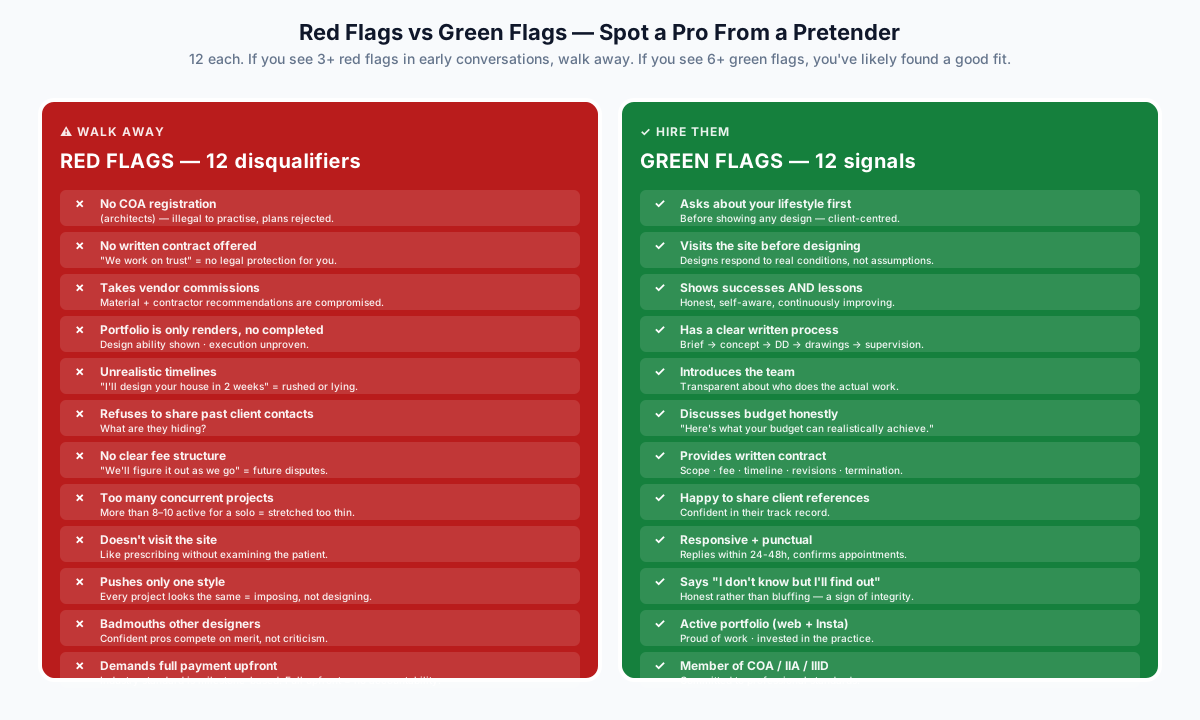
| Red Flag | Why It's a Problem |
|---|---|
| No COA registration (for architects) | Illegal to practice without it. Plans will be rejected by authorities. |
| No written contract | "We'll work on trust" means no legal protection for you |
| Takes vendor commissions | Their material and contractor recommendations are compromised |
| No completed project photos (only renders) | They may have design vision but no execution experience |
| Promises unrealistic timelines | "I'll design your house in 2 weeks" = either rushed work or overpromising |
| Refuses to share past client contacts | What are they hiding? |
| No clear fee structure | "We'll figure it out as we go" = recipe for disputes |
| Too many concurrent projects | More than 8-10 active projects for a solo practitioner = stretched too thin |
| Doesn't visit the site | Designing without seeing the site is like prescribing medicine without examining the patient |
| Pushes only one style | Every project looks the same = they're imposing, not designing for you |
| Badmouths other designers | Unprofessional. Confident designers compete on merit, not criticism. |
| Demands full payment upfront | Standard practice is milestone-based. Full upfront = no accountability. |
Green Flags — Signs of a Good Professional
| Green Flag | What It Indicates |
|---|---|
| Asks about your lifestyle before showing designs | Client-centred approach |
| Visits the site first | Designs respond to real conditions, not assumptions |
| Shows both successes and lessons from past projects | Honest, self-aware, continuously improving |
| Has a clear written process | Organised, professional, accountable |
| Introduces the team | Transparent about who does the work |
| Discusses budget honestly | "Here's what your budget can realistically achieve" |
| Provides a written contract | Protects both parties |
| Happy to share client references | Confident in their track record |
| Responsive and punctual | Respects your time = will respect project deadlines |
| Says "I don't know, but I'll find out" | Honest rather than bluffing — a sign of integrity |
| Active portfolio on website/Instagram | Proud of their work, invested in their practice |
| Registered with COA / member of IIA or IIID | Committed to professional standards |
Architect vs Interior Designer Fees — City-Wise Reference
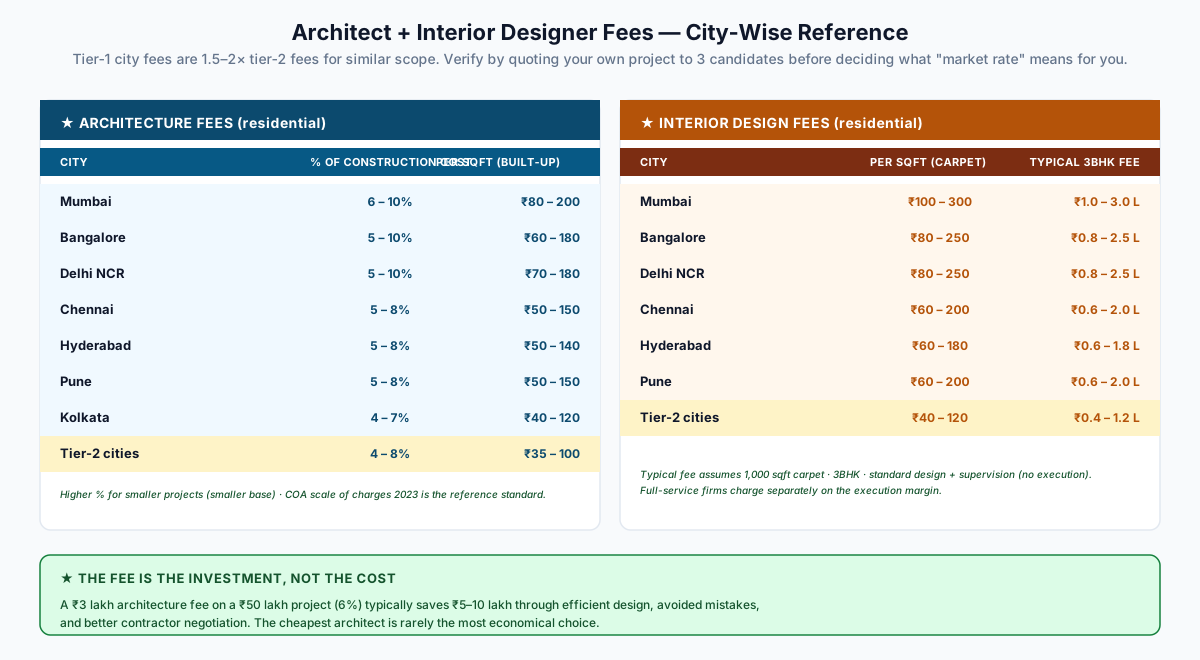
Architecture Fees (Residential)
| City | % of Construction Cost | Per Sqft (Built-up) |
|---|---|---|
| Mumbai | 6-10% | ₹80-200 |
| Bangalore | 5-10% | ₹60-180 |
| Delhi NCR | 5-10% | ₹70-180 |
| Chennai | 5-8% | ₹50-150 |
| Hyderabad | 5-8% | ₹50-140 |
| Pune | 5-8% | ₹50-150 |
| Kolkata | 4-7% | ₹40-120 |
| Tier 2 cities | 4-8% | ₹35-100 |
Interior Design Fees (Residential)
| City | Per Sqft (Carpet) | Typical 3BHK (1000 sqft) Design Fee |
|---|---|---|
| Mumbai | ₹100-300 | ₹1,00,000 - 3,00,000 |
| Bangalore | ₹80-250 | ₹80,000 - 2,50,000 |
| Delhi NCR | ₹80-250 | ₹80,000 - 2,50,000 |
| Chennai | ₹60-200 | ₹60,000 - 2,00,000 |
| Hyderabad | ₹60-180 | ₹60,000 - 1,80,000 |
| Pune | ₹60-200 | ₹60,000 - 2,00,000 |
| Tier 2 cities | ₹40-120 | ₹40,000 - 1,20,000 |
The fee is not the cost — it's the investment. A ₹3 lakh architecture fee on a ₹50 lakh project (6%) typically saves ₹5-10 lakh in construction through efficient design, avoided mistakes, and better contractor negotiation. The cheapest architect is rarely the most economical choice.
After You Choose — Working Together Successfully
Your Responsibilities as a Client
| Responsibility | Why It Matters |
|---|---|
| Make decisions on time | Every delayed decision pushes the timeline. Designers can't progress without your approvals. |
| Be honest about budget | Hiding your real budget leads to a mismatch between expectations and reality. |
| Give complete requirements upfront | Adding bedrooms after the design is finalised means starting over. |
| Respect the process | Don't skip stages. Each stage builds on the previous one. |
| Pay on time | Late payments slow the designer's commitment to your project. |
| Trust the expertise | You hired them for their knowledge. Listen to their professional advice. |
| Communicate preferences, not solutions | "I want the room to feel warm" is better than "put teak wood on that wall." Let them solve the design problem. |
The Designer's Responsibilities
| Responsibility | What to Expect |
|---|---|
| Listen first | Understand your needs before designing |
| Present options | 2-3 concepts, not just one take-it-or-leave-it design |
| Be transparent | About costs, timelines, and constraints |
| Manage the process | Coordinate contractors, consultants, and approvals |
| Communicate proactively | Update you on progress and delays before you have to ask |
| Quality supervision | Ensure construction matches design intent |
| Handover properly | Final inspection, snag list, maintenance guidance |
Common Mistakes When Choosing
1. Choosing the cheapest — you get what you pay for. A ₹20,000 "design" will cost ₹2 lakh in rework.
2. Not verifying COA registration — an unregistered "architect" cannot sign building plans. Your approval will be rejected.
3. Hiring based on Instagram alone — Instagram shows the best 5%. Visit completed projects to see the real quality.
4. Skipping the contract — verbal agreements are the #1 cause of disputes. Always sign a written contract.
5. Not checking references — the designer's past clients are the most honest source of information.
6. Choosing style over substance — a beautiful render means nothing if the designer can't manage construction.
7. Hiring family/friends — professional distance is important. When things go wrong (and they always do), it's harder with personal relationships.
8. Not asking about process — "I'll handle everything" is not a process. You need stages, milestones, and deliverables.
9. Ignoring the team — you may love the principal designer, but a junior may do the actual work. Ask who works on your project.
10. Making the decision in one meeting — meet 3-4 designers before deciding. The comparison is revealing.
Checklist — Before You Sign
- [ ] Verified COA registration (for architects) on coa.gov.in
- [ ] Seen 3+ completed projects similar to mine (not just renders)
- [ ] Spoken to 2+ past clients and asked about timeline, budget, and satisfaction
- [ ] Received a clear fee breakdown — what's included, what's extra
- [ ] Understood the payment schedule — milestone-based, not all upfront
- [ ] Confirmed no vendor commissions — designer is paid by you, not by vendors
- [ ] Reviewed the contract — scope, timeline, revisions, termination, liability
- [ ] Visited their office or met in person — professionalism, team, work environment
- [ ] Confirmed who will work on your project — principal vs junior
- [ ] Verified the design process — brief, concept, DD, working drawings, supervision
- [ ] Checked Google reviews and social media — patterns matter more than individual reviews
- [ ] Felt comfortable — you'll work together for months. Trust and chemistry matter.
Key Takeaways
- COA registration is non-negotiable for architects — verify before anything else at coa.gov.in
- Completed projects matter more than renders — ask to visit a finished project in person
- Interview at least 3 designers before deciding — the comparison will clarify your priorities
- Ask past clients directly — they'll tell you what the designer won't
- Fee transparency prevents disputes — get everything in writing before work starts
- No vendor commissions — ethical designers earn from design fees, not from kickbacks
- The cheapest option costs more in the long run — design mistakes, rework, and delays far exceed the fee difference
- Written contract is mandatory — scope, fee, timeline, revisions, termination, liability
- Communication and chemistry matter as much as skill — you'll work together for months
- Trust the process — a structured design process (brief → concept → DD → working drawings → supervision) produces better outcomes than "let's figure it out as we go"
References:
- Council of Architecture (COA) — Architects Act, 1972 — coa.gov.in
- COA Conditions of Engagement and Scale of Charges, 2023
- Indian Institute of Architects (IIA) — iia-india.org
- Institute of Indian Interior Designers (IIID) — iiid.in
- RERA 2016 — Architect registration and liability provisions
- Consumer Protection Act, 2019 — Client rights in professional services
- RIBA (Royal Institute of British Architects) — Client Guide (adapted for Indian context)
- AIA (American Institute of Architects) — How to Select an Architect
- National Consumer Disputes Redressal Commission — Architect-client dispute precedents
Export this guide
Related Guides — Deep-dive reading
Design/Build vs. Hiring Separately: What Indian Homeowners Should Know
The procurement-model decision behind every home project — one turnkey firm that designs and builds, or an independent designer and a separately appointed contractor — and how to choose the one that fits your time, budget, and appetite for control.
Planning Your ProjectHow to Vet an Architect: CoA Credentials Check in India (2026)
By law, only a Council of Architecture (CoA) registered person may call themselves an architect in India. This guide shows you how to vet an architect properly - verifying registration, checking real built work not just renders, speaking to past clients, confirming site visits, and spotting the warning signs that separate a genuine architect from a draughtsman or an unregistered designer.
Hiring ProfessionalsUnderstanding Construction Contracts & Retainage in India
A homeowner-protective guide to the contract and payment structure behind every interiors or build project — the contract types and when each fits, how to stage payments so your money trails the work, and the retention clause that quietly protects you more than any other.
Cost & MoneyRelated Tools — Try Free
Interior Contract Clause Checklist
16 sections and 98 checkboxes covering scope, BOQ, milestones, penalties, warranty, and disputes.
Contract ChecklistContract Studio
AI generates professional architecture service agreements with milestones and scope.
ArchitectAIPre-Possession Inspection Checklist
Inspect your flat before registration — 10 categories, 70+ checkpoints across legal, carpet area, structure, finishes, and deviations.
Homebuyer Checklist