
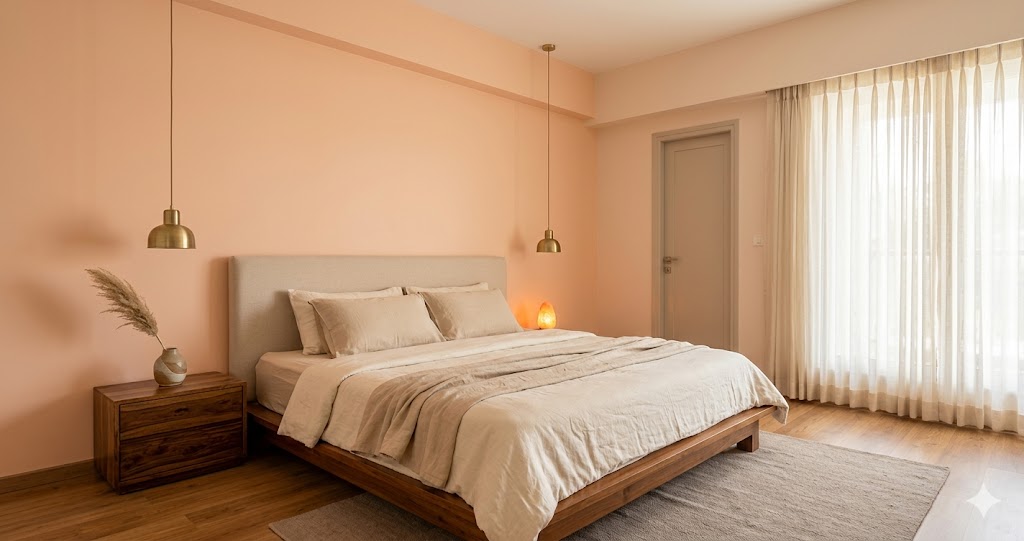
Vastu for Bedroom — A 2026 Working Reference for Indian Homes
Bed direction · Room allocation · Five non-negotiable rules
Vastu for the bedroom is the most personal vastu zone in the entire home — you spend roughly eight hours of every twenty-four inside it, with your body still and your nervous system at its most receptive. Getting the bed placement right matters more than every other interior decision in the room. Wrong mattress, wrong sheets, wrong wall colour are recoverable in a weekend; wrong bed orientation against a wrong wall in a wrong-direction room costs you sleep for years.
This is a 22-minute working reference for homeowners and interior designers planning a bedroom — master, kids', guest, or studio — in an Indian apartment in 2026. It covers what bedroom vastu actually claims, the five non-negotiable rules, which bedroom in your apartment should be assigned to which occupant, bed direction details, the eight most common pitfalls and their fixes, life-stage adaptations, colour and light and material choices, the apartment-reality adaptation layer for when a builder hands you a fixed plan, three remedy tiers from a ₹500 curtain to a partition rebuild, and an honest reckoning with where strict vastu and modern sleep-hygiene research agree and where they diverge.
The bedroom is the rest zone — Vishram. Sleep direction, bed orientation, and the absence of electronic, mirror, and metal interference determine sleep quality more than the mattress brand on the bed. Get the room right and the body will sleep; get the room wrong and no premium memory-foam slab will compensate.
For complementary depth see Vastu for Modern Homes, Vastu House Plan for India, Vastu for the Kitchen, Entrance Vastu, Vastu Colours for the Home, Warm Minimal Interiors, Japandi Apartment Interior Guide, and Wardrobe Finish Ideas. For self-checks use the Vastu Compliance utility and the Vastu Compass utility.
This guide refreshes every 24 months — sleep research updates, paint references and brand sourcing shift annually. Last verified: May 2026 · Next verify: May 2028.
What Bedroom Vastu Is
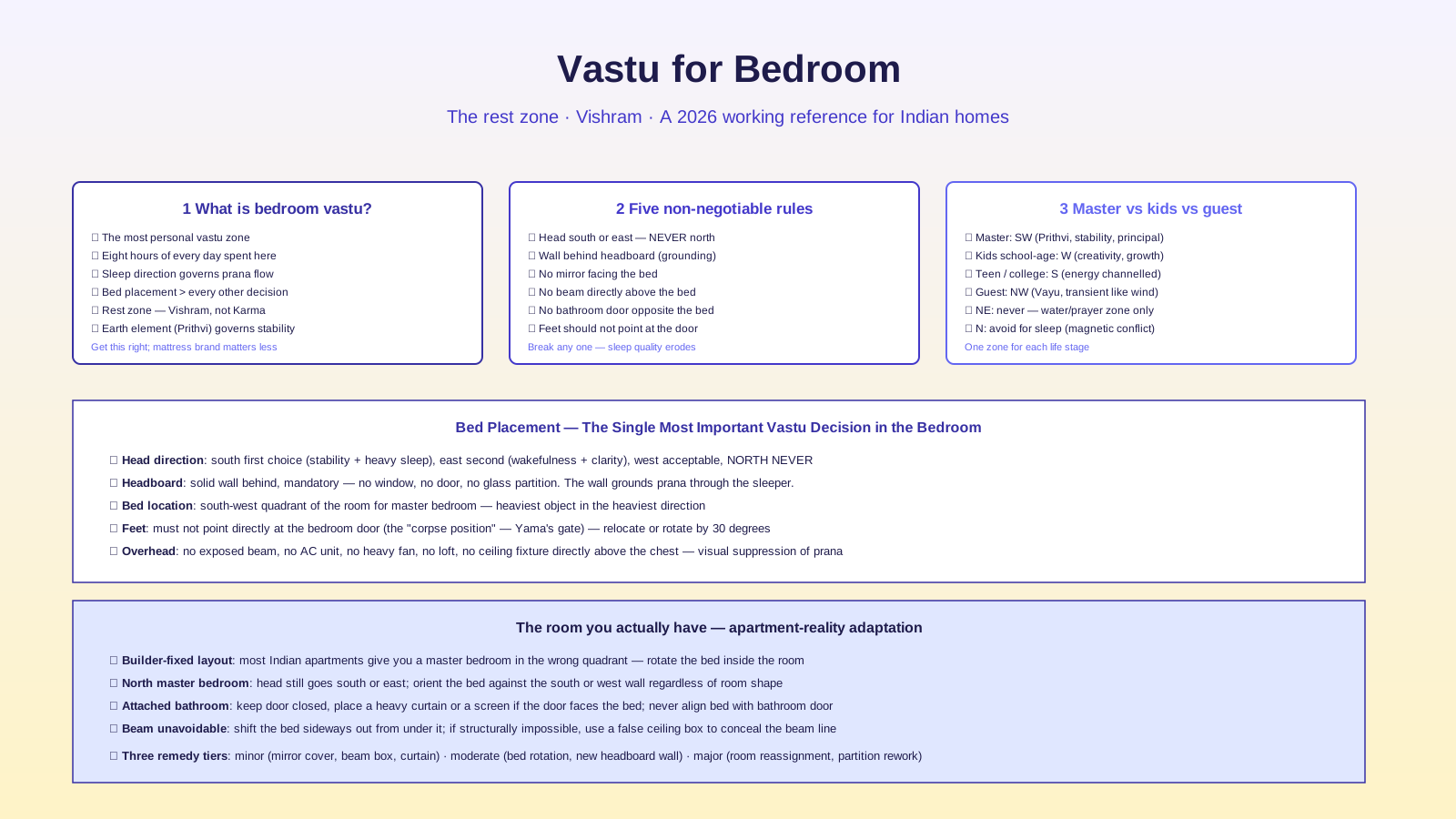
Bedroom vastu is the application of vastu shastra principles — the Vedic spatial discipline that has governed Indian dwelling design for roughly 2,500 years — to the room where the occupants sleep. The bedroom is treated as a Vishram zone (rest zone), distinct from the Karma zone (kitchen, study, office) and the Pooja zone (prayer). Each zone carries a different prana register, and each has a different ideal direction within the building.
The bedroom belongs to the Prithvi (earth) element — heavy, stable, grounding. The principal occupants — the heads of household, the people who carry the weight of the home — belong in the heaviest direction of the home, which in classical vastu is the south-west (SW). Lighter sleepers (children, guests) belong in lighter directions (west, north-west). And certain directions — north-east, south-east — are reserved for non-sleep functions because their elemental character (water-prayer for NE, fire for SE) conflicts with rest.
Five things bedroom vastu is NOT
1. Not optional after you choose a mattress. Bed orientation, room direction, and headboard wall are first-order decisions. Mattress is a second-order decision that you make after the bed is placed.
2. Not a religious requirement. Vastu is a spatial-empirical tradition, not a devotional practice. You do not need to be Hindu, observant, or spiritual to benefit from sleeping with your head pointing south.
3. Not a substitute for sleep hygiene. Vastu deals with room geometry. Sleep hygiene deals with light, temperature, screen exposure, caffeine. Both matter; they are complementary disciplines.
4. Not a single rule. Most homeowners reduce vastu to "head south" and stop. The five non-negotiable rules and the eight common pitfalls together form a complete bedroom system; one rule alone leaves four-fifths of the value on the table.
5. Not impossible in an apartment. Builder-fixed plans constrain room assignment but rarely constrain bed orientation inside the room. You can almost always honour the bed-direction rule even when the room is in the "wrong" direction.
The Five Non-Negotiable Rules
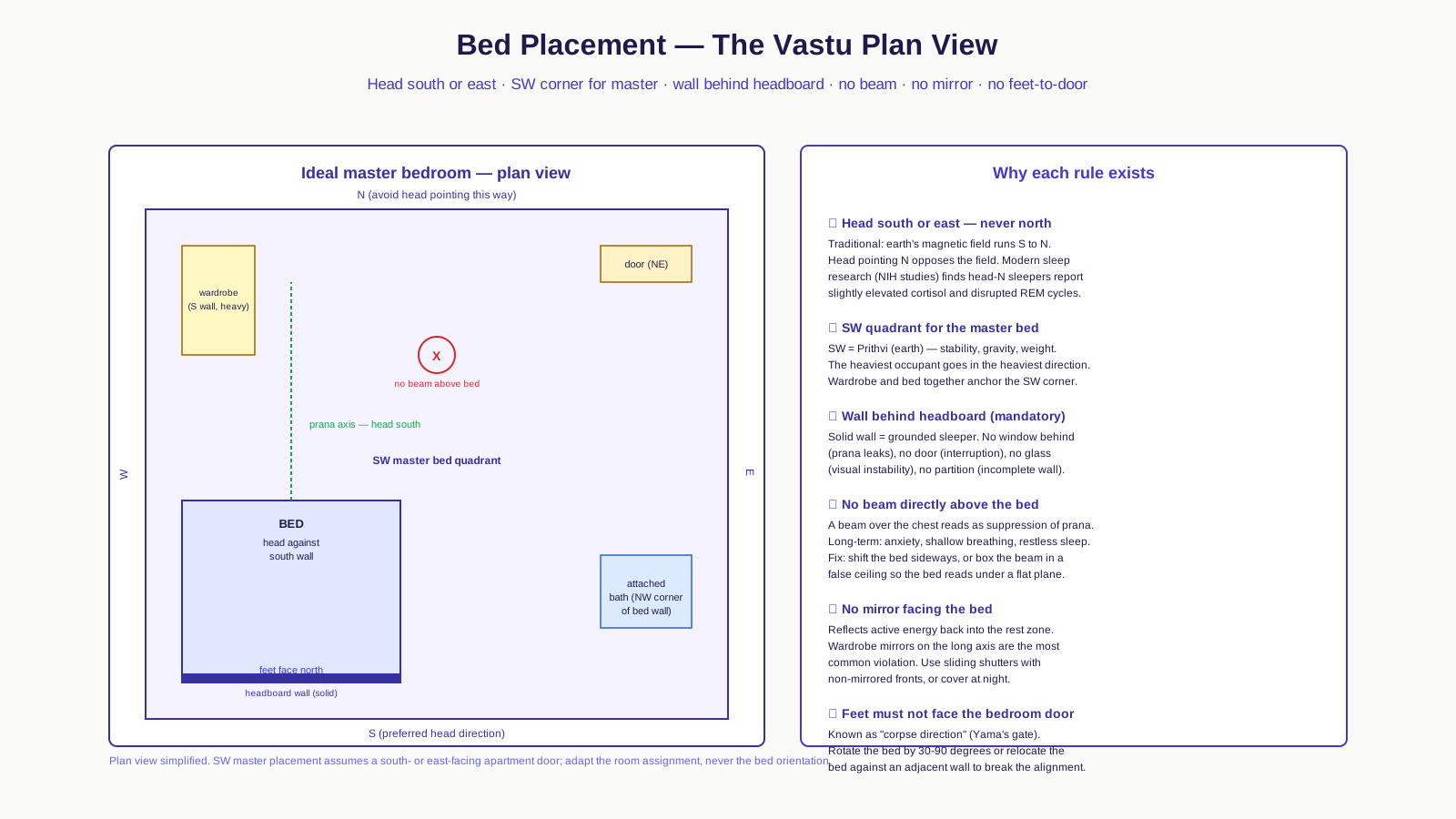
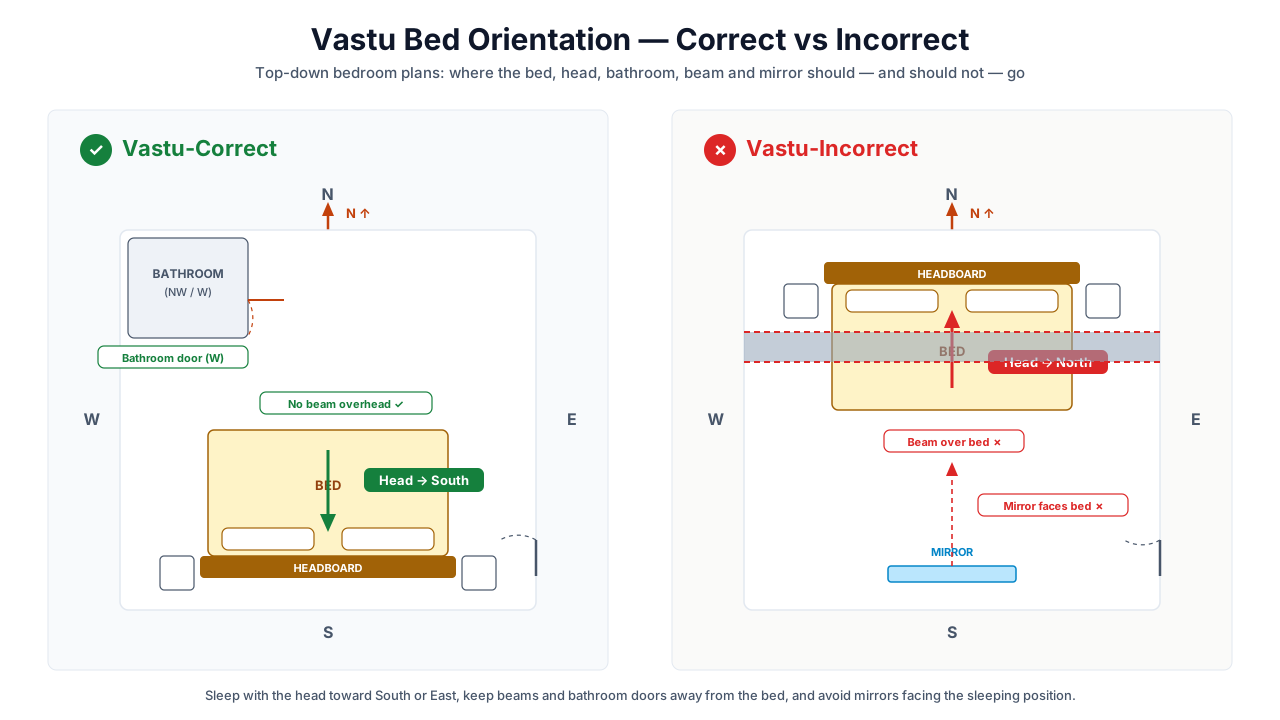
1. Head south or east — never north
This is the single most important rule in bedroom vastu and the one rule where traditional teaching and modern research most clearly converge. Classical vastu (Brihat Samhita, Mayamatam) prescribes head-south as ideal because the earth's magnetic field runs from south to north, and sleeping with the head south aligns the body with the field rather than against it. Head-east is acceptable (linked to wakefulness and clarity — the sun rises in the east). Head-west is tolerable. Head-north is forbidden.
Modern sleep research is less unanimous, but a 2010s Indian Council of Medical Research review of bedroom orientation studies, alongside NIH-indexed work on geomagnetic field effects on REM cycles, finds that head-north sleepers report slightly elevated cortisol on waking and modestly disrupted slow-wave sleep over multi-month observation. The effect is small but consistent. Whether you accept the prana explanation or the magnetic-field explanation, the practical instruction is identical: rotate the bed so the head never points north.
2. Solid wall behind the headboard — mandatory
The headboard must press against a solid wall. No window behind (prana leaks; ventilation disrupts sleep), no door (interruption), no glass partition (visual instability), no half-wall or low partition (incomplete grounding). The wall is what anchors the sleeping body to the building. A bed in the middle of a room, floating, with no headboard wall, is one of the most-reported sleep-quality regressions homeowners describe after a "modernist" master-bedroom redesign.
3. No mirror facing the bed
Wardrobe mirrors on the long axis are the most common violation in Indian master bedrooms, because builder-default wardrobes routinely include mirror-front sliding shutters opposite the bed. The vastu objection: a mirror reflects active energy back into the rest zone. The practical objection: mirrors at the foot of the bed catch streetlight, headlights and standby LEDs and project them across the sleeping body all night. Fix: replace mirror shutters with solid laminate or veneer; if cost-prohibitive, drape a fabric cover over the mirror at night.
4. No beam directly above the bed
A beam, exposed duct, or heavy bulkhead running across the bed line — particularly above the chest — reads as suppression of prana. Long-term occupants below such a beam report anxiety, shallow breathing, restless sleep at higher rates than occupants below a flat ceiling. Fix: shift the bed sideways so the beam runs above the foot or above the wardrobe rather than above the chest; or build a flat false ceiling box that conceals the beam so the bed reads under a flat plane.
5. No bathroom door directly opposite the bed
Modern Indian apartments routinely place the master bathroom door directly across from the bed — the shortest plumbing run for the builder. Vastu objects to the negative-energy register transfer; modern hygiene objects to the odour-and-humidity transfer and the visual axis interruption at 3 am. Fix: keep the door closed always; hang a heavy curtain or place a screen to break the visual axis; or, in a major remediation, move the door to an adjacent wall.
| # | Rule | Why it matters | Worst-case violation |
|---|---|---|---|
| 1 | Head south or east, never north | Magnetic field alignment; cortisol; REM stability | Head north on a long-term bed |
| 2 | Solid wall behind headboard | Grounded sleeper; no leak; no interruption | Bed centred with window behind |
| 3 | No mirror facing bed | Active energy reflection; light pollution | Wardrobe mirror on long axis opposite bed |
| 4 | No beam directly above the bed | Prana suppression; anxiety; shallow breathing | Exposed beam over chest |
| 5 | No bathroom door opposite the bed | Energy + hygiene transfer; axis interruption | Open bathroom door on bed axis |
Which Bedroom Goes Where — Room Allocation by Direction
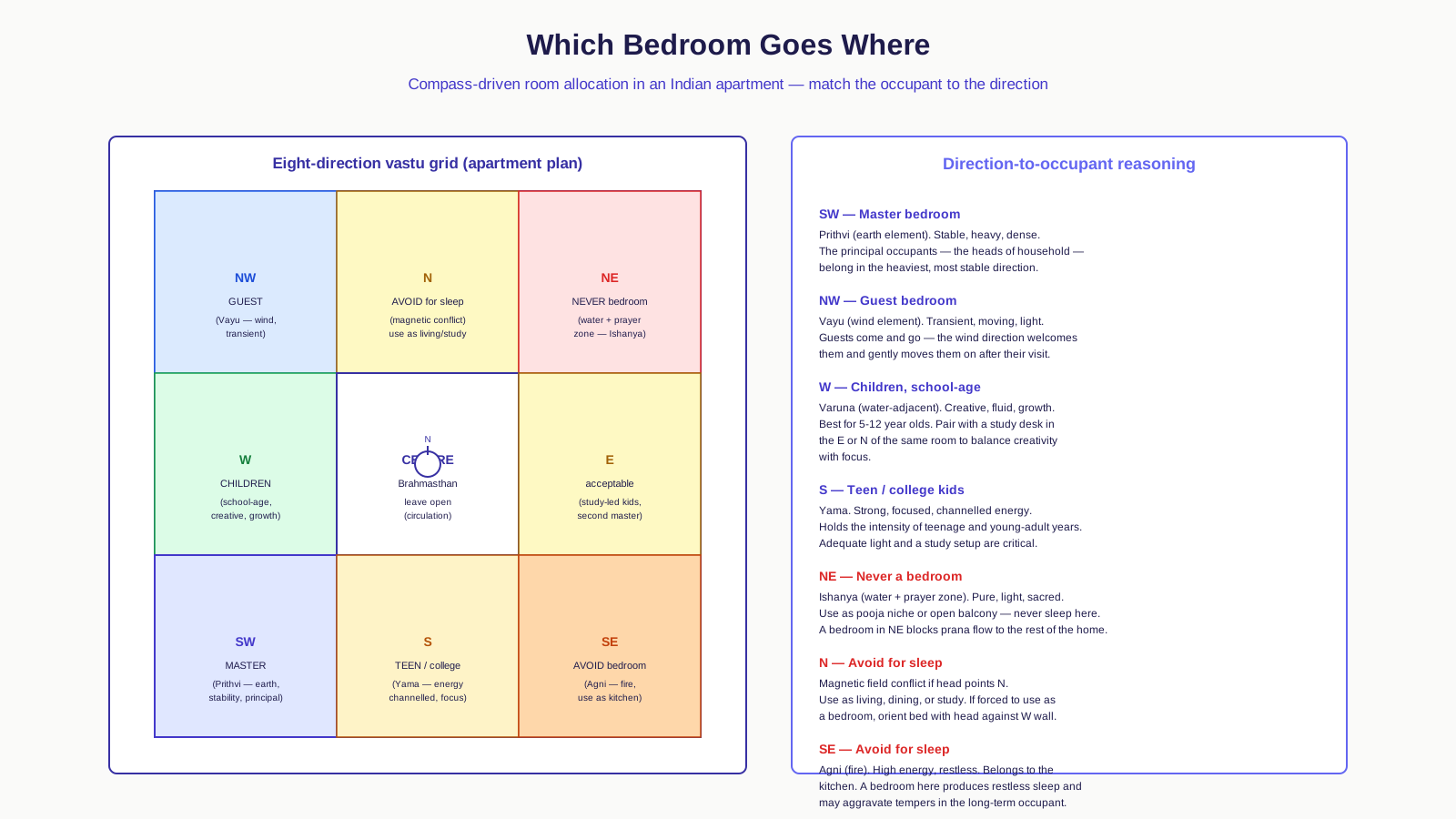
The room-allocation question matters because most Indian apartments offer two or three bedroom shells and the homeowner must decide which shell becomes the master, which the kids' room, which the guest room. The compass direction of each room within the apartment plan governs the choice.
Master bedroom — SW quadrant of the apartment
The south-west bedroom is reserved for the principal occupants — the heads of the household, the heaviest-weight family members in terms of decision authority and time spent in the home. Prithvi (earth element) governs the SW: stable, dense, grounding. The wardrobe and the heavy bed together anchor the SW corner and the SW corner anchors the apartment.
Guest bedroom — NW quadrant
The north-west belongs to Vayu (wind element) — transient, moving, light. Guests arrive and depart; the wind direction welcomes them and gently moves them on after their visit. A guest bedroom in NW does not "hold" the guest as a master bedroom would hold a permanent occupant. Practically, NW is also convenient for guest access without crossing the family's private zones.
Children's bedroom (school-age, 5-12) — W quadrant
The west belongs to Varuna (water-adjacent) — creative, fluid, growth. Best for school-age children whose primary need is creativity and steady growth. Pair with a study desk in the E or N corner of the same room to balance the creative pull of the W with the focus pull of the E.
Teen / college kids — S quadrant
The south belongs to Yama — strong, focused, channelled energy. Holds the intensity of teenage and young-adult years without dissipating it. Adequate daylight (south-facing windows) and a deliberate study setup are critical to translate the energy into achievement rather than restlessness.
Avoid for bedrooms — NE, SE, N (and the centre)
- NE (Ishanya — water + prayer): reserved for the pooja niche, an open balcony, or kept light and low. A bedroom in NE blocks prana flow to the rest of the home.
- SE (Agni — fire): belongs to the kitchen. A bedroom in SE produces restless sleep and is associated with elevated tempers and disturbed digestion over long occupancy.
- N (Kubera — north, magnetic): acceptable as a living, dining or study room but avoided for sleep because of the head-direction magnetic conflict. If you are forced to sleep in a N bedroom, orient the bed so the head presses against the south wall — never the north wall.
- Centre (Brahmasthan): never a bedroom and ideally never any heavy enclosed room; should remain open for circulation.
| Direction | Element / deity | Best occupant | Rationale |
|---|---|---|---|
| SW | Prithvi (earth) | Master / heads of household | Stability, grounding, principal occupants in heaviest zone |
| NW | Vayu (wind) | Guests | Transient, moving — guests come and go |
| W | Varuna (adjacent) | Children, 5-12 school-age | Creativity, growth, fluid energy |
| S | Yama | Teen / college kids | Channelled energy, focus, intensity held |
| E | Indra (sunrise) | Second master, study-led kids | Wakefulness, clarity, morning light |
| N | Kubera | Avoid for sleep — use as living, study | Magnetic conflict with head direction |
| NE | Ishanya (water, prayer) | Never a bedroom — pooja or open zone | Sacred direction; bedroom blocks prana |
| SE | Agni (fire) | Never a bedroom — kitchen direction | Fire element conflicts with rest |
Bed Direction Details — the Sleep Axis
The sleep axis is the imaginary line from the crown of the head, through the spine, to the soles of the feet, when you lie on your back. The crown end of the axis points to the chosen "head direction." Three rules govern the axis:
- Crown direction governs the rule — even if you sleep on your side, even if you roll, even if you switch sides with your spouse, the crown-end of the bed (where the headboard sits) defines the direction. South-crown, east-crown, west-crown acceptable; never north-crown.
- Spouses share the same direction — both occupants of the master bed orient their crowns the same way. Do not orient one head south and the other north on the same bed; the conflicting axes are reported to disturb the sleep of the more sensitive partner.
- Feet must not point at the door — known across vastu, feng shui, and Tibetan death-ritual traditions as the "corpse direction" (Yama's gate). The fix is structural: rotate the bed 90 degrees, or move the bed to an adjacent wall, so the feet point at a side wall rather than the door.
The combined geometry — head south or east, feet not at the door, wall behind headboard, no beam above the chest, no mirror at the foot — usually leaves exactly one or two possible bed positions in any given Indian bedroom shell. Test both candidate positions for two nights each and keep the one where you wake more rested.
Eight Common Bedroom Pitfalls — and the Fix for Each
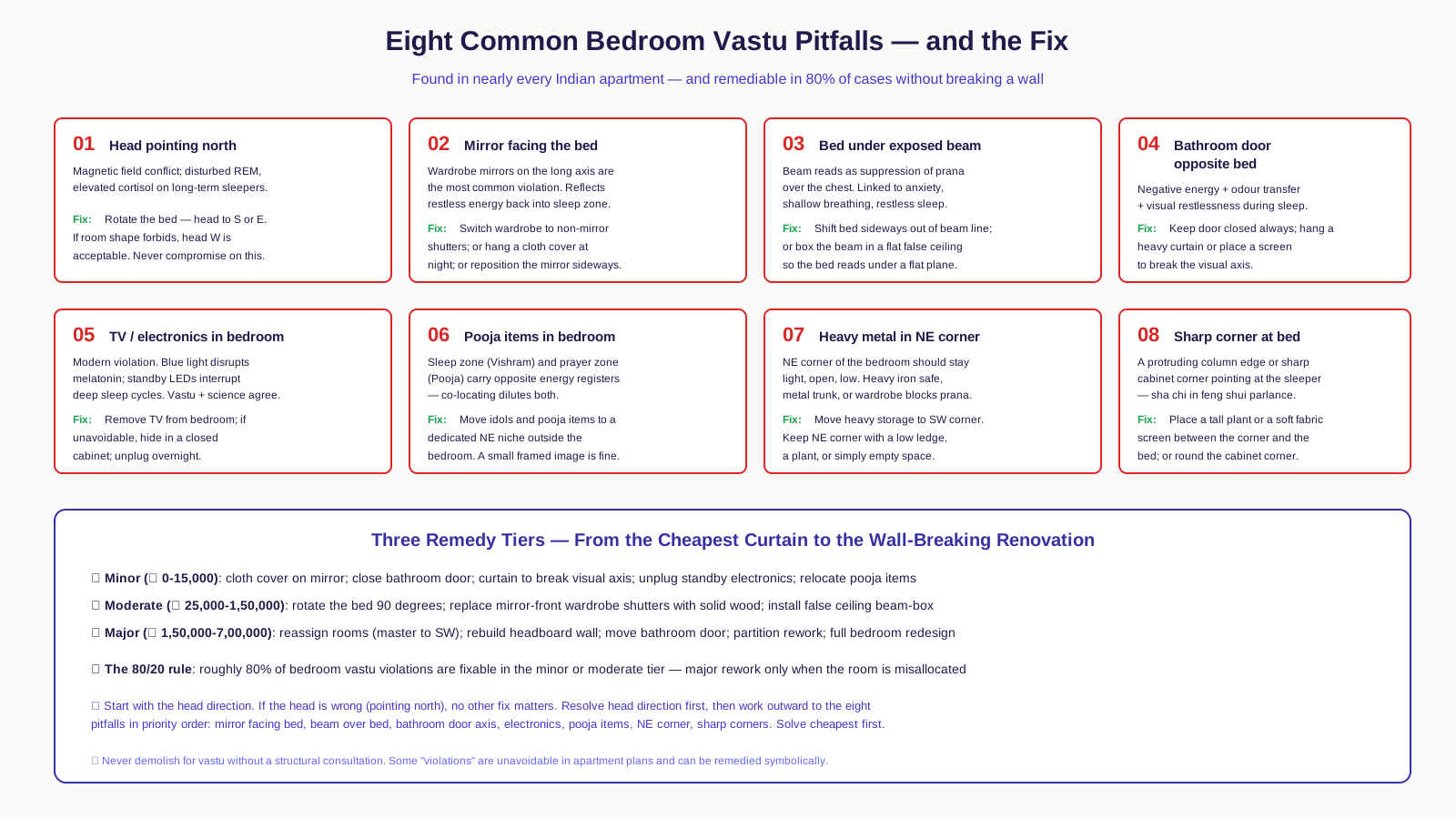
Beyond the five non-negotiable rules, eight additional pitfalls turn up in nearly every Indian apartment audit. They are not as load-bearing as the five rules but they accumulate; three or four of them compounding in the same bedroom can erode sleep quality even when the bed direction is correct.
1. Head pointing north. Magnetic conflict; disrupted REM; elevated waking cortisol. Fix: rotate the bed — head south, east, or west. Non-negotiable.
2. Mirror facing the bed. Wardrobe mirrors on the long axis are the most common violation. Fix: switch wardrobe shutters to non-mirror; hang a fabric cover at night; or reposition the mirror sideways.
3. Bed under exposed beam. Suppression of prana over the chest; anxiety; restless sleep. Fix: shift bed sideways out of beam line, or build a flat false-ceiling box to conceal the beam.
4. Bathroom door opposite the bed. Negative-energy transfer and odour/humidity transfer. Fix: keep door closed always; hang a heavy curtain; place a screen to break the visual axis.
5. TV / electronics in the bedroom. Modern violation. Blue light disrupts melatonin; standby LEDs interrupt deep sleep cycles. Vastu and sleep science agree. Fix: remove TV from the bedroom; if unavoidable, hide in a closed cabinet and unplug overnight.
6. Pooja items in the bedroom. Sleep zone (Vishram) and prayer zone (Pooja) carry opposite energy registers. Fix: move idols to a dedicated NE niche outside the bedroom; a small framed image is acceptable.
7. Heavy metal storage in the NE corner. The NE corner of any room should stay light, open, low. A heavy iron safe or steel trunk blocks prana. Fix: move heavy storage to the SW corner; keep the NE corner with a low ledge, a plant, or empty space.
8. Sharp corner pointing at the bed. A protruding column edge or sharp cabinet corner aimed at the sleeper — sha chi in feng shui parlance. Fix: place a tall plant or a soft fabric screen between the corner and the bed; or round the cabinet corner.
| Pitfall | Severity | Cheapest fix | Lasting fix |
|---|---|---|---|
| Head pointing north | Critical | Rotate bed today | Rotate bed today — non-negotiable |
| Mirror facing bed | High | Cloth cover at night | Replace wardrobe shutters |
| Beam above chest | High | Shift bed sideways | False ceiling beam-box |
| Bathroom door opposite | Moderate | Keep door closed + curtain | Move door to adjacent wall |
| Electronics in bedroom | Moderate | Unplug standby; cover LED | Remove TV; cabinet enclosure |
| Pooja items in bedroom | Low | Move idols out | Dedicated NE pooja niche |
| Heavy metal in NE | Low | Relocate storage to SW | Redesign wardrobe layout |
| Sharp corner at bed | Low | Tall plant in front | Round the corner / move cabinet |
Bedroom Vastu by Life Stage
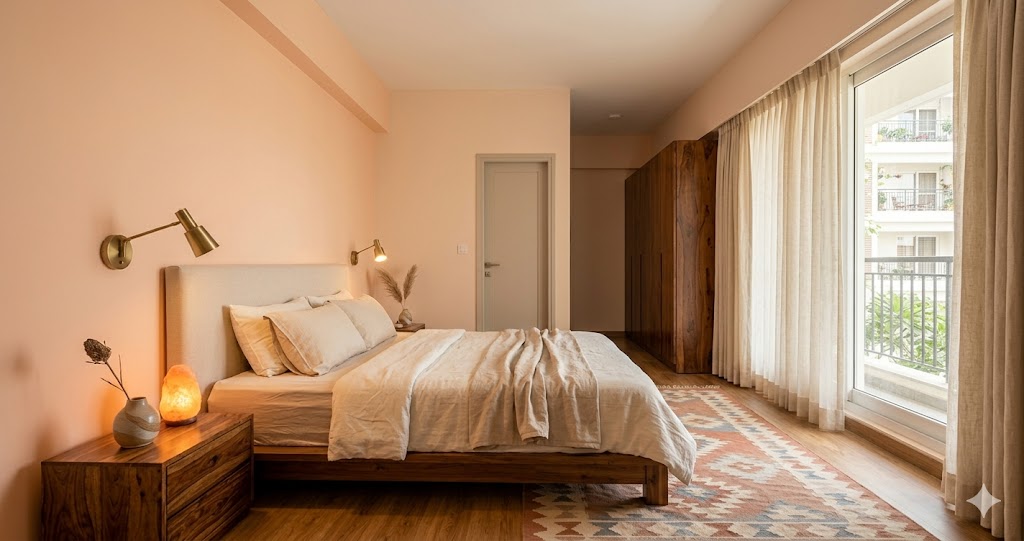
Master couple — SW, soft pink / peach, solid wood
The principal couple occupies the SW bedroom. Bed in the SW quadrant of the room, head south. Walls in Asian Paints 8101 Peach Glow or Berger Soft Salmon — the soft pink / peach family that traditional vastu prescribes for the master. Solid teak or sheesham platform bed (Wakefit, Phantom Hands, Sage Living) with a wide upholstered headboard. Linen bedding in cream and soft peach layering. No metal four-posters, no glass headboards, no overhead fan directly above the chest.
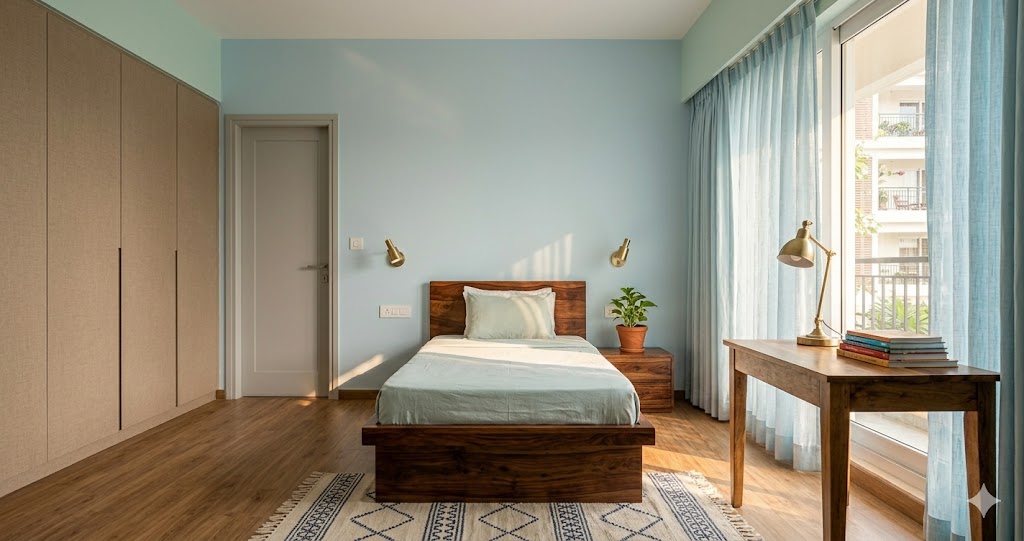
Children, 5-12 — W bedroom, light blue / green, study in the E corner
Children's bedroom in the W quadrant. Walls in a soft light blue or mint green (Asian Paints 7339 Sky Whisper or Berger Mint Mist) — fresh, daylight-friendly, conducive to creative play. Bed head south or east. Study desk pushed against the E or N wall of the same room — wakefulness direction balances the creative pull of the W. Wardrobe in matched warm laminate, no contrasting colour. Single overhead pendant at 2700K dimmable, plus a desk lamp at 3500K for homework.
Teen / college kids — S bedroom, deeper accent, dedicated study zone
Teen bedroom in the S quadrant. Walls in cream or warm white with one deeper accent wall (terracotta, deep ochre, soft sage) behind the bed or study desk. Bed head south or east. Dedicated study zone with a generous desk, a task lamp at 3500K, and minimal distraction. No TV in the room; gaming console in a closed cabinet only. Curtains heavy enough to block streetlight for the late-night-to-late-morning teen sleep pattern.
Guest bedroom — NW, cream / warm white, light furnishing
Guest bedroom in NW. Walls in safe universal cream or warm white. Bed head south, east, or west — never north. Light, easily-movable furniture. A small writing table doubles as a vanity. Single fitted wardrobe rather than a heavy built-in. The vibe should be welcoming but not so settling that guests are encouraged to overstay.
| Life stage | Best room direction | Wall colour family | Notes |
|---|---|---|---|
| Master couple | SW | Soft pink, peach, salmon | Solid wood bed; no metal; wide upholstered headboard |
| Single adult, mid-career | SW or S | Cream, oat, warm white | Solid wood bed; reading sconces over a bedside lamp |
| Newly married couple | SW | Soft peach, gentle rose | Avoid heavy dark walls; layer light textiles |
| Kids, 5-12 | W | Light blue, mint green | Pair with E-corner study desk; single bed against S wall |
| Teen / college kids | S | Cream + earthy accent | Dedicated study; minimal electronics; heavy curtains |
| Guest | NW | Cream, warm white | Light, transient, easily reset between guests |
| Elder parents | SW or S | Warm earth, soft beige | Easy access to bathroom; non-slip flooring; warm under-light |
Colour, Light, Materials
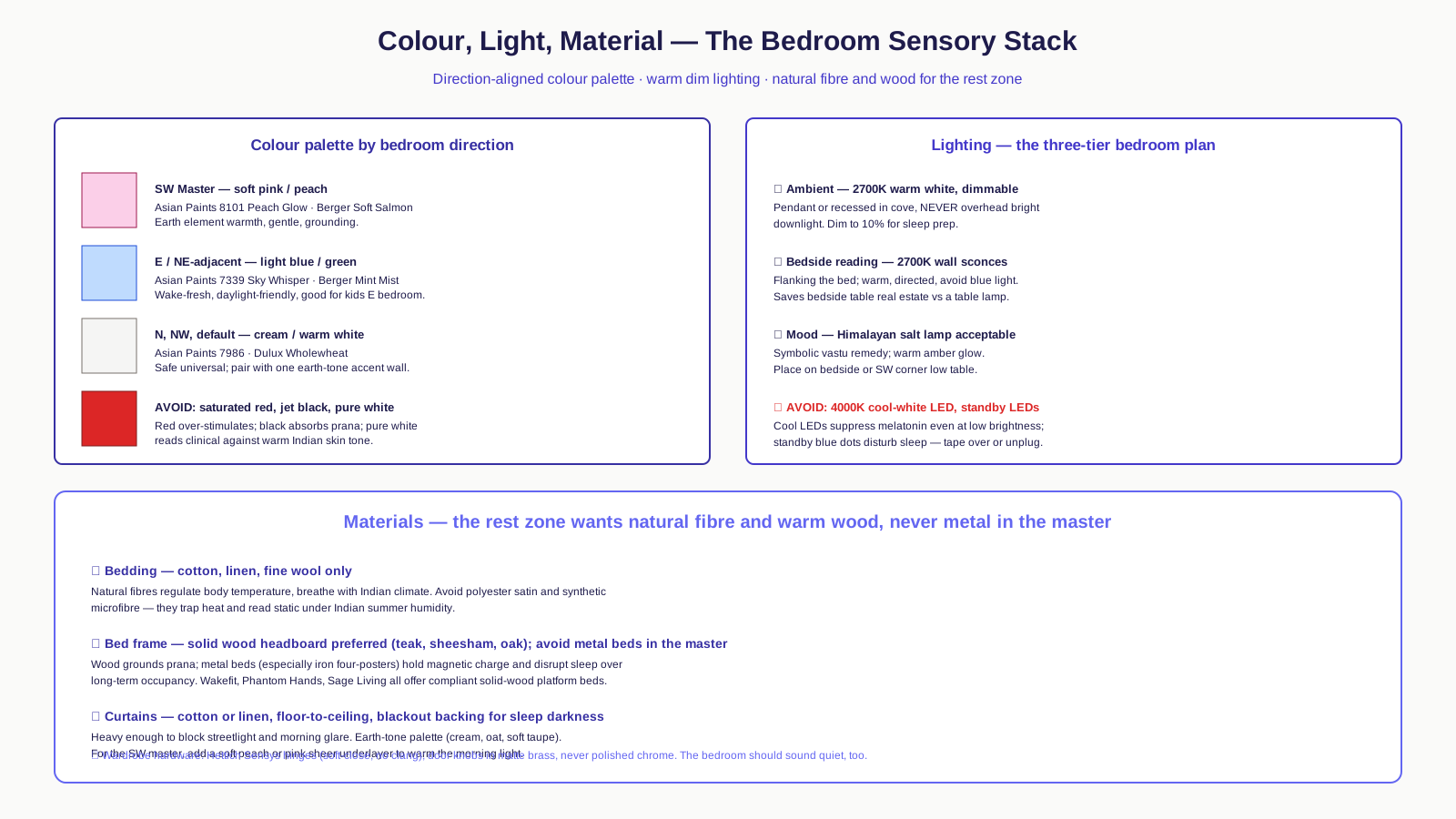
Colour palette by bedroom direction
| Direction | Colour family | Indian paint reference | Why |
|---|---|---|---|
| SW master | Soft pink, peach, salmon | Asian Paints 8101 Peach Glow · Berger Soft Salmon | Earth-element warmth; gentle, grounding; flattering to Indian skin tone |
| E (kids, study-led) | Light blue, mint green | Asian Paints 7339 Sky Whisper · Berger Mint Mist | Wake-fresh, daylight-friendly, encourages clarity |
| N / NW / default | Cream, warm white, soft oat | Asian Paints 7986 · Dulux Wholewheat | Safe universal; pair with one earthy accent wall |
| Teen / college | Cream + terracotta or sage accent | Asian Paints 8516 + Berger Sage | Holds intensity, contains energy without over-stimulation |
| AVOID | Saturated red, jet black, pure white | — | Red over-stimulates; black absorbs prana; pure white reads clinical |
Lighting
- Ambient — 2700K warm white, dimmable. A central pendant or recessed cove, dimmable to roughly 10% for sleep prep. Never an overhead bright-white downlight.
- Bedside reading — 2700K wall sconces flanking the bed; directed, warm, no blue spectrum. Saves bedside-table real estate compared to a table lamp.
- Mood — Himalayan salt lamp acceptable in the SW corner or on a bedside ledge; warm amber glow, traditional vastu remedy, and a soft night-light if a partner needs to move at night.
- Avoid 4000K+ cool-white LEDs (suppress melatonin), standby LEDs (tape over or unplug), and overhead-only ceiling lighting (flattens the room and erases atmosphere).
Materials
- Bedding — cotton, linen, fine wool only. Natural fibres regulate body temperature and breathe with the Indian climate. Avoid polyester satin and synthetic microfibre; they trap heat and read static under Indian summer humidity.
- Bed frame — solid wood (teak, sheesham, oak) is the preferred and traditional choice. Avoid metal beds in the master — particularly iron four-posters — because metal holds magnetic charge over long-term occupancy and can disrupt sleep. Wakefit, Phantom Hands, and Sage Living all offer compliant solid-wood platform beds in the Indian market.
- Curtains — cotton or linen, floor-to-ceiling, with a blackout backing for sleep darkness. Heavy enough to block streetlight and morning glare. Earth-tone palette (cream, oat, soft taupe) for the body of the drape; a soft peach or pink sheer underlayer is a beautiful master-bedroom flourish that filters morning light gently.
- Wardrobe hardware — Hettich Sensys soft-close hinges (no clang at 6 am); door knobs in matte brass, never polished chrome. The bedroom should sound quiet, too.
The Apartment Adaptation Layer — When the Builder Hands You a Fixed Plan
Most Indian apartment owners do not get to choose the direction of the master bedroom. The builder fixed the plan, the corridor opens where it opens, and the largest bedroom may sit in the north or north-east of the apartment — exactly where vastu says the master should not be.
The realistic response: respect the rules that are within your control (bed direction, headboard wall, mirror, beam, electronics) and accept the rules that are not (room direction, structural beam location, plumbing line of the bathroom door). A master bedroom in the north of the apartment with a bed correctly oriented head-south is significantly better than a master bedroom in the SW with the bed wrongly oriented head-north. Bed orientation is more load-bearing than room direction.
Common builder-plan compromises and the workaround
- Master bedroom is in the north of the apartment. Workaround: orient the bed against the south wall of the room (head south), accept the suboptimal room direction, and compensate with a soft peach accent wall behind the headboard to invoke the SW colour register.
- Master bedroom is in the east. Workaround: bed against the west wall, head east. East-master is the second-best master direction in classical vastu and is genuinely acceptable.
- The only natural bed wall has the bathroom door directly opposite. Workaround: heavy curtain on the bathroom door rail; keep door closed always; a low chest of drawers between the bed and the bathroom wall breaks the visual axis without major rework.
- An exposed beam runs across the room directly over the bed. Workaround: shift the bed sideways so the beam runs over the wardrobe or the foot of the bed; if structurally impossible, box the beam in a flat false ceiling.
- The wardrobe has builder-default mirror shutters on the long axis facing the bed. Workaround: drape a fabric cover at night; budget for a shutter swap in the next refresh cycle (₹ 18,000-45,000 typically).
Three Remedy Tiers — From a ₹500 Curtain to a Wall-Breaking Renovation
Minor (₹ 0 - 15,000)
Cloth cover on the mirror; close the bathroom door; hang a curtain to break the visual axis; unplug standby electronics; tape over the standby LED; relocate pooja items to a niche outside the bedroom; place a salt lamp in the SW corner; add a tall plant in front of a sharp protruding corner. The minor tier resolves roughly half of typical violations and requires no contractor.
Moderate (₹ 25,000 - 1,50,000)
Rotate the bed by 90 degrees (sometimes requires reworking electrical points and headboard wall); replace mirror-front wardrobe shutters with solid laminate or veneer; install a false-ceiling beam-box; replace the bedside lighting plan; install soft-close hinges on the wardrobe; replace metal bed frame with solid wood (Wakefit, Sage Living, Phantom Hands); paint the room in the direction-appropriate colour family.
Major (₹ 1,50,000 - 7,00,000)
Reassign the rooms (current master becomes a guest room; current guest room becomes the new master in the SW); rebuild the headboard wall; move the attached bathroom door to an adjacent wall; partition rework to create a proper SW master quadrant; full bedroom redesign including new wardrobe, new flooring, new lighting plan. The major tier is justified only when the bedroom is significantly misallocated or when the homeowner is already redoing the apartment for unrelated reasons.
| Tier | Budget | Scope | Time | Best for |
|---|---|---|---|---|
| Minor | ₹ 0 - 15,000 | Cloth covers, curtains, unplugging, relocation | A weekend | First-pass remediation; renters; pre-redesign audit |
| Moderate | ₹ 25,000 - 1,50,000 | Bed rotation, shutter swap, beam-box, lighting redo | 2-4 weeks | Owners doing a refresh; second pass after minor |
| Major | ₹ 1,50,000 - 7,00,000 | Room reassignment; structural rework; redesign | 8-16 weeks | Misallocated bedroom; bundled with broader renovation |
The 80/20 heuristic: roughly 80% of bedroom vastu violations in Indian apartments are fixable in the minor or moderate tier. Major rework is only worth it when the room is genuinely in the wrong quadrant and the homeowner is in the apartment for the long term.
How Bedroom Vastu Differs from Modern Sleep Hygiene Best Practice
Bedroom vastu and modern sleep-hygiene research are different disciplines with overlapping prescriptions. The overlap is significant; the divergences are honest. A homeowner deciding what to follow benefits from seeing both clearly.
| Topic | Vastu prescription | Modern sleep research | Verdict |
|---|---|---|---|
| Head direction | Head south or east, never north | Mixed evidence; some studies find slight cortisol elevation in head-N sleepers | Agree directionally; vastu is more emphatic |
| Bedroom electronics | None — disrupts rest zone | Strongly discouraged — blue light, standby LEDs | Strong agreement |
| Mirror facing bed | Reflects active energy | Catches stray light, disrupts sleep | Agreement via different mechanisms |
| Bedroom temperature | Cooler is better | 18-22 C is optimal | Both prescribe the same outcome |
| Bedding material | Natural fibre — cotton, linen, wool | Natural fibre regulates temperature better | Strong agreement |
| Room darkness | Heavy curtains; no streetlight | Darkness critical for melatonin | Strong agreement |
| Bed frame material | Wood preferred; avoid metal | No published difference | Vastu prescription stronger than evidence |
| Pooja items in bedroom | Avoid — zone conflict | No published opinion | Vastu only |
| NE corner of bedroom | Keep light and open | No published opinion | Vastu only |
The four areas where vastu and modern research most strongly agree — electronics out of the bedroom, natural fibre bedding, heavy curtains for darkness, cool temperature — produce roughly 70% of practical sleep-quality improvement on their own. The head-direction rule adds a measurable additional improvement. The remaining vastu-specific prescriptions (mirror placement, NE corner, pooja items, bed frame material) are sensible defaults that cost little to implement even if their independent evidence base is modest.
When Strict Vastu Adherence Doesn't Make Sense
There are conditions under which strict bedroom vastu adherence is either impossible or imposes costs out of proportion to the benefit:
- Single-bedroom builder apartment with an immovable bathroom door directly opposite the only viable bed wall. Accept the configuration, use a heavy curtain, and stop worrying. Stress over an unsolvable vastu violation produces worse sleep than the violation itself.
- Rental property where bed rotation requires landlord permission and wardrobe shutter replacement is forbidden. Use the minor-tier fixes (cloth cover, curtain, unplug electronics). Accept what you cannot change.
- The recommended head-south orientation places the bed against an external wall on the western exposure of a top-floor apartment in Chennai or Hyderabad. The wall heats to uncomfortable surface temperatures through the night and the heat through the headboard wall disturbs sleep more than the magnetic-field alignment helps. Pragmatic answer: orient head east instead and accept the second-best direction.
- Co-sleeping with very young children in a configuration that physically requires the parents' heads to point north so the children can be safely positioned at the foot. Child safety overrides direction; revisit once the children move to their own beds.
- Joint-family inherited bedroom assignments where the elder generation has occupied the SW bedroom for decades and reassignment is socially impossible. Live with it; optimise the bedroom you have.
The principle: vastu is a discipline, not a religion. It rewards thoughtful application and tolerates pragmatic adaptation. A bedroom that gets four out of the five non-negotiable rules right is dramatically better than the average Indian builder-default bedroom and is meaningfully better-sleeping than a bedroom that gets all five rules right but where the homeowner is anxious about the one unavoidable compromise.
Where to Go Next
- For the broader vastu framework — Vastu for Modern Homes
- For whole-house planning — Vastu House Plan for India
- For the kitchen direction and layout — Vastu for the Kitchen
- For the entrance vastu rules — Entrance Vastu
- For room-by-room colour choices — Vastu Colours for the Home
- For the warm-minimal master bedroom aesthetic — Warm Minimal Interiors
- For Japandi-inspired low platform beds — Japandi Apartment Interior Guide
- For wardrobe finish specification (non-mirror shutters) — Wardrobe Finish Ideas
- For a self-audit of your apartment — Vastu Compliance utility
- For finding the cardinal direction of your bedroom — Vastu Compass utility
References
1. Varahamihira (6th century CE). Brihat Samhita. Translated by M. R. Bhat, Motilal Banarsidass, 1981. (Foundational text on dwelling direction, room allocation, sleep orientation.)
2. Mayamatam — Treatise on Housing, Architecture and Iconography. Translated by Bruno Dagens, IGNCA / Motilal Banarsidass, 1994. (Classical Sanskrit treatise on Vastu; bedroom and master-room placement.)
3. Vishwakarma Vastu Shastra. Sanskrit text on classical vastu, translated editions across multiple Indian publishers. (Reference for direction-deity correspondences and the eight-direction grid.)
4. Manasara Shilpa Shastra. Translated by Prasanna Kumar Acharya, Oxford University Press, 1933 (reprinted Motilal Banarsidass). (Architectural canon; room dimensioning and orientation.)
5. Khushdeep Bansal (2012). Vaastu Speaks of Success. Penguin India. (Modern practitioner reference on bedroom remedies and apartment-adaptation cases.)
6. Anupama Mohanlal (2018). Vastu — The Complete Indian Guide. Roli Books. (Comprehensive contemporary Indian vastu reference; bedroom chapter.)
7. Bureau of Indian Standards. National Building Code of India 2016 (NBC 2016) — Part 4: Fire and Life Safety and Part 8: Building Services. (Reference for minimum room sizes, ventilation, daylight standards in residential bedrooms.)
8. NIH National Library of Medicine (PubMed-indexed). Studies on geomagnetic field exposure and sleep architecture; collected reviews 2010-2022. (Modern evidence base on head-direction and REM stability.)
9. Indian Council of Medical Research (ICMR). Working paper on sleep hygiene and bedroom environment, 2018. (Indian-context sleep-environment reference.)
10. British Standards Institution (BSI). BS EN 1957:2012 — Furniture — Beds and Mattresses — Test Methods for the Determination of Functional Characteristics. (Sleep ergonomics reference for bed specification.)
11. CDC / National Sleep Foundation. Healthy Sleep Habits guidelines, current edition. (Modern sleep-hygiene baseline against which vastu can be compared.)
12. Walker, Matthew (2017). Why We Sleep — Unlocking the Power of Sleep and Dreams. Penguin / Scribner. (Modern sleep science; chapters on bedroom environment, light, and electronics.)
13. Pallasmaa, Juhani (2012). The Eyes of the Skin — Architecture and the Senses. Wiley. (Tactile and atmospheric theory underpinning material choices in the bedroom.)
14. Indian Standard IS 1326:1968 (reaffirmed). Specification for cotton bed sheets. Bureau of Indian Standards. (Reference for natural-fibre bedding specification.)
Author's note: Bedroom vastu is the area of vastu shastra where the gap between traditional prescription and modern evidence is smallest. Four of the five non-negotiable rules — wall behind headboard, no mirror facing bed, no beam above the chest, no bathroom door opposite the bed — are also recommendations any sleep-hygiene specialist would make on first inspection, arrived at through entirely different reasoning. The fifth rule — head direction — has weaker but non-zero modern evidence. The honest position for a 2026 Indian homeowner is: follow the five rules; they cost little, they align with sleep science across most cases, and they encode 2,500 years of empirical observation of what makes a bedroom restful. Do not catastrophise about unavoidable compromises in an apartment plan; the stress of perceived non-compliance is a worse sleep disruptor than any single violation in this guide.
Disclaimer: This guide is a practical reference, not a religious instruction or a medical prescription. Vastu shastra is a 2,500-year-old spatial tradition; modern sleep research is a younger but rigorous discipline; the two largely agree on bedroom design and this guide highlights areas of agreement and honest divergence. Modern sleep medicine concerns (insomnia, sleep apnea, REM behaviour disorder) require medical consultation and cannot be resolved by room-direction adjustments alone. Paint references, brand mentions (Wakefit, Phantom Hands, Sage Living, Asian Paints, Berger, Hettich), and price bands are 2026 indicative and will shift with currency, sourcing, and inventory. Studio Matrx has no commercial relationship with any brand named. Studio Matrx, its authors and contributors are not responsible for sleep, health, or renovation outcomes based on this guide.
Interactive · Bedroom placement wheel
South-West · Ideal · Head of family / master bedroom
Ideal · Head of family / master bedroom
Nairutya — the most stable, grounding zone. Master bedroom placement here brings authority + stability.
Remedy / tip: Head of bed should be to the south or west. Heaviest furniture on SW wall.
Universal bedroom rules
- • Bed head NEVER to the north — disturbs sleep magnetics
- • Never place mirror directly facing the bed
- • Avoid sleeping under exposed ceiling beams
- • No water features (aquarium, fountain) in bedroom
- • Tall storage on SW wall, not on N / NE
- • Keep electronics 1m+ from the bed
Export this guide
Related Guides — Deep-dive reading
Smart Storage Interiors — A 2026 Working Reference for Indian Homes
Inventory-driven · Floor-to-ceiling · Hardware-engineered · Zone-mapped
Room PlanningJapandi Apartment — A 2026 Style Guide for Compact Indian Homes
Japanese restraint × Scandinavian function · Low furniture · Two-wood discipline
Design StylesSpace-Efficient Homes — A 2026 Working Reference for Compact Indian Apartments
Five spatial multipliers · Floor plan tricks · Dual-purpose furniture
Room PlanningRelated Tools — Try Free
Circadian Light Meter
Patient-centric circadian lighting visualizer for Indian healthcare design — time-of-day × intensity → CCT, melanopic lux (EML / mEDI), melatonin suppression, and an alertness curve. Calibrated against WELL v2 L03 Circadian Lighting Design, CIE S 026:2018, Brainard 2001, and Lucas et al. 2014.
Circadian ToolCross-Ventilation Analyzer
Estimate airflow and air changes per hour (ACH) from room size, window areas, layout, and local wind — with NBC 2016 Part 8 compliance check.
Ventilation CalculatorVastu Window Planner
Vastu guidance for window placement and size by wall direction and room — rating and remedies.
Vastu